Will proceed to enact 22A avoiding a referendum – Wijeyadasa

Minister of Justice, Prisons Affairs and Constitutional Reforms Wijeyadasa, Rajapakshe says the government will proceed to enact the 22nd Amendment to the Constitution avoiding a referendum.

However, the enactment of the constitutional amendment will adhere to the proposed variations in the determination by the Supreme Court, the lawmaker said further.

Announcing the Supreme Court’s determination on the draft constitutional amendment in the parliament this morning, Speaker Mahinda Yapa Abeywardena stated that some provisions of the Bill are inconsistent with the Constitution.

The Supreme Court concluded that the draft constitutional amendment should be passed by a special majority and a referendum or the clauses in question should be amended.

On an overall consideration of the provisions of the Bill, the Supreme Court made the following determination:

1. The Supreme Court states that the Bill complies with the provisions of the Article 82(1) of the Constitution and requires to be passed by the special majority specified in Article 82(5) of the Constitution.

2. Clause 2 of the Bill contains provisions inconsistent with Article 3 read together with Article 4(b) of the Constitution and as such may be enacted only by the special majority required by Article 82(5) and upon being approved by the People at a Referendum by virtue of Article 83. However, the necessity for a Referendum shall cease if the proposed Articles 41A(6) and 41B(4) in Clause 2 are suitably amended to remove the deeming provision set out therein.

3. Clause 3 of the Bill contains provisions inconsistent with Article 3 read together with Article 4(b) of the Constitution and as such may be enacted only by the special majority required by Article 82(5) and upon being approved by the People at a Referendum by virtue of Article 83. However, the necessity for a Referendum shall cease:

(a) If the proposed Article 44(2), the proviso to Article 44(3), Articles 45(1), 46(1), 47(3)(a), 48(3) and 50 in Clause 3 are suitably amended by deleting the reference to the President acting on the advice of the Prime Minister and replacing instead with the President acting in consultation with the Prime Minister;

(b) If the provisions of Article 47(2)(a) are restored in the proposed Article 47(2) in Clause 3. I order that the Determination of the Supreme Court be printed in the Official Report of today’s proceedings of the House.
Congratulations to Hon. Liz Truss for being elected as the leader of the Conservative Party and the Prime Minster of UK

Congratulations to Hon. Liz Truss for being elected as the leader of the Conservative Party and the Prime Minster of United Kingdom who has firm commitment to reconciliation, justice, and accountability in Sri Lanka.

We wish her all the very best during her tenure as a Prime Minister

TELO & Tamil National Alliance

India briefs UN GA on nearly $4 billion assistance given to Sri Lanka

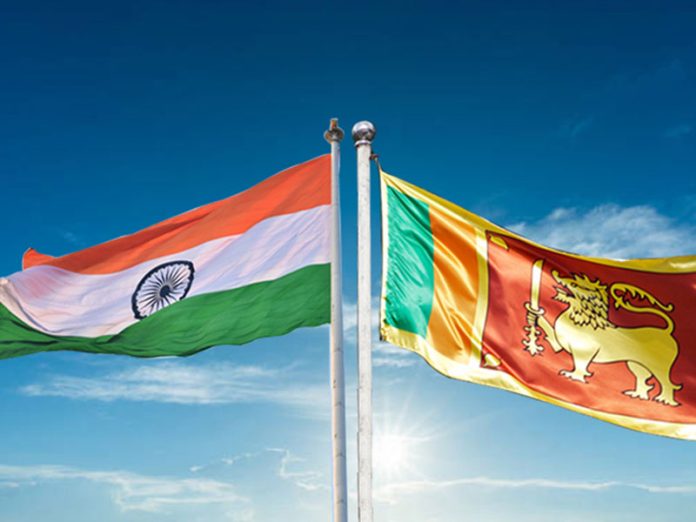
India highlighted its constructive and significant role in human-centric globalisation at the United Nations General Assembly and said that it had provided nearly $4 billion in food and financial assistance to Sri Lanka.

At a UNGA Annual Joint Debate on the Reports of Peacebuilding Commission (PBC) and Peacebuilding Fund (PBF), India’s Permanent Representative to the UN, Ruchira Kamboj said, “In our immediate neighbourhood, we are continuing to help our good friend and neighbour Sri Lanka to ensure food security by providing nearly $4 billion in food and financial assistance during the past few months.”

Speaking about the India-UN Development Partnership Fund which was established in 2017, she said that in a short span of five years, the Fund has developed a portfolio of 66 development projects in partnership with 51 developing countries, including 17 countries in Africa, focusing on South-owned, South-led, demand-driven Sustainable Development Projects (SDGs).

Since the beginning of the Ukraine conflict, in order to mitigate the adverse effects of the destruction of food and commodity supply chains, India has also been providing financial and food assistance to countries in need.

India has always played a constructive and significant role in the context of peacebuilding through its extensive development partnership with countries of the Global South.

“We continue to assist countries through bilateral and multilateral fora in post-conflict situations by providing substantial grants and soft loans. Even during the COVID-19 pandemic, India stood in solidarity with the Global South, further strengthening existing developmental partnerships guided by Kampala Principles enunciated by Prime Minister Narendra Modi in July 2018 during his address to the Ugandan Parliament. A total of 204 line of credit (LoC’s) to the tune of more than USD 12 billion have been extended by India to 42 African countries,” said the Indian Ambassador to the UN.

Talking about PBC, she said that the world today has come to a better grasp of complex and interlinked facets of peacebuilding.

The world today has come to a better grasp of complex and interlinked facets of peacebuilding. The global perspective on addressing conflicts has undergone a massive shift from resolution, reconciliation, and recovery to prevention and reconstruction, thereby making peacebuilding a critical pillar in our collective response to conflict situations.

India, as one of the leading troop and police-contributing countries to UN Peacekeeping Missions, has been an active member of PBC since its inception.

Speaking on Indian contributions to peacebuilding efforts, Kamboj said, “We have more than 5, 500 personnel deployed across 9 Missions, serving under the blue flag, 177 gallant Indian soldiers have made the supreme sacrifice, the largest number among the troops contributing and police-contributing countries.”

She also congratulated Bangladesh for Chairing the Peacebuilding Commissions (PBC) since February and thanked Egypt for its contribution to PBC initiatives.

Kamboj further presented three submissions to enhance support and increased focus from member-states in fulfilling PBC and PBF mandates.

“1) we continue to underscore the importance of the cardinal principle of inclusivity in order to advance national peacebuilding objectives. Thus, an exclusively donor-driven approach to peacebuilding would not be the most prudent part to follow, 2) the ongoing discourse on enhanced financial support for peacebuilding activities through sources other than voluntary contributions merits an in-depth and careful study of its ramifications on the UN ecosystem, any decision to that effect must be consensus-based. Furthermore, the PBC should exercise its convening role more effectively, 3) it is important to set clear benchmarks and criteria for an exit-strategy in the country under consideration, peacebuilding advocacy by PBC needs to draw down when such criteria are met,” said the Indian envoy.

Kamboj also reiterated that India will continue to be a force-multiplier in all peacebuilding efforts, driven very much by this human-centric approach.

Quoting PM Modi, she said, “Let us pledge to reform the global multilateral system to enhance its relevance, to improve its effectiveness, to make it a basis for a new type of human-centric globalization.”
(ANI)

Posted in Uncategorized

Fitch warns of high risk that Sri Lanka may default on local bonds

Sri Lanka is contending with a high risk of default on its local currency bonds as it seeks to reduce debt, key to winning financing from the International Monetary Fund to bring relief to the crisis-hit island.

Fitch Ratings’s ‘CCC’ rating on long-term local currency debt that was affirmed in May “reflects a high risk that local-currency debt will be included in debt restructuring,” Sagarika Chandra, Hong Kong-based associate director, wrote in a statement. Sri Lanka had $30 billion of foreign debt and $34 billion of domestic debt as of the end of April.

Sri Lanka defaulted on its dollar debt in May for the first time, and must clinch a restructuring deal with private bondholders and official creditors including China, Japan, and India to get the IMF board’s nod for a $2.9 billion loan. The nation faces a lawsuit in a US court over its proposed debt recast, with one of the bondholders, Hamilton Reserve Bank Ltd., accusing Sri Lanka of setting terms that favor domestic banks.

“There is a big question mark over whether sustainable levels of debt can be reached by just restructuring US dollar market and concessional debt,” said Kenneth Akintewe, head of Asian sovereign debt at abrdn in Singapore. “Arguably, local currency debt needs to be restructured too in order to reach what the IMF would see as sustainable levels.”

There are mixed signals from the government. President Ranil Wickremesinghe in August said the government was looking at including local bonds in the debt restructuring. Meanwhile, central Bank Governor Nandalal Weerasinghe has said he was confident the nation’s debt can be made sustainable without restructuring domestic debt.

Sri Lanka is walking a tightrope as it juggles the need to meet the IMF demands while ensuring the impact of the debt restructuring on the economy is manageable. Fitch warned that “a default on local-currency debt could have adverse effects on Sri Lanka’s banking sector that would erode the net benefits of such a restructuring.”

Officials are working with financial and legal advisers on a debt restructuring strategy and intend to make a presentation to the creditors in the next few weeks, the finance ministry said last week.

Imposing a debt restructuring on local currency debt could also prove challenging as the rating company views public support for the government as “weak,” and anticipates risks to reforms from political instability. An interim budget last week raised tax rates and included reforms to restore the nation’s fiscal health and meet IMF requirements.

“If there is a haircut on these bonds also, there will be a huge impact on the banking sector,” said Sanath Manatunge, chief executive officer at Commercial Bank of Ceylon PLC, adding that it would also make the restructured sovereign dollar bonds vulnerable.

Source: Bloomberg

Committee appointed to facilitate repatriation of Sri Lankan refugees from India

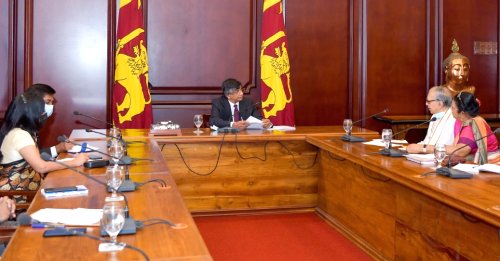
A committee has been appointed by President’s Secretary Saman Ekanayake to facilitate and efficiently carry out the process of repatriation of Sri Lankans who have gone to India as refugees due to the war, President’s Media Division said.

The other members of this committee, headed by Ms. Chandima Wickramasinghe, Additional Secretary to the President, are the Controller General of Immigration and Emigration, senior official of the Ministry of Foreign Affairs, senior official of the Registrar General’s Department and a senior official of the Ministry of Justice.

This decision was reached during the discussion held today (05) at the President’s Office under the chairmanship of the President’s Secretary Saman Ekanayake at the request of the Organization for Eelam Refugees Rehabilitation (OFERR), to bring back the Sri Lankans who have gone to India as refugees due to the war.

It was stated that about 58,000 Sri Lankans are currently residing in Tamil Nadu, India as refugees and only 3,800 of them are ready to return to Sri Lanka at present.

The Sri Lanka Deputy High Commissioner’s Office in Chennai is coordinating the efforts in this regard.

C.S. Chandrahasan from the Organization for Eelam Refugees Rehabilitation (OFERR), S. Suriyakumari, Secretary of Public Administration, officials of the Ministry of External Affairs, officials of the Ministry of Justice, officials of the Immigration and Emigration Department, and officials of the Registrar General’s Department participated in this meeting.

Posted in Uncategorized

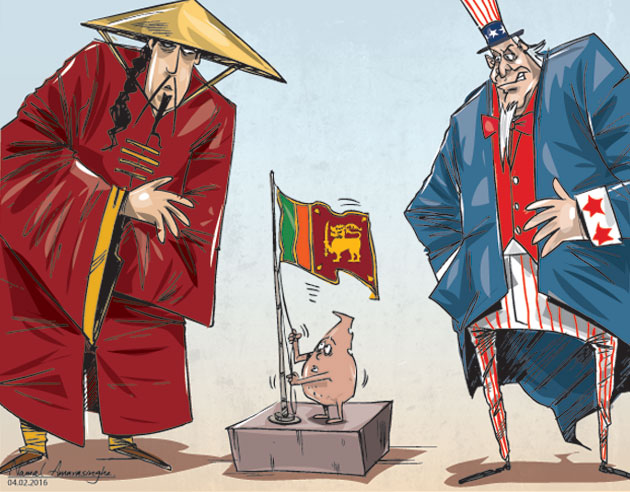
China may disagree with Western creditors on Sri Lanka’s debt restructuring

China, Colombo’s largest bilateral lender, may disagree with Western creditors on Sri Lanka’s debt restructuring.

A senior International Monetary Fund (IMF) official said that Sri Lanka’s ongoing economic crisis would deepen if China disagrees on debt restructuring, reported Sunday Islands Online.

“If one creditor or creditors are not willing to provide these assurances, that would indeed deepen the crisis here in Sri Lanka and would undermine the repayment capacity,” Peter Breuer, senior IMF mission chief told reporters in Colombo when asked what if China does not agree on a debt restructuring plan.

He said that China would not go along with Western creditors on debt restructuring on an equal footing.

“So a deepening crisis means that essentially the resources available to service the debt would become less,” said Breuer at the media briefing after concluding a nine-day visit to finalize the staff-level agreement and a loan package for Sri Lanka’s reforms.

All Sri Lankan creditors including China have to agree to restructure their existing loans to the island nation before the IMF starts disbursing a 2.9 billion US dollar loan on which preliminary agreement was announced on Thursday.

“So it is actually in the interest of all creditors to collaborate together and with Sri Lanka so that Sri Lanka can emerge from this crisis as quickly as possible and regain its repayment capacity and service this new debt that will come out of these debt negotiations,” added Breuer.

Notably, China has so far not agreed to debt restructuring which could include haircuts or reductions in interest rates. Instead, China has expressed its willingness to refinance Sri Lanka to repay its past loans without any changes, said Lankan officials, reported Sunday Islands Online.

Earlier, China had dodged the request for debt relief and said that the ball is in Sri Lanka’s court. A spokesman for the Chinese embassy said that the ball is in Sri Lanka’s court, not China’s, reported Sri Lankan publication Daily Mirror.

“We sent proposals to the Finance Ministry. But, there was no response from them. Also, Sri Lanka insisted that it should complete the agreement with the International Monetary Fund (IMF) first. The ball is in Sri Lanka’s court,” the spokesman said.

The spokesman told Daily Mirror China communicated to the Sri Lankan Finance Ministry three months ago about its readiness to discuss how to address the debt issue with the Chinese banks.
He said China encouraged its banks to discuss it. The Chinese position was also communicated during the telephone conversation between Chinese Premier Li Keqiang and then Sri Lankan Prime Minister Mahinda Rajapaksa.

Sri Lanka has already hired financial and legal advisory firms Lazard and Clifford Chance LLP to support its debt restructuring as the country is on the brink of bankruptcy. Lazard has been the legal adviser in Zambia’s debt restructuring where creditors included China, reported Sunday Islands Online.

The Paris Club of Western nations has a well-defined unified process for dealing with defaulted nations, which is familiar to the IMF.

“Sri Lanka is in a special situation that much of its official debt is outside of Paris Club creditors,” Breuer said.

“It is important to move expeditiously. We want to avoid the crisis from becoming worse,” he added.

Source:(ANI)

Posted in Uncategorized

SLFP split after constitution change

Following the Sri Lanka Freedom Party (SLFP) Constitution being amended to empower its Chairman to remove party officers from their respective positions at their discretion, amidst opposition from several senior SLFP members including Ministers Nimal Siripala de Silva and Mahinda Amaraweera, divisions have arisen within the SLFP, The Morning learnt.

Last week, several amendments were implemented to the Constitution of the SLFP, including a clause empowering the party’s chairman to remove any officer or member at their discretion. Despite the opposition of several members of the SLFP’s parliamentary group such as de Silva, Amaraweera, and MP Chamara Sampath Dassanayake, the amendments were passed in the party’s Central Committee and its All-Ceylon Committee.

Speaking to The Morning, sources within the SLFP said that following the constitutional amendment, there has been a division into two groups in the party. According to sources, SLFP Chairman, former President, and incumbent MP Maithripala Sirisena, SLFP General Secretary and MP Dayasiri Jayasekara, and SLFP Senior Vice President Rohana Luxman Piyadasa are in one group, while the other includes de Silva, Amaraweera, Dassanayake, and some other MPs.

The sources further stated that due to the alleged disobedience of several senior politicians representing the SLFP, the Sirisena-led group is engaged in an effort to remove them from the positions they hold in the party, and to appoint people friendly to them to those positions. Apart from that, the sources also stated that another senior official of the party is attempting to become the SLFP Chairman, thereby paving the way to fulfil his future political dreams.

Meanwhile, an official of the SLFP, when contacted by The Morning, said that de Silva and Amaraweera, who accepted ministerial positions in the current Government despite the SLFP’s decision to the contrary, have been removed from all the positions they held in the party. Noting that the process of revoking their party membership is currently underway, he said that strict measures will be taken against anyone who acts against the party’s decisions in the future.

The SLFP is among the prominent political parties in Sri Lanka and was founded by slain Prime Minister S.W.R.D Bandaranaike in 1951. Since then, it was one of the two largest political parties in the country until the Sri Lanka Podujana Peramuna (SLPP) was formed in 2018. The SLFP first came to power in 1956, and since then has been the predominant party in Government on a number of occasions. Both in the Presidential Election in 2019 and the General Election in 2020, the SLFP supported the SLPP and the MPs representing the SLFP recently left the SLPP governing alliance by becoming “Independent” Opposition MPs in Parliament.

Posted in Uncategorized

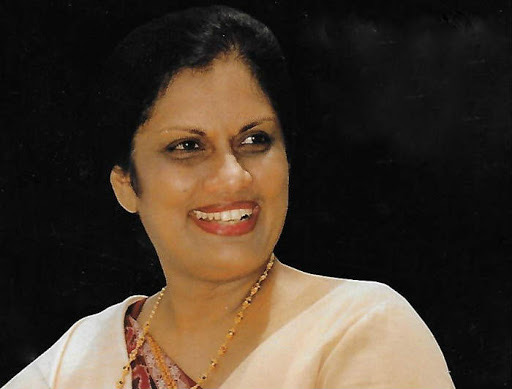
Only bunch of mad-hatters in SLFP now: CBK

Claiming that the Sri Lanka Freedom Party (SLFP) sans any policy now, Former President Chandrika Bandaranaike Kumaratunga said there are only a bunch of mad hatters in the party now.

She told reporters in Colombo that the SLFP was the most Democratic Party in Sri Lanka after the Independence and that its party democracy has been destroyed.

“There is no SLFP today. There are no policies or people in the party. Only the name-board is there,” he said.

She said what matters for her is not the party but the policies and the people of the party and therefore she would continue to work for the people and the policies of the party.

Posted in Uncategorized

New political alliance formed by independent groups

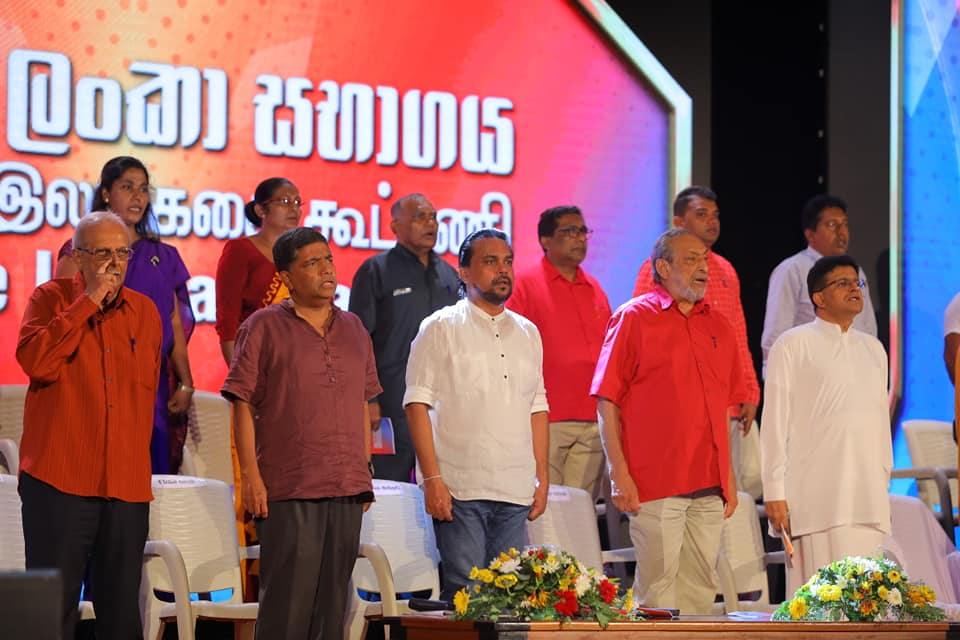
A new political alliance was formed today by some independent groups in Parliament, which includes MPs Wimal Weerawansa, Udaya Gammanpila, Vasudeva Nanayakkara and Tissa Vitharana.

The ‘Supreme Lanka Coalition’ was launched at the National Youth Council premises in Maharagama today.

Former Minister Weerawansa will act as the Chairman of the new alliance and Dr. G. Weerasinghe the Secretary.

Others in the alliance include the Venerable Athuraliye Rathana Thero, MP Gevindu Kumaratunga, Jayantha Samaraweera, Mohamed Muzammil and Weerasumana Weerasinghe.

The new alliance is to contest future elections.

Namal notes strong bond between TMVP and MR

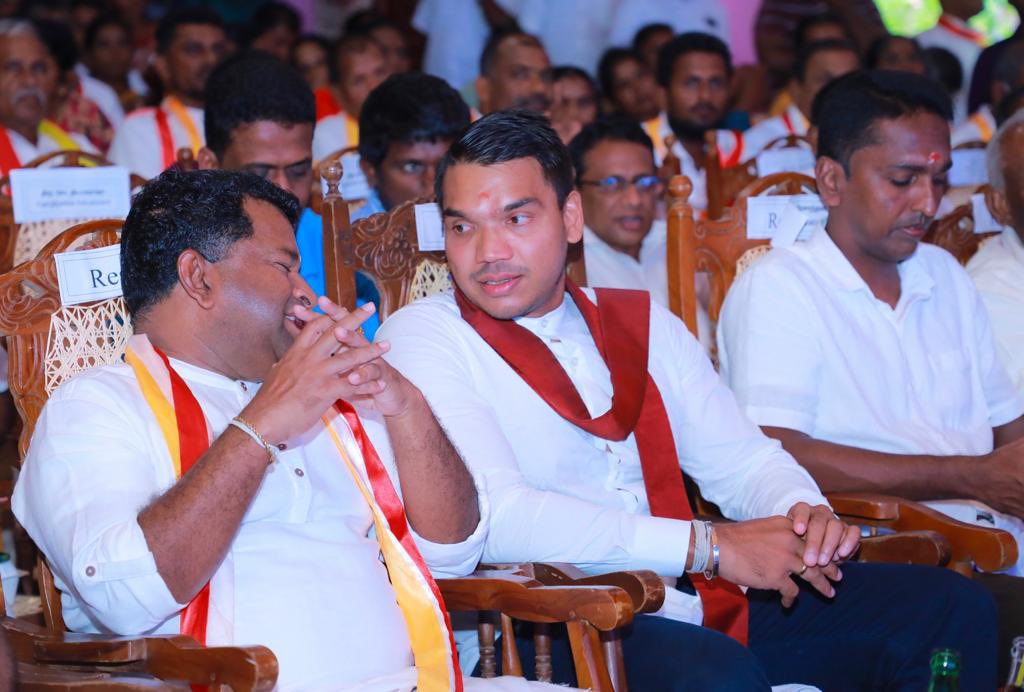
The former Minister tweeted saying that he attended the convention of the party in Batticaloa today.

“Since it’s inception as a political party the TMVP has maintained a strong alliance with all HE @PresRajapaksa led govts. It was an honor to attend the convention of the party earlier in #Batticaloa today on the invitation of Hon. Sivanesathurai Santhirakanthan,” Namal Rajapaksa tweeted.

The TMVP consists of some members who were earlier part of the LTTE.

The TMVP was accused in the past of being involved in human rights abuses.

A former spokesman of the TMVP had also alleged that there were links between the TMVP and the Easter Sunday attacks.

The TMVP has, however, denied the allegations.