President Ranil Wickremesinghe’s efforts to form an All-Party Government (APG) to ensure a speedy economic recovery have turned futile. The principal reason is the reluctance of the main opposition Samagi Jana Balavegaya (SJB) to become a constituent. This became clear when its leader Sajith Premadasa and General Secretary Ranjith Madduma Bandara met the President for talks on Monday.
Commenting on these talks, General Secretary Madduma Bandara told the Sunday Times, “We discussed a variety of issues. We made clear at the end that we would extend our support but will not accept portfolios in a cabinet of ministers or any other appointments.” It became clear from his remarks that the SJB position on a variety of issues, some perhaps justifiably, was at complete variance with those held by President Wickremesinghe.
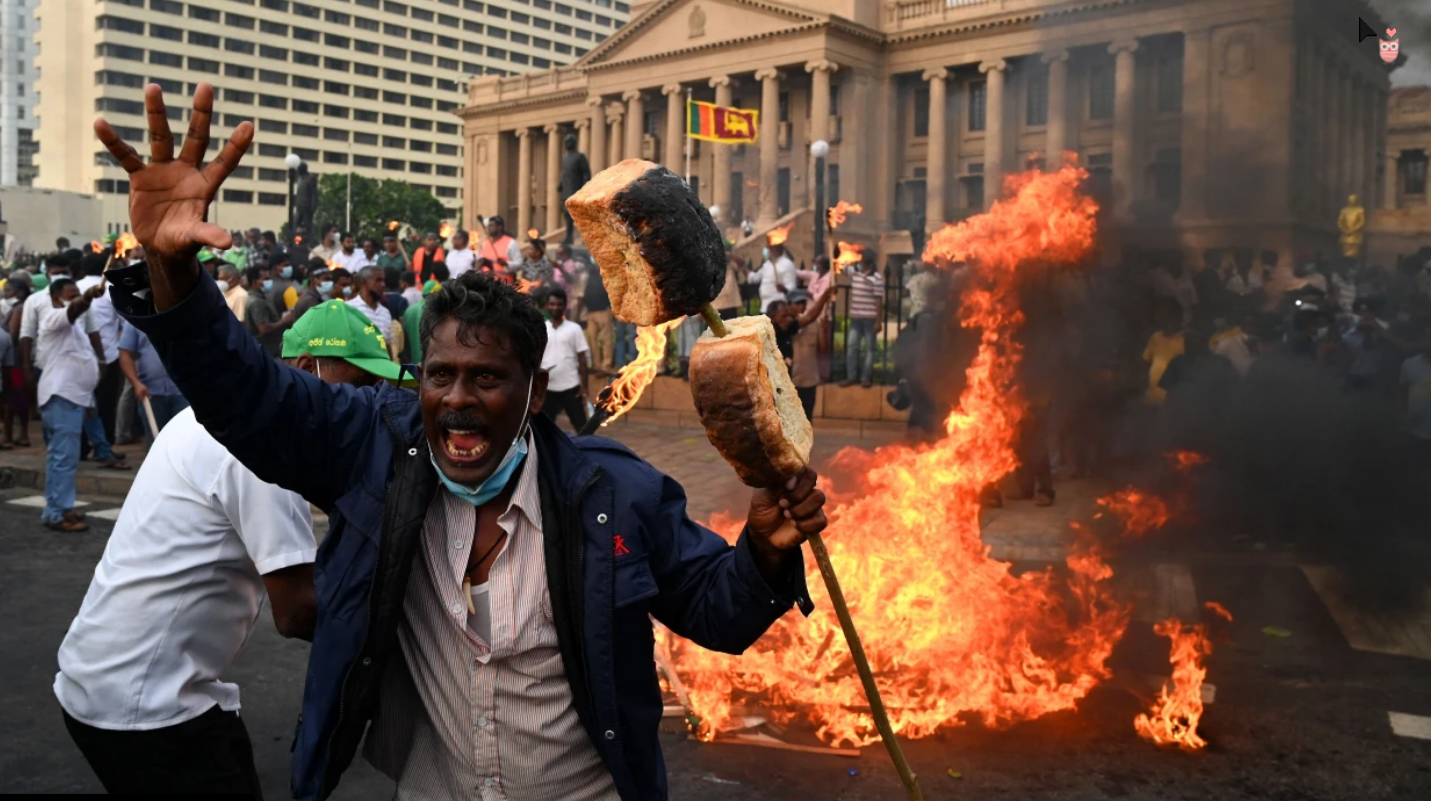
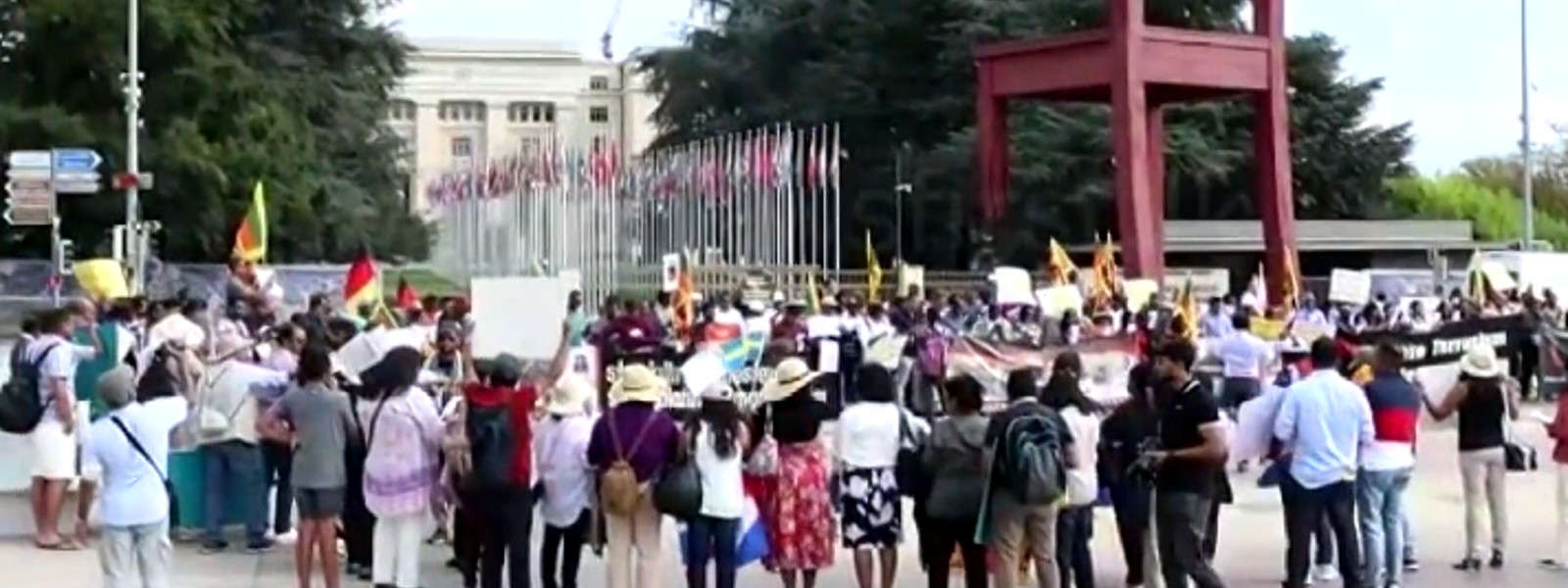
One such touchy issue is the ongoing crackdown on those who protested outside Temple Trees and on the Galle Face Green. This has extended to those who unlawfully entered the Janadipathi Mandiraya (President’s House the Temple Trees, the official residence of the Prime Minister, and attacks on properties belonging to Sri Lanka Podujana Peramuna (SLPP) parliamentarians and supporters. The Police campaign has been more vigorous, and suspects have been arraigned even under the provisions of the controversial Prevention of Terrorism Act (PTA). If the Colombo-based western diplomatic community had rapid-fire media statements issued in the past, relatively there was stoic silence. The issue is to figure at the upcoming UN Human Rights Council sessions beginning in Geneva on September 12. Details of talks a high-level UNHRC delegation held with government leaders in Colombo appear in the later paragraphs. The SJB duo raised issue over the mass arrests. In marked contrast, there seems to be little said and done over the SLPP goon squads that carried out attacks on the protestors on May 9. True that the hybrid protests were infiltrated by extremist political groups in the later stages.
The SJB duo also appealed for early parliamentary elections. Of course, for the SJB, there is the concrete belief that it could win an early poll. Not even fears that some stalwarts within the party may break ranks to join the government have deterred the SJB leaders. This is notwithstanding the strong assertion SJB leader, Premadasa displayed about the ”confidence” he has in his members and “the collective decisions they take.” That there is seething discontent within over leadership issues is known. President Wickremesinghe has assured the SLPPers, particularly first-time MPs, he would not go for an early poll. This will ensure they get their pensions. A factor that weighs in his favour is the absence of the right conditions for polls — foremost being the availability of fuel without shortages so a free and fair polls campaign by all sides could take place. Other than that, there is also a much bigger hidden advantage for him – the consolidation of his United National Party (UNP) in the long term.
President Wickremesinghe is not only disappointed that the APG is not a reality but finds himself in a paradoxical situation. As six times Prime Minister in the past, one could argue he had no untrammeled power. Even if he had a power base in the form of MPs, there was a President over him. It is different now. He has untrammeled power in terms of the constitution, but no power base so to say. Other than him, it is only one more MP (Vajira Abeywardena) in Parliament. Therefore, he had to depend on the SLPP albeit the strategic machinations of its theoretician Basil Rajapaksa. That makes clear that the SLPP, now divided into splinter groups, is extending its support selectively.
Nevertheless, President Wickremesinghe did score considerable public approval as fuel queues receded and cooking gas (LPG) stocks were made available to the needy. However, the challenge before him is to ensure its continuity. How would he find the resources?
Recently, those in the Basil Rajapaksa faction, easily the largest, threatened to oppose the budget being presented by President Wickremesinghe as Minister of Finance. They were demanding positions as State Ministers, positions that go with perks and privileges. They are entitled to one private secretary, one media secretary and three coordinating secretaries. All five are entitled to separate vehicles. In addition, State Ministers are also entitled to five office staff members, three vehicles and other perks enjoyed by ministers. Their salaries are also the same as ministers.
President Wickremesinghe, who is formulating the list of State Ministers, is yet to finalise the total number. The appointments are expected to take place before the presentation of his interim budget. In the absence of an APG, the formation of a new cabinet of ministers has become an uneasy task. The present thinking is to go ahead with the existing cabinet of ministers and the inclusion of a few others from other parties. Such inclusion would naturally lead to an estrangement between the government and the parties concerned. On the one hand, any unpopular measures such a government, possibly identified as a “national government,” takes would nevertheless be blamed on the leader, President Wickremesinghe. Such an accusation would have been absent if it were to have been an APG. Electricity rates have been increased with upper limits going up to 75 percent. On Friday, it was announced that water rates would be raised from September 1. The increase in the price of kerosene, after a substantial reduction in the price of a litre of petrol, has come as a death blow for certain sectors. They include poorer sections who use kerosene to cook their meals and fisher folk who use it to fire their outboard motors to go to sea. The increase has contributed to a spiral in fish prices. The interim budget on Tuesday will see the upward revision of taxes. Those will no doubt come as severe blows to middle- and upper-income groups.
Moves to revive SLPP
Although the return to Colombo on September 2 of ex-President Gotabaya Rajapaksa has no direct relevance, there are SLPP sections who are busy with blueprints to revive the party. Their leader, Mahinda Rajapaksa, has been telling visitors who call to see him at his heavily fortified residence that the time would be ripe in two or more months for the SLPP to make a revival. He told visiting confidants that it must come in the form of meetings where the public should be told of the setbacks the party suffered. He was emphatic that these setbacks were due to wrong advice given by some persons and not the fault of the party leadership. For example, he had pointed out that the ban on the import of chemical fertiliser was the result of ‘misleading’ advice by some ‘misguided’ persons. He expressed the view that the farmers should be told the truth and they would appreciate it. Moreover, he had contended, that the SLPP had done the most to farmers.
Returning home after his inability to obtain asylum in any country on Friday, Gotabaya Rajapaksa, his onetime aides say, had no plans to engage in politics. However, after seven years in politics, first as Defence Secretary and then as President, the temptations are far too much. Already, plans are afoot to afford a “grand” welcome though there are questions over security clearance. It is largely security that has prompted the authorities to offer him a residence which is easier to protect than his private one at Mirihana. A government bungalow has been readied for him facing both Malalasekera Mawatha and Bauddhaloka Mawatha. He will become a neighbour of onetime minister Namal Rajapaksa who still occupies a government bungalow. As it always happens, when “well-wishers” underwrite expenses, prolonged stays do cause issues. At least two such underwriters from Colombo are now ignoring calls from Bangkok.
Whether a campaign for revival is possible in a few months remains a serious question. Firstly, the party that came to power with a collection of smaller political groups is now in shambles. Overall, a pro-China National Freedom Front (NFF) led by Wimal Weerawansa and the Pivithuru Hela Urumaya led by Udaya Gammanpila were the main promoters originally of Dullas Alahapperuma as the rival to then Prime Minister Mahinda Rajapaksa. That was to become the first rift in the ruling disposition then. They appear to have discarded him when he failed to win presidential office. Alahapperuma is now in the fold of a group of 12 MPs who want to form a new party. It is led by former Foreign Minister G.L. Peiris.
Alahapperuma had his own tale of woe. He wrote to Prime Minister Dinesh Gunawardena complaining that he had been left out of the Parliamentary Oversight Committees in which he has “worked for many decades.” This included, he said, the Business Committee and the Finance Committee. He said that G.L. Peiris who seconded his name on behalf of the SLPP and Dilan Perera who was the counting agent at the election of the president in Parliament were removed. They were many others too, he said.
Mahinda Rajapaksa, who was earlier a close admirer of Weerawansa, allowing him to speak at rallies before he did because of his oratorial skills, was bitterly critical of him when he spoke to a visitor. He said Weerawansa was the cause of a lot of problems. However, he was all praise for Gammanpila. Tissa Vitharana, the leader of one of the constituent partners of the group, said yesterday, “We had handed over ‘our concept’ for joining an All-Party Government to ex-President, Gotabaya Rajapaksa. We are discussing it with President Wickremesinghe now.” There are seven parties and one organisation in the group. They are the Democratic Left Front, the Lanka Sama Samaja Party, the Communist Party, the Sri Lanka Mahajana Peramuna, the National Freedom Front and the Pivithuru Hela Urumaya. Yuthukama, an orgnisation led by Gevindu Kumaratunga, MP, is also in the group. Other than that, there are two different groups that have broken away from the SLPP. There are six of them: Anura Priyadarshana Yapa, Chandima Weerakkody, John Seneviratne, Priyankara Jayaratne, Jayaratne Herath and Sudarshini Fernandopulle. Anura Priyadarshana Yapa, a onetime minister, said “We are independent and have not aligned with anyone else in Parliament. We did meet President Wickremesinghe for discussions over an APG. We will not join any proposed government. However, we will support the President’s decisions if they are aligned with ours.”
There was a day-long programme for the 12 MPs gathered in Anuradhapura. They were to visit the Sri Maha Bodhi, Ruwan Weli Seya and the Mirisawetiya Viharaya. In the night they addressed a largely attended meeting of lawyers. Ex Foreign Minister Peiris had been at the Habarana Lodge the previous night celebrating the birthday of a family member. Speakers at the meeting pointed out the hardships faced by the people due to the economic crisis and warned that more difficulties were to come. They pointed out that electricity rates have gone up. Water rates were being increased from next week.
They said they were not sure what other demands were in store as a three-member International Monetary Fund (IMF)delegation was holding talks with the government to reach a staff level agreement. They arrived in Colombo on August 24 and will remain till 31. In Washington DC, the IMF said, “The objective is to make progress towards reaching a staff-level agreement on a prospective IMF Extended Fund Facility (EFF) arrangement in the near term. Because Sri Lanka’s public debt is assessed as unsustainable, approval by the IMF Executive Board of the EFF programme would require adequate assurances by Sri Lanka’s creditors that debt sustainability will be restored. IMF staff would also continue the engagement with other stakeholders during the visit. The team will be led by Mr. Peter Breuer and Mr. Masahiro Nozaki.”
IMF negotiations
Though there has been considerable optimism in government circles and even in some quarters of the opposition that the delegation would leave only after the conclusion of a staff level agreement, the IMF announcement is more guarded. It notes that “the objective is to make progress towards reaching a staff-level agreement on a prospective IMF Extended Fund Facility arrangement in the near term,” and makes clear “because Sri Lanka’s public debt is assessed as unsustainable, approval by the IMF Executive Board of the EFF programme would require adequate assurances by Sri Lanka’s creditors that debt sustainability will be restored.” So, a lot depends on Sri Lanka’s creditors.
The topmost among them is China. Others include the Asian Development Bank, Japan, India, and sovereign bond holders. President Wickremesinghe has been preparing for the talks even before the IMF team arrived in Colombo. On August 17, he wrote to India’s Finance Minister Nirmala Sitharaman seeking assistance for debt restructuring. Ahead of that letter, a government source said, the Foreign Ministry had also sent a Third Person Note to the Indian High Commission in Colombo on the same subject. The source said that the quantum of debt from India was not “very substantial” and pointed out that it was in the range of US$ 930 million. Repayment of Lines of Credit, the source pointed out, would come much later. This would include the US$ 55 million under another Letter of Credit. Similar letters, the government source said, have also been written by President Wickremesinghe to other creditors whose credits are also being sought to be restructured.
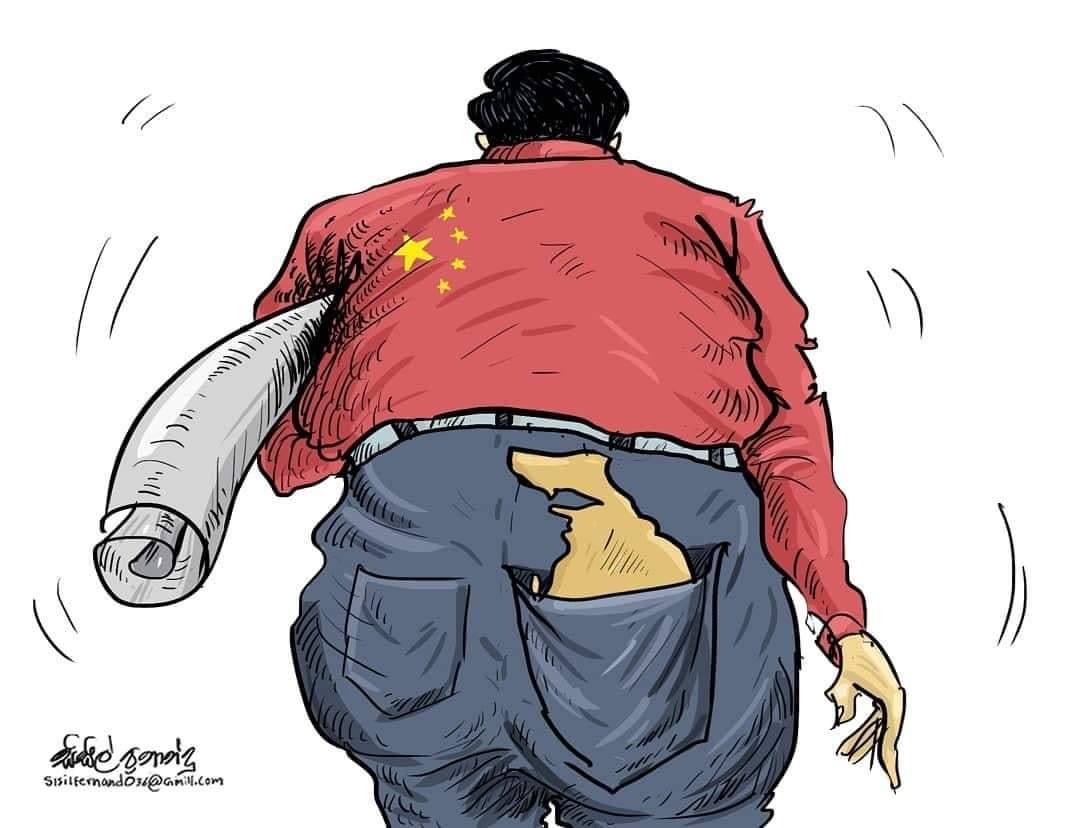
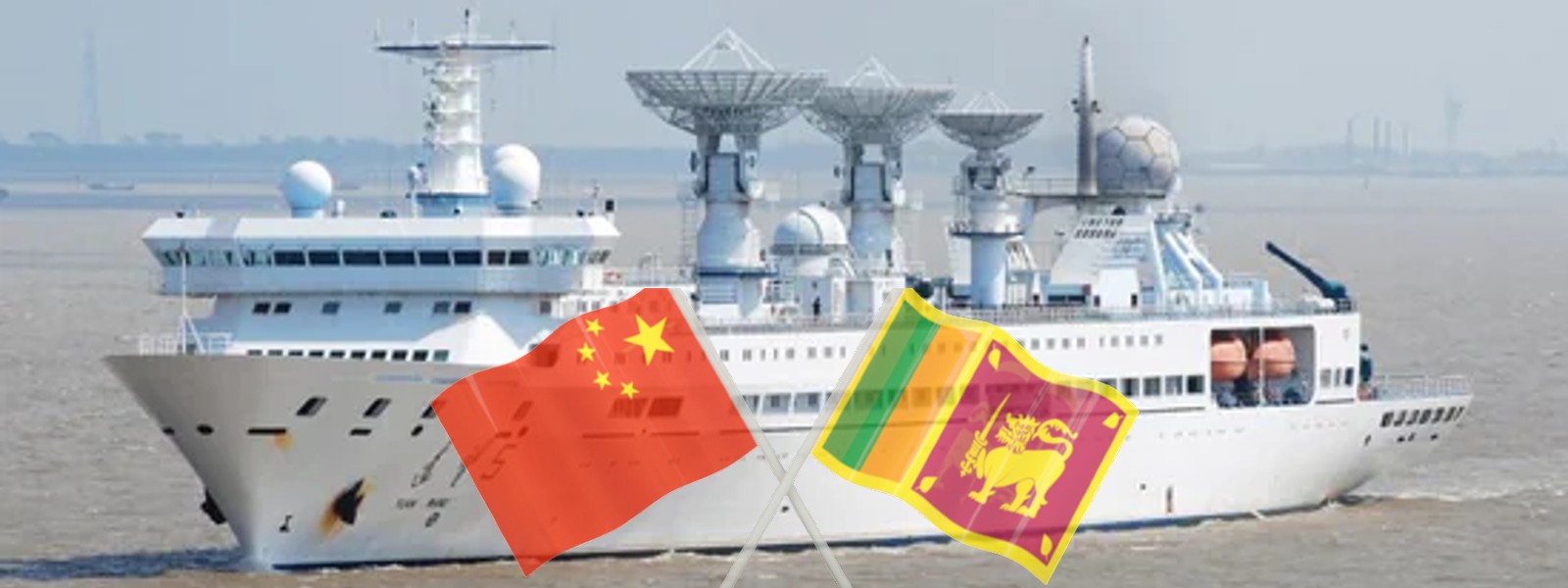
The same source pointed out that since a large volume lay with China, its response was being awaited. China’s Ambassador Qi Zhenhong, in a article posted in his Embassy’s website (and excerpts tweeted) claimed that “two pieces about China have widely caught the eye of Sri Lanka. One was the visit of US House Speaker Nancy Pelosi to “China’s Taiwan region,” and the other, the visit of Chinese scientific research vessel “Yuan Wang 5.” The strongly worded article said, “Those matters may seem irrelevant and thousands of miles apart, but both sides share the same great significance between China and Sri Lanka, “that is to jointly safeguard each other’s sovereignty, independence and territorial integrity.” It concluded by referring to the 51st UNHRC sessions in Geneva, and asking “Will they (though not mentioned, the hint is on India) help Sri Lanka to ease its human rights crisis by providing concrete support?”
In a separate development, in New Delhi the External Affairs Ministry spokesperson declared on Wednesday that “Safety and wellbeing of Indian nationals during their stay outside including in Sri Lanka is always of prime importance to encourage Indians to exercise all care and caution while in Sri Lanka.” An Indian official in New Delhi when queried, speaking on grounds of anonymity said, “Yes, there were lots of questions from prospective Indian travellers and complaints from Indians travelling to Sri Lanka and facing difficulties. When a query was posed in the media briefing, the MEA Spokesman gave a factual statement to address reasonable concerns. This is based on empirical data.” After the “Yuang Wang 5” visit, India’s High Commissioner in Sri Lanka, Gopal Baglay has already left for New Delhi for consultations.
There was an error in these columns last week. President Wickremesinghe will attend the official funeral of onetime Japanese Prime Minister, Shinzo Abe which takes place on September 27. Abe was shot dead during a campaign speech in the western city of Nara. The funeral will be a nonreligious ceremony to be held at the Nippon Budokan, a venue originally built for the 1964 Tokyo Olympics.
UNHRC delegation’s visit
Now to the visit of a delegation from the UN Human Rights Council, ahead of its 51st sessions in Geneva. Last Tuesday, Foreign Minister Ali Sabry met with the delegation leader, Rory Mungoven and other members for a detailed discussion. The government stance, articulated by Minister Sabry, was not to take a ‘confrontational position’ in the light of the current economic downturn and the resultant political upheaval. Minister Sabry also explained that for reasons of national sovereignty and constitutional restrictions, there were impediments to setting up hybrid courts to address accountability issues. Moreover, he said, there were constraints for the same reasons why the government cannot support separate international mechanisms to collect and preserve evidence against the military and the political leadership.
In what a diplomatic source described as “a most diplomatic way,” Foreign Minister Sabry, suggested that if resolution 46/1 is rolled over, then the government would have no choice but to call for a vote. Mungoven, who is head of the Asia Pacific Division of the UNHRC, took down copious notes as Minister Sabry spoke. Present with the Foreign Minister was Foreign Secretary, Aruni Wijewardene.
Mungoven, in brief remarks, noted that there had been repeated public pronouncements from the government including those at the Human Rights Council that the Prevention of Terrorism Act (PTA) will not be used by law enforcement. They have declared that new laws were to be introduced taking into consideration the concerns expressed by the international community. However, they were now learning that the PTA was now being used to carry out arrests. He also referred to explanatory references by Foreign Minister Sabry to the JVP uprising in the 1970s and 1980s. The Foreign Minister had noted that recent acts of violence had been carried out by extremist breakaway factions.
Mungoven is learnt to have pointed out that it was possible that a roll-over resolution based on 46/1 incorporating recent issues and concerns would be highlighted by the Human Rights High Commissioner’s report. That would be in the form of a new resolution at the 51st sessions of the UNHRC. A new Human Rights High Commissioner is yet to be named to replace Michele Bachelet. The Sunday Times has learned that an initial draft is now circulating among members of the core group.
Mungoven has agreed to share with the Sri Lanka Mission in Geneva the draft report of the High Commissioner at least a day or two before the weekend of September 10, it will be the core group of countries which will share the draft resolution with the government.
Quite clearly, the government cannot brush aside the issues that will come up before the 51st sessions of the UNHRC. The introduction of a new resolution by the United States and the core group is serious, particularly in the light of the recent developments and the use of the PTA despite assurances to the contrary. The European Union has already sounded a warning over the future of the GSP plus tariff concessions. It has also drawn attention to the current dialogue with the IMF, a mechanism that will pave the way for further financial help. A lot is in the hands of the government and how it plays it.