Sri Lanka Inflation hits 66.7%

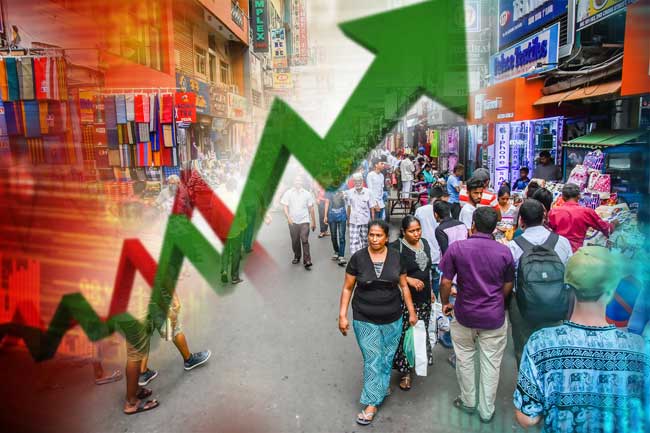
Headline inflation, as measured by the year-on-year (Y-o-Y) change in the National Consumer Price Index (NCPI, 2013=100)1 increased to 66.7% in July 2022 from 58.9% in June 2022.

This increase in Yo-Y inflation was mainly driven by the monthly increases in both Food and Non-Food categories.

Accordingly, Food inflation (Y-o-Y) increased to 82.5% in July 2022 from 75.8% in June 2022, while Non-Food inflation (Y-o-Y) increased to 52.4% in July 2022 from 43.6% in June 2022.

The monthly change of NCPI was recorded at 5.57% in July 2022 due to price increases observed in items of both Food and Non-Food categories which were 2.42% and 3.15%, respectively.

Accordingly, within the Food category, increases were observed in the prices of milk powder, rice, fresh fish, biscuits, and chicken.

However, prices of vegetables, coconut oil, and coconut decreased during the month.

Further, within the Non-Food category, increases were observed in prices of Transport (Bus fare, petrol, and diesel), Furnishing, Household Equipment and Routine Household Maintenance (Washing soap), and Housing, Water, Electricity, Gas, and Other Fuels (Materials for maintenance) sub-categories during the month.

Meanwhile, annual average inflation rose to 25.9% in July 2022 from 20.8% in June 2022.

The core inflation (Y-o-Y), which reflects the underlying inflation in the economy increased to 57.3% in July 2022 from 49.3% in June 2022, while annual average core inflation increased to 21.3% in July 2022 from 16.8% in June 2022.

Posted in Uncategorized

Indo-Lanka ferry service to be launched this year

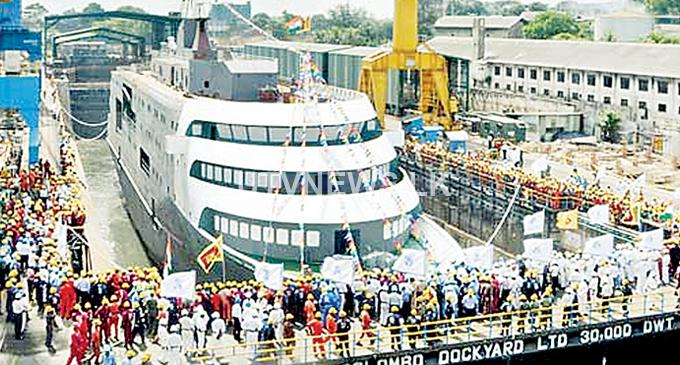
The proposed ferry service between India and Sri Lanka is expected to be launched this year, Puducherry Chief Minister N. Rangasamy said.

He told the Assembly the Indian Government hopes to launch the ferry service between the Karaikal Port and Kankesanthurai Port this year.

Presenting the Budget for 2022-23, Rangasamy also said that under the Sagarmala scheme, it was proposed to commence commercial cargo handling operation at the Puducherry Port, in association with Chennai Port Trust this year.

“It is proposed to invite Expression of Interest (EoI) from firms for operating passenger and cargo ship and promoting other allied activities in the Puducherry Port,” he said.

Posted in Uncategorized

BASL slams govt over abuse of PTA to arrest and detain protesters

The Bar Association of Sri Lanka (BASL) says it is deeply concerned at the use of the provisions of the Prevention of Terrorism Act (PTA) to arrest and detain persons who have been involved in protests against the Government.

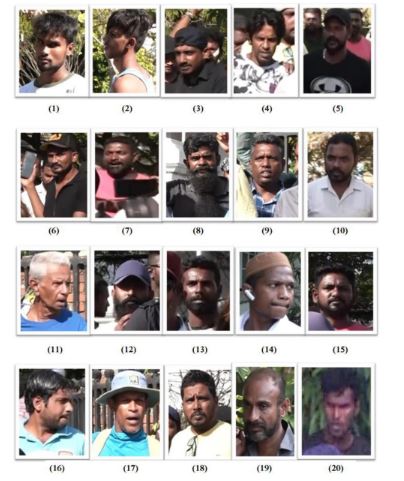
In a media release dated 19th August 2022 the Sri Lanka Police has stated that certain suspects are being presently detained in relation to incidents which occurred during the protests from 9th April 2022.

The BASL noted that since then Detention Orders for 90 days, have been issued, signed by the President in his capacity as the Minister of Defence detaining three protestors under Section 9 of the PTA.

“The PTA is a draconian piece of legislation, which gives wide powers to the Executive to arrest and detain persons for a lengthy period of time,” the Bar Association said in a statement today.

It said that although Detention Orders are amenable to the Fundamental Rights and Writ Jurisdictions of the apex courts, they are not subject to regular judicial supervision unlike instances of arrests and detention under the general law.

The BASL said administrative detention confers the Executive with wide powers over the freedom of physical liberty of a person and lengthy detention periods without judicial supervision go against internationally accepted standards of protections of human rights. “There is also the danger that such detention may result in the detainee being subject to torture and inhuman treatment.”

The association said that provisions of the PTA have time and again been abused as evidenced by many judgments of the apex courts in Fundamental Rights and Writ Applications and as observed by several Members of Parliament on the 22nd March 2022 during the second reading debate on the Bill seeking to amend the Prevention of Terrorism Act, as reflected in the Hansard of that date.

During the said debate the present President Ranil Wickremesinghe who was a Member of Parliament has inter alia stated referring to the PTA that “in time to come, it was abused.”

The BASL emphasized the provisions of the PTA must be resorted to only in very exceptional circumstances where there is manifest evidence indicative of a terrorist dimension that would make resort to its use justifiable. “The PTA was intended to address situations of terrorism and never to address offences which may have occurred during the expression of dissent against the Government such as protests for which there exist the ordinary law of the land including the Penal Code.”

In fact, in its response dated 15th December 2021 to the then Foreign Minister, Prof. G. L. Pieris, on a document prepared by the Foreign Ministry ‘setting out the main changes proposed in the provisions of the Prevention of Terrorism Act’ the BASL advocated amending section 2(1) of the PTA to prevent the misuse of the PTA to arrest and detain persons who are not connected to terrorist acts.

“The BASL notes that the PTA is now being used despite assurances by the Government of Sri Lanka (GOSL) that it was implementing a moratorium on the use of the PTA.”

During the aforesaid debate in Parliament as reflected in the Hansard on the 22nd March 2022, the then Minister of Justice M.U.M. Ali Sabry, presently the Minister of Foreign Affairs stated in Parliament as follows:

“As a result, since September 2021, there has been a de facto moratorium on the use of the PTA on offences other than those which have a direct involvement with terrorism. Therefore, these are progressive steps made in that regard.”

The BASL also noted that the use of the PTA has been seen as a matter of concern in granting to Sri Lanka an extension of the GSP+ by the European Union. The abuse of the PTA has also been raised time and again at the United Nations Human Rights Council in Geneva.

“In these circumstances and in the absence of a clear definition of terrorism in the PTA, there is a grave danger of it being abused to stifle legitimate expressions of dissent and to target persons who exercise their democratic rights including the freedoms of speech and expression, peaceful assembly, and association.”

The BASL therefore called upon the President and the law enforcement authorities to refrain from using the PTA in this manner and to immediately rescind the Detention Orders issued referred to above.

Disclaimer: All the comments will be moderated by the AD editorial. Abstain from posting comments that are obscene, defamatory or slanderous. Please avoid outside hyperlinks inside the comment and avoid typing all capitalized comments. Help us delete comments that do not follow these guidelines by flagging them(mouse over a comment and click the flag icon on the right side). Do use these forums to voice your opinions and create healthy discourse.

Sri Lanka suspends import of over 300 items

The import of over 300 items has been temporarily suspended with effect from today (August 23) under the Import and Export Control Act through a government notification by the Finance Ministry.

The regulation has been issued by has been issued by President Ranil Wickremesinghe, in his capacity as the Minister of Finance, Economic Stabilization and National Policies, in terms of the powers vested in him by Section 20 of the Imports and Exports (Control) Act, No. 1 of 1969.

Cited as the “Imports and Exports (Control) Regulations No. 13 of 2022”, it temporarily suspends the importation of items listed under 305 HS Codes, effective from August 23 and effective until further notice.

However, it states that any goods specified in these Regulations, which have been shipped on board with the date of Bill of Lading / Airway Bill on or before August 23, 2022 and which arrived at any sea ports or airports in Sri Lanka on or before September 14, 2022, shall be allowed for Customs clearance.

It also says that the regulation shall not be applied for importation of any goods, specified in the these Regulations, by any enterprises / operators, approved under the Temporary Importation for Export Purposes (TIEP) Scheme of the Sri Lanka Customs or any enterprises approved under Section 17 of the Board of Investment of Sri Lanka (BOI) Act.

It further states that importation of any goods, specified in these Regulations, by any approved enterprises for processing and re-export purposes may be allowed by the Controller General of Imports and Exports Control on recommendation of the Secretary, Ministry of Industries or Director General, Export Development Board of Sri Lanka, case by case basis.

The host of items included in the list range from chocolate and other food preparations containing cocoa, condensed milk, yogurt, coconuts, Coconut base arrack, roses to perfumes, beauty or make-up preparations, deodorants, dental floss and trunks, suit-cases, brief-cases to various clothing items.

Posted in Uncategorized

Rs. 4.9 mn damages to Galle Face due to ‘GotaGoGama’: UDA

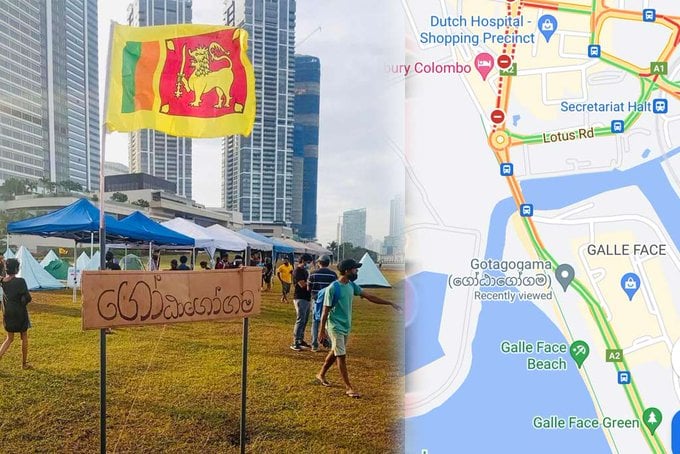
According to the Urban Development Authority (UDA), the damage caused to the Galle Face area including the Galle Face Green due to the makeshift former “GotaGoGama” village which was established in the location demanding the resignation of then-President Gotabaya Rajapaksa, and was subsequently renamed “RanilGoGama” after incumbent President Ranil Wickremesinghe prior to its removal following a court order, is around Rs. 4.9 million.

The authority announced in a press release yesterday (22) that they have now taken steps to obtain an assessment report on the damage caused. It is stated in the assessment report prepared by the UDA that Rs. 150,000 will be spent for the repair of the area, and the basic work on the land while Rs. 4.75 million will be spent for planting grass.

Urban Development and Housing Minister Prasanna Ranatunga had recently instructed the UDA to take necessary legal measures to recover compensation from the activists for the damage caused to the area belonging to the UDA.

“This area belongs to the Colombo Municipal Council (CMC) jurisdiction. Where the illegal construction by the activists was concerned, it was declared an urban development area. If any development activity or temporary construction is carried out in an urban development area, a permit must be obtained in terms of the provisions of the UDA (Amendment) Act, No. 04 of 1982. But the militants have trespassed into the area and committed many atrocities.”

According to the UDA, the right of the general public to freely use the area has also been hindered due to the fact that many unauthorised constructions have been built in that area.

Posted in Uncategorized

HRCSL recommends govt. to permit safe return of GR, his family

The Human Rights Commission of Sri Lanka (HRCSL) in a letter to President Ranil Wickremesinghe has recommended the Government to take all necessary steps to assess the threat situation and provide the former President Gotabaya Rajapaksa and his family with the security protection provided under the law to safely return to the country whenever he makes such a request.

HRCSL Chairperson Rohini Marasinghe and Commissioner Dr. Nimal Karunasiri informed the president that the family of Gotabaya Rajapakse, now living aboard, is entitled to the protection of the law to a safe return to the country.

The HRCSL recommends that the government provide adequate protection to the family of Gotabaya Rajapakse to return to the country.

Several complainants were received by the HRCSL alleging that Ex-President Gotabaya Rajapaksa had tendered his resignation under threat and coercion. And the government had failed to provide adequate security to Gotabaya Rajapaksa during this period. And now, the Ex- President and his family intend to return to the country, according to the letter to President by the HRCSL.

The complaint is based on the premise that the Ex-President and family cannot return to the country due to the prevailing threats they face and that it violates fundamental rights guaranteed under the Constitution for every citizen.

The HRCSL has gone through the complaint. lt grossly violates the fundamental rights guaranteed to every citizen if that citizen cannot return to the country for extraneous reasons beyond his control and which are within the control of the State to eliminate.

Primarily it is inherent for all citizens to return to their country whenever such a citizen seems necessary. “Every citizen is entitled to the freedom to return to sri Lanka,, (Article 14 (1) (i) It is alleged in the complaint that Gotabaya Rajapaksa and his family, who are citizens of this country, are unable to return to the country due to prevailing threats to their lives.

It unequivocally violates fundamental rights if all persons are not guaranteed equal protection under the law. “All persons are equal before the law and are entitled to the equal protection of the law,,(Article tZ (1).

The complaint further alleged that the Ex-President could not return to the Country unless the Government guaranteed the security he is entitled to under the law as Ex-president of Sri Lanka.

The Commission said that it has observed that Ex-President Gotabaya Rajapaksa is entitled to certain privileges and benefits as an Ex-President established under law.

The HRCSL said that the Law enforcement officials of Sri Lanka should assess the threat situation that would affect the violation of the fundamental Rights of Gotabaya Rajapakse and his family now living abroad to return to the country and take all reasonable and appropriate means to prevent and or remedy such infringement within the framework of the law of Sri Lanka and permit their safe return to the country.

The Trap: China’s debt restructuring and strategic manipulation in Sri Lanka

What you need to know:

At the Aspen Security Forum, CIA chief Bill Burns assesses, “Sri Lanka today is heavily indebted to China” having “made some really dumb bets about their economic future and… suffering pretty catastrophic, both economic and political, consequences as a result.”

China’s Belt and Road Initiative (BRI) isn’t quite as lucrative as often advertised. Ten projects found in six nations – Vanuatu, Indonesia, Myanmar, Tajikistan, Pakistan, and Hungary – could not generate sufficient revenue to justify the cost. Projects in Mongolia and Azerbaijan face the same problem, despite gross gains. It falls on these countries to pay the difference.

Several of the would-be BRI beneficiaries have found themselves forced to transfer resources to service their debt. Experts such as Nicholas Casey and Clifford Krauss explains the double-facet behind the BRI logic, and notes that ‘China gets to keep 80 percent of Ecuador’s most valuable export- oil- because many of the contracts are repaid in petroleum, not dollars’. In Zambia, where Chinese creditors hold a third of the national debt, China has taken over mining assets as collateral.

Sri Lanka’s Fall and the Trap

Sri Lanka was an even more dramatic case. As Elizabeth C. Economy described in her book The World According to China, “the country could not service its debt and instead granted China a 99-year lease on its Hambantota port.” It was a senseless decision. Sri Lanka’s political elites had only their political survival in mind; China saw, in this fragile and corrupt political culture, a historic opportunity. The newly elected prime minister, Dinesh Gunawardena, understands this as well as anyone. As foreign minister, he had warned that the 99-year Hambantota deal “can extend for a further period. Which means it can go on for any number of years after 99 years or for another 99 years.” Even today, as prime minister, he knows he could never revisit this agreement nor investigate any Chinese project for corruption, as his predecessor Ranil Wickremasinghe had tried to do in 2015.

At the Aspen Security Forum, CIA chief Bill Burns assesses, “Sri Lanka today is heavily indebted to China” having “made some really dumb bets about their economic future and… suffering pretty catastrophic, both economic and political, consequences as a result.”

“The Chinese have a lot of weight to throw around and they can make a very appealing case for their investments,” says Burns. He further views, “That, I think, ought to be an object lesson to a lot of other players – not just in the Middle East or South Asia, but around the world – about having your eyes wide open about those kinds of dealings.”

It’s a timely warning for many other nations in BRI with largely unsustainable borrowing and China as their major creditor. Field research in Sri Lanka in 2021 made it clear that China has effectively laid two traps in the country, the classic debt trap and a strategic trap. The now-disgraced president Gotabaya Rajapaksa, who fled public anger to the safety of Singapore, contributed to the latter trap, tilting the formerly balanced foreign policy of Sri Lanka towards China. The trap has three levels: a political party level with the Chinese Communist Party; a human rights stance dictated by China; and Chinese military assistance. All three dimensions have worsened significantly during Gotabaya Rajapaksa’s regime. Today, several other South Asian nations follow the same trajectory, with heavy borrowings and supporting China’s policies.

Ignoring the Early Warning

It should come as no surprise that Aid Data’s finding suggest that “the most corrupt governments among Chinese borrowers seem to leave office shortly after the onset of an IMF program.” Will the Chinese loans the underlying reason for the Rajapaksa regime’s end? After all, multiple IMF warnings had gone unheeded in government; the conditions of Chinese loans, and their link to kickback schemes that directly benefited Rajapaksa and the political elites in Sri Lanka.

Sri Lanka’s new president Ranil Wickremesinghe (appointed by lawmakers, not by the public) is now in an awkward spot. He cannot negotiate with the IMF without his opaque major creditor looming over him like a ghost, rattling its promissory notes like chains. After its default of $51 billion of international debt in May, Sri Lanka will need restructuring if it wants IMF funding.

Negotiations with China, however, have made no progress. China’s loans are opaque. According to Sri Lankan Central Bank figures, Chinese debt stands at 10 percent of the country’s $35.1 billion in external debt. But some economists argue that China’s share totaled 20 percent at the end of last year, between public and publicly guaranteed debt, commercial lending, and loans to Sri Lankan state-owned enterprises. Umesh Moramudali, a Sri Lankan researcher, says that “Sri Lanka’s [debt] to Chinese creditors comes to about 20 percent, not 10 percent. So, all the 20 percent will have to be restructured. That means you’ll have to look at how the China Development Bank and China’s Exim Bank will deal with restructuring.”

Behind the Figures and China

Speaking at the G20 finance officials meeting in Indonesia, US Treasury Secretary Janet Yellen said, “Sri Lanka is clearly unable to repay that debt, and it’s my hope that China will be willing to work with Sri Lanka to restructure the debt.” Zambia, Ethiopia, and Chad have applied for help on their debt too; but their efforts have stalled, “largely due to foot-dragging by China”; it was “quite frustrating” that China was not stepping up on the debt issues, explained Yellen.

This push for G20 creditors (including China) to finalize debt restructurings is likely to prove the most important goal to stabilize nations like Sri Lanka and other developing countries facing debt distress. IMF Managing Director Kristalina Georgieva explained that “strong global leadership is also needed to tackle the scourge of high debt, which has reached multiyear highs.” More than 30 percent of emerging and developing countries are in or near debt distress; for low-income countries that number rises to 60 percent. With the tightening financial conditions and exchange rate depreciation, the debt service burden is a harsh, sometimes unbearable burden, says Georgieva. Sri Lanka’s high inflation rate is unbearable, not only for the low-income earners but also for the middle class. The lack of essential food and medicine, in an import-driven economy like Sri Lanka, means that people have no recourse at all but the kindness of strangers.

India, for one, has spent close to $4 billion on swaps and aid to stabilize its neighbour. China, on the other hand, has delayed. It has not offered any specific response, according to Palitha Kohonna, the Sri Lankan ambassador to China, except to offer a new loan to settle the existing debt. Sri Lanka has requested China for a loan of $1 billion to repay an equivalent amount of Chinese debt coming due this year; a $1.5 billion credit line to pay for Chinese imports; and activation of a $1.5 billion swap. This amounts to a total of $4 billion.

Sri Lanka’s creditors will want the IMF to treat all of Sri Lanka’s creditors on par, including China. This is no mere provincial squabble. Sri Lankan economists Anushka Wijesinha and Aquilah Latiff argue, ‘what Sri Lanka could feasibly expect and indeed push for is that China joins a multilateral creditor committee and supports a harmonized effort for debt restructuring talks’. Samantha Power, the Administrator of United States Agency for International Development (USAID), posited the “biggest question of all is whether Beijing will restructure debt to the same extent as other bilateral creditors”. Sri Lanka is just one among many other developing countries where, between 2000-2017, debt to China increased tenfold, from $500 billion to over $5 trillion.

If more nations like Sri Lanka default, China would have to inculcate this extra burden and re-evaluate its BRI strategy. The consequences of such a shift could redefine the future of BRI nations.

Source:www.monitor.co.ug

Posted in Uncategorized

Yuan Wang 5 leaves Sri Lanka after 6-day replenishment

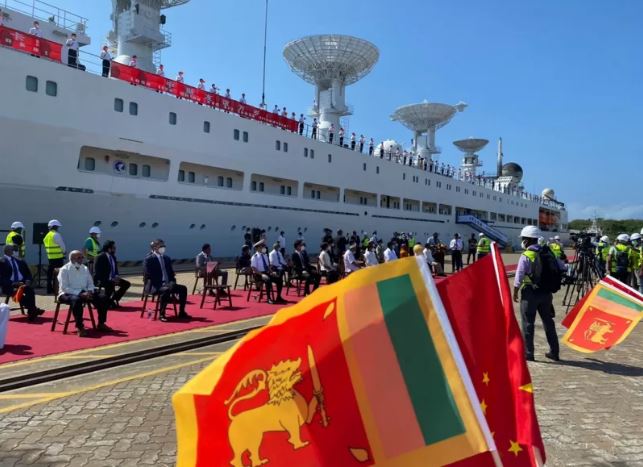
The Yuan Wang 5, China’s missile and satellite tracking ship berthed at Hambantota port in Sri Lanka, departed today (22), confirmed the Harbour Master of the Hambantota Port Exclusively to News 1st.

The Yuan Wang 5 is one of China’s latest generation survey vessel officially entered Port of Hambantota in Sri Lanka on Tuesday 16th August 2022 replenishment purposes.

Sri Lanka granted permission for the high-tech Chinese tracking vessel Yuan Wang 5 to dock at the Hambantota Port in a backdrop marred with controversy.

Diplomatic clearance for the Chinese vessel to make a port call at the Hambantota port from 11-17 August​,​ 2022 for replenishment purposes was granted by the Sri Lankan Ministry of Foreing Affairs, however due to concerns raised by various factions including India, the Ministry requested China to defer the visit of the said vessel to the Hambantota port.

However, the Ministry of Foreign Affairs did not provide any reason for the request.

When the request to defer the visit of the vessel was made, the Yuan Wang 5 had already set sail to Sri Lanka leaving its port of origin on the 14th of July, and it was already in the Indian Ocean.

The vessel thereafter slowed down and moved over the Ninety East Ridge, a mid-ocean ridge on the Indian Ocean floor named for its near-parallel strike along the 90th meridian at the center of the Eastern Hemisphere.

On 16th August 2022, Sri Lanka’s Cabinet Spokesperson & Minister Bandula Gunawardena confirmed that the Chinese ballistic missiles and satellite tracking vessel was requested to delay their visit due to concerns voiced by India.

He said that a request was made from China to defer the arrival until Sri Lanka cleared out the concerns of its neighbor India.

Yuan Wang 5 is a third-generation tracking ship of the Yuan Wang Series. It has top-of-the-line antennas and electronic equipment to track ballistic missiles and satellite.

The Chinese Reasearch Vessel fleet boats of twin vessels identified as Yuan Wang 5 and Yuan Wang 6.

Dissident SLPP faction issues warning over Geneva, IMF and GSP+

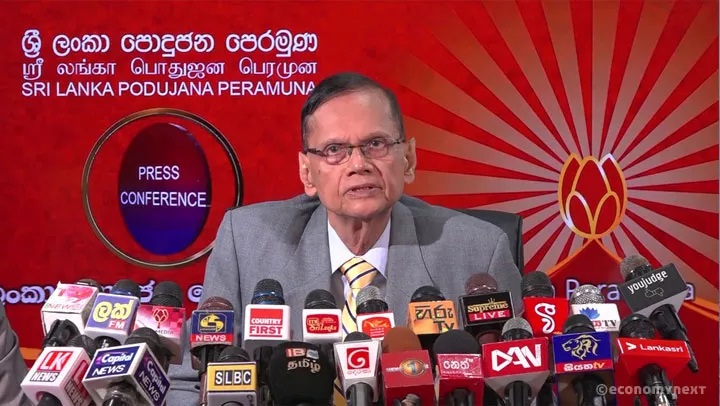
SLPP Chairman Prof. G. L. Peiris, MP, has issued a dire warning to President Ranil Wickremesinghe and the SLPP administration over the continuing crackdown on anti-government protesters.Addressing the media, in Kandy, after paying homage to senior Kandy-based Buddhist monks, on Saturday (20), the former Foreign Affairs Minister censured the government over the detention of Wasantha Mudalige, the convener of the Inter-University Students’ Federation (IUSF) in terms of the Prevention of Terrorism Act (PTA).

The former minister was flanked by former ministers, Dullas Alahapperuma and Prof. Channa Jayasumana. The rebel group’s visit to Kandy coincided with President Wickremeisnghe’s visit, meant to receive the blessings of the Maha Sangha.

In addition to Mudalige, law enforcement authorities, on August 18, detained Ven. Galwewa Siridhamma Thera and Bhashantha Jeewantha Gunathilake, under detention orders.The IUSF, affiliated to the breakaway JVP faction, the Frontline Socialist Party (FSP) played a significant role in the protest campaign that forced the then President Gotabaya Rajapaksa to resign on July 14.

The SLPP National List member alleged that the ruling SLPP’s response to the public protest campaign was contrary to their original policy. Declaring that his group represented the real SLPP, Prof. Peiris emphasized they voted against the imposition of Emergency regulations as the group was opposed to the continuing crackdown. President Wickremesinghe dropped Prof. Peiris from the Cabinet, at the behest of the SLPP. Former Justice Minister Prof. Ali Sabry, PC, who served as the Finance Minister, for a brief period, was recently sworn in as the Foreign Minister.

Referring to President Wickremesinghe recent declaration that Emergency wouldn’t be re-imposed, lawmaker Prof. Peiris questioned the arrest of the IUSF activist, on terrorism charges.The MP strongly defended the protesters right to campaign against the government. Prof. Peiris, who led Sri Lanka’s delegation at the last session of the Geneva-based United Nations Human Rights Council (UNHRC), said that the ongoing crackdown could place the country in an extremely difficult situation at the forthcoming 51st session.

The lawmaker said the government strategy, vis a vis the protest movement, could jeopardize ongoing talks with the International Monetary Fund (IMF), as well as the GSP-plus facility provided by the European Union.Recollecting the recommendations presented to Parliament, in respect of the PTA by him, on behalf of the government, about three months ago, Prof. Peiris said that there was consensus that the dreaded law shouldn’t be utilized, pending total review of the PTA.

The former minister declared that there couldn’t be any justification in detaining the IUSF activists as they exercised the constitutional right to protest.Prof. Peiris told The Island that in spite of the temporary relief received due to improvement in the supplies, the overall situation remained dicey. The failure on the part of the government to secure the support of all political parties, and factions, to form the proposed all-party-government highlighted the crisis the ruling party experienced, Prof. Peiris said.

The former minister said that President Wickremesinghe was recently informed of their position as regards cooperation that could be extended to the government. Responding to another query, the academic challenged the government should respond to severe criticism that the 22nd Amendment would pave the way for a jumbo Cabinet at the expense of the hapless public, struggling to make ends meet.

Prof. Peiris said that the genuine Opposition would cooperate on a campaign to resist the government. The MP expressed confidence that the Opposition could thwart the government plans to suppress the ongoing protest campaign. The former Foreign Minister said that the international community was closely watching the situation and those who believed all could be hoodwinked would soon leant a lesson.

EU concerned about using PTA

The European Union (EU) representatives in Sri Lanka expressed concern about reports on the use of the Prevention of Terrorism Act in the recent arrests.

The EU said in a twitter post “Concerned about reports on the use of the Prevention of Terrorism Act in recent arrests as we refer to information given by the Government of Sri Lanka to the International Community about the de-facto moratorium of the use of the Prevention of Terrorism Act (PTA).”