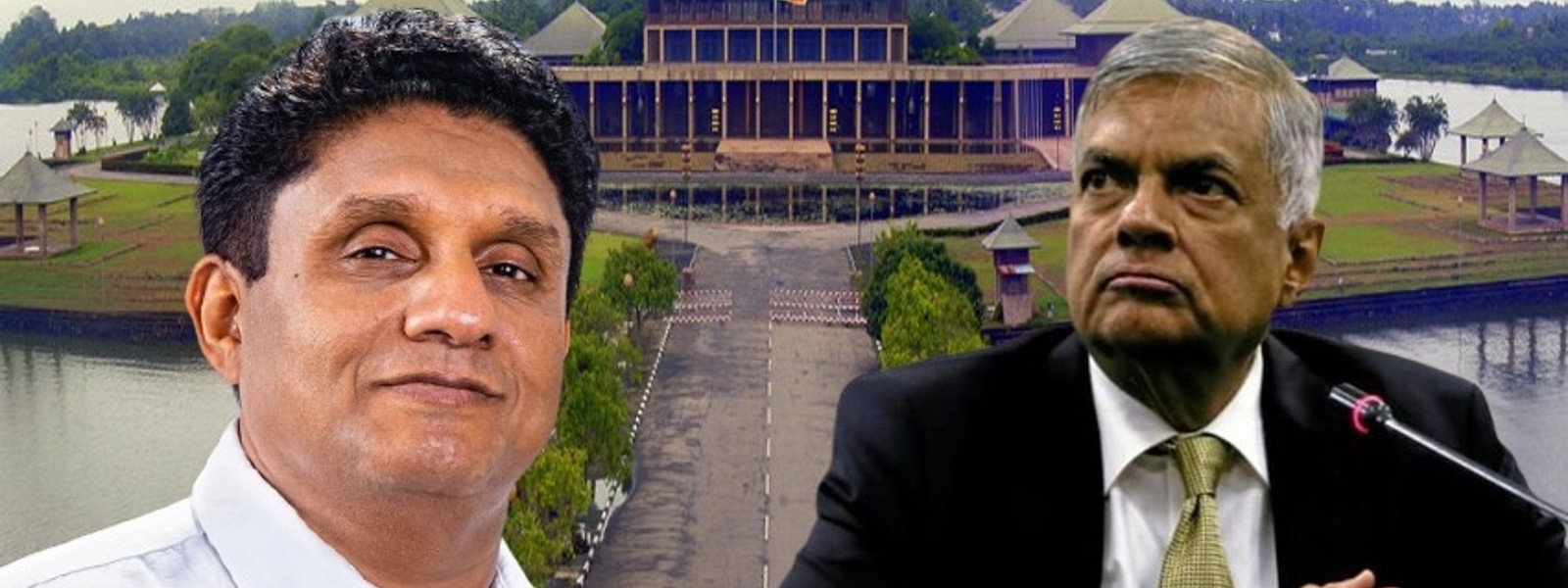
Sajith meets Ranil, says NO to positions

Opposition Leader Sajith Premadasa met with President Ranil Wickremesinghe for talks on Monday (22).

The Samagi Jana Balavegaya said the President and the Opposition Leader exchanges views on an All-Party Government.

The SJB said that the President had once again requested the Opposotion Leader to join with the Government with ministerial positions awarded to SJB MPs.

The Opposition Leader had turned down the offer, and stressed to the President that the SJB will NOT obtain ministerial positions, and will support an All-Party Government program.

The Opposition Leader had noted that rather than adding more burden to the public coffers by obtaining ministerial positions, the SJB will remain in opposition and support the positive steps taken by the government, and criticize the anti-people programs proposed by the government.

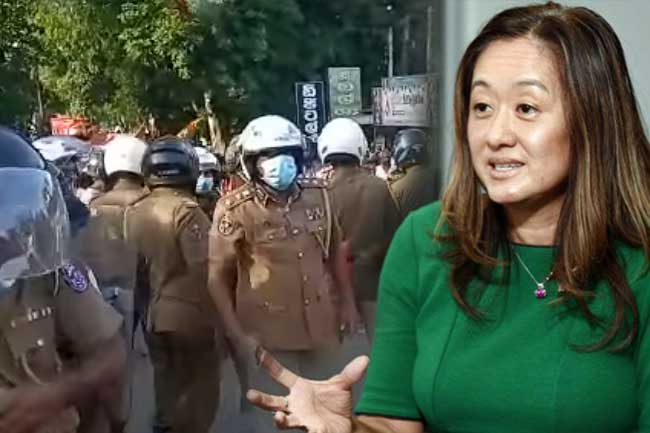
US ambassador says using laws like PTA erodes democracy in Sri Lanka

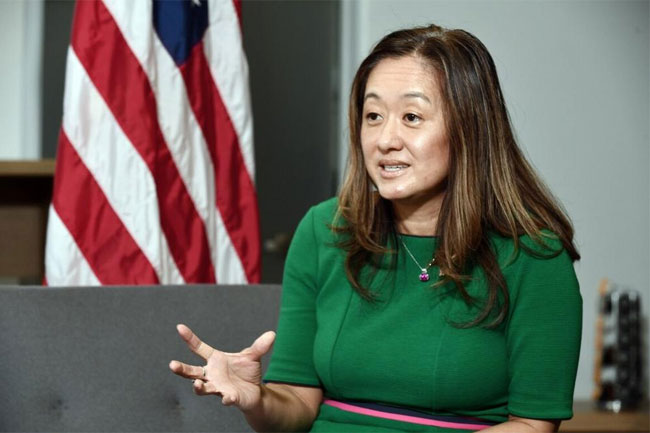
U.S. Ambassador to Sri Lanka Julie Chung says that using laws that do not conform with international human rights standards like the Prevention of Terrorism Act (PTA) erodes democracy in Sri Lanka.

She said the US encourages the government of Sri Lanka to uphold the rights of the people to express their views.

“Using laws that don’t conform with international human rights standards – like the PTA – erodes democracy in Sri Lanka. We encourage the government to uphold the rights of the people to express their views,” she tweeted.

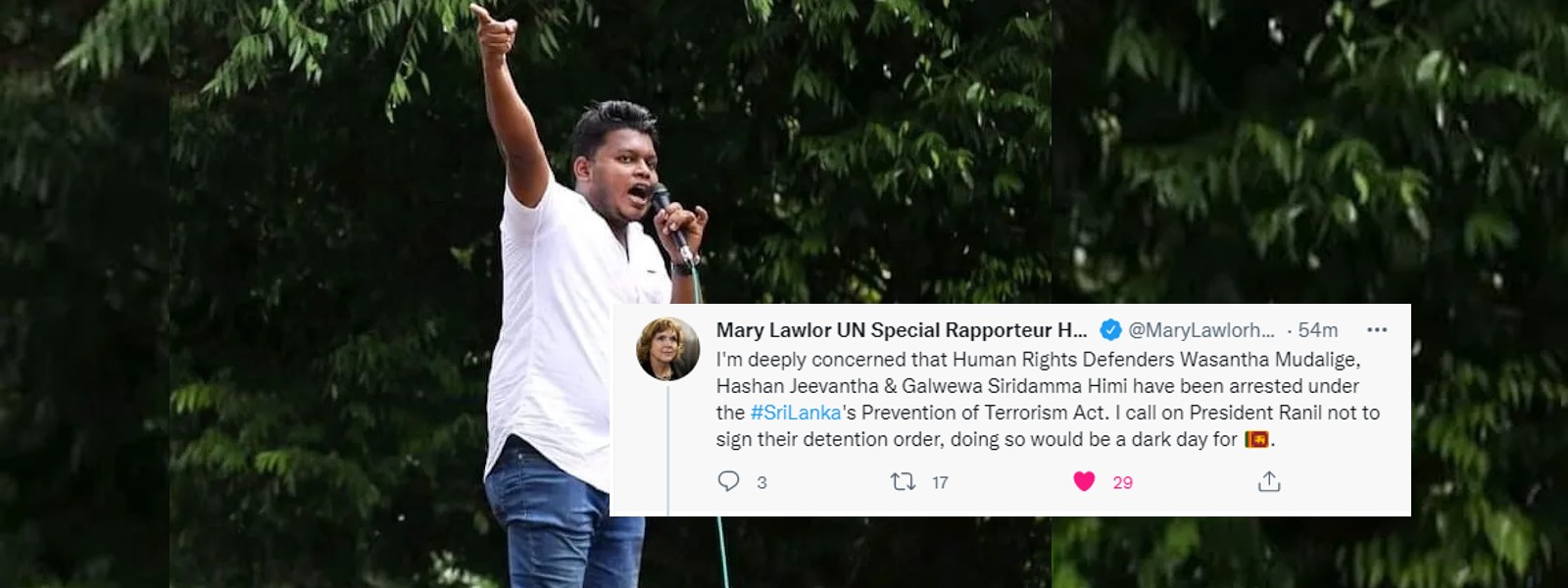
Meanwhile the UN Special Rapporteur for Human Rights Defenders, Mary Lawlor recently said signing the detention order on three activists including Inter-University Students’ Federation (IUSF) convenor Wasantha Mudalige would mark a dark day for Sri Lanka.

In a tweet, Lawlor raised deep concerns about the arrest of Wasantha Mudalige, Ven. Galwewa Siridhamma Thera and Hashantha Jeevantha Gunathilake under the Prevention of Terrorism Act (PTA). She went on to urge President Ranil Wickremesinghe not to sign the detention order on the three activists.

Human rights watchdog Amnesty International today charged that using a draconian anti-terror law to crackdown on protesters is a new low for the Sri Lankan government and that charges of terrorism do not commensurate with any offenses the protesters are alleged to have committed.

Responding to reports that Wasantha Mudalige, the convener of Inter University Students’ Federation, Galwewa Siridhamma Thero, the convener of Inter University Bhikku Federation, and Hashantha Jawantha Gunathilake, member of the Kelaniya University Students’ Union, who were arrested on 18 and 19 August, are being detained under the Prevention of Terrorism Act (PTA), Yamini Mishra, Amnesty International’s South Asia Director, said:

“Using a draconian anti-terror law to crackdown on protesters is a new low for the Sri Lankan government. This weaponizing of an already highly-criticized law, which should be repealed immediately, is a testament to how the authorities are unwilling to withstand any form of criticism and are systematically stifling dissenting voices. This is against Sri Lanka’s international human rights obligations, especially the rights to freedom of expression and peaceful assembly.”

“Charges of terrorism do not commensurate with any offenses the protesters are alleged to have committed. Such an action by the authorities is excessive, disproportionate and in violation of international law. The PTA allows for detention of suspects for up to a year without charge, which is in violation of international law. The defence minister must not sign an order to detain them further under the PTA.”

Posted in Uncategorized

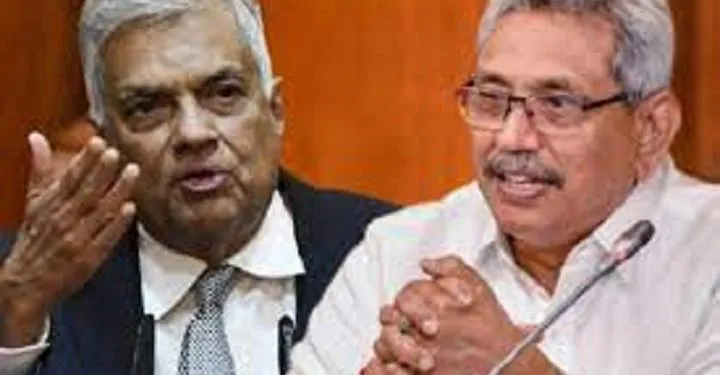
Sri Lanka President Ranil Wickremesinghe calls Rajapaksa to facilitate his return: Report

Sri Lankan President Ranil Wickremesinghe has reached out to his predecessor Gotabaya Rajapaksa to finalise arrangements and facilitate his return to the crisis-hit country, a media report said on Monday.

Rajapaksa, 73, fled the country and resigned last month in the face of a popular uprising against his government for mismanaging the island nation’s economy.

He is currently staying in a hotel in Bangkok with his wife Loma Rajapaksa.

The Daily Mirror newspaper, citing highly-placed sources, claimed Wickremesinghe is reported to have contacted Rajapaksa to discuss arrangements for his return to the country.

The move comes after the ruling party, Sri Lanka Podujana Peramuna, National Organiser Basil Rajapaksa met Wickremesinghe recently and called for the former president’s early return to the country, the report said.

The date of Rajapaksa’s return has still not been finalised, it said, amid reports that he may arrive here this week from Bangkok.

Last week, the main Opposition party Samagi Jana Balawegaya (SJB) said Rajapaksa has the right to return to the country, but he must be tried for allegations of misuse of funds since he does not enjoy legal immunity.

The Sri Lanka’s Constitution allows privileges to former presidents, including personal security and an office with staff.

SJB has accused Rajapaksa’s government of misusing the USD 1 billion loan facility extended by India as part of its financial assistance to help the cash-strapped island nation deal with its unprecedented economic crisis.

The Daily Mirror has also claimed that Rajapaksa’s lawyers in the United States had already begun the procedure last month for his application to obtain the Green Card as he was eligible to apply due to his wife being a US citizen.

In 2019, Rajapaksa renounced his US citizenship to contest the 2019 presidential polls.

Rajapaksa took an early retirement from the Sri Lanka Army and moved into the field of information technology, before immigrating to the United States in 1998.

The daily said Rajapaksa had consulted his lawyers and decided to return to Sri Lanka later this month as he was not allowed the freedom to move in Thailand as initially expected, due to security concerns.

Upon his arrival in Bangkok, Thai police advised the ousted President to remain indoors for security reasons.

The Bangkok Post newspaper reported that at the hotel, the location of which has not been disclosed, plainclothes police officers from the Special Branch Bureau had been deployed to ensure the safety of the Rajapaksas.

Rajapaksa fled to the Maldives last month and thereafter to Singapore.

He entered Singapore on a medical visa and had it extended twice to remain there as much as possible.

As his visa could not be extended further, Rajapaksa and his wife left for Thailand and was assured he could remain there for 90 days.

The Thai government had made it clear to Rajapaksa that he should not engage in political activities while staying in the country.

Source:telegraphindia.com

Posted in Uncategorized

Protesters must not be detained under the draconian anti-terror law

Responding to reports that Wasantha Mudalige, the convener of Inter University Students’ Federation, Galwewa Siridhamma Thero, the convener of Inter University Bhikku Federation, and Hashantha Jawantha Gunathilake, member of the Kelaniya University Students’ Union, who were arrested on 18 and 19 August, are being detained under the Prevention of Terrorism Act (PTA), Yamini Mishra, Amnesty International’s South Asia Director, said:

“Using a draconian anti-terror law to crackdown on protesters is a new low for the Sri Lankan government. This weaponizing of an already highly-criticized law, which should be repealed immediately, is a testament to how the authorities are unwilling to withstand any form of criticism and are systematically stifling dissenting voices. This is against Sri Lanka’s international human rights obligations, especially the rights to freedom of expression and peaceful assembly.”

“Charges of terrorism do not commensurate with any offenses the protesters are alleged to have committed. Such an action by the authorities is excessive, disproportionate and in violation of international law. The PTA allows for detention of suspects for up to a year without charge, which is in violation of international law. The defence minister must not sign an order to detain them further under the PTA.”

“The PTA has a long history of abuse in Sri Lanka, and this development shows precisely why both local and international actors have been calling for its repeal. Time and time again, the Act has been used as a tool to silence government critics, journalists and minorities.”

Background

Sri Lanka’s worsening economic crisis has led to violations of the people’s civil, political, economic and social rights. Over the last few months, the President, Prime Minister, and the cabinet of ministers have had to resign following wide-spread public protests seeking their resignations.

The government responded to largely peaceful protests with excessive and unnecessary force and emergency laws giving sweeping powers to the police and the armed forces, in an effort to curb further demonstrations.

Amnesty International and others have urged the Sri Lankan government to end its crackdown on peaceful protests. Amnesty International has also documented the use of the draconian PTA by the Government of Sri Lanka to target, and harass minorities, activists, journalists and critical voices.

Posted in Uncategorized

US envoy is confident about Lanka’s recovery but warns that the road to it is hard

The US Ambassador to Sri Lanka Julie Chung is confident that Sri Lanka will recover from its present political and economic troubles, but she cautions that it will have to ensure political stability and take hard decisions in consonance with the IMF’s stipulations to bring about the desired result.

Addressing the annual convocation of the Bandaranaike Centre for International Studies (BCIS) here on Saturday, Ambassador Chung warned that there is no magic wand to bring about change and that the Lankan government will have to take unpopular decisions.

Ambassador Chung gave the students some tips about how to look at issues facing them. In the process she subtly conveyed that that her recipe would be applicable to nations too.

She said that no problem will be difficult if it is tackled by all concerned together. “It is easy to stop and hide from the problem. But that kind of approach will lead you nowhere. Take that one small step forward.”

In an apparent reference to a tendency to isolate oneself or one’s country from the rest of the world, Chung said that it is important to realize that the world and humanity everywhere are inter-connected and what happens around us or in one part of the world, affects all. World events are not a “spectator sport” to be watched and not get involved, she said.

She told the recipients of diplomas and certificates that they should not shy away from change or fight change, but embrace it. The other key aspect of life and the human environment is communication. Bad communication could lead to misunderstandings. One should guard against disinformation and fake rhetoric. Before communicating anything the sources of the information must be checked to ascertain its veracity. Information is a moving target. One should not jump to conclusions about it but give it time to develop.

It is important to have convictions and convictions are about what one believes at the core of oneself. And one should stay true to oneself. In the modern world, convictions should be about equality, justice, democracy and non-discrimination. “Discrimination may be dangerous,” Chung warned.

The Ambassador spoke about the need to be positive. “Say yes when you can. Say yes far more than you would say no.” And then be true to your word, she added.

Planning one’s moves is essential Chung said. “Plans should be strategic in thinking but realistic in implementation,” she said. Referring to the Russian invasion of Ukraine she pointed out that the Russians had not been realistic and that is why their plans had gone awry. They got in but are unable to figure out how to get out of the sticky situation.

In an apparent reference to Sri Lanka’s ties with China, Chung said, without mentioning any party, that one should choose one’s alliances carefully. There could be mismatches whether in marital relations or any other relationships.

The Senior Director of the BCIS, Ambassador Sumith Nakandala, said that the BCIS had distinguished itself by not ceasing its academic activities during the pandemic. The virtual mode was used to continue its work.

One of the products of the pandemic was the realization of the need for global cooperation in every field of activity, Nakandala said. As far as Sri Lanka is concerned its present problems were triggered by the pandemic but they were in the making much before, due to long-standing political and economic mismanagement, he added.

The BCIS trains students for the Postgraduate Diploma, Higher Diploma, Diploma and Certificate in International Relations. It was founded in 1974 by Prime Minister Sirimavo Bandaranaike. It is the pioneering institution in the field of International Relations. It also offers Postgraduate programs in International Relations to graduates from recognized universities in Sri Lanka and abroad, besides carrying out research. In addition, an array of international languages are taught.

Posted in Uncategorized

SLPP and UNP to join forces for next election?

Reports state that several senior members of SLPP and UNP are in talks to contest the upcoming Provincial Council elections together, which should be held by March, next year.

The Elections Commission is legally empowered to organise the election after the 20th of September 2022.

Meanwhile, speaking at an event in Colombo recently, Chairman of the Elections Commission Nimal G. Punchihewa said that the duration of the provincial councils have been extended by a year and that the extension ends on 25 March 2023.

Many political parties have already begun preparations in this regard.

Source: Deshaya

Posted in Uncategorized

Do not sign detention order – UN Rapporteur calls on President

United Nations Special Rapporteur on Human Rights Defenders, Mary Lawlor Tweeted that she is ‘deeply concerned’ that Human Rights Defenders Wasantha Mudalige, Hashantha Jeevantha Gunathilaka and Galwewa Siridamma Thero have been arrested under the Prevention of Terrorism Act.

She urged President Ranil Wickremesinghe not to sign their detention orders. She added, ‘doing so would be a dark day for Sri Lanka’.

Posted in Uncategorized

CPC TUs to protest tomorrow (22)

Trade Unions of the Ceylon Petroleum Corporation linked to political parties are set to carry out a protest march tomorrow (22), the Minister of Energy, Kanchana Wijesekara says.

The Minister alleged that the trade unions are carrying out protests opposing the proposed reforms to the CPC.

The Minister recently appointed a seven-member committee to restructure the Ceylon Electricity Board as well.

The Committee has been tasked with evaluating suitable companies to import, distribute and sell petroleum products, and accordingly, multiple companies will get to engage in the Petrolieum Industry in SL with CPC and LIOC.

India closely monitoring Chinese ship in Hambantota

The Indian Government is closely monitoring the Chinese “spy ship” currently berthed in Sri Lanka, India’s Union Minister of State for External Affairs V Muraleedharan said.

He also asserted that the Indian Government will act at the proper time to protect national security.

Speaking to reporters in Tiruchy, Muraleedharan who said the Government of India has been initiating a judicial process for the retrieval of Katchatheevu at the international level. “And so, it is not apt to talk more about the issue”, he said.

While answering a query about the Chinese ‘spy ship’ currently berthed at the Hambantota Port, the Minister said that the Union Government has been closely watching the situation and there will not be any soft approach in terms of national security.

Meanwhile, Tourism Minister Harin Fernando said that he hoped the ship issue would not cause a major diplomatic row as India understands Sri Lanka’s situation.

In Ahmedabad to promote tourism in the island nation, Fernando said China has made a lot of investments in Sri Lanka and has been “understanding its requirements in the past.”

Fernando said President Ranil Wickremesinghe and the Foreign Minister were in constant touch with the Indian Government.

Govt. in discussion with MCC

The Government is looking at proceeding with the long-delayed construction of the third stage of the Central Expressway, with an initial discussion being held last week with the Metallurgical Corporation of China (MCC), The Sunday Morning learns.

It is learnt that officials from the Treasury and MCC had held an initial discussion on construction work of the third stage of the Central Expressway.

A highly-placed Government source told The Sunday Morning that the preliminary discussion with MCC was focused on how to secure the required funding, given that the Exim Bank of China was unable to disburse any loans to Sri Lanka due to the island’s decision to default on its external debt and the ongoing discussions with the Chinese bank to restructure the loans.

“The MCC was asked to look at alternative funding mechanisms and the officials have agreed to discuss the funding further at the next meeting,” the source said.

A loan of $ 52 million had been sought from China’s Exim Bank to commence the construction work of Stage 3 of the Central Expressway while the total cost for the project has been estimated at $ 1 billion.

During last week’s discussion, MCC had informed the Government that it could complete the project by September 2024 if the development work commenced this year.

The construction work of the 44-kilometre third section of the Central Expressway from Rambukkana to Galagedara was mired in controversy following a clash between MCC and Lanka Infrastructure Development Consortium (LIDC) earlier this year.

The controversy resulted in the MCC writing a letter to then President Gotabaya Rajapaksa, claiming that it was the lowest bidder and that its bid was not even opened before finalising the tender to be given to the LIDC.

MCC in its letter to the former President had noted that it had already completed the Colombo-Katunayake Expressway and Colombo’s Outer Circular Highway ahead of schedule to the full satisfaction of the Ministry of Highways, pointing to the huge disparity in the estimated cost for the project between the two bidders.

The Chinese Embassy in Colombo also intervened in the matter and urged that the Sri Lankan Government approach the matter in a transparent and an unbiased manner.

LIDC, issuing a statement in March this year in response to the allegations made by MCC, pointed out that the bids of the two other bidders – China State Construction Engineering Corporation (CSCEC) and MCC International Incorporation (MCCI) – had been disqualified on technical grounds and therefore it was unreasonable to find fault with their company.

“A press release and letter dated 10 February 2022, on a Metallurgical Corporation of China Ltd. (MCC) letterhead (and signed by MCC) circulating in the media purports to explain the various misdeeds in their bid in order to justify its qualification and validity. As LIDC has reliably come to understand, the project bid in question was made by MCCI, which is a subsidiary of MCC, its parent company.

“It has also come to light that in an attempt to qualify for this bid, the bidder had submitted financial details and specific experience of the parent company MCC, without the parent company being a legal part of MCCI’s bid, thereby disqualifying MCCI’s bid as per the bid conditions,” the statement added.

Posted in Uncategorized