IUSF protest against ‘Ranil-Rajapaksa Junta’ today

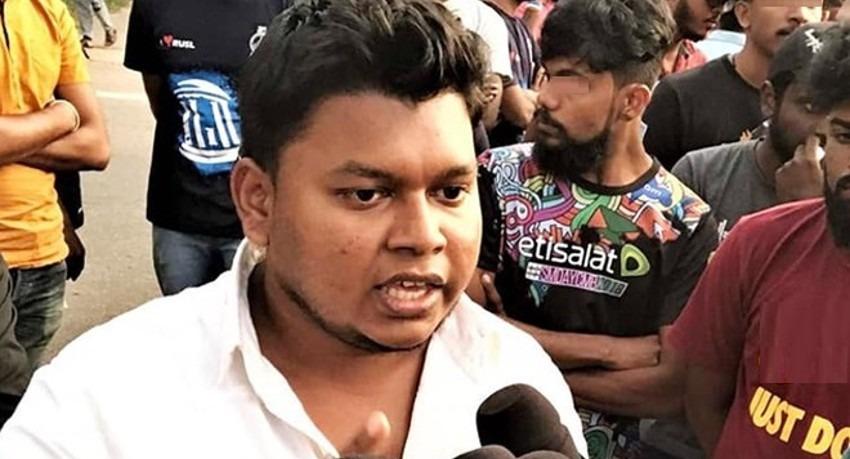
The Inter-University Students Federation (IUSF) will hold a protest against the current Government in Colombo today. IUSF Convener Wasantha Mudalige said the protest will be held against the ‘Deal Ranil-Rajapaksa Junta’ in a bid to oust it.

“The demand was for Gotabaya Rajapaksa to go. But Ranil Wickremesinghe who is currently protecting the Rajapaksa’s must also be ousted. He must be removed from the Presidency,” Mudalige said.

“Wickremesinghe should not feel pleased about the protestors packing up and leaving Galle Face. If we wish, the IUSF, the Galle Face activists along with the people of this country can occupy any building in protest even tomorrow,” he added.

Mudalige said the IUSF will take the lead in commencing discussions on forming a broad political front to face off against the Government. “If Wickremesinghe thinks he can stop the people’s struggle by arresting those involved, he is miserably mistaken. I challenge him to arrest more of us. Doing so will mark the beginning of this Government’s demise,” he said.

The protest march will commence at 1 p.m. from Lipton Circle. The IUSF is calling for the abolishment of the Executive Presidency, the introduction of a new Constitution, the release of all protestors as well as the provision of relief measures to the people.

The student activists are also demanding for the Government to commence academic activities in schools and universities that have been closed for the past three years.

Source: Daily FT

Posted in Uncategorized

SL to set up Special diaspora office

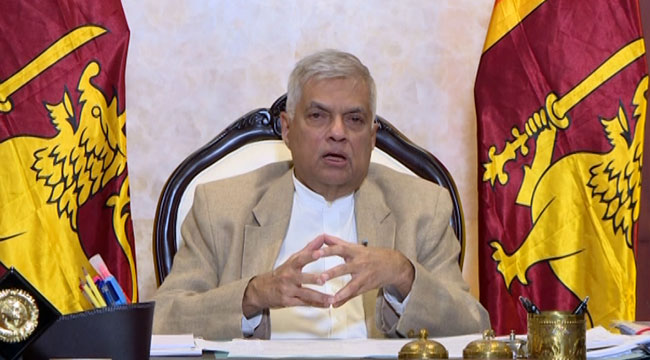
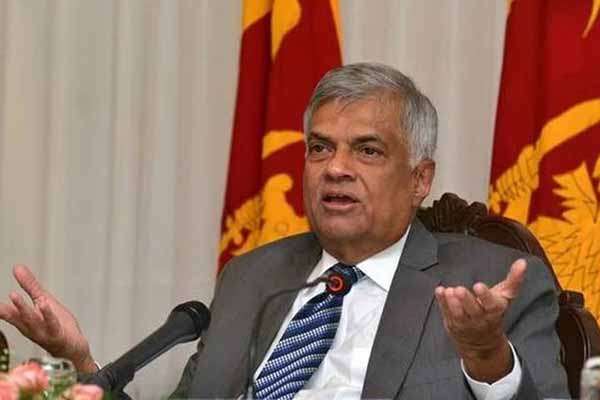
An office will be established to look into the issues and aspirations of the diaspora, President Ranil Wickremesinghe said.

“We must sort out the problems among the ethnic groups and special focus should be given to the diaspora as it is a strength and source of investment,” Wickremesinghe said addressing the 2022 awards ceremony of the Organisation of Professional Associations (OPA) of Sri Lanka.

Further he spoke of the need to establish an export oriented economy to overcome the economic crisis, noting that the country should no longer be heavily reliant on imports.

He added that the country should now prepare for a fourth industrial revolution while the economy must be completely restructured. The President noted that when the public sector collapses, the country should have sufficient funds to meet basic needs like education, health and housing.

“We need an attitude change, failing which the country will become another Lebanon. This is the stark choice before you. Whether we like it or not, we have no choices in the solutions,” he said.

Emphasising on electoral procedures, he noted that the preferential voting system has caused immense damage and that electoral reforms should be introduced through this Parliament.

He further said, the State of Emergency that is due to lapse by the end of the week will not be extended as there is a hint of a return of stability.

Posted in Uncategorized

CEB GM forwards draft agreement giving exclusive rights to Chinese company

The Ceylon Electricity Board (CEB) General Manager has forwarded a draft agreement to the Ministry of Finance recommending that exclusive rights be granted to a Chinese company for supplying natural gas (regasified LNG) to power plants at Kerawalapitiya and Kelanitissa.

The CEB invited international bids in February 2021 for the development of a floating storage and regasification unit (FSRU) at Kerawalapitiya on build, own and operate (BOO) basis on a 10-year contract.

Under this tender, the FSRU stationed offshore at Kerawalapitiya will regasify the natural gas delivered by ship in liquid form (LNG) and then deliver it to power plants at Kerawalapitiya and Kelanitissa through gas delivery pipelines to be constructed under a separate tender floated by the Ceylon Petroleum Corporation.

The CEB has engaged an Indian consulting firm using funds provided by the Asian Development Bank (ADB) to prepare the request for proposal (RFP) documents of this tender, which includes the FSRU agreement and the implementation agreement (IA).

The FSRU agreement is to be signed between the CEB and the project company that would be set up by the selected bidder. The IA is an agreement signed between the project company and the Sri Lankan government, which sets out terms on which the government will provide incentives (such as tax concessions) and assistance (for obtaining statutory approvals such as environmental permits) to the prospective project company.

Under the IA, the GOSL will guarantee the payment due to the project company from the CEB under the FSRU agreement. The IA published with the RFP in February 2021 has not offered exclusivity to bidders, as it is unnecessary to offer such a guarantee since the FSRU agreement will ensure that the project company will operate the FSRU for 10 years.

The bids were closed on 25 June 2021, and the CEB has received only two bids despite some 18 companies purchasing the bidding documents.

The CEB Engineers’ Union (CEBEU) at the time claimed that potential investors had been discouraged by the government’s decision to entertain an unsolicited proposal by the US Company New Fortress Energy (NFE) to supply LNG to two private power plants in Kerawalapitiya including the FSRU and delivery pipeline.

However, according to a senior CEB engineer, this allegation was baseless because another international tender for a combined cycle power plant at Kerawalapitiya published around the same time attracted only a single bid. Industry experts blame international developers’ lack of interest in the dire financial situation in the country that existed at the time.

Out of the two bids received, the offer submitted by a leading US firm that owns and operates a large fleet of FSRUs was rejected by the technical evaluation committee (TEC) because the bidder had sought to conduct on its own expense a complete hydrological study of the offshore location assigned for the FSRU.

Some experts, contacted by The Island agreed that such studies were required for designing the offshore mooring system of the FSRU, which is one of the most critical items in the FSRU operation.

They were of the opinion that it was not usual for FSRU developers to rely on preliminary studies conducted by a third party because mooring system design is a highly specialised job that was not entrusted to unknown parties. However, the CEB has refused the bidder’s request, citing the urgency of implementing this project as the proposed study would take approximately two months. Accordingly, the bid has been rejected without further consideration.

However, despite CEB’s claim of urgency, the TEC is yet to complete the evaluation of the single bid and award the tender, 14 months after the bids were closed. The then CEBEU President Saumya Kumarawadu told The Island in September 2021 that the CEB’s tender was based on a comprehensive feasibility study carried out by experts and the tender was in its final stage of evaluation.

He expressed confidence that the CEB would soon select a suitable investor through a transparent and competitive bidding process, to procure the LNG infrastructure to supply LNG for all existing and future power plants in the country at the most competitive prices.

The TEC has accepted the only remaining offer received from a Chinese company, which is already engaged in road construction contracts in Sri Lanka, submitted in partnership with the Pakistani supplier of the FSRU. It is understood that this “qualifying offer” had quoted a price that is nearly twice that of the offer rejected by the TEC.

Based on the prices offered in the two bids received and the total LNG throughput guaranteed by the CEB in the RFP for the FSRU operation (443 million MMBtu for the 10-year period), the Chinese offer would cost around USD 560 million more than the offer of the US company over the 10-year contract term.

Because of the substantially high price quoted by the selected bidder, it has been decided to negotiate with the bidder with a view to reducing the price. Although the government tender guidelines allow negotiating the price with the selected bidder, they do not permit amendments to original commercial conditions or technical specifications during price negotiations in BOO/BOT projects. However, it is understood that the TEC has agreed to several material changes to the bid conditions including the bidder’s demand to change the designated location of the FSRU, a request adamantly rejected by the CEB during tendering.

The CEB has turned down repeated requests from potential bidders during the pre-bid meetings to change the location of the FSRU specified in the RFP. These parties have claimed that the location specified in the RFP did not have sufficient depth of water needed to float the FSRU.

Industry experts contacted by The Island believed that the CEB’s refusal to change the location may have resulted in the CEB ending up with only two bids. In any event, changing the assigned location of the FSRU is a material deviation from the original tender conditions, especially since the CEB has been clear from the beginning that this change could not be allowed.

The amended IA forwarded by the CEB General Manger is believed to contain several other unfavourable conditions not included in the original IA published with the RFP.

One such amendment is the GOSL’s undertaking to grant exclusive rights to the Chinese company for FSRU operation and delivery of gas to power plants for 10 years. Such a condition will effectively give this company full control of gas supply to nearly 2000 MW of generation capacity in the country, regardless of who supplies LNG.

Ironically, the strong opposition by the CEBEU to the proposal by the US company NFE was based on the allegation that NFE would be given a five-year monopoly for LNG supply in the country under that proposal.

It is also understood that the amended IA has added a new section that will effectively prevent the proposed restructuring of the CEB. Some question whether this is a clever ploy by the CEB engineers, who are opposed to the government’s restructuring of the CEB, to force the GOSL to abandon its reform process.

It is also understood that the amended IA has shifted the burden of obtaining numerous governmental and statutory approvals to the GOSL and CEB. Obtaining such approval is the Project Company’s obligation and the government generally agrees in the IA to provide reasonable assistance.

A senior CEB official contacted by The Island agreed that changing mandatory tender conditions after the award was made would be unlawful and likely to be challenged in court. He stated further that it would be most unlikely that the Ministry of Finance would agree to the changes proposed in the amended IA forwarded by the CEB, as some of these conditions may impinge on the rights of the government.

Source: The Island Online

Govt. throws out Gnanasara Thera’s ‘One Law’ Report

The Government has decided not to go ahead with the recommendations mentioned in the final report of the ‘One Country, One Law” Presidential Task Force (PTF) headed by Bodu Bala Sena General Secretary Ven. Galagodaaththe Gnanasara Thera, as many important issues that need to be addressed urgently have arisen in the current situation, and taking into account the objections of several parties, The Morning learnt.

Speaking to The Morning, well-placed sources stated that in the current situation, a number of other important issues have arisen that require more attention than the concept of “One Country, One Law”, adding that the recommendations mentioned in the final report of the PTF would therefore not be implemented.

“In view of the crisis that has arisen in the country, the formation of an all-party Government is extremely important in obtaining the support of international institutions such as the International Monetary Fund (IMF). Against this backdrop, many parties that the Government and President Ranil Wickremesinghe expect to join the all-party Government have expressed their displeasure with the committees appointed by former President Gotabaya Rajapaksa, including the PTF in question,” the sources added.

Meanwhile, when queried by The Morning earlier as to whether the Government has reached a decision regarding the implementation of the final report of the PTF in question, Minister of Justice, Prisons Affairs, and Constitutional Reforms Dr. Wijeyadasa Rajapakshe PC said that the report has not yet reached his Ministry.

The Morning also contacted the President’s Media Division (PMD) to inquire into the matter when an official of the PMD said on Monday (15) that they had not been informed by the President, or the Presidential Secretariat, as to what to divulge to the media with regard to the final report of the PTF.

Furthermore, several political parties including the Sri Lanka Freedom Party (SLFP), the Thamil Makkal Thesiya Kuttani (TMTK), and the Sri Lanka Muslim Congress (SLMC) have expressed negative views regarding the said PTF on “One Country, One Law” chaired by Gnanasara Thera, and its final report, with the SLMC calling for the said report to be scrapped.

Speaking to The Morning, SLFP Senior Vice President Prof. Rohana Luxman Piyadasa said that while there is a need to implement the concept of “One Country, One Law” in the country, the first step taken by former President Rajapaksa to implement it, which was the appointment of Gnanasara Thera as the PTF Chairman, was critical.

“We all accept that there cannot be different legal systems for each race or ethnicity in a country. The country should be subject to one common law. Therefore, we do not rule out the concept of ‘One Country, One Law’. However, our opinion is that it is not possible to implement that concept based on the report of the PTF chaired by Gnanasara Thera. Given that he is a person who is disliked by many, and is accused of holding extremist views, many parties will not approve of the implementation of a report prepared under his chairmanship,” he said.

Therefore, Prof. Piyadasa said that the report prepared by the PTF in question should be reviewed again. After that, he said that it is best to appoint a committee or another appropriate structure made up of experts in the field of law to implement the concept of “One Country, One Law”, based on the progressive facts, if any, included in the report of the PTF.

Meanwhile, speaking to The Morning, TMTK MP C.V. Wigneswaran said that the appointment of the PTF on “One Country, One Law” itself was a wrong idea of the previous Government headed by former President Rajapaksa. Noting that the country has five legal systems – the English Law, the Roman Dutch Law, the Thesawalamai Law, the Muslim Law, and the Kandyan Law – he said that it is not appropriate to remove them just because of the Sinhala Buddhist majority ideology.

“There are five legal systems in Sri Lanka. How can one say that all these should be removed just because the Sinhala Buddhist majority would like to have it for themselves? This is not a Sinhala Buddhist country; it has two nations. The Tamil people have been in the North and East for more than 3,000 years. So, it is improper to talk in terms of ‘One Country, One Law’.”

When queried as to whether the TMTK would make a request to the Government to scrap the said PTF’s report, he said: “We have other important issues such as the release of Tamil political prisoners. We are more interested in getting them fulfilled. This has no meaning to us, as the North and East are anyway not part of this ‘one country’.”

Moreover, the SLMC has set several conditions for its support for the proposed national all-party Government. Among the SLMC’s demands are the immediate lifting of the emergency regulations, the discontinuation of the ongoing wave of arrests, and the scrapping of the reports commissioned by ex-President Rajapaksa, including that of the PTF Chaired by Gnanasara Thera.

“In keeping with your (reference to President Ranil Wickremesinghe) statement of Government Policy made to Parliament during the ceremonial sitting in order to achieve the objective of a liberal, tolerant, and secular nation, it is important that you make a clear commitment to jettison the reports commissioned by the former President under the theme ‘One Country, One Law’ headed by a radical cleric, known for his bigotry and prejudice. The minority communities have been disproportionately targeted by suggestions made for reform in their practices, belief systems, and personal laws, resulting in much consternation among the Muslims in particular,” the letter from the SLMC to President Wickremesinghe read.

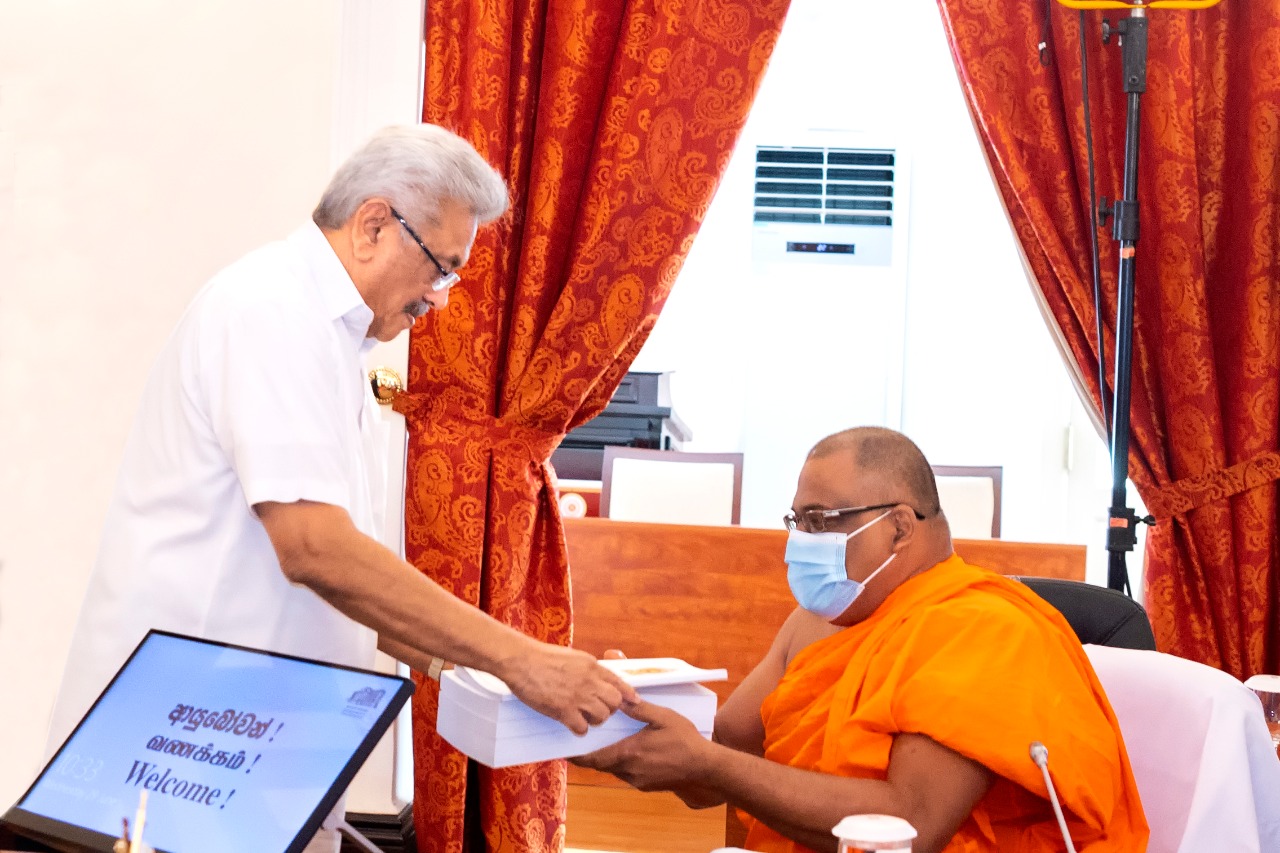
The final report of the PTF on “One Country, One Law” was handed over to then-President Rajapaksa by Ven. Gnanasara Thera on 29 June 2022. The PMD stated at the time that the report is composed of eight chapters with 43 recommendations and two appendices, covering more than 1,200 witnesses from all parts of the island, including professionals, non-Governmental organisations, religious groups, various communities, university students, and legal professionals.

Posted in Uncategorized

UN Sri Lanka and Government sign Sustainable Development Cooperation Framework for Sri Lanka

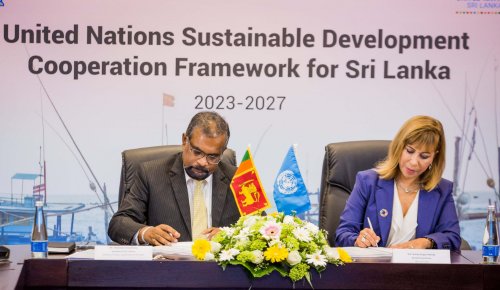
The United Nations Sustainable Development Cooperation Framework (UNSDCF) 2023-2027 was launched today by the Government of Sri Lanka and the United Nations in Sri Lanka.

The Cooperation Framework will guide the work of UN Agencies, Funds and Programs for the next five years (2023 – 2027).

The UNSDCF is the Framework that guides the work of all the UN Agencies in Sri Lanka and articulates the collective vision and contribution of the United Nations to support Sri Lanka to accelerate actions towards the achievement of the 2030 Agenda for Sustainable Development.

The Cooperation Framework gives primacy to accelerating actions to ensure a rapid recovery from the economic crisis along with the impact of COVID-19, prioritizing support to revitalize the economy and economic activities, social services, decent employment, social cohesion, and health and well-being for all people in Sri Lanka.

The UNSDCF was co-signed by the Secretary to the Treasury Mahinda Siriwardana on behalf of the Government of Sri Lanka and UN Resident Coordinator in Sri Lanka Hanaa Singer-Hamdy on behalf of the United Nations. Heads of UN Agencies, Funds and Programs in Sri Lanka also signed the Cooperation Framework. The signing ceremony hosted at the Ministry of Finance was also attended by Secretary to the Ministry of Foreign Affairs Ms. Aruni Wijewardane and the Regional Director for Asia and the Pacific of the UN Development Coordination Office, David McLachlan-Karr.

Speaking at the event, Secretary to the Treasury Mahinda Siriwardana noted that “the current global challenges demonstrate the continued importance for multilateral solutions that bring together the international community around shared priorities. This Cooperation Framework with the United Nations in Sri Lanka will be key as we pursue sustainable and inclusive development for the people of Sri Lanka.”
Elaborating further the UN Resident Coordinator in Sri Lanka Hanaa Singer-Hamdy said, this Cooperation Framework is mutually owned and anchored in national development priorities, the 2030 Agenda and the principles of the UN Charter.

The UNSDCF is structured around four interrelated and mutually reinforcing Strategic Priorities where the UN system will concentrate its expertise to support Sri Lanka to make transformational and accelerated progress. These Strategic Priorities cover Inclusive and Equitable Human Development and Well-being; Resilient and Green Recovery and Growth for Shared Prosperity and Environmental Sustainability; Social Cohesion and Inclusive Governance & Justice; and Gender Equality.

“Of course, our work will be underpinned by a crosscutting commitment to support rapid recovery from the economic crisis and the impact of COVID-19,” she said.

She further noted that programs by the UN System will be anchored in the principles of human rights and non-discrimination and ensuring that “no one is left behind”.

“The 2023 – 2027 Development Cooperation Framework reflects Sri Lanka’s national development priorities while working in partnership with the UN Country Team towards the realization of the 2030 Agenda for Sustainable Development. It is being concluded at a very significant moment in Sri Lanka when transformational changes are being operationalized in the economic and social fronts. The Framework is also an important shift for the UN system in enhanced national level coordination in the delivery of its development activities,” Secretary to the Ministry of Foreign Affairs Mrs. Aruni Wijewardane said.

The UNSDCF will be funded through core budget allocations of an estimated USD 60 Million, in addition to approx. USD 325 Million through other resources – spread across the five-year period of implementation.

Posted in Uncategorized

No extension of Emergency after August 18: President

The emergency regulations which is currently in force in the country, will not be revoked and will be extended after August 18, President Ranil Wickremesinghe announced today.

Speaking during the 35th annual conference of Organisation of Professional Associations (OPA), President Wickremesinghe said emergency will be allowed to lapse. “I will not extend emergency and will let it lapse on August 18,” the President said.

Mr. Wickremesinghe who promised a system change, said both the economy and the political system will be restricted. We intend to turn Parliament into a government and will have oversight committee. There will be a committee on state enterprise reforms, ways and means committee. Youth members from outside Parliament will be appointed to each Committee. We will also have a national council comprising of all parties,” he said.

Coming up with another move by the government, the President also announced that a diaspora office will be opened to get the diaspora community to involve in the development of the nation.

“We will have to change the current electoral system as well,” he said.

“This change will have to come from the present Parliament.”

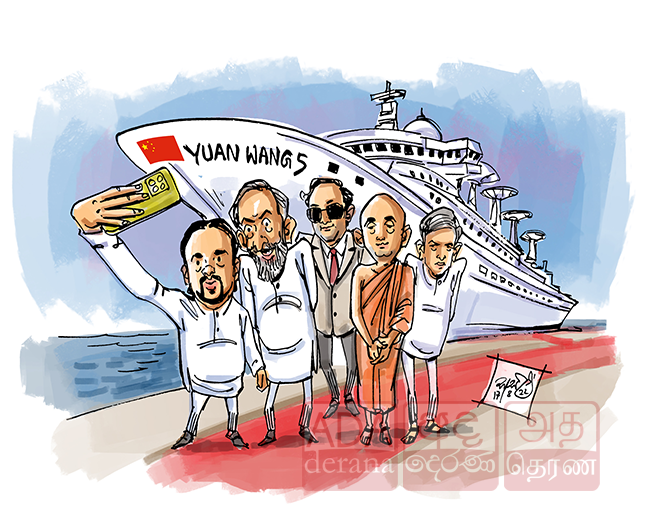
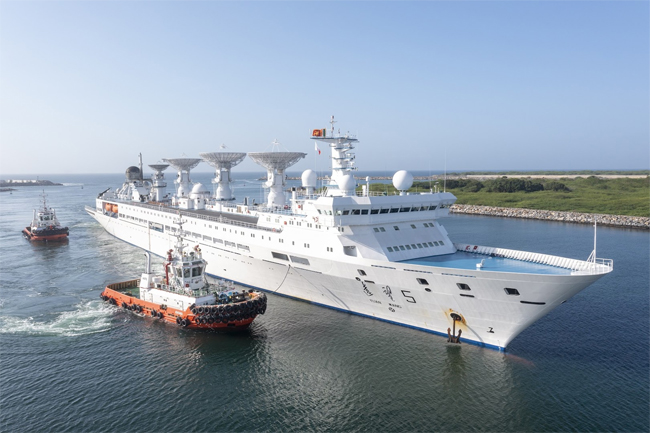
The land may divide us, but the sky and the ocean unites us all: Wimal at the welcome ceremony for Yuan Wang 5

Although this land belongs to Sri Lanka, the sky and the ocean unites us all, said the Leader of the National Freedom Front, Wimal Weerawansa at the welcome ceremony was organized at the Hambantota Port on Tuesday (16) morning, under the auspices of the Chinse Ambassador to Sri Lanka.

MP Weerawansa, speaking further, said that there is an area of ocean and the skies which belongs to Sri Lanka, and as a state, bears responsibility for that area.

“The Indian Ocean Region must remain as Region of Peace. There can be NO conflict. It cannot be home to enemy camps. Even if we are strong or weak economically, we need to maintain the stance,” he said.

The MP further stated that although some call the vessel a Spy-Ship, it should be called a communication vessel.

“China has never told us what the structure of our Government should be. China has never established NGOs in Sri Lanka, and funded them to destabilize the Government. Therefore, China is one of the few countries that extended assistance to Sri Lanka during these tough times. We hope China would help us more,” he said.

Speaking at the event, the Democratic Left Front Leader, Vasudeva Nanayakkara said that the presense of Yuan Wang 5 vessel itself is a symbol of the independence and sovereign power of Sri Lanka.

An unnecessary controversy was raised about the arrival of the vessel, the MP said, adding that it was a machination of the western powers headed by the U.S.

“However the rightious decision prevailed, as Sri Lanka is glad we are to be able to have Yuan Wang 5 here in this port which contributes to the significance of this port and to the future importance of this port. We hope the long lasting friendship cannot be torpedoed by any kind of machinations of imperialism. We trust we will be able to keep our bonds firm and unbreakable and ensure the peace in the Indian Ocean and the freedom in the Indian Ocean” MP Nanayakkara mentioned.

Rear Admiral (Retd) Dr. Sarath Weerasekara, also speaking at the welcome ceremony said that the resolution of the issue with regard to the vessel further strengthens the relations between China and Sri Lanka, and visits such as these also strengthens the friendship between the countries.

Posted in Uncategorized

Sri Lanka Seeks to Strengthen Relationship With PACAF and Quad

The tiny Indian Ocean island of Sri Lanka has an outsize geostrategic importance, and its military seeks deeper ties with Pacific Air Forces for maritime security and disaster relief while not roiling China, a senior Sri Lankan Air Force official told Air Force Magazine.

Just 34 miles off the coast of India at its closest point, Sri Lanka aims to further professionalize its Armed Forces and capabilities at a moment when PACAF is seeking to strengthen regional partnerships.

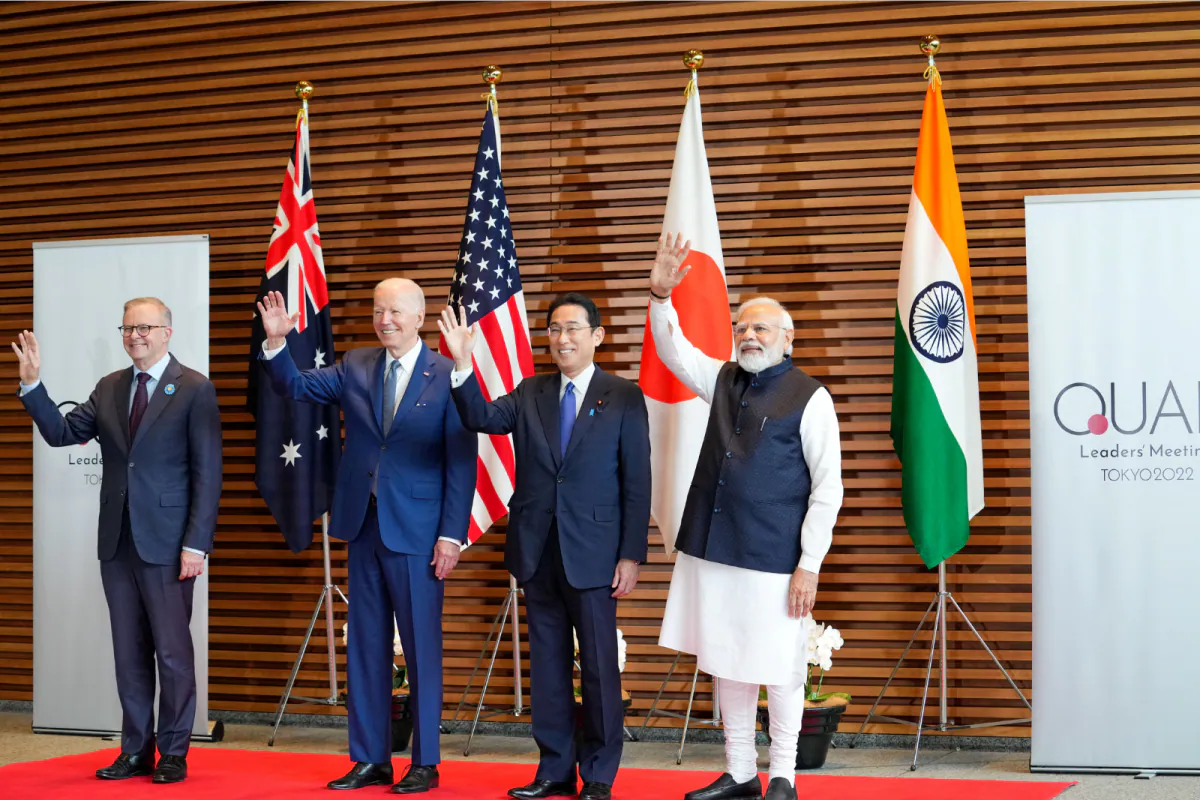
The Sri Lanka Air Force, 30,000 strong, has sought to work more closely with PACAF and is willing to participate in some exercises of the Quadrilateral Security Dialogue, commonly known as “the Quad” grouping, which includes Australia, the United States, Japan, and India.

“We are very concerned about the status quo of the region,” Sri Lankan defense attache Air Vice Marshal Sampath Wickremeratne told Air Force Magazine in a recent meeting at the Embassy of Sri Lanka in Washington, D.C.

“We are very careful, and we do not agitate [any] of the power players in our region,” he said, stressing Sri Lanka’s unaligned status. However, Sri Lanka is worried about shifting security trends in the Indo-Pacific. “There was a status quo, then China coming up with their programs. They are building influence in the region.”

Wickremeratne acknowledged that the United States’ presence in the Indian Ocean traces to the 19th century, and he described China as a “close distant friend,” reflecting its close ties to Sri Lanka while geographically separate.

Sri Lanka’s territorial defense force consists of fewer than 10 fighter jets divided into two small squadrons of Israeli Kfir and Chinese Chengdu F-7G fighters, a licensed version of the Soviet MiG-21 that had been used to contain terrorist groups in the north and east of the island during the insurgency.

The Sri Lanka Air Force’s transport fleet includes two grounded C-130s that lack spare parts due to past U.S. sanctions, the attache said. It relies instead on the Soviet-era Antonov AN-32 and the Chinese-made Xian MA-60. Its helicopter fleet is a mix of Eastern and Western origin, including the Soviet-era Mi-17, Mi-24, and Mi-35 and the American Bell 212, Bell 412, and Bell 206.

For intelligence, surveillance, and reconnaissance, Sri Lanka uses American-supplied Beechcraft turboprop planes.

During the years of internal fighting, many Western countries distanced themselves from defense ties with Sri Lanka, but the country now aspires to reengage globally and strengthen its ability to patrol its territorial waters, which are often used for drug and human trafficking, and illegal fishing.

“We use the satellites and the cloud, and we monitor the dark ships,” Wickremeratne said of illegal vessels.

“For drugs, people recently have used Sri Lanka as a hub for transiting from east to west, from the Afghanistan side to [the Association of Southeast Asian Nations] side,” he said. “The Air Force plays a very big role in that because of the speed, reach, and the height. We are able to react sooner than the other forces.”

Now, Sri Lanka aims to develop its transport and ISR capabilities to better respond to humanitarian and disaster relief and to enhance maritime surveillance, an area where PACAF has shown interest in strengthening collaboration.

One way the attache said Sri Lanka can more closely support PACAF’s goals is by allowing the placement of ISR assets such as the U.S. Department of Transportation application SeaVision or Hawkeye 360, a commercial company that gathers radio frequency data from satellite constellations.

Sri Lanka already partners with India, Australia, and Japan regionally.

“We are getting a lot of support on maritime security,” Wickremeratne said of ties with the United States.

Sri Lanka’s position on participating in Quad activities, and to a lesser extent, those of the newly formed AUKUS group of Australia, the United Kingdom, and United States, is delicate. Sri Lanka agrees with the group’s objectives to maintain the international order, including maritime boundaries, in contrast to China’s numerous, ongoing maritime disputes and aggressive action in the air and the sea.

“Whatever the security structures that are going to be placed in the Indian Ocean region, we would like to play a part of it, but not in a very military angle,” he said, proposing subject matter exchanges, technology, and intelligence sharing. “Anything that we can take and make our territorial security more powerful.”

Inquiries to the PACAF Sri Lanka desk officer were referred to U.S. Indo-Pacific Command, which did not respond to requests for comment by Air Force Magazine.

Command Chief Master Sgt. for Pacific Air Forces David R. Wolfe said PACAF is working on ways to meet Sri Lanka’s defense needs and to respect its neutral status.

“All we’re trying to do is help every country take whatever the next step is for them,” Wolfe told Air Force Magazine at the recent Senior Enlisted Leader International Summit outside Washington, D.C., which did not include the participation of Sri Lankan enlisted officials.

“There’s a very loosely tied, like-minded group of countries that each country for a different reason engages at a different level,” he said. “If they have fears about the geopolitical environment, [we need to] try to allay those fears the best we can, and then find what is the next step for them.”

On the enlisted development side, PACAF aspires to help Sri Lanka grow the education and retention of its enlisted corps with opportunities to reach leadership positions. Wickremeratne admitted that after the country’s conflict period, many former soldiers were released into society without job opportunities.

Sri Lanka’s geographic position is also valuable to PACAF.

“Maritime surveillance is a need,” Wolfe said.

“Interoperability is the main thing that we want with all of the countries, and Sri Lanka is no different,” he said. “Humanitarian assistance and disaster relief is our most likely five-meter target, the most likely need. I mean, that can happen tomorrow, right


Sri Lanka’s runaway ex president to return on Aug 24, 25: cousin

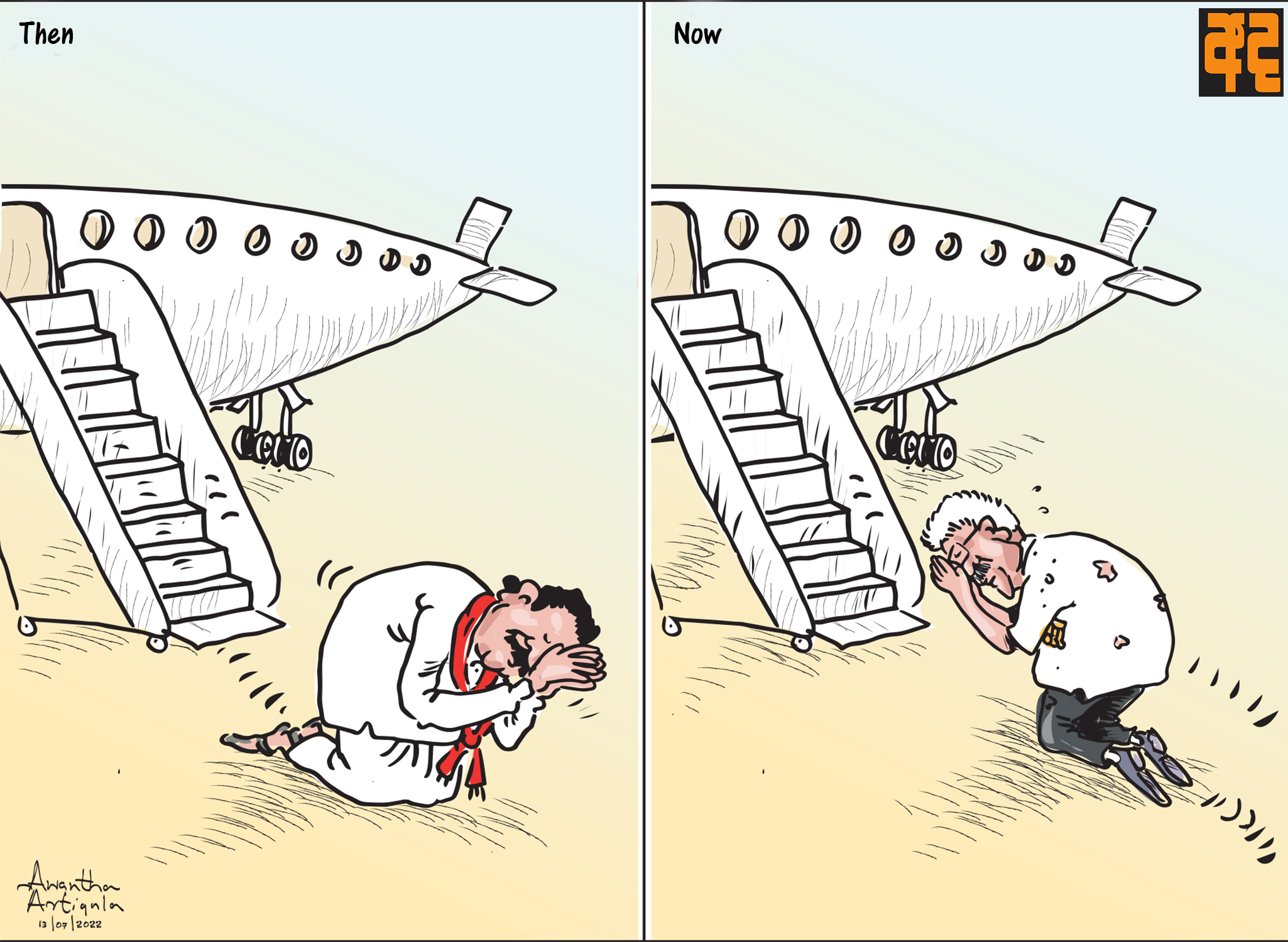
Sri Lanka former President Gotabaya Rajapaksa who fled the country in early July following a wave of protests will be returning to Sri Lanka on August 24 or 25, a family member and former diplomat said.

Ex-Ambassador to Russia Udayanga Weeratunga, who is a cousin of the former president, told EconomyNext on Wednesday August 17 that Rajapaksa will return to Sri Lanka next week.

“It is confirmed that the former President will be returning to the island on 24 or 25th of this month. If nothing changes, he will be here.

“According to the constitution, he will receive protection and other facilities. I assume a house will be prepared for him here as well,” said Weeratunga.

Former President Rajapaksa, who fled the country after protestors stormed his official residence in Colombo, is currently in Bangkok, Thailand. He arrived there on August 12 after a brief stay in Singapore.

Rajapaksa resigned from the presidency after mass protests against the worst currency crisis in the history of the island’s intermediate regime central bank.

Research vessel docking at Hambantota Port doesn’t affect any country: China

China on Tuesday said the activities of its high-tech research vessel will not affect the security of any country and should not be “obstructed” by any “third party,” as the ship berthed at Sri Lanka’s strategic southern port of Hambantota amid Indian and US concerns.

Chinese Foreign Ministry spokesman Wang Wenbin said the ship ‘Yuan Wang 5’ has successfully berthed at Hambantota Port with active cooperation from the Sri Lankan side.

Wang parried a question of extending financial support to Sri Lanka, which went bankrupt defaulting on USD 51 billion in foreign debt which included loans from China.

He said that when the ship arrived, the Chinese Ambassador to Sri Lanka Qi Zhenhong hosted the onsite welcoming ceremony at the Hambantota port, which Beijing took over on 99-year-lease as a debt swap in 2017.

Apparently, referring to Indian and US concerns over the ship with military applications berthing at the Hambantota port in the Indian Ocean, Wang said, “I want to stress again that the marine scientific research activities of the Yuan Wang-5 ship are consistent with international law and international customary practice.”

“They do not affect the security and economic interests of any country and should not be obstructed by any third party,” he said.

He said the ceremony was attended by a representative of Sri Lankan President Ranil Wickramasinghe besides more than ten heads of parties and heads of friendly communities.
The atmosphere was warm and welcoming, as Chinese and Sri Lankan national anthems were played, and the Sri Lankan people performed the traditional folk dance on the red carpet, he said.

It will take some time for the Yuan Wang 5 research ship to complete the replenishment of necessary supplies after the docking, hinting that the vessel may be there for a while.

The Sri Lankan government, which earlier asked the Chinese government to delay the arrival of the ship after India and the US reportedly expressed concern over its specialised in satellite and ballistic missile tracking, finally granted the port access to the vessel from August 16 to 22.

On Monday, Wang declined to reveal details of talks with Colombo leading to the bankrupt island’s government reversing its earlier stand to defer the high-tech vessel’s entry. “As for the specific questions that you raised, we have mentioned China’s position quite a few times,” Wang said when asked about what were the consultations that were held.

After Sri Lanka asked China to defer the entry of the ship, Beijing on August 8 reacted angrily saying it was “completely unjustified” for certain countries to cite the so-called security concerns to pressure Colombo and “grossly interfere” in its internal affairs.

The ship with over 2,000 crew has advanced facilities to track satellites and ballistic missiles, according to the Chinese official media accounts.

Sri Lanka said it permitted the ship after extensive consultations. Colombo’s permission has also raised speculation that Beijing could make a positive announcement about Sri Lanka’s previous request to defer the loans it owed to China and its plea for bridge financing to tide over the crisis until it received International Monetary Fund (IMF) support.

Asked, now that the ship has been permitted to dock and whether China will provide the much-needed financial assistance to Sri Lanka considering its economy was in dire straits, Wang on Tuesday said, “as we have stressed many times, as Sri Lanka’s friendly neighbour, China feels deeply for the economic and social difficulties facing Sri Lanka at the moment.”

China has been doing its utmost to support and help Sri Lanka pull through the difficulties. This is what we have been doing and what we will continue to do, he said.

China, which has extensive investments in Sri Lanka running into billions of dollars, has provided USD 73 million in aid and shipments of rice but maintained a steady silence on Colombo’s request for a bailout package as it became bankrupt after running out of foreign exchange reserves in April this year.

China is the main creditor of Sri Lanka with investment in infrastructure. Debt restructuring of Chinese loans would be key to the island’s success in the ongoing talks with the IMF for a bailout.

Wang pointed out that China and Sri Lanka are traditionally friendly neighbours. For years, the two countries have maintained close cooperation in marine scientific research.

“China is ready to work with the Sri Lankan side to consolidate political mutual trust, deepen win-win cooperation and promote the sound and steady development of the bilateral relations,” Wang said.

The southern deep-sea port of Hambantota, which has been developed largely with Chinese loans, is considered strategically important because of its location. India has said that it carefully monitors any development having a bearing on its security and economic interests.

New Delhi is concerned about the possibility of the ship’s tracking systems attempting to snoop on Indian installations while being on its way to the Sri Lankan port. India has traditionally taken a stern view of Chinese military vessels in the Indian Ocean and has protested such visits with Sri Lanka in the past.

The ties between India and Sri Lanka came under strain after Colombo permitted a Chinese nuclear-powered submarine to dock in one of its ports in 2014.

India’s concerns have been focused on Hambantota Port in particular. In 2017, Colombo leased the southern port to China Merchant Port Holdings for 99 years, after Sri Lanka was unable to keep its loan repayment commitments, fanning fears over the potential use of the port for military purposes.

The Chinese Foreign Ministry on Monday said it was “completely unjustified for certain countries to cite the so-called security concerns to pressure Sri Lanka.” India on Friday rejected China’s “insinuations” that New Delhi pressured Colombo against the planned visit by the Chinese research vessel, but asserted that it will take decisions based on its security concerns.

External Affairs Ministry Spokesperson Arindam Bagchi said in New Delhi that Sri Lanka, as a sovereign country, makes its own independent decisions and noted that India would make its judgment on its security concerns based on the prevailing situation in the region, especially in the border areas.

Source: PTI