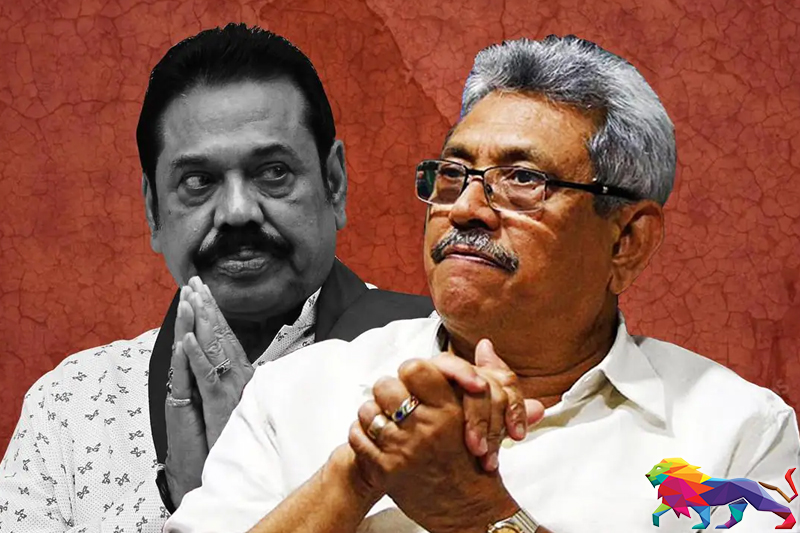
Just two weeks after fleeing to Singapore, former President Nandasena Gotabaya Rajapaksa, is still struggling desperately to find a country that would grant him asylum to live in safety.
When he arrived in that city-state on July 14, the Singapore government granted him a two-week visit visa, as is the practice for all visitors. That was hours before he sent in his letter of resignation after serving 31 months and 27 days from a five-year term as president. The visa was renewed for a further two weeks at his own request. It was now time to leave, they reminded him thereafter and requests for another period of stay were refused.
With attempts to secure asylum in the United Arab Emirates or Saudi Arabia becoming futile, as revealed in these columns just last week, he was engaged in a flurry of activity. It was all over what to do next. With him was wife Iyoma, two Brigadiers who are his personal security officers and two more bodyguards assigned to the former first lady. He was in touch with members of his close family in Sri Lanka and in the United States. Until he found asylum in a country that he felt would provide safety, he chose to sound out Thailand for a short visit. By then, he hoped, other measures he had initiated would bear fruit. Family members and close associates declined to discuss what they were except to lay bare one important thing – he was very concerned for his personal safety and had severely restricted all his movements.
Assigning the task of clearing the way for the visit to Thailand was left in the hands of Sugeeshwara Bandara, his former Private Secretary. When he served ex-President Rajapaksa, it was his responsibility to manage all diary engagements. Acting on his one-time boss’ request, Bandara got in touch with Saman Ekanayake, President’s Secretary, and sought the government’s help to clear visa formalities. The former President and the first lady still carry diplomatic passports. The four who form the personal protection group have been issued with official passports. Thus, the six of them were entitled to visas on arrival in Bangkok. Sri Lankan nationals, however, are required to possess a valid visa before travelling. The Thai government has tightened up procedures after there was abuse and insists on proof of income particulars and a valid air ticket before a visa is issued.
Presidential Secretary Ekanayake’s first task was to apprise President Ranil Wickremesinghe. Only days earlier, the President had declared that it was inadvisable for Gotabaya Rajapaksa to return to Sri Lanka in the immediate future. The former President’s intelligence mechanisms, still almost intact, have voiced fears that he was a very high-profile target. Hence, it was inadvisable to expose him to any vulnerable situation. This is notwithstanding his wish to return to his private residence at Mirihana and live under security forces’ protection. On the political side, President Wickremesinghe’s supporters were worried that he would become vulnerable, and the move could derail measures the President is taking for economic revival. That is if ex-President Gotabaya Rajapaksa, as it has happened many a time, rallies fellow members of the family to engage in active politics to stage a revival.
Dhammika back in Cabinet?
It had happened after Wickremesinghe was made Prime Minister when some loyalists were goaded by the former President into making remarks against him. One such instance was the call by then Investment Promotion Minister, Dhammika Perera, asking Wickremesinghe to resign as Finance Minister. It was Perera who was forced to resign thereafter. He was, however, persuaded not to quit as a Member of Parliament. And now, there are reports that Perera may return to the Cabinet as an SLPP parliamentarian after mending fences with President Wickremesinghe. The man behind the project is onetime Finance Minister and Sri Lanka Podujana Peramuna (SLPP) strategist Basil Rajapaksa.
That apart, paradoxical enough, President Wickremesinghe’s ascent to the Presidency was the direct outcome of the protests at the Galle Face Green and other areas. That forced Gotabaya Rajapaksa out of office. Yet, Wickremesinghe ordered a crackdown on the protestors for ‘violations of the law.’ Mass arrests are continuing, triggering accusations from western nations of continued human rights violations. European Union envoys met President Wickremesinghe this week to warn him of what they say is a disturbing trend. They highlighted three key areas — the future prospects of GSP plus (tariff preferences for local exports), the ongoing dialogue with the International Monetary Fund (IMF) and the impending sessions next month of the UN Human Rights Council in Geneva. As revealed in these columns last week, a UNHRC fact-finding mission is due in Colombo on Thursday on a week-long mission. Also on the cards is a tougher resolution to be moved by the United States and the core group on the conduct of troops and Police during recent protests and related matters.
Of course, it has on the other hand won Wickremesinghe the support of over 70 Sri Lanka Podujana Peramuna parliamentarians whose houses were burnt down or badly damaged. He has promised them compensation to reconstruct. Added to that was the burning of Wickremesinghe’s own house at Fifth Lane, Kollupitiya. Architects and engineers who examined the burnt-out site, where valuable books and artifacts were lost, have advised that it cannot be repaired and would have to be freshly built. He must fork out his own money. Days ago, one night, Wickremesinghe made a lengthy statement to DIG Prasad Ranasinghe, head of the Criminal Investigation Department (CID), over the incident.
It was with a nod from President Wickremesinghe that Presidential Secretary Ekanayake got down to the task of attending to Gotabaya Rajapaksa’s request. He got in touch with Chaminda Colonne, Sri Lanka’s Ambassador to Thailand and asked her to convey to the authorities in Bangkok that the government would like to see a visa issued. She in turn spoke with the Thai Chief of Protocol, Bhavakat Tanskul. Ekanayake also spoke to Shashikala Premawardena, Sri Lanka’s Ambassador to Singapore. That was to both assure the authorities there that the government supported Gotabaya Rajapaksa’s visa application to visit Thailand. She was also asked to apprise the Thai Embassy there that the government was recommending a visa. The matter had reached the highest levels of the Thai government after its Foreign Ministry brought it to the attention of Prime Minister, General Prayut Chan-o-cha. The approval arrived and it was conveyed to Sugheeswara Bandara for transmission to the former President. It became clear that there would be no transport or accommodation made available. Any request for personal security would have to be paid for, said a source familiar with what went on.
The first official confirmation that the visa had been granted came from Tanee Sangrat, the Thai Foreign Ministry spokesperson. He said, “The Thai side received a request for the former President to enter Thailand from the current government of Sri Lanka. The consideration was based on long-standing and cordial ties between the two countries. As a holder of a Sri Lankan diplomatic passport, the former President can enter Thailand without a visa for a period of 90 days, according to the 2013 Agreement on Visa Exemption between Thailand and Sri Lanka. The stay is temporary in nature with the aim of onward travel. No political asylum has been sought.”
A more disconcerting image for Sri Lanka and a poor reflection on her people came in remarks made later by Thai Premier General Chan-o-cha. He told reporters in Bangkok, “This is a humanitarian issue. We have made a promise that it’s a temporary stay. No [political] activities are allowed, and this will help him find a country to take refuge in.” Thai Foreign Minister Don Pramudwinai added that the ousted president can stay in Thailand for 90 days as he is still a diplomatic passport holder. Don said the Sri Lankan government did not oppose the visit and the Thai government would not make accommodation arrangements for him. The visit would not pose conflicts with Colombo as President Wickremesinghe had worked for him when he was in power, he said. The minister said a condition for his stay was that Gotabaya Rajapaksa would not cause problems for Thailand.
One could glean interesting insights from the remarks made by the Thai leader and his Foreign Minister. The most important is the condition they have placed on ex-President Rajapaksa that he should not engage in any political activity in Thailand. As most countries in the world did, Thailand has been keeping a close watch on developments in Sri Lanka and how more than three months of protests forced Gotabaya Rajapaksa out of the presidency and to flee the country in fear. They also know the unprecedented economic collapse he caused. Therefore, are the remarks not a tacit acknowledgement that he should not use Thai soil to fight back or regroup his political activity with the help of likeminded others in Sri Lanka? That such words of caution or even warning is being sounded despite a ‘sovereign guarantee’ from the government of Sri Lanka for the issue of a visa clearly highlights the Thai government’s neutrality on the matter other than act on what Premier Chan-o-cha said was “on humanitarian grounds.” For that reason, the ex-President of Sri Lanka was being tolerated in Thailand. What a humiliation for Sri Lanka’s once most powerful man who often used the military muscle.
On the other hand, whatever the reasons are, it does not bode well for the government of Sri Lanka to seek the help of a friendly foreign country to protect one of its own former presidents. That by itself is an admission to the world that it cannot look after him, for whatever the reason is.
Firstly, former President Rajapaksa fled the country in fear, and no one asked him to do so. The protestors were only seeking his resignation. Gripped with fear, it was entirely his decision. It is known at the highest levels of the security establishment that he bluntly ignored advice and intelligence warnings. Yet, if onetime President and Prime Minister, Mahinda Rajapaksa, could be found a safehouse in the Sri Lanka Navy Commander’s luxury official bungalow in Trincomalee, why not ex-President Gotabaya Rajapaksa? Surely, it does not take that many in a personal protection group to take care of his security. It is not that difficult to find a secure location either.
After all, he would be needed in Colombo to answer questions on how the economic collapse took place. Helping him, in that sense, is helping the ex-President to get away from all the accountability that lay on his shoulders. If that was done, the government could have avoided the periodic Gotabaya Rajapaksa circus that is being enacted before the eyes of the world. It is known that there are no plans by the former President to use his entire 90 day stay in Thailand. So, there is more to come as he desperately looked for options. Another question that begs answer is how he is receiving resources to sustain himself with the highest luxury. If business interests underwrote all his expenses, does it not raise questions?
In this regard, it is interesting to note that since becoming Prime Minister and later President, Ranil Wickremesinghe has inherited the security establishment and a Police department hierarchy put in place by ex-President Gotabaya Rajapaksa. Naturally, that formed the vast volume of Gotabaya Rajapaksa loyalists at the top. President Wickremesinghe empowered the Police to crack down on the protestors. He was at the Defence Ministry headquarters complex in Akuregoda this week congratulating troops for “protecting the Parliament and thus saving democracy.” That hearts and minds operation in the reverse (that is usually done by the military) has won him new friends, powerful and much needed. As a source close to him points out, he acknowledges changes are necessary but admits that it is not a high priority. “His persuasion is working, and the support is immense,” says the source who chuckles “they are vying with each other to be in his good books.”
Business contacts help ex-President
Gotabaya Rajapaksa and his entourage arrived in Bangkok on Thursday night in a chartered plane at the Don Mueang International Airport at 8.10 p.m. They had taken off from Singapore’s Seletar Airport. This is a civilian international airport serving the north-east region of Singapore. It is found about 16 kilometres northwest from Changi, the country’s main airport, and about 25 kilometres north from the main commercial city-centre. A business conglomerate with connections in Sri Lanka had arranged for the charter plane.
Whilst in Singapore, among those who backed him were both foreign and local commercial interests who had been showered with favours by ex-President Gotabaya Rajapaksa. The same interests, those who are familiar with the arrangements said, managed accommodation and other expenses whilst in Thailand. Gotabaya Rajapaksa and his entourage were driven to a high-end hotel in Bangkok’s Lansuang area under security escort.
One of Thailand’s leading national newspapers, The Bangkok Post, said on Friday that Police had recommended that he should not leave his hotel for security reasons. It reported that the charter flight had originally planned to land in Phuket. It is a mountainous island in the Andaman Sea and a popular tourist resort. It said that concerns about a possible information leak resulted in the flight being redirected to Bangkok. “On arrival he was escorted by Thai police and military personnel,” the newspaper said. The report added: “At the hotel, the location of which was not disclosed, plainclothes police officers from the Special Branch Bureau have been deployed to ensure safety. Officials have asked the former leader to remain within the hotel during his stay in the country.”
That such a humiliating fate would befall Gotabaya Rajapaksa was not expected even by his adversaries. Unlike when he was Defence Secretary, where he brought his full authority and personality to bear on various issues, creating worrisome situations, as President, it became clear by hindsight he began to isolate himself. He ignored state service officers and appointed retired military officers, most of them unqualified, to various key positions. He cut himself off from government parliamentarians and did not answer their telephone calls. He packed the foreign service with friends and members of his so-called Viyath Maga.
He abandoned the ‘meet the people’ programme titled Pilisandara which led to contact with common people at the grassroots level. He allowed bribery and corruption to proliferate. Widespread allegations were over members of his own family for siphoning off billions and stacking them abroad. When he served the Army as a Lieutenant Colonel, during the height of the separatist war, he sought help from political leaders and obtained an early discharge. That is how he went to the US and became a citizen there, only to renounce it before the 2019 presidential elections. He won the election with 6.9 million votes. This is despite his vow not to quit as a “failed President”.
Quite clearly, Gotabaya Rajapaksa is on the move for the fear of his life. Having arrived in the Maldives on July 12, that was why he did not want to fly to Singapore in a plane arriving in Male from Colombo. That was why he chose to board a Saudia flight that was bringing in Haj pilgrims to both Male and later to Singapore. It has now become known that four additional air marshals were assigned to this Saudia flight to provide enhanced personal protection. It was from the originating point of the flight, Riyadh. It came at the intervention of a Maldivian VIP politician who had won many a favour from ex-President Rajapaksa. No doubt there will be more episodes of the Gotabaya Rajapaksa drama to unfold.
Controversy over Yuan Wang 5
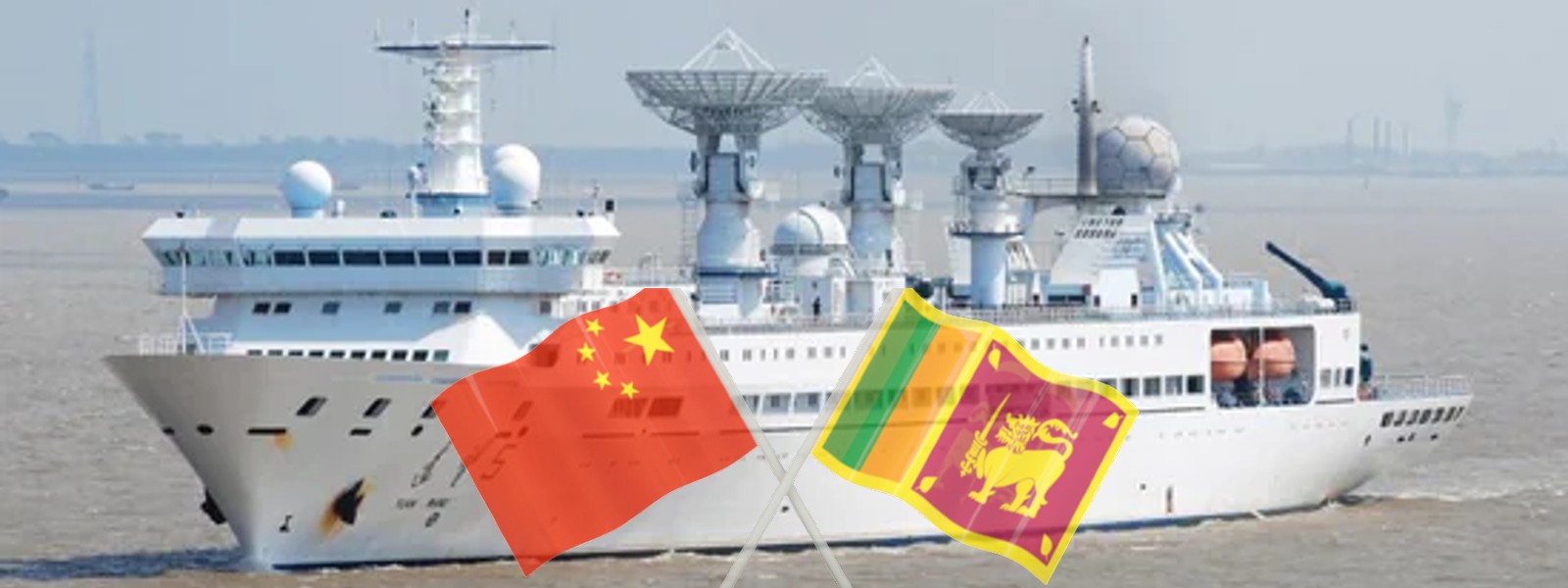
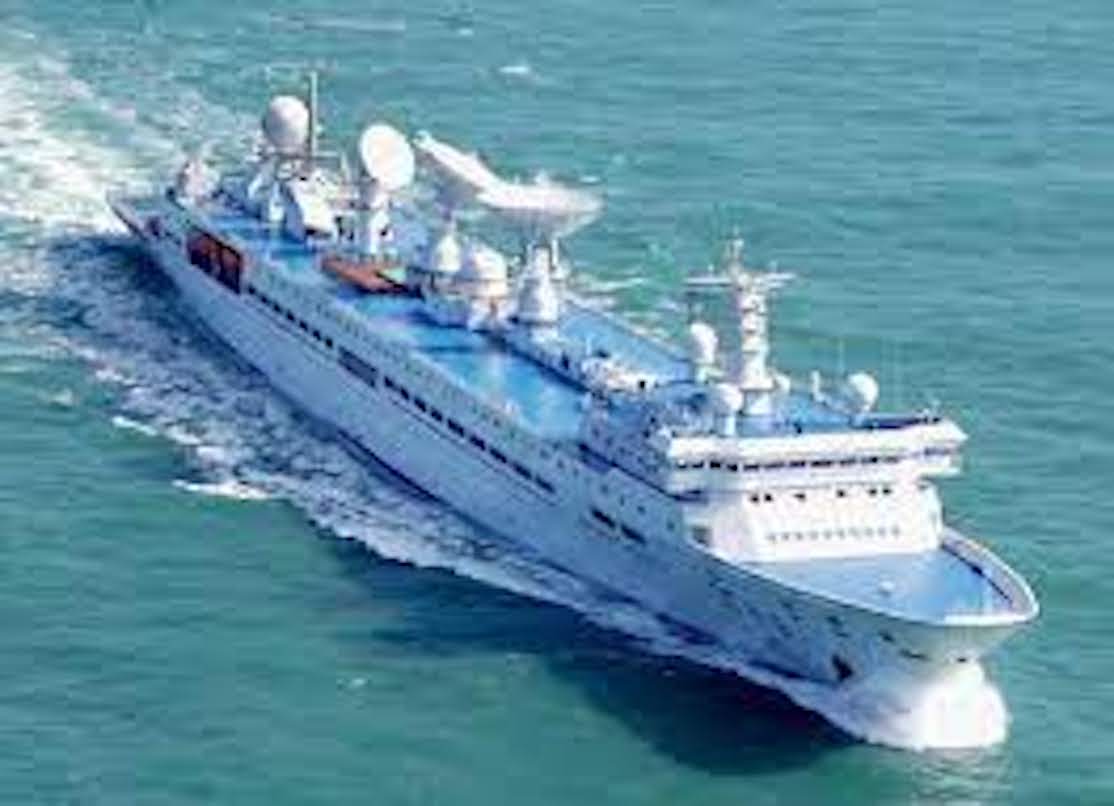
Other than the latest Gotabaya Rajapaksa saga, there has been several other serious issues for the government to grapple with this week. One is the ongoing drama over Yuan Wang 5, the hi-tech Chinese research vessel, which was originally due at the Hambantota Port last Thursday (August 11). It was ex-President Gotabaya Rajapaksa (as Minister of Defence) who had granted approval for the “Chinese scientific Research Vessel Yuan Wang 5 to dock into the Hambantota Port.
This is what a TPN (Third Person Note – No: PR/0640/2022 Clearance No PR/16/DPLCLR/4/CHN/22-2022) dated July 12 said: The Ministry of Foreign Affairs of the Democratic Socialist Republic of Sri Lanka presents its compliments to the Embassy of the People’s Republic of China in Colombo and has the honour to refer the latter’s note no. FPO-(W) 033/2022 dated 28 June 2022 seeking clearance for the Chinese scientific Research Vessel YUAN WANG 5.
“The Ministry wishes to inform that the authorities of the Government of Sri Lanka have granted the necessary clearance for the Chinese scientific Research Vessel YUANG WANG 5 for the port of call to Hambantota from 11th to 17th August 2022 with a 72-hour grace period for replenishment purpose, subject to the government action plan for the prevention of COVID-19 and following conditions:
Keep the AIS (Automatic Identification System) switched on within the EEZ (Extended Economic Zone) of Sri Lanka.
No Scientific research/survey to be conducted in Sri Lanka waters
“The Ministry further wishes to inform the esteemed Embassy that the Telecommunications Regulatory Commission of Sri Lanka has no objection for the use of the frequencies and communication equipment in the said Chinese scientific Research Vessel to non-interference basis for the above period.
“The Ministry of Foreign Affairs of the Democratic Socialist Republic of Sri Lanka avails itself of the opportunity to renew to the Embassy of the People’s Republic of China in Colombo the assurance of its highest consideration.”
As is clear from this TPN, a lot of effort has gone into to granting permission. The lead role in this exercise was played by Sri Lanka’s Ambassador to China, Palitha Kohona. He was onetime Foreign Secretary and is a dual citizen with the other country being Australia. It is in the latter capacity that he served once in the Treaties Section of the United Nations in New York. If dual citizenship in the field of politics was scorned at by the country’s politicians, no one spoke of this category holding sensitive positions in the conduct of the country’s foreign policy. Even if the citizenship was dual, it was assumed for convenience that loyalty was always with Sri Lanka and not the other country. He strongly recommended the visit to Kamal Gunaratne, Secretary to the Ministry of Defence, which saw a multitude of state agencies including the Sri Lanka Ports Authority and the Telecommunications Regulatory Authority granting approval. A recommendation went to the Foreign Ministry who sent the TPN informing of the approval.
The Foreign Ministry, the least functioning among ministries, did not have any consultation at the highest levels before resorting to the TPN. It is not clear whether then Foreign Minister, G.L. Peiris was even aware of the request in June for the Chinese vessels to come to Hambantota. Before undertaking his posting in China, Kohona held a top position in Chinese company in Colombo. This week, in Beijing, he inaugurated an export to Sri Lanka campaign where the participants include this company.
When the news spread of the impending arrival, India which is known to have a vibrant foreign service reacted. A senior Indian official, who spoke on grounds of anonymity on the telephone from New Delhi, said, “Sri Lanka is our closest neighbour. In keeping with our policy of neighbourhood first, we have so far helped to the tune of US$ 3.8 billion to ameliorate the economic distress. We know Yuan Wang 5 is part of the People’s Liberation Army’s strategic force. It has the capability to use military grade weaponry. This episode is clear proof of the non-commercial use of the Hambantota Port. Nothing happens in isolation. This endangers India’s national security interests.”
At a news conference in New Delhi on Friday, the official spokesperson declared, “We reject the insinuations in the (Chinese) statement about India. Sri Lanka is a sovereign country and makes its own independent decisions. As regards India-China relations, we have consistently emphasised the necessity of mutual respect, mutual sensitivity, and mutual interests as a basis for the development of ties. About our security concerns, this is the sovereign right of every country. We will make the best judgment in our own interest. This naturally considers the prevailing situation in our region, especially in the border areas.”
India’s High Commissioner Gopal Baglay has been engaging President Wickremesinghe and government leaders telling them of his country’s concerns over the move. This week, US Ambassador Julie Chung is learnt to have delivered a demarche on the same matter. The Sunday Times learned that High Commissioner Baglay placed before the government leaders’ details about the security concerns for India with documentation. China, however, did not issue a detailed statement except to direct remarks at India criticising her for interfering in an arrangement between Beijing and Colombo. Yet, they have been lobbying diverse groups and individuals to seek their support to urge the government to allow Yuan Wang 5 to dock at the Hambantota Port. This is whilst the research vessel was in a holding position in the deep seas off Banda Aceh (Indonesia). Yesterday, a top-ranking Indian official is learnt to have telephoned President Wickremesinghe to discuss the Yuan Wang 5 episode. He is one who is very familiar with the ongoing developments and closely connected to the political leadership there.
According to diplomatic sources, the strongest protest to government leaders came from China’s Ambassador Qi Zhenhong on Friday.
According to these sources, he warned of profoundly serious consequences if Yuan Wang 5 was not permitted to dock. According to another source familiar with the dialogue, there were plans for the vessel to enter the Hambantota Port area on the argument that there was no refusal according to the Foreign Ministry TPNs and statements it issued. The way permission came to be granted left the government leaders with no cohesive answer and they relented. The Chinese research vessel was allowed to enter Hambantota Port on August 16. It is just a day after India’s Independence Day. However, there were reports, still to be confirmed, that the Chinese research vessel would enter the Hambantota Port on August 14.
Quite clearly China has won the push to pressure Sri Lanka to heed its request. Perhaps quite rightly, the Chinese first obtained permission and Yuan Wang 5 had left its port in China when a request was made to delay the visit to enable further consultations. China’s argument, therefore, was to seek answers as to why such permission was being suspended. The official government position taken, though contested, is that there is no evidence, not even from India or the United States, about any ill effects, military or otherwise, from the Yuan Wang 5 visit to Hambantota. This no doubt will now cause a serious strain in relations between Sri Lanka and India and its western allies. It appears a handful of officials brought about heavy embarrassment to Sri Lanka and the government by rushing through the visit without any consultation with the political leadership. That it pushed President Wickremesinghe into a helpless position and yield to the Chinese demand is no secret.
The Chinese canvassing efforts extended to different areas. For example, the eleven-party group-led by National Freedom Front (NFF) leader Wimal Weerawansa, known to be pro-Chinese, called upon the government to allow Yuan Wang 5 to dock at the Hambantota Port. It is on the grounds that permission has already been granted for the purpose by the government.
Earlier, the Indian representations led to the government wanting to delay the Yuan Wang 5 visit. Taking into consideration the representations made by India, the Foreign Ministry issued another TPN on August 5 (TPN No: PR/0694/2022 Clearance No: PR/16/DPLCLR/4/CHN/22-2022). It said:
“The Ministry of Foreign Affairs of the Democratic Socialist Republic of Sri Lanka presents its compliments to the Embassy of People’s Republic of China in Colombo and has the honour to refer to the Ministry’s Note no. PR/0640/2022 dated 12th July 2022 conveying’ the clearances for the visit of the vessel YUAN WANG 5 to enter Port of Hambantota for replenishment purposes.
“The Ministry wishes to request that the arrival date of the vessel YUAN WANG 5 in Hambantota to be deferred until further consultations are made on this matter. The Ministry of Foreign Affairs of the Democratic Socialist Republic of Sri Lanka avails itself of this opportunity to renew to the Embassy of People’s Republic of China in Colombo, the assurances of its highest consideration.”
As the Yuan Wang 5 visit was drawing greater media attention, the Foreign Ministry also issued a statement three days later. It said, “The Ministry of Foreign Affairs refers to developments related to the Chinese vessel Yuan Wang 5. Diplomatic clearance for the Chinese vessel to make a port call at the Hambantota port from 11-17 August, 2022 for replenishment purposes was conveyed by the Ministry to the Embassy of the People’s Republic of China in Colombo on 12 July 2022. Subsequently in light of the need for further consultations, the Ministry has communicated to the Embassy of the People’s Republic of China in Colombo to defer the visit of the said vessel to the Hambantota port. The Ministry of Foreign Affairs wishes to reaffirm the enduring friendship and excellent relations between Sri Lanka and China which remain on a solid foundation, as reiterated most recently by the two Foreign Ministers Ali Sabry and Wang Yi at a bilateral meeting in Phonm Penh, Cambodia on 4 August, 2022. At this first meeting between the two Foreign Ministers, Minister Sabry referred to Sri Lanka’s firm commitment to the one-China policy which has been a consistent principle in the country’s foreign policy.”
For days ahead of August 11, when Yuan Wang 5 was originally scheduled to dock at the Hambantota Port, monitoring of the vessel showed developments that have puzzled those in India and Sri Lanka alike. For at least three days or more, the research vessel has been in a holding pattern in the high seas off Banda Aceh (Indonesia). It has been moving northwards and southwards in a huge circle. This has raised issue over the claim that the vessel was going to Hambantota “for replenishment purposes.” In the last known position early yesterday, it was reported headed in the direction of Hambantota.
De-proscription of four Tamil groups
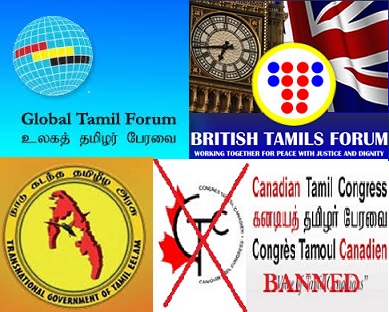
In another development, the Ministry of Defence issued a 30-page gazette notification amending the list of designated persons. In effect this is a ban on terrorism-related groups in keeping with a UN Convention. The amendment left out four diverse groups – the Australian Tamil Congress (ATC), the British Tamils Forum (BTF), the Canadian Tamil Congress (CTC) and the Global Tamil Forum (GTF). The name of Suren Surendiran that was listed together with the GTF has also been removed. The fact that these organisations were to be de-proscribed was reported exclusively in the Sunday Times of June 19. Some new Muslim groups have now been included.
Progress on APG
Another matter of high priority for President Wickremesinghe has become the formation of an All-Party Government (APG). He held a series of meetings with representatives of political parties. Two prospectives likely to join the APG are Sri Lanka Muslim Congress leader Rauff Hakeem, and Democratic People’s Alliance leader Mano Ganesan. He also met the breakaway group of the SLPP that included Anura Priyadarshana Yapa, Priyankara, Jayaratne and Sudarshini Fernandopulle.
Sources close to the presidency said that President Wickremesinghe will table at a future cabinet meeting a fuller report on his talks with representatives of political parties. Such a report is to list the different demands placed by them for joining the APG. “He will call upon the ministers to decide on the broader policies that should be accepted by the proposed APG. The formation will take place immediately thereafter,” these sources said.
The first outcome of such a task would be the formation of a large cabinet of ministers to accommodate nominees of parties. It is only thereafter that a series of programmes will be launched by President Wickremesinghe. Besides the focus on economic development, this will include a complete overhaul of Sri Lanka’s diplomatic representation overseas. For this purpose, those serving in some key postings are likely to be recalled. Thus, the proposed APG will see a new divide between the rulers and those in the opposition. Whether these will help achieve the declared goals still is a critical question for all Sri Lankans.