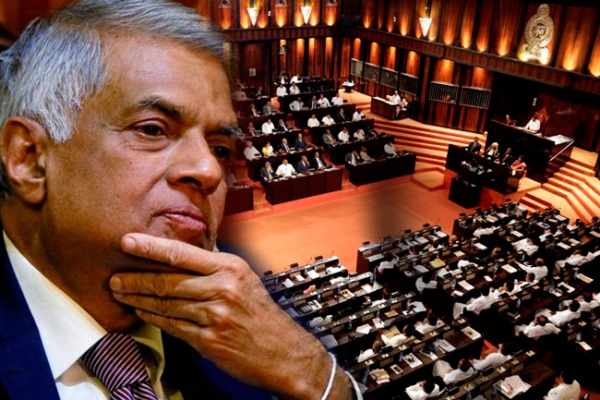
China Defends Military Ship’s Planned Visit to India’s Neighbour Sri Lanka

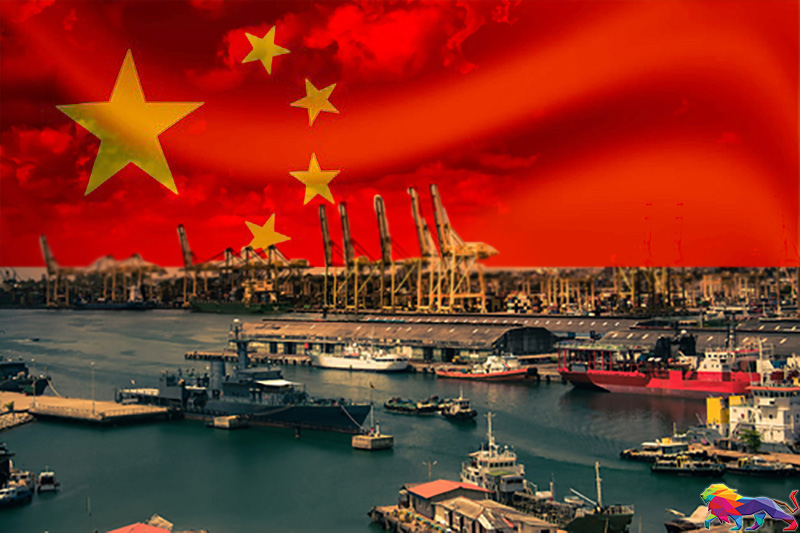
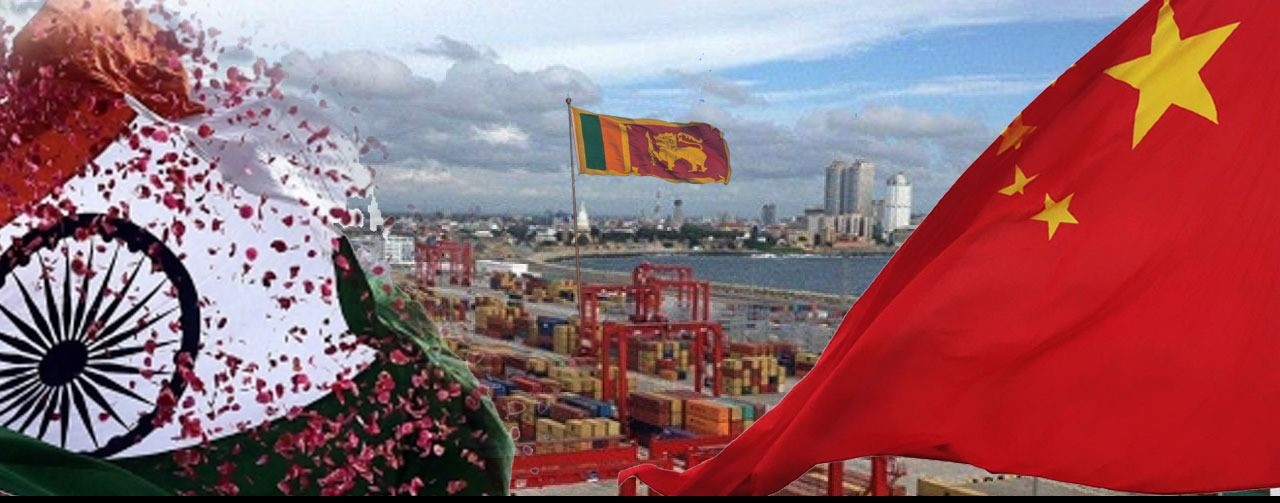
India worries that the Chinese-built and leased port of Hambantota will be used by China as a military base in India’s backyard. The $1.5 billion port is near the main shipping route from Asia to Europe.

Shipping data from Refinitiv Eikon showed Chinese research and survey vessel Yuan Wang 5 was en route to Hambantota and due to arrive on Aug. 11, at a time when Sri Lanka is facing its worst economic crisis in seven decades. India has provided Sri Lanka with nearly $4 billion in support this year alone.

During a weekly briefing late on Thursday, an Indian foreign ministry spokesman said the government was monitoring the planned visit of the Chinese ship, adding that New Delhi would protect its security and economic interests.

India has already lodged a verbal protest with the Sri Lankan government against the ship’s visit, Reuters reported on Thursday.

In response to questions from Reuters, China’s foreign ministry said Beijing had always exercised freedom of the high seas lawfully.

“China hopes that the relevant parties will view and report on China’s marine scientific research activities correctly and refrain from interfering with normal and legitimate maritime activities,” the ministry said in a statement.

Relations between India and China have been strained since armed clashes on their border two years ago killed at least 20 Indian and four Chinese soldiers and led to a massive build-up of troops on both sides.

Foreign security analysts describe the Yuan Wang 5 as one of China’s latest generation space-tracking ships, used to monitor satellite, rocket and intercontinental ballistic missile launches.

The Pentagon’s annual report on China’s military modernisation says the Yuan Wang ships are operated by the Strategic Support Force of the People’s Liberation Army (PLA).

A Sri Lankan consulting firm, the Belt & Road Initiative Sri Lanka, said on its website that the Yuan Wang 5 would be in Hambantota for a week and “conduct space tracking, satellite control and research tracking in the northwestern part of the Indian Ocean region through August and September”.

Sri Lanka formally handed over commercial activities at its main southern port to a Chinese company in 2017 on a 99-year lease after struggling to repay its debt.

China is one of Sri Lanka’s biggest lenders and has also funded airports, roads and railways, unnerving India, which is now trying to claw back lost ground.

Sri Lanka angered India in 2014 when it allowed a Chinese submarine and a warship to dock in Colombo.

(Reporting by Krishna N. Das in New Delhi, Yew Lun Tian in Beijing and Greg Torode in Hong Kong; Editing by Raju Gopalakrishnan and Mark Heinrich)

Copyright 2022 Thomson Reuters.

Not the ideal time for elections -Commission

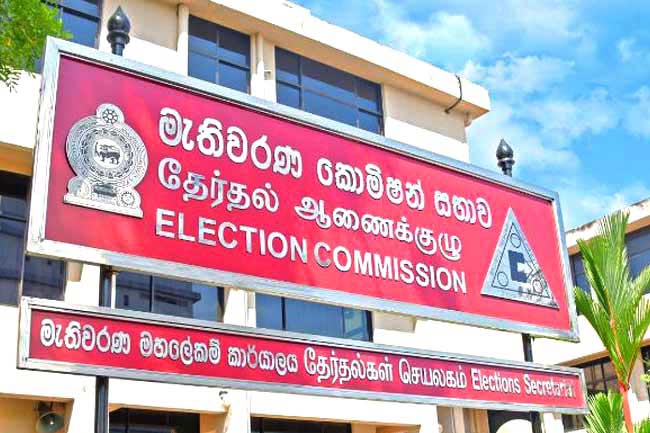
The National Election Commission says the prevalent crisis in the country must be brought to end in order to conduct free and fair elections.

Chairman of the Election Commission Nimal Punchihewa said he is prepared to conduct an election once the major issues faced by the general public due to the current crisis are solved.

Speaking to media after members of the Election Commission called on the Chief Prelates of the Malwathu and Asgiri Chapters, Punchihewa said the Commission is obligated to conduct a free and fair election.

He added the public is not in a mindset to vote in a free manner noting at present the public is languishing in fuel queues.

He questioned if polling booths could be established beside fuel queues.

Nimal Punchihewa said Parliament should pass a vote to conduct a General Election with a majority if an election was to be conducted under the approval of the President.

However, Nimal Punchihewa said seeking solutions to the issues faced by the public should be prioritized over conducting elections.

Meanwhile, Commissioner General of Elections Saman Ratnayake said the voter list for 2022 is currently being prepared.

He said the list is expected to be certified by October.

He noted although the government had changed, the state remained intact.

Speaking on whether foreign funds will be used to conduct an election Ratnayake said the President and Cabinet of Ministers have the responsibility of providing funds for the conduct of an election.

British High Commissioner holds wide-ranging talks with President Ranil

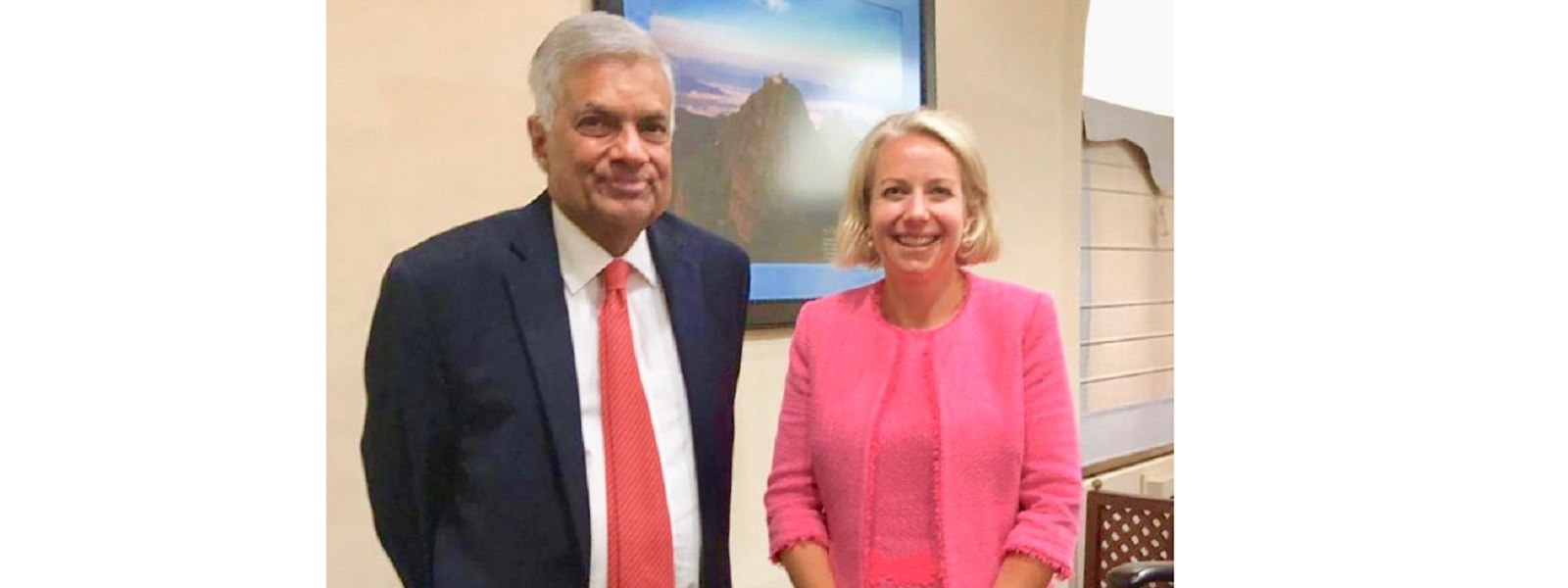
British High Commissioner to Sri Lanka Sarah Hulton says she held a wide-ranging discussion today with President Ranil Wickremesinghe.

In a twitter message, the High Commissioner said she “raised respect for human rights and due process” in line with United Nations Human Rights Commission (UNHRC), during the talks held with the President.

The British High Commissioner also said that she is looking forward to strengthening UK-Sri Lanka relationship within a peaceful, democratic and inclusive space.

Meanwhile President Wickremesinghe had also met with US Ambassador to Sri Lanka, Julie Chung yesterday (July 27) to discuss how the island nation arrived at this point of economic and political crisis.

The focus of the discussion also fell on how the two countries can work together to navigate towards a brighter future for all, the US envoy said in a tweet.

“Our countries and our people have been friends and partners for more than 70 years, relationships that will flourish in a Sri Lanka that embraces good governance, respects human rights, and listens to the aspirations of its people.”

Posted in Uncategorized

Parliament prorogued with effect from today (28); Next session on 3rd August

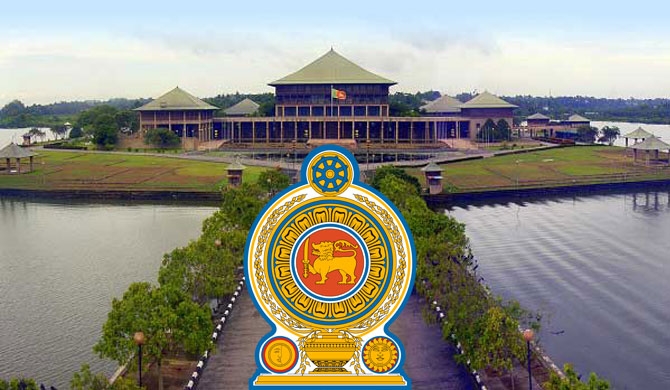
President Ranil Wickremesinghe has decided to prorogue Parliament with effect from midnight today (28).

According to the extraordinary gazette issued this evening, the next session will commence at 10:30 AM on 3rd August 2022.

What does it mean when Parliament is Prorogued?

A prorogation which is a temporary recess of Parliament, should not extend to a period of more than two months, However, such date for summoning Parliament may be advanced by another Presidential Proclamation provided it is summoned for a date not less than three days from the date of such fresh proclamation.

When Parliament is prorogued, the Proclamation should notify the date for the commencement of the new Session of Parliament under Paragraph (3) of Article 70 of the Constitution.

Constitutional Provisions:

During the prorogation the Speaker continues to function and the Members retain their membership even though they do not attend meetings of Parliament.

The effect of a prorogation is to suspend all current Business before the House and all proceedings pending at the time are quashed except impeachments.

A Bill, motion or question of the same substance cannot be introduced for a second time during the same Session. However, it could be carried forward at a subsequent Session after a prorogation.

“All matters which having been duly brought before Parliament, have not been disposed of at the time of the prorogation of Parliament, may be proceeded with during the next Session,” states the Paragraph (4) of Article 70 of the Constitution.

Pending Business of Parliament:

In the light of this constitutional provision, a prorogation does not put an end to pending Business. Thus, a pending matter may be proceeded with from that stage onwards after the commencement of the new Session. At the beginning of a new Session all items of Business which were in the Order Paper of Parliament need to be re-listed, if it is desired to continue with them.

Commencement of the New Session:

At the end of a prorogation a new Session begins and is ceremonially declared open by the President. He is empowered under the Constitution to make a Statement of Government Policy in Parliament at the commencement of each Session of Parliament and to preside at ceremonial sittings of Parliament in terms of the provisions stipulated in Paragraph (2) of Article 33 of the Constitution.

The President is empowered to make a statement of Government Policy at the commencement of each new Session. In the past, it was known as the Throne Speech which was delivered by the Governor-General.

Sri Lanka hopes for $4bn in China aid ‘soon’ as envoy defends ties

Sri Lanka hopes to conclude discussions with China “soon” on a $4 billion aid package, the country’s ambassador to Beijing told Nikkei Asia.

Ambassador Palitha Kohona said in an email that talks were progressing. “We hope that these discussions could be concluded soon, as a positive outcome would definitely assist Sri Lanka to reestablish confidence in the financial markets and recover from its unprecedented and dire financial circumstances.”

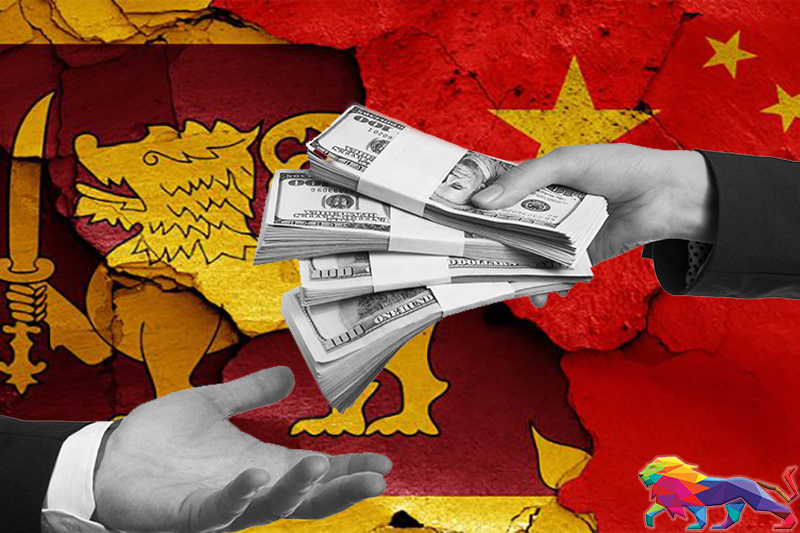
China has been a major creditor of Sri Lanka, though it remains a burning question exactly how much the latter owes the former. Since Sri Lanka plunged into a severe foreign exchange crisis this year and defaulted for the first time in May, Beijing has reportedly been reluctant to go along with debt restructuring.

But new Sri Lankan President Ranil Wickremesinghe, who was elected by parliament on July 20 after the resignation of much-criticized Gotabaya Rajapaksa, is looking to China again as he attempts to cement his grip and quell unrest.

Since early this week, police have been rounding up frontline demonstrators and leaders of the anti-government movement. A state of emergency is to remain in effect for another month after parliament approved it on Wednesday.

Persistent resentment and protests against the new government threaten to disrupt efforts to secure a long-awaited bailout from the International Monetary Fund. Wickremesinghe, in his previous role as prime minister, had expressed optimism in June that such a deal would be in place by the end of this month, but that now appears unlikely.

IMF Managing Director Kristalina Georgieva told Nikkei shortly before Wickremesinghe became president that the fund wanted to offer aid as quickly as possible and would work with any administration — “as long as the next leader enjoys support and has the longevity to lead the country.”

In the meantime, Sri Lanka appears to be pinning hopes on the $4 billion aid package from China, which would include a $1.5 billion credit line and implementation of a $1.5 billion currency swap with Beijing.

Last Friday, the day after Wickremesinghe was sworn in, Chinese President Xi Jinping sent a congratulatory message and promised to “provide support and assistance to the best of my ability.”

Ambassador Kohona stressed that Sri Lanka had never been unable to meet its loan repayment obligations in the past. While protesters and many observers have accused the previous Rajapaksa government of economic mismanagement, the envoy said it was only an unexpected convergence of factors including the COVID-19 pandemic that led to the default.

“However, with the easing of the COVID situation and the return to constitutional governance, we hope to take our discussions with China toward positive conclusions in the near future,” he said.

Average Sri Lankans continue to deal with painful shortages of fuel, food and other essentials, as dwindling foreign reserves have left the country unable to import what it needs. The energy minister said this week that fuel imports must be restricted for the next 12 months, and that fuel would be available only through a quota system starting this month.

Kohona said he has also been holding discussions with large Chinese companies to encourage them to invest in Sri Lanka and bring in more foreign currency. His sales pitch notes that Sri Lanka’s Indian Ocean location puts it within easy air and sea access to promising markets, from Africa and the Middle East to India and Southeast Asia.

“A number of Chinese companies have already made commitments to invest in Sri Lanka and we are actively discussing potential investment options with others, including in steel, renewable energy, tire production, yacht building and infrastructure development,” the ambassador said.

He also said he expects that with a “return to normalcy,” investors in existing big-ticket projects like Colombo Port City and the Hambantota Port area will “proceed with their intended investment plans.” The Chinese government, he said, is “actively” encouraging companies to invest in Sri Lanka.

The ambassador rejected claims that Sri Lanka has fallen into a Chinese “debt trap,” arguing that only around 10% of external debt is owed to China, though some observers have questioned whether that number covers everything.

“Much more is owed to multilateral institutions like the World Bank and the Asian Development Bank,” he said. “Similarly, a considerable amount is owed to institutional investors, mainly from the West, including Wall Street. The interest rates charged by the Chinese lenders have also been favorable.”

Suggestions that Sri Lanka’s financial situation has been caused by the debts owed to China are “inaccurate and misplaced,” he said.

Kohona was also quick to deny that China had abandoned Sri Lanka while India stepped in with around $3.8 billion in financial assistance.

“India, also a long-standing friend, did in fact come to Sri Lanka’s assistance very early and promptly, and we are indeed grateful to India for what it has done,” he said. “But it is an unfair exaggeration to say that China deserted Sri Lanka during its time of need.” According to the ambassador, since 2021, China and Chinese banks have made available almost $1.2 billion worth of assistance in various forms.

Kohona pointed to China’s provision of a 500 million yuan ($74 million) emergency assistance package that included rice, medicines, fertilizer and fuel.

The ambassador suggested that over the longer term, exports to the lucrative Chinese market could help ensure a sustainable recovery. He said that Beijing was encouraging this as well, and that free trade talks were underway.

Not to be outdone, Indian Prime Minister Narendra Modi made it clear this week that his government also remains willing to help. “India will continue to be supportive of the request of the people of Sri Lanka for stability and economic recovery, through established democratic means, institutions and constitutional frameworks,” Modi said in a congratulatory message to Wickremesinghe on Monday.

Source: Nikkei Asia

Posted in Uncategorized

Sri Lanka faces political risks over Rajapaksa links of new govt: Fitch

Sri Lanka is still facing political risks in recovering from a currency crisis and default, tough a new government has been formed under President Ranil Wickremesinghe with a large majority, Fitch, a rating agency said.

“The new president was confirmed by a large majority in parliament, and his government has drawn in some opposition members,” Fitch said in a statement.

“This gives some hope that it will have sufficient support to negotiate and carry out difficult reforms as part of efforts to restore macroeconomic stability and debt sustainability. Such reforms could unlock funding support from the IMF, which we view as important for Sri Lanka’s emergence from default.”

Members of the Rajapaksa family were driven out by protests. However the administration has little public support since it is linked with the ousted Rajapaksa family.

“The government’s parliamentary position appears strong, but public support for the government is weaker,” the rating agency said.

“President Wickremesinghe was prime minister in the previous administration under President Gotabaya Rajapaksa, who was brought down by protests.

“Parliament and the government also remain dominated by politicians from the Sri Lanka People’s Freedom Alliance, which is closely affiliated with the Rajapaksa family. This may increase the risk of further destabilising protests if economic conditions do not improve and/or reforms generate public opposition.”

Political Risks Still Challenge Sri Lanka’s Emergence from Default

Thu 28 Jul, 2022 – 12:37 AM ET

Fitch Ratings-Hong Kong-28 July 2022: The successful formation of a government under the new president, Ranil Wickremesinghe, is an important precondition for resolving Sri Lanka’s debt default, but many challenges remain as the country seeks financing support from the IMF and debt restructuring from private and official bilateral creditors, says Fitch Ratings.

The new president was confirmed by a large majority in parliament, and his government has drawn in some opposition members. This gives some hope that it will have sufficient support to negotiate and carry out difficult reforms as part of efforts to restore macroeconomic stability and debt sustainability. Such reforms could unlock funding support from the IMF, which we view as important for Sri Lanka’s emergence from default.

The government’s parliamentary position appears strong, but public support for the government is weaker. President Wickremesinghe was prime minister in the previous administration under President Gotabaya Rajapaksa, who was brought down by protests. Parliament and the government also remain dominated by politicians from the Sri Lanka People’s Freedom Alliance, which is closely affiliated with the Rajapaksa family. This may increase the risk of further destabilising protests if economic conditions do not improve and/or reforms generate public opposition.

We expect any reform package agreed with the IMF by the government to include elements such as higher taxes, expenditure rationalisation and a commitment to a greater degree of exchange-rate flexibility. There is a significant risk that such reforms could cause public opposition that might impede their implementation. In the absence of an IMF deal, we expect Sri Lanka to face a very strained external position in the near term. The country has little foreign exchange to pay even for essential imports such as fuel, food and medicines, with official reserve assets at just USD1.9 billion (just over one month of imports) as of end-June.

In a statement on 30 June, the Fund noted that it assessed Sri Lanka’s public debt as unsustainable, and confirmed that it would require adequate financing assurances from Sri Lanka’s creditors that debt sustainability would be restored.

Debt negotiations could be complicated by debt owed to China. This amounted to USD5 billion at end-2020, including bilateral official lending and loans from the China Development Bank and Export-Import Bank of China, accounting for around 13% of Sri Lanka’s external debt, according to the IMF. China has traditionally preferred to offer relief for large loans through deferrals such as maturity extensions, payment rescheduling or grace periods, rather than through write-downs.

However, this approach could increase challenges for Sri Lanka to successfully negotiate debt restructuring with other creditors, including private creditors, that delivers the debt sustainability sought by the IMF.

Fitch rates Sri Lanka’s Long-Term Foreign-Currency (LTFC) Issuer Default Rating (IDR) at ‘RD’ (Restricted Default). The Long-Term Local-Currency IDR is ‘CCC’, and is Under Criteria Observation following our introduction of +/- modifiers in the ‘CCC’ category.

A default on local-currency debt could erode local banks’ capital positions, possibly leading to government capital injections into the banking sector that would erode the net benefits of such a restructuring, and when we affirmed the Long-Term Local-Currency IDR in May we assumed that the government would continue to service local-currency debt. Nonetheless, the ‘CCC’ rating reflects a high risk that local-currency debt will be included in debt restructuring, as the stock and interest costs are large, and omitting it could increase the restructuring burden on holders of foreign-currency debt.

Fitch may move Sri Lanka’s LTFC IDR out of ‘RD’ upon the sovereign’s completion of a commercial debt restructuring that we judge to have normalised the relationship with the international financial community.

Posted in Uncategorized

India Says Will “Safeguard Interests” As China Vessel Heads To Sri Lanka

India said on Thursday it was aware of reports about the planned visit of a Chinese vessel to a Sri Lankan port built with money from Beijing.
Shipping data from Refinitiv Eikon showed research and survey vessel Yuan Wang 5 was en route to the southern Sri Lankan port of Hambantota and was expected to arrive on August 11.

“The government carefully monitors any developments having a bearing on India’s security and economic interests, and takes all necessary measures to safeguard them,” foreign ministry spokesperson Arindam Bagchi told a weekly media briefing.

“I think that should be a clear message.”

He did not say what measures India was taking and who the message was addressed to.

China’s foreign ministry did not immediately respond to a request for comment. Sri Lankan officials could not immediately be reached for comment.

A Sri Lankan government official told Reuters on condition of anonymity that Indian diplomats in Colombo had lodged a verbal protest with the Sri Lankan foreign ministry on Monday.

‘Space Tracking’

A Sri Lankan consulting firm, the Belt & Road Initiative Sri Lanka, says on its website that Yuan Wang 5 would be in Hambantota for a week.

“The vessel will conduct space tracking, satellite control and research tracking in the north-western part of the Indian Ocean region through August and September,” it says, without citing a source.

Sri Lanka formally handed over commercial activities in its main southern port to a Chinese company in 2017 on a 99-year lease after struggling to repay its debt. The port is near the main shipping route from Asia to Europe.

US and Indian officials have been concerned that the $1.5 billion port could become a Chinese military base.

A Sri Lankan official told Reuters on Monday Beijing was welcome to pour more money into vast China-backed projects in Hambantota and Colombo.

China is one of Sri Lanka’s biggest lenders and has also funded airports, roads and railways, unsettling India.

As Sri Lanka now battles its worst economic crisis in seven decades, India this year alone has provided it support of nearly $4 billion.

Responding to a tweet on the proposed Hambantota visit, Indian security analyst Nitin A. Gokhale invoked Sri Lanka’s decision to allow a Chinese submarine and a warship to dock in Colombo in 2014, a move that angered India at the time.

“2014 redux?,” Gokhale said on Twitter. “Harmless port call or deliberate provocation?”

India’s concerns over Chinese influence in Sri Lanka come as US President Joe Biden and China’s Xi Jinping held their fifth call as leaders on Thursday amid tensions over a possible visit to Chinese-claimed Taiwan by U.S. House Speaker Nancy Pelosi.

PromotedListen to the latest songs, only on JioSaavn.com

Also on Thursday, Taiwan’s military fired flares to warn away a drone that “glanced by” a strategically-located and heavily fortified island close to the Chinese coast that was possibly probing its defences, the Taiwanese Defence Ministry said.

(Except for the headline, this story has not been edited by NDTV staff and is published from a syndicated feed.)

Posted in Uncategorized

China defends loans offered to Sri Lanka

China has defended the loans it has offered to Sri Lanka following concerns raised by the United States.

Chinese Foreign Ministry spokesman Zhao Lijian said that the cooperation between Sri Lanka and China has always followed the principle of being Sri Lanka-led.

“All cooperation projects have gone through scientific planning and thorough assessment and are never attached with any political strings. The cooperation has contributed to Sri Lanka’s economy and brought tangible benefits to the Sri Lankan people,” he said.

The Chinese Foreign Ministry spokesman said that Sri Lanka’s foreign debt is made up of multiple components.

He said the share of China-related debts is far lower than that of the international capital market and multilateral development banks.

Besides, he says China mostly extends to Sri Lanka preferential loans with low interest rates and long-term maturity, which have helped improve Sri Lanka’s infrastructure and livelihood.

“Shortly after Sri Lanka’s announcement to suspend international debt payments, Chinese financial institutions reached out to the Sri Lankan side and shown full readiness to find a proper way to handle the matured debts concerning China and help Sri Lanka to overcome the difficulties,” the spokesman said.

The Chinese spokesman also said that the global economic and financial markets have suffered enormously as a result of the US’s recent sudden interest rate hike and balance sheet reduction.

He says this has rapidly siphoned off dollars on top of the US’s long-running quantitative easing policy and irresponsible massive stimulus.

“The US’s wayward unilateral sanctions and tariff barriers have undermined the security of global supply and industrial chains, and worsened the price surge of energy, food and other bulk commodities. This has further aggravated the economic and financial condition of developing countries including Sri Lanka. US and other Western capital speculation in Sri Lanka and manipulation of the credit rating of the country seriously undermined Sri Lanka’s financing credibility and channels,” he added.

The Chinese official said that the US should ask itself what it has done for the sustainable development of developing countries like Sri Lanka.

“We hope the US will genuinely help Sri Lanka overcome the current difficulties, ease debt burden and realize sustainable development, instead of unscrupulously latching onto every opportunity to shift the blame, smear other countries and advance geopolitical contests,” he added.

Posted in Uncategorized

Popular South Indian Actor Kamal Haasan discusses Sri Lanka

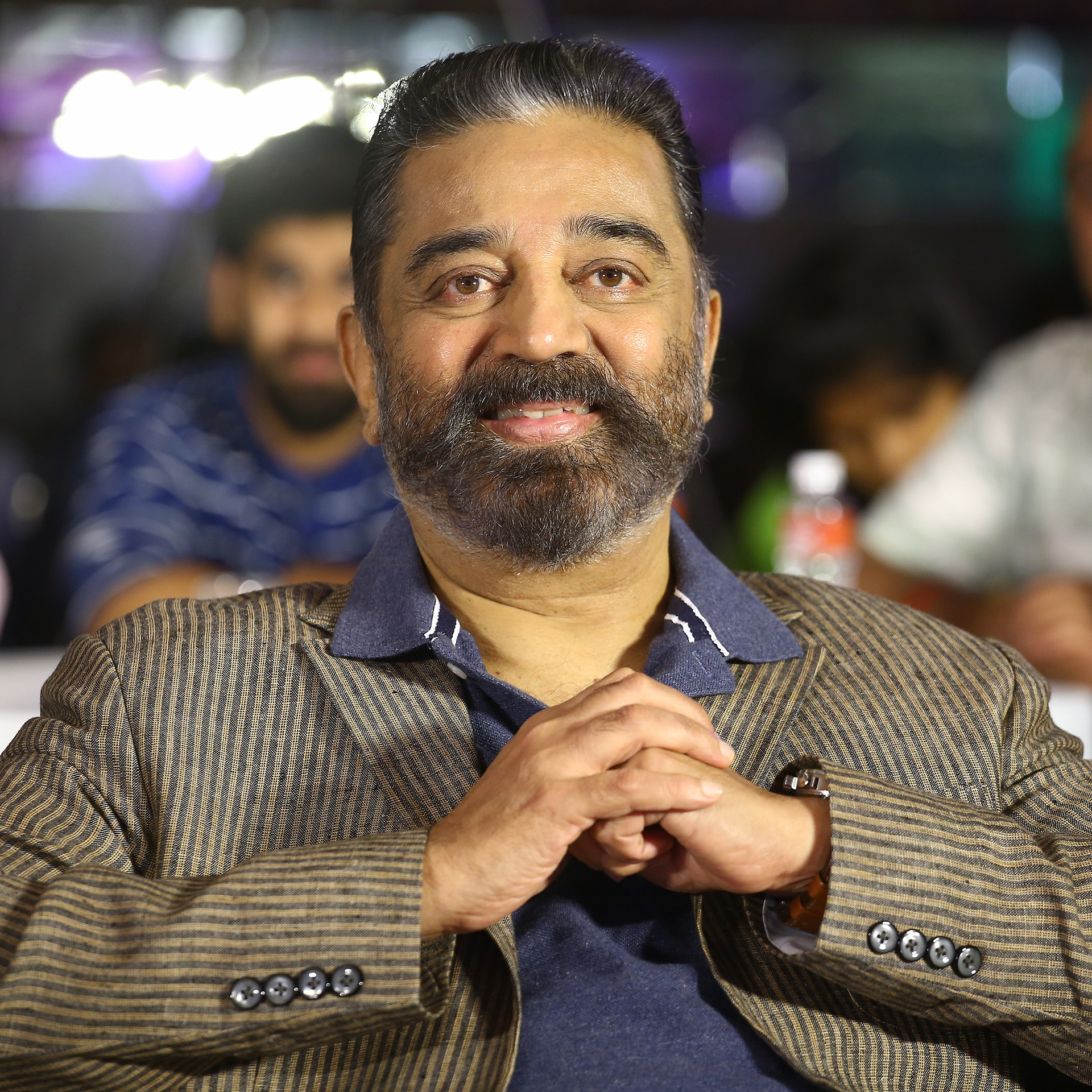
On the invitation extended by Dr. D. Venkateshwaran, the Deputy High Commissioner of Sri Lanka to Chennai, famous South Indian Cinema actor Kamal Haasan and director, visited the Sri Lanka Deputy High Commission of Chennai for the first time in the Mission’s History on July 24.

In this visit, Mr. Haasan had a discussion with Deputy High Commissioner where they discussed the natural beauty of Sri Lanka as well as the cinema industry.

In his speech, Deputy High Commissioner requested Mr. Kamal Haasan to visit Sri Lanka along with members of the film fraternity and the theatre group, which would boost Tourism sector in the country.

Further, Mr. Haasan expressed his interest to ‘Support Sri Lanka’ through his Welfare Association. After the discussion, this veteran actor had a friendly interaction with all the staff members of the Mission.

Sri Lanka Parliament approves state of emergency

Proclamation on the state of emergency declared by the then Acting President under the Public Security Ordinance approved in Parliament of Sri Lanka by majority vote.

The Proclamation on the state of emergency declared by then Acting President under the Public Security Ordinance was approved in Parliament today (27) by a majority of 57 votes with 120 voting in favour and 63 voting against it.

Parliament convened today at 10.00 am and the debate started after the Leader of the House, Minister Susil Premajayantha, presented to the Parliament the resolution regarding the declaration of state of emergency announced by the Acting President under the Public Security Ordinance.

At the end of the debate, which continued until 5.20 pm, Chief Opposition Whip Lakshman Kiriella asked for a division and accordingly the voting was held.

Then Acting President Ranil Wickramasinghe had declared that the provisions of Part 2 of the Public Security Ordinance shall come into operation throughout Sri La:nka from July 18, 2022 through the Proclamation dated 17.07.2022 under Section 2 of the aforesaid Ordinance.

It further states that Parliament is duly informed in terms of Article 155(4) of the constitution that the purpose of the above Proclamation is to the protection of public order and the maintenance of supplies and services essential to the life of the community.

According to the Public Security Ordinance, this Proclamation will be valid for a period of one month if approved by the Parliament within 14 days. If the approval of the Parliament is not obtained within 14 days, it will be cancelled.

Also, the state of emergency can be extended once every 30 days with the approval of the Parliament.

It is stated in the gazette that this proclamation has been issued in accordance with the powers vested in the President in terms of the Public Security Ordinance to ensure public security and the protection of the public order and the maintenance supplies and services essential to the life of community.