Pressure mounts on Govt. to set up accountability mechanism as more bodies emerge from Chemmani mass grave

Mass graves have been one of the tragic legacies of the country’s violent past over the past 40-odd years—from the southern insurrections of 1971 and 1987-89 to the northern separatist insurrection. Tens of thousands of men and women, both young and old, as well as children, became victims of the violence and simply disappeared. Time and again, however, evidence of their grisly fate comes to the surface with the discovery of a mass grave. Each discovery throws up uncomfortable truths that Sri Lankan society must grapple with if it is to heal the still festering wounds of the past and is further evidence of the victims’ long wait for justice.

The issue of mass graves is one that makes every government uncomfortable, but justice demands that they not be ignored. The ruling National People’s Power (NPP) government has insisted it will ensure justice for all victims of enforced disappearances—both in the North and the South. It also granted UN High Commissioner for Human Rights Volker Türk unrestricted access to the Chemmani mass grave site during his official visit to the country last month.

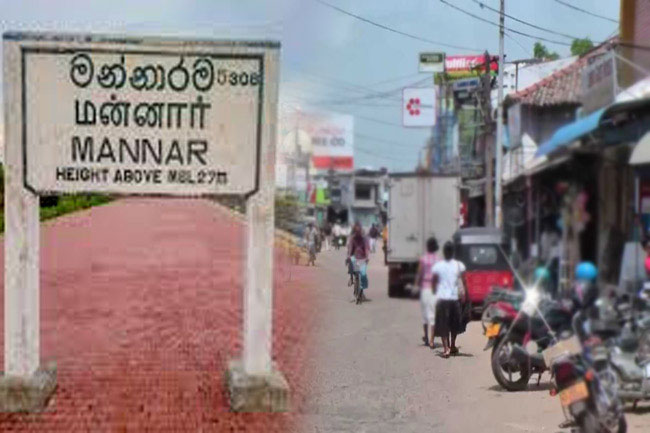
Chemmani is not the only mass grave to have been discovered in recent years. Excavations at the Mannar Sathosa mass grave site and the mass grave site discovered at Kokkuthoduvai in Mullaitivu are still ongoing.

Ongoing excavations at Chemmani and other mass grave sites have again shined an unwelcome spotlight on Sri Lanka at a critical time for the country. While the mass graves and the country’s human rights situation at large are unlikely to have an impact on ongoing tariff negotiations with the United States (US), there is no doubt that, with each new discovery at Chemmani, pressure will only mount on the Sri Lankan government—from countries that have a minority Tamil diaspora with voting rights in their adopted homes, largely limited to Canada and Britain, though—to move forward with a mechanism to ensure accountability.

Excavations at Chemmani to resume tomorrow

At the Siththupathi Hindu cemetery mass grave site in Chemmani, the ongoing excavation activi-ties will resume tomorrow following directives issued by the Jaffna Magistrate.

When the case was taken up for hearing before Magistrate A.A. Aanandaraja on Tuesday, Judicial Medical Officer (JMO) Dr. Piranavan Sellaiyah and archaeologist Prof. Raj Somadeva submitted their preliminary reports to the court, detailing the nature of the mass grave site and their observations.

Last week, the excavation team began its work on an adjacent area in the premises when it came to light more bodies could’ve been buried. The site was marked in court documents as ‘Site 2′.

The court was told that so far 65 full sets of human skeletons have been recovered from the site, with 63 remains from Site 1 and two more from the newly identified Site 2.

The JMO told the court that one set of human remains excavated along with a suspected blue school bag (presumably distributed by UNICEF during wartime) belonged to a child. Some children’s toys were also recovered near the remains as well.

In his report based on the earlier court order issued calling for a report on this particular discovery marked as ‘S-25,’ Dr. Piranavan suggested that the skeleton could belong to a child aged 3-4.

The JMO also pointed out there are similarities of human remains with other sets marked as ‘S-48′ and ‘S-56,’ suspected to belong to minors, compared to the skeleton structure and dresses that were recovered from the site. The court directed him to submit a comprehensive report after further investigations on the matter.

The court also imposed some restrictions on accessing the site for both media and lawyers repre-senting affected communities, considering recent worrisome interpretations that emerged in social media, including the use of Artificial Intelligence (AI).

In the preliminary report submitted by Prof. Somadeva, it was pointed out that, based on forensic evidence collected from the site and the order of the bodies buried, the site was a crime scene.

It was brought to the attention of the court that certain images that were taken at the site went viral on social media with different interpretations and twists by socalled social media influencers and digital content creators.

Stressing that this is a crime scene under judicial purview, the court directed that two lawyers from the Jaffna Bar be allowed to monitor the excavation activities on a roster basis in the morning and evening, with media and relevant experts only being allowed to take photographs at the site.

The case is to be taken up for hearing on August 6.

Posted in Uncategorized

EU survey: Voters demand change in political system, end to political dynasties

Nearly 50 per cent of respondents of a new survey on voter preferences, indicated that a new political force was necessary to resolve Sri Lanka’s crisis, while an overwhelming 90 per cent called for a complete political system change. It also showed that people are moving away from traditional patronage politics and instead prioritising policy-driven, accountable leadership.

Also shown was that voters overwhelmingly prioritised candidates who would offer clear strategies to address the economic crisis, fight corruption and ensure good governance. Some 93 per cent of respondents indicated they would vote based on a candidate’s ability to resolve the economic crisis, 83 per cent prioritised candidates committed to tackling corruption and 86 percent favoured candidates with strong educational backgrounds, signalling a preference for qualified, competent leaders over political dynasties, it showed.

The survey was part of a research report titled “Factors Guiding Voter Preference in Elections in Sri Lanka”, commissioned by the National Peace Council under the European Union funded project “Active Citizens for Elections and Democracy,” recently launched in Colombo.

The study conducted by Dr. Mahesh Senanayake and Ms. Crishni Silva of the University of Colombo offers valuable insights into the key drivers of voter behaviour within Sri Lanka’s dynamic political context. It examines how factors such as economic concerns, perceptions of leadership, trust in public institutions and prevailing social issues influence electoral decisions.

The study also found a decline in the effectiveness of political patronage, with nearly 50 per cent of voters rejecting transactional politics such as food aid distribution, government job promises and infrastructure projects for electoral gain. This indicates a shift towards issue-based and policy driven decision making.

Voters are also moving away from identity-based politics, with factors such as ethnicity, religion and age – once dominant in elections – now less influential. A significant percentage of voters focused instead on leadership qualities, governance policies and economic strategies.

At the launch, Project Manager, Ben Perinpanayagam, who introduced the Active Citizens for Elections and Democracy (ACED) project outlined its objectives to safeguard enabling civic space and promote political pluralism and inclusion by sharing and applying locally generated knowledge.

Secretary to the Prime Minister, Pradeep Saputhanthri, acknowledged the government’s perspective on strengthening democratic institutions and enhancing citizen trust. He emphasised that Sri Lanka was a democracy and understanding the electorate was vital. A survey of this nature was not merely an academic exercise but a diagnostic tool. He expressed his appreciation to the research team, stating that without such research, understanding of political trends would be based on speculation. “Research must be an evidence-based exercise and this study is highly beneficial to society,” he said.

Posted in Uncategorized

Sri Lanka set to pay Rs.300-500 million to Adani

Sri Lanka is set to pay Rs.300-500 million to India’s Adani Company for initial costs sustained by it in terms of the two renewable energy projects, a top source said.

India’s Adani Green Energy withdrew from the projects after differences with the National People’s Power (NPP) government over pricing. The company asked for reimbursement of the initial expenses it incurred here for the execution of the project. The letter was sent in May this year announcing withdrawal from the project and seeking reimbursement.

Afterwards, the Sustainable Energy Authority of Sri Lanka, upon request by the Energy Ministry, sought legal advice on whether payments should be made as requested by the Indian company.

The source said, on condition of anonymity, that legal advice was received yesterday for reimbursements of some of the expenses, and the total amount would be in the range of Rs.300 to 500 million. The Authority is firm that payment made by Adani for the energy permit need not be reimbursed no matter what. However, the exact amount of reimbursements would be determined after consultation of the Attorney General and approval of the board of directors of the Authority within the next few months.

The company was to build wind power plant projects in the Mannar and Pooneryn towns in the Northern Province, investing $442 million.

The project was expected to add at least 350 MW to the national grid by 2025. The company authorities sent a letter to the government authorities in May this year asking for reimbursement of expenses it made initially for research and investigation along with the Sustainable Energy Authority (SEA) in Sri Lanka.

The source said that the entire deal with Adani would be closed after clearance of due reimbursements for fresh tenders to be called for the same renewable energy projects in the north.

“Adani can also participate in the tender process then,” the source said.

Adani struck the deal for the projects with the previous government. The Cabinet approval had been given for them at that time.

US Designates Group Behind Pahalgam Attack ‘Foreign Terrorist Organisation’

The US Department of State added The Resistance Front (TRF) as a designated Foreign Terrorist Organization (FTO) and Specially Designated Global Terrorist (SDGT). 

TRF, a Lashkar-e-Tayyiba (LeT) front and proxy, claimed responsibility for the April 22, 2025, Pahalgam attack which killed 26 civilians.

This was the deadliest attack on civilians in India since the 2008 Mumbai attacks conducted by LeT.

TRF has also claimed responsibility for several attacks against Indian security forces, including most recently in 2024.

The Department of State said that the move demonstrates the Trump Administration’s commitment to protecting US national security interests, countering terrorism, and enforcing President Trump’s call for justice for the Pahalgam attack.

TRF and other associated aliases have been added to LeT’s designation as a FTO and SDGT pursuant to section 219 of the Immigration and Nationality Act and Executive Order 13224, respectively.

Posted in Uncategorized

Mass graves across Sri Lanka: Protesters demand justice, accountability

A protest calling for justice and accountability for mass graves across Sri Lanka—including the recently spotlighted Chemmani site—was held yesterday in front of the Fort Railway Station in Colombo, yesterday (17).

The demonstration drew civil society activists and members of various political groups.

Protesters highlighted that numerous mass graves have been uncovered across the country since the 1990s, both in the North and the South. They accused successive governments of failing to conduct thorough investigations or ensure justice for the victims. Demonstrators noted that despite widespread public outcry, no meaningful accountability was achieved. They warned that Chemmani could meet the same fate if government inaction continues.

The protest was briefly disrupted when Police intervened to stop participants from marching towards the Presidential Secretariat.

Posted in Uncategorized

Rights group demands justice for civilians buried in Chemmani mass grave

In February this year, these mass graves resurfaced when construction workers began the groundwork to put up a crematorium contracted by the Nallur Pradeshiya Sabha. Fr. Sakthivel further said that skeletons and bone fragments of infants, women and girls were unearthed during excavations

Over the past 2-3 decades, several mass graves were unearthed from different parts of the country. These include Sooriyakanda, Hokandara, Wawul Kele, Kottawa Forest Reserve in Galle, state-owned Walpita Farm, Matale Hospital premises, Thiruketheesvaram, Sathosa stores premises in Vavuniya, Kokkuthoduvai in Mullaitivu and the Trincomalee playground

At least 65 bone fragments, skeletons and human remains were unearthed during the Chemmani mass grave excavations that commenced in June this year. Many of these bone fragments were said to be of infants, women and girls who were allegedly killed by the military during the height of the ethnic conflict. In an attempt to demand justice for atrocities committed during the height of the ethnic conflict, and for civilians buried in numerous mass graves around the country, the People’s Power for Justice staged a peaceful protest in Pettah on Thursday (17).

The protesters called on the government to expedite exhumations and to bring about closure to victims. Toys, school bags and clothes unearthed during recent exhumations reveal the harrowing injustice faced by infants and school children during this period. Details regarding the Chemmani mass graves were revealed following a statement given by the main accused of the landmark Krishanthi Kumaraswamy rape and murder case in 1998, minutes before the death sentence was passed on him and nine other convicts.

Speaking to the media during the protest, Fr. M. Sakthivel representing People’s Power for Justice claimed that the JVP regime supported the Chandrika Bandaranaike Kumaratunga regime at the time and that they didn’t make any attempt to unearth mass graves.

“After the military took control of the Jaffna Peninsula, 18-year old Krishanthi Kumaraswamy was raped, murdered and buried by military personnel in 1996,” said Fr. Sakthivel. Her mother, brother and neighbour who went in search of Krishanthi too were murdered and buried. During a lawsuit, Lance Corporal Somaratne Rajapaksa indicated about the mass graves in Chemmani. He claimed that over 400 youth were subsequently killed. When exhumations commenced, around 15 more skeletons were unearthed.”

In February this year, these mass graves resurfaced when construction workers began the groundwork to put up a crematorium contracted by the Nallur Pradeshiya Sabha. Fr. Sakthivel further said that skeletons and bone fragments of infants, women and girls were unearthed during excavations. “We want to know the reasons as to why the military committed such atrocities after they took control over the Jaffna Peninsula and the LTTE was subsequently chased out. Were these infants LTTE supporters? Were they terrorists? Everybody has a right to live on this land. The military has been appointed to protect citizens of a country. But it now looks like the military has committed genocide in the North and East. It was committed in the 1990s, and then another genocide was committed in 2009 in Mullivaikkal. Therefore those from the south has joined hands with victims from the North to support them in their fight for justice.

“Regimes from the South would want to sweep these atrocities under the carpet. They are duty bound to safeguard the military. Successive leaders refrained from exhuming these mass graves. The Matale mass grave is linked to the JVP insurrections but JVP members never appeared on behalf of the victims. They have never spoken about their own brothers who were killed by the military in this manner. So how could we expect the incumbent government to voice for the rights of civilians killed in the North? We like to announce that what happened in Sri Lanka is indeed a genocide. There’s proof of a genocide that happened in Chemmani. Time has come to serve justice to these victims,” he underscored.

Over the past 2-3 decades, several mass graves were unearthed from different parts of the country. These include Sooriyakanda, Hokandara, Wawul Kele, Kottawa Forest Reserve in Galle, state-owned Walpita Farm, Matale Hospital premises, Thiruketheesvaram, Sathosa stores premises in Vavuniya, Kokkuthoduvai in Mullaitivu and the Trincomalee playground. Jaffna Hospital’s Judicial Medical Officer Dr. Pranavan Selliah informed courts that exhumations would recommence on July 21.

Ranil Accuses US of Breaching IMF Debt Deal

Former Sri Lanka President Ranil Wickremesinghe emphasized that the United States, as a member of the Official Creditor Committee (OCC) and a signatory to the IMF’s Extended Fund Facility (EFF), has a responsibility to support Sri Lanka’s debt restructuring efforts. “They must help us now. Otherwise, they are in breach of the agreement,” he said, accusing the U.S. of preventing Sri Lanka from repaying its bondholders.

Wickremesinghe urged the Sri Lankan government to take a firmer stance. “We must now tell the IMF and the bondholders to go to the U.S. and collect the money. Why are we just going and saying, ‘We’ll buy Coca-Cola from you or we’ll buy gas from you’? You are in breach of this.”

Wickremesinghe lamented the erosion of globalization’s benefits, stating, “The world is moving, and we are getting left behind.” He recalled how, in 1990, Vietnam’s Minister of Industry had sought advice from Sri Lanka on foreign exchange strategies. “Today, Vietnam is ahead. So is Cambodia. Bangladesh is going ahead. And we are still grappling with the same issues.”

A central concern raised by Wickremesinghe was Sri Lanka’s strained trade relationship with the United States. He referenced the 30% tariff imposed on Sri Lankan exports to the U.S. during Donald Trump’s presidency, arguing that such barriers have severely impacted the country’s ability to compete. “You can’t survive with 30%. They’re going to ask for less. I hope they succeed. But otherwise, we’re stuck.”

Wickremesinghe described the current global landscape as one of economic bullying and disruption, where long-standing trade agreements forged over the past 25 years have been abruptly discarded. “New arrangements — not even formal agreements — have replaced them in just eight weeks,” he said, highlighting the unprecedented pace of change and the uncertainty surrounding its impact on the global economy.

Posted in Uncategorized

US offers 0% duty on 70–80% of Sri Lankan exports: Dy Minister

The United States has offered to accept 70 to 80% of products exported from Sri Lanka without imposing any tariffs, Deputy Minister of Economic Development (Prof.) Anil Jayantha Fernando stated.

The offer has been made during on-going discussions between Sri Lanka and the US following the decision by US President Donald Trump earlier this year to impose reciprocal tariffs on countries based on existing trade deficits.

Speaking during the “Ada Derana Big Focus” program held today (17), Deputy Minister Anil Jayantha Fernando confirmed that the US has offered Sri Lanka a list of 1,161 products for exports including apparel and 42 products related to the Agricultural industry.

The Deputy Minister of Economic Development stated that the details of the agreement with the United States cannot be disclosed yet, as discussions related to tariff concessions have not been finalized.

He added due to the technical nature and diplomatic protocol, matters under discussion will not be made public at this juncture.

Deputy Minister of Economic Development Anil Jayantha Fernando said Sri Lanka is also in discussions on the possibility of securing 0% tariffs on imports from the US.

He said, “When it comes to imports, currently goods imported from the U.S. fall within a 0% to 20% tariff range. So even if we slightly reduce the rates on some of those items, it will not result in a significant loss of revenue for the government, as we import only around USD 300 million worth from the U.S.”

Meanwhile, a delegation from Sri Lanka is scheduled to leave for the United States tomorrow (18) to continue discussions on further reducing U.S. tariff rates.

According to the recent announcement by the White House, goods exported to the United States from Sri Lanka will be subject to a 30% tariff from August 1.

Chemmani mass grave excavations to resume on July 21

JMO Jaffna general hospital Dr. Pranavan Selliah has informed court that excavations of the Chemmani mass grave in Jaffna will resume on July 21.

He said excavations in the second stage continued for 24 days under the supervision of Jaffna Magistrate A. Anandaraja and the finds included the skeletal remains of 65 bodies and they are at present in his custody.

Bags, footwear, bangles, and clothes were among other finds that are under strict security of the police.

The skeletal remains of human bodies had been recovered first on February 16 by the workers who carried out excavations at the site to lay the foundation for a crematorium under a project contracted by the Nallur Pradeshiya Sabha.

Nallur police had initiated action on information from the contractor and provided protection to the site.

Shani Abeysekara named as witness in Ekneligoda disappearance case

The Attorney General has informed the Colombo Trial-at-Bar Judges Namal Balalle, Mahesh Weeraman and Sujeewa Nishshanka that the current Director of the Criminal Investigation Department (CID) Shani Abeysekara, has been named as a witness in the ongoing case concerning the abduction and disappearance of journalist Prageeth Ekneligoda on January 25, 2010.

Former Commanding Officer of the Giritale Army Camp, Lieutenant Colonel Shammi Kumara Ratna, and nine other members of the Military Intelligence Unit have been named as accused in the case.