IMF hopes to complete Sri Lanka aid talks ‘as quickly as possible’

The International Monetary Fund hopes to complete rescue talks with Sri Lanka “as quickly as possible,” Managing Director Kristalina Georgieva said on Wednesday, hours before the crisis-hit South Asian nation elected a new president.

Speaking with Nikkei Asia in Tokyo, Georgieva said the fund was “very deeply concerned about the well-being of the people in Sri Lanka,” which has been gripped by severe shortages of fuel, food and other essentials after its foreign reserves dried up.

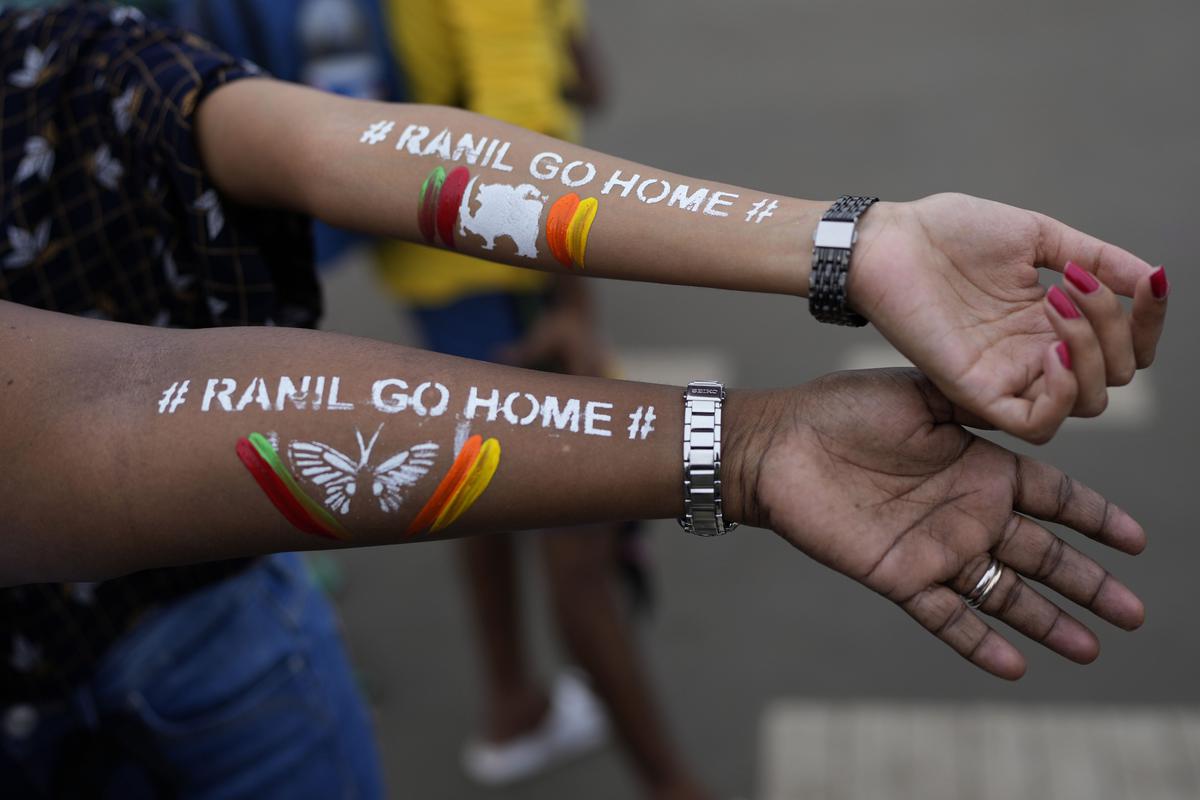
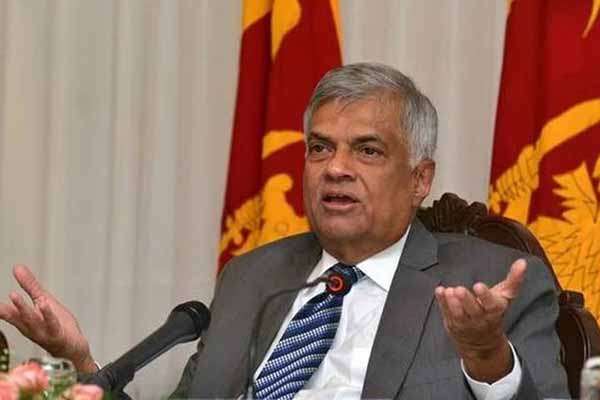
Frustrated citizens have turned their anger on the government, clouding the outlook for debt restructuring and driving once-powerful President Gotabaya Rajapaksa to go into exile and resign last week. On Wednesday, the Sri Lankan parliament elected Ranil Wickremesinghe as his replacement.

Georgieva vowed that “the moment there is a government that we can continue our discussions with, our team will be there.” She added that she was “very hopeful that based on the good technical work we have already done, and the fact that this technical team of Sri Lanka is there, we can complete program negotiations as quickly as possible.”

Wickremesinghe is no stranger to the IMF, as a finance minister and six-time prime minister who has had a hand in negotiations. But he is deeply unpopular with the public.

Georgieva said that the IMF would work with any Sri Lankan administration “as long as the next leader enjoys support and has the longevity to lead the country.”

Sri Lanka is not the only South Asian country facing serious economic pressure. Others include Pakistan, with which the IMF recently reached a staff-level agreement to extend about $1.2 billion in aid, and the Maldives, whose debt-to-gross domestic product ratio stood 123.4% last year according to the IMF’s estimate.

“It is very important for all countries that have had that burden to stare it in the face and not pretend that somehow the problem can go away,” Georgieva warned. “Because it won’t.”

The managing director, who was stopping in the Japanese capital after attending the Group of 20 finance ministers meeting in Indonesia last week, went on to say: “Countries that are faced with severe problems of bad management need to understand that, in this context, markets are jittery. Sentiment is such that there is more anxiety. So if you need to be prudent in good times, you have to be even more prudent in bad times where we are today.”

In the case of Sri Lanka, which “pre-emptively” defaulted on its foreign debt for the first time earlier this year after COVID-19 devastated its core tourism sector, the government was due to submit a debt restructuring plan to the IMF by next month.

“What we would need for the program is financial assurances that will be sustainable, not immediately, but that we have a credible plan to get to that point,” Georgieva said. She added that the incoming government has “a very important role to play, reaching out to both bilateral creditors and private-sector creditors.”

Sri Lanka’s large creditors include Japan, China and India. Georgieva said that she has discussed the situation with the countries during her Asia trip, and was encouraged because “there is an understanding that protracted negotiations are simply not viable, that there has to be decisive action as early as the weeks after a [new] government is in place.”

More broadly, on the global economy, Georgieva said that the IMF will further lower its projection for global GDP growth when it releases its latest World Economic Outlook on July 26. This will mark the third downgrade this year alone. In April, the IMF lowered the outlook for 2022 to 3.6% from 4.4% in January.

She said that the new growth projections would remain in positive territory both for 2022 and 2023. But the downside risks, such as the Ukraine war and inflation, “remain very present.”

“The risk of recession has gone up,” she said.

Georgieva said there will be a “quite significant downgrade” for China, from its 4.4% growth forecast in the IMF’s April projections due to the impact of COVID-19 lockdowns and real estate problems.

She noted that Beijing has started to use monetary as well as fiscal policy levers, but said the question is “how quickly they can produce results.”

When asked about the weakening Japanese yen and the Bank of Japan’s monetary policy, she pointed out that Japan is an export-oriented economy. Hence, the exchange rate is helping Japanese exporters.

“The economy is not yet achieving its inflation target [of 2%] in a sustained manner,” she said. “And therefore, monetary policy accommodation remains the right choice.”

Source: News 1st
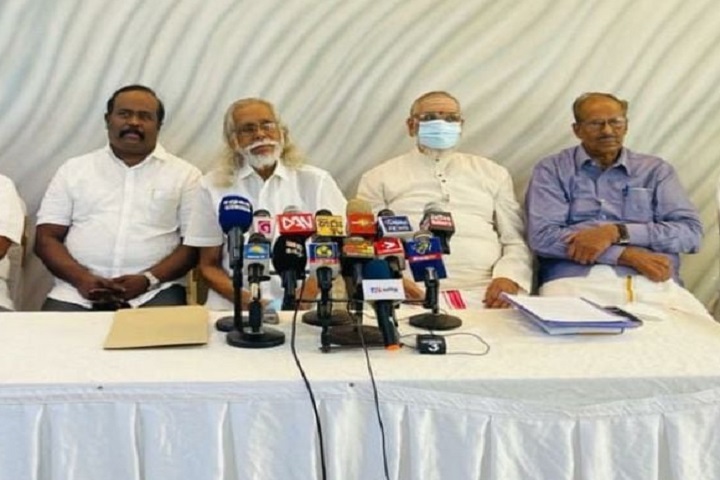
A memorandum to the presidential candidates by six tamil national parties including their members of parliament

-REGARDING THEIR GRIEVANCES –
Whereas the sri lankan tamils and sinhalese are the descendants of the original inhabitants of this island. Buddhism was received into this country in the 3rd century bc. Both communities have occupied this country for a long time and had lived amicably. There is no reason why they cannot live in amity hereafter too. The tamils seek equality and dignity and the right to live and govern themselves in their areas of continued residence peacefully uninterfered by outsiders.
Whereas prior to the country being amalgamated by the british for administrative purposes in 1833, there was a distinguishable tamil speaking area governed by tamil rulers in the north and east of the island. Despite amalgamation which became a fait accompli at the time of independence and the enactment of successive unitary constitutions, the majority in the north and east still speak the tamil language. The indo sri lankan agreement of 1987 recognised the north- east as having been the historical habitation of the tamils.
And whereas since sri lanka obtained independence the tamils including the upcountry tamils have undergone much discrimination and calumny due to the ethnocentric policies pursued by successive sri lankan governments.
And whereas the unitary constitution given by the british at the time of their departure handed over political power to the sinhalese who were minorities in the north east but majority elsewhere. Thereby the majority in the seven provinces outside the north east were able to dominate and hegemonize the tamils so far. The imposition of sinhala language by the sinhala only act of 1956, in areas where the majority were tamil speaking, was symbolic of such domination.
And whereas the rajapakses in order to cover up their corrupt practices and activities both within the military and elsewhere, created an image about the tamils as being terrorists and muslims as extremists. In recent times the sinhala majority have begun to understand the atrocities perpetrated on the tamils and the sufferings undergone by them so far.they have also come to realise that the incidents of april 21st 2019 were staged to get the sinhala buddhist majority votes.today those very voters have turned against their president whom they passionately voted for.
And whereas the country has now realised to a great extent that politicians in sri lanka had for their own personal benefit created the bogey of terrorism and extremism but reconciliation among the diverse people of this island is indeed possible if understanding dawns.
And whereas it is necessary that when the country turns a new leaf politically, we do not repeat the wrongs so far committed and that we put right the political wrongs committed as soon as possible. Now therefore we the leaders of six tamil nationalist parties do hereby set out hereunder the steps that need to be taken immediately to bring an end to the long delayed ethnic crisis.

1. The Sri Lankan Tamils are entitled to the right of self- determination in terms of Article 1 of the provisions of the UN
Covenant on Civil and Political Rights.
They form a Nation in terms of the Law. Therefore steps must be taken to bring to an end the hegemonic
administration and governance hitherto practiced by the Centre. This must take place within six months of election
of the new President.
2. Pending the enactment of a new constitution following remedies must be found for the existing immediate
problems of the Tamils-
a. Withdraw the Prevention of Terrorism Act as undertaken to the UN.
b. Release under a special Amnesty all Tamil Political Prisoners convicted, detained and taken into
custody under the PTA. Needless to say the provisions of the PTA are contrary to the normal criminal law
of the Country.
c. Release all lands to the People in the Northern and Eastern Provinces which were expropriated from
the People by the Archaeology Commission, Mahaweli Authority, Forest Department, Wild Life Department
and the Military Forces et al.
d. Reduce the Military in the North and East substantially handing back the extensive lands and
number of buildings back to the People or the respective District Secretaries, as found appropriate. There
are new lands recently appropriated by the Military. The Military must be asked to hand over them too to
the owners or the respective District Secretary of the area concerned.

e. Take steps without delay to inquire into the enforced disappearances.
f. Stop all land grabbing taking place in the North East in order to settle Persons from outside the
Provinces with a view to change the demography of the Tamil speaking areas.

g. Review all delimitation of boundaries in the North East undertaken by the State with a view to decrease
the Parliamentary representation of Tamil speaking people and take necessary steps to give adequate
representation to the people of the area in contra- position to those brought from outside the Provinces.
There is no need for delimitation for new electorates in the North -East and in the Hill country.
h. Review Election procedures so far adopted with a view to decrease Tamil speaking People’s representation.
Proportional representation should continue.
i. Implement all existing provisions in the Thirteenth Amendment including land and police powers
before a proper Constitution recognizing the right of self -determination of the Tamils is put in place.
Financial power now in the hands of the Governor must be passed on to the Provincial Councils.
j. Make arrangements for the Northern and Eastern Provinces to receive investments without any obstacles being placed by the Central Government. The Tamil diaspora is prepared to bring in large amount of capital
despite the dire straits the country is in, if sufficient guarantees in terms of International trade practices are given by the Government. To overcome the present economic crisis, Sri Lanka needs foreign investments. We are having almost 1.5 million Tamil diaspora all over the world and quite a number of them are willing to bring investments into this country. But they do not have any faith in the Colombo Governments. If the North and East Provincial Councils are given the powers in this interim period to invite and protect the international investments many would like to come and invest here. Under a proper Constitution which recognizes the rights of Nation or Nations within its fold, such powers would be automatically invested in the federal unit.
Powers for tax relief and other relevant concessions like land, infrastructure etc must be given to the Provincial Councils until a proper Constitution is in place. If we make it easy for the investors we would be in a position to invite large foreign direct investments.
On hearing from each candidate their views in writing we would decide whom our Parliamentarians should vote on the 20th July 2022.

Posted in Uncategorized

Dullas, Ranil, Anura to contest for President; Vote on Wednesday (20)

The names of three MPs were nominated in Parliament for the vacant post of President.

1. MP Dullas Alahapperuam – Nominated by Opposition Leader Sajith Premadasa, Seconded by Professor G. L. Peiris.
2. MP Ranil Wickremesinghe (Acting President) – Nominated by Dinesh Gunawardena, Seconded by Manusha Nanayakkara
3. MP Anura Kumara Dissanayake – Nominated by Vijitha Herath, Seconded by Harini Amarasuriya.

Accordingly, these three candidates will contest for the post of President at a secret ballot on Wednesday (20), when Parliament meets at 10 AM.

Source: News 1st

Posted in Uncategorized

Supreme Court rejects petition challenging Ranil’s appointment as MP

The Supreme Court has dismissed a fundamental rights petition filed seeking an order to invalidate the appointment of Ranil Wickremesinghe as a Member of Parliament.

The decision was delivered today by a judge-bench comprising Justices Gamini Amarasekara, Shiran Gunaratne and Janak de Silva.

Announcing the decision, the bench noted that the petition was rejected by accepting the objections presented by the counsels who appeared for the respondent.

The petition had been filed by the General Secretary of ’Vinivida Peramuna’ and public interest litigator, Attorney-at-Law Nagananda Kodituwakku.

The petitioner had states that the fundamental rights of the people of the country have been violated by the appointment of United National Party (UNP) leader and Acting President Ranil Wickramasinghe as a National List Member of Parliament and requests the apex court to issue an order to nullify that appointment.

When the petition was called yesterday (18), the petitioner Mr. Kodituwakku stated before the court that according to the 14th amendment of the constitution, a person who contested the general election and lost cannot be appointed as a member through the national list.

He also pointed out that it is a legal requirement to submit the names of the members appointed for the national list to the Election Commission within a week of the end of the election, and that however Mr. Ranil Wickremasinghe’s name was sent to the Election Commission many months after the end of the 2020 general election.

He therefore argued that the Constitution has been violated through the decision to appoint Ranil Wickremasinghe as a National List Member of the United National Party.

Accordingly, he claimed that the decision to appoint Mr. Wickremasinghe as a National List MP as well as Acting President was against the law.

President’s Counsel Ronald Perera, who appeared for Mr. Ranil Wickremasinghe, presneting facts before the court yesterday alleged that the petitioner has filed this petition by concealing the facts.

He pointed out that the petitioner had previously filed a petition challenging Ranil Wickramasinghe’s appointment as a Member of Parliament and it had been rejected by the Supreme Court last year and accused the petitioner of concealing the mentioning of that fact in the petition.

Accordingly, he also alleged that the petitioner has concealed facts and distorted the truth through this petition.

Therefore, President’s Counsel Ronald Perera requested the court to dismiss this petition without hearing it.

Deputy Solicitor General Kanishka Silva, who appeared for the Attorney General, presented the facts before the court and pointed out that there is no legal basis to maintain this petition.

After considering all the facts, the bench announced its decision today and said that it accepted the preliminary objections presented by the respondents and decided to dismiss the petition without hearing it.

Source: Adaderana

Posted in Uncategorized

Sri Lanka crisis live updates | Acting President Wickremesinghe says IMF talks nearing conclusion

Acting President Ranil Wickremesinghe on Monday urged the political parties to put aside their differences and form an all-party government which would allow the country to recover from the economic crisis as he assured the public that talks with the IMF were nearing conclusion.

Mr. Wickremesinghe renewed the country’s state of emergency Monday ahead of a parliamentary vote to pick a new head of state — a poll in which he is a leading candidate.

Ranil Wickremesinghe automatically became acting President when Gotabaya Rajapaksa resigned last week after fleeing to Singapore.

Police and the military have already stepped up security ahead of Wednesday’s vote to elect a President for the remainder of Mr. Rajapaksa’s term, which ends in November 2024.

Earlier on Sunday, Sri Lanka’s state-run Ceylon Petroleum Corporation (CPC) on Sunday reduced the diesel and petrol retail prices, the first decrease after five hikes since February. The diesel and petrol retail prices have been reduced by Rupees 20 each. Both had been raised by Rs 50 and 60 at the end of May.

Mr. Wickremesinghe, a six-time former prime minister, is being backed for the President position by Mr. Rajapaksa’s party, which remains the largest in the legislature.

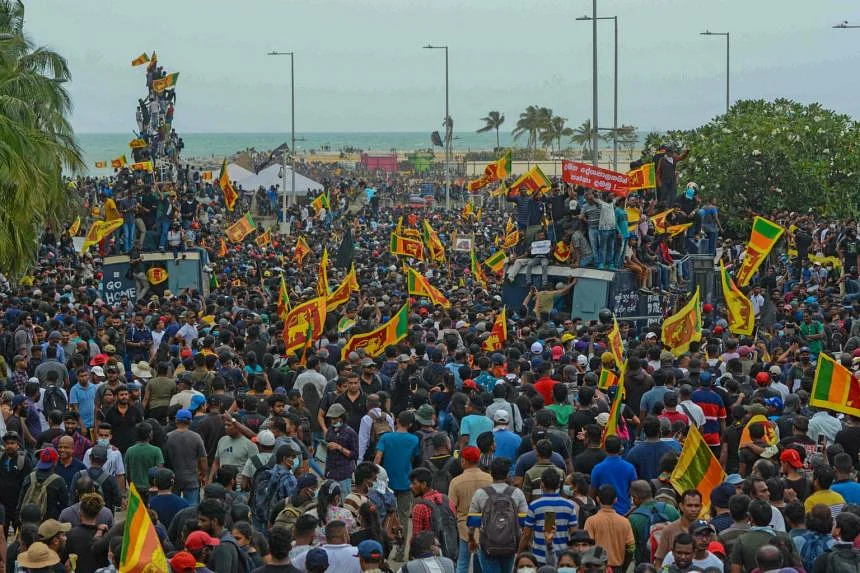
The ex-president was forced to flee when tens of thousands of protesters stormed his official residence after months of demonstrations across the country demanding his resignation over the country’s economic crisis.

Source: The Hindu

Posted in Uncategorized

Tamils Around the World Rally for the Arrest of Former Sri Lankan President Gothabaya for Mass Killing of Tamils: TGTE

Tamil around the world held several rallies calling for the arrest of former Sri Lankan President for the mass killing of Tamils and raping hundreds of Tamil women and girls.

Rallies are held in New York, Malaysia, London, Canada, Germany and other places. They also handed over memorandums to the Singapore Embassy calling for the arrest of Gothabaya under Universal Jurisdiction as called by the UN High Commissioner for Human Rights and others.

1) In Malaysia, Penang Deputy Chief Minister Prof. Ramasamy met the Singapore High commissioner to Malaysia Amb Venu Mennon and handed over the request. A rally was also held outside the Embassy and Prof. Ramasamy addressed the media.

2) In New York, Prime Minister of the Transnational Government of Tamil Eelam Mr. Visuvanathan Rudrakumaran met the Singapore Embassy officials and handed over the Memo. A rally was also held outside the Embassy.

3) In London, a rally was held outside the Singapore Embassy in London and an appeal was handed over to Embassy officials by Transnational Government of Tamil Eelam’s Deputy Ministers Yogilingam and Parthipan handed over a memo calling for the arrest of Gothabaya.

4) In Germany a rally was held calling for the arrest of Gothabaya.

“Around 70 thousand Tamils were killed in six months during Gothabaya’s time as defense secretary. Hundreds of Tamil women & girls were raped, and thousands of Tamils, including babies disappeared” – UN Reports

Former Sri Lankan President Gothabaya Rajapakse fled his country after massive protests and now in Singapore.

According to UN between 40 and 70 thousand Tamils were killed in six months during Gothabaya’s time as defense secretary. Hundreds of Tamil women and girls were raped, and thousands of Tamils, including babies & children, disappeared during his time.

** Video: Sri Lanka’s Killing Fields: https://www.youtube.com/watch?v=3aBLl_M3z40

Nearly 12 years after the end of the civil war in Sri Lanka, there is still no accountability for grave crimes that according to UN constitute war crimes and crimes against humanity, UN High-Commissioner for Human Rights Michelle Bachelet told the United Nations Human Rights Council on February 24 that UN had failed to live up to its prevention role in Sri Lanka.

“She reiterated her previous calls to member states to “investigate and prosecute” perpetrators of human rights abuses in Sri Lanka “in their jurisdictions, under accepted principles of extraterritorial or Universal Jurisdiction.”

“The principle of universal jurisdiction provides for a state’s jurisdiction over crimes against international law even when the crimes did not occur on that state’s territory, and neither the victim nor perpetrator is a national of that state. The principle allows national courts in third countries to address international crimes occurring abroad, to hold perpetrators criminally liable, and to prevent impunity.”

Sri Lanka’s civil war lasted some 25 years, pitting the majority Sinhalese against Tamils. The conflict ended with a massive assault in 2009, in which tens of thousands of Tamil civilians were killed and hundreds of Tamil women & girls were raped. Current president Gotabaya Rajapaksa, who was defence chief at the time, is widely seen as the man who ordered the final assault.

** Video: Sri Lanka’s Killing Fields: https://www.youtube.com/watch?v=3aBLl_M3z40

ADDITIONAL IMPORTANT INFORMATION:

Tamils in the island of Sri Lanka faced repeated mass killings in 1958, 1977, and 1983 and the mass killings in 2009 prompted UN Secretary General Ban Ki-moon to appoint a Panel of Experts to report on the scale of the killings.

According to UN internal review report on Sri Lanka, over 70 thousand Tamils were killed in six months in early 2009 and Tamil women were sexually assaulted and raped by the Sri Lankan Security forces.

International Truth and Justice Project (ITJP) in February 2017 handed over details to UN of Sri Lankan Military run “Rape Camps”, where Tamil women are being held as “sex slaves”. Also, according to UK Foreign and Commonwealth Office report on April 2013, there are over 90 thousand Tamil war widows in Sri Lanka.

Thousands of Tamils disappeared, including babies and children. UN Working Group on Enforced Disappearances stated in 2020 that the second highest number of enforced disappearance cases in the world is from Sri Lanka.

According to this UN report, the killings and other abuses that took place amount to war crimes and crimes against humanity. Independent experts believe that there are elements of these abuses that constitute an act of genocide.

Members of the Sri Lankan security forces are almost exclusively from the Sinhalese community and the victims are all from the Tamil community.

Tamils overwhelmingly voted in a Parliamentary election in 1977 to establish an independent and sovereign country called Tamil Eelam. This Parliamentary election was conducted by the Sri Lankan Government.

*ABOUT THE TRANSNATIONAL GOVERNMENT OF TAMIL EELAM (TGTE):

The Transnational Government of Tamil Eelam (TGTE) is a democratically elected Government of over a million strong Tamils (from the island of Sri Lanka) living in several countries around the world.

TGTE was formed after the mass killing of Tamils by the Sri Lankan Government in 2009.

TGTE thrice held internationally supervised elections among Tamils around the world to elect 135 Members of Parliament. It has two chambers of Parliament: The House of Representatives and the Senate and also a Cabinet.

TGTE is leading a campaign to realize the political aspirations of Tamils through peaceful, democratic, and diplomatic means and its Constitution mandates that it should realize its political objectives only through peaceful means. It’s based on the principles of nationhood, homeland and self-determination.

TGTE seeks that the international community hold the perpetrators of war crimes, crimes against humanity, and genocide against the Tamil people to account. TGTE calls for a referendum to decide the political future of Tamils.

The Prime Minister of TGTE is Mr. Visuvanathan Rudrakumaran, a New York based lawyer.

Source: Ein Presswire

Posted in Uncategorized

Neomal’s son, accused of burning RW’s house, flees from SL!

Evan Perera, the son of former Deputy Minister Neomal Perera, who is accused of causing damage to the private residence of Acting President Ranil Wickremesinghe on the 9th of July, has reportedly fled the country.

“Lankadeepa” had reported, citing Criminal Investigation Department sources, that the son of this Deputy Minister had left for Dubai on the 10th of this month.

It is also reported that former Deputy Foreign Affairs Minister Neomal Perera is also a member of the SJB Executive Committee.

Neomal Perera, who was first elected to Parliament from the Puttalam district representing the United National Party, later held the position of Deputy Minister of Foreign Affairs in the United People’s Freedom Alliance Government.

At the last election, he joined the Samagi Jana Balawegaya (SJB) under the leadership of Sajith Premadasa. It is also reported that he is serving as the party’s Puttalam District Organizer.

After the protesters had stormed the Presidential Palace on the 09th, Evan Perera had posted a video on social media saying, “We raided the Presidential Palace and now we are on our way to raid Ranil Wickremesinghe’s house,” and invited more people from around the country to join them. Ranil Wickramasinghe’s house was raided and he requested through the video not to leave the house until they received the letter of resignation from the Prime Minister.

The police have commenced an investigation regarding a woman in the video who has aided and abated in the act and this particular woman had been seen on several occasions engaging in the protests in and around Colombo together with a politician n, according to police sources.

According to sources of the Criminal Investigation Department, they have taken over all the videos and photographs related to these incidents and commenced an investigations based on them.

Source: Srilanka Mirror

Posted in Uncategorized

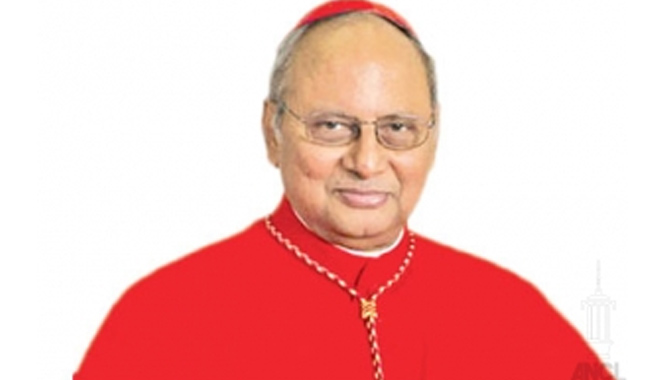
Vote for a President true to your conscience-Cardinal

Archbishop of Colombo Cardinal Malcolm Ranjith has requested all Members of Parliament to work together true to their conscience in selecting a President who can realise the people’s expectations, setting aside corruption, party politics, and enticing MPs with money.

In a letter to all MPs the Cardinal requested the House to seize the opportunity to ensure maximum contribution in fulfilling the aspirations of the people considering it a historic moment.

The letter also states that more than two million citizens are waiting on this crucial decision for the country’s future, in a rare occasion where a President with executive powers had to relinquish power.

The Cardinal also stated there is fear among the people that the elected public representatives will reach a decision that is against the will of the people.

Cardinal Ranjith therefore questioned if self-respect and the will of the people are less important than the political power gained for a short time period.

Easter Attacks: Sri Lanka to seek UK Govt & Intel assistance, says Acting President

Acting President Ranil Wickremesinghe has stated that the absence of a proper Easter Sunday investigation has meant that this issue has still not been fully resolved.

Acting President Wickremesinghe also said that due to the incomplete nature of the Easter Sunday attack investigation, he is requesting the assistance of the UK Government and their intelligence services.

In a special statement, Acting President Wickremesinghe, explained that when he took over as Prime Minister on May 13th the economy had collapsed, with power cuts lasting 5 hours a day. In the two months since then, the Acting President explained that power cuts had been reduced to 3 hours a day, fertiliser has been provided to the farmers and the gas shortage in the country has been solved.

He further stated that last minute he explained July would be a difficult period for the supply of fuel. However, diesel stocks have been secured and are being distributed while from the 21st of July petrol will also be distributed.

He also explained that relief was being provided to the citizens of the country who are struggling with the economic crisis. The Acting President stated that the loans taken by paddy farmers who have planted fields less than 2 acres have been cancelled. While due to the drop in the world oil prices, the fuel prices in the country have also been reduced.

While highlighting the steps taken so far, the Acting President further explained that negotiations with the International Monetary Fund (IMF) were nearing conclusion, and discussions for assistance with foreign countries was also progressing.

He went on to explain that the current political crisis in the country is due to the Executive Presidency, and stated that the 19th Amendment would be re-introduced which would address many of the concerns of the public.

The Acting President went on to explain that there were elements within society who were attempting to disrupt the peace in the country. He explained that these elements would be prohibited from disrupting the country’s progress. Wickremesinghe further stated that the peaceful protesters who had legitimate concerns would be engaged with by the Government and solutions would be found for them.

Acting President Wickremesinghe called upon the political parties in the country to put aside their differences and not allow the country to suffer over differences over an individual. He urged them to come together and form an All-Party Government which would allow the country to recover from the economic crisis.

Source: News 1st

Sri Lanka crisis is a warning to other Asian nations

Sri Lanka is in the midst of a deep and unprecedented economic crisis that has sparked huge protests and seen its president quit after fleeing the country – but other countries could be at risk of similar troubles, according to the head of the International Monetary Fund (IMF).

“Countries with high debt levels and limited policy space will face additional strains. Look no further than Sri Lanka as a warning sign,” said IMF Managing Director Kristalina Georgieva on Saturday.

She said developing nations had also been experiencing sustained capital outflows for four months in a row, putting their dreams of catching up with advanced economies at risk.

Sri Lanka is struggling to pay for crucial imports like food, fuel and medicine for its 22 million people as it battles a foreign exchange crisis. Inflation has soared about 50%, with food prices 80% higher than a year ago. The Sri Lankan rupee has slumped in value against the US dollar and other major global currencies this year.

Many blame ex-President Gotabaya Rajapaksa for mishandling the economy with disastrous policies whose impact was only exacerbated by the pandemic.

Over the years, Sri Lanka had built up a huge amount of debt – last month, it became the first country in the Asia Pacific region in 20 years to default on foreign debt.

Officials had been negotiating with the IMF for a $3bn (£2.5bn) bailout. But those talks are currently stalled amid the political chaos.

But the same global headwinds – rising inflation and interest rate hikes, depreciating currencies, high levels of debt and dwindling foreign currency reserves – also affect other economies in the region.

China has been a dominant lender to several of these developing nations and therefore could control their destinies in crucial ways. But it’s largely unclear what Beijing’s lending conditions have been, or how it may restructure the debt.

Where China is at fault, according to Alan Keenan from International Crisis Group, is in encouraging and supporting expensive infrastructure projects that have not produced major economic returns.

“Equally important has been their active political support for the ruling Rajapaksa family and its policies… These political failures are at the heart of Sri Lanka’s economic collapse, and until they are remedied through constitutional change and a more democratic political culture, Sri Lanka is unlikely to escape its current nightmare.”

Worryingly, other countries appear to be on a similar trajectory.

Laos
The landlocked East Asian nation of more than 7.5 million people has been facing the risk of defaulting on its foreign loans for several months.

Now, a rise in oil prices because of the Russian invasion of Ukraine has put further strain on fuel supplies, pushing up the cost of food in a country where an estimated third of people live in poverty.

Local media outlets have reported long lines for fuel, and said some households had been unable to pay their bills.

Laos’ currency, the kip, has been plunging and is down by more than a third against the US dollar this year.

Higher interest rates in the US have strengthened the dollar, and weakened local currencies, increasing their debt burden and making imports costlier.

Laos, which is already heavily in debt, is struggling to repay those loans or or pay for imports like fuel. The World Bank says the country had $1.3bn of reserves as of December last year.

But its total annual external debt obligations are around the same amount until 2025 – equivalent to about half of the country’s total domestic revenue.

As a result, Moody’s Investor Services last month downgraded the communist-ruled nation to “junk”, a category in which debt is considered high risk.

China has loaned Laos huge amounts of money in recent years to fund big projects like a hydropower plant and a railway. According to Laotian officials speaking to Chinese state news agency Xinhua, Beijing has undertaken 813 projects worth more than $16bn last year alone.

Laos’ public debt amounted to 88% of its Gross Domestic Product (GDP) in 2021, according to the World Bank, with almost half of that figure owed to China.

Experts point to years of economic mismanagement in the country, where one party – the Lao People’s Revolutionary Party – has held power since 1975.

But Moody’s Analytics has flagged increased trade with China and the export of hydroelectricity as positive developments. “Laos has a fighting chance of avoiding the danger zone and the need for a bailout,” economist Heron Lim said in a recent report.

Pakistan

Fuel prices in Pakistan are up by around 90% since the end of May, after the government ended fuel subsidies. It’s trying to rein in spending as it negotiates with the IMF to resume a bailout programme.

The economy is struggling with the rising cost of goods. In June, the annual inflation rate hit 21.3%, the highest it has been in 13 years.

Like Sri Lanka and Laos, Pakistan also faces low foreign currency reserves, which have almost halved since August last year.

It has imposed a 10% tax on large-scale industry for one year to raise $1.93bn as it tries to reduce the gap between government revenue and spending – one of the IMF’s key demands.

“If they are able to unlock these funds, other financial lenders like Saudi Arabia and the UAE [United Arab Emirates] may be willing to extend credit,” Andrew Wood, sovereign analyst at S&P Global Ratings told the BBC.

Former Prime Minister Imran Khan who vowed to fix some of these problems, was ousted from power although the faltering economy is not the only reason for that.

Last month, a senior minister in Pakistan’s government asked citizens to reduce the amount of tea they drink to cut the country’s import bills.

Again China plays a role here, with Pakistan reportedly owing more than a quarter of its debt to Beijing.

“Pakistan appears to have renewed a commercial loan facility vis-a-vis China and this has added to its foreign exchange reserves and there are indications they will reach out to China for the second half of this year,” Mr Wood added.

Maldives

The Maldives has seen its public debt swell in recent years and it’s now well above 100% of its GDP.

Like Sri Lanka, the pandemic hammered an economy that was heavily reliant on tourism.

Countries that depend so much on tourism tend to have higher public debt ratios, but the World Bank says the island nation is particularly vulnerable to higher fuel costs because its economy is not diversified.

US investment bank JPMorgan has said the holiday destination is at risk of defaulting on its debt by the end of 2023.

Bangladesh

Inflation hit an 8-year high in May in Bangladesh, touching 7.42%.

With reserves dwindling, the government has acted fast to curb non-essential imports, relaxing rules to attract remittances from millions of migrants living overseas and reducing foreign trips for officials.

“For economies running current account deficits – such as Bangladesh, Pakistan and Sri Lanka – governments face serious headwinds in increasing subsidies. Pakistan and Sri Lanka have turned to the IMF and other governments for financial assistance,” Kim Eng Tan, a sovereign analyst at S&P Global Ratings, told the BBC.

“Bangladesh has had to re-prioritise government spending and impose restrictions on consumer activities,” he said.

Rising food and energy prices are threatening the pandemic-battered world economy. Now developing nations that have borrowed heavily for years are finding that their weak foundations make them particularly vulnerable to global shockwaves.

Source: BBC News

Posted in Uncategorized