Rajapaksas looking to regroup in Sri Lanka -The Week

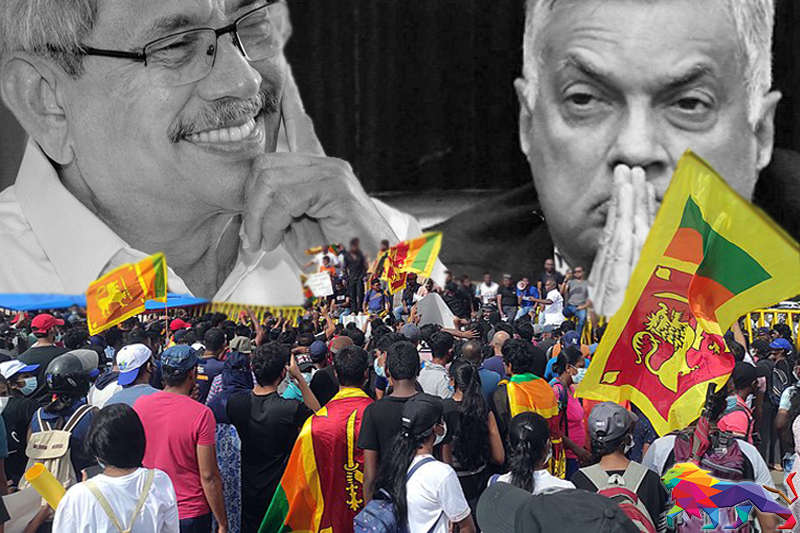
Sri Lanka’s politically under-siege Rajapaksa family will return to dominate once again by forming a new alliance, Namal Rajapaksa, the son of the former president and prime minister Mahinda Rajapaksa, said on Friday. “We will form a new political alliance under the leadership of Mahinda Rajapaksa,” he told a political gathering of the ruling Sri Lanka Podujana Peramuna (SLPP) in the southwestern province of the crisis-hit country.

The SLPP has been at the receiving end of public anger when the island plunged deep into the current economic crisis, leading to street protests in late March, blaming the government for its incompetence. A continuous public protest which lasted over three months saw the ouster of Gotabaya Rajapaksa, the then president. Namal Rajapaksa said Gotabaya Rajapaksa’s inability to crack down on the protests, which he claimed had turned violent, was the reason for the ousted president’s downfall.

Sri Lanka is at a critical juncture in its political life, a UN report has said, noting that impunity for the past and present human rights abuses, economic crimes and corruption were the underlying causes for the collapse of the island nation’s economy. The UN report also suggested fundamental changes to address the current challenges and to avoid repetition of the human rights violations of the past.

Interestingly, it comes ahead of the 51st session of the UN Human Rights Council Session, to be held in Geneva from September 12 to October 7, where a resolution on Sri Lanka is expected to be tabled. This is also the first time that the top UN body has linked the economic crisis with Sri Lanka’s gross human rights violations.

For sustainable improvement to take place, it is vital to recognise and assist Sri Lanka to address the underlying factors, which have contributed to this crisis, including embedded impunity for past and present human rights abuses, economic crimes and endemic corruption, the report said.

The broad-based demands by Sri Lankans from all communities for accountability and democratic reforms presented an important starting point for a new and common vision for the future, it said.

Fundamental changes will be required to address the current challenges and to avoid repetition of the human rights violations of the past, the report said.

A possible resolution by Core-Group underway

A faceoff between the Government of Sri Lanka (GoSL), the Office of the High Commissioner for Human Rights (OHCHR) and several Tamil Diaspora organisations, with a possible new resolution over rights violations in all dimensions is imminent. This time too, a strong debate is expected in Geneva, Switzerland, at the United Nations Human Rights Council’s (UNHRC) 51st Session.

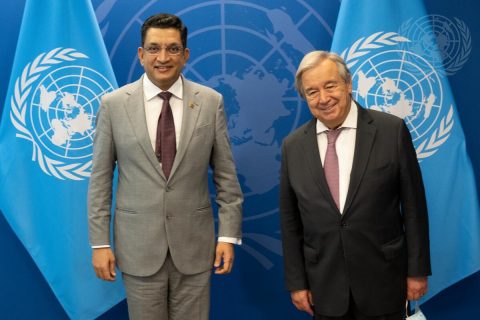
Foreign Minister Ali Sabry, before his departure to Geneva told local media last week that Sri Lanka will stand its ground despite a resolution in favour or not against the country at while Foreign Secretary Aruni Wijewardane said that the Foreign Ministry has worked closely with the UNHRC on many matters at all times. Sabry said, they will cordially work with the UN body but is not interested in confrontations and will not work in the manner that will cause harm to the sovereignty and independence of
Sri Lanka. He referred to the international probe calling to investigate alleged war crimes and human rights violations.

Already, a delegation comprising of the Foreign Minister, Justice Minister Wijeyadasa Rajapakshe and many other officials are currently readying to attend the session. They are preparing to vehemently contest the 46/1 Resolution, the remarks on the OHCHR report and face the resolutions on Sri Lanka by the Core-Group led by the UK in the second week of October.

The OHCHR has also announced that a public meeting has been arranged on the 12 September session at 10 a.m., Geneva time, during which a tribute to victims of enforced disappearances will be held featuring testimony of a victim of enforced disappearance from Sri Lanka.

A vote on the resolution is also expected in the second week of October.

The draft of the resolution would be debated thereafter with the Sri Lankan Government over which a decision would be drawn at the end.

Rejection of resolutions and inclusion of economic crisis by OHCHR

The Government of Sri Lanka has clearly rejected several resolutions from 2011 and also rejected the co-sponsored resolution in 2015 by the then Prime Minister Ranil Wickremesinghe and former Foreign Minister late Mangala Samaraweera.

The resolutions and the co-sponsored resolution despite refuted, are active and not shelved by the UNHRC who might also keep adding many more matters related to Sri Lanka as it did in the past.

The initial resolution was mainly about the Tamil minority, the war related rights violations and issues but as time went by, the OHCHR began to cover vast areas of matters related to Sri Lanka and its negligence. Some of them are related to the current economic crisis where the OHCHR’s report of 6 September 2022 talks about Sri Lanka experiencing an unprecedented economic crisis and is now at a critical juncture in its political life, bringing into sharp focus the indivisibility of human rights, with calls for the international community to urge Sri Lanka to address the underlying causes of the crisis, including impunity for human rights violations and economic crimes.

The OHCHR also called the international community to support Sri Lanka in the investigation of economic crimes that impact human rights and the tracing and recovery of stolen assets.

The High Commissioner Michelle Bachelett also called on authorities to independently, thoroughly and transparently investigate all attacks that have occurred, including the destruction of property, and ensure that those found responsible are held to account.

As of July 2022, the OHCHR said that GoSL has six pending requests for visits by United Nations special procedures. Three special procedures have issued joint statements expressing concern regarding the impact of the economic crisis on human rights, calling for an immediate moratorium on the use of the Prevention of Terrorism Act (PTA), urging the Government to guarantee the fundamental rights of peaceful assembly and expression.

Evidence-gathering mechanism rejected

But the biggest blow for GoSL was Resolution 46/1 which announced an evidence-gathering mechanism on Sri Lanka and all claims of human rights violations and alleged war crimes. It was the only major stumbling block for the Wickremesinghe Government which strongly rejected it to be allowed.

Over this, the OHCHR in its report noted that GoSL has already informed the OHCHR that they have rejected Resolution 46/1, Paragraph 6 that mainly talks about an evidence-gathering mechanism, as it could be used to prosecute troops guilty of war crimes as well as the constitutional framework.

However, using rights activists, the OHCHR has already mapped existing United Nations material, and integrated all of the material from the OHCHR Investigation on Sri Lanka (OISL), where consistent with the applicable conditions and consent. The office has also commenced identifying material held by other actors and engaging with information providers. To date, two organisations’ databases have been migrated into the repository, and negotiations with other information providers are on going.

The OHCHR said, the Sri Lankan Government responded on 18 July, indicating that given its rejection of Resolution 46/1, the team cannot visit the country. But the UNHRC said, it will continue to seek cooperation and request information from the Government in regard to this work.

The UN Rights Commissioner’s Office said for long, successive governments have failed to ensure accountability for gross human rights violations and abuses and serious violations of international humanitarian law in Sri Lanka, especially where alleged perpetrators are State agents. Recognising “the importance of preserving and analysing evidence relating to violations and abuses of human rights and related crimes in Sri Lanka with a view to advancing accountability,” the Human Rights Council decided in Resolution 46/1, Paragraph 6 to strengthen the capacity of OHCHR, “To collect, consolidate, analyse, and preserve information and evidence relating to violations and abuses of human rights and related crimes in Sri Lanka, and to advocate for victims and survivors, and to support relevant judicial and other proceedings, including in Member States, with competent jurisdiction.”

The UN Rights Chief’s Office said, they had formed a dedicated project team to further strengthen its capacity in line with resolution 46/1 on the evidence-gathering mechanism and the team has been fully staffed and operational since May 2022, although the United Nations budget process impacted its configuration and delayed some recruitment. In carrying out this mandate, OHCHR is considering violations and abuses by all parties in Sri Lanka, and against any group, in any geographical area. It is also integrating a gender perspective and child-sensitive approach.

The report of further said, they continued to develop information and evidence repository using an e-discovery platform. This includes configuration to facilitate collecting, organising, crosschecking, collating, searching, and analysing large quantities of data from multiple sources to preserve material and support accountability efforts.

The process of information collection requires great care and a victim-centred approach, the Human Rights Commissioner’s Office said. “The integration of material into the repository is carried out in line with United Nations regulations and policies and OHCHR’s procedures, and taking into account potential future requests for sharing of information.”

OMP needs strengthening

Bachellet said, the confidence and trust of the relatives of victims in the OMP as an independent and credible national mechanism has been severely eroded, particularly since 2020, following a series of problematic appointments of chairpersons and commissioners, and needs to be re-established. In May 2022, one of the Commissioners, Shiraz Noordeen resigned from the OMP, publicly stating that the OMP was unable to act independently to bring justice to victims. Although the purpose of the OMP is to trace and search for the missing, it has not been able to trace a single disappeared person or clarify the fate of the disappeared in meaningful ways, and its current orientation is to expedite the closure of files.

The Government informed OHCHR that the OMP has so far interviewed 1,207 applicants (out of the original list of more than 14,000) for the purposes of verification after which it makes recommendations for relief, further tracing or investigation. As of August 2022, 1,341 families had been issued with “Certificates of Absence”. Apart from the excavation and exhumation of a mass grave in Mannar in 2018, the OMP has not taken a proactive approach in investigating other suspected mass grave sites or leading the process of exhumation of mass graves to identify remains.

Tamil Diaspora going to ICC, TNA fighting to repeal PTA

In the background, there are also some 10 Tamil Diaspora organisations that are busy lobbying UN member states to refer Sri Lanka to the International Criminal Court (ICC).

U.S. Tamil Diaspora organisations wrote a letter to US Secretary of State Antony Blinken about justice and accountability, which Sri Lankan Tamil legislators, civil society, and victim groups forwarded to the Core-Group on Sri Lanka. They stated that they believe that anything short of referring the case to the ICC will forever end any prospect of justice for the vast atrocities committed against their people. In the meantime, GoSL has continuously held talks with like-minded UN member states that have stood by them for their support this time in Geneva as well.

As the session sets to begin, the TNA is gearing for a petition to be signed island-wide starting Saturday (10) calling for the repeal of the draconian PTA brought in 1979 as a temporary provisions Act for six months but continues to be in operation for over 40 years.

The campaign would start in the Northern Province in Mavittapuram, Kanthaswami Kovil, at 9.00 am. The TNA says this campaign is to urge the Government to honour its promise to repeal the PTA. TNA previously also held a campaign against the PTA in Colombo and various other places.

Also, five Sri Lankan Tamil political parties have written a joint statement with six requests to the UN High-Commissioner for Human Rights, Michelle Bachellet ahead of the UN Human Rights Council Session sets to commence tomorrow (11).

They requested to refer Sri Lanka to the ICC; to reduce Sri Lankan military presence in Tamil areas to pre-1983 level before the war started. Also, they request to stop government sponsored Sinhala–Buddhist settlements in Tamil areas, including re-demarcation of divisional boundaries to incorporate Sinhala–Buddhist areas into Tamil districts and annexing Tamil areas into Sinhala-Buddhist areas; calling for an internationally conducted and monitored referendum to bring about a permanent political solution to the protracted Tamil conflict, thereby preventing further atrocities against the Tamil people, which they repeatedly faced inter-alia in 1958, 1977, 1983 and 2009.

The letter had been signed by Tamil Makkal Kootani (TMK) leader MP C.V. Wigneswaran, Leader of Tamil Eelam Liberation Organization (TELO) MP Selvam Adaikalanathan, Leader of the People’s Liberation Organisation of Tamil Eelam (PLOTE) MP Dharmalingam Sithadthan, President of the Eelam People’s Revolutionary Liberation Front (EPRLF) Kandiah Premachandran, Former MP Jaffna District and Leader of Tamil National Party (TNP) Nallathamby Srikantha. They also call on governments around the world to arrest and prosecute Sri Lankan political and military officers in their territories, under the principle of Universal Jurisdiction, which allows for the prosecution of serious international crimes, even if they were not committed in the country’s territory.

Furthermore, they said that the freedom of expression is severely restricted in Tamil areas for several years, facilitated by the extremely large military presence and restrictive laws. Chief among the restrictive laws is the Sixth Amendment to the Constitution, which limits and criminalises political expression.

GoSL and PTA

The Government however has informed the OHCHR that it plans to table a new Counter-Terrorism Act, to replace the PTA, along with a number of other draft laws to regulate cyber-security in the digital space, including an Online Safety Bill to ‘combat online falsehood and manipulation’, which are also in the preparatory stage, the OHCHR noted.

Government informed the OHCHR that the Advisory Board established under Section 13 of the PTA in August 2021 has facilitated the release of 103 detainees charged under the PTA as of July 2022.

According to information available to OHCHR, there remain 47 long-term prisoners under the PTA, 22 of whom are serving sentences and 25 of whom are at various stages of appeal; there are a larger number of detainees from recent years, particularly after the Easter Sunday attacks.

On 1 August 2022, the Government delisted six entities and 316 individuals who had been listed under counter-terrorism regulations, although three organisations and 55 individuals were added including the young Muslim poet, Ahnaf Jazeem, who was detained for 18 months under the PTA before being released on bail in December 2021.

Over the claims of emblematic cases such as truth and investigate the terrible Easter Sunday bombings not addressed the GoSL informed OHCHR of plans to update laws to strengthen commissions dealing with bribery and procurement and other anti-corruption measures.

In the midst of a financial crisis, Sri Lanka must deal with mounting international criticism. They have also become entangled in the IMF bailout. If Sri Lanka wants a bailout, the IMF has many recommendations to agree upon. When it comes to the European Union’s demand to keep the GSP Plus, Sri Lanka must also work hard to improve its human rights record. The conflict would continue, but Sri Lanka will never be able to break free from the grips of international community and other external factors. Unless GoSL takes serious steps to correct its human rights record and bring about changes through constitutional reforms. These have now affected everyone, regardless of race, caste, or religion and many more unrest are imminent if not addressed. Also, many promises have been made to the people of Sri Lanka by successive governments, and they are meant to be honoured, not broken.

– amiesulo@gmail.com

By Sulochana Ramiah Mohan

Posted in Uncategorized

Norway to shut Sri Lanka embassy from 2023

Norway will close its embassy in Sri Lanka’s capital Colombo from July 2023 as part of a reform of diplomatic missions abroad, a statement said.

“The decision to close the Embassy in Colombo does not have any bearing on the bilateral relationship between Norway and Sri Lanka,” the Norwegian embassy in Colombo said in a statement.

“The Government of Norway remains committed to continue further development of friendly and constructive relations between our two countries.

“To ensure the continuation of the amicable and long-standing bilateral diplomatic relations, going forward, Norway intends to accredit a Head of Mission and assign diplomatic staff based at another Norwegian Embassy in the region to cover Sri Lanka.”

Five Norwegian missions abroad will be closed.

“I am sad to share the news of the planned closure of the Norwegian Embassy in Colombo,” Norwegian Ambassador Trine Jøranli Eskedal said.

“This is a result of a wider process to determine how the Norwegian Foreign Service should be set up to deal with the changing geopolitical environment and safeguard Norwegian interests and is not related to Sri Lanka in particular.

“We will continue to maintain our warm bilateral relations with Sri Lanka. Development assistance will also continue.”

Norway opened the Embassy in Colombo in 1996, having had a Norad office in the country since 1976. An important part of the rationale for Norway’s presence in Sri Lanka was linked to Norway’s role in the peace and reconciliation process.

Once the Norwegian Embassy in Colombo is closed, consular services in Sri Lanka will be provided from another Norwegian Embassy in the region.

There is already a visa hub in New Delhi which handles visa applications from Sri Lanka and Maldives, and applicants can visit a VFS office in Colombo for visa appointments.

Posted in Uncategorized

Queen Elizabeth II has died aged 96, Buckingham Palace announces

The Queen has died aged 96, Buckingham Palace has announced.

“The Queen died peacefully at Balmoral this afternoon. The King and the Queen Consort will remain at Balmoral this evening and will return to London tomorrow,” Buckingham Palace said.

Queen Elizabeth II was the longest-reigning monarch in British history and the world’s oldest head of state.

On her death, the Queen’s eldest son and heir, Charles, the former Prince of Wales, has become King of the United Kingdom and 14 Commonwealth realms.

In a statement, he said: “The death of my beloved Mother, Her Majesty The Queen, is a moment of the greatest sadness for me and all members of my family.

“We mourn profoundly the passing of a cherished Sovereign and a much-loved Mother.

“I know her loss will be deeply felt throughout the country, the Realms and the Commonwealth, and by countless people around the world.

“During this period of mourning and change, my family and I will be comforted and sustained by our knowledge of the respect and deep affection in which The Queen was so widely held.”

Posted in Uncategorized

Student Monks protest against PTA; Demand release of IUSF activists

The Inter-University Bhikku Federation gathered in Pettah on Thursday (8) evening to protest demanding the immediate release of student activists who are held under the Prevention of Terrorism Act.

Sri Lanka Police informed the monks and the other student activists who gathered opposite the Pettah Bo Tree, to disperse immediately, however, the group led by the Monks started a protest campaign.

Ven. Udenigama Gunarathne Thero, a member of the Inter-University Bhikku Federation said those in government who committed murder, theft, and sold off public property should be arrested.

“Although there are no queues for fuel, people have not gotten fuel. The same goes for the price of goods. Electricity and Water tariffs were increased and the prices of goods also continue to increase,” said the Venerable Thero

The protesters dispersed after about an hour.

Source: News 1st

Posted in Uncategorized

Sri Lanka would be able to use new IMF funding for budget: CB Governor

Sri Lanka would be allowed to use funds from the next International Monetary Fund for budget finance, and not only to boost foreign reserves, Central Bank Governor Nandalal Weerasinghe said.

Sri Lanka has gone to the IMF 16 times in the past after printing money to boost domestic demand and losing foreign reserves.

“In all the earlier programs IMF money was available to the Central Bank for balance of payments purposes,” Governor Weerasinghe told Sri Lanka’s Newsfirst television.

“Those funds were not available to the government to finance the fiscal deficit.

“But this time, because of this special situation that money can be used to finance the fiscal deficit as well.”

IMF disbursements are usually made directly into the central bank’s balance sheet without disturbing domestic reserve money. The money is invested in US securities (effectively the US budget deficit) in the case of a dollar peg.

By the time IMF money comes, the economic activity and credit had been slowed by higher interest rates and a float of the currency is done to end sterilized interventions (money/exchange policy conflicts) and restore monetary stability.

This is the reason why IMF programs work and borrowing or bridging finance only makes the problem worse.

Budget finance usually comes from other development partners such as the World Bank and Asian Development Bank.

Strong reform programs in the past have qualified Sri Lanka for program loans, where disbursements are made when growth-promoting reforms are done.

This time the IMF is expected to give 2.9 billion US dollars over 4 years roughly averaging 750 million US dollars.

“So that is an additional support IMF is giving directly into budget finance by which the government can bring down the domestic borrowing requirement,” Governor Weerasinghe said.

“Now 100 percent of the deficit is financed through domestic borrowings.

“Whereas once we get this IMF money, the government can reduce domestic borrowings. The government can get less debt from the domestic market so that more money would be available for private sector development.”

However IMF funds given for central bank reserves also technically ease pressure on the domestic market, analysts familiar with the IMF theoretical process say.

Foreign reserves, under Net International Reserve Target, are savings taken away from the domestic credit system through a higher interest rate by blocking domestic credit.

An IMF program reverses the process a pegged central bank engages in to create a currency crisis, which is to inject liquidity into a banking system by purchasing Treasury bills, allowing banks to give loans without raising deposits, making outflows more than inflows.

To rebuild reserves typically current inflows are taken away from the domestic credit system by selling down the central bank holdings of Treasury bills into the banking system after floating the currency and re-pegging the currency to allow the central bank to buy dollars.

By making disbursements into the central bank, especially front-loaded disbursements, the sell downs of bills into the banking system can be reduced, creating space for either budget finance or private sector credit.

Instead, foreign reserves can be built over a longer period, including after other external flows also resume with increased confidence.

However, in the current crisis, investors have been spooked over fears that domestic debt would be re-structured exposing a weak link in the current IMF strategy to restore debt sustainability to countries with monetary instability.

Source: Economy Next

Posted in Uncategorized

Rebel SLPP MPs demand equal time to speak

Rebel Sri Lanka Podujana Peramuna (SLPP) MPs today demanded equal time to speak in Parliament.

Former Minister Dullas Alahapperuma said that the 13 MPs who crossed over to the opposition benches have not been allocated time by the Government to speak in Parliament.

Alahapperuma said that there are 4 groups from the SLPP that are now sitting as independent MPs in Parliament.

However, he said that only their group has not been given time to speak in Parliament.

He appealed to Speaker Mahinda Yapa Abeywardena to speak to the party leaders and resolve the issue.

Opposition Leader Sajith Premadasa also agreed that the rebel SLPP group must be given time to speak in Parliament.

Leader of the House Susil Premajayantha said that he will look into the matter.

Source: Colombo Gazette

Posted in Uncategorized

USAID Administrator to visit Sri Lanka this week

Administrator of United States Agency for International Development (USAID) Samantha Power is planning to engage in a two-day official visit to Sri Lanka this week.

According to reports, Power is expected to arrive on the island on September 10.

She will be holding discussions with President Ranil Wickremesinghe and other government officials during her visit.

USAID administrator’s visit comes after U.S. Treasury Secretary Janet Yellen informed the Sri Lankan government that the United States, as a creditor nation, would participate in restructuring Sri Lanka’s debt.

The U.S. Treasury Department, welcoming President Wickremesinghe’s proposal for a coordination platform for Sri Lanka’s official bilateral creditors, has urged engagement in this regard.

The United States also pledged to continue to engage with their other government agencies, as well as the World Bank and Asian Development Bank, to assist the people of Sri Lanka.

Source: Adaderana

New State Ministers sworn in

The swearing-in of new State Ministers was held at the Presidential Secretariat in Colombo, under the patronage of President Ranil Wickremesinghe this morning (Sep 08).

Accordingly, a total of 37 parliamentarians took oaths in their new state ministerial portfolios.

1. Jagath Pushpakumara – State Minister of Foreign Employment Promotion

2. Ranjith Siyambalapitiya – State Minister of Finance

3. Lasantha Alagiyawanna – State Minister of Transport

4. Janaka Wakkumbura – State Minister of Provincial Councils and Local Government

5. Mohan Priyadarshana de Silva – State Minister of Agriculture

6. Rohana Dissanayake – State Minister of Sports and Youth Affairs

7. Lohan Ratwatte – State Minister of Plantation Industries

8. Indika Anuruddha – State Minister of Power and Energy

9. Sanath Nishantha – State Minister of Water Supply

10. Dilum Amunugama – State Minister of Investment Promotion

11. Vijitha Berugoda – State Minister of Piriven Education

12. Siripala Gamlath – State Minister of Highways

13. Shantha Bandara – State Minister of Mass Media

14. Kanaka Herath – State Minister of Technology

15. Shehan Semasinghe – State Minister of Finance

16. Thenuka Vidanagamage – State Minister of Economic Development and Housing

17. Pramitha Bandara Tennakoon – State Minister of Defence

18. Arundika Fernando – State Minister of Urban Development and Housing

19. Tharaka Balasuriya – State Minister of Foreign Affairs

20. Anuradha Jayaratne – State Minister of Justice and Prisons Reforms

21. Sathasivam Viyalanderan – State Minister of Trade

22. Sisira Jayakody – State Minister of Indigenous Medicine

23. Piyal Nishantha de Silva – State Minister of Fisheries

24. Prasanna Ranaweera – State Minister of Small- and Medium-Scale Enterprise Development

25. D.V. Chanaka – State Minister of Conservation of Wildlife and Forest Reserves

26. D.B. Herath – State Minister of Livestock Development

27. Shasheendra Rajapaksa – State Minister of Irrigation

28. Dr. Seetha Arambepola – State Minister of Health

29. Kader Masthan – State Minister of Rural Economy

30. Ashoka Priyantha – State Minister of Home Affairs

31. Aravindh Kumar – State Minister of Education

32. Geetha Kumarasinghe – State Minister of Women and Child Affairs

33. Sivanesathurai Chandrakanthan – State Minister of Rural Road Development

34. Suren Raghavan – State Minister of Higher Education

35. Diana Gamage – State Minister of Tourism

36. Chamara Sampath Dasanayake – State Minister of Primary Industries

37. Anupa Pasqual – State Minister of Social Empowerment

Source: Adaderana

Anger over bloated new Sri Lanka government

The country of 22 million has suffered months of rampant inflation, severe shortages of essential goods and widespread protests, pushing it to default on its foreign debt in April.

The 37 new state ministers will not accept their modest salaries, but they are entitled to three cars each with fuel, state housing, bodyguards, salaries for personal staff and free stamps, the government said.

On social media, some Sri Lankans vented frustration over the use of public funds.

“No pot to pee… but 37 state ministers!” tweeted user Soraya Deen.

Mirhani Rahees added on the platform: “Spending on these useless state ministers… we have to tighten our belts. There goes my tax money in flames.”

Another user, Krishna Perera, accused the government of having “no commitment to human rights, economic reform, or accountability”.

The new members all come from the coalition of former president Gotabaya Rajapaksa, who fled Sri Lanka in July after protesters overran his official residence, but he returned to the country last week.

Among the new ministers is Rajapaksa’s nephew, Sashindra, who takes the irrigation portfolio.

The 37 new posts are in addition to the 20-member cabinet of President Ranil Wickremesinghe, who took over in late July following Rajapaksa’s exit.

Wickremesinghe, a six-time prime minister, has only one seat in the 225-member parliament and depends on Rajapaksa’s Sri Lanka Podujana Peramuna (SLPP) party, the largest bloc.

Officials close to Wickremesinghe said his attempts to form a broad unity government were yet to materialise as the main opposition Samagi Jana Balawegaya (SJB) had refused to join.

Sri Lanka is in talks with the International Monetary Fund to finalise a $2.9-billion bailout that requires Colombo to raise taxes and privatise loss-making state enterprises — both politically unpopular moves.

In a new report released Tuesday, the UN Human Rights Council urged Wickremesinghe to prosecute those responsible for economic crimes that bankrupted the country.

The report said a culture of impunity for war-time atrocities during the decades-long civil war that ended in 2009 had led to the economic crisis which has undermined the rights of all communities.

Source: RFI

Posted in Uncategorized