State owned Independent Television Network also taken off air

The state owned Independent Television Network (ITN) went off air a short while ago after a group of protestors tried to breach the security deployed at the premises and forcibly take over the channel.

The officials at ITN, it is learnt, have quickly taken the channel off air before the protestors entered the premises.

Earlier in the day, protestors forcibly entered the national television channel, Rupavahini, and took control of the telecast forcing the station to be taken off air. Rupavahini management got the channel back on air a few minutes ago after security personnel had cleared the premises.

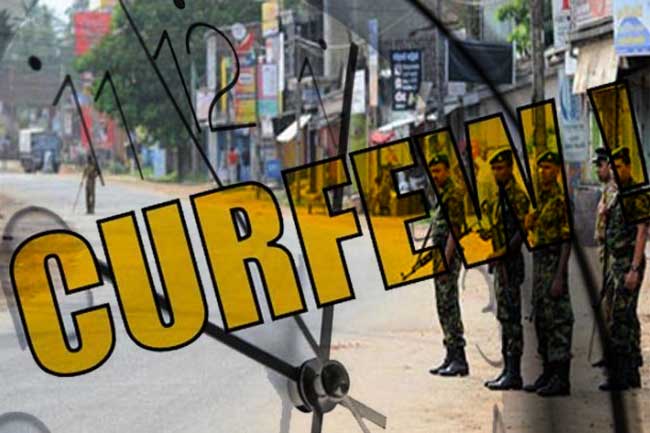
Emergency declared in entire Sri Lanka, Curfew in Western province

Sri Lanka Prime Minister Ranil Wickremesinghe has ordered to impose Curfew in the Western Province with immediate effect, Prime Minister’s Office said.

The Prime Minister’s Office states that the Emergency Law has been declared covering the entire island.

The measure comes after protesters demanding his resignation attempted to enter the Prime Minister’s Office on Flower Street this morning and police used tear gas to disperse the protesters.

Meanwhile, Inspector General of Police CD Wickramaratne and the security forces have been instructed to arrest those rioting and to seize vehicles that are transporting mobs including persons behaving in a violent manner into custody.

Sri Lanka: President Gotabaya Rajapaksa flees the country on military jet

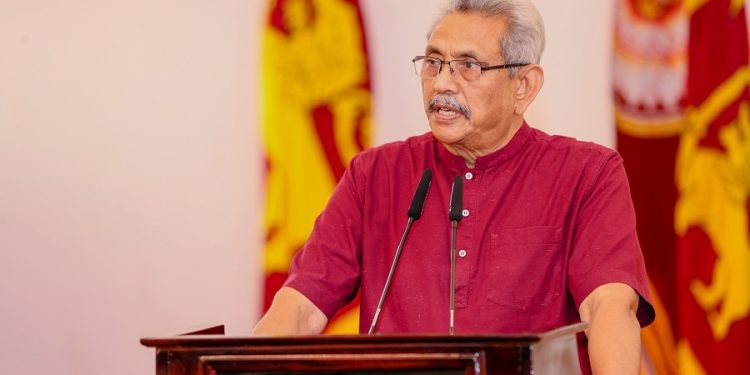
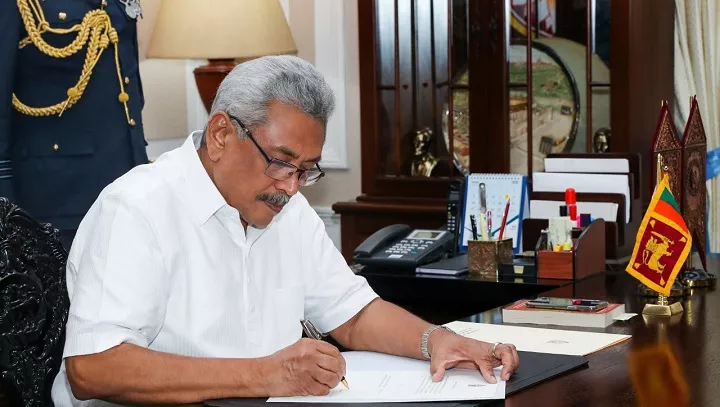
President Gotabaya Rajapaksa has fled Sri Lanka on a military jet, amid mass protests over the island’s economic crisis.

The country’s air force confirmed the 73-year-old flew to the Maldives with his wife and two security officials.

In his absence, he has appointed Prime Minister Ranil Wickremesinghe as acting president.

Mr Rajapaksa’s departure ends a family dynasty that has dominated Sri Lanka’s politics for the past two decades.

The president had been in hiding after crowds stormed his residence on Saturday, and had pledged to resign on Wednesday 13 July.

A source told the BBC that Mr Rajapaksa will not remain in the Maldives and intends to travel on to a third country.

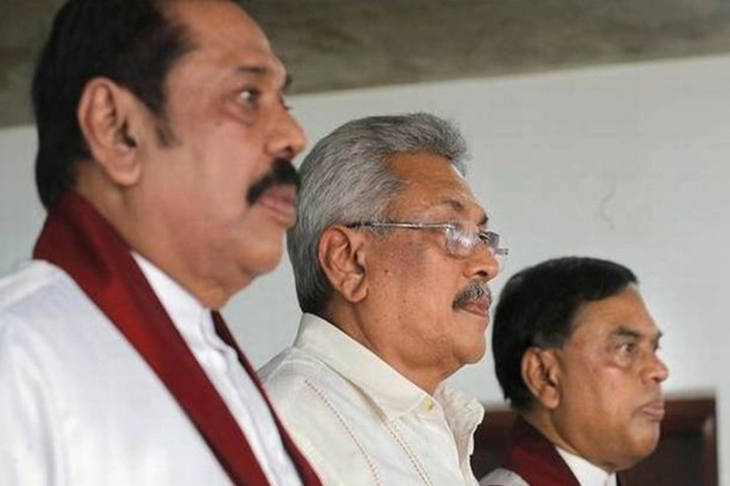
His brother, former Finance Minister Basil Rajapaksa, has also left Sri Lanka and is said to be heading to the US.

As Sri Lankans awoke to the news, thousands of people took to the streets of the capital, Colombo. Many gathered at Galle Face Green, the city’s main protest site. Some listened to fiery speeches at a makeshift stage set up for ordinary people to take the mic.

Punctuated by cries of “Victory to the struggle”, the rallying cry of the protest movement, speakers railed against a government and the leaders they feel have failed them.

Sri Lankan Prime Minister, Ranil Wickremesinghe, has declared a state of emergency across the country and a curfew has been imposed in the western province, a spokesperson in his office said.

Police have fired tear gas to disperse a group of protesters who were walking near the prime minister’s office and towards parliament.

Some demonstrators were furious about Mr Rajapaksa’s departure, seeing a lack of accountability.

“We don’t like it. We want to keep him. We want our money back! And we want to put all the Rajapaksas in an open prison where they can do farm work,” said protester GP Nimal.

But 23-year-old university student Reshani Samarakoon told the BBC that the former president’s exile offered “hope that in the future we can eventually become a developed country, economically and socially”.

Sri Lankans blame President Rajapaksa’s administration for their worst economic crisis in decades.

For months they have been struggling with daily power cuts and shortages of basics like fuel, food and medicines.

The leader, who enjoys immunity from prosecution while he is president, is believed to have wanted to flee abroad before stepping down to avoid the possibility of arrest by the new administration.

Sri Lanka: The basics

Sri Lanka is an island nation off southern India: It won independence from British rule in 1948. Three ethnic groups – Sinhalese, Tamil and Muslim – make up 99% of the country’s 22 million population.
One family of brothers has dominated for years: Mahinda Rajapaksa became a hero among the majority Sinhalese in 2009 when his government defeated Tamil separatist rebels after years of bitter and bloody civil war. His brother Gotabaya, who was defence secretary at the time, is the current president but says he is standing down.
Presidential powers: The president is the head of state, government and the military in Sri Lanka but does share a lot of executive responsibilities with the prime minister, who heads up the ruling party in parliament.
Now an economic crisis has led to fury on the streets: Soaring inflation has meant some foods, medication and fuel are in short supply, there are rolling blackouts and ordinary people have taken to the streets in anger with many blaming the Rajapaksa family and their government for the situation.

A remarkable win for protesters

What a fall from grace for President Gotabaya Rajapaksa – for so long such a major figure in Sri Lanka.

Few expected that matters would ultimately go this way.

As the former defence chief he oversaw the military operations in the controversial war against the Tamil Tiger rebels that ended in 2009. He is accused of human rights abuses during the war and also targeting those who dissented, but he has always denied those accusations.

The Rajapaksa family has dominated Sri Lankan politics for two decades, and with strong backing from the Sinhala Buddhist majority, Gotabaya became president in 2019.

His departure is a remarkable victory for the protesters who came to the streets to express their anger against the mismanagement of the economy and the escalating cost of living.

The president’s departure threatens a potential power vacuum in Sri Lanka, which needs a functioning government to help start digging it out of financial ruin.

Politicians from other parties have been talking about forming a new unity government but there is no sign they are near agreement yet. It’s also not clear if the public would accept what they come up with.

Under the constitution, it’s the prime minister, Ranil Wickremesinghe, who should act in the president’s stead if the latter resigns. The prime minister is considered the president’s deputy in parliament.

However, Mr Wickremesinghe is also deeply unpopular. Protesters set fire to his private residence on Saturday – he and his family were not inside – and he said he would resign to make way for a unity government, but gave no date.

That leaves the parliament’s speaker as the next most likely to step in as caretaker president, constitutional experts say. But Mahinda Yapa Abeywardena is an ally of the Rajapaksas, and it is unclear whether the public would accept his authority.

Whoever does become acting president has 30 days to hold an election for a new president from among members of parliament. The winner of that vote could then see out the remainder of Mr Rajapaksa’s term until late 2024.

On Monday, the main opposition leader Sajith Premadasa told the BBC he would be tilting for the presidency. But he also lacks public support and there is deep public suspicion of politicians in general.

The protest movement which has brought Sri Lanka to the brink of change also does not have an obvious contender for the country’s leadership.

Additional reporting by the BBC’s Frances Mao, Yaroslav Lukov and Simon Fraser.

Posted in Uncategorized

India denies reports that it helped President Rajapaksa flee to Maldives

India on Wednesday categorically denied “baseless and speculative” media reports that it facilitated the travel of Sri Lankan President Gotabaya Rajapaksa who fled to the Maldives on a military jet in the face of a public revolt against his government for mishandling the country’s economy.

The 73-year-old Sri Lankan President left the country along with his wife and two security officers on a military jet on Wednesday.

“The High Commission categorically denies baseless and speculative media reports that India facilitated the recent reported travel of @gotabayar @Realbrajapaksa out of Sri Lanka,” the High Commission of India in Sri Lanka tweeted.

“It is reiterated that India will continue to support the people of Sri Lanka as they seek to realis their aspirations for prosperity and progress through democratic means and values, established democratic institutions and constitutional framework,” it added.

In a brief statement, the Sri Lanka Air Force (SLAF) said that under the Constitution granted to an Executive President, Mr. Rajapaksa was flown to the Maldives onboard an Air Force plane Wednesday morning.

“On government request and in terms of powers available to a President under the Constitution, with complete approval from the ministry of defence, the President, his wife and two security officials were provided a Sri Lanka Air Force plane to depart from the Katunayake international airport for the Maldives in the early hours of July 13,” the statement said.

On Saturday, Mr. Rajapaksa had announced to step down on Wednesday after thousands of protesters stormed his official residence, blaming him for the unprecedented economic crisis that has brought the country to its knees.

Source: PTI

Sri Lanka’s fallen dynasty is already planning its next comeback

For years, Sri Lanka’s Rajapaksa dynasty ruled the island nation with an iron fist, striking fear into political opponents, journalists and other perceived threats to their power. Now protesters are chasing them out of their homes, and out of power.

President Gotabaya Rajapaksa, 73, is set to resign on Wednesday after months of street protests over surging prices and shortages of basic goods such as food or petrol. After spending his time holed up at his official seaside residence, protesters shouting “Gota Go Home” forced him to flee on Saturday while breaching the gates of the compound in dramatic scenes.

The unrest showed the public fury at Rajapaksa, whose three-year adminisration has left Sri Lanka pleading for cash from the International Monetary Fund and nations like China and India after defaulting on foreign debt for the first time since independence from Britain in 1948. Bondholders are also furious: One last month named the Rajapaksas in a lawsuit seeking more than $250 million in unpaid debt — the first of potentially many others.

Yet it wasn’t only demonstrators that wanted Rajapaksa out of office: Even other members of his family saw him as a lame-duck leader. And one in particular, his 36-year-old nephew Namal Rajapaksa, has already been thinking of how the dynasty can restore its reputation over the long term even as the increasingly violent protests had some observers wondering if the whole family would be forced into exile.

In a recent interview at the ruling party’s office in Colombo, which was vandalized by a mob during the May 9 violence, Namal said that Gotabaya “should complete his term and then go.” He described the family’s current predicament as a “temporary setback,” adding that the goal now was “to provide as much stability as we can to address the basic needs of the people, and in the meantime work on long-term strategies.”

Namal is the eldest son of Mahinda Rajapaksa, 76, the current president’s brother who previously held the top job from 2005 to 2015. With Gotabaya as his defense minister during that time, Mahinda crushed a three-decade insurgency from Tamil rebels using brutal tactics that prompted widespread concerns about civilian deaths. At the same time, the brothers sought to crush political opposition and racked up billions of dollars worth of debt, mostly to China.

That decision drove a wedge between the brothers, according to people familiar with the situation, who said that Mahinda for weeks had resisted Gotabaya’s calls that he step aside before relenting. Of the six Rajapakas in the cabinet at the start of the year, Gotabaya was the last one standing — and he’ll soon be gone.

The tensions between the brothers reflects their different leadership styles, according to Paikiasothy Saravanamuttu, executive director of the Centre for Policy Alternatives, a Colombo-based research group.

“Mahinda is a populist politician who the people still love,” Saravanamuttu said. “But Gota is a much more reserved, introverted person, and has no experience in governance.”

Whereas public sparring had once been rare for the Rajapaksas, now they are pointing fingers at one another.

In an interview last month at his official residence now occupied by protesters, Gotabaya acknowledged that sweeping tax cuts and a fertilizer ban implemented shortly after he took office didn’t work. But he characterized those misfires as collective ones, and said his push for a bailout last year from the International Monetary Fund but was rebuffed by advisors and relatives until protests got out of hand.

“I didn’t get the support or proper implementation from people who were responsible,” Gotabaya said, adding that he wouldn’t stand again for the presidency after his term expires in 2024.

Namal said his father disagreed over whether to implement sweeping tax cuts and urged Gotabaya not to go ahead with an ill-timed ban on synthetic fertilizers. “Had my father been the president, he would have never taken that decision,” Namal said. Mahinda didn’t respond to requests for comment.

No matter who is responsible, the Rajapaksas are facing a record low and are in need of a rebrand. And Namal is positioning himself as the main person from the next generation to take the mantle.

During the interview, Namal spoke in a measured, calm voice like a seasoned politician. A fan of bodybuilding, the former sports minister wore a short-sleeved shirt that left part of his biceps visible.

Namal made clear that his policies would be more in line with those of his father than his uncle. Sri Lanka’s problem, he said, was that it deviated from a plan to turn Sri Lanka into a manufacturing and transshipment hub. He also saw a need to upgrade airports to attract more tourists and improve agricultural output so the country had ample supplies to feed itself.

He acknowledged his family’s history in the halls of power but also said he doesn’t believe in “dynastic politics.”

“My father started 55 years ago from Hambantota, I started five years ago — it’s a long journey in politics,” Namal said. “This is a rough patch, so face it and move forward.”

In Hambantota district on the southern coastline, the family’s base of power for decades, the political fate of the Rajapaksas remains in question. Armed soldiers patrol outside their sprawling ancestral bungalow, which was reduced to burned-out rubble in May. Locals also destroyed a museum built in the family’s honor, vandalized their tombs and toppled a gold-plated statue depicting a family hero.

The family’s connection to Hambantota stretches back decades. D.A. Rajapaksa, Mahinda and Gotabaya’s father, was a prominent lawmaker. Relatives have homes scattered across the district. Nuan Sameera, 60, a farmer from the village of Hukura Wallya, recalled fondly how Mahinda used to frequent a nearby temple and mingle with locals.

“They are part of us,” Sameera said, even as he criticized the Rajapaksas for the shortage of food and fertilizer.

Rajapaksa critics associate Hambantota with the clan’s extravagant spending habits. An international airport built a decade ago in their name is devoid of passenger flights. A sprawling cricket stadium hardly hosts international matches. And cargo ships barely dock at a $1 billion port constructed with Chinese money.

Even so, Mahinda remains popular in Hambantota, a largely agrarian district set amidst watery rice paddies and coconut trees. Sunil Rajapaksa, a farmer who isn’t related to the family but lives near one of their houses, said he wouldn’t be surprised if Namal leads the dynasty into a new era.

“If Bongbong Marcos could come back, why not the Rajapaksas?” he said, referring to the son of a former dictator who just won the presidency in the Philippines. “It’s just a matter of time before people realize that the Rajapaksas worked to better the country.”

Namal is clear about one thing: He has no plans to flee Sri Lanka, as some rumors suggested at the height of the chaos in May.

“We will never leave the country — it will never happen,” he said. “If the people don’t want us, they have the ballot — not the bullet.”


Posted in Uncategorized

Motion against MR, BR & Co, from flying abroad

A motion was filed with the Supreme Court of Sri Lanka on Tuesday (12) seeking an order prohibiting Former Finance Ministers Mahinda Rajapaksa & Basil Rajapaksa, and Former Central Bank Governors Ajith Nivard Cabraal & Professor W. D. Lakshman, from traveling overseas.

This motion has been submitted in relation to a fundamental rights petition filed by Chandra Jayaratne, the former president of the Sri Lanka Chamber of Commerce, requesting that an investigation be ordered against the people responsible for the current economic crisis.

It is stated in the motion that the fundamental rights petition filed requesting an order to conduct an investigation against the people responsible for the current economic crisis is scheduled to be called before the Supreme Court on the 27th of July.

The application requests for an order to be made against Former Finance Ministers Mahinda Rajapaksa, Basil Rajapaksa, and Former Central Bank Governors Ajith Nivard Cabral and Professor W. D. Lakshman, and Former Secretary of the Ministry of Finance S. R. Attygalle, preventing them from traveling overseas without the permission of the court.

The motion noted that due to the current situation in the country, the President who is also a respondent in the FR application is away from the public eye, and there is an attempt being made by other respondents to leave the country.

Therefore, the motion seeks an order against Former Finance Ministers Mahinda Rajapaksa, Basil Rajapaksa, Former Central Bank Governors Ajith Nivard Cabral and Professor W. D. Lakshman, and Former Secretary of the Ministry of Finance S. R. Attygalle, preventing them from traveling overseas without the permission of the court.

On the 17th of June, Transparency International Sri Lanka along with 3 individuals filed a petition (SC/FRA/212/2022) in the public interest calling for action against persons responsible for the current economic crisis in Sri Lanka.

The case was taken up for support for leave to proceed on the 1st of July. During the session, counsel appearing on behalf of two of the respondents requested Court to take up the petition along with another petition (SCFR 195/2022) which was similar in nature. Court thereafter directed the matter to the Chief Justice to consider this request. After consideration, the case was to be taken up for support on the 27th of July.

The petition by TISL, Chandra Jayaratne, Jehan CanagaRetna, and Julian Bolling claims that the respondents named in the petition are directly responsible for the unsustainability of Sri Lanka’s foreign debt, its hard default on foreign loan repayments, and the current state of the economy of Sri Lanka.

The petition calls for the respondents to be held accountable for their illegal, arbitrary, and unreasonable acts or omissions which culminated in the current economic crisis.

Source: News 1st

Posted in Uncategorized

President blocked at airport as he tries to escape

President Gotabaya Rajapaksa had attempted to leave the country today but was prevented from doing so by immigration staff, the AFP news agency quoted official sources as saying.

Rajapaksa and his wife spent the night at a military base next to the main international airport before he attempted to leave.

He has promised to resign on Wednesday and clear the way for a “peaceful transition of power” — but became stuck in his own country on Tuesday after an attempt to flee.

As president, Rajapaksa enjoys immunity from arrest. It is believed he wanted to go abroad before stepping down to avoid the possibility of being detained.

But immigration officers were refusing to go to the VIP suite to stamp his passport, while he insisted he would not go through the public facilities, fearing reprisals from other airport users.

Rajapaksa’s youngest brother, Basil — who resigned in April as finance minister — missed his flight early on Tuesday after a similar standoff with airport staff.

Basil Rajapaksa tried to use the paid concierge service for business travellers, but airport and immigration staff said they were withdrawing from the fast-track service with immediate effect.

“There were some other passengers who protested against Basil boarding their flight,” an airport official told AFP. “It was a tense situation, so he hurriedly left the airport.”

There was no official word from the president’s office about his whereabouts, but he remained commander-in-chief of the armed forces with military resources at his disposal.

One option still open to him would be to take a navy vessel to either India or the Maldives, a defence source said.

Source: Colombo Gazette

Posted in Uncategorized

Basil turns back after trying to fly out of country

Former Minister Basil Rajapaksa has attempted to leave the country through the Bandaranaike International Airport in Katunayake early this morning (July 12), Ada Derana learns.

It is reported that Rajapaksa’s attempt was hampered after he was met with a strong protest at the airport and the immigration officers refused to serve him at the VIP departure lounge.

The president of Immigration and Emigration Officers’ Association K.A.A.S Kanugala said its members attached to the Silk Route Lounge, which provides dedicated services to the VIPs at the airport, withdrew from their duties from midnight yesterday.

The decision was taken due to concerns regarding the security of immigration officers serving at the lounge.

Kanugala told Reuters that the immigration officers are under tremendous pressure to not allow top-level figures to leave the country, given the ongoing crisis situation.

“We are concerned for our security. So, until this issue is resolved, the immigration officials working at the VIP lounge decided to withdraw their services,” he said further.

Source: Adaderana

Posted in Uncategorized

Islandwide hartal if resignation delayed

A multi-sectoral islandwide hartal-cum-strike protest campaign with the expected participation of over 1,000 trade unions (TUs) is to be conducted on Thursday (14) if President Gotabaya Rajapaksa does not step down as promised tomorrow (13).

The National Trade Union Co-ordinating Centre (TUCC) warned that if President Rajapaksa and the Government do not step down tomorrow, an islandwide hartal will be conducted. TUCC Co-Convener Wasantha Samarasinghe, speaking to the media, said that if the President has not resigned by the dawning of 14 July, the entire country will come to a standstill due to the hartal. He added that hospitals, ports, banks, and transportation will be gravely affected.

Speaking to The Morning, representing the TUCC, Academy of Health Professionals President Ravi Kumudesh said that more than 400 TUs are expected to participate in the hartal, noting: “Unions representing the health, postal, railway, ports, electricity, and water supply sectors would be participating in the hartal and strike action on 14 July if President Rajapaksa does not step down.” According to Kumudesh, Colombo would be the centre of the islandwide trade union action.

Meanwhile, in a letter to Speaker of Parliament Mahinda Yapa Abeywardena, leaders of all political parties, and MPs, Kumudesh said: “It is reported to us through unofficial sources that military action is being planned to forcibly evacuate the protestors from the protest site (Galle Face Green) and related locations.

“If that happens, it would be the beginning of the worst tragedy in Sri Lanka. The expected leadership could not be seen from you to solve the current crisis in the country within the Constitutional framework, which is crucial in order to avoid such a bad situation. Therefore, we request your prompt intervention on preventing the country from being pushed into a terrible tragedy.”

The letter also requested the Speaker to convene Parliament immediately; assume the office of the President for a short period of time, as soon as possible, until an interim President is elected by Parliament; take all Constitutional steps to hand over the power to an interim all-party Government convened with a Prime Minister (PM) having the majority support in Parliament; and formulate a time-bound roadmap for the interim Government to resolve critical economic issues and to restore normalcy until the General Election.

Ceylon Teachers’ Union (CTU) General Secretary Joseph Stalin, speaking to The Morning, said that all unions in the education sector would participate in the hartal and strike action on Thursday if the President does not step down. “We convey our support under the organisation called ‘Trade Unions and Bahujana Sanvidana Ekamuthuwa (Collective of Peoples’ Organisations) against Government suppression’.”

Further, Lanka Postal Services Association Chairman Jagath Mahinda also said that all senior and junior officers would participate in the hartal under the TUCC and the Ekabadda Janatha Viyaparaya (United People’s Movement).

“More than 1,000 trade unions are expected to participate in the union action,“ he claimed, speaking to The Morning.

General Railway Station Masters’ Union General Secretary Kasun Chamara Jayasekera, speaking to The Morning, said that they would also extend their support to the union action.

“We actually supported throughout this process where even on 9 July, we operated trains despite the Police curfew,” he said.

All-Ceylon Transport Workers’ Union General Secretary Sepala Liyanage, speaking to The Morning, also said that they would support the strike.

Government Medical Professionals’ Association President Dr. Lakshman Edirisinghe said that they would take a decision on trade union action after analysing the situation today (12).

“We are currently analysing the situation and will come to a conclusion. If an all-party Government is formed, there would be no need for a trade union action,” he said.

Source: The Sunday Morning

Sri Lanka crisis: UN calls for dialogue to ensure smooth govt transition Read more At: https://www.aninews.in/news/world/us/sri-lanka-crisis-un-calls-for-dialogue-to-ensure-smooth-govt-transition20220712083431/

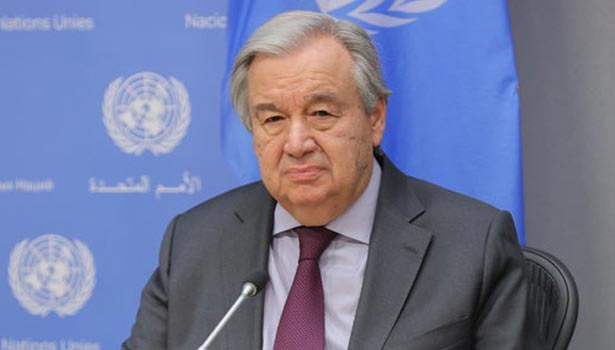
United Nations Secretary-General Antonio Guterres on Tuesday called for dialogue to ensure a smooth transition of government in Sri Lanka and find sustainable solutions to the economic crisis.
“I stand in solidarity with the people of Sri Lanka & call for dialogue to ensure a smooth transition of government & to find sustainable solutions to the economic crisis,” Guterres tweeted.
“I condemn all acts of violence and call for those responsible to be held accountable,” he added.
On Monday, the Deputy Spokesperson for the Secretary-General, Farhan Haq said that the UN Secretary was closely following the developments in Sri Lanka, and stands in solidarity with the country.
Notably, Sri Lanka’s President Gotabaya Rajapaksa on Saturday agreed to step down from his post. He said that he will step down from the presidency on July 13 amid economic and political instability. On Monday, Sri Lanka’s speaker of parliament said political party leaders have decided to elect a new president on July 20 through a vote in parliament.
In a statement, Speaker Mahinda Yapa Abeywardena said that following a meeting with all political party leaders, it was decided to convene parliament sessions on July 15 and inform the parliament that there was a vacancy for the presidency.
Nominations for the presidency will be called for on July 19 and a vote will be taken on July 20 to elect a new president, the speaker said. Party leaders also decided to form an all-party government under the new president and take steps to continue the supply of essential services.
This comes after protests by thousands rocked Colombo on Saturday as crowds tore through the barricades surrounding Rajapaksa’s residence and climbed over the fence and took control of the area.
Dramatic visuals from outside Rajapakse’s residence showed a sea of demonstrators storming into the compound, tearing down security cordons placed by police, taking a dip in the swimming pool and romping through his kitchen and home.
Hours after the protestors stormed his official residence, Rajapaksa agreed to step down from his post. Sri Lanka is suffering its worst economic crisis since gaining independence in 1948, which comes on the heels of successive waves of COVID-19, threatening to undo years of development progress and severely undermining the country’s ability to achieve the Sustainable Development Goals (SDGs).

Source: ANI