SLPP MP opens fire into the air after heated argument

Sri Lanka Podujana Peramuna Parliamentarian Lalith Warnakumara had opened fire into the air following a heated argument on Thursday (7) night.

Sri Lanka Police said that the incident took place in Anguruwatota, Kalutara at a house where a religious event had taken place.

A senior police officer said that following a heated argument, the MP has opened fire into the air.

Source: News 1st

Galle Face demonstrators hold talks with SLMC

A group of demonstrators from Gota Go Gama (GGG) in Galle Face had talks with the Sri Lanka Muslim Congress (SLMC).

The SLMC said that the meeting took place at the SLMC party headquarters.

SLMC Leader Rauff Hakeem and party secretary Nizam Kariappar, PC, attended the meeting.

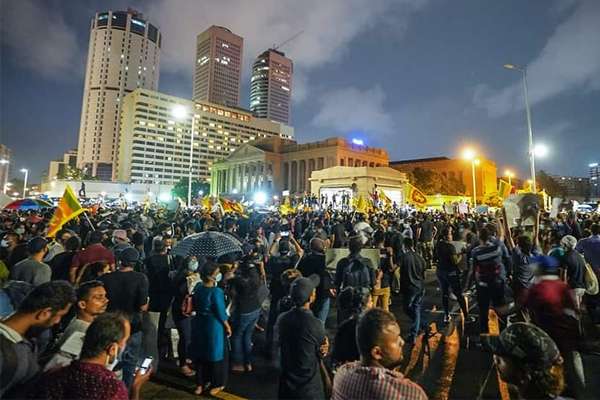
The Galle Face protesters had explained the focus of the mass protest to be staged against President Gotabaya Rajapaksa tomorrow (Saturday).

Similar talks had taken place between other opposition party representatives and the GGG protesters earlier.

Source: Colombo Gazette

MP tops Rs 3 trillion for 2nd time

Government of Sri Lanka’s (GoSL) demand pull inflationary face value money printing (FVMP) debt increased by Rs 4,326 million on Wednesday (6), due to a perennial lack of revenue.

Consequently, GoSL’s FVMP debt as a whole increased by 1.06 per cent (Rs 31,755.04 million) to Rs 3,025,057.15 million (Rs 3.0251 trillion) on Wednesday, being only the second time that GoSL’s FVMP debt has crossed the three trillion-rupee mark. The first time it crossed three trillion rupees was on 28 June (last Tuesday), with a figure of Rs 3.16 trillion.

Subsequently, the country’s foreign reserves bled by USD 76.24 million (Rs 27,429.04 million) led by the settlement in respect of payments made in relation to ‘essential’ imports on Wednesday. Conversions are based on the administered ‘spot’ value as at Monday which was Rs 359.79 to the US dollar.

GoSL’s MP borrowing costs (BCs) relative to the increase in its FVMP debt accelerated by 102 per cent (Rs 107,095.68 million) to Rs 212,091.80 million on Wednesday due to selling pressure of Treasury (T) Bills and T Bonds to reinvest in the day’s Rs 70 billion T Bill auction for higher returns, where weighted average yields across the board increased by over 400 basis points. The Market was short for a record 201 market days to Wednesday, though this shortfall decreased by 0.67 per cent (Rs 4,326 million) to 645,753 million, Central Bank of Sri Lanka (CBSL) data showed. GoSL’s highest to the 205th highest FVMP debt has been registered for a record 205 market days to Wednesday. GoSL’s FVMP debt has been over two trillion rupees for a record 111 consecutive market days to Wednesday due to an almost perennial lack of revenue.

Source: Ceylon Today

Posted in Uncategorized

Sri Lanka top five SOEs lose Rs931bn amid monetary instability

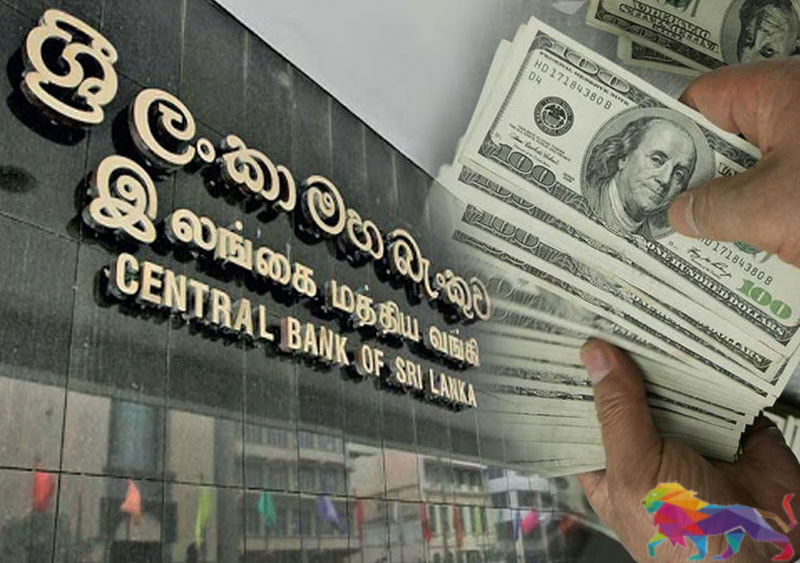
Sri Lanka’s top five state enterprises have lost 931 billion rupees in the first four months of 2022, official data shows, with a collapse of a soft-peg due to aggressive open market operations of the central bank contributing to most losses.

The Ceylon Petroleum Corporation lost 628 billion rupees, with 541 billion rupees of the gap coming from a foreign exchange loss as a soft-peg operated by the central bank collapsed steeply after two years of money printing.

The forex loans were also taken to buy oil when the central bank created forex shortages through aggressive open market operations during the current and past currency crises.

Currency crises and forex shortages are a problem associated with soft pegs where money and exchange policies conflict.

Once a clean floating regime or a hard peg is adopted forex shortages disappear as if by magic.

The CPC also assumes the losses of the Ceylon Electricity Board indirectly by giving fuel on credit and taking loans to fund its own cash flow shortages due to delays by the Public Utilities Commission of Sri Lanka to grant it price increases.

The prices are hurriedly raised under an IMF program. CEB prices were raised through an IMF program in 2012, prior to a float of the currency, but it was later reversed as a China-funded coal plant came online and a price increase was not granted despite several requests.

The Finance Ministry implemented a price formula for CPC under an IMF program in 2018 as a structural benchmark as prices were directly under political controls but the CEB which was under regulation missed structural benchmarks and indicative targets.

“Ceylon Electricity Board (CEB) continued to record losses throughout 2019H1 (-0.5 percent of GDP), due to hydropower shortages, high generation costs, and lack of adjustments in retail prices,” an IMF staff report said in 2019 at the tail end of the last program.

“The end-June and end-September ITs on Non-Commercial Obligations of CPC and CEB were
both missed.”

Sri Lanka re-nationalized state enterprises like Sri Lankan Airlines and Litro Gas under then-President Mahinda Rajapaksa and his economic advisors who advocated state expansion and the next administration which critics say had policy fright did not privatize a single entity.

Both Sri Lanka and Pakistan which have the worst central banks in South Asia have severe problems with SOE losses, mostly coming from currency depreciation.

In Sri Lanka the classical economic principle of sound money has been discarded in favor of Mercantilism and monetary instability which became popular in Western academic circles in the wake of the Great Depression in general and up to 1971 in particular.

Dual anchor conflicts, which did not exist in South Asia when it was in the Sterling Area under British rule, burst forth under the post-World War II failed Bretton Woods system, leading to forex shortages, trade, and exchange controls.

Western nations exited dual anchor conflicting soft-peg in 1971 (Japan, Germany, Singapore, Thailand, Hong Kong, kept highly consistent pegs under the Bretton Woods and after) with the collapse of the Bretton Woods.

Soft pegs continue to be peddled to and embraced in South Asia under ‘monetary reform’ ‘monetary policy modernization’ and ‘central bank independence’, critics say.

Sri Lanka’s ‘economists’ favor currency depreciation based on a neo-Mercantilist belief that undermining a sound monetary system to tilt the playing field towards exporters at the expense of their workers profiting from a delay in wage catch-up, will make the country an export powerhouse, despite the policy creating industrial unrest and civil strife for over half a century.

“The days are gone in which most persons in authority considered the stability of foreign exchange rates to be an advantage,” explained classical economist Ludwig von Mises. “Devaluation of a country’s currency has now become a regular means of restricting imports and expropriating foreign capital.

“It is one of the methods of economic nationalism. Few people now wish for stable foreign exchange rates for their own countries.

“The more fateful results of inflation derive from the fact that the rise in prices and wages which it causes occurs at different times and in different measures for various kinds of commodities
and labor.

“Some classes of prices and wages rise more quickly and to a higher level than others. While inflation is under way, some people enjoy the benefit of higher prices on the goods and services they sell, while the prices of goods and services they buy have not yet risen at all or not to the same extent.

“These people profiteer by virtue of their fortunate position. For them, inflation is good business. Their gains are derived from the losses of other sections of the population.

“Modern monetary theory has provided us with the irrefutable demonstration that this disproportion and non-simultaneousness are inevitable features of every change in the quantity of money and credit.”

In 2022, unrest is not only be found in Sri Lanka. Strikes are spreading and incumbent rulers are losing office in Europe and elsewhere after the Federal Reserve, the European Central Bank, and the Bank of England also printed money to ‘create jobs in 2020 and 2021.

Source: Economy Next

Private Member Bills tabled to amend the electoral system

Parliamentarian Imthiaz Bakeer Markar has presented three Private Member’s Bills in Parliament that includes proposals to amend laws and regulations pertaining to the country’s electoral system.

Accordingly, a Bill to amend the Parliamentary Elections Act No.1 of 1981, a Bill to amend the Provincial Council Elections Act No.2 of 1988 and a Bill to amend the Local Government Elections Ordinance No.53 of 1946 were presented.

The proposals calls for the need to provide youth below the age of 35 the opportunity to represent institutions.

The proposals also include that during a General Election, a Provincial Council Election, and a Local Authorities Election when political parties and independent groups submit nominations, not less than one-fourth of the number of candidates in a relevant district should be youth.

Posted in Uncategorized

Sri Lanka hikes interest rates 100bp amid galloping inflation

Sri Lanka’s central bank has has raised interest rate at which overnight money is printed for banks by 100 basis points to 15.5 percent as the country was gripped by galloping inflation and depreciation.

“Having noted the higher than expected escalation of headline inflation recently and the increased persistence of high inflation in the period ahead, the Board was of the view that a further monetary policy tightening would be necessary to contain any build-up of adverse inflation expectations,” the central bank said in its June monetary policy review.

“In arriving at this decision, the Board weighed the impact of tighter monetary conditions on overall economic activity, including the micro, small, and medium scale businesses, and the financial sector performance, among others, against far reaching adverse consequences of any escalation of price pressures across all sectors of the economy in the near term.

“On balance, the Board was of the view that this policy adjustment would help guide inflation expectations to be anchored around the targeted level of headline inflation over the medium term, while curtailing any build-up of underlying demand pressures in the economy”.

The central bank urged the government to also reduce the deficit as quickly as possible to stop printing money.

“Faster implementation of the expected fiscal reforms aimed at strengthening government revenue mobilisation and expenditure rationalisation is needed to reinforce fiscal consolidation efforts, including the expected improvements in the financial position of state-owned business enterprises,” the central bank said.

“Such adjustment in fiscal sector performance would result in a decline in gross financing needs of the Government in the period ahead, and help scale down monetary financing at a faster pace.”

The central bank which also conducts Treasuries auctions allowed Treasury bill yields this week to stop 28 percent in a bid to avoid printing money.

Sri Lanka is experiencing high inflation after two years of money printed to keep rates down and boost growth (stimulus), and a failed float with a surrender requirement.

In June consumer prices in Colombo hit 54.6 percent as the rupee fell from 200 to 360 and forex shortages continue to persist due to the failed float.

According to a fan chart published by the central bank, inflation could peak around 75 percent, with a low probability of it going higher.

Download Monetary Policy Review Sri-Lanka-June-Monetary_Policy_Review

Private credit has started to slow and market rates have risen, the central bank said.

“..The growth of credit to the private sector, once adjusted for the impact of the depreciation of the Sri Lanka rupee against the US dollar, recorded signs of slowing in May 2022, year-on-year, while the expansion of broad money has been weighed down by the contraction in net foreign assets of the banking system,” the statment said.

“The elevated lending interest rates are expected to slow the expansion of money and credit aggregates in the period ahead…”

Sri Lanka has experienced rapid currency crises and monetary instability over the past 7 years with the adoption of highly discretionary flexible inflation targeting and a flexible exchange rate, which critics have likened to un-anchored monetary policy.

Posted in Uncategorized

More than 6 million Sri Lankans facing food insecurity: UN

In the face of record food price inflation, skyrocketing fuel costs and widespread commodity shortages, some 6.26 million Sri Lankans, or three in 10 households, are unsure of where their next meal is coming from, according to the latest food insecurity assessment from the World Food Programme (WFP), released on Wednesday.

As prices keep healthy meals out of reach, some 61 per cent of households are regularly using coping strategies to cut down on costs, such as reducing the amount they eat and consuming increasingly less nutritious meals.

And with opportunities to make enough income in the medium- to long-term decreasing for an estimated 200,000 families, the UN food relief agency anticipates that even more people will turn to these coping strategies as the crisis deepens.

“These days, we don’t have a proper meal but eat only rice and gravy,” one woman told WFP.

WFP is warning that a lack of nutrition has grave consequences for pregnant women, putting both their own and their children’s health at risk.

“Pregnant mothers need to eat nutritious meals every day, but the poorest find it harder and harder to afford the basics,” WFP Deputy Regional Director for Asia and the Pacific Anthea Webb said last month.

She told a local television station that by skipping meals, pregnant women were putting themselves and their children’s health at risk in a way that “carries throughout your life”.

To combat the food crisis and its effect on malnutrition, WFP has been distributing monthly food vouchers to pregnant women, valued at $40, in some of the poorest neighbourhoods, alongside antenatal care provided by the local government.

Debilitating inflation

Amidst a staggering 57.4 per cent inflation rate, steeply increasing food prices have crippled the population’s ability to put sufficient and nutritious meals on the table, rendering two in five households without adequate diets.

The food security situation is worst among people working in the farming estates sector – such as large tea plantations – where more than half of households are food insecure, according to WFP.

In all measures of food insecurity and coping strategies, these households have consistently poorer outcomes than urban and rural populations.

While urban households are depleting savings to cope for now, families on rural estates are already turning to credit, in order to buy food and other necessities.

“Poor families in cities and those who work on estates have seen their incomes plummet while market prices have soared,” the WFP official said.

A gloomy picture

Sri Lanka is suffering its worst economic crisis since gaining independence in 1948, which comes on the heels of successive waves of COVID-19, threatening to undo years of development progress and severely undermining the country’s ability to achieve the Sustainable Development Goals (SDGs), said WFP.

A current oil supply shortage has forced schools and government offices to close until further notice.

Reduced domestic agricultural production, a lack of foreign exchange reserves, and local currency depreciation, have fuelled the shortages.

The economic crisis will push families into hunger and poverty – some for the first time – adding to the half a million people who the World Bank estimates have fallen below the poverty line because of the pandemic.

WFP steps up

To address the downward spiralling situation, last month WFP launched a $60 million emergency appeal for food and nutrition to assist three million of the most at-risk Sri Lankans.

“We must act now before this becomes a humanitarian catastrophe,” warned WFP chief David Beasley in a tweet.

To date, the agency has delivered 88 per cent of the first batch of 2,375 vouchers it has available, and targeted three million people to receive emergency food, nutrition, and school meals, until December.

-United Nations

Posted in Uncategorized

Travel advisories against SL galore as uncertainty mounts

The travel advisories against visiting Sri Lanka, which were slightly relaxed just weeks ago, are now back and they could further hurt the already struggling tourism sector.

As the situation in the country is showing no signs of improving and with public agitation against the government led by President Gotabaya Rajapaksa and Prime Minister Ranil Wickremesinghe getting intensified, governments across the world are cautioning their citizens against visiting Sri Lanka.

The United Kingdom and New Zealand issued fresh warnings to their citizens this week, advising them against any non-essential travel to Sri Lanka.

The two governments updated their respective travel advisories by citing the worsening economic crisis and the potential for civil unrest. In mid-June, Tourism Minister Harin Fernando was in the United Kingdom, where he met with the UK travel and tourism industry personnel to increase tourist traffic from that country. Fernando also held discussions with New Zealand High Commissioner in Colombo Michael Appleton last week, where the duo discussed how the two countries can work together to develop tourism and other areas.

Other nations that continue to maintain travel advisories against Sri Lanka include the United States of America, Europe Union, Canada, Australia and Ireland.

Commenting on the travel advisories, Sri Lanka Tourism Development Authority (SLTDA) Chairman Priantha Fernando said it is the responsibility of the respective governments to inform their citizens of ground conditions abroad.

“What is being touched upon are the inconveniences tourists might have to undergo in #SriLanka due to the current conditions,” tweeted Fernando yesterday.

The SLTDA chief said the required steps would be taken to “soften” the impact of such warnings where possible.
“We are continuously working on providing a hassle-free experience to tourists who visit #SriLanka,” he added in his tweet.

Tourist arrivals to Sri Lanka for the month of June totalled 32,856, recording a marginal increase when compared with the previous month, largely influenced by the Australia tour of Sri Lanka, which commenced in early June.
For the first half of 2022, a total of 411,337 tourists had visited Sri Lanka against the 17,000 tourists in the COVID-hit first half of 2021.

Posted in Uncategorized

Sri Lankan President calls Russian counterpart seeking an offer of credit to import fuel

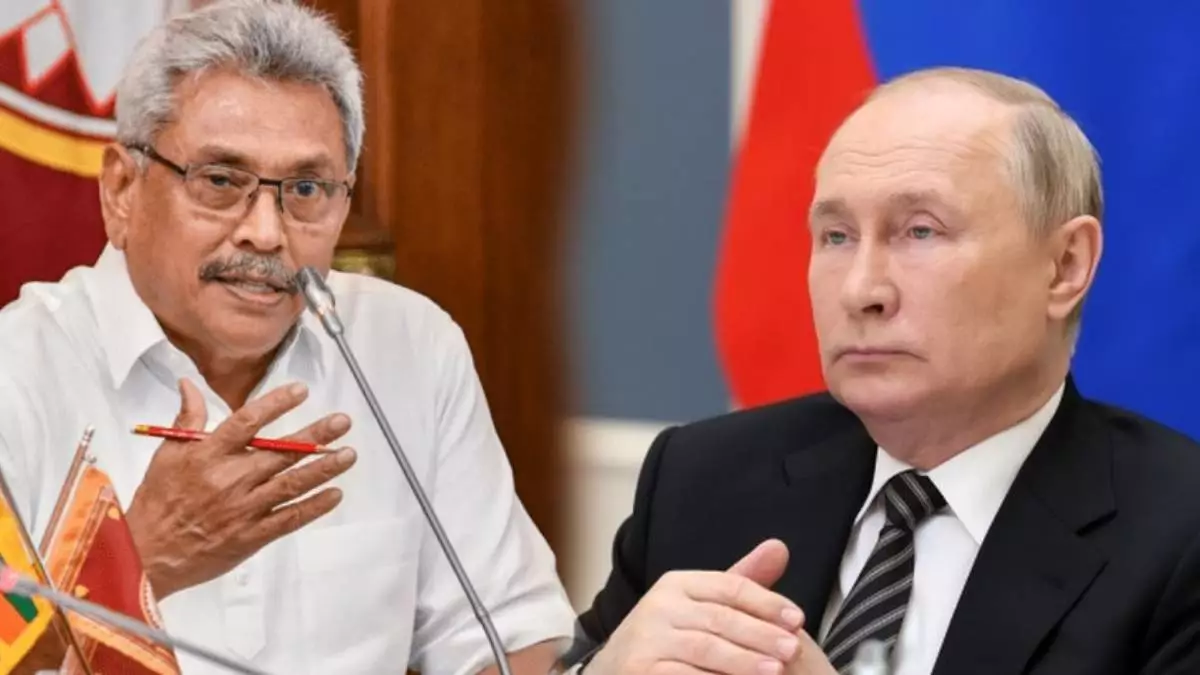
Sri Lankan President Gotabaya Rajapaksa has called President of Russia, Vladimir Putin requesting an offer of credit support to import fuel to overcome the current economic challenges.

President Rajapaksa said in a tweet that he had a very productive telephone conversation with the President Putin today (July 06) and thanked him for the assistance extended by the Russian government to overcome the challenges Sri Lanka faced in the past.

During their conversation, Sri Lankan President has also requested the Russian counterpart to resume Russian airline Aeroflot’s flight operations to Sri Lanka.

The two leaders have unanimously agreed that strengthening bilateral relations in sectors such as tourism, trade and culture is paramount in reinforcing the friendship between the two nations.

An official press release of the Russian President’s Office confirming the conversation said the two presidents discussed current matters of bilateral trade and economic cooperation, in particular, in energy, agriculture and transport.

“In the context of the 65th anniversary of establishing diplomatic relations between the two countries marked this year, the mutual disposition to further progressive development of traditionally friendly Russian-Sri Lankan ties was confirmed,” the statement said.

The leaders have agreed to continue contacts at various levels.

‘The family took over’: how a feuding ruling dynasty drove Sri Lanka to ruin -UK Guardian

The inside story of Rajapaksa family infighting that toppled a country into violence and bankruptcy

Dilith Jayaweera can still recall the moment he realised Sri Lanka was hurtling, unstoppably, towards financial ruin.

It was around October 2021 and Jayaweera, a Sri Lankan media magnate and close friend of the Sri Lankan president, Gotabaya Rajapaksa, had invited Basil Rajapaksa, the president’s younger brother, who was also the finance minister, to join him for dinner.

There was little love lost between Basil Rajapaksa and Jayaweera, who had long mistrusted each other. But nonetheless, as the pair ate in his sleek Colombo office, the media mogul had some urgent questions for the man responsible for Sri Lanka’s economy. Was the country heading for a terrible crash?

“Basil couldn’t answer even my basic questions,” recounted Jayaweera. “He was giving very lousy answers – that we’ll find money from here, from there, saying it would all be fine to pay our debts. I saw then he really didn’t understand the economy at all; that it was done, dusted, finished for us.”

What came less than six months later was the worst economic crisis that Sri Lanka has experienced since independence in 1948. The suffering it has caused, as the treasury ran dry and the country became unable to import fuel, food and medicine, has left barely anyone on the island of 22 million people unscathed. According to the UN, Sri Lanka is facing a “dire humanitarian crisis”; many struggle for one meal a day, surgeries and cancer treatments are being halted, schools have shut and petrol sales have stopped as fuel has run out. “Our economy has completely collapsed,” the prime minister, Ranil Wickremesinghe, recently told parliament.

Sri Lankans shout slogans during a protest against Gotabaya Rajapaksa in front of the presidential secretariat building in Colombo

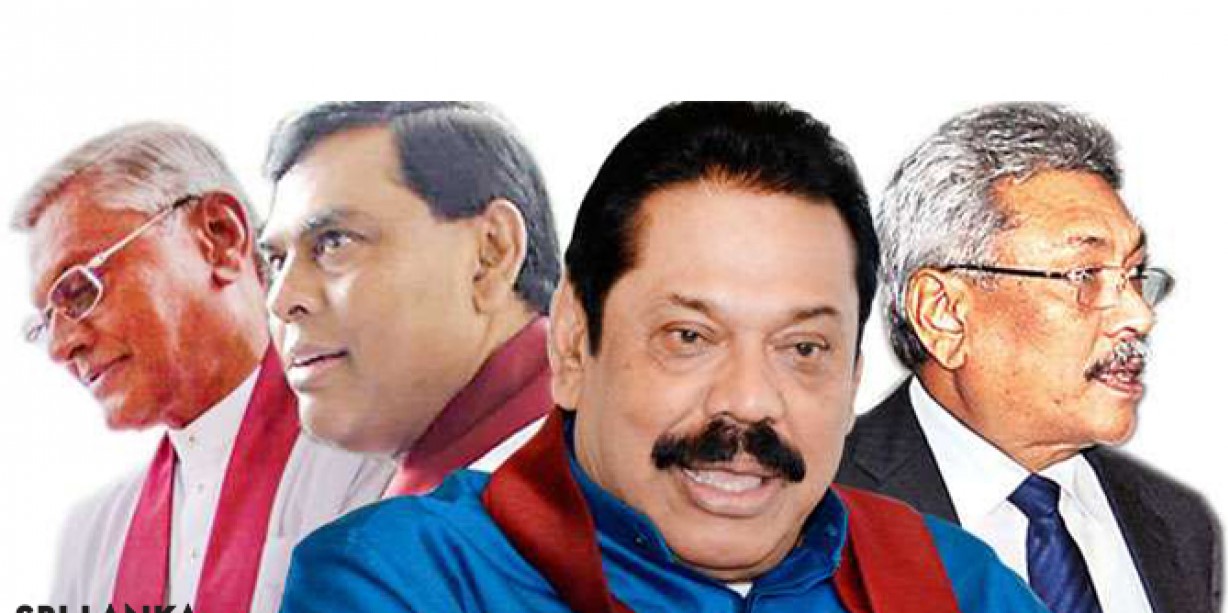
It has prompted an unprecedented political reckoning in Sri Lanka, focused largely on the Rajapaksa family dynasty, which has held power over Sri Lankan politics for two decades. Since March, mass protests have called for the resignation of the president. Mahinda Rajapaksa, his brother and a former prime minister and president, has already resigned because of the pressure, as have Basil Rajapaksa and several other family members who were in the cabinet or held political posts.

According to those who witnessed it from the inside, the story of Sri Lanka’s crisis is rooted in this family, who concentrated power to the point that the country came to resemble an autocratic family business, accountable to no one until it pushed the nation to bankruptcy. As Sri Lanka began to unravel, the family became riddled with infighting and the once cordial relationship between the two brothers Gotabaya and Mahinda descended into bitterness as they both clung to power. On 9 May, the family divisions spilled out on to the streets as the country’s worst violence in more than three decades took place.

Cabinet ministers, opposition politicians, Rajapaksa aides and confidantes – many of whom still have vested interests and strong ties to various Rajapaksa family members – pointed overwhelmingly to Basil, the younger of the brothers and so-called strategist of the family, as the one who oversaw the downfall. Operating first as a shadowy power broker behind the scenes before becoming finance minister, he was described by several ministers as having unparalleled influence over the president and cabinet, yet proved incompetent at running the economy and ignored multiple warnings that a financial meltdown was coming.

Mahinda and Gotabaya Rajapaksa wave to supporters at party convention in 2019

“Basil was the true power,” said Udaya Gammanpila, who was a cabinet minister between 2020 and 2022 before Basil had him removed in March for being publicly critical. “Gotabaya didn’t know how bad things were and Mahinda was getting old and not in the best health, he was just the figurehead. Everything was controlled by Basil.” Basil declined to be interviewed for this article and his close aides refused to speak on the record.

Sri Lanka’s economic problems began long before Gotabaya took power in late 2019. From 1977 onwards, successive governments built the country on a precarious foundation of debt. Imports overwhelmingly exceeded exports and a progressive but costly welfare state widened the deficit further, which was covered by more high-interest borrowing.

“This was a timebomb that had been accumulating for several decades now,” said Gammanpila. “Everything was built with borrowed, not earned, money.”

From 2005, when Mahinda was elected as president and the family began to dominate the political landscape, they, too, began rampantly borrowing, first to pay for Sri Lanka’s three-decade civil war against Tamil minority separatists, which was brought to a brutal end in 2009, then for a “super-growth” development spree of roads, airports, stadiums and power grids. GDP grew from $20bn (£16.6bn) to $80bn but more than $14bn was borrowed in the process, and all the Rajapaksas became mired in accusations of vast-scale corruption, from bribes to money laundering.

Mahinda lost the 2014 presidential election but the dynasty had no intention of relinquishing its hold on power. Basil, who was out on bail on corruption charges that were later dismissed, set about forming a new political party, the Sri Lanka Podujana Peramuna (SLPP). After an amendment to the constitution meant Mahinda was not allowed to run for a third term, it was decided – after considerable resistance by some in the family ranks – that Gotabaya would be their candidate in the November 2019 presidential elections. But, speaking in 2018, Basil made his intentions known. “The truth is that if Gotabaya comes forward it will be I who will run the country since he is new to politics,” he told local media.

Gotabaya, an austere, devout and straight-talking military man, was the opposite to his older brother, the charismatic and politically savvy Mahinda. He had attracted the backing of an influential group of intellectuals, business leaders and academics, who believed he would forge his own path from the previous Rajapaksa regime. However, Gotabaya’s experience in politics was limited; he had only held the unelected post of defence secretary in Mahinda’s administration, where he was celebrated for ending the civil war, despite accusations of war crimes.

As soon as Gotabaya took office, “the family took over; he was dancing only to their tune”, said Nalaka Godahewa, a former CEO turned SLPP MP who had backed Gotabaya. Basil loyalists were given the key cabinet portfolios and the family parachuted in PB Jayasundara, a bureaucrat who had a decades-long relationship with Mahinda and Basil, to become secretary and economic adviser to the president. Jayasundara had once been barred from holding public office, but that was later overturned.

“Gotabaya had no political experience and knew nothing about economics; he depended entirely on PB Jayasundara to run the economy,” said Charitha Herath, an SLPP MP who sat on several parliamentary finance committees. “The problem was, he was giving very bad advice.”

It was on his advice that Gotabaya implemented sweeping tax cuts in 2019, despite international warnings against it, causing government revenue to fall by more than a trillion rupees in two years. As Sri Lanka was hit by Covid, and money from tourism and foreign remittances dried up, Jayasundara pushed back against import bans and going to the IMF to restructure the country’s loans, even as debt repayments were mounting and warnings were given by the central bank monetary board from November 2020. He is also accused of feeding the president misleading information, including a cashflow statement – which Jayaweera said he saw himself during a meeting with Gotabaya in early 2021 – that presented a rosy picture of Sri Lanka’s outgoings.

The Rajapaksas’ grasp over the government tightened further after the SLPP swept the 2020 parliamentary elections. Mahinda became prime minister, while his son and heir apparent, Namal Rajapaksa, was brought into cabinet, as was the eldest Rajapaksa brother, Chamal.

“The Rajapaksas controlled the entire country,” said Asanga Abeyagoonasekera, a Sri Lankan political analyst and author. “The government became autocratic, ultranationalist and heavily militarised.”

They pushed through an amendment to the constitution that concentrated more power into the president’s hands and allowed for dual citizens to become MPs. Not long after, in July 2021, Basil – who is also a US citizen – was made finance minister, though several in the cabinet believed he had already been running the economy with Jayasundara behind closed doors.

According to several ministers, Basil swiftly became the de facto head of the cabinet. He would decide which cabinet papers were approved and had the last word on all big decisions, while Gotabaya and Mahinda – who was now in his mid-70s and had stepped back from decision-making – would nod along. “The president accepted whatever proposal Basil put before him,” said Vasudeva Nanayakkara, a leftwing MP who was a cabinet minister in Gotabaya’s ruling coalition until April this year.

Basil did not tolerate dissent in cabinet and under his watch, those in the cabinet and on financial oversight committees claim they were presented with misleading information about the country’s finances.

Demonstrators with an effigy of Gotabaya Rajapaksa in Colombo

“I submitted 11 cabinet papers warning about the impending crisis,” said Gammanpila. “But whenever we raised an economic issue, Basil felt we were interfering with his work and he got offended. He repeatedly said that everything was fine. But in my assessment, he doesn’t have even a basic understanding about economics.”

Meanwhile, dysfunction reigned at Sri Lanka’s central bank. A glaring rift had developed between Basil and the bank governor, Ajith Nivard Cabraal. They refused to speak for months and blamed each other for the mounting financial problems. Cabraal began excessively printing money to try to fill the gaps in the treasury, triggering mass inflation.

Government bureaucracy was also in a state of disarray after Gotabaya had appointed military generals, some implicated in war crimes, to run 15 civilian government ministries, which proved autocratic and inefficient. Defence spending, higher under Gotabaya than during the civil war, further drained the treasury while his presidential order suddenly banning all chemical fertilisers resulted in agricultural devastation.

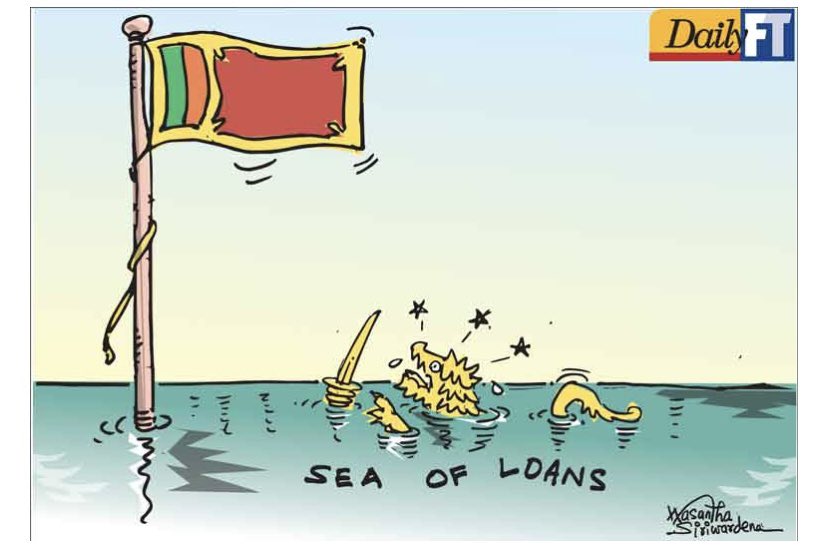
By the beginning of 2022, it was clear that Sri Lanka’s economy, in particular its reserves of foreign currency, was facing an unprecedented catastrophe. The country owed $51bn in foreign loans, of which it was expected to pay back almost $7 billion that year, but it was running out of dollars and had been locked out of all international markets to borrow any more.

As Sri Lanka struggled to pay for food, petrol and medicine imports and inflation kept soaring, people began to protest in droves. Internally, the Rajapaksa family were shocked that the anger on the streets was viscerally directed towards them. As the demonstrations grew, the president was advised that even if he would not go, others in his family needed to.

In early April, to the fury of Basil, Gotabaya asked for the resignation of all Rajapaksas who held government positions, except Mahinda. However, this did little to ease public anger and Gotabaya quickly became convinced the only way to secure stability was for Mahinda also to also step down as prime minister.

Those on the inside say Mahinda agreed to resign on three or four occasions, but would then return to his inner circle – including his wife and two sons who were in politics – to be persuaded he did not need to go. “This kept on happening for about two weeks,” said Godahewa. Frustration and anger grew between the two brothers.

“The relationship between Gotabaya and Mahinda had always been very cordial, very loving and paternal,” said Nanayakkara. “But towards the end, as Gotabaya told Mahinda in so many words to step down, it was very, very bitter.”

It was on 9 May, during a rally at the prime minister’s Colombo residence – a few days after Mahinda had finally agreed to go – that the rupture between the two brothers came to a head. Some described the meeting as a farewell to Mahinda, others as a show of strength to demonstrate to Gotabaya that it was Mahinda who was still the true political magnet of the family.

Arranged by Basil, Mahinda’s son Namal and their close cabinet allies, hundreds of Mahinda’s loyal grassroots supporters were bussed into the prime minister’s residence. But as witnesses and video footage testify, the meeting quickly got out of hand. Riled by chants of “Whose power? Mahinda’s power” and the government’s chief whip, Johnston Fernando, calling out “let’s start a fight … he [the president] should hand power over to us”, some of the supporters charged out of the gates, led by several SLPP

They marched towards Galle Face, the anti-government protest camp where thousands had been gathering to demonstrate for weeks, and began violently beating hundreds of protesters and setting alight their tents.

As reports of the attacks reached Gotabaya Rajapaksa, who was at home in Colombo, he exploded in anger. The night before, having already had concerns about the gathering, he had given instructions to the chief of police to be ready with officers, teargas and water cannon.

“The president was screaming over the phone to the senior DIG, asking why the hell haven’t you prevented these people entering Galle Face,” said Godahewa, who was holed up at Gotabaya Rajapaksa’s home for two days as it all took place. “He was shouting: ‘I’m the president, you do what I say, somehow stop these people.’”

Drivers queue for fuel in Colombo.

But, according to police and ministerial sources, the police chief held back from taking action against the mobs attacking Galle Face, having been told by his seniors that this was a family matter between Mahinda and Gotabaya and it was safer for police to not be seen to take sides.

By the time the police responded, the spark of violence had been lit, engulfing Sri Lanka in some of the worst attacks in decades. A mob tried to storm the prime minister’s residence, leaving him barricaded in his bedroom with his sons and allies until he was evacuated by special forces at 4am. The houses of more than 70 SLPP MPs and Rajapaksa allies were set alight and an MP was beaten to death by a mob. Many believe militant political elements who wanted to bring down the government seized the opportunity to launch a coordinated attack.

Gotabaya also appeared to have lost control of the military, who failed to intervene, many said out of fear by top brass that they would be held accountable if anyone was killed. “I saw how much the president pleaded with the army chief to take action, saying: ‘Send troops, do something,’” said Godahewa, whose own house was burned down. “The president was so frustrated because everybody’s house was burning and the army was not stopping them.”

In the aftermath, the Rajapaksas were a family divided: Gotabaya and Chamal, the eldest of the brothers, on one side, and Basil, Mahinda and his sons Namal and Yoshita on the other. Gotabaya blamed those around Mahinda for stirring up violence with “that stupid meeting” and publicly Chamal condemned Mahinda for not resigning earlier. Privately those close to Basil pushed the narrative that Gotabaya was not up to the job any longer.

Those around Gotabaya – who was frequently described as “out of touch” with the mood of the people – believe he still has no intention of stepping down as president, even though he cuts an isolated figure; this week he was driven out of the parliament chamber by chants of “Gota Go Home” by MPs.

Some said he was staying put out of a militaristic obligation to duty and preserving the Rajapaksa name, while Godahewa said that “in his mind, he’s still naively determined to have a positive legacy”.

The future of the Rajapaksa dynasty now looks increasingly uncertain. A new amendment to the constitution has been submitted to cabinet for approval, which will reduce presidential powers and once again ban dual citizens holding office. Basil initially put up a fierce resistance to it but last month pre-emptively stepped down as an MP, though other SLPP MPs continue to try to halt it and it has been criticised for not going far enough.

Yet some remain unconvinced Sri Lanka has permanently thrown off the shackles of dynastic politics. “The Rajapaksas are known to play the long game, so I couldn’t say for sure if this will be the end of them – look at the Philippines, there’s a Marcos back in power after 30 years,” said Herath. “But right now, there’s no place left for them here.”