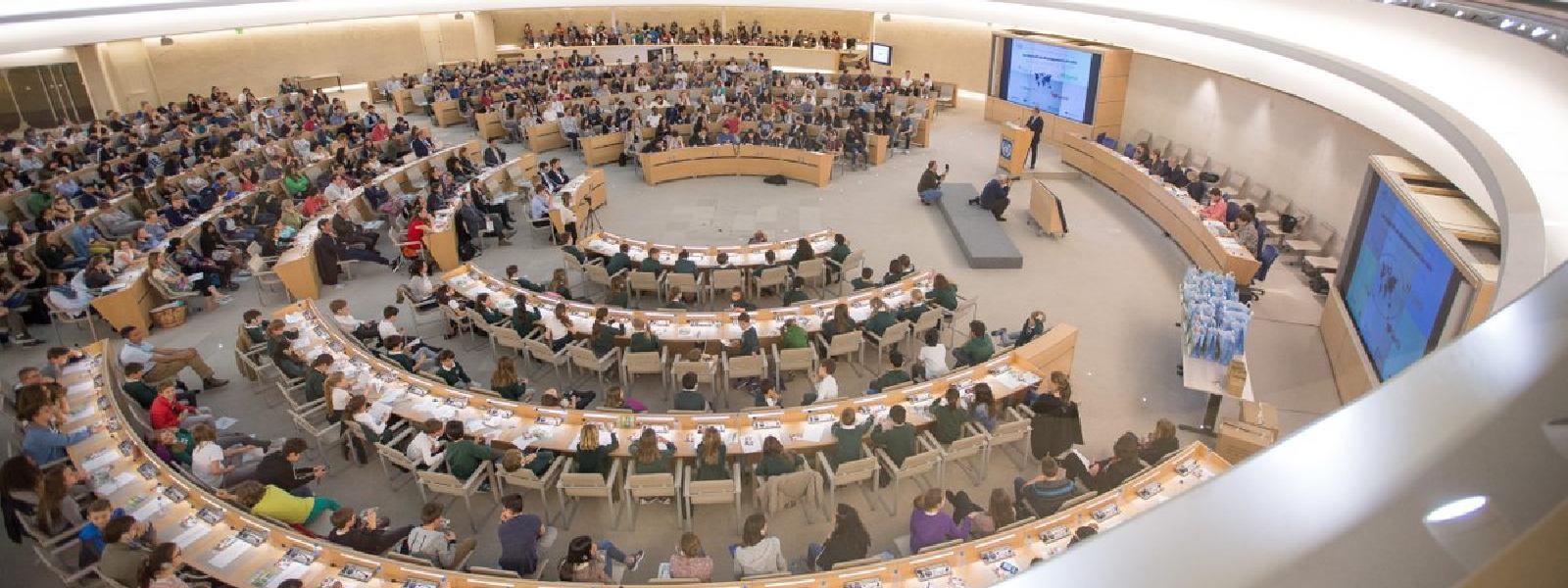
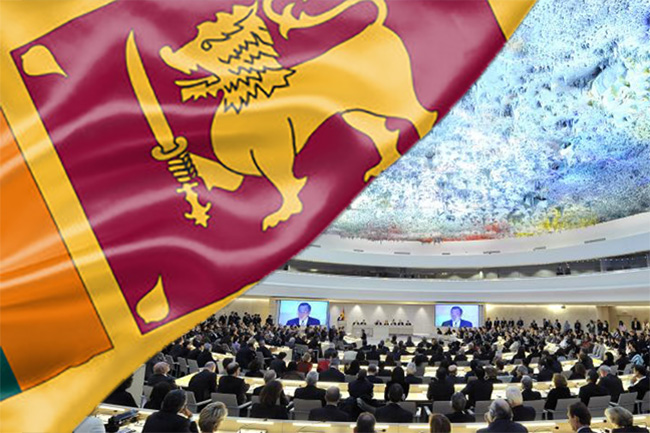
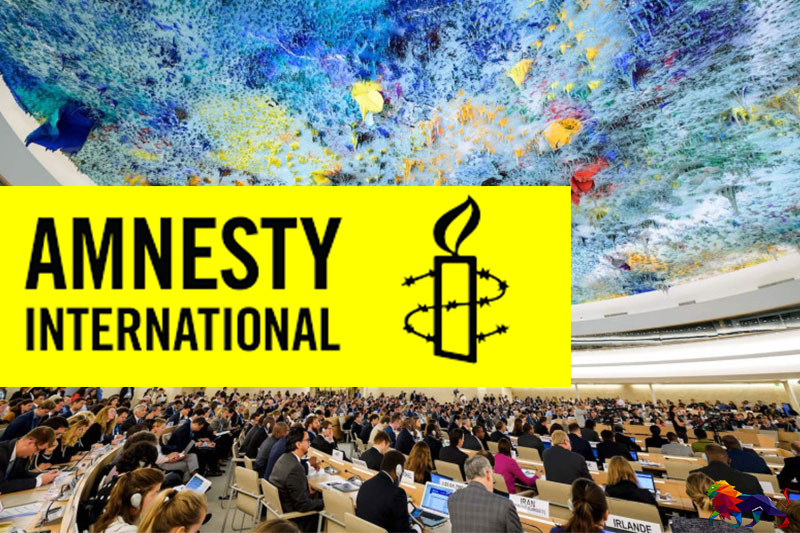
A faceoff between the Government of Sri Lanka (GoSL), the Office of the High Commissioner for Human Rights (OHCHR) and several Tamil Diaspora organisations, with a possible new resolution over rights violations in all dimensions is imminent. This time too, a strong debate is expected in Geneva, Switzerland, at the United Nations Human Rights Council’s (UNHRC) 51st Session.
Foreign Minister Ali Sabry, before his departure to Geneva told local media last week that Sri Lanka will stand its ground despite a resolution in favour or not against the country at while Foreign Secretary Aruni Wijewardane said that the Foreign Ministry has worked closely with the UNHRC on many matters at all times. Sabry said, they will cordially work with the UN body but is not interested in confrontations and will not work in the manner that will cause harm to the sovereignty and independence of
Sri Lanka. He referred to the international probe calling to investigate alleged war crimes and human rights violations.
Already, a delegation comprising of the Foreign Minister, Justice Minister Wijeyadasa Rajapakshe and many other officials are currently readying to attend the session. They are preparing to vehemently contest the 46/1 Resolution, the remarks on the OHCHR report and face the resolutions on Sri Lanka by the Core-Group led by the UK in the second week of October.
The OHCHR has also announced that a public meeting has been arranged on the 12 September session at 10 a.m., Geneva time, during which a tribute to victims of enforced disappearances will be held featuring testimony of a victim of enforced disappearance from Sri Lanka.
A vote on the resolution is also expected in the second week of October.
The draft of the resolution would be debated thereafter with the Sri Lankan Government over which a decision would be drawn at the end.
Rejection of resolutions and inclusion of economic crisis by OHCHR
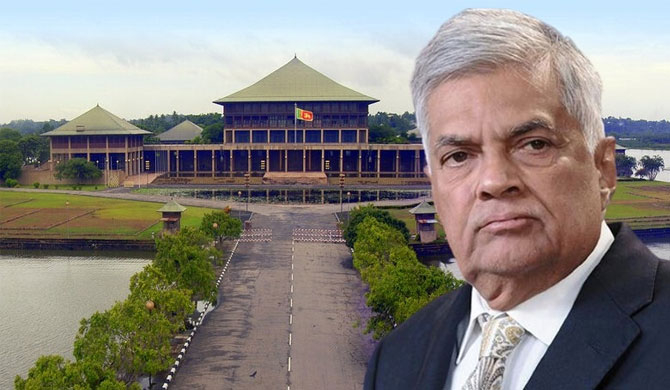
The Government of Sri Lanka has clearly rejected several resolutions from 2011 and also rejected the co-sponsored resolution in 2015 by the then Prime Minister Ranil Wickremesinghe and former Foreign Minister late Mangala Samaraweera.
The resolutions and the co-sponsored resolution despite refuted, are active and not shelved by the UNHRC who might also keep adding many more matters related to Sri Lanka as it did in the past.
The initial resolution was mainly about the Tamil minority, the war related rights violations and issues but as time went by, the OHCHR began to cover vast areas of matters related to Sri Lanka and its negligence. Some of them are related to the current economic crisis where the OHCHR’s report of 6 September 2022 talks about Sri Lanka experiencing an unprecedented economic crisis and is now at a critical juncture in its political life, bringing into sharp focus the indivisibility of human rights, with calls for the international community to urge Sri Lanka to address the underlying causes of the crisis, including impunity for human rights violations and economic crimes.
The OHCHR also called the international community to support Sri Lanka in the investigation of economic crimes that impact human rights and the tracing and recovery of stolen assets.
The High Commissioner Michelle Bachelett also called on authorities to independently, thoroughly and transparently investigate all attacks that have occurred, including the destruction of property, and ensure that those found responsible are held to account.
As of July 2022, the OHCHR said that GoSL has six pending requests for visits by United Nations special procedures. Three special procedures have issued joint statements expressing concern regarding the impact of the economic crisis on human rights, calling for an immediate moratorium on the use of the Prevention of Terrorism Act (PTA), urging the Government to guarantee the fundamental rights of peaceful assembly and expression.
Evidence-gathering mechanism rejected
But the biggest blow for GoSL was Resolution 46/1 which announced an evidence-gathering mechanism on Sri Lanka and all claims of human rights violations and alleged war crimes. It was the only major stumbling block for the Wickremesinghe Government which strongly rejected it to be allowed.
Over this, the OHCHR in its report noted that GoSL has already informed the OHCHR that they have rejected Resolution 46/1, Paragraph 6 that mainly talks about an evidence-gathering mechanism, as it could be used to prosecute troops guilty of war crimes as well as the constitutional framework.
However, using rights activists, the OHCHR has already mapped existing United Nations material, and integrated all of the material from the OHCHR Investigation on Sri Lanka (OISL), where consistent with the applicable conditions and consent. The office has also commenced identifying material held by other actors and engaging with information providers. To date, two organisations’ databases have been migrated into the repository, and negotiations with other information providers are on going.
The OHCHR said, the Sri Lankan Government responded on 18 July, indicating that given its rejection of Resolution 46/1, the team cannot visit the country. But the UNHRC said, it will continue to seek cooperation and request information from the Government in regard to this work.
The UN Rights Commissioner’s Office said for long, successive governments have failed to ensure accountability for gross human rights violations and abuses and serious violations of international humanitarian law in Sri Lanka, especially where alleged perpetrators are State agents. Recognising “the importance of preserving and analysing evidence relating to violations and abuses of human rights and related crimes in Sri Lanka with a view to advancing accountability,” the Human Rights Council decided in Resolution 46/1, Paragraph 6 to strengthen the capacity of OHCHR, “To collect, consolidate, analyse, and preserve information and evidence relating to violations and abuses of human rights and related crimes in Sri Lanka, and to advocate for victims and survivors, and to support relevant judicial and other proceedings, including in Member States, with competent jurisdiction.”
The UN Rights Chief’s Office said, they had formed a dedicated project team to further strengthen its capacity in line with resolution 46/1 on the evidence-gathering mechanism and the team has been fully staffed and operational since May 2022, although the United Nations budget process impacted its configuration and delayed some recruitment. In carrying out this mandate, OHCHR is considering violations and abuses by all parties in Sri Lanka, and against any group, in any geographical area. It is also integrating a gender perspective and child-sensitive approach.
The report of further said, they continued to develop information and evidence repository using an e-discovery platform. This includes configuration to facilitate collecting, organising, crosschecking, collating, searching, and analysing large quantities of data from multiple sources to preserve material and support accountability efforts.
The process of information collection requires great care and a victim-centred approach, the Human Rights Commissioner’s Office said. “The integration of material into the repository is carried out in line with United Nations regulations and policies and OHCHR’s procedures, and taking into account potential future requests for sharing of information.”
OMP needs strengthening
Bachellet said, the confidence and trust of the relatives of victims in the OMP as an independent and credible national mechanism has been severely eroded, particularly since 2020, following a series of problematic appointments of chairpersons and commissioners, and needs to be re-established. In May 2022, one of the Commissioners, Shiraz Noordeen resigned from the OMP, publicly stating that the OMP was unable to act independently to bring justice to victims. Although the purpose of the OMP is to trace and search for the missing, it has not been able to trace a single disappeared person or clarify the fate of the disappeared in meaningful ways, and its current orientation is to expedite the closure of files.
The Government informed OHCHR that the OMP has so far interviewed 1,207 applicants (out of the original list of more than 14,000) for the purposes of verification after which it makes recommendations for relief, further tracing or investigation. As of August 2022, 1,341 families had been issued with “Certificates of Absence”. Apart from the excavation and exhumation of a mass grave in Mannar in 2018, the OMP has not taken a proactive approach in investigating other suspected mass grave sites or leading the process of exhumation of mass graves to identify remains.
Tamil Diaspora going to ICC, TNA fighting to repeal PTA
In the background, there are also some 10 Tamil Diaspora organisations that are busy lobbying UN member states to refer Sri Lanka to the International Criminal Court (ICC).
U.S. Tamil Diaspora organisations wrote a letter to US Secretary of State Antony Blinken about justice and accountability, which Sri Lankan Tamil legislators, civil society, and victim groups forwarded to the Core-Group on Sri Lanka. They stated that they believe that anything short of referring the case to the ICC will forever end any prospect of justice for the vast atrocities committed against their people. In the meantime, GoSL has continuously held talks with like-minded UN member states that have stood by them for their support this time in Geneva as well.
As the session sets to begin, the TNA is gearing for a petition to be signed island-wide starting Saturday (10) calling for the repeal of the draconian PTA brought in 1979 as a temporary provisions Act for six months but continues to be in operation for over 40 years.
The campaign would start in the Northern Province in Mavittapuram, Kanthaswami Kovil, at 9.00 am. The TNA says this campaign is to urge the Government to honour its promise to repeal the PTA. TNA previously also held a campaign against the PTA in Colombo and various other places.
Also, five Sri Lankan Tamil political parties have written a joint statement with six requests to the UN High-Commissioner for Human Rights, Michelle Bachellet ahead of the UN Human Rights Council Session sets to commence tomorrow (11).
They requested to refer Sri Lanka to the ICC; to reduce Sri Lankan military presence in Tamil areas to pre-1983 level before the war started. Also, they request to stop government sponsored Sinhala–Buddhist settlements in Tamil areas, including re-demarcation of divisional boundaries to incorporate Sinhala–Buddhist areas into Tamil districts and annexing Tamil areas into Sinhala-Buddhist areas; calling for an internationally conducted and monitored referendum to bring about a permanent political solution to the protracted Tamil conflict, thereby preventing further atrocities against the Tamil people, which they repeatedly faced inter-alia in 1958, 1977, 1983 and 2009.
The letter had been signed by Tamil Makkal Kootani (TMK) leader MP C.V. Wigneswaran, Leader of Tamil Eelam Liberation Organization (TELO) MP Selvam Adaikalanathan, Leader of the People’s Liberation Organisation of Tamil Eelam (PLOTE) MP Dharmalingam Sithadthan, President of the Eelam People’s Revolutionary Liberation Front (EPRLF) Kandiah Premachandran, Former MP Jaffna District and Leader of Tamil National Party (TNP) Nallathamby Srikantha. They also call on governments around the world to arrest and prosecute Sri Lankan political and military officers in their territories, under the principle of Universal Jurisdiction, which allows for the prosecution of serious international crimes, even if they were not committed in the country’s territory.
Furthermore, they said that the freedom of expression is severely restricted in Tamil areas for several years, facilitated by the extremely large military presence and restrictive laws. Chief among the restrictive laws is the Sixth Amendment to the Constitution, which limits and criminalises political expression.
GoSL and PTA
The Government however has informed the OHCHR that it plans to table a new Counter-Terrorism Act, to replace the PTA, along with a number of other draft laws to regulate cyber-security in the digital space, including an Online Safety Bill to ‘combat online falsehood and manipulation’, which are also in the preparatory stage, the OHCHR noted.
Government informed the OHCHR that the Advisory Board established under Section 13 of the PTA in August 2021 has facilitated the release of 103 detainees charged under the PTA as of July 2022.
According to information available to OHCHR, there remain 47 long-term prisoners under the PTA, 22 of whom are serving sentences and 25 of whom are at various stages of appeal; there are a larger number of detainees from recent years, particularly after the Easter Sunday attacks.
On 1 August 2022, the Government delisted six entities and 316 individuals who had been listed under counter-terrorism regulations, although three organisations and 55 individuals were added including the young Muslim poet, Ahnaf Jazeem, who was detained for 18 months under the PTA before being released on bail in December 2021.
Over the claims of emblematic cases such as truth and investigate the terrible Easter Sunday bombings not addressed the GoSL informed OHCHR of plans to update laws to strengthen commissions dealing with bribery and procurement and other anti-corruption measures.
In the midst of a financial crisis, Sri Lanka must deal with mounting international criticism. They have also become entangled in the IMF bailout. If Sri Lanka wants a bailout, the IMF has many recommendations to agree upon. When it comes to the European Union’s demand to keep the GSP Plus, Sri Lanka must also work hard to improve its human rights record. The conflict would continue, but Sri Lanka will never be able to break free from the grips of international community and other external factors. Unless GoSL takes serious steps to correct its human rights record and bring about changes through constitutional reforms. These have now affected everyone, regardless of race, caste, or religion and many more unrest are imminent if not addressed. Also, many promises have been made to the people of Sri Lanka by successive governments, and they are meant to be honoured, not broken.
– amiesulo@gmail.com
By Sulochana Ramiah Mohan