Yuan Wang 5 leaves Sri Lanka after 6-day replenishment

The Yuan Wang 5, China’s missile and satellite tracking ship berthed at Hambantota port in Sri Lanka, departed today (22), confirmed the Harbour Master of the Hambantota Port Exclusively to News 1st.

The Yuan Wang 5 is one of China’s latest generation survey vessel officially entered Port of Hambantota in Sri Lanka on Tuesday 16th August 2022 replenishment purposes.

Sri Lanka granted permission for the high-tech Chinese tracking vessel Yuan Wang 5 to dock at the Hambantota Port in a backdrop marred with controversy.

Diplomatic clearance for the Chinese vessel to make a port call at the Hambantota port from 11-17 August​,​ 2022 for replenishment purposes was granted by the Sri Lankan Ministry of Foreing Affairs, however due to concerns raised by various factions including India, the Ministry requested China to defer the visit of the said vessel to the Hambantota port.

However, the Ministry of Foreign Affairs did not provide any reason for the request.

When the request to defer the visit of the vessel was made, the Yuan Wang 5 had already set sail to Sri Lanka leaving its port of origin on the 14th of July, and it was already in the Indian Ocean.

The vessel thereafter slowed down and moved over the Ninety East Ridge, a mid-ocean ridge on the Indian Ocean floor named for its near-parallel strike along the 90th meridian at the center of the Eastern Hemisphere.

On 16th August 2022, Sri Lanka’s Cabinet Spokesperson & Minister Bandula Gunawardena confirmed that the Chinese ballistic missiles and satellite tracking vessel was requested to delay their visit due to concerns voiced by India.

He said that a request was made from China to defer the arrival until Sri Lanka cleared out the concerns of its neighbor India.

Yuan Wang 5 is a third-generation tracking ship of the Yuan Wang Series. It has top-of-the-line antennas and electronic equipment to track ballistic missiles and satellite.

The Chinese Reasearch Vessel fleet boats of twin vessels identified as Yuan Wang 5 and Yuan Wang 6.

Posted in Uncategorized

Dissident SLPP faction issues warning over Geneva, IMF and GSP+

SLPP Chairman Prof. G. L. Peiris, MP, has issued a dire warning to President Ranil Wickremesinghe and the SLPP administration over the continuing crackdown on anti-government protesters.Addressing the media, in Kandy, after paying homage to senior Kandy-based Buddhist monks, on Saturday (20), the former Foreign Affairs Minister censured the government over the detention of Wasantha Mudalige, the convener of the Inter-University Students’ Federation (IUSF) in terms of the Prevention of Terrorism Act (PTA).

The former minister was flanked by former ministers, Dullas Alahapperuma and Prof. Channa Jayasumana. The rebel group’s visit to Kandy coincided with President Wickremeisnghe’s visit, meant to receive the blessings of the Maha Sangha.

In addition to Mudalige, law enforcement authorities, on August 18, detained Ven. Galwewa Siridhamma Thera and Bhashantha Jeewantha Gunathilake, under detention orders.The IUSF, affiliated to the breakaway JVP faction, the Frontline Socialist Party (FSP) played a significant role in the protest campaign that forced the then President Gotabaya Rajapaksa to resign on July 14.

The SLPP National List member alleged that the ruling SLPP’s response to the public protest campaign was contrary to their original policy. Declaring that his group represented the real SLPP, Prof. Peiris emphasized they voted against the imposition of Emergency regulations as the group was opposed to the continuing crackdown. President Wickremesinghe dropped Prof. Peiris from the Cabinet, at the behest of the SLPP. Former Justice Minister Prof. Ali Sabry, PC, who served as the Finance Minister, for a brief period, was recently sworn in as the Foreign Minister.

Referring to President Wickremesinghe recent declaration that Emergency wouldn’t be re-imposed, lawmaker Prof. Peiris questioned the arrest of the IUSF activist, on terrorism charges.The MP strongly defended the protesters right to campaign against the government. Prof. Peiris, who led Sri Lanka’s delegation at the last session of the Geneva-based United Nations Human Rights Council (UNHRC), said that the ongoing crackdown could place the country in an extremely difficult situation at the forthcoming 51st session.

The lawmaker said the government strategy, vis a vis the protest movement, could jeopardize ongoing talks with the International Monetary Fund (IMF), as well as the GSP-plus facility provided by the European Union.Recollecting the recommendations presented to Parliament, in respect of the PTA by him, on behalf of the government, about three months ago, Prof. Peiris said that there was consensus that the dreaded law shouldn’t be utilized, pending total review of the PTA.

The former minister declared that there couldn’t be any justification in detaining the IUSF activists as they exercised the constitutional right to protest.Prof. Peiris told The Island that in spite of the temporary relief received due to improvement in the supplies, the overall situation remained dicey. The failure on the part of the government to secure the support of all political parties, and factions, to form the proposed all-party-government highlighted the crisis the ruling party experienced, Prof. Peiris said.

The former minister said that President Wickremesinghe was recently informed of their position as regards cooperation that could be extended to the government. Responding to another query, the academic challenged the government should respond to severe criticism that the 22nd Amendment would pave the way for a jumbo Cabinet at the expense of the hapless public, struggling to make ends meet.

Prof. Peiris said that the genuine Opposition would cooperate on a campaign to resist the government. The MP expressed confidence that the Opposition could thwart the government plans to suppress the ongoing protest campaign. The former Foreign Minister said that the international community was closely watching the situation and those who believed all could be hoodwinked would soon leant a lesson.

EU concerned about using PTA

The European Union (EU) representatives in Sri Lanka expressed concern about reports on the use of the Prevention of Terrorism Act in the recent arrests.

The EU said in a twitter post “Concerned about reports on the use of the Prevention of Terrorism Act in recent arrests as we refer to information given by the Government of Sri Lanka to the International Community about the de-facto moratorium of the use of the Prevention of Terrorism Act (PTA).”

Sajith meets Ranil, says NO to positions

Opposition Leader Sajith Premadasa met with President Ranil Wickremesinghe for talks on Monday (22).

The Samagi Jana Balavegaya said the President and the Opposition Leader exchanges views on an All-Party Government.

The SJB said that the President had once again requested the Opposotion Leader to join with the Government with ministerial positions awarded to SJB MPs.

The Opposition Leader had turned down the offer, and stressed to the President that the SJB will NOT obtain ministerial positions, and will support an All-Party Government program.

The Opposition Leader had noted that rather than adding more burden to the public coffers by obtaining ministerial positions, the SJB will remain in opposition and support the positive steps taken by the government, and criticize the anti-people programs proposed by the government.

US ambassador says using laws like PTA erodes democracy in Sri Lanka

U.S. Ambassador to Sri Lanka Julie Chung says that using laws that do not conform with international human rights standards like the Prevention of Terrorism Act (PTA) erodes democracy in Sri Lanka.

She said the US encourages the government of Sri Lanka to uphold the rights of the people to express their views.

“Using laws that don’t conform with international human rights standards – like the PTA – erodes democracy in Sri Lanka. We encourage the government to uphold the rights of the people to express their views,” she tweeted.

Meanwhile the UN Special Rapporteur for Human Rights Defenders, Mary Lawlor recently said signing the detention order on three activists including Inter-University Students’ Federation (IUSF) convenor Wasantha Mudalige would mark a dark day for Sri Lanka.

In a tweet, Lawlor raised deep concerns about the arrest of Wasantha Mudalige, Ven. Galwewa Siridhamma Thera and Hashantha Jeevantha Gunathilake under the Prevention of Terrorism Act (PTA). She went on to urge President Ranil Wickremesinghe not to sign the detention order on the three activists.

Human rights watchdog Amnesty International today charged that using a draconian anti-terror law to crackdown on protesters is a new low for the Sri Lankan government and that charges of terrorism do not commensurate with any offenses the protesters are alleged to have committed.

Responding to reports that Wasantha Mudalige, the convener of Inter University Students’ Federation, Galwewa Siridhamma Thero, the convener of Inter University Bhikku Federation, and Hashantha Jawantha Gunathilake, member of the Kelaniya University Students’ Union, who were arrested on 18 and 19 August, are being detained under the Prevention of Terrorism Act (PTA), Yamini Mishra, Amnesty International’s South Asia Director, said:

“Using a draconian anti-terror law to crackdown on protesters is a new low for the Sri Lankan government. This weaponizing of an already highly-criticized law, which should be repealed immediately, is a testament to how the authorities are unwilling to withstand any form of criticism and are systematically stifling dissenting voices. This is against Sri Lanka’s international human rights obligations, especially the rights to freedom of expression and peaceful assembly.”

“Charges of terrorism do not commensurate with any offenses the protesters are alleged to have committed. Such an action by the authorities is excessive, disproportionate and in violation of international law. The PTA allows for detention of suspects for up to a year without charge, which is in violation of international law. The defence minister must not sign an order to detain them further under the PTA.”

Posted in Uncategorized

Sri Lanka President Ranil Wickremesinghe calls Rajapaksa to facilitate his return: Report

Sri Lankan President Ranil Wickremesinghe has reached out to his predecessor Gotabaya Rajapaksa to finalise arrangements and facilitate his return to the crisis-hit country, a media report said on Monday.

Rajapaksa, 73, fled the country and resigned last month in the face of a popular uprising against his government for mismanaging the island nation’s economy.

He is currently staying in a hotel in Bangkok with his wife Loma Rajapaksa.

The Daily Mirror newspaper, citing highly-placed sources, claimed Wickremesinghe is reported to have contacted Rajapaksa to discuss arrangements for his return to the country.

The move comes after the ruling party, Sri Lanka Podujana Peramuna, National Organiser Basil Rajapaksa met Wickremesinghe recently and called for the former president’s early return to the country, the report said.

The date of Rajapaksa’s return has still not been finalised, it said, amid reports that he may arrive here this week from Bangkok.

Last week, the main Opposition party Samagi Jana Balawegaya (SJB) said Rajapaksa has the right to return to the country, but he must be tried for allegations of misuse of funds since he does not enjoy legal immunity.

The Sri Lanka’s Constitution allows privileges to former presidents, including personal security and an office with staff.

SJB has accused Rajapaksa’s government of misusing the USD 1 billion loan facility extended by India as part of its financial assistance to help the cash-strapped island nation deal with its unprecedented economic crisis.

The Daily Mirror has also claimed that Rajapaksa’s lawyers in the United States had already begun the procedure last month for his application to obtain the Green Card as he was eligible to apply due to his wife being a US citizen.

In 2019, Rajapaksa renounced his US citizenship to contest the 2019 presidential polls.

Rajapaksa took an early retirement from the Sri Lanka Army and moved into the field of information technology, before immigrating to the United States in 1998.

The daily said Rajapaksa had consulted his lawyers and decided to return to Sri Lanka later this month as he was not allowed the freedom to move in Thailand as initially expected, due to security concerns.

Upon his arrival in Bangkok, Thai police advised the ousted President to remain indoors for security reasons.

The Bangkok Post newspaper reported that at the hotel, the location of which has not been disclosed, plainclothes police officers from the Special Branch Bureau had been deployed to ensure the safety of the Rajapaksas.

Rajapaksa fled to the Maldives last month and thereafter to Singapore.

He entered Singapore on a medical visa and had it extended twice to remain there as much as possible.

As his visa could not be extended further, Rajapaksa and his wife left for Thailand and was assured he could remain there for 90 days.

The Thai government had made it clear to Rajapaksa that he should not engage in political activities while staying in the country.

Source:telegraphindia.com

Posted in Uncategorized

Protesters must not be detained under the draconian anti-terror law

Responding to reports that Wasantha Mudalige, the convener of Inter University Students’ Federation, Galwewa Siridhamma Thero, the convener of Inter University Bhikku Federation, and Hashantha Jawantha Gunathilake, member of the Kelaniya University Students’ Union, who were arrested on 18 and 19 August, are being detained under the Prevention of Terrorism Act (PTA), Yamini Mishra, Amnesty International’s South Asia Director, said:

“Using a draconian anti-terror law to crackdown on protesters is a new low for the Sri Lankan government. This weaponizing of an already highly-criticized law, which should be repealed immediately, is a testament to how the authorities are unwilling to withstand any form of criticism and are systematically stifling dissenting voices. This is against Sri Lanka’s international human rights obligations, especially the rights to freedom of expression and peaceful assembly.”

“Charges of terrorism do not commensurate with any offenses the protesters are alleged to have committed. Such an action by the authorities is excessive, disproportionate and in violation of international law. The PTA allows for detention of suspects for up to a year without charge, which is in violation of international law. The defence minister must not sign an order to detain them further under the PTA.”

“The PTA has a long history of abuse in Sri Lanka, and this development shows precisely why both local and international actors have been calling for its repeal. Time and time again, the Act has been used as a tool to silence government critics, journalists and minorities.”

Background

Sri Lanka’s worsening economic crisis has led to violations of the people’s civil, political, economic and social rights. Over the last few months, the President, Prime Minister, and the cabinet of ministers have had to resign following wide-spread public protests seeking their resignations.

The government responded to largely peaceful protests with excessive and unnecessary force and emergency laws giving sweeping powers to the police and the armed forces, in an effort to curb further demonstrations.

Amnesty International and others have urged the Sri Lankan government to end its crackdown on peaceful protests. Amnesty International has also documented the use of the draconian PTA by the Government of Sri Lanka to target, and harass minorities, activists, journalists and critical voices.

Posted in Uncategorized

US envoy is confident about Lanka’s recovery but warns that the road to it is hard

The US Ambassador to Sri Lanka Julie Chung is confident that Sri Lanka will recover from its present political and economic troubles, but she cautions that it will have to ensure political stability and take hard decisions in consonance with the IMF’s stipulations to bring about the desired result.

Addressing the annual convocation of the Bandaranaike Centre for International Studies (BCIS) here on Saturday, Ambassador Chung warned that there is no magic wand to bring about change and that the Lankan government will have to take unpopular decisions.

Ambassador Chung gave the students some tips about how to look at issues facing them. In the process she subtly conveyed that that her recipe would be applicable to nations too.

She said that no problem will be difficult if it is tackled by all concerned together. “It is easy to stop and hide from the problem. But that kind of approach will lead you nowhere. Take that one small step forward.”

In an apparent reference to a tendency to isolate oneself or one’s country from the rest of the world, Chung said that it is important to realize that the world and humanity everywhere are inter-connected and what happens around us or in one part of the world, affects all. World events are not a “spectator sport” to be watched and not get involved, she said.

She told the recipients of diplomas and certificates that they should not shy away from change or fight change, but embrace it. The other key aspect of life and the human environment is communication. Bad communication could lead to misunderstandings. One should guard against disinformation and fake rhetoric. Before communicating anything the sources of the information must be checked to ascertain its veracity. Information is a moving target. One should not jump to conclusions about it but give it time to develop.

It is important to have convictions and convictions are about what one believes at the core of oneself. And one should stay true to oneself. In the modern world, convictions should be about equality, justice, democracy and non-discrimination. “Discrimination may be dangerous,” Chung warned.

The Ambassador spoke about the need to be positive. “Say yes when you can. Say yes far more than you would say no.” And then be true to your word, she added.

Planning one’s moves is essential Chung said. “Plans should be strategic in thinking but realistic in implementation,” she said. Referring to the Russian invasion of Ukraine she pointed out that the Russians had not been realistic and that is why their plans had gone awry. They got in but are unable to figure out how to get out of the sticky situation.

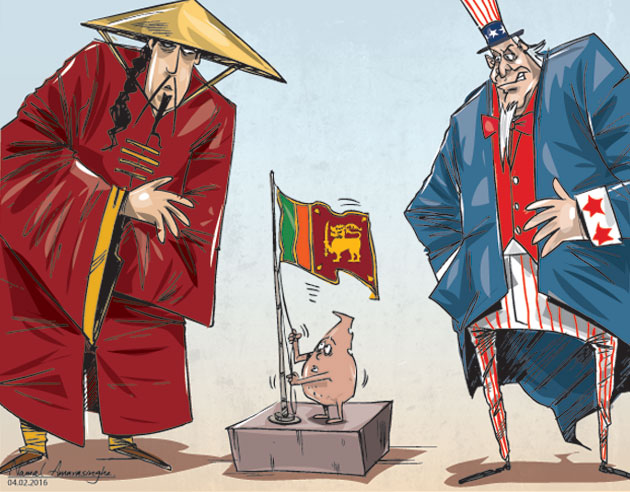
In an apparent reference to Sri Lanka’s ties with China, Chung said, without mentioning any party, that one should choose one’s alliances carefully. There could be mismatches whether in marital relations or any other relationships.

The Senior Director of the BCIS, Ambassador Sumith Nakandala, said that the BCIS had distinguished itself by not ceasing its academic activities during the pandemic. The virtual mode was used to continue its work.

One of the products of the pandemic was the realization of the need for global cooperation in every field of activity, Nakandala said. As far as Sri Lanka is concerned its present problems were triggered by the pandemic but they were in the making much before, due to long-standing political and economic mismanagement, he added.

The BCIS trains students for the Postgraduate Diploma, Higher Diploma, Diploma and Certificate in International Relations. It was founded in 1974 by Prime Minister Sirimavo Bandaranaike. It is the pioneering institution in the field of International Relations. It also offers Postgraduate programs in International Relations to graduates from recognized universities in Sri Lanka and abroad, besides carrying out research. In addition, an array of international languages are taught.

SLPP and UNP to join forces for next election?

Reports state that several senior members of SLPP and UNP are in talks to contest the upcoming Provincial Council elections together, which should be held by March, next year.

The Elections Commission is legally empowered to organise the election after the 20th of September 2022.

Meanwhile, speaking at an event in Colombo recently, Chairman of the Elections Commission Nimal G. Punchihewa said that the duration of the provincial councils have been extended by a year and that the extension ends on 25 March 2023.

Many political parties have already begun preparations in this regard.

Source: Deshaya

Posted in Uncategorized

Do not sign detention order – UN Rapporteur calls on President

United Nations Special Rapporteur on Human Rights Defenders, Mary Lawlor Tweeted that she is ‘deeply concerned’ that Human Rights Defenders Wasantha Mudalige, Hashantha Jeevantha Gunathilaka and Galwewa Siridamma Thero have been arrested under the Prevention of Terrorism Act.

She urged President Ranil Wickremesinghe not to sign their detention orders. She added, ‘doing so would be a dark day for Sri Lanka’.