Crisis-hit Sri Lanka just days from running out of fuel – Reuters

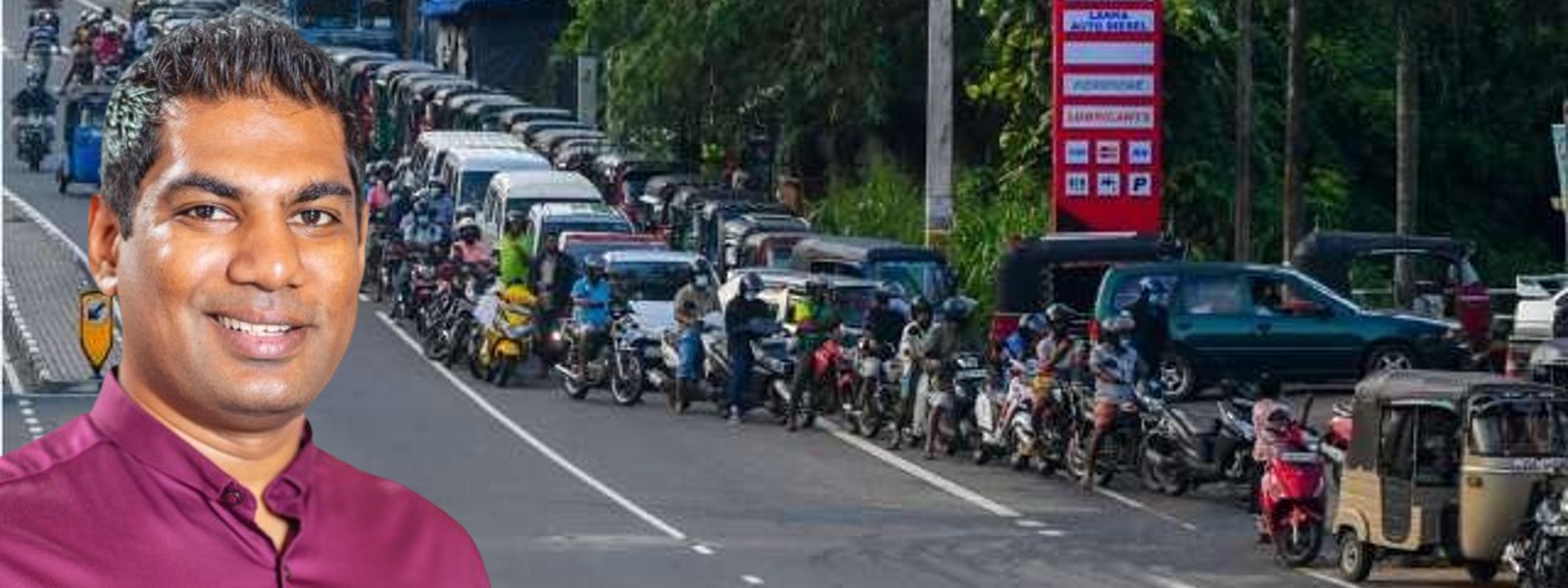
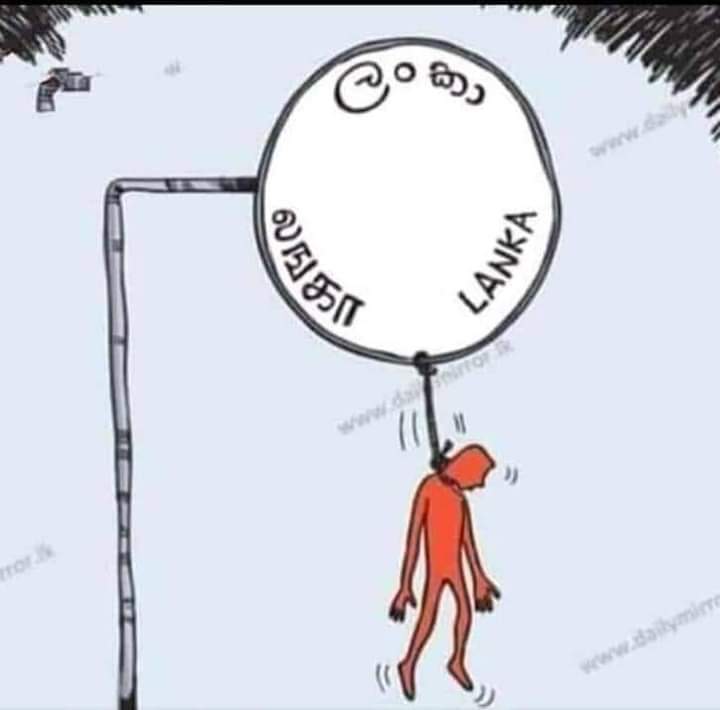
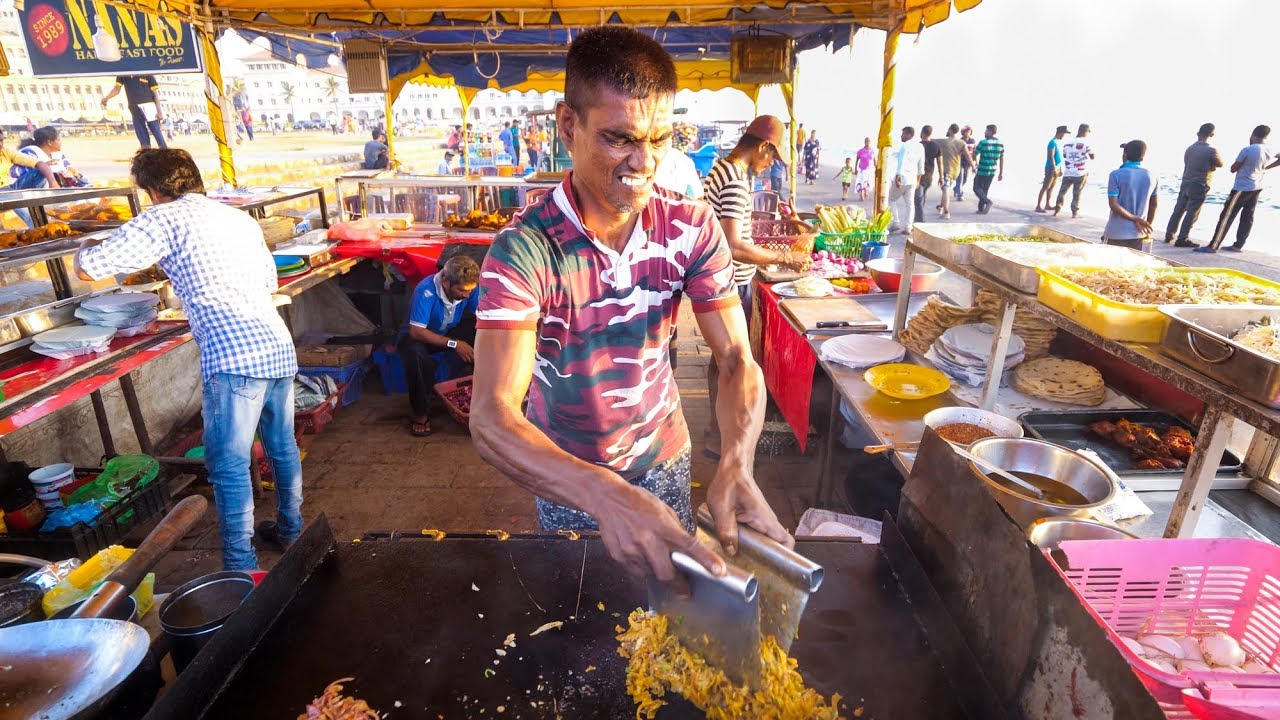
Sri Lanka expects to run out of fuel in days, prompting the government to close schools in Colombo and order government employees to work from home, while troops handed tokens to people lining up for petrol to keep their places in the queue.

Sri Lanka is suffering its worst economic crisis in seven decades, with foreign exchange reserves at a record low and the island of 22 million struggling to pay for essential imports of food, medicine and, most critically, fuel.

Industries like garments, a big dollar earner in the Indian Ocean nation, are left with fuel for only about a week to 10 days.

Public transport, power generation and medical services will get priority in fuel distribution, with some rationed to ports and airports.

“I have been in line for four days, I haven’t slept or eaten properly during this time,” said autorickshaw driver W.D. Shelton, 67, one of those who received a token meant to hold his place in the queue for when fuel becomes available.

“We can’t earn, we can’t feed our families,” added Shelton, who was 24th in line at a fuel station in the centre of Colombo, but set to stay there as he had no petrol for the journey to his home just 5 km (3 miles) away.

The government is talks with the IMF on a possible bailout, but many people can’t wait that long. The navy in the early hours of Monday arrested 54 people off the eastern coast as they tried to leave by boat, a spokesman said, on top of 35 “boat people” held last week.

Embattled President Gotabaya Rajapaksa’s elder brother resigned as prime minister last month after clashes between pro- and anti-government protesters spiralled into countrywide violence that left nine dead and about 300 people injured. An escalation of the fuel shortage could lead to a fresh wave of demonstrations.

Opposition leader Sajith Premadasa called for the government to step down.

“The country has collapsed completely due to the fuel shortage,” he said in a video statement. “The government has lied to the people repeatedly and has no plan on how to move forward.”

POWER CUTS

The government fuel stockpile stands at about 9,000 tonnes of diesel and 6,000 tonnes of petrol, the power minister said on Sunday, but no fresh shipments are due.

Lanka IOC, the local unit of Indian Oil Corporation, told Reuters it had 22,000 tonnes of diesel and 7,500 tonnes of petrol, and was expecting another 30,000 tonnes shipment of petrol and diesel combined around July 13.

Sri Lanka consumes about 5,000 tonnes of diesel and 3,000 tonnes of petrol a day just to meet its transport requirements, Lanka IOC chief Manoj Gupta told Reuters.

Other big consumers are industries like apparel and textiles companies, whose exports jumped 30% to $482.7 million in May, according to data released on Monday.

“We have enough fuel for the next seven to ten days, so we are managing,” said Yohan Lawrence, secretary general of the Sri Lanka Joint Apparel Associations Forum.

“We are watching and waiting to see if fresh fuel stocks arrive and what will happen in the coming days.”

Sri Lanka’s power regulator said the country was using its last stocks of furnace oil to run multiple thermal power plants and keep power cuts to a minimum. Scheduled power cuts will rise to three hours from Monday from two and a half hours earlier.

“We are hoping to keep power cuts at three to four hours for the next two months,” said Janaka Ratnayake, chairman of the Public Utilities Commission of Sri Lanka. “But given the situation of the country this could change.”

FINANCIAL HELP

The government has told employees to work from home until further notice, while schools have been shut for a week in the commercial capital of Colombo and surrounding areas.

Fuel station queues have grown rapidly since last week.

A team from the International Monetary Fund is visiting Sri Lanka for talks on a $3 billion bailout package. The country is hoping to reach a staff-level agreement before the visit ends on Thursday, that is unlikely to unlock any immediate funds.

It has received about $4 billion in financial assistance from India and the Sri Lankan government said on Monday the United States had agreed to provide technical assistance for its fiscal management. (Reporting by Uditha Jayasinghe; Writing by Uditha Jayasinghe and Krishna N. Das; Editing by Clarence Fernandez and Nick Macfie)

Schools in Colombo and other major cities to remain closed next week

The Ministry of Education says that schools in the Colombo Zone and other major cities will remain closed next week, from June 27 to July 01.

However, the ministry said that rural schools can function as normal on Tuesday, Wednesday and Thursday during next week.

Accordingly, issuing a notice, the ministry informed that the educational activities in the schools during the week from 27th of June to 01st of July 2022 will be conducted according to the following manner:

1. The schools where students and teachers are not having transport difficulties must be conducted normally just as the rural schools were held from 20.06.2022 to 24.06.2022 and if there are teachers facing the transport difficulties, the principal will arrange a flexible timetable for them without considering from their personal leave.

2. The urban schools which were not held last week must be conducted 03 days a week viz. Tuesday, Wednesday and Thursday from 07.30 am to 01.30 pm. The discretion of deciding the number of days conducting primary classes in these schools lies with the principal.

For the absent days of the students the learning activities will be continued through inline teaching / assignments / home based activities.

3. Actions will be taken not to consider the absent days of the teachers due to transport difficulties as personal leave.

4. The Ministry of Education extends its gratitude to the teachers and principals who contributed to conduct the schools even amidst of transport difficulties from 20.06.2022 to 24.06.2022.

Posted in Uncategorized

Bus fares and food prices to increase further

The All-Ceylon Restaurant Owners’ Association announced that the price of rice packets and all other food items will be increased by 10%, while the Lanka Private Bus Owners’ Association (LPBOA) and the All-Ceylon Private Bus Owners’ Association (ACPBOA) have stated that the Government should take steps to increase bus fares as soon as possible, as the failure to do so would result in the disruption of bus services.

These announcements were made following the Ceylon Petroleum Corporation (CPC) and the Lanka Indian Oil Corporation (LIOC) having increased fuel prices with effect from yesterday (26).

Speaking to The Morning yesterday (24), LPBOA President Gemunu Wijeratne said that the LPBOA strongly condemns the Government’s decision to increase fuel prices. Emphasising that the Government should take steps to restructure or shut down the institutions that are running at losses, he said that such institutions should not be maintained further with public money.

“We usually refuel our buses at night. However, buses were not able to pump fuel on 25 June, as the Sri Lanka Transport Board (SLTB) did not issue fuel to our buses properly. So, the SLTB is making huge profits by pumping fuel, which was received earlier, at the new prices. I have also spoken to Minister of Transport Dr. Bandula Gunawardana in this regard.”

Noting that he is ready to halt bus services at any time, Wijeratne said that the Government would be given time until today (27) to calculate all costs and increase the bus fares. He also said that if the bus fares are to be increased on 1 July, on the day of the annual bus fare amendment, bus drivers should be given fuel at the previous prices.

Meanwhile, ACPBOA President Anjana Priyanjith said that considering the fuel price increase and the annual bus fares amendment, the current bus fares would have to be increased by at least 40%, adding that the minimum bus fare, which is currently Rs. 32, would have to be increased to Rs. 40. He also said that the ACPBOA would refrain from operating buses if the Government does not take steps to increase bus fares before tomorrow (28).

The CPC and the LIOC have increased fuel prices at higher rates, with effect from yesterday.

The CPC announced that it had decided to increase the price of 92-Octane petrol by Rs. 50 per litre, 95-Octane petrol by Rs. 100 per litre, Auto Diesel by Rs. 60 per litre, and Super Diesel by Rs. 75 per litre. Accordingly, the price of a litre of 92-Octane petrol has been increased to Rs. 470, 95-Octane petrol to Rs. 550, Auto Diesel to Rs. 460, and Super Diesel to Rs. 520.

Meanwhile, Lanka IOC has also increased fuel prices in line with the CPC prices.

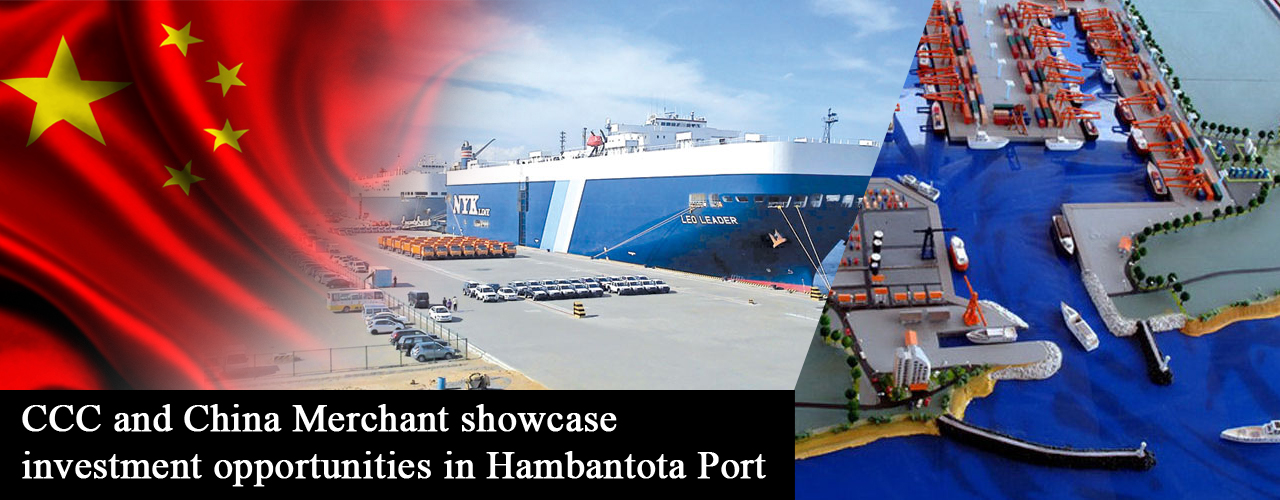
Was cash strapped Sri Lanka duped by China in Hambantota Port?

The Hambantota Port is located in southern Sri Lanka close to the east-west sea route. Its construction began in 2008 which was funded through Chinese loans of about US$ 1.3 billion. The construction was carried out by a joint venture of China Harbor Engineering Company (CHEC) and the Sino Hydro Corporation.

Phase I of the project was completed in 2010 and the port commenced commercial operations in November 2011. Phase II of the project began in 2012 and was completed in 2015. The total expenditure on building the port and equipping it was about US$ 1.5 billion.

By 2016, the Hambantota Port under the ownership of Sri Lanka Ports Authority (SLPA) had incurred losses of about SLR 46.7 billion. Meanwhile, Sri Lanka had to repay nearly US$ 1.7 billion to China as principal and interest for the loan it had taken to build this Port (till about 2036). The debt repayment for this loan at that time was close to about US$ 100 million annually.

By this time, it was also clear that this expensive project was not commercially viable as had been shown in initial feasibility studies till a ‘suitable’ study found this to be commercially ‘feasible’.

Using this pretext of recurring losses, an elaborate scheme was designed to enable China to secure ownership of this port for 99 years in the garb of an investment into a Public Private Partnership to manage and operate the Port.

In December 2016, the Sri Lankan government announced that ongoing losses made it necessary to restructure the port in collaboration with China Merchants Port Holdings Company (CMPort) to make it commercially viable.

A number of documents were concluded between the Sri Lankan government and CMPort between 2016 and 2017. As a result of these documents and a Concession Agreement signed in July 2017, two newly created entities called the Hambantota International Port Group (HIPG) and Hambantota International Port Services Co. Ltd (HIPS) took control of the Hambantota Port and its operation and management for a period of 99 years.

CMPort agreed to ‘invest’ US$ 1.12 billion for the acquisition of 85% stake in HIPG and a 52% stake in HIPS. The remaining stakes in HIPG and HIPS were given to SLPA. Thus, the overall percentage of shares held in the Hambantota Port by CMPort is about 70%. HIPG would develop and manage the port along with adjoining land, while HIPS would operate the Port services.

Interestingly, there was no change in Sri Lanka’s debt obligations for this project following the acquisition of stakes by Chinese entities in the Hambantota Port. Payments for these stakes were sent to the Treasury which possibly used it for other purposes perhaps.

Therefore, Sri Lanka continues to repay the debt despite restructuring the Port itself and handing it over to China. When taking over the Port, both HIPG and HIPS did not inherit any liability in this respect and GoSL continued to be liable for the debt existing prior to the transfer.

This was reconfirmed during a recent hearing (22 June 2022) under the aegis Committee on Public Enterprises (COPE) of the Parliament of Sri Lanka where it was revealed that the loans taken for the construction of the Hambantota Port had not been repaid with the ‘investment’ by the Chinese company in 2017. Therefore, Sri Lanka continues to bear the debt for the failed port despite restructuring it and handing it over to a Chinese entity for 99 years.

It was further revealed that these liabilities have not been correctly reflected in either SLPA or Government accounts. Chairman of the COPE recommended that necessary steps be taken to include the loan liabilities in a suitable manner in the publications/reports within a month.

The Hambantota Port also enjoys an exclusivity period which says that there shall not be any port/terminal development directly in competition with the Port within 100 km from the Port (with some exemptions).

Despite having a number of berths for various purposes with different depths and being operational for about a decade, the Port witnesses visits by only about 400 vessels annually. In comparison, the Port of Colombo handles about 4,000 vessels annually.

While the Port’s website claims various kinds of capacities in terms of bulk cargo, container movement and Ro-Ro, the actual ability to handle such volumes is doubtful as the supporting infrastructure and equipment such as suitable cranes for such volumes are not visible.

According to informed sources, major shipping lines are not keen on Hambantota Port yet for movement of containerized cargo. Therefore, containers are not handled in any significant way at Hambantota Port currently.

The current focus at the Hambantota Port at the moment is trans-shipment of vehicles (Ro-Ro) which according to shipping experts is not a very profitable operation. The other area is bulk cargo such as cement clinkers, bunkering fuel and LPG for some units located nearby.

The ongoing economic challenges have further affected the Port’s throughput. Work related to port development has also been reportedly halted currently due to the ongoing fuel/forex crisis.

Some limited bunkering operations are carried out at the Port. The Port has entered into a strategic partnership with Sinopec for bunkering which provides fuel to local bunker operators in Sri Lanka who then sell it to visiting ships. It is learnt that local bunkering operators prefer to buy oil from Singapore as it is cheaper compared to HIPG/Sinopec’s bunker fuel.

Given the constraints in expansion in areas such as container cargo, Ro-Ro, and bunkering, there have been efforts to speed up the development of an industrial zone adjoining the Port as an effort to make the Port attractive or feasible. Several MoUs and agreements have been signed mostly with Chinese or local entities for tyre manufacture, vehicle assembly, appliances, cement, cargo storage etc. Work on some units has commenced while others remain suspended.

It appears that Hambantota was initially a part of a string of strategic locations that China wanted to develop without any consideration for feasibility. The money spent on the Hambantota Port is in no way commensurate with the massive investment/loan that has gone into the project.

The scheduled expansion of capacity at the Colombo port with the addition of two deep draught terminals will further reduce processing times, bring down costs and make the Colombo Port even more attractive. Further, the Colombo Port is already a very well-developed trans-shipment hub and located only about 200 kilometres away from Hambantota. Therefore, it is extremely unlikely that another Port would be able to flourish as a major container trans-shipment hub in such close proximity.

Separately, it is becoming evident that the actual volume of Chinese debt may be well above the current publicly available figure of US$ 3.3 billion which is about 10% of the Government’s debt. Certain experts estimate that this may be beyond US$ 6 billion or almost 20% of Sri Lanka’s external debt with lending rates that are higher than most concessional financing.

It is understood that the current official figures only account for project loans to the government and have not included Chinese loans to Sri Lankan state-owned enterprises and loans of other types.

China has also taken a tough approach on debt restructuring where it would need to agree with other creditors to help Sri Lanka achieve consensus with all its creditors. China has been reluctant to commit to debt restructuring and has offered to refinance its debt through another loan. It has also not permitted Sri Lanka to use a currency swap of 10 billion yuan executed last year by imposing tough conditions.

After Sri Lanka decided to approach the IMF, there were some initial statements from China which hinted that going to the IMF may impact Sri Lanka’s debt restructuring discussions with China. This indicates that China may continue to create challenges for Sri Lanka in its engagement with the IMF as well as during debt restructuring.

Source:Hindustantimes.com

Posted in Uncategorized

Bankrupt Sri Lanka runs out of fuel

Sri Lanka has virtually run out of petrol and diesel after several expected shipments were delayed indefinitely, the energy minister said Saturday (Jun 25) while apologising to motorists for the worsening fuel crisis.

Kanchana Wijesekera said oil cargoes that were due last week did not turn up while those scheduled to arrive next week will also not reach Sri Lanka due to “banking” reasons.

Sri Lanka is facing a serious shortage of foreign exchange to finance even the most essential imports, including food, fuel and medicines and is appealing for international handouts.

Wijesekera said the state-run Ceylon Petroleum Corporation was unable to say when fresh oil supplies will be on the island. The CPC had also shut its only refinery over a shortage of crude oil, he added.

The refinery started operation earlier this month using 90,000 tonnes of Russian crude oil bought through Dubai-based Coral Energy on two-month credit terms.

Wijesekera said he regretted that deliveries of “petrol, diesel and crude oil shipments due earlier this week and next week” would not be fulfilled “on time for banking and logistical reasons”.

Scarce supplies left in the country will be distributed through a handful of pumping stations, he said.

Public transport and power generation will be given priority, Wijesekera added, urging motorists not to queue up for fuel.

“I apologise for the delay and inconvenience,” the minister said as hundreds of thousands of motorists spent long hours waiting for petrol and diesel across the impoverished nation.

Last week, the government shut non-essential state institutions along with schools for two weeks to reduce commuting because of the energy crisis.

Several hospitals across the country reported a sharp drop in the attendance of medical staff due to the fuel shortage.

Prime Minister Ranil Wickremesinghe warned parliament on Wednesday that the South Asian nation of 22 million people will continue to face hardships for a few more months and urged people to use fuel sparingly.

“Our economy has faced a complete collapse,” Wickremesinghe said.

“We are now facing a far more serious situation beyond the mere shortages of fuel, gas, electricity and food.”

Unable to repay its US$51 billion foreign debt, the government declared it was defaulting in April and is negotiating with the International Monetary Fund for a possible bailout

Posted in Uncategorized

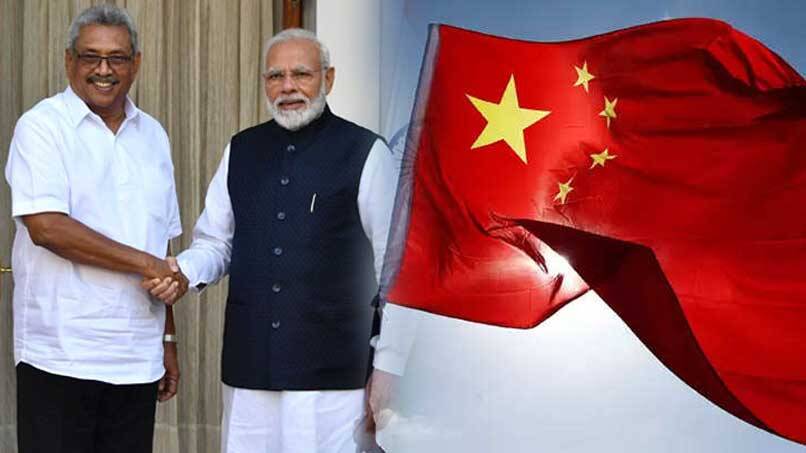
India Strengthens Its Position in Sri Lanka Vis-à-Vis Rival China By P.K. Balachandran/The Diplomat

In the 1980s, India was calling the shots in Sri Lanka, cashing in on its mediatory and interventionist role in the ethnic conflict that wracked the island. But New Delhi’s relevance receded after the minority Tamils’ armed struggle was crushed by the Sri Lankan forces in May 2009. The post-war era in Sri Lanka was marked by a crash program of reconstruction and development. While India failed to seize the opportunity to deploy its economic muscle and retain its foothold on Sri Lanka, an aggressive China filled the vacuum with alacrity.

Given its convoluted decision-making process, the lackluster leadership of the day, and its lumbering bureaucracy, India was no match to Xi Jinping’s newly ambitious China, armed with the well-endowed and expansionist Belt and Road Initiative (BRI).

Xi quickly responded to Sri Lankan President Mahinda Rajapaksa’s call for massive funds and technical assistance for infrastructural development while India dithered.

According to a Chatham House study headed by Dr. Ganeshan Wignaraja, the cumulative value of Chinese infrastructure investment in Sri Lanka between 2006 and July 2019 reached $12.1 billion. Economist Umesh Moramudali calculated that, considering both Public and Publicly Guaranteed (PPG) debt, China accounted for 19.9 percent of Sri Lanka’s foreign debt in 2021.

Get briefed on the story of the week, and developing stories to watch across the Asia-Pacific.

However, since the deepening of the economic crisis due to a severe foreign exchange shortage in January 2022, the decade-old roles have been reversed.

India has extended lines of credit totaling $4 billion for food, fuel, fertilizer, and medicines, according to Prime Minister Ranil Wickremesinghe’s statement in parliament on June 22. As per a recent press release from the Indian High Commission, India has so far given $5 billion to Sri Lanka as development assistance with more than $600 million as grants.

In contrast, Beijing has been a bystander as Sri Lanka goes down in debt distress. Out of the $26 billion repayment on which Sri Lanka defaulted this year, China is owed $7 billion.

Unlike India, which rushed to help upon obtaining assurances about some economic and security-related projects, China set tough conditions. Beijing wanted Colombo to put its economic house in order first; agree to debt refinancing instead of seeking rescheduling of repayment; finalize the long-pending China-Sri Lanka Free Trade Agreement; and above all, distance itself from India, the West, and the IMF.

China has been repeatedly telling Sri Lanka to encourage foreign direct investment (FDI) instead of borrowing. And more importantly, the Chinese, from President Xi Jinping down to Foreign Ministry spokespeople, have been asking Sri Lanka to be “independent” (of India and the West, presumably).

But given the dire situation and an ingrained fear of FDI, Sri Lanka has not accepted any of these conditions. Instead, it has turned to India, the West and the IMF. Wickremesinghe is still hoping to form an India-China-West consortium to devise a recovery plan for Sri Lanka. But India and China are unlikely to be part of the same team, given their competing interests in Sri Lanka.

Of late, China has been making some feeble efforts to ingratiate itself with Sri Lanka via small aid packages. But its offer of $76 million pales into insignificance compared to India’s $4 billion.

Under Prime Minister Narendra Modi’s “Neighborhood First” policy and his Security and Growth for All in the Region (SAGAR) project, India is continuing to send ship loads of daily necessities to Sri Lanka. To get the backing of Indian political parties, External Affairs Minister S. Jaishankar met many of them and secured their support. In a follow-up, New Delhi sent a high-level delegation of senior officials led by Foreign Secretary Vinay Kwatra to Colombo on June 23 to discuss recovery plans with President Gotabaya Rajapaksa and Wickremesinghe.

Significantly, the two sides discussed the promotion of “Indo-Lankan investment partnership” in various fields such as infrastructure, connectivity, and renewable energy. India’s assistance is thus both philanthropic and transactional.

In March, a MoU was signed on setting up the Trincomalee Power Company in eastern Sri Lanka. The Indian energy and ports tycoon, Gautam Adani, got a $500 million renewable energy project in Sri Lanka’s north. Earlier, Adani had bagged the $700 million project to build the West Container Terminal in Colombo port.

In May, MOUs were signed on setting up a Maritime Rescue Coordination Center; implementation of hybrid power projects in three islands off Jaffna; and the development of fisheries harbors in Sri Lanka.

India appears to be making up for lost time. Indians cannot now complain that Sri Lanka favors China in the allocation of projects. However, there is still an undercurrent of hostility in the island to India and fears about Indian hegemony. Influential nationalist leader Wimal Weerawansa has voiced the fears of a “sell out” and opposition MP S.M. Marikkar wondered if the Indian officials had come to acquire Kachhativu Island in return for aid.

The Sri Lankans’ attitude to India in the coming months will depend on the IMF’s bailout package. This is because India is banking on the IMF bailout to help it manage Sri Lanka. Moreover, the West’s financial backing for India’s efforts in Sri Lanka depends on the success of the IMF’s mission. Wickremesinghe is hoping to get the IMF’s bailout in July.

But the question of China’s role still lingers. Will China remain a bystander, watching India and the West displacing it in Sri Lanka? Observers think such a scenario is inconceivable given developments in the Indo-Pacific region. But there is as yet no clue as to what China has up its sleeve.

(P.K. Balachandran is a freelance journalist specializing in South Asia and based in Colombo, Sri Lanka)

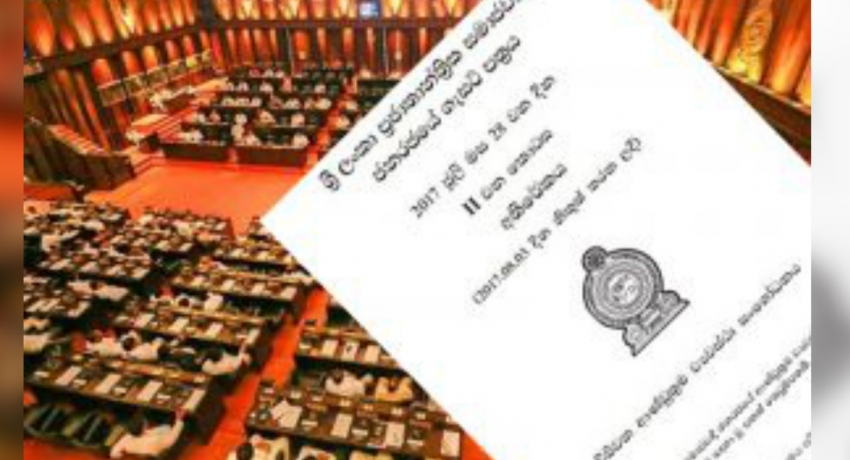
Constitutional amendment: Cabinet to decide on gazetting 22A tomorrow

The Cabinet of Ministers is to decide tomorrow (27) on gazetting the proposed 22nd Amendment to the Constitution, after looking at the final draft of the legislation that has received the approval of the Attorney General (AG), The Sunday Morning learns.

Justice Minister Dr. Wijeyadasa Rajapakshe told The Sunday Morning that the Government’s proposed 22nd Amendment had been approved by the Attorney General after the Legal Draftsman had passed it on to the Attorney General’s Department.

“The finalised draft will be presented to Cabinet on Monday and a decision will be made then on when to gazette the proposed Amendment,” he said, adding that the draft Amendment would be gazetted next week itself.

At the last Cabinet meeting, the Justice Minister presented a Cabinet note informing that the Government’s draft 21st Amendment would be identified in future as the 22nd Amendment to the Constitution, since the draft Amendment presented by the Samagi Jana Balawegaya (SJB) had already been gazetted as the 21st Amendment.

At the same meeting, Minister Prasanna Ranatunga had questioned whether the proposals presented by other MPs, especially ruling party MPs, to the proposed Amendment had been included in the draft that was presented to the Cabinet for approval.

Prime Minister Wickremesinghe had noted that the relevant provisos (the President’s proposals) had been included, and that therefore there were no more issues in that regard.

After receiving the assurances from the Prime Minister and Justice Minister, the Cabinet of Ministers approved the draft Amendment with agreement that the legislation would be gazetted after the Cabinet saw the draft finalised by the Attorney General.

Posted in Uncategorized

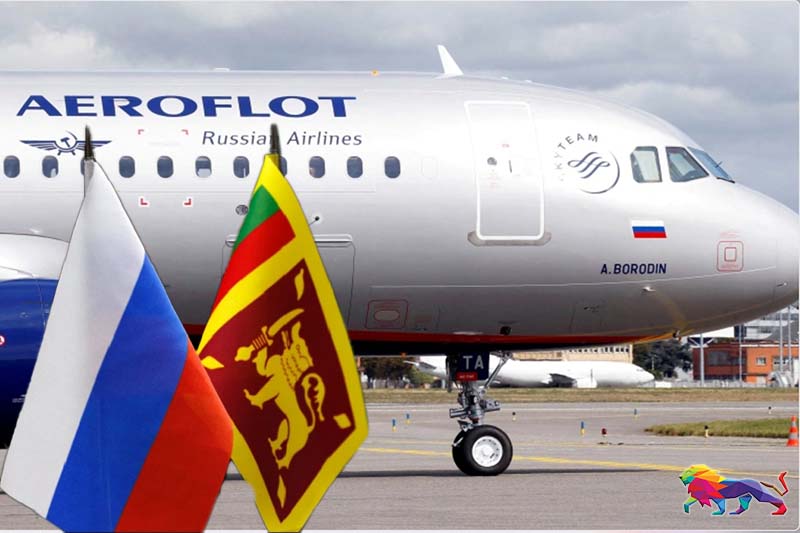
Two ministers to visit Russia tomorrow

Two ministers will be flying to Russia tomorrow (27) and they will discuss matters including fuel imports during the visit, according to Minister Kanchana Wijesekara.

The Minister of Power and Energy revealed this during a press briefing held in Colombo today. He was responding to a question raised at the media briefing regarding Sri Lanka not seeking oil from Russia.

Speaking further the Minister said that the misters are traveling on another diplomatic visit and hoped that the discussion would be held in due course during that visit and that a favorable answer would be forthcoming.

He said it is a misconception to say that they are not interested to obtain fuel from Russia. “We have made requests, and there are diplomatic channels to go ahead with it.”

“The truth is that the ship that was to come earlier had also been proposed to bring down a shipment from a Russian company. The first letter of credit was also rejected because of a ship from a Russian company from international banks.”

He said: “As far as I know, two ministers are going to talk to Russia about certain issues on their way to another diplomatic affair. We hope to receive a favorable answer. It doesn’t matter who we get from. If we receive at a lower cost, we will try it.”

India rushes food, medicine to bankrupt Sri Lanka

Sri Lanka accepted a rice and pharmaceuticals shipment from neighbouring India on Friday (Jun 24) as the island nation battles an unprecedented economic crisis that has left supermarket shelves and pharmacy cabinets empty.

A critical shortage of foreign currency has left Sri Lanka unable to pay for enough imported food, fuel and medicines to meet demand since the end of last year, causing widespread hardship.

Its 22 million people have also been forced to endure prolonged daily blackouts and galloping inflation that has strained household budgets.

India has extended US$1.5 billion in credit lines to allow Sri Lanka to keep meeting a portion of its food and energy needs, and Friday’s shipment followed a visit by Indian experts for aid talks.

“Both parties discussed at length the future course of action of the Indian aid programme to stabilise and revive the Sri Lankan economy,” Sri Lankan President Gotabaya Rajapaksa’s office said after the meeting.

An acute lack of petrol has immobilised Sri Lanka this week, with parliament cancelling two days of sittings to help conserve fuel.

The United Nations last week appealed for emergency food aid after a survey showed that four out of five Sri Lankans were skipping meals to cope with the crisis.

A US Treasury delegation is expected in the capital Colombo next week to assess the crisis, with Prime Minister Ranil Wickremesinghe telling lawmakers on Wednesday that the nation’s economy had reached the point of “complete collapse”.

Sri Lanka has already defaulted on its US$51 billion foreign debt and is in bailout talks with the International Monetary Fund, which could take months.

TNA AND TELO Leader Selvam Adikalanathan MP Wants PM To Stop Ilmenite Mining In Mannar

The Tamil National Alliance (TNA) Joint leader and TELO Leader MP Selvam Adaikalanathan has sent a letter to Prime Minister Ranil Wickremesinghe requesting him to take immediate steps to stop the mega-scale Ilmenite mining in Mannar which is being carried out causing severe environmental pollution.

According to the letter, mining is being carried out across many acres by a large number of private companies using heavy machinery.

In his letter, TNA &TELO MP Selvam Adaikalanathan has stated that his Party does not believe all these companies have been issued permits to engage in Ilmenite mining in the area.

He has also pointed out that the particular area has become a huge pit of 500 acres due to these mines which are supported by the politicians.

Accordingly, the TNA has requested the PM to pay his attention to the issue and take immediate steps to stop the ongoing mining activities.