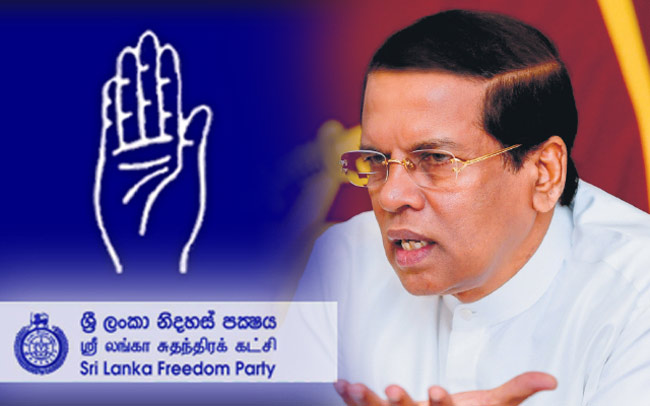
Weerasekera warns TNA not to test patience of Buddhists

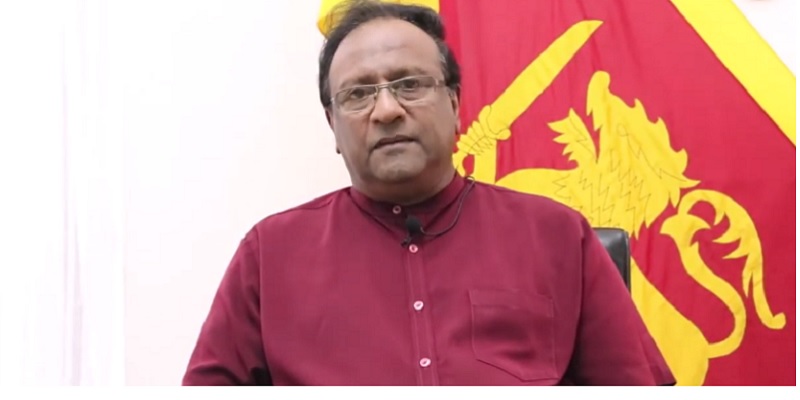
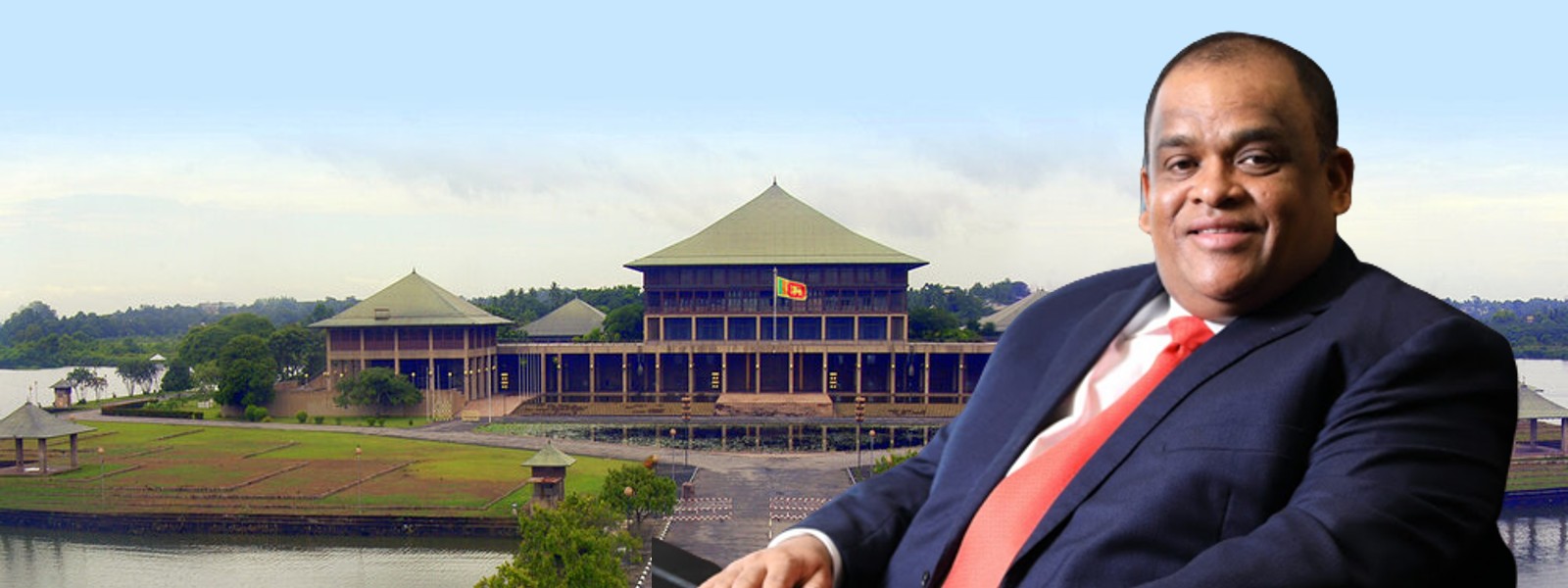
Former Minister Sarath Weerasekera today warned the Tamil National Alliance (TNA) not to test the patience of Buddhists.

Speaking in Parliament today, Weerasekera said that the TNA was making defamatory statements towards Buddhist monks and Buddhist teachings.

He accused the TNA of being the political party of slain LTTE leader Vellupillai Prabakaran.

Weerasekera said that when Prabakaran was killing people the Buddhist community did not harm ordinary Tamils.

The former Minister of Public Security said that there is a limit to the patience of Sinhalese Buddhists.

SJB & JVP boycott Parliament session, as mark of protest against government

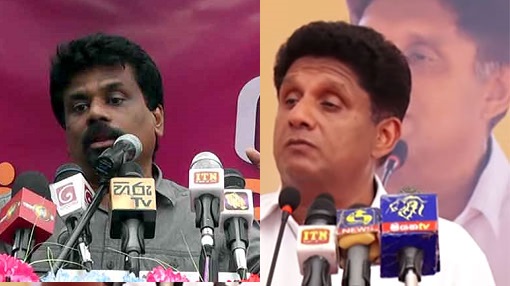
Sri Lanka’s main opposition Samagi Jana Balavegaya (SJB) and the opposition National People’s Power (NPP) will boycott parliament this week, opposition leader Sajith Premadasa said and NPP leader Anura Kumara Dissanayake said before proceeding to walk out of the chamber.

The government has turned parliament into a talk shop and time spent in parliament is a waste of time and offers no solution to the people suffering outside, Premadasa told parliament on Tuesday June 21.

“We will boycott this parliament,” thundered Premadasa.

Janatha Vimukthi Peramuna (JVP)-led National People’s Power (NPP) leader Anura Kumara Dissanyaake echoing Premadasa’s statement said no useful solutions have come out of parliament so far.

Sri Lanka is going through its worst economic crisis in its post-Inedependence history, with long queues for essentials seen around the country.

Dissanayake said the government must present to parliament a short term plan or a roadmap with proposals for a way out of the crisis.

President Gotabaya Rajapaksa and Prime Minister Ranil Wickremesnghe are in two camps and conflict is brewing between them, claimed Dissanayake.

“There is no point debating here if no roadmap or plan is presented to parliament,” he said.

Sri Lanka Freedom Party (SLFP) general secretary Dayasiri Jayasekara also demanded a plan on solutions to Sri Lanka’s lengthening fuel queues.

Government MP Nimal Lanza said opposition parties including the NPP was uninterested in forming an all party government when overtures were first made.

“Don’t speak empty words and mislead the people. If you have a plan, we will raise both hands and extend our support,” he said.

National Freedom Front (NFF) leader Wimal Weerawansa claimed that some SLFP MPs and MPs from Lanza’s group had secretly proposed to President Rajapaksa that Wickremesinghe be appointed Prime Minister.

Refuting this claim, Lanza said: “Don’t get me started [on others].”

“However, there needs to be a government. We’re not going to attack a new government just for the sake of it. But a Prime Minister needs to have a plan. It doesn’t look like they even have an answer to the crisis.

“It was implied that Wickremesinghe would be able to pull billions of dollars out of his pocket soon after his appointment, given his supposed international connections. That hasn’t happened,” said Weerawansa.

Why Gotabaya should go? Why now?

Those who have followed this column might know that I have regularly expressed strong reservations about Gotabaya Rajapaksa during his previous stint as the secretary of defence and later his reincarnation as the president. Those concerns would be vindicated when the Sri Lankan judiciary is unshackled from routine political meddling and inherent bias toward the powers that be. Nonetheless, after the other Rajapaksas resigned and their dynastic project crumbled, I, for one, had rather been inclined to put up with Gotabaya Rajapaksa’s continuation in office for the time being for the sake of political stability.

Initially, it appeared as a reasonable trade-off in exchange for political instability. Now, I must admit I have been naïve. Gotabaya is not a source of political stability, but rather the stark opposite. He is the greatest source of political instability. Not only was he the primary catalyst who mothballed an otherwise manageable sovereign debt crisis into a calamity of unprecedented proportions. His continuation in the office against a myriad of calls for his departure is prolonging the crisis. He should leave the office for the sake of the country. To begin, he should announce a timeline for his departure, removing the greatest handicap for the formation of an all-party government.

Once a new all-party government is formed, he should make him redundant, (at maximum limiting himself to negotiate a safe way out). He should let the new government dig the country out of the hole, unencumbered by his presence. He should let Sri Lankans dream again, his government has been a long nightmare. If he and his ever-depleting number of sycophants cannot fathom why he should leave, here are a few reasons why his continuation would mean the ultimate demise of the nation.

No one wants him – save a few acolytes

First, for Sri Lanka to come out of the current economic misery, a trilogy of factors should converge: the Sri Lankan public, the political parties that would form the alternative government and the international community. None of them wants to deal with the incumbent president.

Sri Lankans, including many millions who voted for Gotabaya and SLPP, now view him as the source of their misery and want to see his back. He came to power in a race-baiting election campaign, now the hapless public is quarrelling in queues. Their frustration manifest in clashes with police, which have been responding with excessive force. Gotabaya is dragging the country towards another violent conflagration, which he might then use to cement his power.

The political opposition does not want meaningful cooperation with a government that Gotabaya calls shot. They view it as politically suicidal. Also, as the experience of Ranil Wickremesinghe reveals a political cohabitation with Gotabaya is also a meaningless and wasteful venture.

Intl. community more at ease with a govt without him

The international community, especially the democratic nations that always held reservations about Gotabaya Rajapaksa’s chequered history riddled with skeletons are less inclined to associate with his government. He snubbed the Japanese, Sri Lanka’s time-tested ally by cancelling the Japanese-funded Colombo Light rail project. He snubbed the Americans over the Millennium Challenge Cooperation (MCC) Grant. By snubbing the West, he and his acolytes believed China would open its chequebook. But, Chinese mandarins who might not have qualms about Rajapaksa’s authoritarian tendencies, or his brother’s kleptocracy, had already burnt their fingers funding similar irrational autocrats in Venezuela and Nicaragua. They gave him the boot. China after all is a mercantilist state, and the one with which, it would be the hardest to agree on bilateral debt restructuring. That would potentially poison the entire process.

The Middle Eastern countries, with deeper pockets, thanks to the rising energy prices, would have been more forthcoming with assistance had not been Gotabaya Rajapaksa regime’s track record of anti-Muslim dog whistling.
In the absence of friends, Gotabaya was left with India, which terms its assistance as a hallmark of ‘neighbourhood first’ policy — and in private perhaps, as the vindication of the ‘Indira doctrine’, India’s equivalent to the Monroe doctrine (that in times of contingency, the countries in India’s sphere of influence should seek India’s assistance first before reaching out to the others). However, Sri Lanka has already outlived Indian generosity and is still asking for more. Any future assistance would come with many strings attached, which Gotabaya Rajapaksa, the pseudo patriot seems to be content with.

President Rajapaksa knows his low international standing, hence the appointment of Ranil Wickremesinghe as his prime minister. But the international community knows better. They know that Mr. Wickremesinghe is a spent political force of dubious political utility. His contribution so far has been saving the Rajapaksas, much less the nation. The political instability and policy confusion that Gotabaya Rajapaksa creates, makes it harder for Sri Lanka to negotiate debt restructuring and intentional assistance. In the absence of progress in talks with the lenders and friendly nations, Sri Lanka slides further into the precipice. Gotabaya is perpetuating the misery of the people.

Political mandate exhausted

Second, he claims to have a political mandate. Alas, that was exhausted long ago. A president who single-handedly broke the back of the state, through his disastrous tax reforms, and then decimated the local agricultural sector, impoverishing 1.8 million farming families has neither moral right nor a political mandate to stay in power any longer. In any country where accountability matters, he should have been impeached, or in court for the gross mismanagement of the state affairs.

Avert a complete ruin like in Venezuela

Third, the recent history of international politics would reveal that the countries do not cease to exist as viable political and economic entities just because they were confronted with a severe debt crisis. Ireland was there in the early 2000s, and Greece went through a similar economic squeezing later in the 2010s. Argentina defaults habitually. But those states have remained viable entities. Countries that crumbled beyond redemption – such as Venezuela now and Zimbabwe in the early 2000s- did so for a different reason: demagogic leaders who prioritized their political survival over the survival of the nation, and hang on to power at the demise of their states as anything but a functioning entity.

Gotabaya Rajapaksa is carrying Sri Lanka in that direction. Economic predictions are dire. World Bank forecasts the Sri Lankan economy to contract by 6.8 per cent. UNICEF warns ‘one of a kind crisis’ in food security. Rajapaksa already oversees a state that has ceased to function in many areas. Long cherished pillars of the welfare state, free education and free healthcare are crumbling. Child malnutrition is rising. Public transport is at a standstill. Commuters are crushed to death riding in overloaded trains. The elderly are dying in fuel queues. Gotabaya Rajapaksa who has no public support, nor international partners (or common-sense wisdom), cannot address the country’s acute economic crisis. Instead, he is perpetuating it.

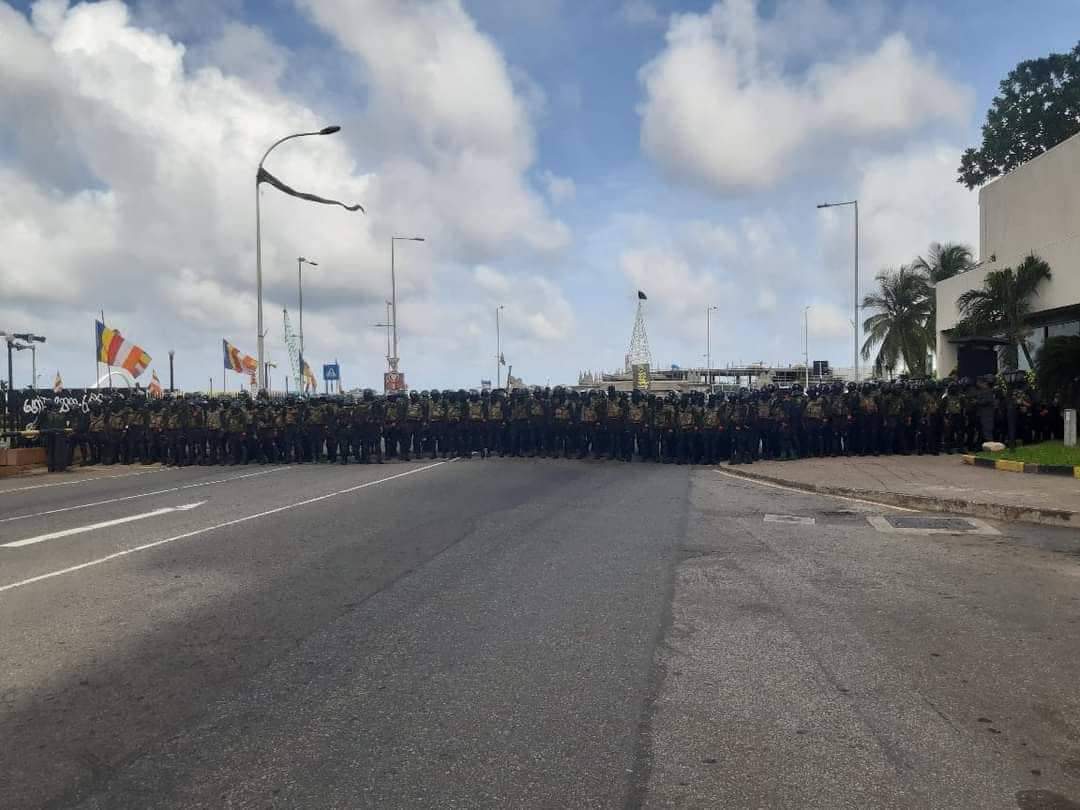
Fourth, a political chokehold cannot be sustained without the use of brute force. Yesterday, on his birthday, President Rajapaksa mobilized hordes of military personnel to the vicinity of

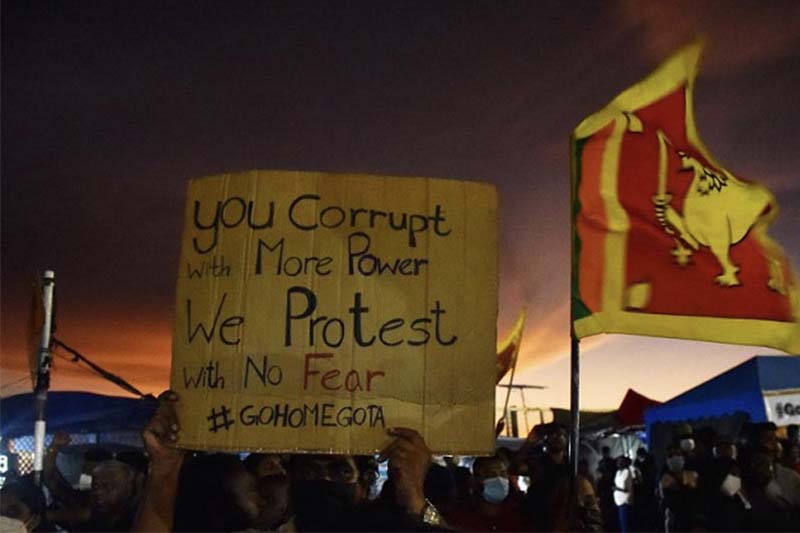
GotaGoGama. Like his counterparts in Venezuela and Nicaragua, Rajapaksa is switching to rule by force. Such a state quo also requires diverting a substantial part of the nation’s limited resources to the security apparatus of the state. That is in the making. See the cops who jumped the queues and pump full tanks in petrol stations.

As Rajapaksa resorts to militarization and brutalization of society, even the modest gains of ‘Aragalaya’ is evaporating. Premier Ranil Wickremesinghe is an accessory to this crackdown. The Sri Lankan public and the international community should not let them succeed.

Gotabaya Rajapaksa has brought the Sri Lankan nation to its knees. In any dispassionate analysis, the destruction he unleashed on the economy in two short years far outweighs the destruction that another race-baiting megalomaniac unleashed over three decades. That man is Veluppillai Prabakaran.

Gotabaya should go. To begin with, he should announce a timeline for his departure and invite the political opposition to form an all-party government. He should let them fix the broken state, negotiate international assistance and pass a constitutional amendment that restores the checks and balances of the government. The executive presidency should also go, the Rajapaksas have vindicated the danger of excessive powers vested with the office. A new constitution should follow. But, for the country to dream of a better future, Gotabaya should go.

Follow @RangaJayasuriya on Twitter

Posted in Uncategorized

China-funded Lotus Tower stays idle in Colombo

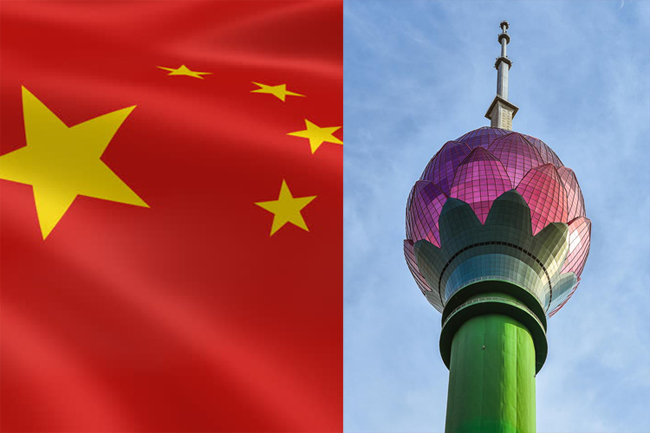
The Colombo Lotus Tower, which was funded by China and was declared open in late 2019 by the then President Maithripala Sirisena, remains non-operational to-date in the heart of the Capital of Sri Lanka.

The 356.3-metre-tall tower, the tallest telecommunication tower in the whole of South Asia, was constructed at a cost of USD 104.3 million, 80% of which was funded by China. The rest of the funds were provided by the Telecommunication Regulatory Commission (TRC) of Sri Lanka.

When it was declared open partially for the public in September 2019, the then Sri Lankan President made the allegation that one of the Chinese firms contracted to work on the project had disappeared with USD 11 million of state funds.

The construction of the project began in 2012 under the administration of Sirisena’s Predecessor Mahinda Rajapaksa but the construction of the tower faced many hurdles largely due to lack of funds.

According to the original plan of the project, the tower was to be developed as a telecommunication tower equipped with a hotel, a telecommunications museum, restaurants, auditorium, an observation deck, a shopping mall and a conference centre. Although it has been almost three years since the grand opening, the tower has not been operationalised. Neither the proposed features have been set up in the tower nor it has been opened for the public.

Today, it seems that the sole purpose of the tower is to illuminate the Colombo skyline to mark special days such as Vesak and Christmas or to raise awareness on days such as Breast Cancer Awareness Day and World Safety Day.

The Lotus Tower is one of several projects funded by China in Sri Lanka that have not yet yielded the expected outcome. A large amount of funds have been obtained from China as loans to complete these projects.

According to the data from the External Resources Department of the Ministry of Finance, Sri Lanka, out of the USD 26.4 billion in outstanding external foreign debt by the end of 2021, about USD 7.1 billion was debt from China.

However, projects like the Lotus Tower have become a burden to Sri Lanka as they have failed to generate a desired revenue to help pay back the loan installments.

The Hambantota Port is considered another white elephant and so is the Mattala Rajapaksa ‘International’ Airport. The Port which is situated at the Southern tip of Sri Lanka is now being operated by the Hambantota International Port Group after it was leased out by China on a 99-year-lease basis in 2017. A 70 percent stake of the port was leased to China Merchants Port Holdings Company Limited (CM Port) for 99 years for USD 1.12 billion. Five loans were obtained to construct the Port under the government led by Mahinda Rajapaksa from 2007 to 2014. Although the port was leased to China for 99 years, there was no cancellation of debt obtained from China. The Hambantota Port deal cannot be considered as a debt-equity swap as many people believe.

The operations of the Hambantota Port did not generate sufficient revenue to match the debt obligations. Following the completion of phase one of the project the port operations commenced in 2011. However, according to data issued by a Parliament committee, the accumulated losses of Hambantota port was USD 300 million as of the end of 2016.

The port operations have expanded since Hambantota Port was leased to CM Port but it is yet to prove whether it can generate sufficient revenue to assist with the debt servicing.

Meanwhile, the Mattala Rajapaksa ‘International’ Airport which was constructed at a cost of USD 210 million obtained from China is also struggling to survive since its opening in March 2013.

Out of USD 210 million spent on the project, USD 190 million came from the Chinese Government in the form of loans issued by the Exim Bank of China. Neither the Port nor the Airport in Hambantota have borne fruits. At one point, paddy was stored at the Airport warehouses.

More recently, the newly appointed Minister of Ports, Shipping and Aviation Nimal Siripala de Silva said the monthly loss from operating the Mattala International Airport was Rs. 10 million.

While participating in an inspection tour and a staff meeting at the Airport on June 11, Minister de Silva emphasized that steps should be taken to minimize the loss and maintain it as a productive airport with a minimum number of employees.

“Today, the Mattala Airport is being maintained with the money earned by Katunayake Bandaranaike International Airport (BIA) and the loan of USD 210 million obtained from China for the construction of this airport is to be repaid in installments,” the Minister said.

Therefore, he said alternative proposals are being considered to increase the revenue of the Mattala Airport.

Dhammika Perera undertakes not to take oath as MP or Minister until court decides on FR

Businessman Dhammika Perera has undertaken not to take oath as a Member of Parliament or Minister until the Supreme Court decides whether or not to grant leave to proceed with the petitions filed before courts against his appointment as an MP.

The fundamental rights petitions filed against the appointment of Dhammika Perera as a Member of Parliament were taken up by a three-judge bench comprising Justices Priyantha Jayawardena, Yasantha Kodagoda and Arjuna Obeysekera today (Jan. 20).

Romesh de Silva, PC, who appeared on behalf of the business magnate, at the end of the consideration of the petitions, informed the court of his client’s undertaking.

Further consideration of the petitions was adjourned until tomorrow (20).

Last week, several individuals and organisation including the Centre for Policy Alternatives (CPA) and its Executive Director filed a fundamental rights (FR) application challenging the appointment of Dhammika Perera to fill the vacancy created by the resignation of former Minister Basil Rajapaksa, as a Member of Parliament elected under Article 99A of the Constitution (the National List).

Posted in Uncategorized

Cabinet approval for 21st Amendment to Constitution

The 21st Amendment to the Constitution has received the approval of the Cabinet of Ministers today (20), according to Minister Harin Fernando.

In a twitter message, he said that draft constitutional amendment was tabled and passed by the Cabinet and that it will be tabled in parliament soon.

The Minister also expressed his gratitude to Prime Minister Ranil Wickremesinghe and the Minister of Justice, Prison Affairs and Constitutional Reforms Dr. Wijeyadasa Rajapakshe for pushing it through.

The draft proposal was expected to be discussed once again and a final decision reached at the weekly cabinet meeting this evening, after its approval had been delayed several times.

Following last week’s cabinet meeting, the Justice Minister has said the Cabinet had not green-lighted the constitutional amendments as it was decided that further educating the political party leaders in this regard was necessary.

Thereby, several political party leaders were expected to be informed in detail with regard to the 21st Amendment.

He had said that the draft of the amendment will be gazetted after receiving the approval of the Cabinet.

The 21st Amendment was initially tabled in the Cabinet on June 06 by Minister Wijeyadasa Rajapakshe and the discussion on it had been adjourned until last week.

The 21st Amendment is expected to empower Parliament over the executive president and annul the 20A to the Constitution, which had given unfetted unfettered powers to President after abolishing the 19th Amendment.

Under the 21A, the President, the Cabinet of Ministers and the National Council will be held accountable to the Parliament. Fifteen Committees and Oversight Committees are also accountable to Parliament.

Posted in Uncategorized

PM begins talks with IMF delegation in Colombo

Prime Minister Ranil Wickremesinghe and an International Monetary Fund delegation has commenced discussions a short while ago.

Premier Wickremesinghe is holding talks with the 10-member IMF team at the Prime Minister’s Office.

A team from the IMF is in the island to hold discussions with the government and officials regarding a bailout package to support Sri Lanka to overcome the current economic crisis.

The IMF team is expected to remain in the country until the 30th of June to discuss the economic programme of the government which will lead to the bailout package.

Earlier, the IMF has also reaffirmed its commitment to support Sri Lanka at this difficult time.

An IMF team led by Peter Breuer and Masahiro Nozaki conducted a virtual mission with the Sri Lankan authorities from the 9th to the 24th of May on an economic program that could be supported by an IMF lending arrangement.

The IMF team met with Prime Minister Ranil Wickremesinghe at the concluding meeting, following technical discussions with the economic team led by Governor of the Central Bank of Sri Lanka Nandalal Weerasinghe and Secretary to the Treasury Mahinda Siriwardana.

The team also met with representatives of the private sector, the financial sector, and development partners.

Sri Lanka which is facing an unprecedented economic crisis is seeking to obtain around $5 billion from the IMF to deal with the on-going issues.

Posted in Uncategorized

21 persons including a monk arrested following Colombo Fort protest

Sri Lanka Police arrested 21 people for protesting near the President’s Office in Colombo on Monday (20) morning.

One monk, four women, and 16 men were arrested by Sri Lanka Police.

A statement from Sri Lanka Police said that a group of protestors obstructed the two gates leading to the President’s Office from Lotus Road on Sunday (19) night, and then obstructed the two gates leading to the Finance Ministry, and the Treasury as well.

It added that the protestors set up tents at these gates, and this situation prevented public employees reporting for essential services at the respective offices from entering or exiting the premises.

Sri Lanka Police said the protest also inconvenienced the general public as well.

Sri Lanka Police added that the protest also caused a delay of half an hour for the Finance Secretary to attend the meeting with the International Monetary Fund.

Therefore, Sri Lanka Police and the Special Task Force decided to detain the protestors.

The suspects will be produced to court on Monday (20) for legal action, said Sri Lanka Police.

Posted in Uncategorized

Global financial agencies or donor countries would not come forward to bail out SL: Sirisena

Global financial agencies or donor countries would not come forward to bail out Sri Lanka from her current economic, political and social mess as long as Gotabaya Rajapaksa – Ranil Wickremesinghe kleptocracy remains in power, former President and SLFP leader Maithripala Sirisena said.

The only solution was to form an all-party interim government sooner than later with a cabinet not exceeding 15 members representing all the political parties in Parliament and select a Prime Minister from among them on consensus of all with a pledge to hold a general election in 6 months, he added.

Addressing the media at the party office, Sirisena stressed that the top priority of the all-party government must be the enactment of the 21st Amendment to the Constitution clipping executive powers of the President and strengthening the legislature while reintroduction of the Constitutional Council with independent commissions.

“The rivalry which existed during the yahapalana regime between him and Prime Minister Wickremesinghe was being re-played by President Rajapaksa and Wickremesinghe right now bringing the country’s woes from bad to worse. President calls meetings among ministers and public officials to advise them how to do their job. Not to be outdone, Prime Minister Wickremesinghe also convenes conferences at Temple Trees for public and private sector officials and politicians to tell them how to do their job. Sadly, they both have miserably failed to deliver and the predicament of 22 million Sri Lankans gets aggravated by the day,” Sirisena stressed.

The incompetency, mismanagement, corruption and misrule under the SLPP regime during the last three years had led the global community to brand Sri Lanka as a failed state and a pariah state. Ranil as usual has also failed miserably there is not even a sign of recovery from the untold sufferings. That is why, the international community refuses to help Sri Lanka until this regime leaves, he noted.

The SLFP has forewarned the government of the impending disastrous situation to the President and then Prime Minister and Finance Minister one year ago and the importance of forming an all party government but they did not listen, The result is seen today, Sirisena emphasized.

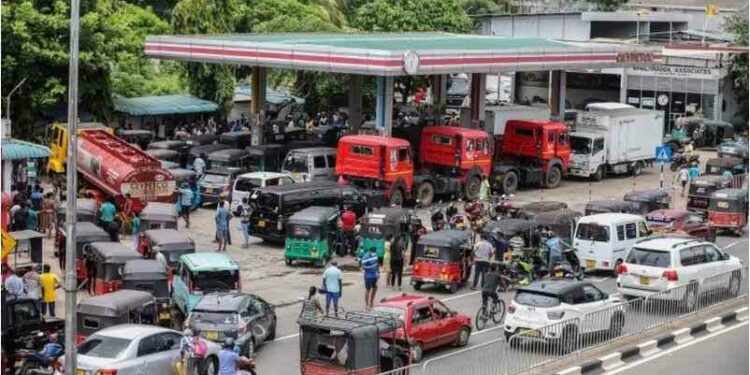
Govt. struggles as fuel shortage stretches amidst growing public outcry

The Government’s struggle to deal with growing fuel shortage and queues continued as public outcry worsened with fears over minimal supply in the next few days.

In response the Power and Energy Minister Kanchana Wijesekera appealed to the public not to queue up for next three days saying proper distribution will only be restored by Thursday. Separately the Government is also mulling a new scheme to supply fuel to three-wheelers and motorcycles.

This will be based on the respective number plate’s last digit.

Discussions were also held with the officials of the relevant Ministries and Institutions to formulate a special program to provide fuel and electricity required for the Fisheries, Agriculture, Plantation Industries, Export Industries, Small and Medium Scale Industries to continue uninterrupted.

These frantic measures including securing new sources of supply from overseas came as thousands of people and motorists languished for days in long queues.

The People’s Bank has opened a Letter of Credit (LC) for $ 42.6 million to purchase a shipment of 300,000 barrels of 92 Octane petrol. The Ministry said 41,000 metric tons of 300,000 barrels of petrol will be imported soon from a new supplier.

Minister Wijesekera told the media that the fuel shortage was due to the high demand and hoarding of fuel by the people even though the required fuel is imported every 10 days.

The website launched last week to showcase the availability of fuel filling stations has been temporarily shut down from Saturday night. Violence was also reported from various parts of the country over the weekend, as the State sector was given priority to refill fuel, whilst thousands of people waited in long queues for days.

In addition, social media videos showed several vehicles were seen obtaining jerry cans of fuel directly from a Ceylon Petroleum Corporation and Lanka IOC fuel bowsers, whilst Policemen also took money from motorcyclists to cut across the queues and refill tanks.

On Saturday, Minister Wijesekera announced that the license of three fuel bowsers has been suspended with immediate effect.

He said the suspension was enforced by CPC and LIOC pending further investigations into three incidents reported on social media about illegal unloading fuel.

Separately, the LIOC Indian also announced that strict measures will be taken against unethical fuel distribution.

A vehicle with a sticker of doctors was seen obtaining jerry cans of fuel directly from a Lanka IOC fuel bowser along Marine Drive, whilst thousands of motorists were lined up in queues to refill. Another video showed several cans being loaded into a red van from a CPC bowser.

Minister Wijesekara appreciated everyone who brought illegal activities to their notice.

Tense situations were also reported from around the country such as Athurugiriya, Kurunegala, Madurankuliya, Visuwamadu, and Puttalam as Government officials and police personnel were given priority or had separate queues to obtain fuel from fuel stations. The motorist alleged that the State sector workers were misusing their privileges, calling it unfair.

Videos showed how people gathered in queues were manhandled by police personnel and army in many parts of the country, from Friday. Incidents were reported from Athurugiriya, Maspotha in Kurunegala, Madurankuliya, Visuvamadu in Mullaitivu, and Puttalam.

Yesterday morning, the Public Security Ministry Secretary directed Sri Lanka Police to use ‘minimum force’ to control unruly situations at fuel stations.

The Ministry said that the directive was issued to maintain law and order in areas where protests are reported.

It added that a discussion took place on Saturday on seeking military assistance to control such situations.

The Education Ministry on Saturday announced that all schools within the Colombo Zone and suburbs as well as the schools located in the main cities of other provinces will remain closed from 20 to 24 June given the fuel crisis.

Separately, the Ceylon Teachers’ Service Union yesterday claimed that steps have not been taken to provide fuel for teachers engaged in O/L paper marking.

“Many issues have arisen as to how teachers will report to paper marking centres amidst the fuel crisis. The buses and trains are overcrowded due to the lack of public transportation. If public transportation does not function properly, the Government must provide an alternative method of transportation,” CTSU Chief Secretary Mahinda Jayasinghe said.

He also said that teachers have been waiting in queues for four to five days to obtain fuel, adding that they received information about a teacher being assaulted after obtaining fuel without waiting in line.

Jayasinghe cautioned that the failure to provide fuel will result in teachers withdrawing from paper marking temporarily.

Meanwhile, Samagi United Trade Union Force (SUTUF) convener and media spokesman Ananda Palitha called on the Government to initiate discussions with Russia at least in the interim to obtain fuel at a low cost.

“Public transportation has been disrupted completely due to the fuel shortage. It is questionable that diplomatic officials have not been directed to hold discussions with Russia to obtain fuel at a low cost,” he told journalists yesterday.

He pointed out that gas and fuel can be obtained through such measures at least in the interim to stop the economy from coming to a standstill.

In the first four months of this year, Sri Lanka has spent $ 1.92 billion on fuel imports up by 38% from the corresponding period of 2021. Of that, refined petroleum imports amounted to $ 1.55 billion, up by 49.7%, and coal shipments up by 102% to $ 256 million. Between January and March (1Q) fuel imports were up 44.5% to $ 1.4 billion. In terms of quantity, refined petroleum and other imports were down by 14% to 1.18 million tons.

Power and Energy Minister Kanchana Wijesekera confirmed the Government requires a total of $ 554 million to import fuel required for this month, whilst reiterating that negotiations are currently underway to secure a new credit facility from India worth another $ 500 million.

Last week, the Cabinet-appointed Sub-Committee approved entering into agreements with two companies to import petrol and diesel in the long term.

The moves come with only three more scheduled shipments – two carrying petrol and one diesel due in the country for this month. One of the petrol shipments was due yesterday, while the diesel and the other petrol ships are due next Friday. In addition, two crude oil shipments are also scheduled to arrive on 29 June.