Sri Lankan people are struggling in the economic crisis Buddha statue in Mullaitivu Kurundurmalai in collaboration with the Army

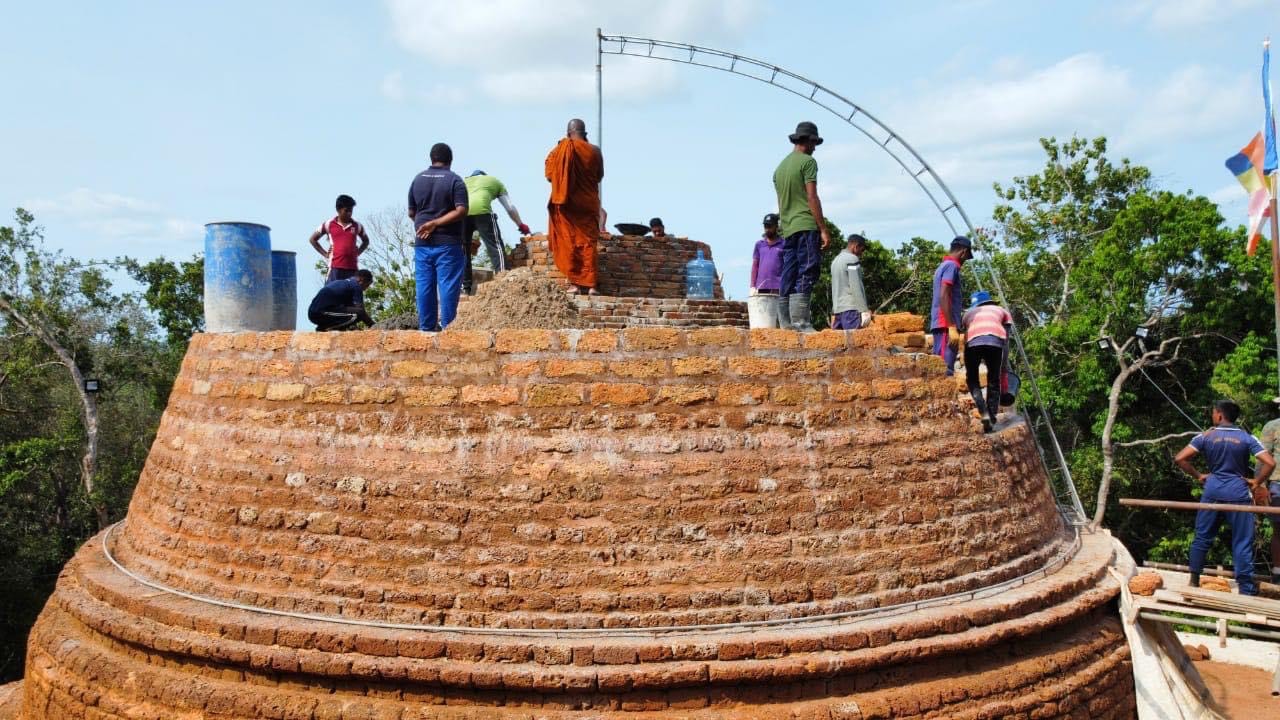
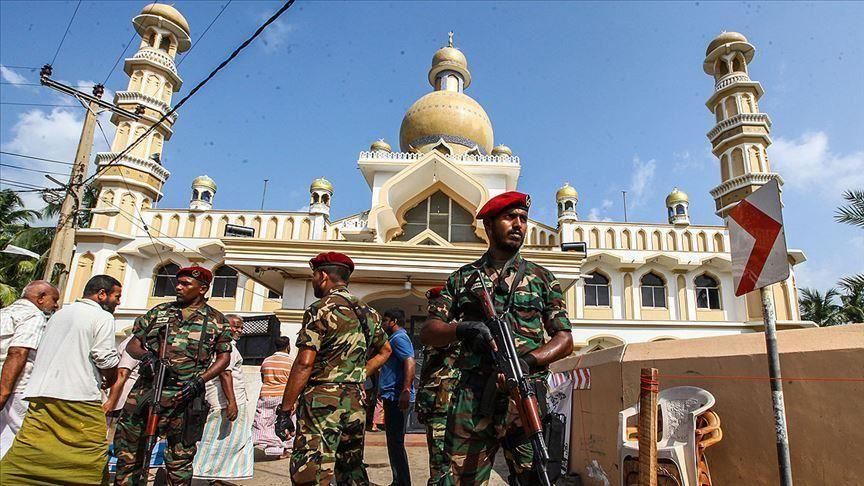
A dedication ceremony for a new Buddha statue is set to take place tomorrow with the assistance of the Sri Lankan army in Kurunthurmalai, Mullaitivu, in a further attempt to seize the site of an ancient Tamil temple.

The ceremony, where a Buddha statue carved in Kabok stone be consecrated, is expected to attract a large number of Sinhalese from the South, including senior Sri Lankan army officers, police officers and Buddhist monks.

The Athi Aiyanar temple, a native place of worship of Tamils located in the Thannimurippu area, has been targeted by intense landgrab efforts by Sinhala Buddhist monks over recent years. Their efforts have been met with fierce resistance from locals which in 2018 led to a court order decreeing that no changes could be made to the site. The court also stated that the archaeology department had abused its power in allowing Buddhist monks to survey the area.

In January 2021, Vidura Wickramanayaka, Sri Lanka’s state minister for ‘national heritage’, accompanied by army soldiers and archaeology department officers, led an event at Kurunthurmalai, in which a new Buddha statue was placed and consecrated at the site of the Athi Aiyanar temple despite the court order banning them to do so. Since then, the Sri Lankan army and the archeology department have intimidated and banned local Tamils from entering the area.

Tamil National Alliance (TNA) M A Sumanthiran and former Northern Provincial Councillor T Ravikaran have filed an interim injunction has been filed to stop any excavation work. However, the inunction has still not been granted.

In a recent report, People for Equality and Relief in Lanka (PEARL) highlight that since the end of the armed conflict in 2009, Sri Lanka’s Director General of Archaeology “has ordered excavations and instructed district authorities to put up Buddhist structures on pre-existing Tamil worship sites and private Tamil lands, regardless of any opposition to it.”

The advocacy organisation also notes how the state have justified Buddhisisation across the North-East by destroying and appropriating Tamil and Muslim places of worship to erect Buddhist shrines which in turn has provided “space and authority for Buddhist monks to influence the agenda” of the Sri Lankan government.

Sri Lanka Electricity (Amendment) Bill passed in Parliament

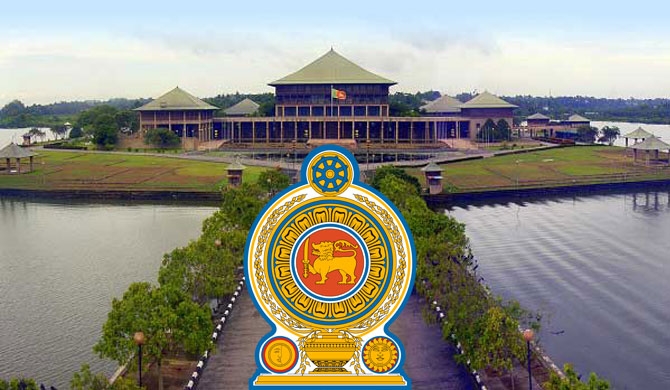
The Sri Lanka Electricity (Amendment) Bill was passed in Parliament without amendments this evening.

The Bill was presented in Parliament by Minister of Power and Energy Kanchana Wijesekera.

Minister Wijesekera said the Bill is essential for Sri Lanka to ensure low-cost power generation in future.

Accordingly, the second reading of the Bill took place in Parliament today.

Following the second reading debate, the opposition requested for a division.

Accordingly, the bill was passed with a majority of 84 votes.

120 Parliamentarians voted in favour of the bill while 36 MPs voted against it. 13 Members abstained from voting.

The Speaker of House is required to ratify the bill to become a law.

Meanwhile, several trade unions including the Ceylon Electricity Board Engineers’ Union vehemently opposed the move to pass the bill.

The CEB Engineer’s Union also decided to stage an indefinite strike yesterday.

However, following talks with the President, the strike action was called off.

In that backdrop, Minister of Power and Energy Kanchana Wijesekera reiterated that he will not be deterred by the unions’ threats and will take forward the bill which will pave the way for the introduction of low-cost renewable energy projects in future.

Posted in Uncategorized

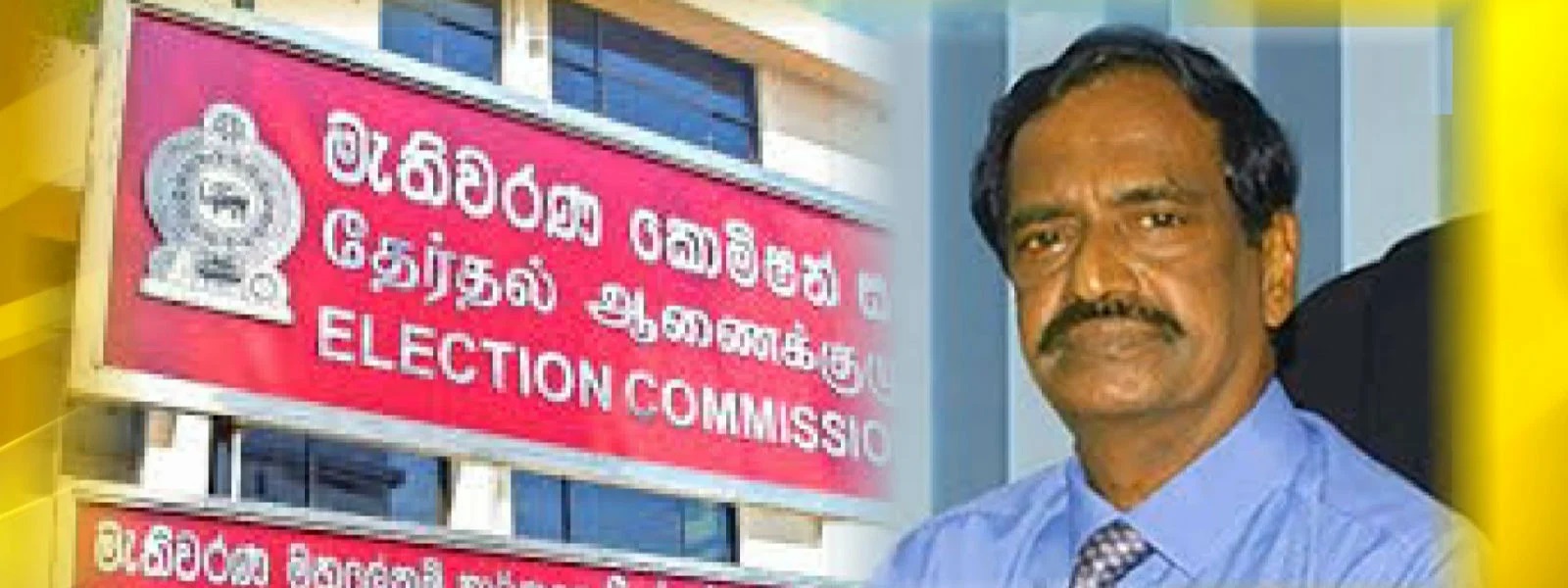
Cannot go for an election until economic crisis is addressed: ECSL Chairman

If an election is held, it will be free and fair only if there is an environment to support that, says the Chairman of the Elections Commission, Attorney-at-Law Nimal G. Punchihewa.

The ECSL Chairman further stated that although the commission currently has only Rs. 5 billion now, the amount will likely increase two to three times.

However, he pointed out that money is not the issue, but there is a question whether those in queues for gas and kerosene can make a decision according to their conscience.

Therefore, he said that Sri Lanka will have to go for an election after the economic crisis is addressed.

“The people are emotional now. We don’t know how it will affect the outcome of the election. This may lead to various groups of thugs emerging apart from political parties, and it may create security issues at filling stations,” he stated.

Punchihewa said that if an election is to be held now, it will be similar to the district elections in 1982 and the provincial elections in 1999, which is not needed at the moment.

Posted in Uncategorized

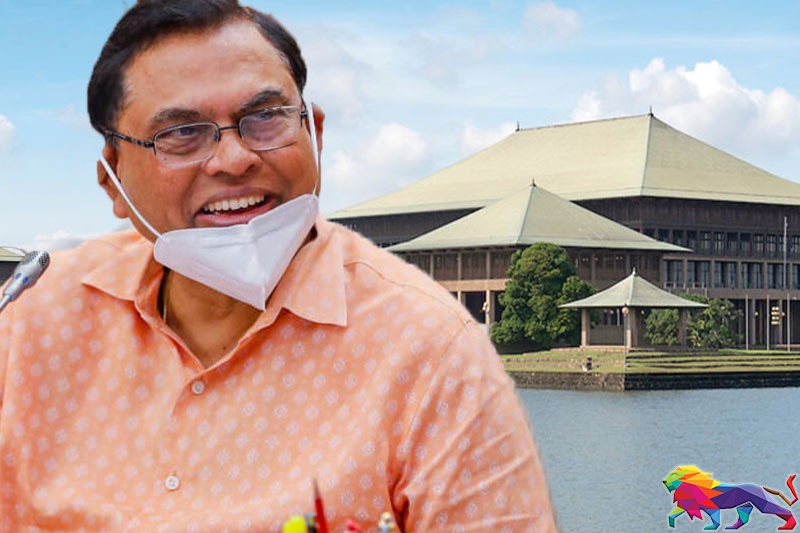
Basil leaves: Sri Lanka’s former finance minister quits parliament ahead of 21st amendment

Cash-strapped Sri Lanka’s former Finance Minister Basil Rajapaksa vacated his parliamentary seat on Thursday (09) downplaying his role in the country’s worst ever forex crisis, without ruling out a comeback, and likening the Rajapaksa family to India’s RSS.

Exactly one month after his older brother and then Prime Minister Mahinda Rajapaksa resigned against a backdrop of bloody violence, the younger Rajapaksa announced his departure from the legislature Thursday morning at the Sri Lanka Podujana Peramuna (SLPP) headquarters where he fielded questions from reporters eager to press him on his part in the ongoing calamity.

Rajapaksa appeared to be in a beaten-but-not-defeated mood as he attempted to use humour to deflect questions about his responsibility and, at one point, even seemed to shift the blame to the very people who had voted for his party, the SLPP.

“No, I’m not passing the buck to the people. But yes, they do hold some responsibility for electing us to power. If, as you say, we passed the buck, then those who gave us the buck in the first place are also responsible,” said Rajapaksa, quickly recovering from a question that had visibly agitated him

It was the one moment in the hour-long press briefing in which he lost his cool.

The former finance minister’s ouster was one of the key demands of Sri Lanka’s protesting public. Among the anti-government slogans shouted at protests islandwide was the earworm “Kaputu kaak, kaak, kaak” followed by a chorus of “Basil, Basil, Basil, Basil.” The somewhat elitist meme originated from a video in which Rajapaksa was heard using the Sinhala word for crows, “kaputas”, in the plural form, at a discussion held in English, for which he was relentlessly mocked on social media.

Asked to comment on his “new brand”, Rajapaksa claimed that he had made the singsong protest slogan his phone’s ringtone.

“I mean, it’s not a bad animal, really. I hold no grudge against any being. I do not seek vengeance.

“It’s my ringtone now. The phone goes ‘Basil Basil’ when it rings.

“The first bit is played back at a lower volume,” he added with a chuckle.

On more serious matters, Rajapaksa was no less facetious. When questioned about the erosion of Rajapaksa popularity, he said: “I think we can see that our family is better at politics than at governance.”

The former minister and architect of the SLPP said that there are such cases globally.

“India’s RSS has been around for years, but they do not govern directly. The BJP has taken on that role,” he said.

However, he does not foresee an immediate end to the Rajapaksa dynasty.

“Sri Lankans elected a Rajapaksa president three times: twice with Mahinda Rajapaksa, and once with Gotabaya Rajapaksa,” he said.

As for his own plans, the youngest Rajapaksa sibling said though he has retired from governance, he will continue to play an active role in politics. His resignation from the SLPP’s national list slot, he said, was for someone the party deems suitable to take his place.

Speculation has been rife that that someone will be businessman Dhammika Perera. Rajapaksa’s answers to questions about Perera’s entry to active politics were vague, at best.

“I don’t know about that. That is a decision that’s up to the party.”

However, he did say later on that if Perera wishes to implement some of the plans he had proposed for the country, there is no reason he should not be given an opportunity to do so. The same is true, he said, for anyone from the ‘aragalaya’, Sri Lanka’s youth-led protest movement.

“I invite anyone from the Aragalaya to take my place,” he said.

Regarding the economic crisis and the immense hardships imposed on the public, apart from a hurried “apology” at the end of the press briefing for any mistakes made during his tenure as Finance Minister, there was no heart-rending mea culpa from the former MP.

He brushed aside any suggestion from the journalists present that he and the Rajapaksa administration had been the authors of the agony the people were now feeling.

“I’m no longer finance minister.

“Since 1951, this country has been run the same way, on debt. No government has tried to change this. After my appointment, I tried to some extent enable the people to stand on their own feet.

“It may or may not have worked, but if there is something this country is getting now [in terms of financing], it is only what I was able to secure as finance minister,” he said.

Pressed for more honesty, Rajapaksa claimed the crisis was already there when he came on board as finance minister. He forcefully rejected suggestions by journalists that his government was responsible for the erosion of Sri Lanka’s foreign reserves which had stood at seven billion US dollars in late 2019 when his brother President Gotabaya Rajapaksa was sworn in.

“There was no seven billion dollars when I came on. I do not accept that reserves went down to zero under me. There were no reserves when I was appointed,” he said, adding that fertilizer and other essentials were being purchased today with loans that he had helped secure.

Rajapaksa said the government had been divided on approaching the IMF for assistance, and that reconciliation between two pro and anti-IMF camps had to be achieved.

“I sent the first letter to the International Monetary Fund (IMF). It was after that that two IMF officials came and met me and President Rajapaksa,” he said.

President Rajapaksa had earlier said in a televised address to the nation that it was a mistake to not go to the IMF. Former Finance Minister Rajapaksa, however, in some apparent revisionism said that the president had in fact said the IMF should’ve assisted Sri Lanka sooner.

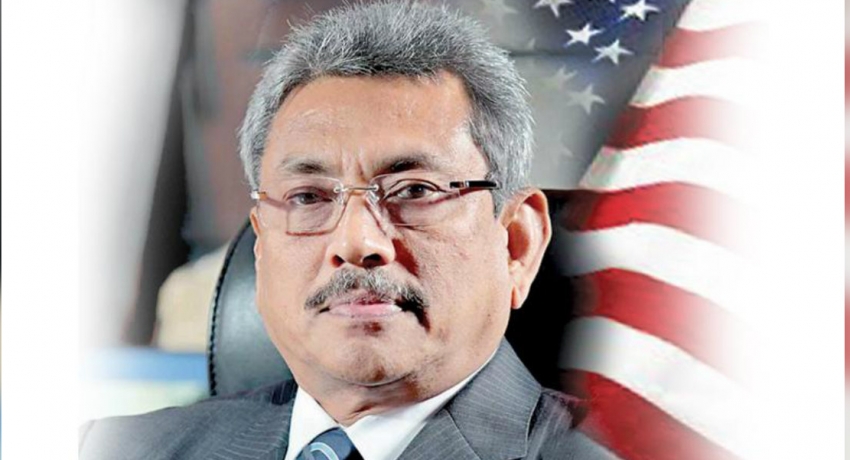
There has been speculation that the proposed 21st amendment to Sri Lanka’s constitution is being delayed due to machinations by Basil Rajapaksa against a provision to ban duel citizens from entering parliament. Rajapaksa is a US citizen and visits that country regularly. Some former influential government ministers who now function as independent MPs in parliament famously called him the “Ugly American” and accused him of carrying out a US agenda, a claim which Rajapaksa rejects.

“Personally I’m opposed to the 21st amendment,” he said, but added quickly that it was not due to personal reasons.

A constitution must serve the public interest, he said. “We can’t take the power given by 6.9 million voters to one leader and confer that on someone who only managed over 250,000 votes,” he said, referring to Sri Lanka’s newly sworn in Prime Minister Ranil Wickremesinghe.

“I definitely support certain aspects of the 21st amendment, such as the provisions on independent commissions.

“I don’t know if the amendment will pass,” he said, adding however that decentralisation of power to benefit the public is important.

If the executive presidency is to be abolished, Rajapaksa said, Sri Lana’s provincial council system – a legacy of the 1987 India-Sri Lanka Accord – must be reformed in the interest of maintaining the island nation’s sovereignty and unitary character.

Though he would personally have voted against it, he said, the decision to vote for the amendment or not remains with the party, which he says he will continue to work with.

Basil Rajapaksa leaves parliament, which he entered as an unelected MP via the national list, with Sri Lanka’s economy freefalling around the hapless and increasingly desperate citizenry.

He, however, believes he did his best.

“I think I did [do something] to the best of my ability. But I couldn’t do everything the people had expected,” he said.

Asked if his resignation was a permanent one, Rajapaksa said: “If the people decide so, perhaps; but if they want me back, I’m ready for that too.”

“I know it’s going to be even more difficult going forward. We must all work together. We’re ready to extend any help to the present administration and whoever may be coming next,” the former minister said.

He expressed hope that global conditions will also improve, facilitating Sri Lanka’s recovery.

“I hope the Ukraine crisis is resolved and tourism will pick up again.

As he stood up to leave the briefing he said: “I would also like to express my sincere apologies to the people if there were any mistakes made.”


Posted in Uncategorized

Pay in foreign currency if you want to perform Hajj, Govt. tells SL Muslims

The Sri Lankan government has announced that Muslims would be allowed to perform Hajj this year provided they pay their travel costs in foreign currency, as the country faces its worst economic crisis in recent memory.

Last month, Sri Lanka’s umbrella association of pilgrimage organizers said its members would suspend operations because the cost of sending worshippers to Makkah — estimated at $10 million — would be too high for the country to bear when it is struggling with the worst financial downturn since independence in 1948, and has already defaulted on its foreign debt repayments.

The suspension was conditionally lifted by Religious Affairs Minister Vidura Wickremanayake on Tuesday, following consultations with Muslim parliamentarians and Environment Minister Naseer Ahamed, who also oversees Middle Eastern affairs.

“At the request of the Muslim groups led by Minister Ahamed, we have decided to fulfil the quota of pilgrims by requesting them to pay for their Hajj package in foreign currencies, which will not affect our national economy,” Wickremanayake told Arab News.

“I have requested the Central Bank to work out the modalities of working out this pilgrimage and they would help them find an easy passage to and from Makkah this year.”

Muslims make up almost 10 percent of the country’s population of 22 million, which is predominantly Buddhist.

This year, the country has been allocated a quota of 1,585 pilgrims to perform the Hajj, after Saudi Arabia announced it would allow 1 million foreign and domestic Muslims to travel to the holy sites in Makkah.

While it is unlikely that Sri Lanka would fill the entire quota, Ahamed, who discussed the issue with Wickremanayake, said that even sending a reduced number of pilgrims this year would help the country keep its allocation. This year’s number is already lower than in 2019, before the coronavirus pandemic upended Hajj travel.

“Since the pilgrims have been asked to pay for their package in foreign currencies, we cannot expect to make use of the full quota this year. But it’s good to take some pilgrims to keep Sri Lanka’s quota intact for next year too when things would get eased,” Ahamed told Arab News.

“Three years ago, we got a Hajj quota of nearly 4,000 and this year we do not want to miss this 1,585 quota for Lankan pilgrims.”

One of Islam’s five main pillars of faith, the Hajj was restricted over coronavirus fears to just 1,000 people residing in Saudi Arabia in 2020. Last year, the Kingdom allowed 60,000 domestic participants, compared with the pre-pandemic number of 2.5 million.

Prospective Sri Lankan pilgrims have to file their applications with the Ministry of Religious Affairs by Friday.

“I have asked those interested to make the necessary applications to the department of Muslim Religious and Cultural Affairs on or before June 10,” said Ibrahim Sahib Ansar, director of the ministry’s department overseeing the logistics.

“There are 86 Hajj travel operators and some 15 reputed agents will be selected from them and the operations will be streamlined through them,” he added.

Source: Arab News

Posted in Uncategorized

Plea to US embassy urging to investigate Rajapaksa’s assets

A group of citizens today held a protest outside the US Embassy in Colombo urging the US authorities to investigate the financial crimes committed allegedly by the Rajapaksa family.

The protesters said they informed the law makers in the US to investigate about their assets and property.

The protesters also claimed they did not belong to any organization or political party and that they only represent the public.

They alleged that there are reports that Rajapaksa’s had looted public money and urged the authorities to investigate them.

The protesters handed a plea to be handed over to the US ambassador Julie Chung urging to take steps to intervene and investigate the matter.


Posted in Uncategorized

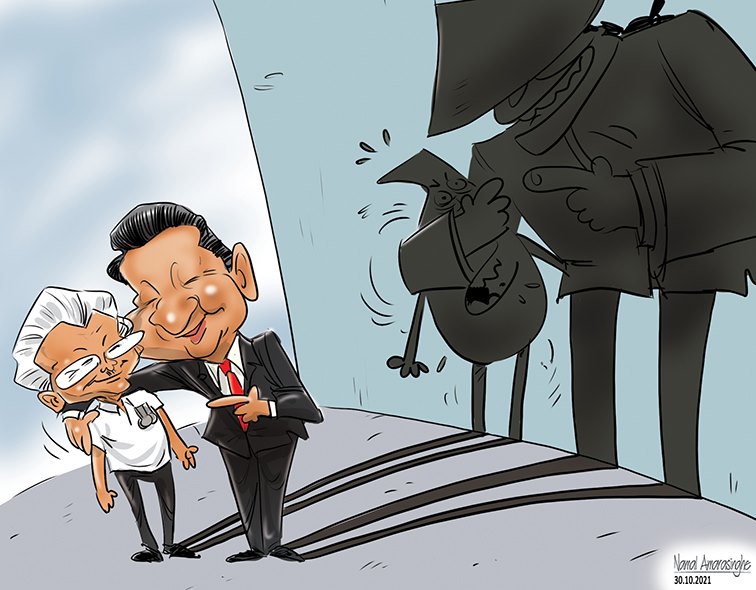
China Reassures Sri Lanka After President Questions Commitment

China reassured Sri Lanka that it remains committed to helping the country resolve its financial difficulties, after President Gotabaya Rajapaksa said that Beijing appeared to be shifting its strategic focus elsewhere.

“South Asian countries, along with the other countries in our neighboring areas, are China’s priority in its diplomacy,” Foreign Ministry spokesman Zhao Lijian said Wednesday at a regular press briefing in Beijing. “China attaches great importance to forging closer good neighborly relations with its neighbors and has worked hard to this end.”

“As traditional friendly neighbors, China pays close attention to and feels for the difficulties and challenges facing Sri Lanka,” he added.

The comments come after Rajapaksa said China appeared to be shifting its strategic focus toward Southeast Asia and Africa, noting that South Asian countries in financial trouble aren’t getting the same attention from Beijing as before. Rajapaksa also said Sri Lanka couldn’t tap a $1.5 billion currency swap from Beijing and had yet to hear back on his request to President Xi Jinping for a $1 billion loan to buy essential goods.

“They have less interest in this region,” Rajapaksa said in an interview with Bloomberg News on Monday. “I don’t know whether I am right or wrong, even the focus on Pakistan has gone down. That shows that their interest here is not like earlier. Their interest has shifted to two other areas.”

China Shifting Focus to Southeast Asia, Sri Lanka President Says

Sri Lanka and Pakistan have been some of the biggest recipients of China’s largesse over the past decade, with Beijing extending billions of dollars in credit to build ports, power plants and other infrastructure. In recent months, however, Beijing has taken its time reissuing a loan to Pakistan and hesitated in responding to Sri Lanka’s request for fresh credit as the International Monetary Fund negotiates lending programs with both nations.

Zhao defended China’s actions, noting it had given emergency humanitarian assistance including rice and medicine. He also said Chinese financial institutions also reached out to Sri Lanka and “expressed their readiness to find a proper way to handle the matured debts related to China.”

“We hope Sri Lanka will work actively with China in a similar spirit and work out a feasible solution expeditiously,” Zhao added. “China is ready to work with relevant countries and international financial institutions to continue to play a positive role in supporting Sri Lanka’s response to current difficulties and efforts to ease debt burden and realize sustainable development.”

Bloomberg (Source)

Posted in Uncategorized

21 A: JVP proposes dissolution of Parliament within six months after enactment of new law

The JVP has said that the Parliament should be dissolved within six months after the enactment of the proposed 21st Amendment to the Constitution.

The JVP made some far reaching proposals as regards the proposed amendment. Its three-member parliamentary group has proposed that any MP who deserted his party under any circumstances should be immediately removed from the Parliament.

The JVP has said so in a letter to the Justice Ministry in response to Justice Minister Dr. Wijeyadasa Rajapajse’s request for political parties to make proposals in respect of the 21st Amendment to the Constitution.

JVP leader Anura Kumara Dissanayake told The Island that his party submitted its proposals in writing as it declined to participate in meetings chaired by Prime Minister Ranil Wickremesinghe to discuss constitutional proposals.

The JVP has proposed that the President shouldn’t hold any ministerial portfolio.

The following are the proposals pertaining to allocation of portfolios: (1) The Cabinet of Ministers should consists of 25 lawmakers (2) There should be 25 Deputy Ministers (3) There shouldn’t be State Ministers or any other positions created to accommodate members (4) The number of ministers/deputies cannot be increased in the event of a National Government (5) Ministerial portfolios and the assigned subjects should be included in the Constitution and (6) depending on requirement there should be provision for creation of new ministries.

The JVP proposed that the presidential pardon for a person sentenced for death, found guilty in terms of Public Property Act of 1982 No 12, sentenced on a bribery and corruption charges, rape, statutory rape and serious sexual offenses and those found guilty of misappropriation of public property, criminal misuse of power and criminal breach of trust should be subjected to parliamentary approval.

Members of the University Grants Commission (UGC) and Secretaries to Ministries should be appointed by the Constitutional Council.

As regards dual citizenship, the JVP has proposed in addition to members of Parliament, dual citizens cannot serve the Constitutional Council and independent commissions. The JVP has proposed that the Constitutional Council cannot appoint dual citizens to the positions it was constitutionally empowered to do.

The JVP recommended that the police and the CIABOC (Commission to Investigate Allegations of Bribery or Corruptions) should be empowered to initiate investigations into anyone required to make asset declaration or act on a complaint received from the public.

Except dual citizens, all should be eligible to contest parliamentary election until he or she reaches the age of 70.

Sri Lanka needs to find $ 6 billion to keep the country afloat this year: Ranil

PM says Colombo should find $3.3 bn for fuel, $900 mn for food for six months

Sri Lanka must find $6 billion to keep the country afloat for the next six months, Prime Minister Ranil Wickremesinghe said on Tuesday, as he outlined the government’s plans to combat an unprecedented economic crisis.

President Gotabaya Rajapaksa appointed Mr. Wickremesinghe as PM on May 12, days after Mahinda Rajapaksa resigned as PM amid mounting protests by citizens demanding that the ruling clan quit office. After assuming charge, Mr. Wickremesinghe asked citizens to brace for the “most difficult months” of their lives.

Breaking down Sri Lanka’s requirements for the coming months Mr. Wickremesinghe, addressing the Parliament on Tuesday, said the country must “somehow” find $3.3 billion for fuel, $250 million for gas, $900 million for food items for six months, and $600 million for fertilizer for a year. “In this context, we need $5 billion to ensure our daily lives are not disrupted for the next six months. We need to strengthen the rupee in line with the daily requirements of the citizens. Another $1 billion is needed to strengthen the rupee. That means we need to find $6 billion to keep the country afloat for the next six months,” he told the House.

The next three weeks would be a particularly difficult time for sourcing fuel, Mr. Wickremesinghe said, calling for “unity and patience” while facing the acute shortages.

Shining the spotlight on the looming food crisis, he said: “We will have to face serious difficulties and shortages in terms of our diets,” pointing to the impact of poor harvest on rice and other crops. Sri Lanka’s paddy production has fallen by half this year, consequent to President Gotabaya’s sudden ban on chemical fertilizer last year. The policy was reversed in about six months following farmer protests and widespread criticism, but has meanwhile severely impacted the crop, leaving the government in a tough spot where it must import more food while scrambling for dollars.

Further, Mr. Wickremesinghe pointed to a recent study by the World Food Program that found that 73% of the participating households had reduced their diet and food intake. “We will change that situation and strive to provide food without shortage as per this food security plan. We are working towards ensuring a three-meal situation in the country,” he said.

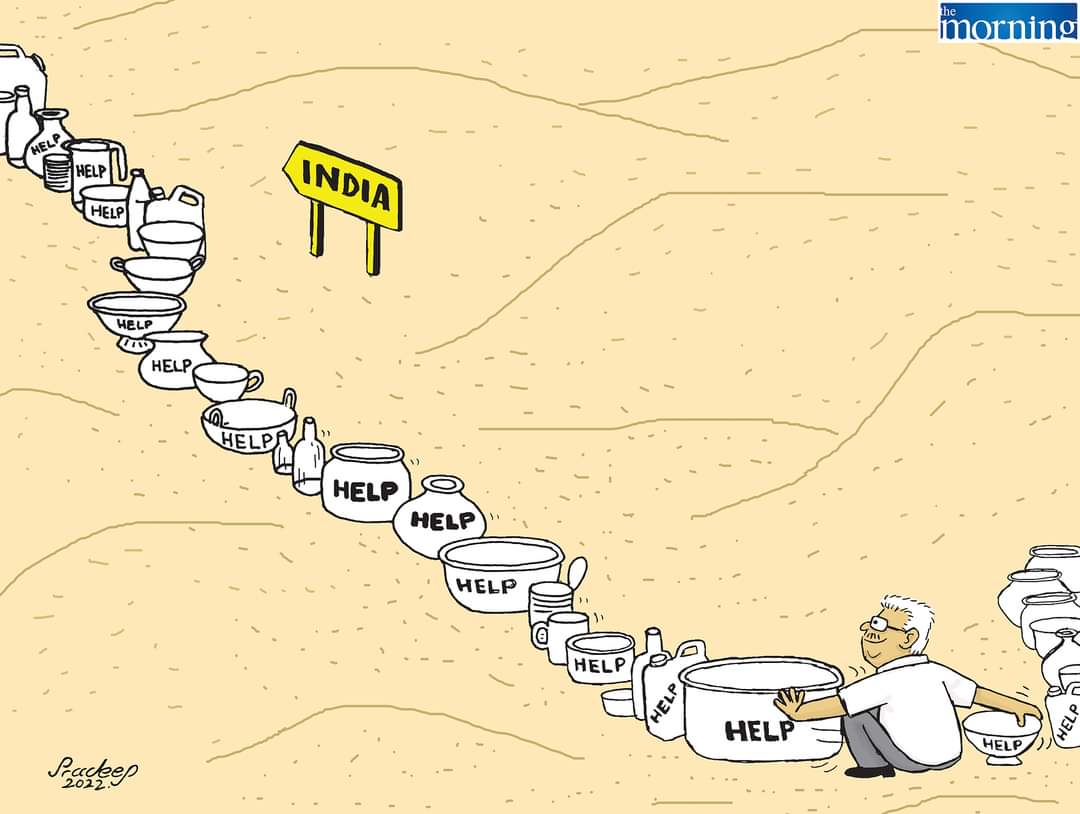
President Gotabaya has said Prime Minister Narendra Modi has assured swift supply of essential fertilizers to Sri Lanka. The Cabinet on Monday cleared a proposal to obtain a $ 55 million loan from the Exim Bank of India for the purpose. The PM has also sought help from China and Japan.

Source:THE HINDU

PM holds talks with IMF Managing Director Kristalina Georgieva

Prime Minister Ranil Wickremesinghe has held discussions with the Managing Director of the International Monetary Fund, Kristalina Georgieva, regarding the current economic situation in the country.

The Office of the Prime Minister said, during the discussion, Premier Wickremesinghe requested that the staff-level delegation from the IMF visit Sri Lanka as soon as possible so that the staff-level agreement could be finalised.

The Prime Minister has noted that the negotiations regarding bridging finance were reliant on Sri Lanka and the IMF concluding a staff-level agreement.

The PMO said the IMF Managing Director had expressed her willingness to support Sri Lanka during these difficult times.

Sri Lanka is currently holding talks with the IMF to obtain nearly USD 4 billion to address the short-term financial issues.

Posted in Uncategorized