What the Crisis in Sri Lanka Means for the World -Time.Com

Many middle-income and developing countries are now suffering from a combination of internal political dysfunction and external economic shocks generated mainly by COVID-19 and the war in Ukraine. Sri Lanka provides a powerful example and a warning for countries in other regions that will face similar predicaments.

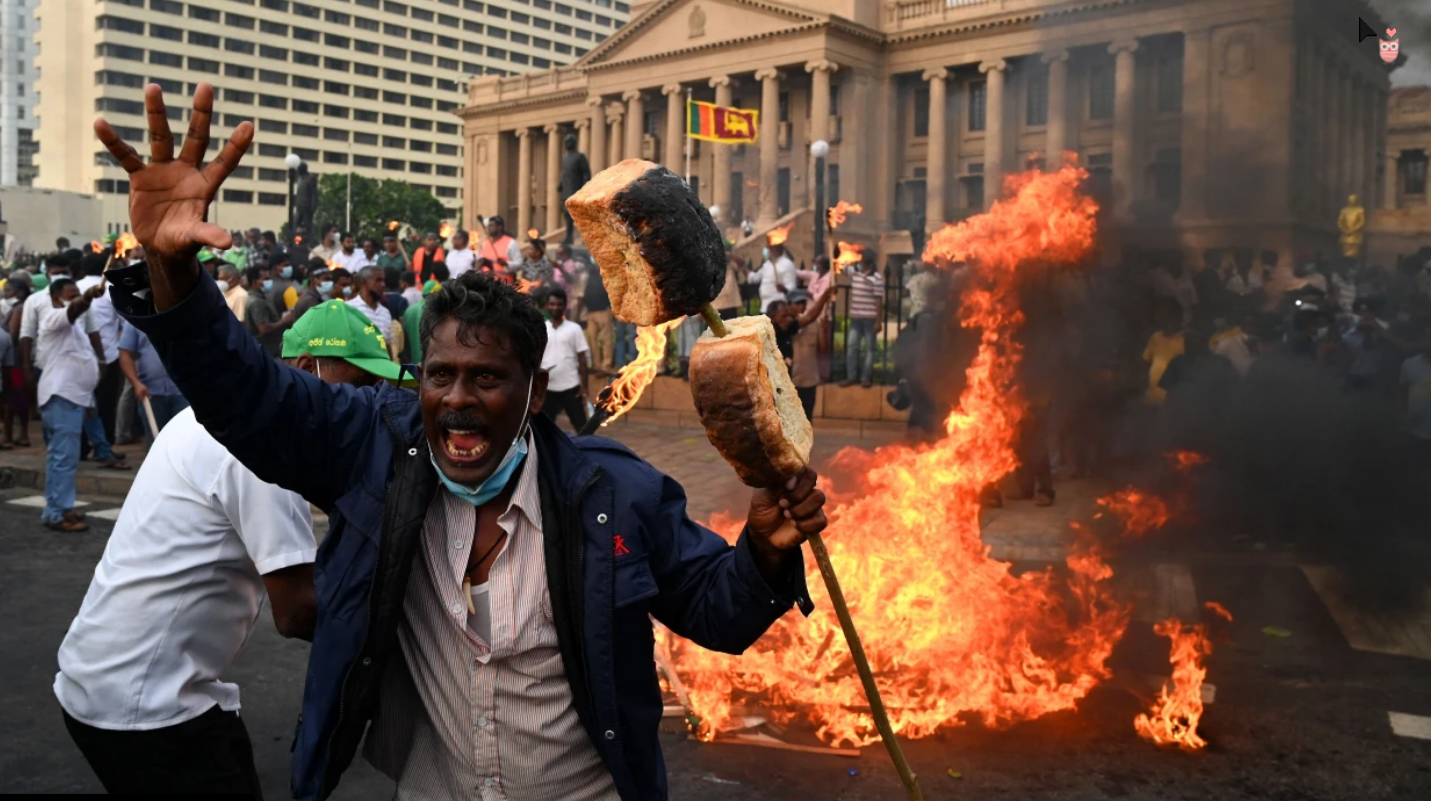
Sri Lanka is not a poor country. When adjusted for purchasing power, per capita GDP in this nation of 22 million people is higher than in South Africa, Peru, Egypt, or Indonesia. But the country now faces a political crisis powered by severe shortages of food, fuel, electricity, and medicine. The currency is collapsing, and the government can’t afford imports or to make its debt payments. At times in recent weeks, violent protests have threatened to spiral out of control.

How did we get here?

A quarter century of civil war, which ended in 2009, has created a legacy of violence at the heart of Sri Lanka’s politics. In 2019, a terrorist attack by an ISIS-inspired Islamist group on minority Christians made international headlines. On Easter Sunday, a series of bombs detonated in churches and hotels killed and injured hundreds of people. Those attacks, and the sense of insecurity they created across the island nation helped elect Gotabaya Rajapaksa, a former defense minister with a reputation for toughness, later that year.

Gota, as the president is widely known, then named his older brother, Mahinda, a former president, as prime minister. A landslide election victory in 2020 gave the Rajapaksas a two-thirds parliamentary majority, which then allowed them to rewrite Sri Lanka’s constitution to give the president extraordinary new powers.

Then hubris kicked in. Family and friends were given important posts in government. A series of economic mistakes, including populist tax cuts, deprived the government of revenue and made it much harder to borrow money abroad.

External shocks have also played a big role in Sri Lanka’s troubles. COVID-19 devastated a tourism sector still reeling from terrorism, a sector that’s critical for government revenue and job creation in the country. The pandemic also cut deeply into remittances, money sent home by Sri Lankans working abroad.

The increasingly unpopular Rajapaksas refused to accept the need for government spending cuts and tax increases to help Sri Lanka avoid even tougher economic conditions. A ban on chemical fertilizers to push farmers toward organic farming in the middle of the economic crisis made matters worse for the country’s food supply.

Then came Russia’s invasion of Ukraine and the damage it is now inflicting on global food and fuel prices. Russia and Ukraine are both leading exporters of grain, and the war has shut in much of that production. Russia and its ally Belarus, which also faces Western sanctions for allowing Russia to use his country’s territory as a launchpad for attacks on Ukraine, are leading producers of fertilizer. Higher prices for fuel are the natural result of supply worries that have pushed oil above $100 per barrel. Sri Lanka also imports more than 80 percent of its medical supplies. Donors in India and in Europe have helped, but there’s a limit to how much they are willing to do.

In Sri Lanka, public anger came to a head in early May. Economic pressures exacerbated infighting within the Rajapaksa family, particularly between the president and prime minister. After the government appeared to send counter-protesters to attack the mainly peaceful crowds that called for the prime minister to resign, bloodshed ensued. Enraged anti-government protesters then went on an arson spree, attacking the homes of Rajapaksa family allies, and threatening the prime minister’s own residence. The PM was forced to step down, and he needed the protection of security forces for a 4 AM evacuation of his home.

A state of emergency was declared across the county. Angry mobs have launched more attacks on politicians and their homes. Hundreds have been injured in recent weeks, and some have died. A member of parliament was killed in his car. Two more of President Rajapaksa’s siblings and a nephew have resigned their cabinet posts.

Late last month, Sri Lanka defaulted on its debt for the first time in the nation’s history.

What now?

President Rajapaksa, struggling to survive politically, has pledged to reverse some of the constitutional changes that gave him more power. He has accepted help for Sri Lanka’s economy from India and China, and he’s appealed to the IMF for a bailout. New Prime Minister Ranil Wickremesing, a political veteran, has been brutally honest in his public comments on the scale of the problems Sri Lanka faces and the need for bold action to solve them. He has said Sri Lanka will raise tax rates to earn a bailout from the International Monetary Fund. He then used a televised speech to call on protest groups to join in the process of reform. He pledged that parliamentary committees will allow lawmakers, young people and experts to work together.

For now, the protesters continue to demand President Rajapaksa’s resignation, though there don’t appear to be enough votes in parliament to impeach him, and the opposition looks to have little interest in sharing responsibility for cleaning up this mess by joining a government of national unity.

In short, a chastened Sri Lankan government will try to muddle through, hope the pandemic and Russia’s war in Ukraine end soon, and do its best to secure long-term financial health.

It’s a pattern that will be repeated in many developing countries in coming years.
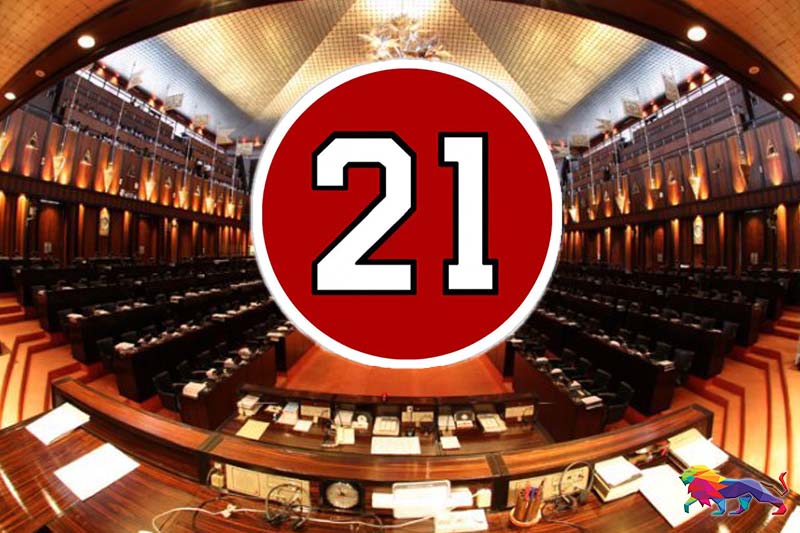
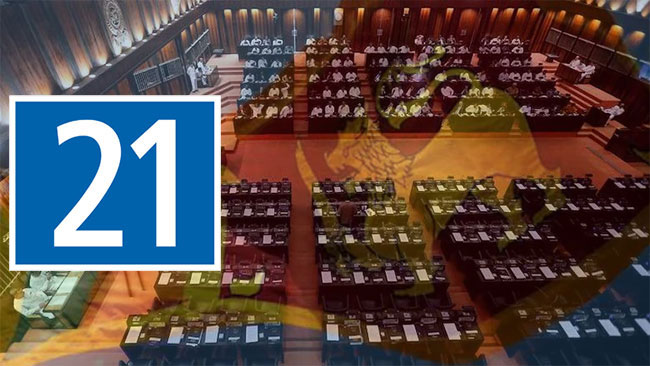
21st Amendment to be submitted to Cabinet for approval tomorrow

Sri Lanka’s Minister of Justice Wijedasa Rajapakshe says that the draft bill pertaining to the 21st Amendment to the Constitution is expected to be presented to the Cabinet of Ministers for approval tomorrow (06).

The Minister pointed out that the views and suggestions obtained from the party leaders will be included tomorrow in the 21st Amendment Draft Bill, which has already been submitted to the Cabinet.

Accordingly, the relevant amendment is to be discussed in the Cabinet and approved.

Minister Wijedasa Rajapakshe stated that it is expected to be presented to Parliament soon after receiving the Cabinet approval.

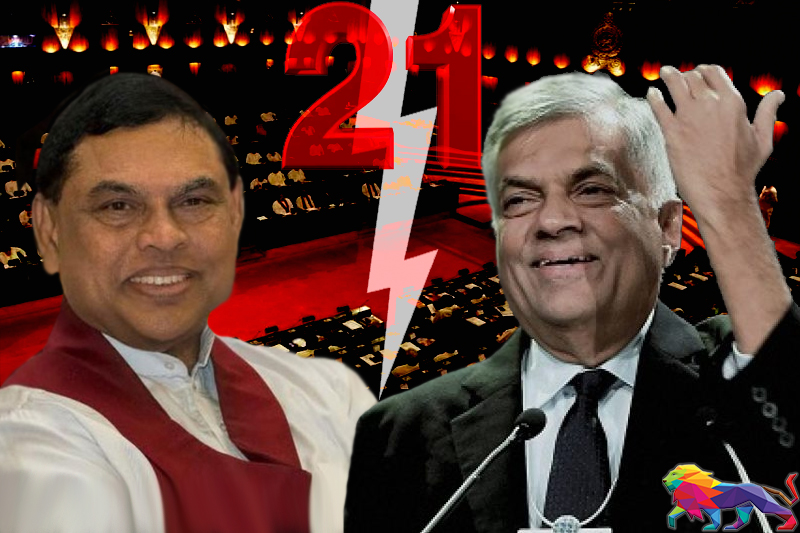
The 21st Amendment is expected to annul the 20th Amendment to the Constitution, which gives unfettered powers to President Gotabaya Rajapaksa after abolishing the 19th Amendment that will strengthen Parliament.

Rajapakshe said that the 21st Amendment to the Constitution, including proposals submitted by political parties and various other parties, will be submitted to the Cabinet for approval on Monday, the portal reported.

He said that the draft of the amendment will be gazetted after receiving the approval of the Cabinet.

Prime Minister Wickremesinghe last week batted for the 21st Amendment to the Constitution, saying it will curb the president’s unlimited powers while enhancing the role of Parliament in governing the debt-ridden country which is also facing an unprecedented political turmoil.

Under the 21A, the President will be held accountable to the Parliament. The Cabinet of Ministers is also accountable to Parliament. The National Council is also accountable to Parliament. Fifteen Committees and Oversight Committees are accountable to Parliament.

21st Amendment: Three key issues yet to be resolved

Three key issues related to presidential powers are yet to be resolved before the final draft of the 21st Amendment is to be submitted to the cabinet for approval, a senior government official said.

President Gotabaya Rajapaksa, Prime Minister Ranil Wickremesinghe and Justice Minister Wijeyadasa Rajapakshe met last night to sort out the outstanding issues. A separate meeting between the Prime Minister, Justice Minister and the Attorney General has been scheduled for today.

The key outstanding issues are whether the President should retain the defence portfolio, the powers of the President to remove the prime minister and the prime minister’s powers on the appointment of Cabinet Ministers, the official said.

The outstanding issues were directly linked to moves to increase the Prime Minister’s and Parliament’s powers, the official said.

He said the diplomatic community and donor agencies were keen on the Government’s stability before going ahead with providing further financial and other assistance.

The officials said that, bedsides the key issues, the proposal to restrict dual citizenship holders serving as Members of Parliament also has turned out to be a contentious issue, with some SLPP members opposing the move. “However, that is a matter for the President to discuss with SLPP members and resolve,” he said.

Justice Minister Wijeyadasa Rajapakshe told the Sunday Times that at Friday’s meeting with party leaders, there was consensus that the proposed amendments should not include clauses which may require a referendum.

He said the objective of the discussions scheduled for last night was to reach middle ground between the Presidential and Parliamentary powers.

Parliamentarian Anura Priyadharshana Yapa said there was an understanding that the Presidential powers to remove the Prime Minister should be transferred to Parliament.

He said positive proposals made by the Samagi Jana Balawegaya too should be included in the draft proposals.

Posted in Uncategorized

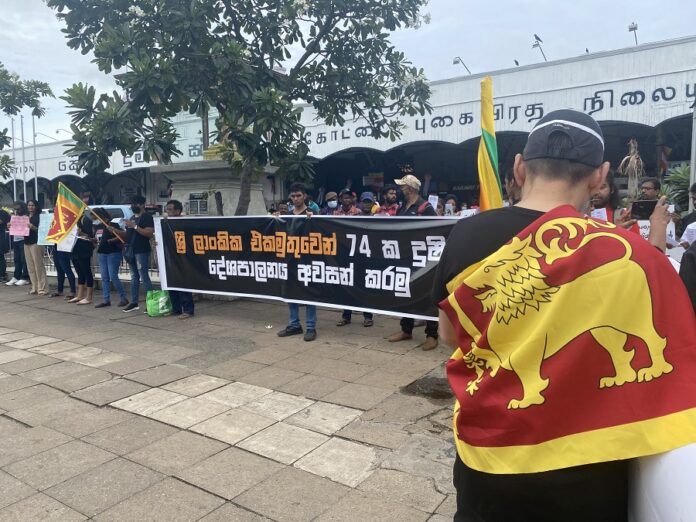
End to 74-years of corrupt rule in Sri Lanka Demonstration and signature campaign in Fort

A demonstration and signature campaign against the Government and 74-years of corrupt rule, was staged in Fort today.

The demonstrators called for an end to 74-years of corrupt rule in Sri Lanka.

Various groups and individuals joined the demonstration shouting slogans against the Government.

Separately, a signature campaign was carried out near the Fort Railway Station against President Gotabaya Rajapaksa and Prime Minister Ranil Wickremesinghe.

The camping sought support against the Government formed by President Gotabaya Rajapaksa and Prime Minister Ranil Wickremesinghe.

The signature campaign was carried out by the Inter-University Students’s Federation (IUSF).

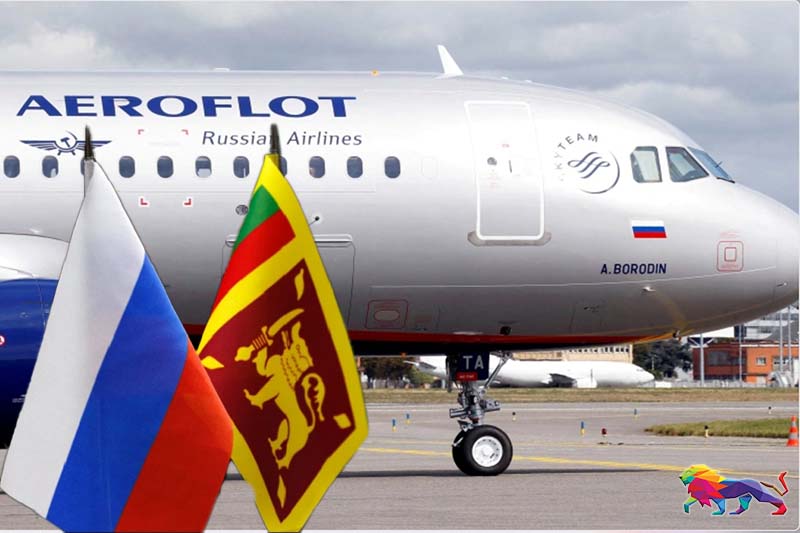
Russia warns Lanka: Detention of Aeroflot plane could jeopardize ties

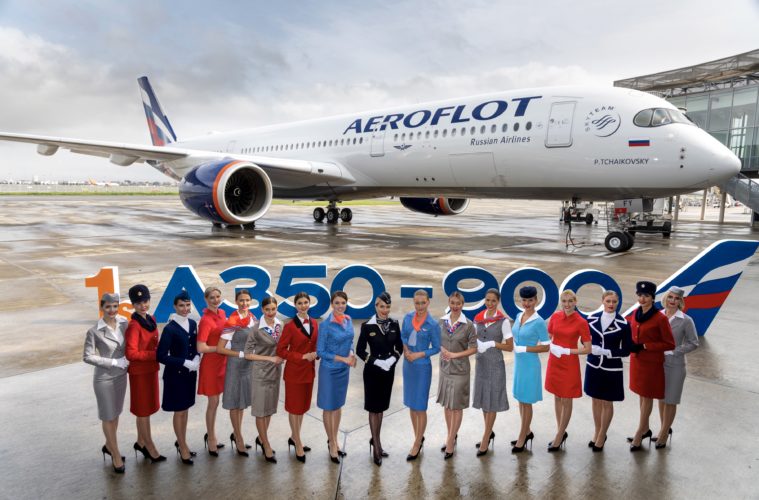
The detention of a Russian Aeroflot flight with 191 passengers on board at the Colombo International airport on June 2 following an order from the Colombo Commercial High Court, is threatening to jeopardize Russo-Sri Lankan ties.

The Russian Foreign Office summoned the Sri Lankan Ambassador to Moscow, Janitha Abewickrema Liyanage on Friday and lodged a protest saying that the detention of the aircraft was “groundless” and that it could have a “negative impact on the traditionally friendly bilateral relations.” The Russians “urged the Sri Lankan side to settle this problem as soon as possible.”

On Friday, Aeroflot reported that the departure of its SU-289 flight from Colombo to Moscow scheduled for June 2 was at first delayed and then canceled due to the absence of a permit from Sri Lanka’s aviation authorities. Earlier, Colombo’s Commercial High Court had entertained a complaint filed by Ireland’s leasing company, Celestial Aviation Trading Limited, against Aeroflot and banned its Airbus A330 jet from leaving the country until June 16. However, a court hearing to lift the seizure of the aircraft is scheduled for June 8, 2022.

Meanwhile, displeased with the detention and backed by the Russian government, Aeroflot announced that it will be suspending commercial flights to Sri Lanka for the time being. “Aeroflot is suspending commercial flights to Colombo (Sri Lanka) for the near future due to the unreliability of the situation in terms of ensuring unhindered flights of the airline’s aircraft to Sri Lanka. Ticket sales for flights to Colombo are temporarily closed,” the company said in a statement.

“Aeroflot passengers who are in Colombo (Sri Lanka) and have tickets for return flights to Moscow SU289 dated June 2, June 4 and June 5 will be delivered to Moscow by SU289 flights departing on June 4 and June 5,” the news agency Sputnik reported.

Sputnik saw this row as being part of the Ukraine crisis and the US and Western sanctions against Russia for launching military operations against Ukraine.

“The wave of EU sanctions against Russia over its military operation in Ukraine banned sales of aircraft and their parts to Russian carriers and obligated European leasing companies to retrieve all leased planes from Russia. A number of countries have closed their airspace to Russian flights and threatened to detain the planes registered and leased abroad,” Sputnik recalled.

After Western countries sanctioned Russia for attacking Ukraine, aircraft lessors demanded the return of the leased planes but Russia retained most of them, saying that the demand violated lease agreements. Russia also started registering planes in the country itself. The aircraft in question was registered in Russia in April and Sri Lanka was duly informed.

The Russian government said in a statement that the aircraft was registered in Bermuda and had dual registration. It further said that the Airbus A330 aircraft in question had flown to Sri Lanka on 7 previous occasions. It had been detained even after the Sri Lankan authorities had given a guarantee to the Russian aviation agency last March, that they would not detain aircraft of the Russian airline.

The Irish Lessor’s Case

The Colombo-based financial daily DailyFT said that the owner of the aircraft, Celestial Aviation Trading Ltd. of Ireland, had filed action against the Aeroflot Russian Airlines seeking interim relief from the Commercial High Court of Colombo pending arbitration proceedings instituted in London.

According to the lessor, the aircraft, identified by its unique manufacturer’s serial number registered in Bermuda, was leased by its owner to Aeroflot, and the said lease was terminated in March 2022 due to Aeroflot’s failure to act in compliance with the terms of the lease agreement.

Contrary to the owner’s request to cease operations of the aircraft and handover possession, Aeroflot continued the use of the aircraft for flights between Colombo and Moscow. It has been further submitted to Court that the aircraft did not have a valid airworthiness certificate or an insurance, as per the terms of the lease.

While these disputes had already been referred to arbitration in London, the owner, Celestial Aviation, sought relief in the Commercial High Court to preserve the subject matter of the dispute (the aircraft) until the determination of the arbitration, by seeking an enjoining order against Aeroflot preventing them from operating, handling, taking off the ground the identified aircraft. A further enjoining order was sought to prevent Aeroflot from removing any parts, equipment systems and modules etc.

After hearing the submissions made by Avindra Rodrigo Counsel for the Plaintiff owner of the craft, High Court Judge Harsha Sethunge, granted both enjoining orders on 2 June, few minutes prior to the arrival of the said aircraft at the BIA. The aircraft was scheduled to leave Colombo at 12.50 p.m. on the same day on a turnaround flight. The enjoining order issued by Court was served on and conveyed to the Acting Head of Air Navigation Services as directed by Court. The Aeroflot flight SU 289 carrying around 191 passengers scheduled to leave Colombo was stopped a few minutes before its take-off.

Dr.Lasantha Hettiarachchi appearing for Aeroflot informed the Court of the inconvenience caused to the passengers of the flight and sought to vacate the enjoining orders. The Counsel submitted that additional expenses are incurred for each delayed day as a result of having to provide for 191 passengers, however, admitted that the craft is owned by the Plaintiff.

Avindra Rodrigo with Aruna de Silva instructed by F J & G de Saram, appearing for the owner of the aircraft, impressed upon the Court that the dispute between the parties stems purely from a commercial transaction which is to be resolved through arbitration and reliefs are sought in Commercial High Court to preserve the aircraft which is the subject matter of the arbitration.

The Counsel further emphasized that the aircraft is owned by his client and that Aeroflot is operating it without any authorization. The Counsel drew the attention of the Court to alternative flights scheduled between Colombo and Moscow which could be arranged for the passengers of the cancelled flight.

The High Court Judge directed the Defendants to file their objections and any applications formally so that the proper procedure of the Court can be followed in taking this matter forward and decided to hear the matter on June 8, taking into cognizance its urgency.

Posted in Uncategorized

Moragoda calls on Tamil Nadu Chief Minister Stalin

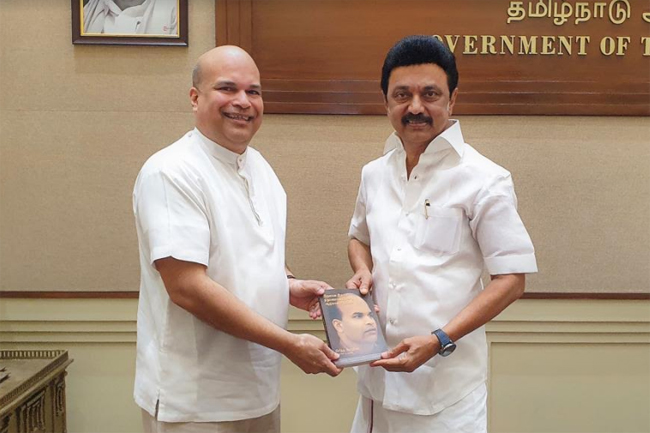
Sri Lanka’s High Commissioner to India MilindaMoragoda, paid a courtesy call on the Chief Minister of Tamil Nadu, Thiru M.K. Stalin on Saturday (04) morning at the Chief Minister’s office in Chennai. The Chief Secretary of the Tamil Nadu Government Thiru Irai Anbuand several other key State officials were present at the meeting. This was the first time that a Sri Lankan High Commissioner in New Delhi met with the Chief Minister of the State of Tamil Nadu after 2011.

This was made known via a media release by the Indian High Commission in Sri Lanka today (04).

The courtesy call on the Chief Minister of Tamil Nadu by the High Commissioner came as part of the latter’s plan to expand Sri Lanka’s footprint at state level to promote greater interactions between Sri Lanka and the states of the Indian Union as stipulated in his policy road map the “Integrated Country Strategy for Sri Lanka Diplomatic Missions in India”.

At the outset, the Chief Minister extended a warm welcome to the High Commissioner of Sri Lanka. During the very cordial discussion that followed, the High Commissioner thanked the Chief Minister and the people of Tamil Nadu for the humanitarian assistance worth of LKR two billion that they recently extended to Sri Lanka to help it manage the current economic situation.

In response, Chief Minister Stalin observed that he was concerned with the situation in Sri Lanka and had made arrangements to immediately dispatch the first shipment of essential commodities. He added that a second shipment is also in line to be dispatched and that a few more shipments are expected.

The statement further noted that Moragoda and Stalin discussed an array of areas pertaining to the relationship between Sri Lanka and the State of Tamil Nadu, including the fishermen’s issue. The two dignitaries reviewed the ancient and strong ethnic, cultural and religious affinities between Tamil Nadu and Sri Lanka and discussed the ways to further strengthen them. In this regard, Chief Minister Stalin requested that Sri Lanka may wish to install a statue of the celebrated Tamil poet and philosopher Thiruvalluvar in a suitable premise in Sri Lanka, such as a university. The High Commissioner welcomed the suggestion made by the Chief Minister and undertook to support and facilitate this initiative.

With a view to having better coordination on all aspects of the relationship between Sri Lanka and the State of Tamil Nadu, High Commissioner Moragoda requested the Chief Minister to designate a focal point at state level. High Commissioner Moragoda invited Chief Minister Stalin to visit Sri Lanka as well.

High Commissioner Moragoda also presented a copy of the Tamil translation of the book containing his parliamentary speeches to the Chief Minister. The High Commissioner recalled how he had presented a copy of the same book to the father of Chief Minister Stalin, the late Thiru M. Karunanidhi, former Chief Minister of Tamil Nadu, in 2006.

High Commissioner Moragoda was accompanied by the Deputy High Commissioner of Sri Lanka to Southern India Dr. D. Venkateshwaran, Deputy High Commissioner of Sri Lanka in New Delhi NilukaKadurugamuwa and Second Secretary of the Deputy High Commission of Sri Lanka in Chennai SupunDeshaprema to this meeting.

Posted in Uncategorized

India hands over 3.3 tons of medical supplies to Lanka’s ambulance service

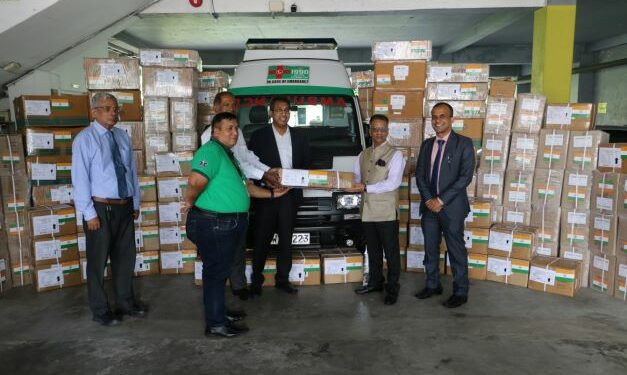
The Indian High Commissioner Gopal Baglay handed over 3.3 tons of essential medical supplies donated by Government of India for the 1990 Suwaseriya Ambulance Service to the Chairman of Suwaseriya Foundation Mr. Duminda Rathnayaka in the gracious presence of Dr. Harsha de Silva, Member of Parliament and Sohan de Silva, CEO of Suwaseriya Foundation in Colombo on 3 June 2022.

External Affairs Minister Dr. S. Jaishankar was apprised of the looming shortage of medical supplies faced by the Foundation during his visit to the Suwaseriya Headquarters in Colombo in March 2022.

Responding to the urgent requirement, Indian Naval Ship (INS) Gharial was specially deployed for ensuring expeditious delivery of medical supplies to Sri Lanka. In addition to the Suwaseriya Foundation, medical supplies for General Hospital Hambantota, Teaching Hospital, Peradeniya and Teaching Hospital, Jaffna were also carried onboard INS Gharial.

It may be recalled that 1990 emergency ambulance service, spread across all the 25 Districts of Sri Lanka, is a shining example of India’s people-centric and demand-driven development cooperation partnership with Sri Lanka.

The ambulance service was realized through a grant assistance of around USD 22 million by Government of India. The service proves to be immense value to the people of Sri Lanka and plays an instrumental role in saving precious lives.

More than 25 tons of drugs and medical supplies which were donated by the Government and people of India during the last two months are valued at close to SLR 370 million. This is in addition to economic assistance of around USD 3.5 billion and supply of other humanitarian supplies such as rice, milk powder, kerosene etc.

Posted in Uncategorized

Aeroflot suspends flights to Sri Lanka

Russia’s Aeroflot airline is suspending its flights to Sri Lanka after authorities arrested its Airbus A330 jet, according to the airline’s statement.

“Aeroflot is suspending commercial flights to Colombo (Sri Lanka) for the immediate period due to an unreliable situation in terms of the airline’s unobstructed flights to Sri Lanka. The sales of tickets for flights to Colombo have been temporarily shut down,” the statement noted.

Aeroflot passengers located in Colombo with return tickets for June 2, 4 and 5 will be brought to Russia from Sri Lanka on June 4 and 5. Repatriation planes will fly to Colombo without passengers, according to the statement. The company also vowed that those passengers with tickets to Moscow for later dates would also be brought home as scheduled.

On Friday, Aeroflot reported that the departure of its SU-289 flight from Colombo to Moscow scheduled for June 2 was at first delayed and then canceled due to the absence of permit from Sri Lanka’s aviation authorities.

Earlier, Colombo’s Commercial High Court satisfied a complaint filed by Ireland’s Celestial Aviation Trading Limited leasing company against Aeroflot and banned its Airbus A330 jet from leaving the country until June 16. A court hearing to lift the seizure of the aircraft is scheduled for June 8, 2022.

Source: TASS

Posted in Uncategorized

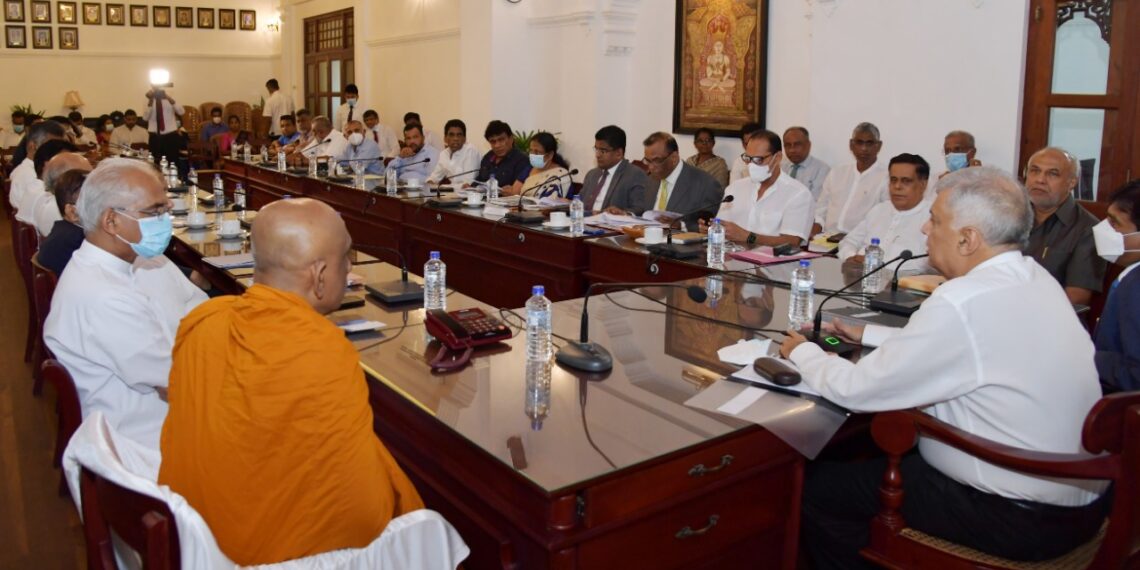
General consensus reached on key points on 21A draft

A general consensus has been reached between all parties regarding several key points related to the draft of the 21st Amendment to the Constitution.

The party leaders met with Prime Minister Ranil Wickremesinghe this evening at the Office of the Prime Minister for a second round of discussions pertaining to the 21st Amendment to the Constitution.

The Prime Minister’s Media Division however said, the amendment could be subject to revisions based on the Supreme Court determination over Constitutional Amendment tabled by the Samagi Jana Balawegaya.

21A : Party Leaders agree that it should avoid provisions calling for a referendum

Sri Lankan Prime Minister Ranil Wickremesinghe said that the Party Leaders have arrived at a consensus with regard to the 21st Amendment to the Constitution.

“It will be an amendment that will avoid any provision which will require a referendum,” he said.

However, he said that will not be enough as the crisis worsens.

Sri Lankan Prime Minister Ranil Wickremesinghe said the country is only at the beginning of the crisis, and the worst is still to come.

“At the moment, there are no queues for petrol, but you don’t understand that I not only have to do the job of the Prime Minister, but of the firefighter,” he said adding he needs to look for at least USD 40 Million daily for payment of shipments.

“We have run down the economy, we have state enterprises owning trillions of rupees to the banks, we have enterprises that are losing, we have projects that will not benefit Sri Lanka with no priority list,” he told a gathering on Friday (3) adding that agencies were using different credit lines for their requirements.

He said the food supplies in Sri Lanka will last until September to October, as Sri Lanka did not have sufficient fertilizer for either the Yala or Maha seasons.

“If we receive fertilizer for the next Maha Season, we will be self-sufficient by February next year,” he said.

The Prime Minister said a time would come when people will not eat three meals a day but will have only two meals per day.

He said the government is in talks with friendly nations for assistance, adding that Sri Lanka cannot get through this year alone.

“We need a few billion dollars from outside, otherwise this country cannot survive. We need to get that money. We have to reach out again to the people we rejected, to the Japanese who have been our friends since 1952, but today are hurt after what happened,” he said while asking what country rejects $ 3 Billion in aid without a thank you, and even without a negotiation.

The Prime Minister said Sri Lanka is lucky that India has come forward to help, while other nations too are chipping in.

“China came forward with assistance, but someone in the government went forward and negotiated a swap loan which we cannot use,” remarked the Prime Minister adding that though Sri Lanka needs to look at the West, the West unfortunately is facing a problem with inflation and Ukraine.

He said it is essential that Sri Lanka apologize for its mistakes and make up with friends for support.

The Prime Minister said there are two crises that are affecting Sri Lanka.

“One has already started. That is the economic crisis in Sri Lanka,” said the Prime Minister adding that it is followed by the political crisis, a reflection of a loss of confidence in a political system that allowed the country to reach its present level.

The Prime Minister said the second crisis is the global impact of the Ukraine Crisis, and Sri Lanka is only seeing the beginning.

Sri Lankan Prime Minister Ranil Wickremesinghe said that Sri Lanka did not approach the International Monetary Fund early enough.

Speaking on Sri Lanka – Japan relations, the Prime Minister said it was Japan that came to Sri Lanka’s rescue when it hit a crisis before.

He said Sri Lanka must reach out to Japan for more support, along with the rest of its friends.

The Prime Minister said that Sri Lanka must push through with an agreement with the IMF and it must also decide on its debt structure.