There were many in Sri Lanka and abroad who thought the political life of Ranil Wickremesinghe had been laid to rest after the August 2020 parliamentary elections. The United National Party (UNP) that had Wickremesinghe at the helm for more than 25 years was routed at the polls. For the first time since its inception, the UNP failed to get even one MP elected. The UNP was able to garner only 249,435 (2.15%) votes throughout the Island.
In Colombo district where Ranil Wickremesinghe contested the UNP got only 30,875 (2.61%). Ranil’s share of the preference votes is not known but it is surmised that it would have been less than 15,000. It was a terrible downfall for the UNP leader and five times prime minister whose personal tally at the previous 2015 parliamentary election had been a record breaking 500,566. Also Ranil had never suffered defeat in an election from the time he first entered Parliament as an MP in July 1977.
Viewed against this dismal backdrop, there was much merit in the opinion articulated by political observers and analysts that the 2020 electoral verdict had written the political obituary of the UNP in general and Ranil Wickremesinghe in particular. This may very well have been the case but for two factors. The first was the remarkable resilience, tenacity and political courage of Ranil Wickremesinghe. The second was the consolation prize received by the UNP in the form of a national list MP. The silver lining for the UNP, in the dark cloud of electoral defeat, was that the overall votes gained by the party at the polls, entitled it to a solitary national list MP post.
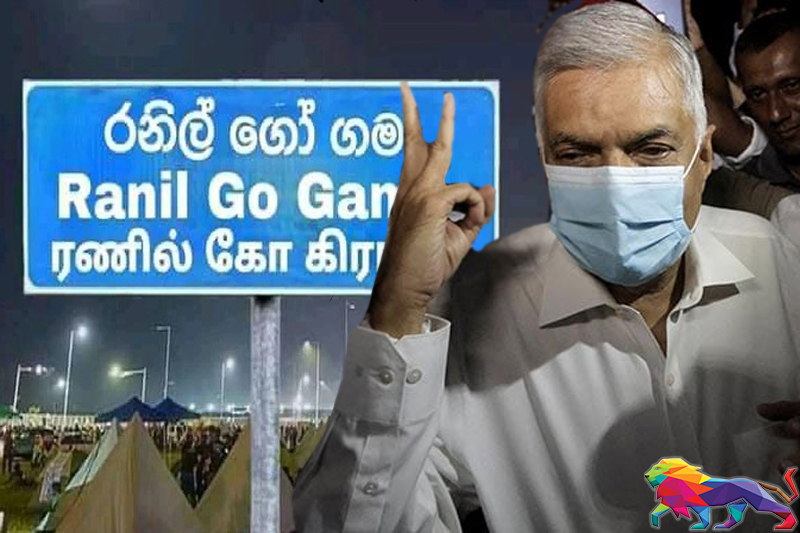
What has been happening thereafter amounts to an unbelievable exhibition of political wizardry, Wickremesinghe utilised the national list MP slot to engineer a political renaissance. Ten months after the disastrous 2020 election, Ranil Wickremesinghe re-entered Parliament on 23 June 2021 as the UNP national list MP. On 12 May 2022, the lone UNP parliamentarian was appointed Prime Minister by President Gotabaya Rajapaksa. Ten weeks later on 21 July 2022, Ranil Wickremesinghe was sworn in by Chief Justice Jayantha Jayasuriya as the eighth executive president of Sri Lanka. Ranil had been elected president by 134 of 225 MPs in Parliament on 20 July. The poll had been necessitated by the resignation of Gotabaya Rajapaksa.
Thus Ranil Wickremesinghe – for whose political life the death knell had been seemingly rung after the 2020 poll – demonstrated to the world at large that reports of his political demise have been greatly exaggerated as stated once by Mark Twain. In the words of the bard of Avon quoted at the beginning, Ranil has “taken the tide in the affairs of men, at the flood, on to fortune.” In a deft display of strategic calculation and tactical manoeuvring, Ranil Wickremesinghe has reached the pinnacle of power from the depths of defeat.
Ranil’s return and rise to the top in three stages as Parliamentarian, Premier and President will be related in detail in this two-part article. This does not mean that this column necessarily approves or disapproves of what Ranil has done or is doing. This narrative merely places the contours of Ranil’s three-stage political renaissance in perspective. Some of these matters have been related to some extent in my articles in our sister paper “Daily Mirror”. I shall be drawing from those for this article if and when necessary.
August 2020 Parliamentary Election
Politically resilient Ranil Wickremesighe’s return to power has indeed been remarkable. The advent of the August 2020 parliamentary election saw Ranil’s erstwhile deputy leader Sajith Premadasa staging a “coup” and forming the “Samagiya Jana Balawegaya” (SJB). The SJB contested elections under the telephone symbol. Most MP’UNP hitched their wagon to the Premadasa star. Political party allies of the UNP such as the Sri Lanka Muslim Congress (SLMC) Tamil Progressive Alliance (TPA) and the All Ceylon Makkal Congress (ACMC) also switched sides.
The grand old party tasted ignominious defeat at the 2020 Parliamentary poll. The UNP led front obtained 106 seats at the 2015 elections but in 2020 the party failed to get even one MP elected. The UNP polled only 249,435 (2.15%) votes. No MP was elected. Adding insult to injury was Ranil Wickremesinghe’s personal debacle. The UNP leader who had not lost an election from the time he entered Parliament in 1977 was trounced in Colombo district.
Under the proportional representation electoral system the votes it garnered enabled the UNP to nominate a single MP on the national list. Ranil declined nomination and left it to the party to decide upon another nominee. There was keen competition among the UNP stalwarts – who had stood by Ranil through thick and thin – to be appointed as MP on the national list. So much so that the party was in danger of fragmenting again. Finally there emerged a consensus that the UNP leader should be appointed national list MP. Ranil relented and took his oaths as the sole UNP parliamentarian on 23 June 2021.
Sole UNP national list MP
The UNP national list MP episode was illustrative of Ranil’s astute political skills in two aspects. Ranil may very well have desired the national list MP seat though outwardly posturing as not being interested. This led to an intricate situation where the party could not agree upon a nominee and instead opting for Ranil unanimously. The protracted wrangling within party folds to agree upon an alternative to Ranil in the form of a national list MP and the broad consensus reached in appointing him as MP strongly indicated the indispensability of Wickremesinghe to the UNP at this juncture. There would be no potential aspirant to party leadership as is usual after massive electoral loss.
The second aspect was the timing of his re-entry to Parliament. The 2020 Parliamentary election was a terrible defeat for the UNP in general and Wickremesinghe in particular. In 1956 the party got 8 seats in a Parliament of 101 MPs. In 1970 the UNP got 17 seats in a Parliament of 157 MPs. But in 2020 the UNP had only one seat in a Parliament of 225 MPs. It was a crushing defeat.
It may have indeed been very humiliating for Ranil to enter Parliament in such a situation. He may have been harangued mercilessly by both sides in Parliament and the media. The delay in making his re-entry to Parliament made a huge difference. By that time the sheen had worn off both the Government and opposition in Parliament. The lacklustre performance of Sajith Premadasa as leader of the opposition disappointed many. Ranil was sorely missed. He had been a fixture in Parliament since 1977.
Ranil’s re-entry to Parliament
So when Ranil made his Parliamentary re-entry there was no major hullabaloo. Of course there were some jibes and taunts but nothing significant. Soon Ranil began making his presence felt in Parliament. He made many positive contributions. Sadly the country was plunged into an unprecedented economic crisis but those in power kept dilly-dallying.
Wickremesinghe offered valuable suggestions to cope with the economic crisis. These ranged from going to the International Monetary Fund (IMF) to setting up a consortium of countries to help garner more financial aid for Sri Lanka. He also kept warning of acute food shortages and an imminent collapse of the economy. These were not heeded and Ranil was ignored like a voice in the wilderness by the powers that be.
Wickremesinghe made a tremendous impression by participating in the all-party conference convened by former President Gotabaya Rajapaksa to discuss ways and means of dealing with the economic crisis. The chief opposition SJB with 54 MPs boycotted it but the sole MP of the UNP was at the conference. Ranil Wickremesinghe’s exchanges with Ajith Nivard Cabraal exposed the shallow economic policies of the then Central Bank Governor and demonstrated the UNP leader’s better grasp of the economic malady afflicting the nation. When Cabraal resorted to personal attacks, Gotabaya himself apologised publicly to Ranil.
“Gota Go Home” protests
Even as the economic crisis worsened there were widespread shortages of essentials like fuel, gas, food and medicine and enhanced power cuts. People began protesting. The “Gota Go Home” protests at Galle Face Green and its impact transformed the political environment. President Rajapaksa resorted to multiple measures to tackle the situation. While refusing to quit on the basis that he had a mandate given by 69 lakhs of people at the 2019 presidential poll, Gotabaya effected several changes in the government. He replaced the older cabinet of senior ministers with a new one of younger ministers. He fired many officials including Cabraal and appointed a new Central Bank Governor. A team of eminent economists was appointed as advisers. Colombo began interacting with the IMF and World Bank.
Gota also invited opposition parties to help form a new multi-party Government. But the SJB and JVP rebuffed Gota. They insisted that Gotabaya Rajapaksa must resign first and emphasised they would not serve in any Government under President Gotabaya Rajapaksa. In a controversial move Gotabaya began pressuring his brother and former President Mahinda Rajapaksa to resign as Prime Minister to pave the way for a new premier being appointed. The other members of the Rajapaksa clan in Government had all resigned earlier. Mahinda resisted the call to resign. There was a stalemate while a cold war ensued between both brothers.
Events however began overtaking. A meeting was held on 9 May at “Temple Trees” where SLPP members assembled in large numbers and urged Mahinda not to resign. Subsequently some of these “supporters” went on the rampage against the protesters opposite “Temple Trees” and at Galle Face. The protesters were viciously assaulted by the armed SLPP mob which also demolished the structures constructed by protesters. Some SLPP MPs were involved in the attacks. The anti-protest violence itself had been allegedly planned and encouraged by key SLPP personalities.
Counter violence by anti-SLPP mobs
After the initial shock, there was a huge backlash. While the attacks on the protests were universally condemned there erupted counter violence. Anti-SLPP mobs began unleashing violence. The SLPP supporters suspected of being involved in the attack were in turn attacked by organised groups. Some were manhandled and dumped in the Beira Lake. Some of the vehicles in which the supporters were transported to Colombo were identified and destroyed. SLPP Polonnaruwa MP Amarakeerthi Athukorala was set upon by a mob at Nittambuwa and beaten to death along with his personal security officer. Nightfall saw further terror. The residences and businesses owned by many SLPP ministers, state ministers, MPs and prominent party supporters were besieged by mobs. The buildings were looted and set on fire. The Police, STF and military seemed unable or unwilling to curb the violence. Some attacks continued on the next day too. Houses, buildings, businesses and vehicles belonging to over 70 SLPP parliamentarians including present and past ministers were totally demolished or extensively damaged.
Beleaguered premier Mahinda Rajapaksa
Mahinda Rajapaksa had earlier been reluctant to step down as Prime Minister. When news of the attacks on protesters by SLPP mobs was known, Mahinda submitted his resignation. This was immediately accepted by Gotabaya. It was a terrible night for Mahinda and his family. Large crowds gathered outside “Temple Trees” and surrounded the premises on all sides. The beleaguered Mahinda Rajapaksa family was marooned within the “Araliya” abode.
Worse still were the sustained efforts by sections of the mob to enter the premises and attack Mahinda. The gates were breached and mobs stormed in. An arson attack was launched. Around 20 Molotov Cocktails or Petrol bombs were thrown at the building. The fire was doused. Tear gas was fired repeatedly to disperse the mobs. Shots were fired in the air. Finally Mahinda and Namal Rajapaksa with their families were evacuated by helicopter to the Trincomalee naval base. In a further development the ancestral house of the Rajapaksas at Medamulna was attacked and destroyed. So too was the memorial dedicated to the parents of Chamal, Mahinda, Gotabaya and Basil.
There seemed to be no government in existence. Political instability was at its lowest point. All this while the country was in the grip of a debilitating economic crisis. Political stability was essential in negotiations seeking financial assistance from the IMF and World Bank. The newly appointed Central Bank Governor Dr. Nandalal Weerasinghe held a media conference where he warned that unless political stability was urgently restored there was no hope for Sri Lanka to get out of the economic morass. Dr. Weerasinghe threatened to quit as Central Bank governor and return to Australia if the situation was not rectified within a few days.
New Prime Minister needed
President Gotabaya Rajapaksa was in a terrible quandary. Although he was refusing to resign as president, Gota’s credibility and effectiveness was practically nil. He was legally the President but seemed to lack legitimacy in the fast changing political environment. Furthermore Sri Lanka was in dire economic straits. Something had to be done urgently to salvage the economy. For all this a new and efficient prime minister was needed.
When Gota conferred with a few advisers and aides he was told that the most suitable person available among the 225 MPs in Parliament was Ranil Wickremesinghe. Moreover Ranil was acceptable to the international community as well as the global financial institutions. But there was a problem. Gota had had a conversation with Ranil prior to Mahinda’s resignation. In that exchange Ranil had reportedly asked Gota to resign as President. This was not to Gota’s liking.
So President Gotabaya Rajapaksa turned to other alternatives. A choice Gota was very much in favour of was former speaker Karu Jayasuriya but unfortunately he was not an MP. There had been news reports that SJB national list MP Mayantha Dissanayake was going to resign his post so that Karu could be nominated. Mayantha’s brother and former minister Navin Dissanayake is the son in law of Karu Jayasuriya. This resignation however did not take place and there have been reports that SJB leader Sajith Premadasa had vetoed the move.
Gota approached former friend and ex-comrade at arms Field Marshall Sarath Fonseka. The former Army commander turned MP was now a political foe. Nevertheless Gota felt a strong man like Fonseka was needed to handle the violence and collapse of law and order. There was a meeting where Sarath Fonseka reportedly accompanied by Parliamentarian Diana Gamage engaged in talks with Gota. Fonseka however declined to accept Gota’s offer and told the President that he should resign first as a prerequisite. Friend turned foe Sarath Fonseka was unwilling to work as Premier with Gota in the saddle as President.
Gotabaya in sheer desperation turned once again to the Leader of the Opposition. Sajith Premadasa once again refused to be Prime Minister with Gotabaya as President. “Resign first” said Sajith. He was encouraged in this uncompromising intransigence by the cabal of multi-party MPs surrounding him.
With Sajith Premadasa spurning his offer again President Rajapaksa was compelled to turn to Ranil Wickremesinghe. There were lengthy conversations between Gota and Ranil. The chief facilitators were a key official at the presidential secretariat and a high-ranking office-bearer of the UNP.
Tactical shift in Ranil’s stance
Earlier when Mahinda was yet the premier, Wickremesinghe had been asked by the media whether he was planning to join the SLPP led Government; Ranil had retorted, “Why should I get aboard a sinking ship? He had also opined to Gota before that the President should resign. But now Ranil Wickremesinghe made a tactical shift in his stance. He was aware that his political bete noire Sajith Premadasa had declined Gota’s offer twice. Ranil recognised an “opening” here and seized the opportunity.
Ranil revised his earlier position that Gota should quit. Instead of asking Gota to resign, Ranil secured an assurance from the President that the “Gota Go Home” protests should be allowed to continue and not be suppressed. The President reportedly agreed. Obviously the logical conclusion of the “Gota Go Home” protest could only result in Gotabaya going home. What Ranil seemed to have calculated then, was that the “Gota Go Home” protest would ultimately result in Gota resigning. Where Wickremesinghe differed from Premadasa and Fonseka and others was that he did not insist upon Gota quitting as a pre-condition. His shrewd assessment of the situation was that the continuing protests would ultimately succeed in forcing Gota’s resignation.
The second assurance Ranil obtained from Gota was a reduction in Presidential powers. The 21st Amendment would be introduced to bring back the 19 A to replace 20 A. However there would be no Presidential or Parliamentary election until political and economic stability was restored. An agreement was arrived at between Gota and Ranil. Upon hearing that Ranil could become premier, Sajith Premadasa contacted Gota and informed the President that he would re-consider the offer under certain amended conditions. Gota informed Sajith politely that he had already decided to appoint Ranil Wickremesinghe as Prime Minister.
Prime Minister for the sixth time
Ranil Wickremesinghe the lone UNP parliamentarian was sworn in as Prime Minister for the sixth time on 12 May 2022. The appointment caused much controversy. What happened thereafter including the resignation of Gota, burning of Ranil’s residence by protesters, the ascension of Ranil as President and the positive and negative acts of omission and commission by the eighth executive president of Sri Lanka will be delved into in greater detail in the second part of this article.
(The writer can be reached at dbsjeyaraj@yahoo.com.)