SJB directs several proposals to the PM over 21A

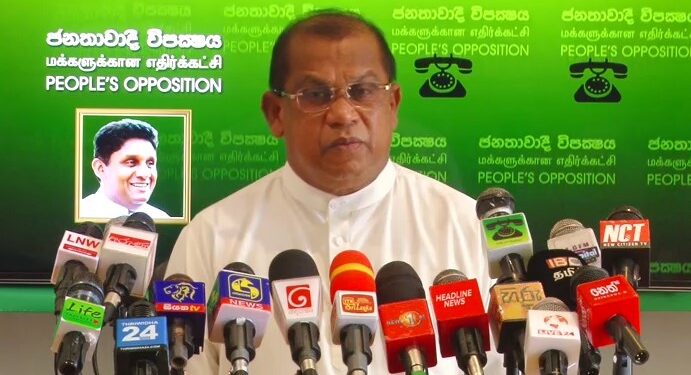
General Secretary of the Samagi Jana Balawegaya Parliamentarian Ranjith Madduma Bandara has directed several proposals to Prime Minister Ranil Wickremesinghe pertaining to the draft 21st Amendment to the Constitution presented by Minister of Justice Wijeyadasa Rajapakshe.

The proposals cite that the provisions in the 19th Amendment, that the President cannot hold ministries must be re-enacted.

The SJB said they received legal advice that a referendum is not required for the amendment as the article was in force at the time of the election of the current President.

The party also proposed that provisions be made to appoint other members of the Monetary Board in addition to the Governor of the Central Bank on the recommendation of the Constitutional Council.

The SJB also proposes the establishment of a National Priorities and Evaluation Commission as an independent commission to evaluate and issue recommendations on development projects that should be prioritised while its members must be appointed by the Constitutional Council.

The SJB also proposed that all office bearers in significant positions in the country, including the President, Prime Minister, Ministers, Deputy Ministers, Parliamentarians, Provincial Councillors and Governors must mandatorily submit declarations of assets and liabilities.

It was also proposed to include provisions to formulate a legal framework in the event individuals fail to submit their asset statements or falsify information and for stern action to be taken.

Gnanasara Thera visits Saudi Arabia to discuss religious extremism in SL

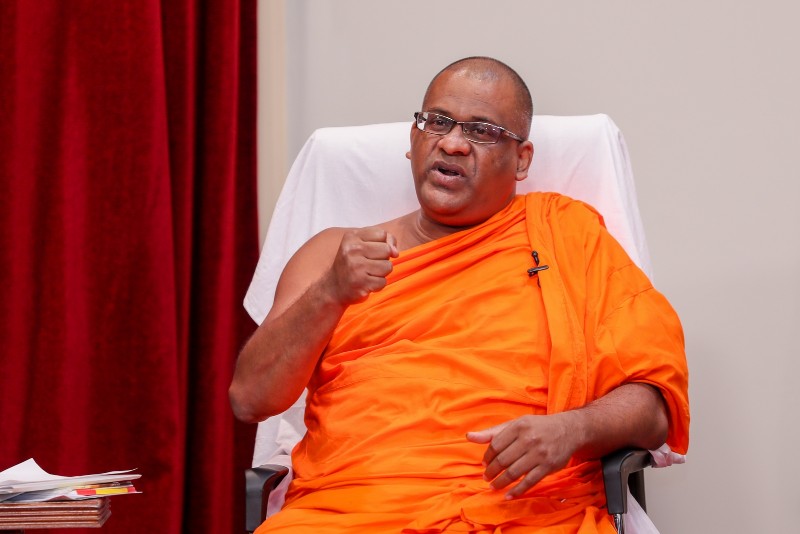
The Kingdom of Saudi Arabia had reportedly extended its support to mitigate religious extremism in Sri Lanka during a special meeting they had with Ven. Galagoda Aththe Gnanasara Thera, who made a recent visit to Saudi on a special invitation, the Daily Mirror learns.

Gnanasara Thera who presently heads the Presidential Task Force for ‘One Country, One Law’ had personally been invited on a two day visit to Saudi Arabia, to attend a top level discussion between the Saudi officials on eradicating religious extremism, about a week ago.

The Thera, who was accompanied by a small party with another prominent Buddhist monk and two laymen including a university lecturer, had reportedly been invited by Crown Saudi Prince Mohammed Bin Salman for a discussion in Riyadh, sources close to the Thera said.

The local party had talks with the Saudi Defence Minister with a ring of top level officials to discuss matters pertaining especially to religious extremism and its influence in Sri Lanka.

The local party had also been taken on a tour in certain state departments in the Saudi Government, including a cyber crime monitoring unit in Riyadh for spreading of religious extremism.

During the discussions it had surfaced that Saudi Government was having a keen interest in Sri Lanka when it comes to religious extremism with its influence and was ready to help mitigate it, the sources further said.

However, when contacted BBS senior representative Dilantha Withanage said that they were neither invited by the Crown Prince of Saudi Arabia nor had any talks with him or the Defence Minister regarding mitigating religious extremism in Sri Lanka and said there were only certain discussions pertaining to the topic which took place.

He however did not rule out his presence in Riyadh with the Ven. Thera for a top level meeting.

Sri Lanka PM briefs UK Prime Minister on country’s situation

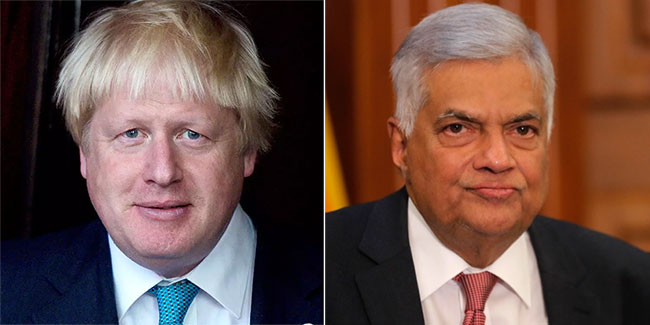
Sri Lanka Prime Minister Ranil Wickremesinghe has held discussions with British Premier Boris Johnson today and briefed his British counterpart on the current situation of the country.

The British Premier has assured the United Kingdom’s continuing support for the people of Sri Lanka during the current economic crisis.

The UK PM’s Office confirmed in a press release that the British Prime Minister spoke to Sri Lankan Prime Minister Ranil Wickremesinghe this afternoon.

Prime Minister Johnson congratulating Wickremesinghe on his recent re-appointment as Prime Minister has underlined the UK’s continuing support for the people of Sri Lanka during their current economic difficulties.

Prime Minister Ranil Wickremesinghe said the British Premier pledged to support Sri Lanka especially in the fields of tackling climate change and assisting the country in becoming an export oriented open economy.

Prime Minister Johnson has stressed the role Putin’s barbaric invasion and senseless blockade of the Black Sea has played in exacerbating global food supply issues.

“He emphasized the need for the entire international community to take action against the horrors Putin is inflicting on the Ukrainian people,” Prime Minister Johnson’s Office said.

The British Prime Minister and Prime Minister Wickremesinghe also discussed the potential for further UK-Sri Lanka cooperation in areas including clean energy. “They looked forward to working closely together in the coming years,” the UK PM’s Office said.

Posted in Uncategorized

PM proposes appointing a National Council – FULL SPEECH

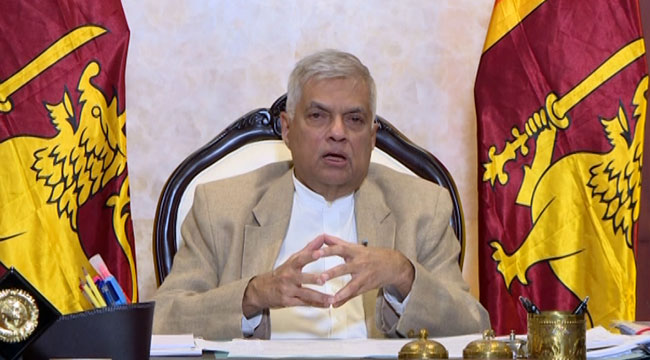
Prime Minister Ranil Wickremesinghe has proposed appointing a National Council consisting of the Speaker, the Prime Minister, the Leader of the Opposition and leaders of the major political parties.

The National Council will talk about the policies of the country, about the decisions taken by the Cabinet and about the reorganization of the Parliament of this country.

The National Council will also gave the right to summon the Cabinet of Ministers and the Chairmen of Committees.

“According to the new system we have proposed, the President will be held accountable to the Parliament. The Cabinet of Ministers is also accountable to Parliament. The National Council is also accountable to Parliament. Fifteen Committees and Oversight Committees are accountable to Parliament,” the Prime Minister said in a special statement today.

He said the main issues in the country are not limited to the economic sphere.

The Prime Minister said that there are two major issues in the political sphere. The re-introduction of the 19th Amendment is one of these issues.

“We, as party leaders, are now preparing the 21st Amendment in this regard,” he said.

The second issue is to work towards the abolition of the Executive Presidency. The Prime Minister said that the timing and methodology must be decided by the Party Leaders.

“The functioning of the Parliament has been paralyzed due to the weakening of the Parliamentary powers by the 20th Amendment. The Executive has been given more powers. The main allegation today is that the Parliament has not acted to prevent the economic crisis. There is an allegation that even though the ruling party had a majority in Parliament they neglected the work of the Parliament. Everything was systematically controlled by the Cabinet Ministers,” he said.

The Prime Minister also said that they are working to establish two new Committees on Monetary Affairs. He said they will appoint a Legal and Methodological Committee to look into the matter. (Colombo Gazette)

Full statement:

Today, the main issues in our country are not limited to the economic sphere. There are also two major issues in the political sphere. The re-introduction of the 19th Amendment is one of these issues. We, as party leaders, are now preparing the 21st Amendment in this regard.

The second issue is to work towards the abolition of the Executive Presidency. The timing and methodology must be decided by the Party Leaders.

The functioning of the Parliament has been paralyzed due to the weakening of the Parliamentary powers by the 20th Amendment. The Executive has been given more powers. The main allegation today is that the Parliament has not acted to prevent the economic crisis. There is an allegation that even though the ruling party had a majority in Parliament they neglected the work of the Parliament. Everything was systematically controlled by the Cabinet Ministers.

We do not always have to look at what happened in the past, but there are examples we can follow.

Before the independence of Sri Lanka there was a State Council from 1931 to 1947. That State Council functioned following the committee system. Each subject was divided into seven committees. The Chairmen of the Committees became Ministers. The seven Ministers had formed a Cabinet. In addition, there were three officials appointed by the Governor.

In addition, there was an Accounts Committee to control public money. At that time we had the opportunity to carry out this methodology successfully.

Now we need to change the structure of Parliament and create a new system by combining the existing system of Parliament or the Westminster system and the system of State Councils. In those cases Parliament can participate in governing the country.

First of all, the existing laws need to be strengthened in order to give those powers to Parliament in the exercise of monetary powers.

Following the example of countries such as the United Kingdom, New Zealand and India, we are proposing a stronger and more powerful law.

At present there are three Committees on Government Finance. The three Committees are the Public Finance Committee, the Accounts Committee and the Committee on Public Enterprises. Leader of the House Dinesh Gunawardena has made several proposals to strengthen the powers of these three Committees.

In addition, we are bringing recommendations forward.

We are working to establish two new Committees on Monetary Affairs. We will appoint a Legal and Methodological Committee to look into the matter.

Secondly, the main problem we face is the financial condition of the banks and financial institutions. There are a number of issues that have been weakened.

Under our Standing Order 111 we can appoint oversight committees. No oversight committees have been appointed before. Therefore, we propose to appoint ten oversight committees. They also report to Parliament on policies. Parliament should act on that.

It should also be noted that the chairpersons of these five Finance Committees and the Ten Supervisory Committees are appointed by backbenchers. They are not appointed by Ministers.

Therefore, we have the opportunity to work out a methodology that is independent of the Cabinet of Ministers and works with both the Minister and the Parliament.

The youth are calling for a change in the existing system. They also want to know the current issues. Therefore, I propose to appoint four youth representatives to each of these 15 committees. One of them will be appointed by the Youth Parliament. The other three will be from the protesting groups and other activist groups. The methodology used to chose these individuals can be decided by the youth organizations themselves.

In addition, we hope to involve people with expertise in specific fields in this work. Through this work, young people will be able to learn about problems and provide solutions to them on their own. They will be able to contest elections if they wish to do so.

We also propose a National Council. A committee consisting of the Speaker, the Prime Minister, the Leader of the Opposition and the leaders of the major parties is called the National Council.

It should be said that the National Council is very important. The National Council can talk about the policies of the country. It can also talk about the decisions of the Cabinet. It can also talk about the reorganization of the Parliament of this country. If so, it can be called a political body.

The National Council has the right to summon the Cabinet of Ministers and the Chairmen of Committees.

According to the new system we have proposed, the President will be held accountable to the Parliament. The Cabinet of Ministers is also accountable to Parliament. The National Council is also accountable to Parliament. Fifteen Committees and Oversight Committees are accountable to Parliament.

There is a system in place to control the Government through the Cabinet, to examine the work of the President, to oversee the work of the political affairs through the National Council and to oversee the financial affairs and other matters of the other fifteen committees. There are articles prepared on this matter. I appreciate that a number of other organizations have made similar proposals.


Justice Minister briefs religious leaders on draft 21A

Minister of Justice Wijeyadasa Rajapakshe visited Kandy today to brief religious leaders on the draft 21st Amendment to the Constitution.

Speaking to media the Minister said excessive powers vested in the Executive Presidency must be devolved to Parliament and governmental institutions.

Minister Rajapakshe noted through the 19th Amendment to the Constitution the independency of state institutions was ensured, for the purpose of investigating bribery and corruption.

He noted such measures were reversed through the 20th Amendment.

Justice Minister Wijeyadasa Rajapaksa stated an individual holding dual citizenship was appointed to the Ministry of Finance and played a significant role in creating the prevalent economic crisis.

The Minister said he hoped to rectify such provisions through the draft Amendment.

The Minister said he hopes to obtain the blessings of the Chief Prelates and brief them on the proposed amendments.

Meanwhile, Minister of Justice Wijeyadasa Rajapakshe noted the opposition is also in favour of the abolishment of the Executive Presidency.

He added abolishing the Executive Presidency requires a referendum as the entire Constitutional framework is based on one post.

The Minister claimed the executive President is responsible for national security and reiterated that the abolishment of such powers should be determined through a referendum.

The Justice Minister said after the draft 21st Amendment is passed, attention could be drawn to a new Constitution that would abolish the post of the Executive President.

The Minister of Justice further stated the opposition called for the resignation of President Gotabaya Rajapaksa adding if the President resigned, Parliament is tasked with appointing an acting President.

Minister Rajapaksa said since the Sri Lanka Podujana Peramuna held a majority in Parliament there is a possibility that Former Finance Minister Basil Rajapaksa would be appointed to the post.

Hence, the Justice Minister said it was required that further action be taken with the consent of the public.

Posted in Uncategorized

SJB and JVP oppose 21A draft

The draft bill for the 21st Amendment to the Constitution is due to be tabled at a Cabinet meeting on the second week of June by including proposals presented by independent groups today and more proposals presented during the party leaders meeting on Friday.

Meanwhile, the Sri Lanka Podujana Peramuna has decided to appoint a committee consisting of lawyers and Parliamentarians to study the 21st Amendment.

The Sri Lanka Freedom Party said it has submitted proposals to the Minister of Justice, on clauses to be included in the 21st Amendment.

The Samagi Jana Balawegaya also noted that that a legal Committee has been appointed to study the 21st Amendment to the Constitution.

SJB Secretary Ranjith Madduma Bandara said the committee will consist of President’s Counsel Upul Jayasuriya, Srinath Perera and Tissa Wijegunawardena.

The SJB added that powers vested in the President have been further strengthened by the proposed 21st Amendment to the Constitution.

As a result, the SJB Secretary revealed that his party could not support the proposed Constitutional Amendment.

The JVP also claimed that they cannot accept proposals within the draft bill of the proposed 21st Amendment.

Party Propaganda Secretary Vijitha Herath said his party hopes to submit proposals for a new draft to be compiled in the coming week.

Herath also said his party would not join next Friday’s talks held under the patronage of Prime Minister Ranil Wickremesinghe.

Posted in Uncategorized

SLFP fully supports draft 21st Amendment, proposes more amendments

Chairman of the Sri Lanka Freedom Party (SLFP) Maithripala Sirisena has informed Justice Minister Wijedasa Rajapksha in writing that he and his party fully support the proposed draft of the 21st Amendment to the Constitution.

In a letter addressed to the Minister of Justice, Prison Affairs and Constitutional Reforms, the former President states that the SLFP agrees to all amendments in the proposed draft and also submits several other proposals too for consideration.

The ex-President’s letter refers to the Justice Minister’s letter dated 24th May 2022, by which he had forwarded the draft bill of the 21st Amendment to the Constitution for his observations.

“I wish to place on record that my party and I fully support the proposed 21st Amendment to the Constitution,” he says.

Whilst agreeing to all of the amendments in the Justice Minister’s proposed draft, Mr. Sirisena also proposes the following amendments for his consideration:

1. Part II of the Schedule to Article 41C in the proposed Draft: Include the Members of the Monetary Board and Secretaries of Ministries.

2. Article 41G (3) of the Constitution : make amendments to provide for the Rules of the Constitutional Council to be made within one month of the constitution of the council;

3. Similar time frames should be prescribed in respect of Rules to be made by all Commissions established in terms of the Constitution established in terms of the Constitution;

4. Article 44(2) of the Constitution: to be amended to provide for the President to only hold the portfolio of the Minster of Defence;

5. Article 47 of the Constitution: to be amended to provide for 30 Ministries on a pre-identified, rational basis;

6. Article 43 of the Constitution: to be amended to provide for the grant of Pardon to be carried out in terms of the recommendations by a body established by law, appointed by the President, on the recommendation of the Constitutional Council;

7. Article 91 of the Constitution: to be amended to provide for a conviction under Section 9 of the Declaration of Assets and Liabilities Act. No 1 of 1975, as a disqualification for election as a Member of Parliament.

8. Article 92 of the Constitution: to be amended to provide for a conviction under Section 9 of the Declaration of Assets and Liabilities Act. No 1 of 1975, as a disqualification for election to the office of President;

9. Inclusion of a provision for the appointment of Governors of the Provinces, Ambassadors and Heads of Missions to be done on the ‘advice’ of the Prime Minister in consultation with the Cabinet of Ministers.

10. Inclusion of a new provision to prohibit the appointment of persons as secretaries to ministries form outside of the Public Service.

Posted in Uncategorized

Medical Faculty students in protest against current crisis

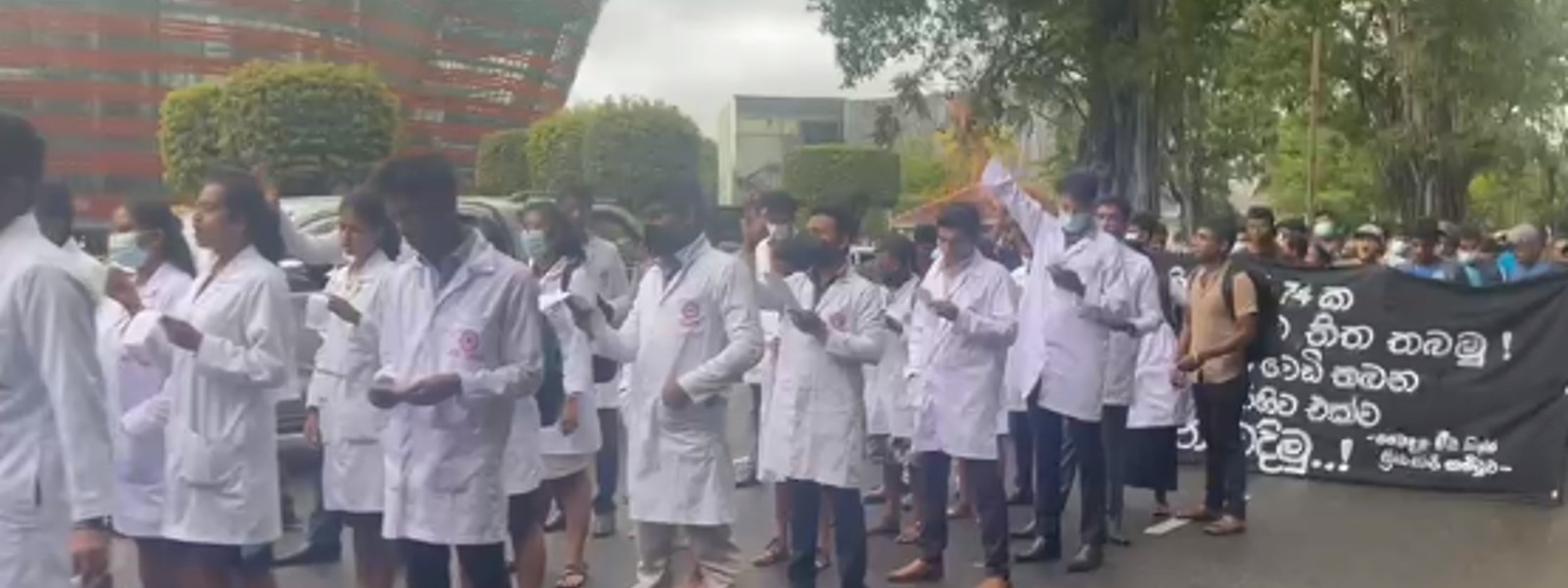
Committee of Medical Faculty Student Activists are currently engaged in a protest demanding a solution to the current economic crisis and social instability.

The protest commenced from near Vihara Maha Devi Park.

The Medical students represented many universities in the country, and the protesters carried placards and marched towards Pettah through technical junction.


Posted in Uncategorized

How a fertilizer ban became a part of Sri Lanka’s Crisis

Sri Lanka is currently grappling with an economic crisis which had severely affected many sectors. This crisis has been blamed on the Government’s incorrect and arbitrary decisions.

The agriculture sector also faced the same fate, which began from April 27th in 2021, when the Import and Export Control Department banned imports of fertilizer and agro-chemicals.

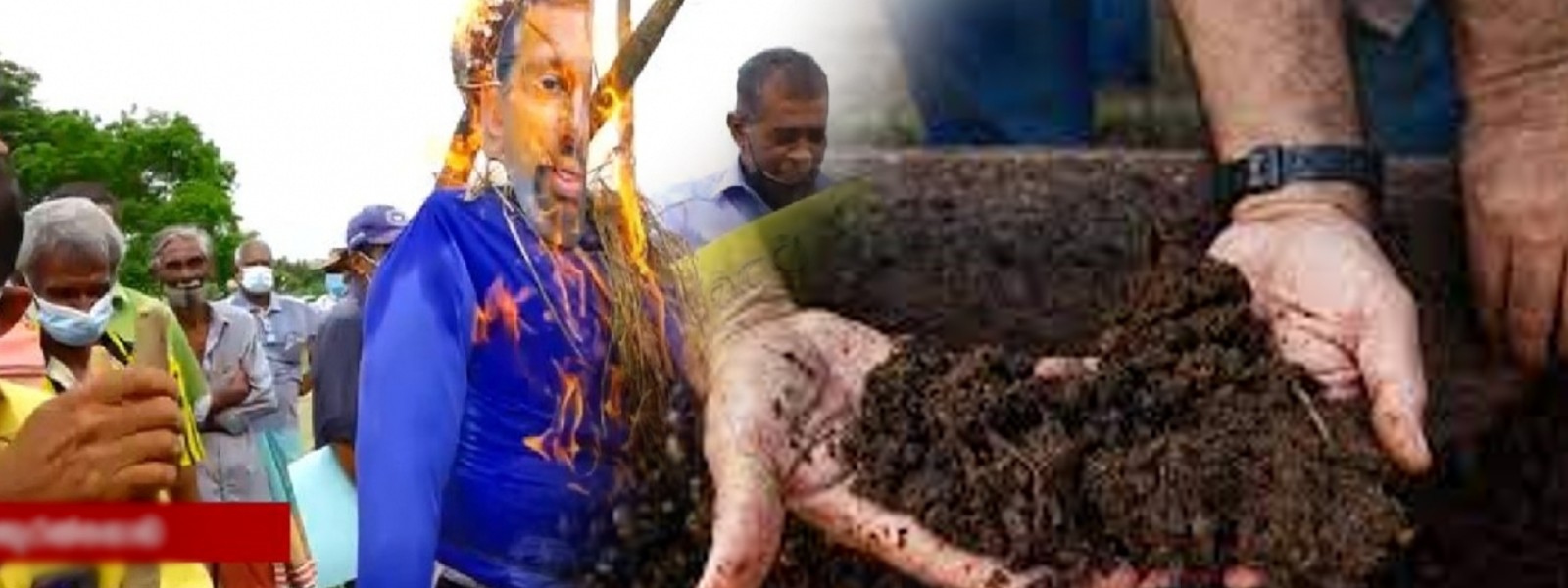
Farmers were severely affected by the move, which saw their cultivations going to waste. This led them to take it to the streets demanding for fertilizer.

Here is a lookback at the gradual decline of the agricultural sector which followed this decision;

August 5th 2021

Cabinet grants approval to import 99,000 metric tons of organic fertilizer produced using seaweed, from China’s Qingdao Seawin Biotech Group.

The consignment was valued at 63.6 million US dollars

September 2021

The ship, ‘Hippo Spirit’ carrying 20,000 metric tons of Chinese fertilizer leaves the Qingdao Port.

August 2021

National Plant Quarantine Service detects harmful bacteria in Chinese fertilizer samples, and experts warn that importing fertilizer containing harmful bacteria may affect the agriculture sector.

October 2021

Agriculture minister says samples were not brought in line with safety conditions, and calls for another test

29th October 2021

Second test confirms the presence of harmful bacteria, which leads to the importation of the consignment being suspended.

Thereafter, Sri Lanka’s state-run fertilizer companies went to court, and the Colombo Commercial High Court issued an order preventing People’s Bank from paying for the shipment.

The Ship carrying Chinese fertilizer shipment reached Sri Lankan waters, however continued to travel around the country by changing its name.

Then, the fertilizer shipment remained in Sri Lankan waters for more than 70 days, and the Chinese company said that it will go for arbitration in Singapore.

Amidst all this, Sri Lankan farmers held protests demanding to reject Chinese fertilizer shipment.

26th October 2021

Then the Chinese company sent a letter of demand, warning of legal action against Sri Lanka’s National Plant Quarantine Service

The samples were then re-tested in a lab agreed by both parties, and the results did not indicate presence of harmful bacteria

Then, the Hippo Spirit ship left for Singapore, and both parties reached a settlement, which led to the Court lifting order preventing payments.

January 7th 2022

Sri Lanka paid 6.9 million US dollars for the fertilizer shipment, as the Hippo Spirit ship remained in China

The agriculture minister then assured that fertilizer will be imported under proper standards, by the same Chinese company, after placing a 5 million USD guarantee. He assured that the ship will go back, and new samples will be sent, which will be tested by the National Plant Quarantine Service.

Five months have passed since the agriculture minister made these remarks. However, no fertilizer shipment has reached the country.

What happened to the payment made for the shipment also remains uncertain.

As a result of poor decision making, the government had to pay 6.9 million US dollars, which is equal to about 2.5 billion rupees today.

Liquid Nitrogen

The government then took steps to import liquid nano nitrogen fertilizer from India. These stocks were imported at twice or thrice the cost of the market value of the product.

However, it was revealed in Parliament that 290 million rupees had been deposited to a personal bank account during this transaction, which is how a selected few amassed profits as the agriculture sector fell deeper into crisis

All these actions led to farmers facing massive losses as their harvests declined due to the fertilizer shortage. President Gotabaya Rajapaksa, himself, later admitted that the decision was wrong.

However, no steps have been taken yet to provide any relief to these farmers. Although the Government lifted import restrictions, importers were not able to bring down chemical fertilizer or agrochemicals.

Now farmers are cultivating for the Yala season, while facing the mounting issue of not having the required fertilizer. And despite having an agriculture sector that can flourish, the government is importing rice from overseas, mostly on credit.

Qquestions remain, that if the output declines this season, can Sri Lanka bear the economic impact that would follow? Will this result in a food shortage next year? Or else, will the government make emergency purchases of food?

50 days for GotaGoGama : Police fire tear gas to disperse protesters near WTC

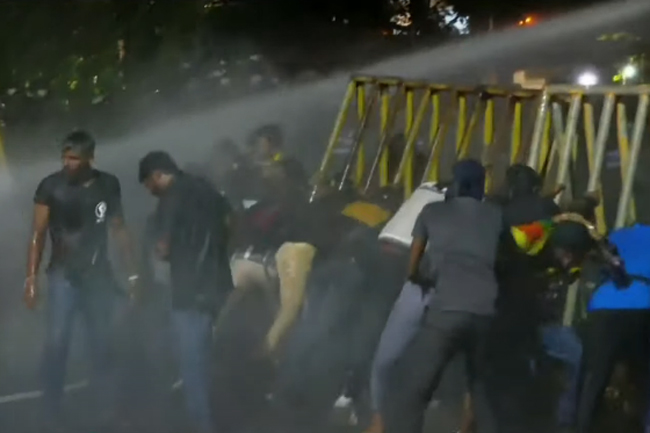
The police have fired tear gas and used water cannons to disperse the anti-government protesters engaged in a demonstration near the World Trade Centre this evening (May 28).

A massive protest march was organized today in view of the 50th consecutive day of the ‘GotaGoGama’ protest site at the Galle Face Green.

Meanwhile, the Colombo Fort Magistrate yesterday issued an order yesterday, barring the protesters from entering several roads in Colombo including York Street and Bank Street.

The court order states that the protesters are prohibited from forcibly entering or damaging public institutions and official residences in the Colombo Fort police division, or obstructing the duties of officers in the area.