Two elderly Sri Lankan refugees fall unconscious on arrival in Dhanushkodi; rescue efforts last hours

An elderly man and an elderly woman who fled the economic crisis-hit Sri Lanka using an illegal ferry to India were found unconscious on the seashore in Dhanushkodi.
Around 7am, local fishermen spotted the duo on the shore near Kothandaramar temple. The Coastal Security Group (Marine) police in Rameswaram were informed. The police managed to reach the spot around 8am and found 81-year-old Sivan from Mannar and 71-year-old Parameswari from Trincomalee unconscious. Since, the only available road to Dhanushkodi was five km away, they decided to seek the help of the Indian Coast Guard to send a hovercraft for the rescue.
Since the access road was more than 5km away from the spot, Coastal Security Group personnel had to protect the heavily dehydrated senior citizens with whatever they could till the Coast Guard’s hovercraft arrived at the spot.

It took three hours for the hovercraft to arrive since the base is situated in the Mandapam facing South sea while the spot where these Sri Lankans landed lies in North sea. Other formalities like providing requisition letter were also involved. As the health condition of the two elderly people started deteriorating due to scorching coastal heat, the marine police had to provide them shade using the clothes they brought in their bags.

Once the hovercraft arrived, the Sri Lankans were first taken to Rameswaram Government Hospital for first aid. They were later shifted to Ramanathapuram Government Hospital for further treatment.

Marine police inspector Kanagaraj said a ferryman from Sri Lanka dropped the two at chest level water and they waded in cold sea water to reach the shore. By the time they reached shore, the duo was spent and the day’s temperature took a heavy toll on them.

“After hours of treatment, the man has gained consciousness but remains in a shock while the woman is yet to gain her consciousness. Once they recover, we would be able to get more information,” he said.

With the economic condition in the neighbouring country in doldrums, many Sri Lankans are fleeing the country and arriving as refugees taking an illegal ferry. The number has crossed 90. The refugees are hosted at Mandapam refugee camp.

Source: The Times of India

Posted in Uncategorized
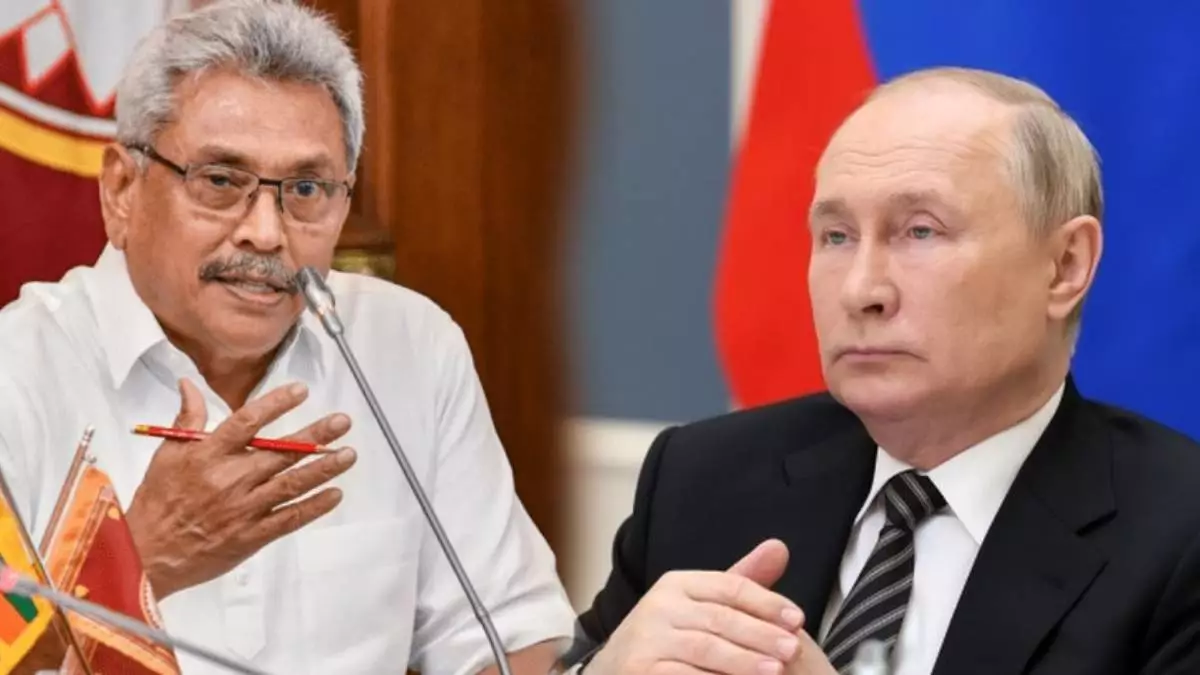
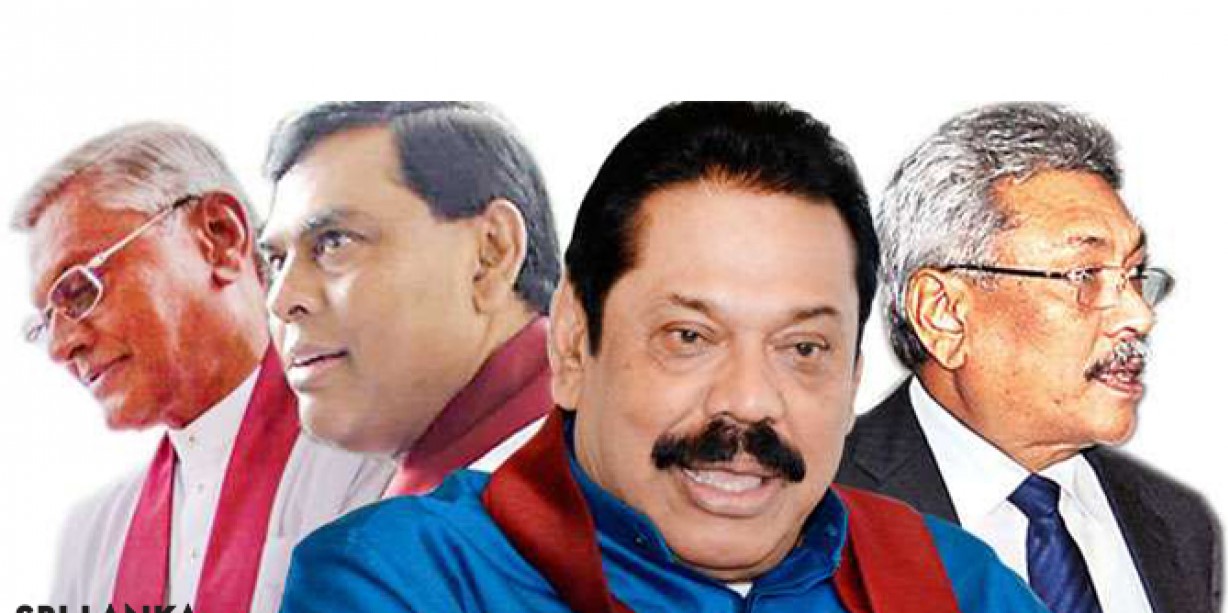
Gotabaya Rajapaksa, Ranil Wickremesinghe, Dr. Nandalal Weerasinghe, K.M. Mahinda Siriwardana

Child’s guide to debt restructuring: Not a cakewalk but a task entailing hard work

Written by W. A. Wijewardena

“After 2015, there was a new innovative clause under which if 75% of the bondholders agree, they could go ahead with a debt restructuring plan even if the balance 25% disagrees. Hence, the bond maturing on 25 July 2022, issued prior to 2015, will be subject to this impediment. As such, the restructuring could get delayed if the New York Federal Court delivers its judgement against Sri Lanka. If it happens, it will also delay Sri Lanka’s planned bailout from IMF. That is why I said that it is advisable for Sri Lanka to resolve that issue amicably and quickly”

Aseni, whiz kid in economics, has been intrigued by three pieces of hot news that had hit the media last week. One was the arrival of the legal and financial advisors hired by the Government to initiate work on planned restructuring of some selected foreign debt contracted by the Government. The second was fielding of a staff-team by IMF to arrive at a staff-level agreement for a bailout package for Sri Lanka which in the opinion of the Prime Minister and Finance Minister, Ranil Wickremesinghe, is saddled with a collapsed economy.

Both news items were promising. But the third was somewhat negative because one of the investors in the International Sovereign Bonds maturing on 25 July 2022, Hamilton Reserve Bank, had taken the Government of Sri Lanka to New York Federal Court and pleaded for a direction that the Government should pay in full the principal plus interest due to them amounting to $ 257 million. She asked her grandpa, Sarath Mahatthaya, an ex-employee of the Ministry of Finance, about this.

The following is the conversation between Aseni and Sarath.

Aseni: Grandpa, the Government had hired a legal consultant and a financial consultant to help it restructure selected foreign borrowings because it does not have forex to pay them, and it is one of the pre-conditions for seeking a bailout package from IMF. While this work is going on, one of the investors in the ISB due to mature on 25 July 2022, namely, Hamilton Reserve Bank, has filed a case against the Government in New York Federal Court demanding the full repayment of the moneys they have invested in those ISBs. What is this court case and how will it affect the Government’s planned debt restructuring program?

Sarath: Hamilton Reserve Bank is not a US bank, but one that has its headquarters in St. Kitts and Nevis, a tiny British Commonwealth country in the Caribbean. It is a popular tax haven. They have sued Sri Lanka in USA because the law applicable to the issue of these ISBs is the US Law and not the Sri Lanka Law. Their action is like placing a spanner in the path of the Sri Lanka Government which is planning to go for a debt restructuring.

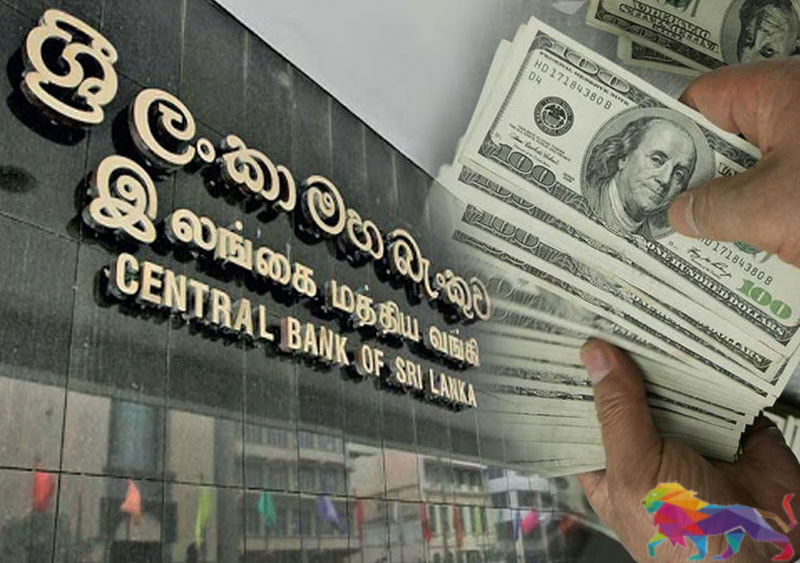
What has been planned by the Government is to restructure some selected borrowings, namely, from commercial markets by issuing ISBs, and from bilateral sources – they are called bilateral because only one lender and borrower are involved. Borrowings from individual countries like China, India, Japan, UK, USA, and so on are included in this latter category. In addition, the Government has borrowed from international financial institutions – called multilateral sources – like ADB, World Bank, International Fund for Agriculture Development, etc., and by issuing bonds denominated in US dollars called Sri Lanka Development Bonds or SLDBs. These two categories are not in the debt restructuring plan. But, since Sri Lanka does not have foreign exchange, the country is unable to repay such debt also. The bitter truth is that Sri Lanka will have to default all its foreign debt that includes borrowings by government corporations like CPC, SriLankan Airlines, Water Board, and so on, and those borrowed by the private sector businesses.

Under restructuring, both the borrower and the lender will agree to a new repayment plan. That should necessarily be repayment of less than the full amount. It can be waiving of the interest or waiving of some part of the principal or a combination of both. When interest or some part of the principal is waived, it is called in investment jargons taking a ‘haircut’. For instance, if 25% of the principal is waived, it is called a haircut of 25% which the lender should forego. Since the alternative is to lose everything, a haircut of less than 100% is a better deal. However, the size of the haircut will depend on the relative bargaining power of either party. That is because the borrower wants to give the largest haircut, while the lender wants to accept the smallest haircut. Since both parties hire competent legal and financial advisors to argue their case, the negotiation will be a tough job.

Sri Lanka’s bargaining power will be weakened by the new court case against it. If the New York Federal Court delivers its judgement in favour of Hamilton Reserve, Sri Lanka will have to make the full payment on 25 July. If it does so, the other creditors will also ask for the same treatment on the principle of equal treatment. Then, the debt restructuring plan will come to a standstill. If it does not pay, it will amount to a default and the country runs the risk of its assets within the jurisdiction of the court being confiscated to recover the debt. For instance, if a Sri Lankan plane lands in USA or elsewhere, the lender can invoke the court’s jurisdiction to acquire it to recover its debt. In a similar judgment delivered against Argentina, a frigate belonging to that nation and anchored in Ghana was detained to recover the dues to bondholders. That is because when sovereign bonds are issued, the issuing country forfeits its sovereign immunity rights.

These lenders who take the borrowers to courts are called ‘holdout investors’ because they stand outside the negotiating creditors putting a hold on the ongoing restructuring plan. And these litigations may take many years for conclusion. For instance, in the case of Argentina, the whole restructuring plan was made inactive by some bondholders taking the country to courts in USA and the US courts took some 10 years to deliver the judgement. Hence, this court case is necessarily a spanner placed in Sri Lanka’s path.

Aseni: I hear that debt restructuring is a precondition for Sri Lanka to get an IMF bailout. If so, does this mean that this bailout negotiations will be delayed?

Sarath: In a way yes. If the issue with the holdout bondholders can be resolved amicably and quickly, there is no impediment for the proposed bailout package. But that depends on the conditions of the bond issues. Prior to 2015, the typical sovereign bonds had a clause that had given extra powers to bondholders called Collective Action Clause or CAC. Under that clause, even a single bondholder can hold the borrower at ransom and demand preferential treatment. This CAC is not applicable to all the bonds issued as a pool but to each bond issued. They are called single series CACs.

But after 2015, there was a new innovative clause under which if 75% of the bondholders agree, they could go ahead with a debt restructuring plan even if the balance 25% disagrees. Hence, the bond maturing on 25 July 2022, issued prior to 2015, will be subject to this impediment. As such, the restructuring could get delayed if the New York Federal Court delivers its judgement against Sri Lanka. If it happens, it will also delay Sri Lanka’s planned bailout from IMF. That is why I said that it is advisable for Sri Lanka to resolve that issue amicably and quickly.

Aseni: You said that since Sri Lanka does not have forex, it is likely that it will default all the foreign currency denominated debt, both public and private. However, there are some experts who have argued that Sri Lanka’s foreign currency denominated debt has been underreported. Is it correct Grandpa?

Sarath: In public discussions, many refer to the total foreign currency debt as equal to $ 51 billion picking a number that has been published by the Central Bank in its Annual Report for 2021. This has grossly underreported the foreign currency borrowings of the country. This has been a practice adopted by the Central Bank since 2020. According to the Bank, this $ 51 billion is made up of $ 27 billion representing the central government and $ 24 billion owed by the non-government sector. This latter category is made up of borrowings by the Central Bank, commercial banks, savings and development banks, public corporations, and the private sector businesses.

To arrive at the true foreign currency borrowings of the country, we will have to make a reconciliation of the numbers published by the Bank. Let’s start with the central government debt which has been recorded as $ 27 billion. This is mostly made up of loans obtained by the government amounting to $ 21 billion and bonds amounting to $ 6 billion. The loans have been recorded at their face value liability. But several adjustments have been made to the value of bonds which do not stand to economic logic. In the case of international sovereign bonds or ISBs, the face value liability has been $ 13 billion.

But the Central Bank has changed this value by making two adjustments. One is that the ISBs held by local commercial banks and individuals have been removed from this value and recorded it as a domestic borrowing of the Government. The second is of the remaining ISB value, what has been taken to books is their market price and not the amount which the Government should pay at the end. Since ISBs are traded at a deep discount today – for instance, an ISB with a repayment liability of $ 100 is traded on average at around $ 40 – the value so recorded is less by $ 60 than its true level.

In addition, the amount of Sri Lanka Development Bonds or SLDBs held by local commercial banks and individuals have been removed from the foreign debt and added to Government’s domestic debt. In this manner, the total underreporting of government’s foreign debt has been $ 9 billion. This will make the central government’s borrowing $ 36 billion and the total country borrowing $ 60 billion.

The story does not end there. There are public corporations like CPC, CEB, Water Board, etc. which have raised foreign funds on guarantees given by the Government. Since these institutions cannot repay these loans, ultimately, the Government will be required to shoulder the burden. This category has an outstanding balance of $ 9 billion. Accordingly, the central government’s borrowings will increase to $ 45 billion and the total country borrowings to $ 69 billion or 82% of GDP. This is the total value of foreign currency borrowings which the Government must repay.

Aseni: You said that this adjustment does not stand to economic logic. Why is it so?

Sarath: In the case of a creditor, when the market price goes down, he should make a ‘mark to market’ adjustment by reducing his lending portfolio to the market price. But the amount written off is a loss and should be charged to the profit and loss account. A debtor cannot do this, unless creditors have agreed to write it off. In Sri Lanka’s case this has not happened. Further, if such a write-off is allowed, the amount written off is a gain for Sri Lanka and it should be written back to the revenue of the budget. The Central Bank has not done this adjustment. Hence, it is an arbitrary writing-off.

Categorising the dollar denominated bonds held by domestic entities as domestic debt is meaningless because they are to be repaid in dollars and not in rupees. In fact, when they matured, the full amount was paid in dollars. Hence, the adjustment made by the Central Bank does not stand to economic logic. It seems that the Bank has confused debtors with creditors.

Aseni: What this means is that the Government should have a restructuring plan for the entire value of $ 45 billion. In addition, those private sector borrowings amounting to $ 24 billion may also need a similar restructuring process. What is your view on this, Grandpa?

Sarath: True, the Government cannot do this restructuring in piecemeal. If it pays the full value for some creditors and ask others to agree to a haircut, they might ask Sri Lanka to apply the principle of equal treatment. It also weakens Sri Lanka’s defence in the New York Federal Court.

About the private sector debt, since Sri Lanka does not have foreign exchange reserves to service it, there is a likelihood of forced default of that debt. This problem does not arise if the private sector entities can repay those loans by borrowing again from that source or from elsewhere. But with lower credit rating for sovereign Sri Lanka at ‘restrictive default’ or RD level, it is very unlikely to happen. This is because when the sovereign rating is at a certain level, the entities in the country cannot get a rating above that level. For instance, Fitch Ratings has downgraded the short-term and long-term foreign borrowings of the Bank of Ceylon to RD from C level quoting that the Bank has missed one of its recent debt repayments. Hence, the next debt crisis will hit the country when the private entities are unable to raise foreign funds anymore.

Sri Lanka’s Central Bank is facing this problem right now. If it cannot get the SWAP facilities with other central banks extended when they mature, it will have to default them because it has no capacity to repay them with its negative foreign reserves at $ 4 billion as at the end of April 2022. This is why it is important for Sri Lanka to get this IMF bailout package as soon as possible.

Aseni: What about the domestic borrowings of the Government? Are those loans too facing a similar problem?

Sarath: The advantage of domestic borrowings of the Government is that they can be repaid by printing money if the market participants do not want to lend to the Government at the going interest rates. This happened in the case of the previous week’s Treasury bill issue. The Central Bank had offered Rs. 93 billion to the market, but it could get from the market at the prevailing bill rates of around 21% only Rs. 31 billion. The Central Bank had to give a major part of the balance Rs. 62 billion to the Government by issuing a Treasury bill to itself. The ordinary people call this money printing. As a result, the Central Bank’s Treasury bill holdings have increased to Rs. 2,086 billion on Friday, 24 June from Rs. 2,043 billion a day ago.

But this money printing is not a healthy feature for inflation fighting, exchange rate stabilisation, and overall macroeconomic stability of the country. It will also hamper Sri Lanka’s ongoing negotiations with IMF for a bailout package. That is because one of the preconditions for the bailout package is to cease the central bank funding of the government. For that purpose, IMF has recommended to the Government to get funding by adjusting the tax rates which Ministry of Finance has done only halfway through.

In this context, Aseni, someone can argue that Sri Lanka’s domestic debt is not sustainable. Hence, it is not a surprise if the demand for restructuring of the domestic debt is also presented as a precondition for this IMF bailout.

Aseni: Thanks, Grandpa, for the explanation. I have now learned the complexity of these debt restructuring exercises. It is not a cakewalk but a task which should be carefully planned and implemented.

Sri Lanka rules out refueling stops for non-scheduled aircraft and instructs all airlines to “strictly” carry fuel for return journey

Sri Lanka’s civil aviation authorities last night issued a “Notice to Airmen” (NOTAM) advising that local airports cannot accommodate requests for refueling by non-scheduled aircraft.

They also advised scheduled aircraft operating to all airports in Sri Lanka “to strictly adhere to the requirement of carrying return sector fuel”. “This requirement does not include diplomatic, humanitarian and emergency aircraft intending to operate to Sri Lankan airport,” the NOTAM said.

The reason is given as “due to limited ability of Jet A-1 fuel at Sri Lankan airports”. The Sunday Times reported yesterday that aviation fuel supplies are at critically low levels with the Civil Aviation Authority of Sri Lanka (CAASL) saying it was fighting to ensure they will last the week.

“The jet fuel situation is becoming very worrying,” CAASL Director General Capt. Themiya Abeywickrama said. “The Ministry is involved in trying to get it sorted out. We are calculating till when we can run and hope to manage till the end of the month.”

On Sunday, Power and Energy Minister Kanchana Wijesekera said the country will invite companies with capacity–including marine bunker companies–to provide aviation fuel. He said an entity had earlier been selected from six that had bid for the tender but that it had not delivered so far.

A call for debt justice, debt cancellation and transparency in IMF negotiations

The Coalition for Economic Democracy in Sri Lanka (CEDSL) is a group of concerned academics, activists, agricultural, fisheries and industrial workers, students, business persons, trade unionists, and professionals based ‘in country’ and overseas, including the diaspora, who uphold the values of economic rights and justice in public policy making.

In the wake of two years of economically-devastating COVID-19 lockdowns, quantitative easing, and money printing globally, we call on international actors to heed the people’s demands for a ‘debt jubilee’ and ‘cancellation’ as a priority.

We wish to draw your attention to key issues regarding the current debt crisis and its social, political and economic impacts which are not adequately represented in public discussion, yet crucial to the wellbeing and security of Sri Lanka’s citizenry.

“The gross lack of transparency in ongoing negotiations between the IMF and a government that lacks legitimacy but purports to represent the citizens is a consequence of an inherently unequal relationship between Sri Lanka and the IMF, where the US and former European colonial powers have overwhelming decision-making power. While the IMF demands ‘transparency’ and that all creditors be treated ‘equally’, the names of the ISB holders behind Sri Lanka’s default are a closely guarded secret”

A call for debt justice

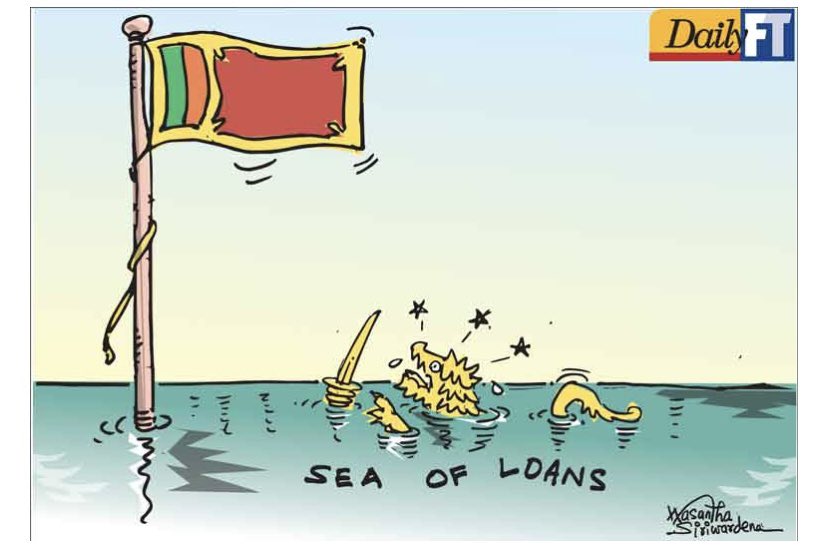
International support is welcome to ease the economic burden on the people of Sri Lanka which includes shortages of fuel, food and medicines that impact livelihoods and health, increasing poverty and inequality. However, due to an International Sovereign Bond (ISB), debt trap and depreciation of the Sri Lankan rupee against the US dollar, sustainable solutions are needed rather than short-term sale of strategic assets that benefits ISB holders and hedge funds that sustain dependent development.

In May/June 2022 Sri Lanka’s debt was estimated to be $ 51 billion with current debts of $ 5 billion to be paid to ISB holders and hedge funds like BlackRock, which secured huge United States (US) government ‘COVID-19 bailout’ funds to asset-strip and impoverish countries around the world during the economically-devastating COVID-19 lockdowns.

Contrary to widespread media disinformation about the sources of debt and the causes of default, this is the first time that Sri Lanka, in April of this year, defaulted as an independent state. It is the debt owed to ISBs that amounts to almost 50% that has caused the default at this time.

The Asian Development Bank and World Bank have indicated willingness to roll over their multilateral debt, so too the bi-lateral debt holding Asian countries including Japan, China and India. Along with debt cancellation there is need for de-dollarisation and trading in a basket of currencies. The loss of such autonomy and sovereignty due to the ISB debt trap and the International Monetary Fund (IMF) stepping in to devalue the currency is at the root of the current shortage of food, fuel, meds, fertiliser, gas, etc. The purported shortage of ‘exorbitantly privileged’ dollars is the most devastating impact of the entire “staged” default.

While the return of stolen assets by the Rajapaksa family, some who are US citizens, is vital, we believe that there is an even greater need for ‘debt justice’, a ‘debt jubilee’, and ‘debt cancellation’ and the current international financial architecture is not fit for purpose, particularly, the IMF which works for the global 1 percent and imposes austerity on the rest.

Transparency in IMF negotiations

The gross lack of transparency in ongoing negotiations between the IMF and a government that lacks legitimacy but purports to represent the citizens is a consequence of an inherently unequal relationship between Sri Lanka and the IMF, where the US and former European colonial powers have overwhelming decision-making power. While the IMF demands ‘transparency’ and that all creditors be treated ‘equally’, the names of the ISB holders behind Sri Lanka’s default are a closely guarded secret!

In 2019, Sri Lanka was classified by the World Bank as an Upper Middle Income Country (MIC), making it ineligible for concessionary development loans, and forcing it to borrow from private capital markets at high interest rates. The new government that came to power cut taxes causing a significant loss of government revenue. The 2019 Easter bombings and policies undertaken during two years of militarised COVID-19 lockdowns and mass injections have triggered the current debt crisis leading to the staged default.In 2019, Sri Lanka was classified by the World Bank as an Upper Middle Income Country (MIC), but just three year later in 2022 certain international actors want Sri Lanka to be re-classified a ‘Least Developed Country’ (LDC), and the island to join the world’s poorest of the poor1 – in Washington Consensus parlance, a “Highly Indebted Poor Country” (HIPC).

LDC status will mean a significant loss of economic and foreign policy autonomy and sovereignty at a time when it is vital that Sri Lanka and other developing countries act in their own self-interest rather than be forced to join geostrategic blocs that are being formed in the Indian Ocean region such as the QUAD at this time of Cold War 2.0.

We consider that the peoples’ sovereignty and national policy autonomy is being undermined through non-transparent deals with politicians who are not democratically elected and have a history of amassing ‘odious debt’, the burden of which citizens are being forced to bear. Particularly notable on the accumulation of odious debt are the current odious, newly appointed Prime Minister, implicated in the country’s biggest financial fraud over the Central Bank bond scam, and the President, a US citizen until 2019, whose family wallows in nepotism. They are now negotiating with the IMF to sell national assets?!

There is a clear pattern of disinformation, exaggeration and fear-generation regarding Sri Lanka’s debt in local and global media messaging. This understates the intrinsic Wealth of the Nation, its strategic assets, and the strengths of this country given the failure to differentiate between illiquidity and insolvency in the context of a proposed IMF fire sale of assets and State Owned Enterprises (SOEs).

The IMF’s traditional approach to debt restructuring though privatisation of SOEs, austerity measures, and fire sale of assets of countries merely causes more problems and places the burden on the poor as is evident in from Argentina, to Greece and Lebanon. However, odious debt is an outcome of speculative and reckless ISB lending sans due diligence to governments that lack legitimacy and are known to be corrupt. In fact, the IMF which works for the Global 1 percent is a part of the problem and not the solution. So too are processes of datafication, manipulation of matrices, indices and algorithms to ensure ‘pumping and dumping’ of countries into the MIC debt trap, LDC or HIPC status and Paris Club ‘solutions’ of asset stripping of countries.

“International support is welcome to ease the economic burden on the people of Sri Lanka which includes shortages of fuel, food and medicines that impact livelihoods and health, increasing poverty and inequality. However, due to an International Sovereign Bond (ISB), debt trap and depreciation of the Sri Lankan rupee against the US dollar, sustainable solutions are needed rather than short-term sale of strategic assets that benefits ISB holders and hedge funds that sustain dependent development”

Southern voices to be heeded

There is an urgent need for Southern voices and perspectives in development, debt cancellation and debt justice in the International Aid Architecture as many countries in the Global South face a similar situation of odious debt as an outcome of speculative and reckless lending by ISB traders who must be also held accountable.2

The demand of many Sri Lankans is for debt cancellation and de-dollarisation and trading in a basket of currencies, not IMF re-structuring; for example, to enable the purchase of discounted oil and gas from sanction-hit Russia perhaps in exchange for tea. Sri Lanka should have the economic and foreign policy sovereignty to source its needs from any country that offers good value for money.

A firm “No” to IMF fire sale of strategic assets and asset stripping: A list has already been prepared of strategic lands, airports, ports, transport, telecom frequencies and energy infrastructure to be privatised. The dastardly sale of the Yugadhanavi power plant US-based New Fortress has already further compromised national security and policy sovereignty and autonomy.

Today the interests of Sri Lanka are being represented by foreign law firms, Lazard and Clifford Chance in so-called IMF negotiations with ISB traders. On numerous occasions, Lazard, which has been involved in both advising on privatisation and then profiting from its advice, has undervalued the price of state companies, enabling its asset management branch to purchase the stock at low prices and re-sell it for considerable profit.3

If the debt negotiations are so complex that Sri Lankan law firms and accountants cannot represent the interests of the citizens of the country, and the debt data is itself contested, the debt is odious, its holders unknown, and the negotiations not transparency, then fundamental question arise regarding legitimacy, transparency and accountability of the very process of so-called IMF negotiations. Such concerns were also raised in IMF negotiations in Greece, Lebanon and Argentina and other countries.

The United Nations Charter and international law affirm the Right of Peoples to Self-Determination and permanent sovereignty over their wealth, resources and economic activity as a precondition for the realisation of all human rights. So too, principles of sovereignty and independence of states, equality in relations with other states, and national policy-making autonomy cannot be eroded by global Covid-19 and other ‘pandemic’ and climate catastrophe narratives.

Sustainable solutions: Long-term, medium-term, short-term

We seek much more than debt relief, and demand ‘debt justice’! While the crisis in Sri Lanka is being framed as a “humanitarian disaster” it is quite clear that it is more complex with economic, political, social and geopolitical dimensions and dynamics.4 Solutions must hence be duly designed, tailored and targeted to improve the lives of the most vulnerable, and to restore sovereignty to the people of Sri Lanka and their State.

1. We demand a ‘debt jubilee’ and to write off the odious debts held by ISB debt holders like BlackRock (that also holds Adani stock), that engaged in reckless lending that has debt trapped several countries including Sri Lanka. COVID-19 saw the greatest transfer of wealth in human history from the bottom of the economic ladder to the top.

2. We call on the Government to urgently begin a process of de-dollarisation and trade in a basket of currencies in order to restore Sri Lanka’s monetary sovereignty and pursue a course of development that promotes South-South cooperation and responds to the needs and aspirations of the Sri Lankan citizenry. The relevance of the current International Development Architecture for Sri Lanka and other debt trapped countries in the Global South must be questioned. Sri Lanka needs to reconsider its relations with institutions like the IMF, WB, OECD, Paris Club of Donors in a manner that affirms not dismantles its sovereignty and policy autonomy, both exercising the ability to negotiate as an independent country free of IMF conditionality and US sanctions, and working in the interests of its citizens.

3. We call on the Government to immediately stop all initiatives and actions underway for the privatisation of strategic assets, including lands, airports, ports, telecom frequencies, transport and energy infrastructure, and reverse all actions already commenced or implemented as valuations did not consider the island’s geostrategic value and security concerns.

4. We call on the Government to develop a National Energy and Food Security Policy based on analysis take cognisance of the current global energy wars, geopolitics and climate catastrophe discourses. Of utmost importance in ensuring food security is the maintenance of food supply chains, and prioritisation of fuel for the Fisheries and Agriculture sectors in the context of fuel rationing; rationalisation of taxation, and targeting the wealthy – to enable the most vulnerable groups such as farmers, fishers precarious workers in the informal sector, and small and medium term enterprises to regain their livelihoods. In the absence of such a policy, climate narratives like the rush to “green energy” and organic fertiliser without an adequate transition plan and transfer of technology given the island’s tiny carbon footprint has contributed significantly to the current fuel, food and economic crisis in Sri Lanka and in other parts of the Global South.

5. The strengthening of governance and government institutions is paramount to address the effects of COVID-19 lockdowns which gave rise to a pandemic of corruption and a lack of accountability due to national institutions and oversight agencies being debilitated under the guise of lockdowns, holidays due to staged fuel shortages, de-centralisation and inept digitalisation. Services like public transport can be improved through more energy efficient and environment friendly measures and the abolishing of duty free car permits for politicians and the privileged ‘professional’ class. Finally, there is an urgent need for a “Buy local” State-led consumer education program so that citizens support local industry and manufacturers.

On 24 June, 2022, this statement was authored and signed in Sri Lanka, France and Australia by:

Tamara Kunanayakam was Sri Lanka’s Ambassador/Permanent Representative to the United Nations at Geneva, and former Ambassador to Brazil and Cuba. She served as Chairperson/Rapporteur of the United Nations Intergovernmental Working Group and senior official at the UN Office of the High Commissioner for Human Rights (OHCHR).

Dr. Darini Rajasingham-Senanayake is a social and medical anthropologist with research expertise in international development and political economic analysis. She was a member of the International Steering Group on “Southern Perspectives on Reform of the International Development Architecture”.

Jeremy Liyanage was a teacher of the Social Science, lecturer in Community Development and held positions in the church, community and government sectors. Before founding the charity, Bridging Lanka, Jeremy worked in senior policy positions in local government in Australia.

“Along with debt cancellation there is need for de-dollarisation and trading in a basket of currencies. The loss of such autonomy and sovereignty due to the ISB debt trap and the International Monetary Fund (IMF) stepping in to devalue the currency is at the root of the current shortage of food, fuel, meds, fertiliser, gas, etc. The purported shortage of ‘exorbitantly privileged’ dollars is the most devastating impact of the entire “staged” default”

Co-signatories

Professor Asoka Bandarage – academic and distinguished (adjunct) professor at the California Institute of Integral Studies. She taught at Yale University, Brandeis University, Macalester College, Georgetown University, European Peace University and Mount Holyoke College, MA where she received tenure

Dr. Michael Roberts – Historian and lecturer at the Dept. of History at Peradeniya University (1961-76) and the Dept of Anthropology at Adelaide University (1977-2003). Rhodes Scholar. His major works are in agrarian history, social mobility, nationalism and ethnic conflict

Dr. Dharshana Kastiriaratne, Assistant Professor, Faculty of Computing, Computer Science and Software Engineering, Sri Lanka Institute of Information Technology (SLIIT)

P.C. Nathan – Deputy Secretary General of Ceylon Mercantile and General Workers Union (CMU), one of the largest trade unions in the commercial sector in Sri Lanka

Ranjit Seneviratne – Marine Engineer and former official with the FAO in Rome who now champions non-chemical, biodiverse ‘forest garden’ methods of cultivation

Dr. Sandya Hewamanne – Professor of Anthropology, Department of Sociology at the University of Essex, and the Director of IMPACT-Global Work

Lacille De Silva – former Director, Administration, and former Director, Legislative Services, Parliament of Sri Lanka

Rohini Hensman is a writer, independent scholar and activist working on workers’ rights, feminism, minority rights and globalisation based in Mumbai and London.

Hiran Fernando – is a retired Chemical Engineer who worked at Unilever for more than 25 years and is now involved in civil service initiatives

Ananda Weerasekere – retired Human Resource Management Specialist and Social Activist

Gamini Lindagedara – Mechanical Engineer and Social Activist

Herman Kumara – National Convener, National Fisheries Solidarity Movement, Chairperson, Praja Abilasha Land Rights Network and Board Member, Right to Life Human Rights Organization

Sandun Thudugala – Director, Programmes and Operations at Law & Society Trust, Colombo

Asoka Siriwardena – Formerly Lecturer in Political Science; international civil servant at the Commonwealth Telecom Organization London, and retired Deputy General Manager Sri Lanka Telecom.

Footnotes:

1. Should Sri Lanka join the ranks of the “Poorest of the World’s Poor”?

http://www.lankapage.com/NewsFiles22/Jun13_1655134777.php

2. Cf. OXFAM report “Inequality Kills”.

3. The Privatization Industry in Europe by Sol Trumbo Vila and Matthijs PetersTransnational Institute Thttps://www.tni.org/files/publication-downloads/tni_privatising_industry_in_europe.pdf

4. A new Quad Humanitarian and Disaster Relief Mechanism (HADR) http://www.colombopage.com/archive_22A/Jun15_1655268284CH.php

Source: DailyFT

Crisis-hit Sri Lanka just days from running out of fuel – Reuters

Sri Lanka expects to run out of fuel in days, prompting the government to close schools in Colombo and order government employees to work from home, while troops handed tokens to people lining up for petrol to keep their places in the queue.

Sri Lanka is suffering its worst economic crisis in seven decades, with foreign exchange reserves at a record low and the island of 22 million struggling to pay for essential imports of food, medicine and, most critically, fuel.

Industries like garments, a big dollar earner in the Indian Ocean nation, are left with fuel for only about a week to 10 days.

Public transport, power generation and medical services will get priority in fuel distribution, with some rationed to ports and airports.

“I have been in line for four days, I haven’t slept or eaten properly during this time,” said autorickshaw driver W.D. Shelton, 67, one of those who received a token meant to hold his place in the queue for when fuel becomes available.

“We can’t earn, we can’t feed our families,” added Shelton, who was 24th in line at a fuel station in the centre of Colombo, but set to stay there as he had no petrol for the journey to his home just 5 km (3 miles) away.

The government is talks with the IMF on a possible bailout, but many people can’t wait that long. The navy in the early hours of Monday arrested 54 people off the eastern coast as they tried to leave by boat, a spokesman said, on top of 35 “boat people” held last week.

Embattled President Gotabaya Rajapaksa’s elder brother resigned as prime minister last month after clashes between pro- and anti-government protesters spiralled into countrywide violence that left nine dead and about 300 people injured. An escalation of the fuel shortage could lead to a fresh wave of demonstrations.

Opposition leader Sajith Premadasa called for the government to step down.

“The country has collapsed completely due to the fuel shortage,” he said in a video statement. “The government has lied to the people repeatedly and has no plan on how to move forward.”

POWER CUTS

The government fuel stockpile stands at about 9,000 tonnes of diesel and 6,000 tonnes of petrol, the power minister said on Sunday, but no fresh shipments are due.

Lanka IOC, the local unit of Indian Oil Corporation, told Reuters it had 22,000 tonnes of diesel and 7,500 tonnes of petrol, and was expecting another 30,000 tonnes shipment of petrol and diesel combined around July 13.

Sri Lanka consumes about 5,000 tonnes of diesel and 3,000 tonnes of petrol a day just to meet its transport requirements, Lanka IOC chief Manoj Gupta told Reuters.

Other big consumers are industries like apparel and textiles companies, whose exports jumped 30% to $482.7 million in May, according to data released on Monday.

“We have enough fuel for the next seven to ten days, so we are managing,” said Yohan Lawrence, secretary general of the Sri Lanka Joint Apparel Associations Forum.

“We are watching and waiting to see if fresh fuel stocks arrive and what will happen in the coming days.”

Sri Lanka’s power regulator said the country was using its last stocks of furnace oil to run multiple thermal power plants and keep power cuts to a minimum. Scheduled power cuts will rise to three hours from Monday from two and a half hours earlier.

“We are hoping to keep power cuts at three to four hours for the next two months,” said Janaka Ratnayake, chairman of the Public Utilities Commission of Sri Lanka. “But given the situation of the country this could change.”

FINANCIAL HELP

The government has told employees to work from home until further notice, while schools have been shut for a week in the commercial capital of Colombo and surrounding areas.

Fuel station queues have grown rapidly since last week.

A team from the International Monetary Fund is visiting Sri Lanka for talks on a $3 billion bailout package. The country is hoping to reach a staff-level agreement before the visit ends on Thursday, that is unlikely to unlock any immediate funds.

It has received about $4 billion in financial assistance from India and the Sri Lankan government said on Monday the United States had agreed to provide technical assistance for its fiscal management. (Reporting by Uditha Jayasinghe; Writing by Uditha Jayasinghe and Krishna N. Das; Editing by Clarence Fernandez and Nick Macfie)

Schools in Colombo and other major cities to remain closed next week

The Ministry of Education says that schools in the Colombo Zone and other major cities will remain closed next week, from June 27 to July 01.

However, the ministry said that rural schools can function as normal on Tuesday, Wednesday and Thursday during next week.

Accordingly, issuing a notice, the ministry informed that the educational activities in the schools during the week from 27th of June to 01st of July 2022 will be conducted according to the following manner:

1. The schools where students and teachers are not having transport difficulties must be conducted normally just as the rural schools were held from 20.06.2022 to 24.06.2022 and if there are teachers facing the transport difficulties, the principal will arrange a flexible timetable for them without considering from their personal leave.

2. The urban schools which were not held last week must be conducted 03 days a week viz. Tuesday, Wednesday and Thursday from 07.30 am to 01.30 pm. The discretion of deciding the number of days conducting primary classes in these schools lies with the principal.

For the absent days of the students the learning activities will be continued through inline teaching / assignments / home based activities.

3. Actions will be taken not to consider the absent days of the teachers due to transport difficulties as personal leave.

4. The Ministry of Education extends its gratitude to the teachers and principals who contributed to conduct the schools even amidst of transport difficulties from 20.06.2022 to 24.06.2022.

Posted in Uncategorized

Bus fares and food prices to increase further

The All-Ceylon Restaurant Owners’ Association announced that the price of rice packets and all other food items will be increased by 10%, while the Lanka Private Bus Owners’ Association (LPBOA) and the All-Ceylon Private Bus Owners’ Association (ACPBOA) have stated that the Government should take steps to increase bus fares as soon as possible, as the failure to do so would result in the disruption of bus services.

These announcements were made following the Ceylon Petroleum Corporation (CPC) and the Lanka Indian Oil Corporation (LIOC) having increased fuel prices with effect from yesterday (26).

Speaking to The Morning yesterday (24), LPBOA President Gemunu Wijeratne said that the LPBOA strongly condemns the Government’s decision to increase fuel prices. Emphasising that the Government should take steps to restructure or shut down the institutions that are running at losses, he said that such institutions should not be maintained further with public money.

“We usually refuel our buses at night. However, buses were not able to pump fuel on 25 June, as the Sri Lanka Transport Board (SLTB) did not issue fuel to our buses properly. So, the SLTB is making huge profits by pumping fuel, which was received earlier, at the new prices. I have also spoken to Minister of Transport Dr. Bandula Gunawardana in this regard.”

Noting that he is ready to halt bus services at any time, Wijeratne said that the Government would be given time until today (27) to calculate all costs and increase the bus fares. He also said that if the bus fares are to be increased on 1 July, on the day of the annual bus fare amendment, bus drivers should be given fuel at the previous prices.

Meanwhile, ACPBOA President Anjana Priyanjith said that considering the fuel price increase and the annual bus fares amendment, the current bus fares would have to be increased by at least 40%, adding that the minimum bus fare, which is currently Rs. 32, would have to be increased to Rs. 40. He also said that the ACPBOA would refrain from operating buses if the Government does not take steps to increase bus fares before tomorrow (28).

The CPC and the LIOC have increased fuel prices at higher rates, with effect from yesterday.

The CPC announced that it had decided to increase the price of 92-Octane petrol by Rs. 50 per litre, 95-Octane petrol by Rs. 100 per litre, Auto Diesel by Rs. 60 per litre, and Super Diesel by Rs. 75 per litre. Accordingly, the price of a litre of 92-Octane petrol has been increased to Rs. 470, 95-Octane petrol to Rs. 550, Auto Diesel to Rs. 460, and Super Diesel to Rs. 520.

Meanwhile, Lanka IOC has also increased fuel prices in line with the CPC prices.

Posted in Uncategorized

Was cash strapped Sri Lanka duped by China in Hambantota Port?

The Hambantota Port is located in southern Sri Lanka close to the east-west sea route. Its construction began in 2008 which was funded through Chinese loans of about US$ 1.3 billion. The construction was carried out by a joint venture of China Harbor Engineering Company (CHEC) and the Sino Hydro Corporation.

Phase I of the project was completed in 2010 and the port commenced commercial operations in November 2011. Phase II of the project began in 2012 and was completed in 2015. The total expenditure on building the port and equipping it was about US$ 1.5 billion.

By 2016, the Hambantota Port under the ownership of Sri Lanka Ports Authority (SLPA) had incurred losses of about SLR 46.7 billion. Meanwhile, Sri Lanka had to repay nearly US$ 1.7 billion to China as principal and interest for the loan it had taken to build this Port (till about 2036). The debt repayment for this loan at that time was close to about US$ 100 million annually.

By this time, it was also clear that this expensive project was not commercially viable as had been shown in initial feasibility studies till a ‘suitable’ study found this to be commercially ‘feasible’.

Using this pretext of recurring losses, an elaborate scheme was designed to enable China to secure ownership of this port for 99 years in the garb of an investment into a Public Private Partnership to manage and operate the Port.

In December 2016, the Sri Lankan government announced that ongoing losses made it necessary to restructure the port in collaboration with China Merchants Port Holdings Company (CMPort) to make it commercially viable.

A number of documents were concluded between the Sri Lankan government and CMPort between 2016 and 2017. As a result of these documents and a Concession Agreement signed in July 2017, two newly created entities called the Hambantota International Port Group (HIPG) and Hambantota International Port Services Co. Ltd (HIPS) took control of the Hambantota Port and its operation and management for a period of 99 years.

CMPort agreed to ‘invest’ US$ 1.12 billion for the acquisition of 85% stake in HIPG and a 52% stake in HIPS. The remaining stakes in HIPG and HIPS were given to SLPA. Thus, the overall percentage of shares held in the Hambantota Port by CMPort is about 70%. HIPG would develop and manage the port along with adjoining land, while HIPS would operate the Port services.

Interestingly, there was no change in Sri Lanka’s debt obligations for this project following the acquisition of stakes by Chinese entities in the Hambantota Port. Payments for these stakes were sent to the Treasury which possibly used it for other purposes perhaps.

Therefore, Sri Lanka continues to repay the debt despite restructuring the Port itself and handing it over to China. When taking over the Port, both HIPG and HIPS did not inherit any liability in this respect and GoSL continued to be liable for the debt existing prior to the transfer.

This was reconfirmed during a recent hearing (22 June 2022) under the aegis Committee on Public Enterprises (COPE) of the Parliament of Sri Lanka where it was revealed that the loans taken for the construction of the Hambantota Port had not been repaid with the ‘investment’ by the Chinese company in 2017. Therefore, Sri Lanka continues to bear the debt for the failed port despite restructuring it and handing it over to a Chinese entity for 99 years.

It was further revealed that these liabilities have not been correctly reflected in either SLPA or Government accounts. Chairman of the COPE recommended that necessary steps be taken to include the loan liabilities in a suitable manner in the publications/reports within a month.

The Hambantota Port also enjoys an exclusivity period which says that there shall not be any port/terminal development directly in competition with the Port within 100 km from the Port (with some exemptions).

Despite having a number of berths for various purposes with different depths and being operational for about a decade, the Port witnesses visits by only about 400 vessels annually. In comparison, the Port of Colombo handles about 4,000 vessels annually.

While the Port’s website claims various kinds of capacities in terms of bulk cargo, container movement and Ro-Ro, the actual ability to handle such volumes is doubtful as the supporting infrastructure and equipment such as suitable cranes for such volumes are not visible.

According to informed sources, major shipping lines are not keen on Hambantota Port yet for movement of containerized cargo. Therefore, containers are not handled in any significant way at Hambantota Port currently.

The current focus at the Hambantota Port at the moment is trans-shipment of vehicles (Ro-Ro) which according to shipping experts is not a very profitable operation. The other area is bulk cargo such as cement clinkers, bunkering fuel and LPG for some units located nearby.

The ongoing economic challenges have further affected the Port’s throughput. Work related to port development has also been reportedly halted currently due to the ongoing fuel/forex crisis.

Some limited bunkering operations are carried out at the Port. The Port has entered into a strategic partnership with Sinopec for bunkering which provides fuel to local bunker operators in Sri Lanka who then sell it to visiting ships. It is learnt that local bunkering operators prefer to buy oil from Singapore as it is cheaper compared to HIPG/Sinopec’s bunker fuel.

Given the constraints in expansion in areas such as container cargo, Ro-Ro, and bunkering, there have been efforts to speed up the development of an industrial zone adjoining the Port as an effort to make the Port attractive or feasible. Several MoUs and agreements have been signed mostly with Chinese or local entities for tyre manufacture, vehicle assembly, appliances, cement, cargo storage etc. Work on some units has commenced while others remain suspended.

It appears that Hambantota was initially a part of a string of strategic locations that China wanted to develop without any consideration for feasibility. The money spent on the Hambantota Port is in no way commensurate with the massive investment/loan that has gone into the project.

The scheduled expansion of capacity at the Colombo port with the addition of two deep draught terminals will further reduce processing times, bring down costs and make the Colombo Port even more attractive. Further, the Colombo Port is already a very well-developed trans-shipment hub and located only about 200 kilometres away from Hambantota. Therefore, it is extremely unlikely that another Port would be able to flourish as a major container trans-shipment hub in such close proximity.

Separately, it is becoming evident that the actual volume of Chinese debt may be well above the current publicly available figure of US$ 3.3 billion which is about 10% of the Government’s debt. Certain experts estimate that this may be beyond US$ 6 billion or almost 20% of Sri Lanka’s external debt with lending rates that are higher than most concessional financing.

It is understood that the current official figures only account for project loans to the government and have not included Chinese loans to Sri Lankan state-owned enterprises and loans of other types.

China has also taken a tough approach on debt restructuring where it would need to agree with other creditors to help Sri Lanka achieve consensus with all its creditors. China has been reluctant to commit to debt restructuring and has offered to refinance its debt through another loan. It has also not permitted Sri Lanka to use a currency swap of 10 billion yuan executed last year by imposing tough conditions.

After Sri Lanka decided to approach the IMF, there were some initial statements from China which hinted that going to the IMF may impact Sri Lanka’s debt restructuring discussions with China. This indicates that China may continue to create challenges for Sri Lanka in its engagement with the IMF as well as during debt restructuring.

Source:Hindustantimes.com

Bankrupt Sri Lanka runs out of fuel

Sri Lanka has virtually run out of petrol and diesel after several expected shipments were delayed indefinitely, the energy minister said Saturday (Jun 25) while apologising to motorists for the worsening fuel crisis.

Kanchana Wijesekera said oil cargoes that were due last week did not turn up while those scheduled to arrive next week will also not reach Sri Lanka due to “banking” reasons.

Sri Lanka is facing a serious shortage of foreign exchange to finance even the most essential imports, including food, fuel and medicines and is appealing for international handouts.

Wijesekera said the state-run Ceylon Petroleum Corporation was unable to say when fresh oil supplies will be on the island. The CPC had also shut its only refinery over a shortage of crude oil, he added.

The refinery started operation earlier this month using 90,000 tonnes of Russian crude oil bought through Dubai-based Coral Energy on two-month credit terms.

Wijesekera said he regretted that deliveries of “petrol, diesel and crude oil shipments due earlier this week and next week” would not be fulfilled “on time for banking and logistical reasons”.

Scarce supplies left in the country will be distributed through a handful of pumping stations, he said.

Public transport and power generation will be given priority, Wijesekera added, urging motorists not to queue up for fuel.

“I apologise for the delay and inconvenience,” the minister said as hundreds of thousands of motorists spent long hours waiting for petrol and diesel across the impoverished nation.

Last week, the government shut non-essential state institutions along with schools for two weeks to reduce commuting because of the energy crisis.

Several hospitals across the country reported a sharp drop in the attendance of medical staff due to the fuel shortage.

Prime Minister Ranil Wickremesinghe warned parliament on Wednesday that the South Asian nation of 22 million people will continue to face hardships for a few more months and urged people to use fuel sparingly.

“Our economy has faced a complete collapse,” Wickremesinghe said.

“We are now facing a far more serious situation beyond the mere shortages of fuel, gas, electricity and food.”

Unable to repay its US$51 billion foreign debt, the government declared it was defaulting in April and is negotiating with the International Monetary Fund for a possible bailout

Posted in Uncategorized

India Strengthens Its Position in Sri Lanka Vis-à-Vis Rival China By P.K. Balachandran/The Diplomat

In the 1980s, India was calling the shots in Sri Lanka, cashing in on its mediatory and interventionist role in the ethnic conflict that wracked the island. But New Delhi’s relevance receded after the minority Tamils’ armed struggle was crushed by the Sri Lankan forces in May 2009. The post-war era in Sri Lanka was marked by a crash program of reconstruction and development. While India failed to seize the opportunity to deploy its economic muscle and retain its foothold on Sri Lanka, an aggressive China filled the vacuum with alacrity.

Given its convoluted decision-making process, the lackluster leadership of the day, and its lumbering bureaucracy, India was no match to Xi Jinping’s newly ambitious China, armed with the well-endowed and expansionist Belt and Road Initiative (BRI).

Xi quickly responded to Sri Lankan President Mahinda Rajapaksa’s call for massive funds and technical assistance for infrastructural development while India dithered.

According to a Chatham House study headed by Dr. Ganeshan Wignaraja, the cumulative value of Chinese infrastructure investment in Sri Lanka between 2006 and July 2019 reached $12.1 billion. Economist Umesh Moramudali calculated that, considering both Public and Publicly Guaranteed (PPG) debt, China accounted for 19.9 percent of Sri Lanka’s foreign debt in 2021.

Get briefed on the story of the week, and developing stories to watch across the Asia-Pacific.

However, since the deepening of the economic crisis due to a severe foreign exchange shortage in January 2022, the decade-old roles have been reversed.

India has extended lines of credit totaling $4 billion for food, fuel, fertilizer, and medicines, according to Prime Minister Ranil Wickremesinghe’s statement in parliament on June 22. As per a recent press release from the Indian High Commission, India has so far given $5 billion to Sri Lanka as development assistance with more than $600 million as grants.

In contrast, Beijing has been a bystander as Sri Lanka goes down in debt distress. Out of the $26 billion repayment on which Sri Lanka defaulted this year, China is owed $7 billion.

Unlike India, which rushed to help upon obtaining assurances about some economic and security-related projects, China set tough conditions. Beijing wanted Colombo to put its economic house in order first; agree to debt refinancing instead of seeking rescheduling of repayment; finalize the long-pending China-Sri Lanka Free Trade Agreement; and above all, distance itself from India, the West, and the IMF.

China has been repeatedly telling Sri Lanka to encourage foreign direct investment (FDI) instead of borrowing. And more importantly, the Chinese, from President Xi Jinping down to Foreign Ministry spokespeople, have been asking Sri Lanka to be “independent” (of India and the West, presumably).

But given the dire situation and an ingrained fear of FDI, Sri Lanka has not accepted any of these conditions. Instead, it has turned to India, the West and the IMF. Wickremesinghe is still hoping to form an India-China-West consortium to devise a recovery plan for Sri Lanka. But India and China are unlikely to be part of the same team, given their competing interests in Sri Lanka.

Of late, China has been making some feeble efforts to ingratiate itself with Sri Lanka via small aid packages. But its offer of $76 million pales into insignificance compared to India’s $4 billion.

Under Prime Minister Narendra Modi’s “Neighborhood First” policy and his Security and Growth for All in the Region (SAGAR) project, India is continuing to send ship loads of daily necessities to Sri Lanka. To get the backing of Indian political parties, External Affairs Minister S. Jaishankar met many of them and secured their support. In a follow-up, New Delhi sent a high-level delegation of senior officials led by Foreign Secretary Vinay Kwatra to Colombo on June 23 to discuss recovery plans with President Gotabaya Rajapaksa and Wickremesinghe.

Significantly, the two sides discussed the promotion of “Indo-Lankan investment partnership” in various fields such as infrastructure, connectivity, and renewable energy. India’s assistance is thus both philanthropic and transactional.

In March, a MoU was signed on setting up the Trincomalee Power Company in eastern Sri Lanka. The Indian energy and ports tycoon, Gautam Adani, got a $500 million renewable energy project in Sri Lanka’s north. Earlier, Adani had bagged the $700 million project to build the West Container Terminal in Colombo port.

In May, MOUs were signed on setting up a Maritime Rescue Coordination Center; implementation of hybrid power projects in three islands off Jaffna; and the development of fisheries harbors in Sri Lanka.

India appears to be making up for lost time. Indians cannot now complain that Sri Lanka favors China in the allocation of projects. However, there is still an undercurrent of hostility in the island to India and fears about Indian hegemony. Influential nationalist leader Wimal Weerawansa has voiced the fears of a “sell out” and opposition MP S.M. Marikkar wondered if the Indian officials had come to acquire Kachhativu Island in return for aid.

The Sri Lankans’ attitude to India in the coming months will depend on the IMF’s bailout package. This is because India is banking on the IMF bailout to help it manage Sri Lanka. Moreover, the West’s financial backing for India’s efforts in Sri Lanka depends on the success of the IMF’s mission. Wickremesinghe is hoping to get the IMF’s bailout in July.

But the question of China’s role still lingers. Will China remain a bystander, watching India and the West displacing it in Sri Lanka? Observers think such a scenario is inconceivable given developments in the Indo-Pacific region. But there is as yet no clue as to what China has up its sleeve.

(P.K. Balachandran is a freelance journalist specializing in South Asia and based in Colombo, Sri Lanka)

Posted in Uncategorized