Sri Lanka president, PM, opposition leader support proposed UN-monitored reforms: Victor Ivan

Sri Lanka President Gotabaya Rajajapksa, Prime Minister Ranil Wickremesinghe and Opposition Leader Sajith Premadasa have all expressed their support for a policy document that proposes a UN-monitored reform agenda to help pull the crisis-hit nation back from the brink, its author Victor Ivan said.

Ivan told EconomyNext on Wednesday, June 15, that the “biggest hurdle” of getting the main opposition Samagi Jana Balavegaya (SJB) on board has been overcome following a four-hour round of discussions held on Monday June 13, while both the president and the prime minister were already agreeable to the reforms proposed.

This development comes amid reports in the media that the president and prime minister are following their own agendas with little or no coordination or understanding between them – something former President Maithripala Sirisena commented on this Friday.

Ivan, founding editor of the Ravaya newspaper, had reached out to President Rajapaksa through a business contact.

“The president discussed the programme with us for nearly two hours, and stated that he approves it,” he wrote in a preamble to the document. On May 20, Ivan met Prime Minister Wickremesinghe, days after latter’s appointment.

“He too was of the opinion that it was essential to direct the country to a reform programme that would bring about a complete transformation of the system,” wrote Ivan.

The veteran journalist has been in conversation with all major political parties apart from the Janatha Vimukthi Peramuna (JVP) and the faction led by former SJB parliamentarian Patali Champika Ranawaka, but talks with these groups will also take place in due course, he told EconomyNext in a telephone interview.

Titled ‘Opening Doors for Reforms’, the document is a detailed but straightforward set of proposals for impactful reform aimed at the widely coveted and ever elusive “system change”.

“The current demand for system change is not taking place within a constitutional framework. Our attempt is to bring that fight to a constitutional framework,” said Ivan.

The document recommends, among other things, that the president relinquish his position of being above the law through an amendment to the constitution. This is meant to be a symbolic gesture to demonstrate to the public that he is “willing to open the door for reforms”.

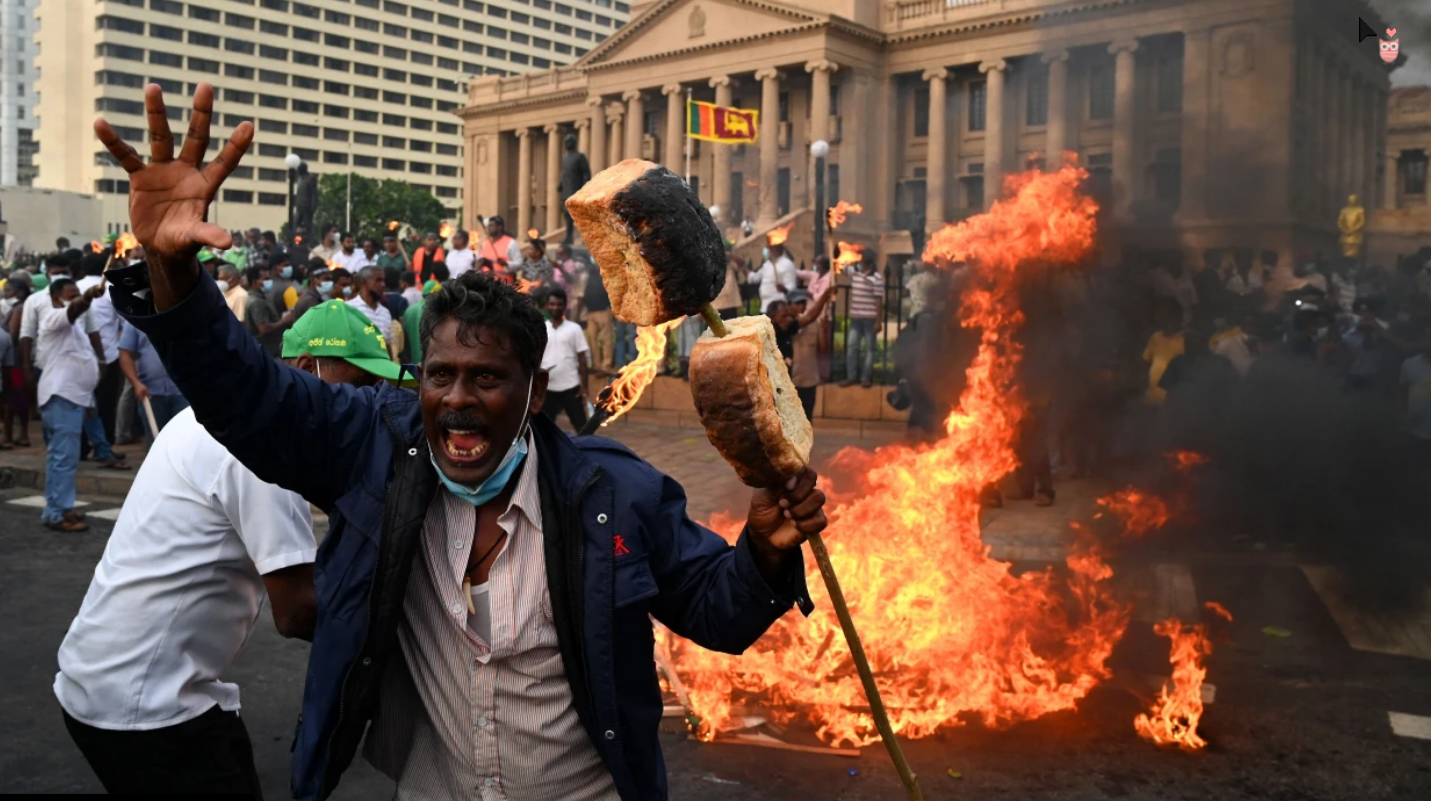
President Rajapaksa’s resignation has been the chief demand of Sri Lanka’s activist youth who have been camping out at Colombo’s Galle Face Green for over two months in an Occupy Wall Street-style protest campaign that has come to be known as the Aragalaya, or Struggle. Though the vigour of the protest has somewhat dissipated since the violence unleashed by government supporters on May 09 and the retaliatory mob violence that followed, the demand has remained: President Rajapaksa must go home. Rajapaksa, however, recently told Bloomberg that he intends to remain in office for the rest of his term as he does not wish to retire prematurely as a “failed president.”

“One can demand that the president leave. But if the president refuses to leave, he can only be sent home through an impeachment. If we go for a system change, the presidential system will go away. Otherwise, we have to bring the president to a place where he is not above the law,” said Ivan.

Among the key objectives of the reform agenda is a replacement of the prevailing political system with a “better and wholesome system that is corruption free, efficient, people-friendly and modern, and thereby rescuing the country from the present unfortunate predicament and create a dignified Sri Lanka that all can be proud of.”

The reforms are proposed to be carried out in two phases with the backing of the president, the prime minister, the leader of the opposition, and the general public within a transparent, participatory framework. Further details can be found at the end of this article.

Among the major outcomes expected, according to Ivan’s document, are creating a disciplined and modern civil society endowed with pluralistic attitudes and capable of acting with the sense of rights and responsibilities, establishing an advanced democratic system of governance in which there is no space for the Head of State to be above the rule of law, and enforcing the rule of law strictly and equally so that the sovereignty of the people is well represented and operative.

Other anticipated outcomes include judicial reforms, ensuring press freedom while holding the media accountable, stronger anti-corruption laws, a national policy framework on development, reforming provincial councils, and adopting a new constitution.

The programme also proposes an interim constitution as a “bridge to transit from the old system to a new one while maintaining the legal continuity and integrity of the [existing] constitution”.

Sri Lanka is currently going through the worst economic crisis in its 74-year post-Independence history and is on the cusp of an unprecedented socio-political upheaval that some analysts worry could lead to a total deterioration of society.

Ivan believes this is the best time for lasting reform.

“We’re now on the precipice of an abyss, and if we fall into it, there is no getting out for 10, 15 years. What we propose is that don’t go there. Don’t try to forcefully change governments in this moment. Form an all party government. But don’t stop there. In order to secure international support, the world needs to see that significant changes are on the cards,” he said.

Asked if it was realistic to expect such change under a Rajapaksa presidency, Ivan said: “Not every world leader who brought about system change was good. When a country is pushed to the brink, the doors tend to open for such reform. That is the way.”

“We think a programme like this will facilitate international support,” he added.

The document proposes that the United Nations takes part in the programme as an observer and “secure its technical advice on how to make the reform programme formalised and pragmatic”. The experts and resource persons to train the major teams involved in this programme, it said, should be secured from the UN, and the committee should also have the power to appoint any advisors needed.

Ivan said such reform will also motivate newcomers to get into active politics. One of the proposals is to enact tough laws on election campaign funding.

“At present, it’s only those who deal with black money can afford to contest elections,” he said.

Ivan is of the view that reform cannot take place on the streets. Reform, he reiterated, must be done within a constitutional framework.

Does this mean he no longer believes in the Aragalaya?

“The Aragalaya must decide on its own [what it must do]. We cannot tell them to stop it or continue it,” he said.

Ivan is unconcerned about speculation that efforts to scuttle any meaningful reform will come from within the Sri Lanka Podujana Peramuna (SLPP), the party said to be controlled by former Finance Minister Basil Rajapaksa.

“The doors for reform open when a country is backed into a corner. In our proposals, we haven’t targeted individuals, but rather a change in the system,” he said.

“We’re trying to see if we can push the country to a path of reform. My view is that it can be done, and this is the best time for it,” he added.

The president must also seize the opportunity presented to him, Ivan said.

“The reform door is now open. The president can then go home with dignity. There will be no need to kick him out,” he said, insisting once again however that the reforms were not targeting any individuals.

“The idea is for political parties to come to the understanding that it is through a reform programme that the country can be saved. This is for the good of the country.

“If Sri Lanka is not pushed towards such reform, what will happen? The country will be destroyed,” he said.

The detailed proposals contained in Ivan’s document are as follows:

Recreating Sri Lanka, a brief reform plan:

The main objective:

The main objective of this reform program is to eliminate the ills of the existing political system which is corrupt, inefficient, unfriendly and outdated, and replace it with a better and wholesome system that is corruption free, efficient, people-friendly and modern, and thereby rescuing the country from the present unfortunate predicament and create a dignified Sri Lanka that all can be proud of.

The methodology proposed to be adopted to achieve the objective:

This reform program is proposed to be implemented with the support of the President of the country, the ruling party of the Parliament headed by the Prime Minister, the main Opposition headed by the Leader of the Opposition and the general public; it should be conducted in two main phases and within a recognized legal framework based on a system of people’s participation which is transparent and accountable to the people and the legislature.

Expected major changes:

To create a disciplined and modern civil society endowed with pluralistic attitudes and capable of acting with the sense of rights and responsibilities. (a) Educate the society and instruct the citizens with necessary knowledge to achieve this purpose, (b) abolition of outdated feudalistic caste system in its entirety, (c) conduct investigations on disappeared persons, do them justice and formulate appropriate policies to prevent recurrence of such incidents in the future, altogether,(d) look into the grievances of all community groups (ethnic, religious, gender and cultural) that may be considered oppressed, marginalized and vulnerable, and grant them equal human dignity and rights enjoyed by the rest of population , (e) ensuring gender equality, (f) strengthen the freedom of citizens which is of diverse nature, (g) establish a statutory framework that confers a significant group of citizens the right to intervene directly and democratically in important issues of governance when it is essential to do so, rather than restricting the exercise of the sovereignty power of the citizens which is their right only at the elections. Considering the methodologies such as public initiation, recalling, and alternative referendum that some other countries have adopted granting the citizens to intervene in a direct democratic manner, it would be possible to set up a system in which a significant group of as many as three to four hundred thousand citizens were allowed the right to submit proposals to Parliament. When a proposal is submitted with a specified number of signatures, a system could be set up to include it in the Order Paper of Parliament, debate it and put it to a vote.

Establish an advanced democratic system of governance in which there is no space for the Head of State to be above the rule of law, and the rule of law is enforced strictly and equally so that the sovereignty of the people is well represented and operative.

a) abolish the Presidential system and establish a bicameral Legislature with a nominal President and assign the responsibility of governing the country to the Cabinet of Ministers headed by the Prime Minister.

b) Explore the causes of the decline in the standard of Parliament and abolish altogether the opportunity given the Members of Parliament to transact business with the Government and take appropriate measures to establish an efficient and effective parliamentary system.
c) Enact laws to ensure the internal democracy of political parties and grant the Election Commission the powers to monitor it.
d) introduce a method to eliminate the distance between elected representatives and the voters, and introduce a simpler electoral system with lesser representation on the National List that replaces the district system with a system based on electorates so that the huge costs incurred by candidates in contesting elections could be reduced.
e) Empower the Election Commission to enact laws to restrict the funds received and expended by political parties and candidates during elections and delegate powers to the Election Commission to monitor such activities.

Identify the causes of the decline of the judiciary with the assistance of the judiciary itself and make necessary reforms with the view to establishing a strong, efficient and independent judiciary. (a) Restore the judiciary with the full “power of review”.

Considering the immense importance of the media in a democratic political system and the strengths and limitations of the role of the media in Sri Lanka, as well as the horrendous repressions that have been inflicted on it from time to time, introduce policies, rules and regulations conducive to ensuring the freedom and enhancing the quality of the media, and also holding the media accountable to society.

Investigate the roots of corruption which has overwhelmed the State, its system of institutions, and the political and bureaucratic regime of the State like a terrible cancer, and formulate strong and pragmatic reforms to eradicate the menace of corruption altogether.

Formulate a “National Policy” framework that incorporates all important aspects of development so that the development process of the country is maintained as a permanent entity that does not change when the governments change; and also, to ensure that the possibility of arbitrary actions by politicians or bureaucrats in that regard could be completely eliminated.

The Provincial Council system was introduced with the intervention of India, to establish a kind of sub-national level administration particularly for fulfilling the aspirations of the Tamil people. In view of the violent atmosphere that prevailed in the country at the time of its introduction, both countries did not have the ability to assess the facts relating to it in their correct perspective, calmly and logically. The fact that the Provincial Council system is in a chaotic condition can be considered as an unavoidable consequence of the circumstances under which it was set up. Therefore, it is necessary that the appropriate reforms are made with the concurrence of India so as not to jeopardize the aspirations of the Tamil people and to regularize the Provincial Council system eliminating its present chaotic condition.

Investigate the drawbacks of the Attorney General’s Department and the Police, the two main law enforcement agencies, and introduce reforms that will make the two agencies more effective and efficient.

The enormity of the public service (there is one public servant for every 15 people) and the corruption and inefficiency inherent in it, is another major factor contributing to the failure and bankruptcy of Sri Lanka. The Government agencies responsible for collecting tax and issuing licenses are plagued by rampant corruption. Certain government institutions that are continued to be run at a loss despite their potential for earning profits can also be considered as a crucial factor that has contributed to the bankruptcy of the country. The country’s defense spending also remains at a level which is unbearable to the country. It is important to look into this situation and make necessary reforms to reduce the number of employees in the public sector and make the public sector more efficient and effective.

Adoption of a new constitution based on “People’s Participation “to legalize the proposed reforms.

Violation of the Constitution:

a) Deliberate violation of the Constitution should be made a punishable offense(b) Amendments that undermine or distort the democratic essence of the Constitution should be outlawed, as in India, (c) the Supreme Court shall be conferred the necessary power to do that .

Implementation of the Reform Program:

A Constitution Formulation Committee consisting of the representatives of Parliament and representatives of people’s organizations shall be set up to plan, formulate and implement the Reform Program. (a) It shall consist of 50 Members elected from Parliament and 100 Members of the representatives of public organizations. (b) The 50 Members of Parliament shall include the Prime Minister, the Leader of the Opposition and the Leaders of the Parties represented in Parliament. (c) The 100 Representatives of the People should be elected in a way that is acceptable and represents all sections of society, with representatives who are capable of contributing to this cause, creatively. (d) The President shall have the ex-officio authority to attend the committee meetings.

All meetings of the Committee should be conducted in a transparent manner visible to the public; and a substantial number of counters should be maintained to allow the public to express their views in this process.

The United Nations Organization also should be involved in this program as an observer; and secure its technical advice on how to make the reform program formalize and pragmatic; the experts and resource persons to train the major teams involved in this program should be secured from the United Nations Organization. The committee should also have the power to appoint advisors needed for it.

Implementation of the Reform Program should take place in two main phases (a) Phase 1: Appointing Officers’ Committees or Commissions for fact finding and maintaining them, (b) initiation of necessary reforms to give effect to Judicial reforms under Article 111, Media Reforms under Article 1V and reforms to the new system of governance up to the holding of an election under Article 11 as outlined above. (c) The election should be held as a means to elect the representatives to the Constitution Assembly, in addition to electing the representatives of the legislature, (d) the tasks included in the first phase should be completed within a year.

Phase II of the Reform Program:

a) The political party that comes to power, in addition to governing the country as an all-party government, should complete the reform program included in the Interim Constitution as prescribed therein. (b) After the election of the new Parliament, the Constitution Formation Committee set up in the first phase shall cease to operate and the Parliament should become the authorized body to carry out the work of constitution making and the remainder of the reform program. (c) Even after the dissolution of the Constitution Formulation Committee, the work of the formulation of a constitution should be maintained in a transparent manner, and the committee should maintain a transparent framework that allows the public to actively participate in the legislative processes (d) The draft constitution shall be approved by a two-thirds majority of the bicameral legislature; then it should be approved by the judiciary and ratified by the public in a subsequent referendum..

The Interim Constitution:

When a country has been plunged into an unprecedented crisis following a catastrophic collapse of the socio – political system and the economy of it, it would not be possible to use the old or existing constitution successfully any longer to change the old system and move into a new system. “Interim Constitution” is a successful and proven method adopted by many countries which have plunged into similar crises, as a bridge to transit from the old system to a new one while maintaining the legal continuity and integrity of the constitution; this has been acknowledged as a valid methodology by international law also. It is very difficult for our country which is in a great crisis at the moment to move into a new system using the old constitution. Adopting an interim constitution can be considered as the best way to overcome this difficulty. Since it is an interim measure only, applied until a new constitution is enacted, and also it provides a guarantee that a referendum shall be held to obtain public approval for the new constitution once it is formulated, and also to repeal the existing or old constitution, the need does not arise for the interim constitution to be subjected to a referendum prior to the completion of all activities of reforms program. The Interim Constitution should be drafted by the Constitution Formulation Committee. It should include the overall reform program and the details of how it should be implemented, the time frame, and all other necessary factors. The Constitution Formulation Committee derives its power from the Interim Constitution. It must be presented to Parliament and passed by a two-thirds majority.

Public Education:

In order for this reform program which requires a greater public involvement to be successful, there should be an optimal level of a strategic program of publicity and education aimed at educating the public and raising their awareness of it. The program must have the capacity to reach at least 80 percent of the total population.

Concluding the Reform Program:

The reform program will be concluded with the referendum held for obtaining the public approval for the new constitution, and the second phase of it should be completed in less than three years.

Posted in Uncategorized

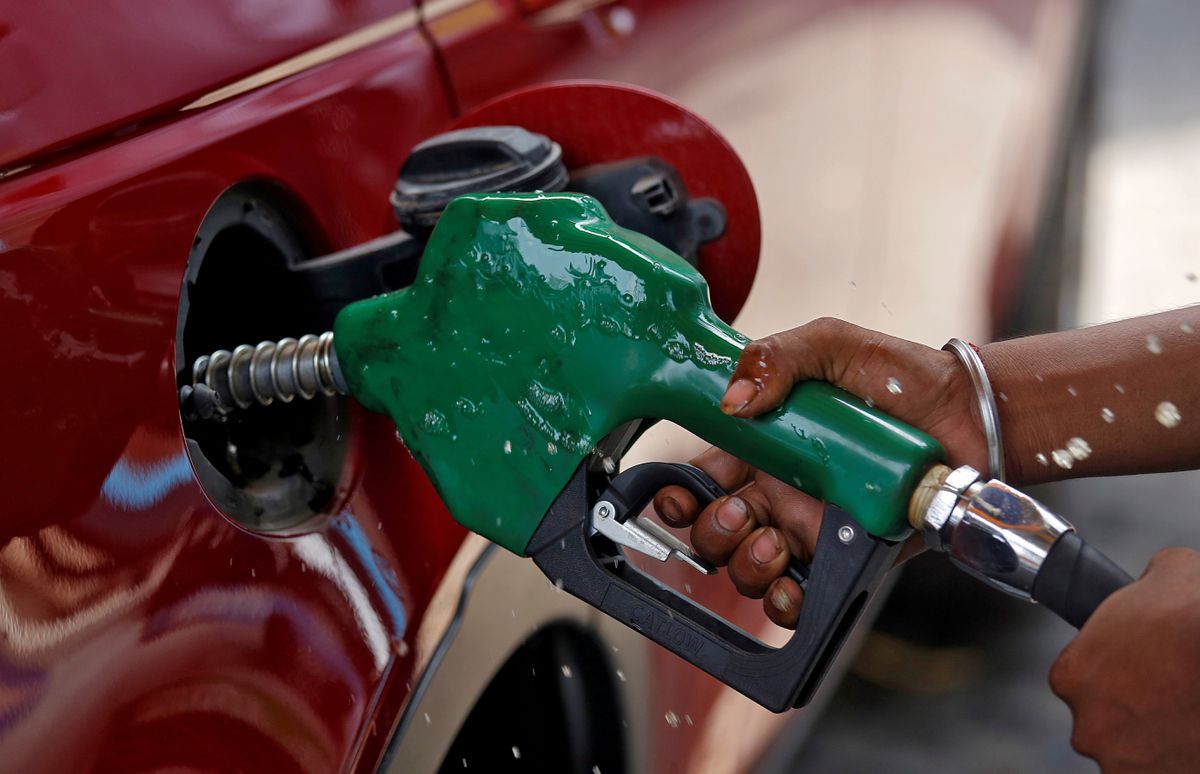
US seeks probe on excessive use of force at fuel stations

The United States (US) has called for an investigation into any excessive use of force at fuel stations in Sri Lanka.

The US Ambassador to Sri Lanka, Julie Chung urged the authorities to exercise restraint under these difficult circumstances.

“As petrol lines & power cuts increase, tensions are naturally rising too. But boiling over will not address SL’s urgent needs. I urge authorities to exercise restraint under these difficult circumstances. Any excessive use of force should be quickly investigated,” she tweeted.

Earlier, the UN Resident Coordinator to Sri Lanka, Hanaa Singer-Hamdy said she was troubled by the images of violence in petrol queues, involving the Police and Army.

“I urge security services to understand the frustration of citizens spending hours in long lines, & to exercise restraint in the use of force. I call on authorities to investigate any excessive use of force,” she tweeted.

A number of incidents have been reported at fuel stations across the country as the public wait in long queues for fuel.

Posted in Uncategorized

Army opens fire in the air at Meegahathenna fuel station

The Army fired in the air during a tense situation at a fuel station in Meegahathenna, Kalutara today.

The tense situation involved motorists waiting for fuel for several hours at the fuel station.

As the situation got out of hand the Army had opened fire.

Yesterday (Saturday) the Army opened fire during a tense situation which erupted at a fuel station in Visuvamadu.

A group of people reportedly clashed with the Army at the fuel station.

Videos circulating on social media showed troops retaliating by throwing objects towards an unruly mob.

The Army had then fired shots in the air in an attempt to control the violence.

President’s plans regarding UNHRC four organizations to be delisted BTF -ATC-CTC and GTF

The ’great relief’ President Rajapaksa has gained from entrusting responsibilities to Premier Wickremesinghe is being used to ensure a “trouble free” period ahead when he plans to retire in two years. An area of much concern for him has remained the resolutions at the Geneva-based UN Human Rights Council. The shoddy handling of issues there both by the Foreign Ministry in Colombo and the Sri Lanka Permanent Mission to the UN in Geneva has aggravated the situation with the last resolution calling upon member countries to resort to universal jurisdiction to deal with instances of human rights violations. Most damagingly external evidence gathering project has been initiated.

Incidentally, a few errors crept into references to the resolutions in last week’s reportage. The resolution 46/1 (Promoting reconciliation, accountability, and human rights in Sri Lanka) was passed in March 2021 and not in March 2020 as reported. Also, the reference of the resolution concerned was 46/1 and not 41/6 as reported.

President Rajapaksa’s plans vis-à-vis the UNHRC surfaced when Foreign Minister, G.L. Peiris, appeared in Geneva early this week. It was for the Council’s 50th sessions where there was no discussion on Sri Lanka. On such occasions, the usual practice has been for Sri Lanka’s Permanent Representative in Geneva to make a statement and the need for a Foreign Minister to be present does not arise. Even other countries follow the same practice. However, Peiris flew to Singapore for the Shangri La Asian Security conference and from there to Geneva.

He took the opportunity of making a speech last Monday at the 50th regular sessions. He was oblivious to the fact that it was the SLPP government, under President Gotabaya Rajapaksa, (where he had been a cabinet minister), which removed independent institutions functioning under Parliament and vested more powers in the President. He also had a big hand in drafting the 20th Amendment that brought about the change. He now claimed: “We are actively engaged in evolving an all-party consensus regarding the need for the 21st Amendment to the Constitution, to consolidate seminal democratic values enshrined in Parliament, independent institutions and salutary checks and balances on the powers of the Executive.”

He added, “On the important aspect of the economy, to stabilize the situation and provide essentials for our people, we are formulating concrete measures which are expected to lead to an IMF supported programme. In moving forward, we are in dialogue with all stakeholders including domestic and international partners. We are putting together a coherent structure to place our economy back on a sustainable growth path and to provide for necessities such as food, fertiliser, energy, and medicines. The current situation and future reform measures have a potentially adverse impact on the lives and livelihoods of the poor and the vulnerable. In agreement, therefore, with the emphatic remarks by the distinguished High Commissioner, Michelle Bachelet, earlier this morning, Sri Lanka is firmly committed to targeted social protection measures to mitigate these consequences. We certainly recognize, as a core belief, that human rights are indivisible, interconnected, and interdependent.

“Over the past years, including at the 49th Session in March this year, we have interacted with the Council in addressing a series of issues raised in relation to Sri Lanka. Today, as we seek to redress grievances and issues in a broader social context, it is both compelling and challenging to demonstrate further tangible progress on post-conflict consolidation through domestic processes. We will continue to do so by active engagement with this Council.”

A Geneva-based diplomat who is familiar with details of meetings FM Peiris held including selective bilaterals over three days summed up the visit. “The whole reason the minister seems to have made the effort of travelling to Geneva, when Sri Lanka was not even on the agenda, was to indicate formally to the core-group of countries, the Office of the High Commissioner for Human Rights (OHCHR) and other relevant member states, that Sri Lanka may be willing to negotiate the text of any future resolutions. This is particularly in September when the 51st sessions will be held. It is now known that a tough resolution will be placed before that session and will cover several new developments. That would include attacks on protestors, intimidation of journalists, declaration of emergency, intimidation of peaceful protestors by military personnel, as well as the counter attacks on the properties of parliamentarians. Further it could refer to the breakdown of rule of law, weakening of democracy and the selective nature of the police actions that followed the violence of May 9 and the lack of will from the Government to proceed with the investigation with vigour and conviction.”

The call for resort to universal jurisdiction has also been a cause for concern. That proviso makes violators liable for arrest in the countries which exercise universal jurisdiction to face charges under their laws. For example, it could apply, if there are accusations and if Gotabaya Rajapaksa chooses to return to the United States where he has a home in Los Angeles. An attempt to negotiate provisions in a future resolution, however, has not been successful.

The next day (Tuesday) after FM Peiris’s speech, the core group Canada, Germany, Malawi, Montenegro, North Macedonia, the United Kingdom, and the United States issued a statement in Geneva. They said: “We recognise the significant challenges that Sri Lanka has been facing over recent months, causing great hardship for the Sri Lankan people.

“We note that protesters, have exercised their rights to freedom of peaceful assembly and association, and freedom of expression in recent months. We are deeply concerned by violent attacks on peaceful protestors and subsequent violence against government-aligned politicians and supporters. Those responsible for this violence must be held to account. We stress the crucial importance of upholding democracy, human rights, and the rule of law, and maintaining independent institutions. We also urge the Sri Lankan authorities to address long-standing impunity and corruption and underline the need for good governance and sound economic policies. Our concerns over surveillance and intimidation of civil society persist and we stress the importance of protecting civil society space.

“The Core Group calls on Sri Lanka to cooperate with the High Commissioner and her Office and is ready to support Sri Lanka on the implementation of HRC resolution 46/1.” The reference and the call to implement HRC resolution 46/1, it can be seen, rules out FM Peiris’ moves to negotiate the upcoming resolution. He also said in his speech that “The list of designated individuals, groups, and entities under the United Nations Regulation No. 1 of 2012 is being reviewed. As of now 318 individuals and four entitles are proposed to be delisted. This is a continuing exercise.”

The Sunday Times learnt that the four organizations to be delisted are the Australian Tamil Congress (ATC), British Tamils Forum (BTF), Canadian Tamil Congress (CTC) and the Global Tamil Forum (GTF). The spokesperson for the most effective of these organisations, Suren Surendiran of the Global Tamil Forum (GTF) took to the twitter to demand “why and on what basis these four organisations and 318 persons were proscribed in the first place.” He demanded an apology for the proscription “for this baseless proscription as you delist” tagging President Rajapaksa, Defence Secretary Kamal Gunaratne and other relevant bodies.

Posted in Uncategorized

Prevailing crisis situation led to closure of Peradeniya University

Peradeniya University will be closed from today due to the present deepening crisis situation, Vice Chancellor Prof. M. D. Lamawansa said.

“Due to the current difficulties faced by the people at large, all academic programmes including examinations will be temporary on hold, and all hostels will be closed immediately. Hence, it is hereby informed that all students should leave the university premises with immediate effect,” the Vice Chancellor said in a notice.

Respective faculties will be notified on the commencement of the academic activities and examinations in due course, the notice further says.

May be an image of text that says "Telephone 17.06.2022 081-2388151 081-2389164 පේරාදෙණිය විශ්වවිද්‍යාලය, ශ්‍රී ලංකාව பேராதனைப் பல்கலைக்கழகம்" இலங்கை UNIVERSITY OF PERADENIYA LANKA vc@pdn.ac.lk Vice- Chanceler NOTICE Due to the current difficulties faced, all academic programmes including examinations will be temporary discontinued, and all hostels will be closed immediately. Therefore, it is hereby informed that all students should leave the university premises with immediate effect. Respective faculties will commencement of the examinations in due course. notify information on the academic activities and Prof. M. D. Lamawansa VICE-CHANCELLOR NUMBERS.LK Vice Chancellor University of Peradeniya Peradeniya Sri Lanka"

Posted in Uncategorized

Financial losses loom for Sri Lanka apparel sector

The export earnings in Sri Lanka’s clothing sector for the June to August period are set to fall by 20-25 percent, with the sector likely to miss the US $ 6 billion export target for the year, as the country’s political and economic crisis continues unabated.

Sri Lanka’s Joint Apparel Association Forum (JAAF) Secretary General Yohan Lawrence told Just Style that in terms of the value, this is “nearly a loss of US $ 125 million per month for the next three months”.

A loss of buyers’ confidence in the industry because of the “political instability” is a real risk, he said. With apparel accounting for on average 40 percent of Sri Lanka’s total export revenue, there is an urgent need to maintain buyers’ confidence in the industry adding “the perceived threat to the sector” has been very damaging.

Moreover, the lack of a steady supply of energy is affecting small to medium-scale apparel makers although Sri Lanka’s large apparel manufacturers have managed to continue production because they “have been among the most effective adopters of renewable energy technology, particularly solar energy”. Lawrence is urging the government to “secure bridge financing” immediately until there is a definite timeline on an International Monetary Fund (IMF) bailout.

Lawrence said JAAF is pressing the government to “immediately commence discussions with credible policy and industry experts towards rapid development of a practical, apolitical ‘Roadmap for Sri Lanka’s Economic Recovery’”. While there are ongoing efforts to get bilateral funding, “it is nowhere near enough”, he said adding, “This is a very real problem”, that needs sorting.

With foreign reserves down to almost nothing, imports have come to a near standstill. That said, the supply of imported raw materials needed for the apparel export sector has so far continued to flow. This is because the sector has been allowed to use money from export earnings to buy raw material inputs.

“So, we have been using part of our inward remittances [export revenue] as outward remittances to buy the raw materials we need and the balance of the money will be converted to local currency,” Lawrence added. (www.Just-Style.com)

Sri Lanka tells civil servants work from home amid fuel shortage – Aljazeera

Sri Lanka’s government has ordered public sector employees to work from home for two weeks due to severe fuel shortages as the island nation grapples with its worst financial turmoil in seven decades.

With existing stocks of fuel projected to run out in a matter of days, Sri Lanka is scrambling to find foreign exchange to pay for desperately needed petrol and diesel imports. A combination of government mismanagement and the COVID-19 pandemic have pushed the country into its deepest economic crisis since independence from Britain in 1948.

The Public Administration and Home Affairs Ministry announced the work-from-home order on Friday for all but the most essential workers.

“Taking into consideration the severe limits on fuel supply, the weak public transport system, and the difficulty in using private vehicles, this circular allows minimal staff to report to work from Monday,” the ministry said.

Of its approximately one million government employees, those providing essential services such as healthcare will continue to report for duty at their offices, the circular said.

The education ministry also said all schools have been asked to remain closed for two weeks from Monday and to ensure online teaching if students and teachers had access to electricity.

Earlier this week, the government also approved a four-day work week for public sector workers to help them cope with a chronic fuel shortage and encourage them to grow food.

Snaking lines of vehicles stretching several kilometres have formed at many gas stations countrywide this week, leaving some people waiting for more than 10 hours for fuel.

The country is also facing record-high inflation and lengthy power blackouts, all of which have contributed to months of protests – sometimes violent – calling on President Gotabaya Rajapaksa to step down.

Sri Lanka is in talks with the International Monetary Fund (IMF) for a bailout package with a delegation expected in Colombo on Monday.

The United Nations has outlined a plan to raise $47m to provide assistance to 1.7 million Sri Lankans worst-hit by the crisis over the next four months.

As many as 5 million Sri Lankans could be directly affected by food shortages in the coming months, Prime Minister Ranil Wickremesinghe’s office said in a statement on Friday.

The World Food Programme (WFP) said it began distributing food vouchers to about 2,000 pregnant women in Colombo’s “underserved” areas as part of “life-saving assistance” on Thursday.

The WFP is trying to raise $60m for a food relief effort between June and December.

Posted in Uncategorized

Sri Lanka: Second-highest in child malnutrition in South Asia, says UNICEF

The Spokesperson for UNICEF Sri Lanka, Bismarck Swangin states that Sri Lanka’s economic crisis is a children’s crisis, with 1.7 children in the country having to bear the brunt of the crisis.

Speaking to ABC Australia, the UNICEF representative said that while Sri Lanka had one of the highest rates of child malnutrition in South Asia, the economic crisis has only exacerbated the child malnutrition crisis.

According to the UNICEF, 7 out of 10 families are cutting down their food intake to mitigate the crisis, Swangin said. Accordingly, those who were having three meals had decreased to two, while those who were eating two meals had declined it to one.

The UNICEF recently launched an appeal for $25 million to provide humanitarian aid to 1.7 million children in Sri Lanka, which the UNICEF points out are at risk of dying from malnutrition-related causes.

While Sri Lanka has the second-highest rate of acute malnutrition among children under 5 in South Asia, at least 17% of children are suffering from chronic wasting, a disease that carries the highest risk of death.

The quality of the food has recorded a severe decrease as will, he said.

While Sri Lanka has not had favorable numbers with regard to its standing on malnutrition, the current economic crisis will only make it worse, the UNICEF representative said that families are pushing their limits, with children not being able to access their basic rights due to the country’s inability to import essentials such as fuel.

Speaking further, Swangin said that the crisis had affected schoolchildren the most, with them being unable to go to school due to the rise in fuel prices, and being at the risk of starving due to the prices of school meals being doubled, which was a major incentive for children to go to school.

Emphasizing on the UNICEF appeal launched, the Spokesperson said that they are aiming to treat children who are severely malnourished, to provide communities with water, to provide pregnant mother with nutritious diets and supplements, to grant mental health support to children and to grant support to avoid a worst-case scenario.

Swangin commented on the illegal Sri Lankan migrants who were captured in their efforts to go to Australia by boat. He pointed out that the people are getting increasingly desperate, and are resolving to coping mechanisms, such as selling assets or pawning jewelry.

Pointing out that he worked with Somalia, Yemen and Sudan, the UNICEF spokesperson said that this is a crisis like none other.

‘Eastern Terminal will not be given to Adani’ – Minister

Minister of Ports, Shipping and Aviation Services Nimal Siripala de Silva has stated that the Eastern Terminal of the Colombo Port will not be handed over to Adani Group of India.

At a media briefing, the Minister also asserted that the terminal will not be handed over to any other private company.

The Minister said that the Colombo Port East Terminal will continue to be operated under the Ports Authority and arrangements are being made to purchase several cranes from a Chinese company for its operations.

Mr. Nimal Siripala de Silva said that US $ 278 million is required for this purpose and that US $ 18 million has already been paid.

JVP willing join an all-party government for a specific period and objectives

Leader of the Janatha Vimukthi Peramuna (JVP) Anura Kumara Dissanayake has said that they are willing to join an all-party government, established for a specific period and objectives.The JVP leader said that the 21st Amendment gave more power to the Prime Minister.Thus, the term of the current administration must end within a short time after 21A is passed, he said.

“After a short period, an election must be held to appoint a new government and a Prime Minister,” Dissanayake said.Dissanayake said so during a meeting with the Collective for Reform. He said that a real all-party government must be established.

“We believe that elections should be held as soon as possible. However, an all-party government is needed to hold a free and fair election and to create a stable environment,” Dissanayake said following a request made by representatives of civil society organisations.Representatives for Collective for Reform said that they did not agree with the government’s statement that there was no money for elections. They believed that government servants would join election duties voluntarily if a free and fair election was held.The JVP leader also said that the resources needed for an election could be minimised and that an all-party government was needed to ensure politico-economic stability before an election is held.