President chairs meeting on current situation

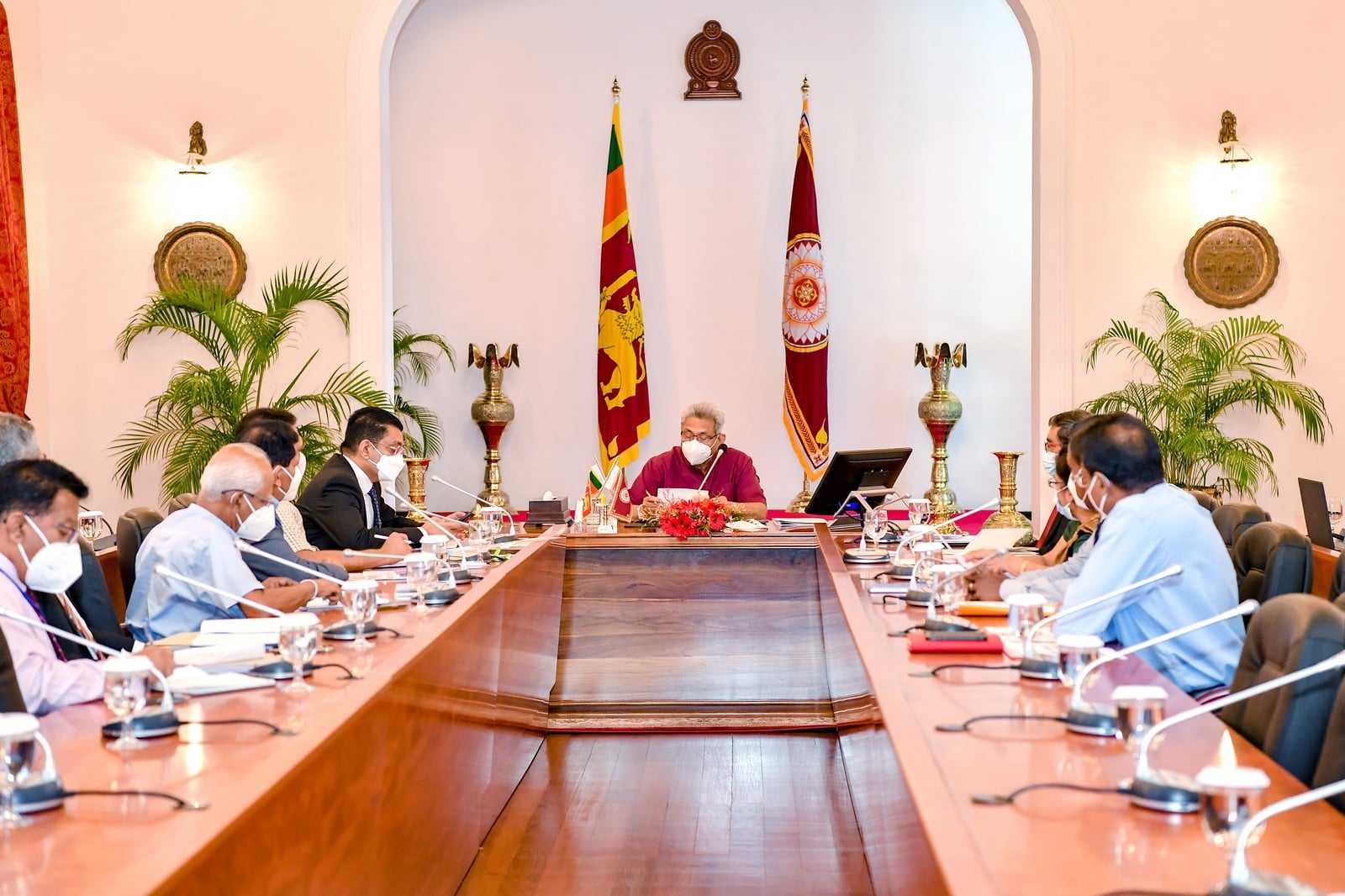
Several discussions were held on Saturday (16) under the auspices of President Gotabaya Rajapaksa regarding the current situation in the country.

The President’s Media Division (PMD) said the first discussion was between Finance Minister Ali Sabri, PC, Central Bank Governor Dr. Nandalal Weerasinghe, Secretary to the President Gamini Senerath, Presidential Advisor Lalith Weeratunga, and Secretary to the Ministry of Finance K.S. M. M. Siriwardena.

The President held another discussion with the participation of officials from the Ministries of Finance, Energy, and Health, said the PMD.

Posted in Uncategorized

Analysis: Sri Lanka bondholders brace for big losses in debt restructuring

(Reuters) – Sri Lanka’s creditors face losing a third to half of their investment in the country’s dollar bonds, after the government announced it would restructure $11 billion worth of debt, the first such financial shake-up in its modern history.

Formal debt talks haven’t started but analysts are already crunching the numbers to estimate what kind of haircuts could be inflicted on bondholders.

Mired in economic crisis, Sri Lanka has halted all external debt payments and is prioritising its remaining hard currency reserves to buy food and fuel..

The country of 22 million has been hit by nationwide street protests and shortages of everything from power to medicines, and its dollar bonds trade at deeply distressed levels of around 40 cents in the dollar.

With markets factoring in an International Monetary Fund (IMF) loan programme as part of the debt overhaul, a $1 billion bond maturing on July 25 LK080475284= is valued at around 45 cents in the dollar, Refinitiv data showed.

Citi projects that, across the bonds maturing between 2022 and 2030, Sri Lanka may seek a coupon haircut of around 50%, a reduction of at least 20% in face value and maturity extensions between 10-13 years.

“Assuming an 11% exit yield, we estimate that the recovery value on the dollar bonds in such a scenario could range in the low to mid 40s,” Citi strategist Donato Guarino said, referring to the interest rate at which the new securities will trade on the day of the debt exchange.

Step-up coupons – interest payments that increase over time – could also play a role “to give the government more time to recover” after the restructuring, Guarino added, noting these were used in Ecuadorean and Argentine debt restructurings.

Tellimer analysts assumed in their base case scenario a 30% haircut. They assign a recovery value near 60 cents on the dollar for the bonds, with a 8% exit yield.

They also flagged an alternative scenario with a 42-cent recovery value and a 16% exit yield.

UNWELCOME SURPRISES?

Tellimer senior economist Patrick Curran considers a 50% haircut a “worst case” scenario, with a recovery value as low as 30 cents for a 16% exit yield.

He highlighted the possibility that the debt overhaul might not be as swift as hoped.

“While bondholders will receive some downside protection if negotiations drag out if interest is capitalised, prolonged delays will also make for a more onerous starting point and political risk will raise exit yields, potentially eroding recovery values,” Curran added.

Ratings agency S&P Global has said debt talks could be complicated and take “many months” to complete.

On Wednesday, it lowered Sri Lanka’s foreign currency rating to “CC” from “CCC” – two notches above the level denoting default – while Fitch cut its rating to “C” from “CC”. .

JPMorgan analysts say the debt servicing moratorium is expected to pave the way for an IMF programme but warn a restructuring might be “more comprehensive” than what has been announced.

As of now, the debt service suspension only covers about 55% of public debt, Citi calculates, noting the latest IMF report hints at a “tough programme ahead”.

The fund recommends tax reforms, and possibly, curbs on public-sector wages and capital expenditure.

Asset managers BlackRock (BLK.N) and Ashmore (ASHM.L) are among the top holders of Sri Lanka’s international bonds. They are part of a fledgling creditor group, with White & Case acting as legal adviser.

Bondholders are in wait and see mode until the government picks a financial adviser, one creditor said, speaking on condition of anonymity.

“The group’s idea so far is to be reactive, not proactive,” the source said.

Sri Lanka stock market shut after default announcement

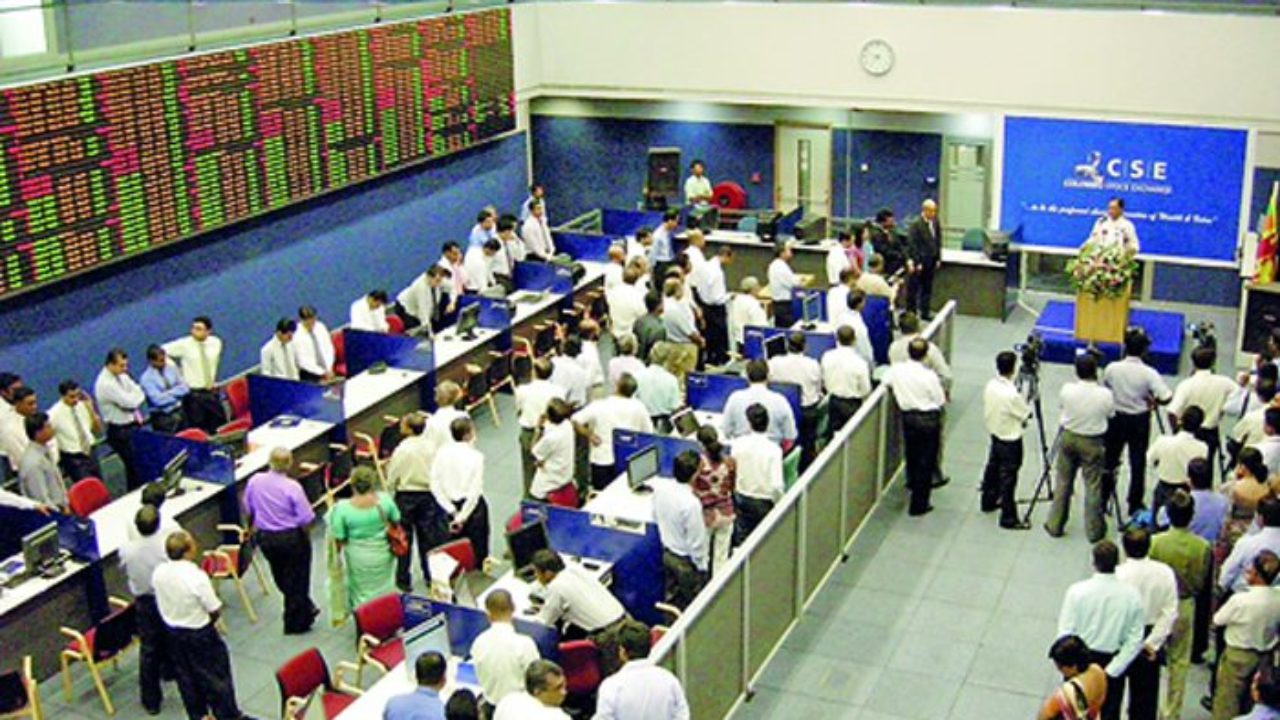
Sri Lanka’s securities regulator has directed the Colombo Stock Exchange to be shut for five days after the island announced a suspension of debt repayments and domestic gilt yields soared as attempts were made to reduce money printing.

The Securities and Exchange Commission of Sri Lanka believed “it would be in the best interests of investors as well as other market participants if they are afforded an opportunity to have more clarity and understanding of the economic conditions presently prevalent, in order for them to make informed investment decisions.”

The Board of the Colombo Stock Exchange has made a request on April 15, to temporarily “close the stock market citing the present situation in the country.”

Sri Lanka’s central bank printed over two trillion rupees from 2020 to keep interest rates down, blowing the balance of payments apart driving up inflation and stock prices (asset price inflation).

When margin credit is available at low rates, the present value of long term assets go up. When rates eventually correct, prices come down to earth.

However there had also been strong inflationary expectations in the stock market where the rupee was expected to fall steeply after the money printing, keeping export and similar stocks up.

Stocks have stumbled in recent weeks as a monetary meltdown began and attempts are underway to arrest the slide.

Economists and analysts had warned that Sri Lanka was heading for dollar debt default and monetary meltdown and fuel shortages after ‘flexible’ inflation targeting, a pseudo domestic anchor with a reserve collecting peg, began trigger external instability and growth shocks.

Bar Association raises concerns over attempts to disrupt peaceful protests

The Bar Association of Sri Lanka today said it views any attempts to disrupt a peaceful protest by the people with grave concern.

Responding to the measures taken by the police to move its trucks to the vicinity of Galle Face Green where a peaceful protest by thousands of people is ongoing, President of the BASL, President’s Counsel Saliya Peiris said any attempt to disrupt in whatever manner what is a peaceful protest by the people of this country will have grave repercussions for the country, its democracy, its economy and the rule of law.

The Bar Association of Sri Lanka in a statement said the trucks have now been removed after it was highlighted in the social media and brought to the notice of the authorities.

“The BASL views with grave concern any attempt to disrupt in whatever manner, what is a peaceful protest by the people of this country. Any such attempt will have grave repercussions for the country, its democracy, its economy and the rule of law,” it said.

The BASL called upon the Government to desist from taking any steps whatsoever to disrupt what is a legitimate exercise of the freedom of dissent of the people.

Fitch downgrades SriLankan’s govt-guaranteed USD 175 Mn bonds to “C”

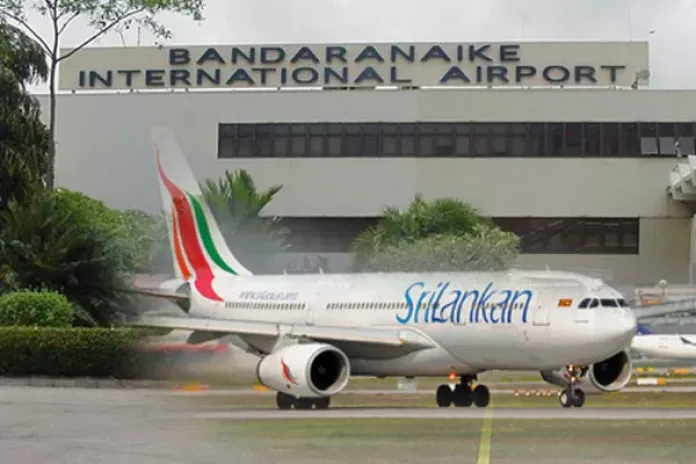
Fitch Ratings has downgraded the rating on state-run SriLankan Airlines Limited’s USD 175 million government-guaranteed bonds, due in June 2024, to ‘C’ from ‘CC’.

The move comes after the Sri Lankan government suspended foreign debt payments.

The rating action on the bonds follows the downgrade of Sri Lanka’s Long-Term Foreign-Currency Issuer Default Rating to ‘C’ from ‘CC’, and the downgrade of its foreign-currency bonds issued on international markets to ‘C’ from ‘CC’, the rating agency said.

Fitch said the national carrier’s bonds are rated at the same level as its parent, the state of Sri Lanka, due to the unconditional and irrevocable guarantee provided by the state.

SriLankan Airlines largely operates as a regional airline with a few long-haul flights. As of December 2021, the company has a fleet consisting of wide- and narrow-bodied aircraft in the Airbus A330 and A320 family respectively.

In 2019, SriLankan Airlines issued a USD 175 million bond to roll over a similar-sized issue that matured in June 2019.

The issue was fully guaranteed by the government and Fitch Ratings gave the bond a given provisional rating of ‘B(EXP)’ in line with the sovereign rating.

-Agencies

Posted in Uncategorized

Private Jets & UL Cargo flights linked to Uganda – What’s going on?

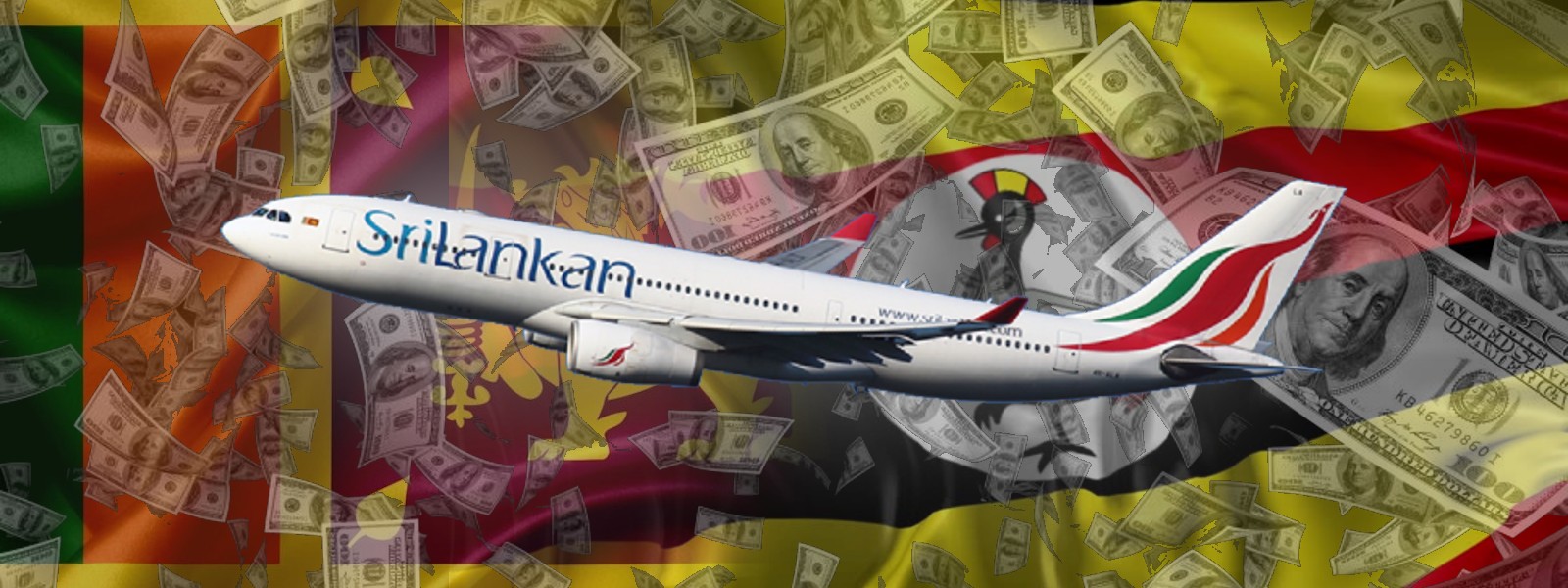
SriLankan Airlines on Thursday (14) said it received an air cargo order to transport about 102 tons of printed material from Colombo to Entebbe International Airport in Uganda in February 2021.

The consignment was purely commercial in nature and brought in much-needed foreign revenue to the airline and country at the time. SriLankan wishes to emphasize that this cargo order was undertaken for commercial reasons only, it added.

The details of the cargo consignment were withheld due to contractual obligations as per air cargo industry standards said the statement.

However, in response to concerns raised following the statement the national carrier tweeted to say that the Ugandan government ordered Ugandan currency notes from a global security printer who operates several factories worldwide, including one in Sri Lanka, exporting to global markets.

It went on to note that SriLankan aircraft which were underutilised at this time (2021) during the pandemic were chartered by a UK based freight forwarder.

A tweet by the Airline Pilot’s Guild of Sri Lanka on the 23rd of February 2021, revealed that SriLankan Airlines operated three consecutive cargo flights to Entebbe in Uganda.

Sri Lankan Airlines said what is now being misunderstood is the Airline Pilots Guild proud announcement of this achievement of using unutilized pax aircraft.

HOWEVER…….

Multiple events between Uganda and Sri Lanka in recent times sparked serious concerns among Sri Lanka’s social circles.

The most recent of these events was when Sri Lankan Prime Minister Mahinda Rajapaksa travelled to Tirupati, India on pilgrimage, in a private jet.

This particular jet was leased for a very high price, and it arrived at the Ratmalana Airport for the Prime Minister to travel to India, from the Entebbe International Airport in Uganda.

Startling details of this particular jet were revealed by the Frontline Socialists Party in late 2021.

The Frontline Socialists Party on the 28th of December 2021 said that the private jet used by the Prime Minister to travel to India on pilgrimage had a flight history that is a cause for concern.

“The T7 – JSG has a very interesting flight history,” said Pubudu Jagoda, the Academic Secretary of the FSP, and the flight path detailed by him is as follows.

10th December 2021 : Arrives at the Katunayake Airport from India.

10th December 2021 : Flies to Jomo Kenyatta International from Katunayake Airport.

14th December 2021 : Travels to multiple locations in Kenya

14th December 2021 : Flies to Bukoba Airport, Tanzania

15th December 2021 : Flies to Kampala Airport (Entebbe International Airport) from Tanzania

16th December 2021 : Arrives at Colombo International Airport, Ratmalana.

Pubudu Jagoda said that after reaching Sri Lanka on the 16th of December, the private jet had flown to Cochin and Chennai in India on two separate occassions, before reaching the country once again.

23rd December 2021 : Flies to Thirupathi

24th December 2021 : Returns to Sri Lanka

27th December 2021 : Flies to New Delhi India.

Jagoda pointed out that the around Rs. 32 Million was spent for this priate jet, and raised concerns as to why the Prime Minister of Sri Lanka would resort to using a private jet, when he could have easily used a passenger plane.

UGANDA TO BE BLACKLISTED

Uganda’s financial industry risks being blacklisted by international systems for failure to put in place measures that can effectively prevent financial crimes like money laundering.

This is a requirement by the Financial Action Task Force (FATF), a global inter-governmental organisation on the initiative of the G7countries to develop policies to combat money laundering and terrorism financing.

Uganda was put on the ‘Grey List’, a list that shows the performance of countries regarding the safety or level of risk of their financial systems.

This came after the FATF declined to adopt Uganda’s Money Laundering and Terror financing risk assessment report done by the Ministry of Finance, the Financial Intelligence Authority (FIA) and some NGOs in 2018.

This was what the European Union based on to blacklist Uganda’s financial sector.

To avoid being downgraded to the “Blacklist”, Uganda must submit a revised report by May 2022, showing improvements responding to the gaps that were cited in the current report.

CONCERNS MOUNT IN SRI LANKA

Former Parliamentarian Hirunika Premachandra, the National Organizer of the Samamgi Vanitha Balavegaya told reporters on Friday (15) that rumour has it that all the money looted from the people were moved to Uganda.

She said based on the calculations of the weight of the currency that was supposedly airlifted by SriLankan Airlines Cargo, approximately 10 Million US Dollars have been moved out.

The Former MP also said that from 1986 to 2021 the Foreign Reserves of Uganda were around 1.5 Billion US Dollars, however in 2021 that figure has moved upto over 4.4 Billion US Dollars.

Concerns are mounting in the country over the transactions taking place between Sri Lanka and Uganda, an African country with so many issues concerning finances and monetary security.


Posted in Uncategorized

China Hesitates On Bailing Out “Sinking Ships” Sri Lanka, Pakistan

Over the past few years, the U.S. has accused China of using “debt diplomacy” to make developing nations across the world more dependent on Beijing.

Yet the cases of Sri Lanka and Pakistan — both friends of China facing dire financial situations as inflation soars — show that President Xi Jinping’s government is becoming more reluctant to pull out the checkbook. China still hasn’t made good on a pledge to re-issue loans totaling $4 billion that Pakistan repaid in late March, and it hasn’t responded to Sri Lanka’s pleas for $2.5 billion in credit support.

While China has pledged to help both countries, the more cautious approach reflects both a refining of Xi’s signature Belt and Road Initiative as well as a hesitancy to be seen interfering in messy domestic political situations. Pakistan got a new prime minister on Monday after parliament booted out former cricket star Imran Khan, and Sri Lanka’s leader is facing pressure from protesters to step down.

“Beijing has for the past couple of years been rethinking its external lending because their banks realized they were carrying a lot of debt with countries whose prospects of paying back were quite limited,” said Raffaello Pantucci, a senior fellow at the S. Rajaratnam School of International Studies at Nanyang Technological University. “This came on top of a tightening economic situation at home which also required a lot of spending, so there was less appetite to just throw money around wantonly.”

China is currently facing its own economic troubles, with lockdowns to contain the country’s worst Covid outbreak since early 2020 shutting down the technology and financial hubs of Shanghai and Shenzhen. Premier Li Keqiang on Monday told local authorities they should “add a sense of urgency” when implementing policies as analysts warn the official growth target of a 5.5% is now in jeopardy.

China has become the world’s largest government creditor over the past decade, with its state-owned policy banks lending more to developing countries than the International Monetary Fund or the World Bank in some recent years. The opacity around the terms and scale of some of that lending has been criticized, especially as the pandemic exacerbates debt problems in poorer countries.

Sri Lanka was downgraded deeper into junk by Fitch Ratings, which said on Wednesday the nation’s decision to suspend payments on its foreign debt has kicked off a sovereign default process. S&P said Sri Lanka’s next interest payments are due on April 18 and the failure to cover them will likely result in default, as would an outright debt restructuring.

Sri Lanka’s top diplomat in Beijing this week said he was “very confident” that China will come through with credit support, including $1 billion for the country to repay existing Chinese loans due in July. In an interview with Bloomberg, Ambassador Palitha Kohona said the process often takes months and he didn’t see any delay.

“Given the current circumstances, there aren’t that many countries that can step out to the pitch and do something,” he said. “China is one of those countries that can do something very quickly.”

Still, China’s role in helping to resolve ongoing crises in South Asia may be limited despite its status as a major creditor. A Shanghai-based scholar who researches China’s overseas lending said new credit lines are harder to approve as authorities emphasize risk management at financial institutions including policy banks. The scholar asked not to be named due to rules for speaking with the media.

Xi highlighted the importance of a more cautious approach at a high-level Belt and Road symposium in November. “It is necessary to implement risk prevention and control systems,” Xi said. He called on participants to make “small but beautiful” projects a priority for foreign cooperation and “avoid dangerous and chaotic places.”

Earlier this month, Jin Liqun, president of the China-backed Asian Infrastructure Investment Bank, encouraged Sri Lanka to turn to the IMF for help in a meeting with Kohona.

‘Unfairly Blamed’

The most “burdensome debt” in terms of maturity and rates is typically owed to international sovereign bonds, mostly private market participants, according to Meg Rithmire, an associate professor at Harvard Business School who specializes in comparative political development in Asia and China. Therefore many in China view Beijing as being “unfairly blamed” for the fiscal choices made by political leaders in other countries, she said.

“China is wary of its actions being misinterpreted or backfiring, and is, I think, waiting to see what efforts other actors, like the international financial institutions, can undertake before it jumps in to offer credit support,” Rithmire said.

China’s development banks are acting to preserve returns and it “would be difficult for them to easily accede to Sri Lanka’s requests for deferrals,” said Matthew Mingey, a senior analyst at Rhodium Group’s China Macro & Policy team who researches economic diplomacy.

“Credit conditions back in China aren’t making things any easier for them,” he added. “Ultimately, Sri Lanka needs the IMF.”

‘Sinking Ships’

Sri Lanka said Tuesday it would expedite talks with the IMF after it halted payments on foreign debt to preserve dollars for essential food and fuel imports. Pakistan’s new government also plans to work with the IMF to stabilize the economy, according to Miftah Ismail, a former finance minister and a senior ruling party leader.

China’s ability to assist either country with a balance-of-payments crisis is limited, particularly as Beijing’s financial assistance is almost always tied to specific projects, said Muttukrishna Sarvananthan, principle researcher at the Point Pedro Institute of Development in Sri Lanka. China’s policy of non-interference in internal affairs prevents it from offering the type of advice needed for countries to emerge out of a financial crisis, he added.

“Even the IMF appears to be moving very slowly — if not abandoning — the requests of both Pakistan and Sri Lanka for their assistance,” Sarvananthan said. “Which sane bilateral donor country or international financial institution would pour money into sinking ships in both Pakistan and Sri Lanka.”

Source: NDTV.com

Posted in Uncategorized

Arrested Police Sergeant granted bail, top lawyers group appears free

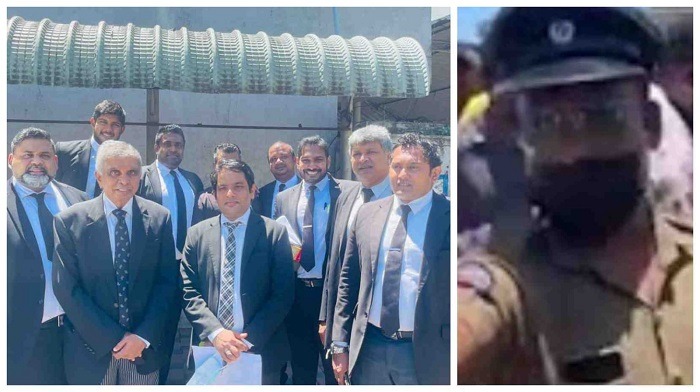
A group of lawyers has secured the release of the Police Seargent who was arrested following a disciplinary inquiry over his actions to join the public protest at the Galle Face Green yesterday.

The Police officer had voiced his support for the people and issued a statement joining the protest against President Gotabaya Rajapaksa and his Government.

He was later summoned for an inquiry by the Police Department, which initiated disciplinary action against the officer and later arrested him.

The Police officer who was presented in court was represented by a group of 12 lawyers, who had provided their services free of charge, as part of their support for the public protest.

Lawyers have been representing and providing their services in this manner for several people who have been detained or penalized for their involvement in the ongoing public protest.

Speaking to NewsWire, a lawyer who represented the Police Seargent said they had informed the court that voicing one’s opinion is not a crime and is a fundamental right of a person.

The lawyer further said the Government has caused the current crisis, and a Police Sergeant affected by the crisis voicing his opinion on the matter is not an offence.

He said that thereafter, the court had granted bail for the arrested Police Seargent.

LG Polls & PC Polls must be held soon – HRCSL

The Human Rights Commission of Sri Lanka (HRCSL) emphasizes that the elected public representatives in Parliament have a responsibility to provide a speedy solution to the current crisis facing the country.

The commission said it was questionable whether MPs were advocating for the aspirations of the people they represent at a time like this.

The Human Rights Commission (HRC) said that due to this a clear distance is being created between the aspirations of the people and the actions of the rulers.

The Chairperson of the Human Rights Commission said that the Human Rights Commission has recommended to the Government to hold the Provincial Council Election and Local Government Elections expeditiously.

She further pointed out that postponing the Provincial Council Election and Local Government Elections is a violation of the rights of citizens.

Speaking to News 1st, the Chairperson of the Human Rights Commission, retired Supreme Court Judge Rohini Marasinghe, said that her commission does not have the power to recommend that parliamentary elections be held at this time.

She pointed out that the reason for this was that the term of office of Parliament had not yet ended.

Posted in Uncategorized

Police officer who joined Galle Face protest produced before court

The uniformed police officer who had participated in the public protest in progress at the Galle Face Green has been granted bail after being produced before the court.

He was placed under arrest by the Colombo Fort Police on Thursday (April 14).

It is reported that a large number of lawyers have come forward to offer legal assistance to the police officer in question.

The case will be taken up again on April 29.

On Thursday, Sri Lanka Police announced that disciplinary action would be taken against the police officer who had participated in the protest and that legal action would also be initiated against him, if necessary.

Videos of a police officer in uniform joining protesters and making a statement were widely circulated on social media on Thursday.

In a media release, the Police Spokesman’s Office said the Police Sergeant in question, who is attached to the Kuttigala Police Station, had left the police station without permission and had joined the protest in this manner.

The release further stated that this incident has severely discredited the Sri Lanka Police, which is a disciplined service.