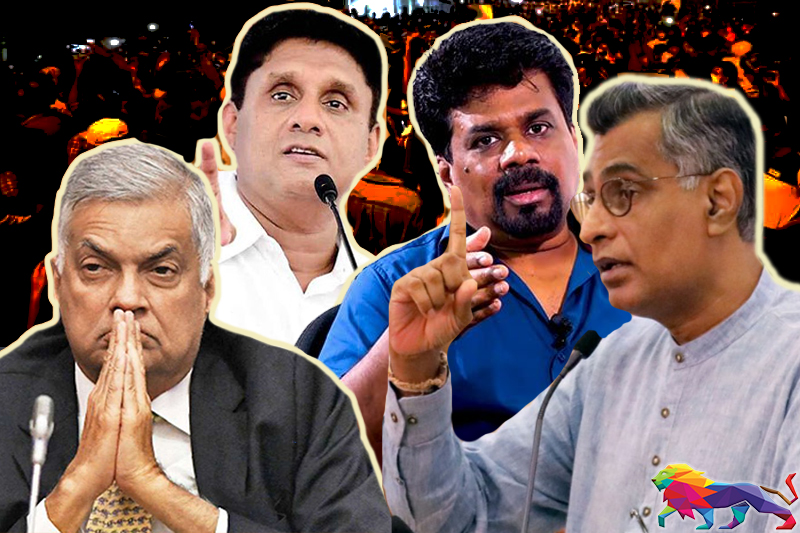
General election: EC calls for all-party solution

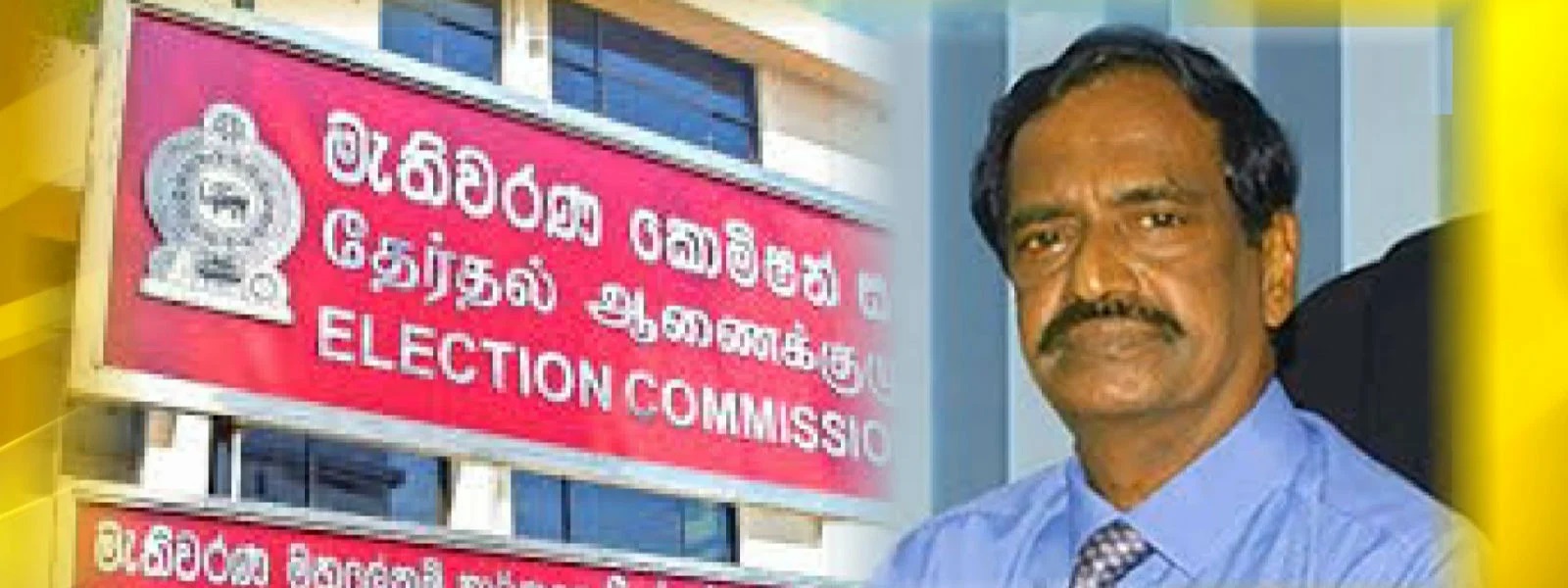
The Elections Commission (EC) yesterday (9) called for an all-party solution to the current political and economic crisis, with the EC Chairman stating that an election during the current instability and economic crisis was not the answer to Sri Lanka’s woes.

EC Chairman Nimal Punchihewa said that all political parties in Parliament must unite to bring Sri Lanka out of the current crisis.

“Going for an election is not the solution, in fact it can make things worse at this point. We must find a democratic solution through solidarity. In this sense the party leaders must come together for a given time period and share the responsibilities and find a way to face this crisis and overcome it. At least the political parties represented in Parliament should come together and find a solution.”

He said election costs would be over around Rs. 10 billion and the time-frame itself to organise an election would exceed three months, while shortages in supplies of paper and fuel also needed to be resolved.

“At least three-and-a-half to four months will be needed to arrange an election. Around Rs. 10 billion will be required to hold a General Election. It will be a similar cost for Provincial Elections as well since the basic costs are more or less the same. If the Government decides to go for an election, then it must find solutions to issues such as paper and fuel shortages as ä large supply of both will be needed to conduct an election.”

He said an electronic voting system was not an option as the necessary legislation would need to be introduced and the public would need to be accustomed to the new technology.

“Going for a digital election method is not viable, especially in a hurry. Our people have not voted using such a system so first that challenge must be overcome. Overall, from what we have seen in other countries, digital voting has not always been successful, so that is not an option at this point. In addition, the law has to be changed as well if we are going to introduce a new mode of casting a vote.”

Meanwhile, People’s Action for Free and Fair Elections (PAFFREL) too said holding polls was not the answer for the present issue. PAFFREL Executive Director Rohana Hettiarachchi said there were multiple reasons including the fact that a change in government would not be able to resolve the economic crisis as long as there was political instability.

“A common consensus must be found between the political parties in Parliament to resolve this crisis. Having an election to change the government won’t fix the problem of political instability and whoever comes into the opposition will once again hinder any moves the new government makes to try to turn things around. This is why it is important for political parties to come together and bring about political stability first.”

Galle Face protest against President continues despite rain

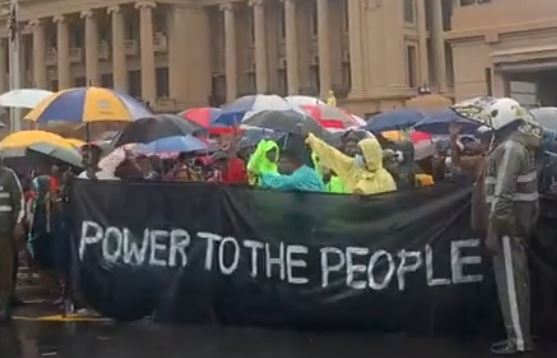
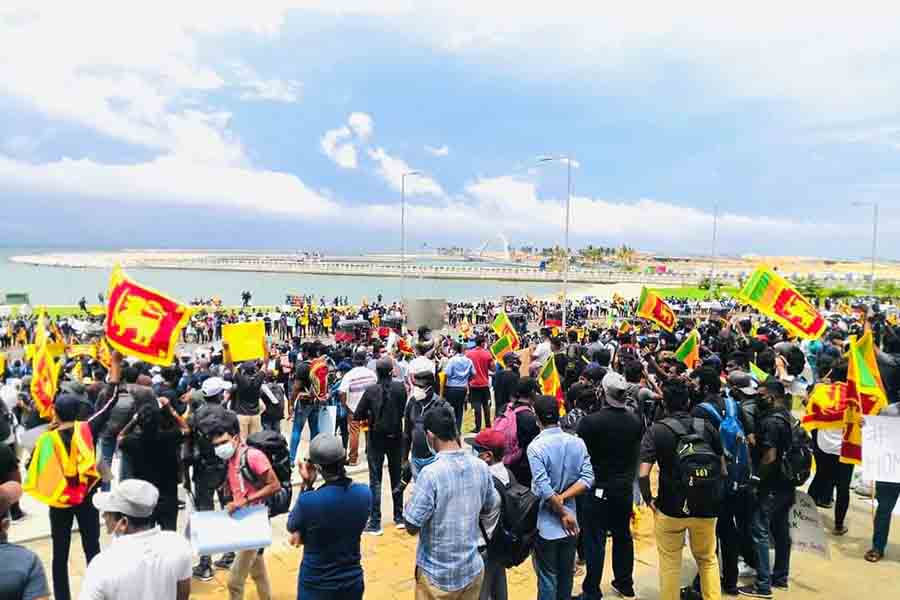
The massive protest that started at 10.00 am yesterday in front of the Presidential Secretariat near the Galle Face Green demanding the resignation of the President and the government is still in progress.

Despite the heavy rains, some protesters remained near the Presidential Secretariat last night continuing into the morning.

Meanwhile, many people were seen bringing in food and water to the protesters.

Easter Attacks conspirators gained power, but they cannot protect it – Cardinal

Easter Attacks conspirators can do whatever they want to secure power, but they cannot protect that power, remarked His Eminence Malcolm Cardinal Ranjith on Saturday (8).

The Head of Sri Lanka’s Catholic Church took part in a protest in Negombo with other religious leaders to voice his displeasure over delayed justice for the victims of the 2019 Easter Attacks.

“They tried to blame it all on the Muslim Community,” said His Eminence while stressing that the people must not forget that a conspiracy was orchestrated to carry out the attacks.

He slammed the government for failing to implement the recommendations made by the Presidential Commission of Inquiry that was appointed to investigate the Easter Sunday Attacks of 2019.

Former Sri Lankan Cricket captain Angelo Mathews says accountability is needed for the Easter Sunday Attacks of 21st April 2019. He said, “You can run but you can’t hide from the wrath of God.”

Posted in Uncategorized

Galle Face protest: protestors moving towards Presidential Secretariat

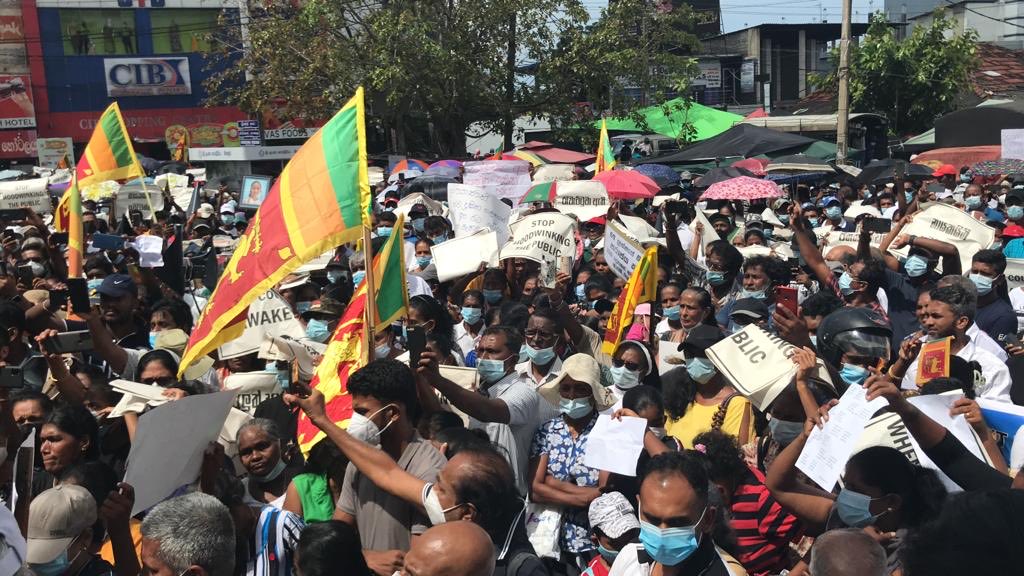
A protest is currently underway with the participation of a large number of people at Galle Face, Colombo.

large number of people including professionals and youth are participating in the protest, which is hoping to draw massive crowds.

The protestors were seen moving towards the Presidential Secretariat.

Heavy traffic was reported near Galle Face Green due to a protest being carried out by the youth, demanding President Gotabaya Rajapaksa to step down from the Presidency.

Security has been tightened near Galle Face Green and around the Presidential Secretariat.

Meanwhile, protests are also underway in several areas of the country against the government as well.

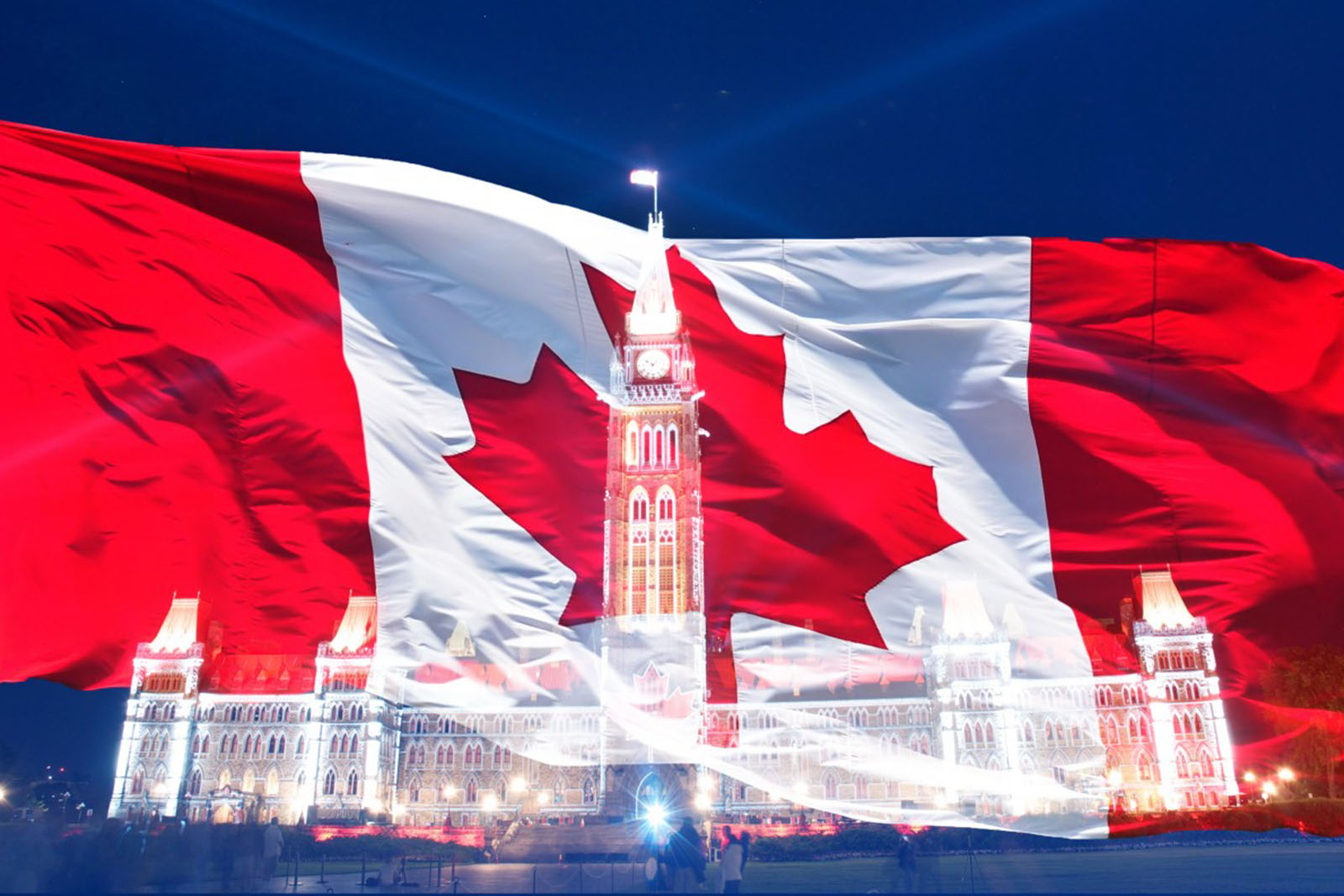
Canada deeply concerned about the situation in Sri Lanka

Canada says it is deeply concerned about the deteriorating economic situation and civil unrest in Sri Lanka.

Canadian Minister of Foreign Affairs, Mélanie Joly said that it is essential that the right to peaceful protest be respected.

“We stand in solidarity with the peoples of the island during these difficult times,” she tweeted.

Multiple countries, including Canada, have issued travel warnings for Sri Lanka as a result of ongoing protests.

Canada noted that on April 1, 2022, the President declared a nationwide state of emergency following protests in Colombo. The state of emergency will give local authorities the power to arrest individuals without a warrant. Further protests are planned in Colombo and across the country in the coming days. Curfews may be imposed on short notice, particularly in Colombo.

Canadians have been told to expect a heightened security presence, monitor local media to stay informed on the evolving situation, avoid areas where demonstrations and large gatherings are taking place and follow the instructions of local authorities.

Posted in Uncategorized

Crisis in Lanka and Pakistan: Similarities and Differences By P.K.Balachandran

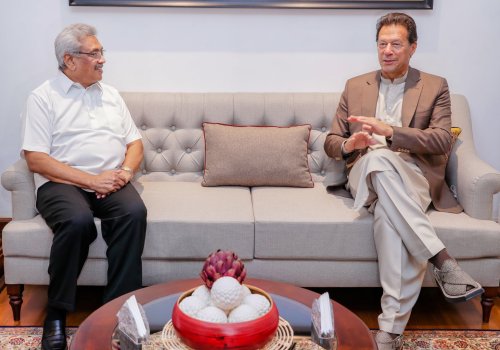
Sri Lanka and Pakistan are currently undergoing a rather unusual economic-cum-political crisis. In both, the population is facing economic distress and a foreign exchange shortage. And in both, there is a movement to oust the top leader, namely, President Gotabaya Rajapaksa in Sri Lanka and Prime Minister Imran Khan in Pakistan.

But there is a critical difference between the cases. While in Sri Lanka, the anti-government movement is entirely homegrown, in Pakistan, according to Imran Khan, it is foreign-inspired.

Imran has alleged that the US had funded and facilitated the opposition’s bid to move a No-Confidence Motion (NCM) against him in the National Assembly to install a puppet regime that will do the bidding of the US. He alleged that a US State Department official Donald Lu had warned Pakistan that if the NCM did not go through, the country would suffer. Imran alleged in an interview to ARY TV that the US and the opposition had been plotting a regime change since August 2021 because of his bid to give Pakistan an independent foreign policy to serve its national interest like India’s policy serves its national interest.

Imran got the NCM rejected by the Speaker of the National Assembly on the ground that it was a foreign-inspired conspiracy. He also got the National Assembly dissolved on the grounds that it had become a nest of saboteurs manipulated by external forces inimical to Pakistan.

Imran had got President Alvi to order fresh elections to the National Assembly. But in Sri Lanka, parliament is intact, with no talk of fresh elections from any quarter. In Sri Lanka, a settlement to the political issue involving the President is being sought within the existing parliament, as no one wants fresh elections in the midst of an economic crisis marked by a shortage of essentials.

In Sri Lanka, the Opposition and the ruling party rebels want President Gotabaya Rajapaksa to step down and facilitate the election of a new President by the existing parliament itself. The main opposition Samagi Jana Balawegaya (SJB) wants the abolition of the Executive Presidency to curb arbitrary rule. The Tamil Progressive Alliance (TPA) wants the repeal of the 20 th.Amendment and the re-enactment of the repealed 19 th.Amendment to clip the wings of the all-powerful Executive President, who is held responsible for the present plight of the country because the buck stop with him.

Issues in Sri Lanka and Pakistan are different. In Sri Lanka, the questions are: (1) Should power continue to rest with Executive President Gotabaya Rajapaksa or it should be held by an interim President elected by parliament to serve the remaining period of Gotabaya Rajaaksa’s five-year tenue? (2) Should a multi-party cabinet be formed with majority support in parliament to advice President Rajapaksa?

Sri Lanka’s coffers are virtually empty and it is going around the world with a begging bowl. The country cannot afford elections now. In contrast, in Pakistan, the economic situation is not so grave and elections can be held. Pakistan’s problems are more political (with an added foreign element in it) than economic.

In Sri Lanka, the politicization of the economic problem is causing concern in some circles because it delays a solution to the economic problem affecting all citizens. The Sri Lankan parliament Speaker, Mahinda Yapa Abeywardena, on Wednesday made a fervent appeal to MPs to stop giving priority to political demands (chiefly the ouster of President Gotabaya Rajapaksa) and put their heads together to find a way to end the severe economic crisis.

“Economists have warned that there may be a severe food shortage apart from fuel, gas and electricity shortages.” He appealed to all MPs to make good use of the opportunity to debate the current crisis and jointly find solutions for issues rather than find fault or blame each other.

“If we fail at that task, it is parliamentary democracy which fails. The result could eventually cost the lives of thousands of innocent people including all of us. I have experienced two such dark ages during my life. Hence, we must take every effort in order to avert such a situation and find solutions in order to make this country a better place for all of us and our children,” the Speaker said in an emotional speech.

Indeed, as the Speaker was making his statement, doctors of government hospitals were demonstrating in Colombo demanding essential medicines.

But the Speaker’s appeal fell on deaf ears on the politicos. When Gotabaya Rajapaksa conveyed to parliament that he will not quit, the opposition began demonstrating within parliament demanding that he quit forthwith.

Throwing the political ball into the court of the opposition, the President said that he would appoint anyone as Prime Minister if he or she could prove the backing of 113 MPs (in a House of 225 including the Speaker) to form a government. He was aware that behind the opposition’s bluster it was badly divided and would find it hard to unite to form a stable government.

One of the factors favoring President Gotabaya Rajapaksa is the growing concern about the use of violence by the some protestors in parts of the island. The Bar Association of Sri Lanka (BASL), while defending the right of those protesting peacefully, has called upon authorities to take necessary action against any protesters inciting violence.

Chastened by the agitation, the Lankan government has shed its reserve about going to the IMF for a rescue package. The IMF had said that “foreign debt service needs of US$ 7 billion each year will require access to very large amounts of external financing at concessional rates and long maturities.” President Gotabaya Rajapaksa has appointed a team of eminent economic and fiscal experts as Members of the “Presidential Advisory Group on Multilateral Engagement and Debt Sustainability.” The group will help conduct negotiations with the IMF and other international funding institutions. The members of this elite group are: Dr Indrajit Coomaraswamy, Prof. Shanta Devarajan, and Dr Sharmini Coorey.

In Pakistan, the trigger for the current crisis has been Imran’s arrogant style of functioning, his intolerance, the demonization of the opposition and his antagonism to the US, a long-time benefactor of Pakistan. Imran has also been none-too-friendly with the army, the national political watchdog in Pakistan since the 1950s.

However, though the state of the economy is a secondary factor, Imran’s performance in this sphere has left much to be desired. According to a December 2021 poll, 55% of Pakistanis had declared the performance of Imran’s Pakistan Tehreek-e-Insaf (PTI) government as being below par. In 2019–20, Pakistan’s growth rate had dropped to minus 0.4%. It is now rising at 2 to 4%, but this is still well below the 7% or more needed to stay ahead of its population growth.

Pakistan’s continuing poor fiscal situation is due to its inability to increase revenues. High inflation is a major worry. From January 2020 to March 2022, India’s food inflation had been about 7% whereas Pakistan’s was around 23%, pointed out Uzair Younus, director of the Pakistan Initiative at the Washington-based Atlantic Council.

Writing in Wall Street Journal, Saeed Shah says: “Pakistan’s economy has for decades limped from one crisis to another, unable to sustain the growth needed for its young and fast-expanding population. Gross domestic product per capita of less than US$ 1,200 a year is more than a third lower than India’s, making Pakistan the 183 rd. poorest country globally, World Bank data show.”

Foreign direct investment has dropped. Pakistan is on its 22nd bailout under IMF supervision since first turning to the lender in 1958, Saeed Shah says. Pakistan also remains on the “Grey List” of the Financial Action Task Force that monitors illegal money movements and terrorist financing.


Posted in Uncategorized

UN experts condemn crackdown on protests in Sri Lanka

UN human rights experts urged the Sri Lankan Government to guarantee the fundamental rights of peaceful assembly and of expression during peaceful protests, amid the country’s severe economic crisis.

“We are gravely concerned by the recent proclamation of a state of emergency as well as the order that blocked access to social media platforms,” the experts said. “These measures seem aimed at discouraging or preventing peaceful protests in the wake of the worsening economic crisis and the lack of access to fuel, electricity, medicines and essential food items.

“We condemn the excessive use of teargas and water cannon to disperse protesters, as well as the recent block of social media platforms. We urge the Sri Lankan Government to allow students, human rights defenders and others to protest in a peaceful manner, and to freely share their political views and express their discontent, both online and offline.”

Issuing a statement the UN also said that the Sri Lanka’s population has been hit by rising inflation, shortages of fuel and essential goods and prolonged power cuts as a result of a scarcity of foreign exchange. The economic crisis has aggravated an already dire situation on access to food and health, causing difficulties for millions of persons living in poverty and for persons with serious medical conditions to access medicines or hospitals.

On 31 March 2022, hundreds of people gathered in front of the president’s residence, demanding his resignation over his handling of the crisis, in an initially spontaneous and peaceful demonstration. Security forces fired teargas and water cannon to disperse the crowd, prompting clashes. Nearly 50 people were injured, including several journalists, and there were more than 50 arrests.

The compounded impact of foreign debt, corruption and the COVID-19 crisis, has affected the country’s economy. Experts called on the government to ensure that all human rights be respected and protected.

Thousands of people have since joined the daily protests, calling for political and economic reforms. The government imposed nationwide curfews from 2 to 4 April, arresting over 600 people found in violation of the curfew. On 2 April 2022, the president declared a nationwide public state of emergency, that has since been revoked, empowering him to override most laws with the exception of the constitution, while the government blocked access to several social media platforms. Access to these platforms was later restored.

The experts called on the authorities to engage in constructive and open dialogue with the Sri Lankan people.

“Peaceful protests and voices of legitimate dissent should not be met with unnecessary and excessive use of force by authorities,” the experts said. “Resorting to use of force against protesters will only jeopardize avenues to express discontent peacefully, risking instead an escalation of tensions.

“We urge the Sri Lankan Government to seek an open and genuine dialogue with peaceful demonstrators on political reforms and means to lessen the impact of the economic crisis.”

Posted in Uncategorized

EU calls on Sri Lankan authorities to explore democratic ways out of crisis

The Delegation of the European Union to Sri Lanka noting that freedom of assembly and freedom of expression are pillars of any democratic society, when they remain peaceful, encouraged all parties to continue acting with restraint and find constructive and democratic ways out of the crisis.

The Delegation of the European Union issued a joint statement together with the diplomatic missions of EU Member States Germany, France, Italy, the Netherlands and Romania and with the diplomatic missions of Australia, New Zealand, Norway, Switzerland, and the United Kingdom regarding the current situation in the island nation.

Following is the full statement:

Freedom of assembly and freedom of expression are pillars of any democratic society, when they remain peaceful. We therefore encourage all parties to continue acting with restraint. We consider the end of the state of emergency as a positive step.

We call on all parties to explore constructive and democratic ways out of the current crisis that has taken its toll on the Sri Lankan people.

We stress the extreme urgency of the situation, which requires the authorities to start in-depth discussions with the International Monetary Fund (IMF) on the reforms needed to bring the Sri Lankan economy back to a sustainable path.

Posted in Uncategorized

Sri Lanka opposition eying impeachment amid no-confidence motion: sources

Sri Lanka’s opposition is eying an impeachment of President Gotabaya Rajapaksa as calls intensify for his resignation, political sources said as efforts are also underway to collect signatures for a no-confidence motion.

The main opposition Samagi Jana Balawegaya which supported a finance bill without calling for a vote this week, had warned that a no-confidence vote would be brought.

Earlier about 10 parties linked to sacked ministers Wimal Weerawansa and Udaya Gammapila had said they will pull the plug on the government at a time chosen by them.

Efforts are under way to garner the support of legislators who are said they were ‘independent’ last week, according to political sources.

Sri Lanka is operating with four ministers and President Rajapaksa is expected to announce a new cabinet which will bring more ministers.

Sri Lanka’s parliament attempted to impeach the late President Ranasinghe Premadasa in the 1990s but the effort failed after then speaker M H Mohammed switched sides.

Impeaching a President is an exhausting process under Sri Lanka’s constitution.

The current speaker is also a from the President Rajapaksa’s party.

Article 38

2)

(a) Any Member of Parliament may, by a writing addressed to the Speaker, give notice of a resolution alleging that the President is permanently incapable of discharging the functions of his office by reason of mental or physical infirmity or that the President has been guilty of-

(i) intentional violation of the Constitution,

(ii) treason,

(iii) bribery,

(iv) misconduct or corruption involving the abuse of the powers of his office, or

(v) any offence under any law, involving moral turpitude, and setting out full particulars of the allegation or allegations made and seeking an inquiry and report thereon by the Supreme Court.

(b) No notice of such resolution shall be entertained by the Speaker or placed on the Order Paper of Parliament unless it complies with the provisions of sub-paragraph (a) and –

(i) such notice of resolution is signed by not less than two-thirds of the whole number of Members of Parliament, or

(ii) such notice of resolution is signed by not less than one-half of the whole number of Members of Parliament, and the Speaker is satisfied that such allegation or allegations merit inquiry and report by the Supreme Court.

(c) Where such resolution is passed by not less than two-thirds of the whole number of Members (including those not present) voting in its favour, the allegation or allegations contained in such resolution shall be referred by the Speaker to the Supreme Court for inquiry and report.

(d) The Supreme Court shall, after due inquiry at which the President shall have the right to appear and to be heard, in person or by an attorney-at-law, make a report of its determination to Parliament together with the reasons therefor.

(e) Where the Supreme Court reports to Parliament that in its opinion the President is permanently incapable of discharging the functions of his office by reason of mental or physical infirmity or that the President has been guilty of any of the other allegations contained in such resolution, as the case may be, Parliament may by a resolution passed by not less than two-thirds of the whole number of Members (including those not present) voting in its favour remove the President from office.

US asks citizens to ‘reconsider’ travel to Sri Lanka in new advisory

The United States in its latest travel advisory on Wednesday has cautioned its citizens from travelling to Sri Lanka amid the ongoing economic crisis and unrest in the country.

Pointing to the fuel and medicine shortages in Sri Lanka, the US’ new ‘Level 3’ advisory also mentioned terror threats as a concern.

“Reconsider travel to Sri Lanka due to COVID-19 and fuel and medicine shortages. Exercise increased caution in Sri Lanka due to terrorism,” said the US State Department said in its latest travel advisory.

“There have recently been protests over the economic situation and queues at gas stations, grocery stores and some pharmacies. Protests have occurred throughout the country and have mostly been peaceful. In some instances, police have used water cannons and tear gas to disperse protesters,” the advisory said.

Mentioning the power outages in the nation, the advisory further said, “There have also been daily planned power outages across the island, as well as some unplanned power outages, as fuel for backup generators is increasingly scarce. Public transportation in some instances has been limited or curtailed. Travellers should monitor local media for updates on the ongoing situation.”

Meanwhile, the US has also issued a level-3 travel health notice for Sri Lanka due to Covid-19. The ‘level-3’ indicated a high level of coronavirus cases in the country. “Your risk of contracting COVID-19 and developing severe symptoms may be lower if you are fully vaccinated with an FDA-authorised vaccine. Before planning any international travel, please review the CDC’s specific recommendations for vaccinated and unvaccinated travellers,” said the travel advisory.

Meanwhile the US Embassy in Colombo said the travel advisory was updated to reflect the impact of Sri Lanka’s economic and political challenges on travelers.

In a twitter message, it said the overall level of the advisory remains at ‘Level 3’ and that the terrorism language has stayed consistent since April 2019.

“Updated travel advisory for Americans in Sri Lanka to reflect the impact of SL’s economic & political challenges on travelers. Please note the overall level of the advisory remains at Level 3 & the terrorism language has stayed consistent since April 2019,” the US Embassy tweeted.

People are continuing their protests against the incumbent government over the shortage of food and fuel and power cuts. Protesters are also demanding that the president and his entire government resign.