Not ready to accept any proposal unless President resigns: Anura

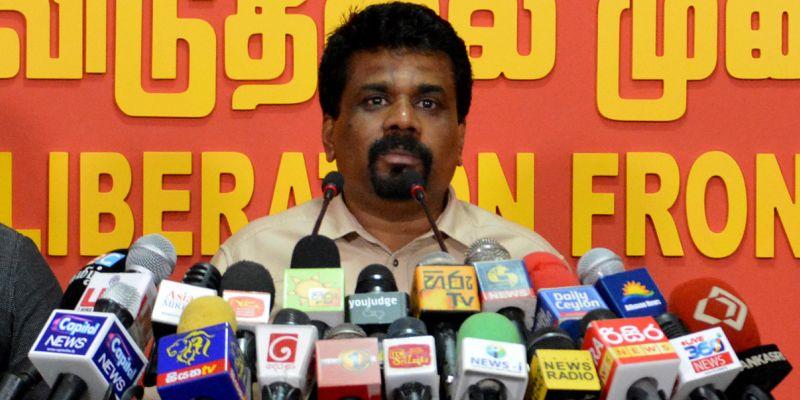
The National People’s Power (NPP) MP Anura Kumara Dissanayake said today that they were not prepared to accept any proposal such as an interim government unless President Gotabaya Rajapaksa resigns from being the President.

He told Parliament that any proposal that are being made while President Rajapaksa in power, would not alleviate people’s violent protests, as one of the key demands of the people was President to quit from the post.

He said none of the proposals made by the President was effective in resolving the burning issues of the people and added that people strongly demand that the President should “go home”.

“Resigning from the Cabinet or forming an interim government were not the solutions to the current issues,” he said.

MP Dissanayake said they were ready to make proposals or accept any mechanism proposed to resolve the crisis on condition that the President should resign from the post in the first place.

Posted in Uncategorized

NZ PM Jacinda Ardern seeks advice on Sri Lanka crisis

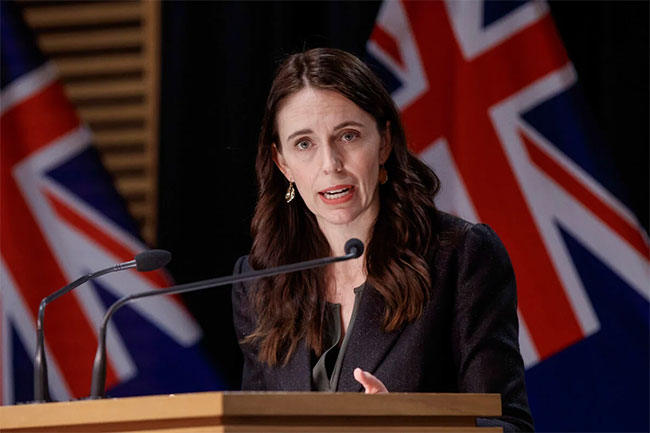
New Zealand Prime Minister Jacinda Ardern said Sri Lanka is experiencing an incredibly tumultuous period as island-wide protests continue amid an economic crisis.

Economic blunders have been compounded by the pandemic, resulting in soaring inflation and a shortage of food, fuel and medical supplies, the Newshub reported.

“In terms of the foreign policy implications for New Zealand that’s where I am looking to receive an additional briefing over the coming 24 hours from the ministry,” Prime Minister Jacinda Ardern said.

The protests are calling for a change in the leadership of the Sri Lankan government, which stands accused of mismanaging public funds.

New Zealand Sri Lankans are signing a petition calling for the NZ Government to condemn the actions of the Sri Lankan leadership.

When asked if she condemned Sri Lanka’s leadership, Ardern stopped short but acknowledged the growing frustration of Sri Lankan people.

“It is a very tumultuous time politically and domestically in Sri Lanka,” she said.

The President of Sri Lanka, Gotabaya Rajapaksa, imposed a 36-hour curfew and a social media blackout in response to the protests.

New Zealand Foreign Minister Nanaia Mahuta has also weight weighed in, saying: “New Zealand strongly upholds democratic values and institutions, including free speech and the right to peacefully protest.”

She said Aotearoa New Zealand was monitoring the unfolding economic, political and security situation in Sri Lanka closely – and encouraged all parties to continue to work on a peaceful solution.

The protest is drawing attention from around the world with the diaspora also taking to the streets in the US, Australia and New Zealand.

Posted in Uncategorized

Court prevents Cabraal from traveling overseas

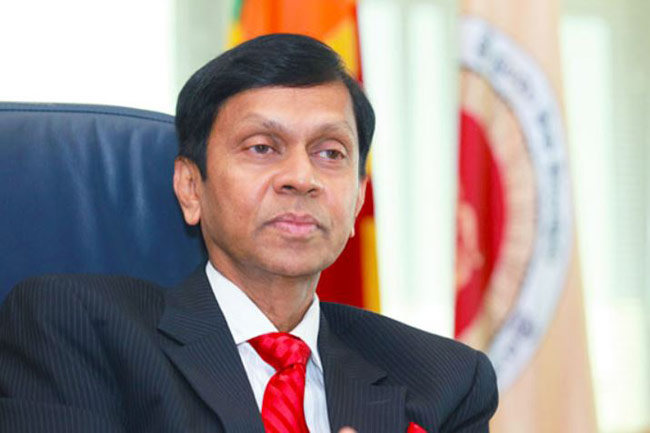
Colombo Magistrate’s Court issued an order preventing Ex-Central Bank Governor Ajith Nivard Cabraal from traveling overseas.

Ajith Nivard Cabraal was also issued summons to appear in Court on the 18th of April.

The order was issued by Colombo Additional Magistrate Harshana Kekunuwela upon considering an application filed by former governor Keerthi Tennakooon.

The application charged Cabraal for abusing public funds during his tenure as the governor of the central bank.

President’s Counsel Maithri Gunaratne and Attorney-at-Law Gunaratne Wanninayake appeared on behalf of the plaintiff.

The additional magistrate has also ordered Ajith Nivard Cabraal to appear in court on the 18th of this month.

Pharmaceuticals in short supply; GMOA declares a health emergency

Sri Lanka’s State Ministry of Production, Supply, and Regulation of Pharmaceuticals said that government hospitals are running short of 40 different medicines due to the present crisis.

Secretary to the State Minister Dr. Saman Ratnayake told News 1st that stocks of 60 different medicines will only last for another week, and less than a month.

However, facilities have been arranged for pharmaceutical importers to import medicines under the Indian Credit Line.

In addition, The Bank of Ceylon and People’s Bank have decided to open Letters of Credit valued at USD 7 Million each.

However, health professionals have warned that the entire health system would collapse within the next week if the crisis is not resolved.

Dr. Senal Fernando, the Secretary of the Government Medical Officer’s Association speaking to reporters said the GMOA has decided to declare a health emergency across Sri Lanka.

Following the mass resignation of the Sri Lankan cabinet, there is no proper authority to be held responsible for the crisis, said one local doctor who took part in a protest outside of the capital, Colombo.

According to local doctors, medication required for the daily clinics, diabetes patients, as well as heart patients is in short supply, while medical equipment is also scarce.

Sri Lanka imports most of its pharmaceuticals from Asian nations such as India, China, Pakistan, and Bangladesh.

Due to the foreign exchange crisis, the importation of pharmaceuticals is in limbo, as the country needs to source an additional USD 20 Million to avert a major crisis

Posted in Uncategorized

Sri Lanka’s currency plunges to world’s worst-performing in economic meltdown

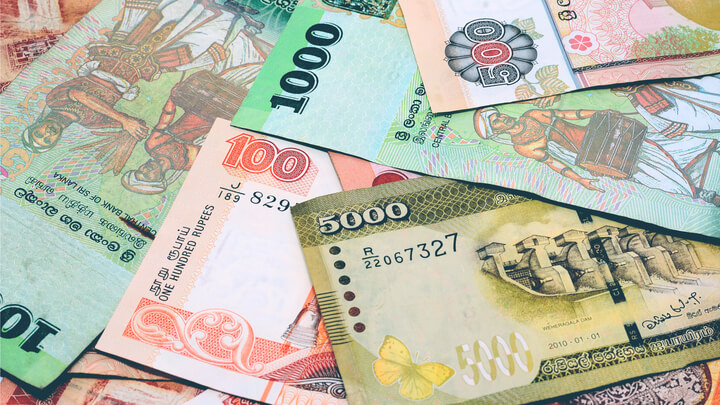
Sri Lanka’s rupee has plunged to a record low to become the world’s worst-performing currency, as President Gotabaya Rajapaksa struggles to contain a worsening economic and political crisis.

The Sri Lankan rupee was hovering near SLRs300 per US dollar on Wednesday, down 32 per cent year to date and lagging even Russia’s rouble, after Rajapaksa ended emergency rule just days after it was imposed.

Sri Lanka is facing a foreign exchange crisis as its government grapples with looming debt payments, widespread protests and an economic emergency.

The backpedal on the emergency decree from Rajapaksa’s government came after his new finance minister, Ali Sabry, quit less than 24 hours into the job.

Sabry’s resignation was the latest in a rush of departures. The country’s entire cabinet quit over the weekend following nationwide protests over severe food and power shortages as well as runaway inflation.

Central bank governor Ajith Nivard Cabraal, who was scheduled to oversee a policy meeting on Thursday, also resigned on Monday.

The hollowing out of Rajapaksa’s administration has stoked concerns over the country’s ability to secure help from the IMF to avoid defaulting on looming international bond payments.

Previous finance minister and the president’s brother Basil Rajapaksa had been preparing to fly to Washington to discuss terms with the IMF prior to his resignation over the weekend.

“Things don’t look good. So much depends on whether they can get any IMF funding,” said Steve Cochrane, chief Asia-Pacific economist at Moody’s. “A stable government matters.”

Cochrane said raising interest rates could help curb inflation and potentially bolster the rupee. “But there are other factors driving inflation that the central bank has little control over,” he added, including commodity prices pushed up by Russia’s invasion of Ukraine, supply chain constraints and lack of foreign reserves to pay for imports.

Analysts said markets were focused on a $1bn sovereign dollar bond repayment due on July 25. On Wednesday, that bond was trading well below face value at a record low of $0.58, as doubts mounted over Sri Lanka’s ability to come up with enough dollar funding to make the payment.

As finance minister, the president’s brother oversaw a regime of drastic tax cuts that prompted global rating agencies to repeatedly downgrade the country’s sovereign credit rating, leaving it frozen out of international debt markets.

That forced Sri Lanka to make interest payments on its sovereign bonds from dwindling foreign reserves, which have come under pressure during the coronavirus pandemic. The tourism sector, one of the island nation’s main revenue generators, has been hit particularly hard.

The IMF estimated in late February that Sri Lanka had only about a month worth of foreign reserves left.

“With the government in disarray, the prospects of securing an IMF package look bleak,” said Alex Holmes, Asia economist at Capital Economics. “That again elevates the chances that the government will eventually have to resort to a sovereign default”.

(Financial Times)

Posted in Uncategorized

Sri Lanka’s GDP growth projected to dip to 2.4% in 2022 – ADB

The Asian Development Bank’s (ADB) annual flagship economic publication has forecast a muted recovery from the coronavirus disease (COVID19) pandemic as Sri Lanka’s economy grapples with macroeconomic challenges arising from high debt, low foreign reserves, and inflationary pressures.

ADB said it projected Sri Lanka’s economic growth to dip to 2.4% in 2022 and improve marginally to 2.5% in 2023.

The Asian Development Outlook (ADO) 2022 observed that even as the Omicron variant of COVID-19 subsides, the country is facing several headwinds. Rising food, fuel and commodity prices, higher import prices, supply chain disruptions, shortages stemming from the foreign exchange squeeze, demand side pressures, and exchange rate depreciation will drive inflation higher in 2022.

Inflationary pressures are expected to moderate in 2023 as global prices fall and supply constraints ease.

“A strong vaccination drive helped economic activity recover from the impact of multiple COVID-19 waves, with tourism, one of the worst hit sectors, gaining strength at the turn of the year,” said ADB Regional Economic Advisor for South Asia Rana Hasan. “At the same time, strong growth is being held back by Sri Lanka’s debt overhang, large external financing requirements, energy shortages, and high inflation. Immediate measures to restore macroeconomic stability and debt sustainability are crucial for recovery to gain traction.”

Underlying macroeconomic weaknesses, the pandemic’s lingering impacts, energy shortages and external shocks pose downside risks to the economic outlook.

In the absence of access to sustained balance of payment financing, foreign exchange reserves will continue to be limited, and external sector vulnerabilities are likely to persist. The implications of the Russian invasion of Ukraine will be seen through higher oil and food prices as well as reduced tourism and exports earnings.

Sri Lanka resignations heighten uncertainty compounding external crisis: Moody’s

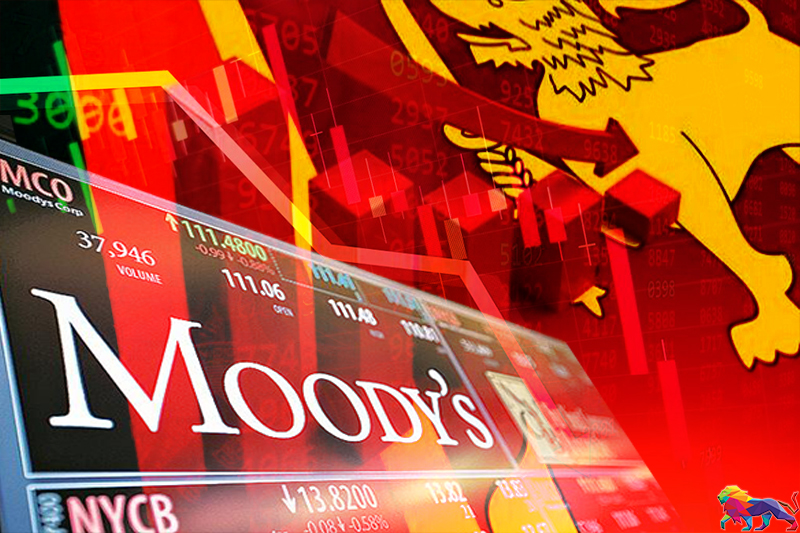
A wave of resignations of ministers and officials in Sri Lanka has raised policy uncertainty at time when the country is reeling from a currency crisis and shortages and has debt repayments, Moody’s, a rating agency has said.

“Protracted political uncertainty is likely to hinder progress in obtaining external financing from key development partners or attracting foreign direct investment, or both, because of Sri Lanka’s reliance on capital inflows to repay its sizeable foreign-currency obligations,” Moody’s said.

“The difficult political environment could also weigh on policymaking and the economy’s recovery from the pandemic, compounding challenges to fiscal consolidation and government efforts to shore up reserves to service its external debt obligations.”

Sri Lanka’s cabinet resigned after protests broke out around the country. The central bank Governor and Treasury Secretary also resigned.

The full statement is reproduced below:

Resignations of key officials raise policy uncertainty,
compounding external liquidity and fiscal difficulties

On 3-4 April, all of Sri Lanka’s (Caa2 stable) cabinet, with the exception of President Gotabaya Rajapaksa and Prime Minister Mahinda Rajapaksa, tendered their resignations, along with the governor of the central bank.

The resignations were partly a response to rising public dissatisfaction and social tensions over high inflation, shortages of essential items and lengthy power cuts, increasing political and policy uncertainty at a time when Sri Lanka is experiencing a severe external liquidity and fiscal crisis and a deteriorating macroeconomic environment.

The government declared a state of emergency and imposed a two-day countrywide curfew on 2-3 April after protesters demanding the president’s resignation stormed his home.

Protracted political uncertainty is likely to hinder progress in obtaining external financing from key development partners or attracting foreign direct investment, or both, because of Sri Lanka’s reliance on capital inflows to repay its sizeable foreign-currency obligations.

The difficult political environment could also weigh on policymaking and the economy’s recovery from the pandemic, compounding challenges to fiscal consolidation and government efforts to shore up reserves to service its external debt obligations.

Intensifying social unrest and sporadic curfews are likely to further strain the tourism industry, delaying the recovery in tourism receipts that were a crucial part of the government’s plans to bolster foreign-currency inflows before the pandemic.

An extended period of political uncertainty could also delay ongoing discussions to secure external financing from development partners, deter foreign direct investment and prolong negotiations with the IMF over potential policy or financing support.

Sri Lankan authorities recently signaled their willingness to engage the IMF for support because of the country’s dwindling foreign-exchange reserves buffer.

Sri Lanka’s foreign-exchange reserves were around $2 billion as of the end of February 2022, well below the government’s annual external debt repayments of $6 billion-$7 billion through to at least 2025 and covering less than two months of imports. Very low foreign-exchange reserves in turn have led to broad restrictions on imports (among other measures to preserve foreign-exchange resources) and shortages of several essential items such as fuel and milk powder.

Inflation rose to double digits in November 2021 and reached 17.5% year on year in February 2022.

Meanwhile, Russia’s military conflict with Ukraine (Caa2 rating under review for downgrade) is exacerbating Sri Lanka’s external difficulties, mainly via a higher energy and food import bill. Fuel imports accounted for 18% of total imports in 2021 and agricultural imports 8%. Higher inflation is likely to prompt further policy rate hikes, which will raise government borrowing costs and further weaken debt affordability.

The Central Bank of Sri Lanka raised its main policy rate by 100 basis points to 10.5% in early March 2022 and its policy rate is now 200 basis points above a low of 8.5% in 2020-21, although it remains below the 15% rate that preceded aggressive rate cuts following the coronavirus outbreak.

Posted in Uncategorized

Monk claims Mahanayaka Theras have requested govt. to resign

The government should not underestimate the public anger and must take immediate steps to resign immediately while forming a caretaker administration to restore the country’s crisis and bring it under control, Sri Lanka Ramanna Nikaya, Ven.Prof. Aththangane Rathanapala Thera said.

Addressing the media, the prelate said the Mahanayaka Theras have also requested the government to resign immediately.

“During the past 2½ years, the incumbent government has ruined the country to its end, destroyed democracy, the country’s supremacy of the law, sold national assets, the country has been colonized, the country’s money has been misused, and foreign exchange has been misused as well. People know everything,” he said.

That is why the people have come on to the streets. People have begun to beg and cry for food. If the government does not take the situation seriously by listening to them, people will move to take very stern action.

Therefore, the Mahanayaka Theras requested the government to honour the public demand and resign with immediate effect without putting people under more burden.

With his MPs jumping ship, Lankan President revokes emergency

The beleaguered Sri Lankan President Gotabaya Rajapaksa revoked the Public Emergency late on April 5, following the defection of 42 MPs from the ruling coalition which had reduced the government’s majority in parliament to two. The government has to have at least 113 MPs in the House of 225. At the end of April 5, it had 114, a wafer thin majority, which it could lose any time.

Due to defecations from the ruling coalition, the “Independent group” in parliament has swelled to 42. The opposition comprises 68 MPs.

42 MPs had broken away from the ruling Sri Lanka Podujana Peramuna (SLPP) coalition led by President Gotabaya Rajapaksa. They were responding to the popular demand that the President quit office, owning responsibility for the current economic crisis marked by sky rocketing prices and shortages of food, fuel and foreign exchange. Power cuts ranging from 5 to 13 hours per day had stretched the patience of Sri Lanka’s 21 million citizens.

Groups of people from various economic classes and age groups continued to gather at public places across the island to shout slogans and hold placards demanding the exit of the President and the Rajapaksas from the government. Two Rajapaksa brothers and two of their sons are Ministers, while sibling Gotabaya Rajapaksa is the Executive President with humongous powers.

On April 5, 42 MPs from the ruling Sri Lanka Podujana Peramuna (SLPP) and its allies like the Sri Lanka Freedom Party (SLFP) and the Ceylon Workers’ Congress, told parliament that they would henceforth sit separately as “Independent groups.”

Foreseeing this, President Gotaabaya Rajapaksa had said on Monday that he would appoint anyone as Prime Minister if he or she came with the support of a minimum of 113 MPs, the minimum needed to form a government. The opposition parties rejected the President’s offer.

The reason for the rejection is that under the Sri Lankan Executive Presidential system, the President is all powerful, especially after the enactment of the 20 th. Amendment which had enhanced the powers of the President to the detriment of the Prime Minister, the cabinet and parliament. With the 20 th. Amendment in place, the President can always over-rule the Prime Minister no matter how many MPs the latter has to back him. And a strong-man like Gotabaya Rajapaksa would certainly not allow a Prime Minister from the ranks of the opposition to function independently and effectively.

This is why Sajith Premadasa, Leader of the Samagi Jana Balawegaya (SJB), the principal opposition party, demanded the abolition of the Executive Presidency. To manage the interim period, he requested the Speaker to seek the resignation of the President. But the Speaker said that the constitution has no provision for making such a request. He told the MPs to settle the issue politically.

Defections Galore

The first government group to announce its exit was the 11-party outfit led by former Ministers Wimal Weerawansa and Udaya Gammanpila. 17 MPs from this group decided to function as an independent group. The Sri Lanka Freedom Party (SLFP) leader Maithripala Sirisena said that the 16 MPs of his party have decided to function as an independent group. Seeing the writing on the wall, Sri Lanka Podujana Peramuna (SLPP) MP and former Minister Anura Priyadharshana Yapa announced that 12 SLPP MPs have decided to function independently. The Tamil Progressive Alliance has said that it would support the government if it repealed the 20 th.Amendment.

Newly Appointed Finance Minister Quits

Meanwhile, the newly appointed Finance Minister Ali Sabry tendered his resignation to the President saying that the Ministry of Finance should be in the hands of an expert in the field of economic and finance given the complexity of the economic and financial situation. Sabry is a lawyer. He even offered to resign from his seat in parliament to enable the SLPP to nominate a financial expert in his place and give him the Finance portfolio.

Finance Secretary A.R.Attygalle also quit. The Central Governor Ajith Nivard Cabraal had already resigned and P.Nandalal Weerasinghe, the Deputy Governor, had taken his place. Last weekend, two State Ministers had quit from their posts.

What will Gotabaya Do?

What President Gotabaya Rajapaksa will do now, with so many of his crew jumping ship, is the million-dollar question now. Will he resign seeing the writing on the wall or will he hang on regardless of his growing unpopularity?

Most political observers, who know his mindset expect him to stay put and fight, touting Highway Minister Johnston Fernando’s argument that he still enjoys a mandate given by 6.9 million voters in the last Presidential election.

Rajapaksa might go along with the United National Party (UNP) Ranil Wickremesinghe’s suggestion that MPs should set aside politics and jointly evolve a solution to the economic problem, which lies at the root of the political problem. Wickremesinghe told parliament on Tuesday that he had talked to the IMF, the World Bank and other international institutions and was told that they would help Sri Lanka tide over the current shortages. Sri Lanka could also seek help from a consortium of friendly countries such as India, China, Japan, US, and South Korea, Wickremesinghe said. In fact, all these countries have told the President that they were ready to help.

To Wickremesinghe, merely changing the government or the President will not solve the economic problem. Parliament should collectively evolve a national solution, though he said earlier that he would not mind taking up the Presidency if Gotabaya Rajapaksa resigned and parliament elected him to take his place temporarily.

Namal Rajapaksa, the son of Prime Minister Mahinda Rajapaksa and former Sports Minister, has noted that the demonstrators only want an individual to go, and are giving no thought whatsoever to solving the economic problem collectively through the formation of an all-party government as the President had suggested.

There is another school of thought which believes that in desperation, Gotabaya Rajapaksa, an ex-army officer, might hand over power to the army led by Gen.Shavendra Silva. But Gen.Silva met the Defense Attaches of the various embassies in Colombo on Monday and apprised them of the army’s role which he said is to aid civil power as and when it is called upon to do so.

“The armed forces of Sri Lanka would always comply with the Constitution and the Army is no exception,” Gen. Shavendra Silva said. “The Army as a professional outfit is always prepared to provide security and protection to the State as necessary,” he added.

Still another school of thought believes that the demonstrations would cease once the diesel shortage ends and power generation resumes with fuel aid from India and perhaps China too. Till then, Gotabaya Rajapaksa would hang on. Once shortages end, however temporarily, the Rajapaksa clan that had left the government will re-enter it to re-establish its political dominance over Sri Lanka, it is felt.

One of the reasons for the existence of the last line of thought is that Sri Lankans are not capable of sustaining movements over a long period of time. They tend to wait for elections to make their point. The next Presidential election is slated for 2024. And the other reason is the lack of unity in the opposition. There is no single tall leader in the opposition to unite it and give it decisive leadership.

Source: newsin.asia

Harin nominates Harsha as 6-month President

Samagi Jana Balawegeya (SJB) Opposition Parliamentarian Harin Fernando yesterday (6) urged the Parliament to come together to provide a solution to the people protesting on the streets, and suggested that fellow SJB MP and economist Dr. Harsha de Silva be made a caretaker President for six months at least, until an election can be held.

“People are protesting on the streets because they are frustrated. We as the Parliament are responsible for providing them with an answer. We need to put our political differences aside and come together to provide a solution. If President Gotabaya Rajapaksa resigns, then what next? The Constitution allows the Parliament to appoint a President. Let us come together. I propose that Dr. de Silva be made a caretaker President until an election can be held,” Fernando told the Parliament yesterday.

He said that the current President’s downfall has been the latter’s pride and his refusal to listen to criticism.

“I have told from back then that this is a curse. No President has fallen so fast, in two years,” he claimed.

He urged the Parliament to put aside its differences and come together for the people.

“Even the all-party meeting today (6) ended with no conclusion. The Parliament will get hit next,” he warned yesterday.

On Sunday (3), the 11 constituent parties of the Governing Alliance, led by Sri Lanka Podujana Peramuna (SLPP) Government MPs Udaya Gammanpila, Wimal Weerawansa, and Vasudeva Nanayakkara, proposed that an all-party, Interim Government be formed as a solution to the current political crisis gripping the country. Following the resignations of the Cabinet of Ministers on Sunday, four Cabinet portfolios (Finance, Foreign, Education, and Highways) were appointed in order to maintain stability in the country until a full Cabinet is appointed. However, President’s Counsel M.U.M. Ali Sabry resigned as the Finance Minister. The Government lost its two-thirds majority in the Parliament recently as 40 MPs announced that they will function independently. Although President Rajapaksa has reportedly called upon the Opposition to show a 113 majority to hand over power, the SJB, the National People’s Power (NPP), and the Tamil National Alliance (TNA) have stressed that they will not accept any solution that does not include the resignation of the President.