Opposition disunity and foreign aid may help the Rajapaksas stay afloat By P.K.Balachandan

The Rajapaksa regime in Sri Lanka, extremely hard-pressed though it economically and politically, might still survive thanks to disunity among the Opposition parties and the massive infusion of financial and material aid to the country from abroad. The fact that the politically savvy Prime Minister Mahinda Rajapaksa has come out of his shell and is fronting for the reclusive and apolitical President Gotabaya Rajapaksa, is also expected to buttress the government.

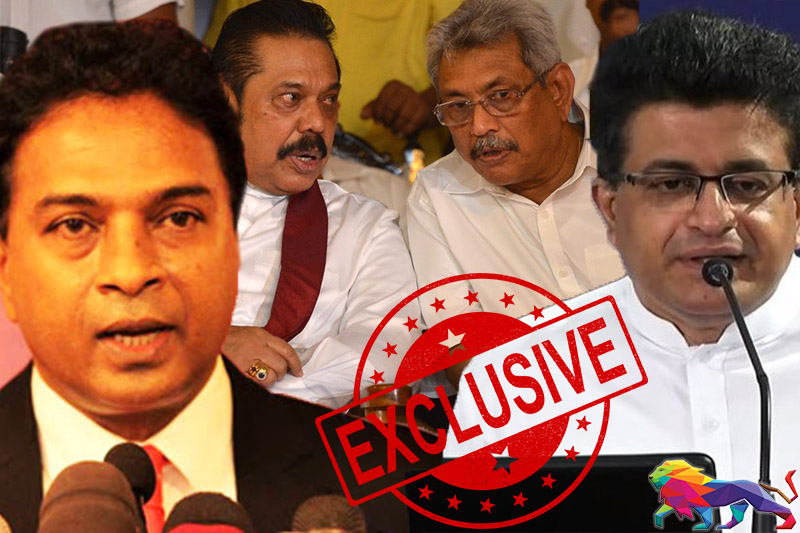
There are essentially six critical factors working in favor of the regime. The first factor is the Rajapaksas’ firm resolve to stay put in power so long as they have the backing of the constitution and the law. Their resolve is a major challenge to the Opposition which is chronically divided. President Gotabaya Rajapaksa has categorically told his detractors that he will not resign because he still has the mandate secured in the last elections and that he will not accept any corrective mechanism outside the framework of the constitution. This stance is fully backed by his elder brother, Prime Minister and political heavy weight, Mahinda Rajapaksa. The firmness of the Rajapaksas’ means that the Opposition will have to marshal all its resources and put the brothers on the mat if it is to dislodge them. But it appears that it is incapable of doing so.

The second factor is opposition disunity. Although after the defection of 42 MPs from the ruling coalition, the government had only one more than the required number to stay in power, it has survived because the opposition has multiple and clashing aims and is also lacking a single leader. In an act of bravado, the Janatha Vimukthi Peramuna-led National People’s Power (NPP) rejected the President’s call to parties in parliament to accept cabinet portfolios in an all-party interim government. The JVP and NPP leader Anura Kumara Dissanayake said President Rajapaksa could not make such a suggestion when the people were demanding his exit at once and with one voice. The NPP/JVP MP, Vijitha Herath, said that the President should be “impeached”, which is a very complicated process.

MPs of the breakaway group of the ruling Sri Lanka Podujana Peramuna (SLPP), the Sri Lanka Freedom Party (SLPP) and the 11-party alliance, jointly wrote to the President asking him to appoint an all-party government, and also a “National Executive Council” functioning above the cabinet. They also demanded a repeal of the 20 th.Amendment, which gives the President gargantuan powers; and the re-enactment of the 19 th.Amendment which had given more powers to parliament. The main opposition party, Samagi Jana Balawegaya (SJB), started collecting signatures for a Motion of No Confidence against the government. The Tamil National Alliance demanded the abolition of the Executive Presidency. But the Tamil Progressive Alliance (TPA) said that this demand was too ambitious and opted for the restoration of the 19 th.Amendment instead. The United National Party (UNP) leader Ranil Wickremesinghe asked the President to resign making way for him to become a caretaker President till the next election.

The opposition parties were also divided on the question of seeking IMF help to resolve the economic crisis. The Lanka Sama Samaj Party (LSSP) and the JVP/NPP are against going to the IMF, while the SJB and the United National Party (UNP) were for it.

The third factor is the inability of the Leader of the Opposition, Sajith Permadasa, to reconcile these different demands. He is unable to present one list of demands and press the government to accept them making use of the government’s wafer thin majority in parliament. The opposition is amorphous and leaderless.

The fourth factor in favor of the government is the assumption of leadership by Prime Minister Mahinda Rajapaksa, a past master in politics. He is filling the void created by Gotabaya Rajapaksa who has gone into a shell. Disregarding his poor health, Mahinda Rajapaksa left the backseat he had been occupying since 2019 end to engage with politicians and state the government’s case to the public. It was Mahinda Rajapaksa and not Gotabaya Rajapaksa who delivered an address to the nation over TV. In that, he showed empathy for the suffering public. But he also stated that the opposition had spurned his offer of positions in the government to jointly solve the country’s problems. He then justified the government’s decision to dig in and do its best to solve the problems on its own as mandated in the last elections.

The fifth factor is the amorphousness of the demonstrating citizens’ group demanding the President’s resignation. The demonstrators are basically apolitical middle and upper class youth. For them, protest is a part time activity. It is also a floating population, lacking an organizational structure and leadership. Prime Minister Mahinda Rajapaksa has cleverly offered to talk to them, knowing full well that they are not in a position to talk with one voice, except to keep chanting “Gota Go Home”.

The sixth and the most critical factor is the help that the international community is giving to enable Sri Lanka to come out of the economic woods. Indian aid of US$ 2.5 billion to buy essential fuel, food and medicines, has been arriving, to the great relief of the government as well as the masses. India will help with ‘bridge financing’ to enable Sri Lanka before it gets the IMF facility.

China too has promised US$ 2.5 billion in loans and buyer’s credit. The modalities for the disbursal of these funds are being worked out. Both India and China have enormous geostrategic and economic stakes in Sri Lanka and political stability is a necessary condition for those interests to be realized.

The US is at a remove as compared to India and China, but it is vitally interested in roping Sri Lanka into the anti-China, Indo-Pacific grouping. To achieve this, Washington will need a friendly and stable government in Colombo. Washington has clout in the IMF and the World Bank, which Sri Lanka has decided to approach for funds. It is expected that the US will help Sri Lanka in this regard. The encouraging part is that the Rajapaksa government has shed its reserve about approaching the IMF and will be sending a team of distinguished neo-liberal economists to negotiate with international funding institutions. President Gotabaya Rajapaksa has also spoken to other countries like Japan and South Korea and these have promised help.

With the onset of seasonal rains, hydro-electric power generation is expected to increase giving relief from long-duration power cuts. On the agricultural front, the Prime Minister has withdrawn the policy of disallowing chemical fertilizers and has revived the fertilizer subsidy to infuse life into the dying agricultural sector.

With the government indicating its determination to stay put and the international community inclined to help the incumbent government, some of those who left it are believed to be thinking of trekking back. SLFP MP Shantha Bandara is already back and is a State Minister now. And fellow partyman, Ranjth Siyambalapitiya, has also come back as Deputy Speaker. More MPs are likely to come back to the Rajapaksa fold. It is therefore likely that the government of the Rajapaksas will stay put to steer the ship of State through the troubled economic waters.
Posted in Uncategorized

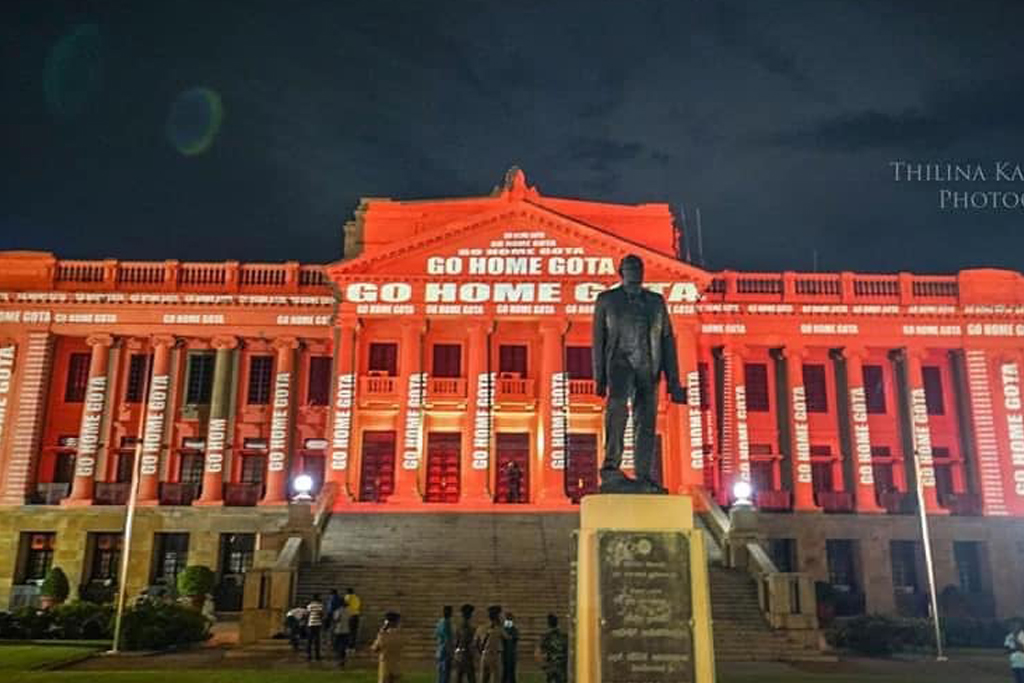
Protesters project “Go home Gota” on President’s office building, Police attempt to block

The President’s office in Colombo on the Galle Face stretch is considered to be the most powerful building in the city.

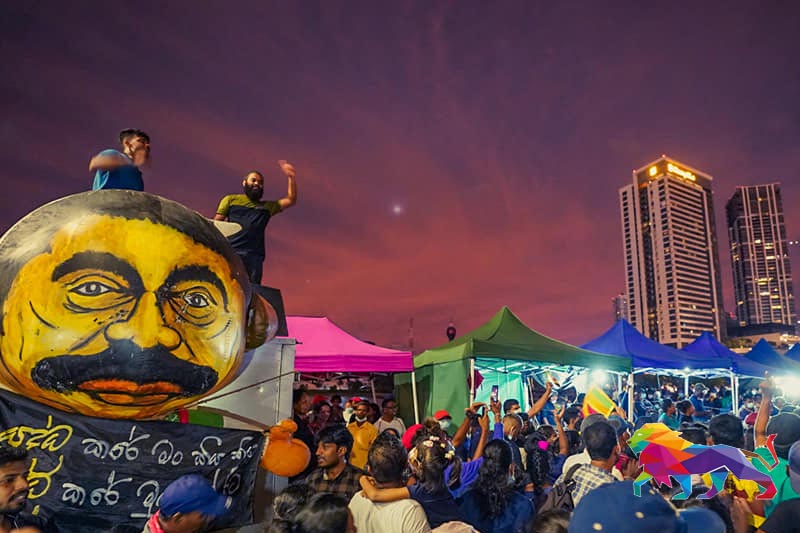
However, for over a week ordinary Sri Lankans with zero political backing have camped outside the President’s Office demanding the resignation of President Gotabaya Rajapaksa, Prime Minister Mahinda Rajapaksa, and the entire Government.

Protestors are camped at what is now called GotaGoGama, formerly the agitation site for protest and are protesting at the gates of the President’s Office 24 hours of the day.

In recent days, thousands of Sri Lankans have taken to the streets to demand the resignation of President Gotabaya Rajapaksa.

Sri Lanka is facing its worst economic crisis since gaining independence from Britain in 1948 with food shortages, soaring prices and power cuts.

On Sunday (17) night, tech savvy protestors decided to take over the President’s Office walls using video projector mapping.

Head-turning projection mapping has become commonplace at events like music festivals, product launches or shows, but that doesn’t make the spectacle any less mind-blowing. Projecting video onto surfaces such as buildings, to create the illusion of 3D art, used to be a fledgling art form but it has grown into a phenomenon.

Unlike flat projection, video projection mapping turns any object into a screen – such as a building – and project onto its walls without any distortion. Often site-specific, the best projection mapping projects succeed by enhancing rather than effacing the architecture they’re beamed onto, this time it was the President’s Office.

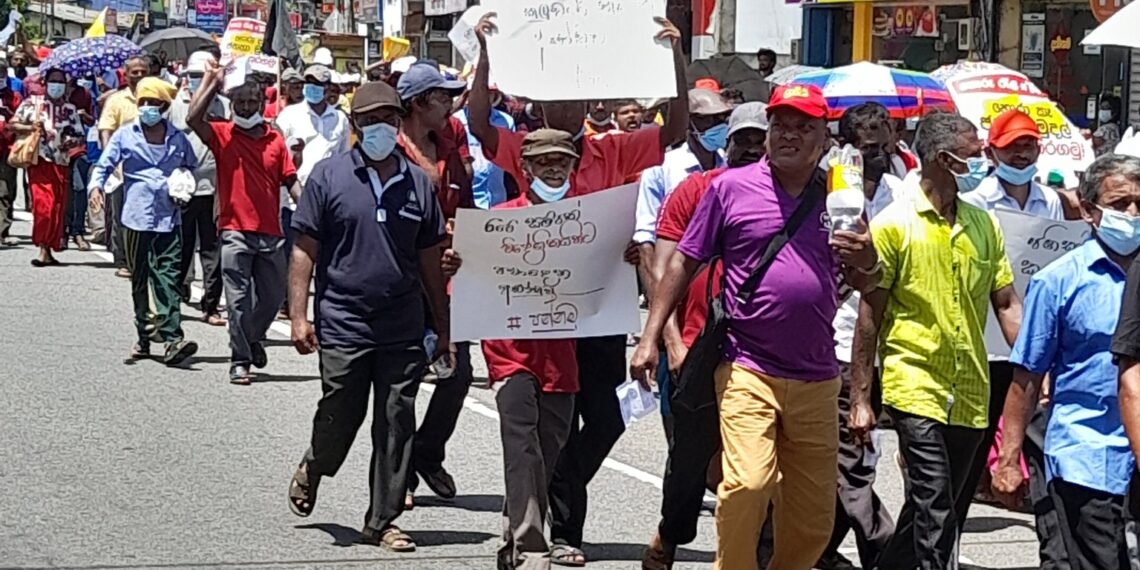
NPP begin ‘Pannamu’ protest towards Galle Face

The protest march organised by the National People’s Power under the theme ‘Pannamu’ commenced in Beruwala this morning.

The march has been organised in support of the demonstration at Galle Face demanding the resignation of President Gotabaya Rajapaksa.

The NPP will march from Beruwala to Wadduwa today and from Wadduwa to Moratuwa tomorrow.

The group will continue its protest march from Moratuwa to Galle Face and join the demonstration at the Agitation Site opposite the Presidential Secretariat on Tuesday.

Speaking to media, Leader of the NPP MP Anura Kumara Dissanayake said they are at the forefront of the protests organised against the President and the country.

MP Dissanayake noted that although the country’s assets have depleted and the government is struggling to repay debt, wealth of those ruling the country has not reduced.

He said there are several properties and assets worth millions of rupees in Uganda, Dubai, Malawana, Matara, Los Angeles and Seychelles linked to the country’s rulers.

MP Anura Kumara Dissanayake stressed that the general public is aware that all rulers of the country robbed the country while also protecting those misappropriating public funds.

He said some are living a lavish lifestyle after robbing state assets.

MP Dissanayake claimed now another group is attempting to come to power to rob the country.

He said all properties that are linked to the country’s rulers in Uganda, Malawana, Matara, Los Angeles and Seychelles should be seized.

The NPP leader noted that only a group that is not linked to corruption can protect the country’s assets and seized assets of those who rob the country.

He said therefore they are the only group that is capable of fulfilling the needs of the people.

Leader of the NPP MP Anura Kumara Dissanayake said a country cannot be stable when the government is unable to repay the debt, import fuel, vehicles are queuing up at filling stations and when power plants and refineries are shut.

He said therefore the time is apt to stand against the current rulers.

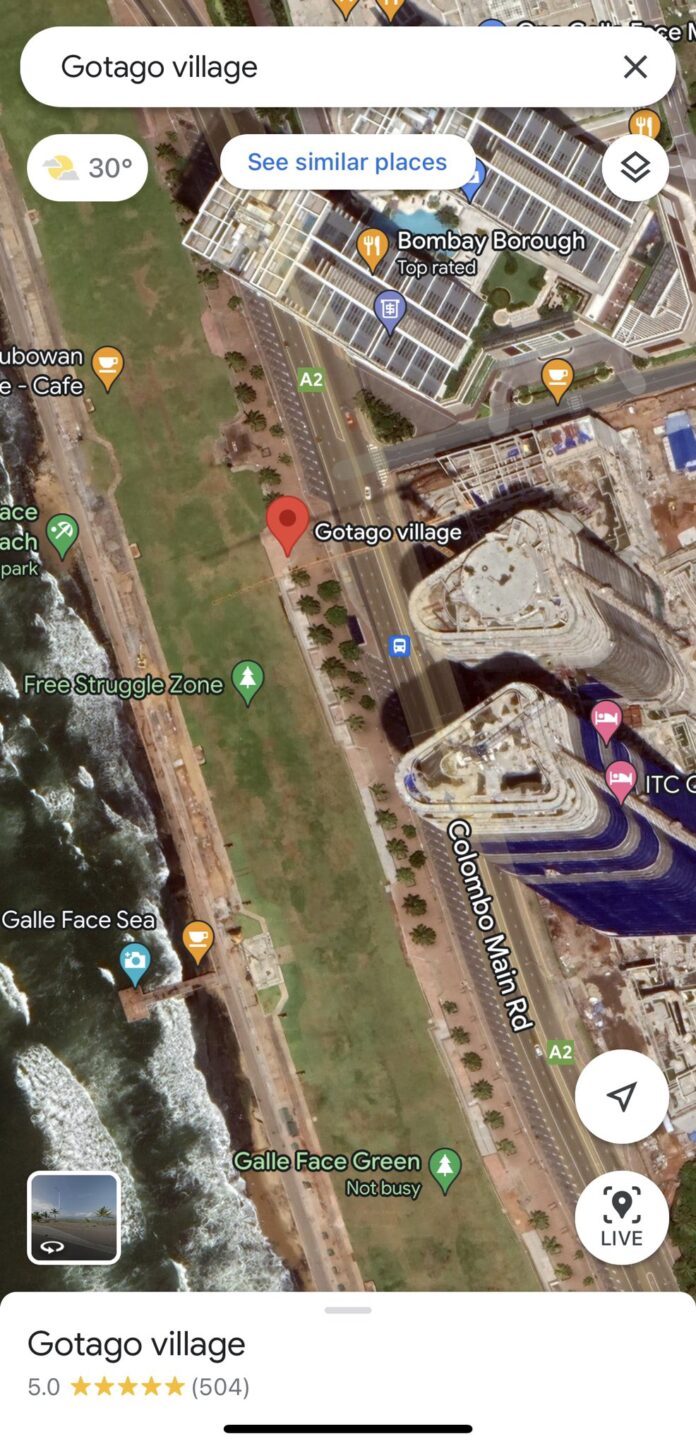
Gota Go Village listed on google maps

Gota Go Village has been listed on google maps, showing the direction for motorists trying to reach the location.

The village has been listed as a bus stop in Colombo and directs motorists to the place where the protest against President Gotabaya Rajapaksa is currently underway.

The village has a 5 star rating and over 550 reviews as of 17th April.

The #GoHomeGota protest was launched opposite the Presidential Secretariat on 9th April.

The protesters began to stay at Galle Face since 9th April with tents and portable toilets also being installed.

The protest was launched over the President’s failure to prevent the economic crisis which has affected Sri Lanka.

He and Prime Minister Mahinda Rajapaksa have also been accused of corruption by the protesters.

The protest was named Occupy Galle Face and the site of the protest was named Gota Go Gama.

Religious leaders have also extended their support to the protest and held religious observances at the site.

The traditional Sinhala and Tamil New Year was also celebrated at the site of the protest.

“Galle GotaGoGama” removed tents are back after lawyers intervene

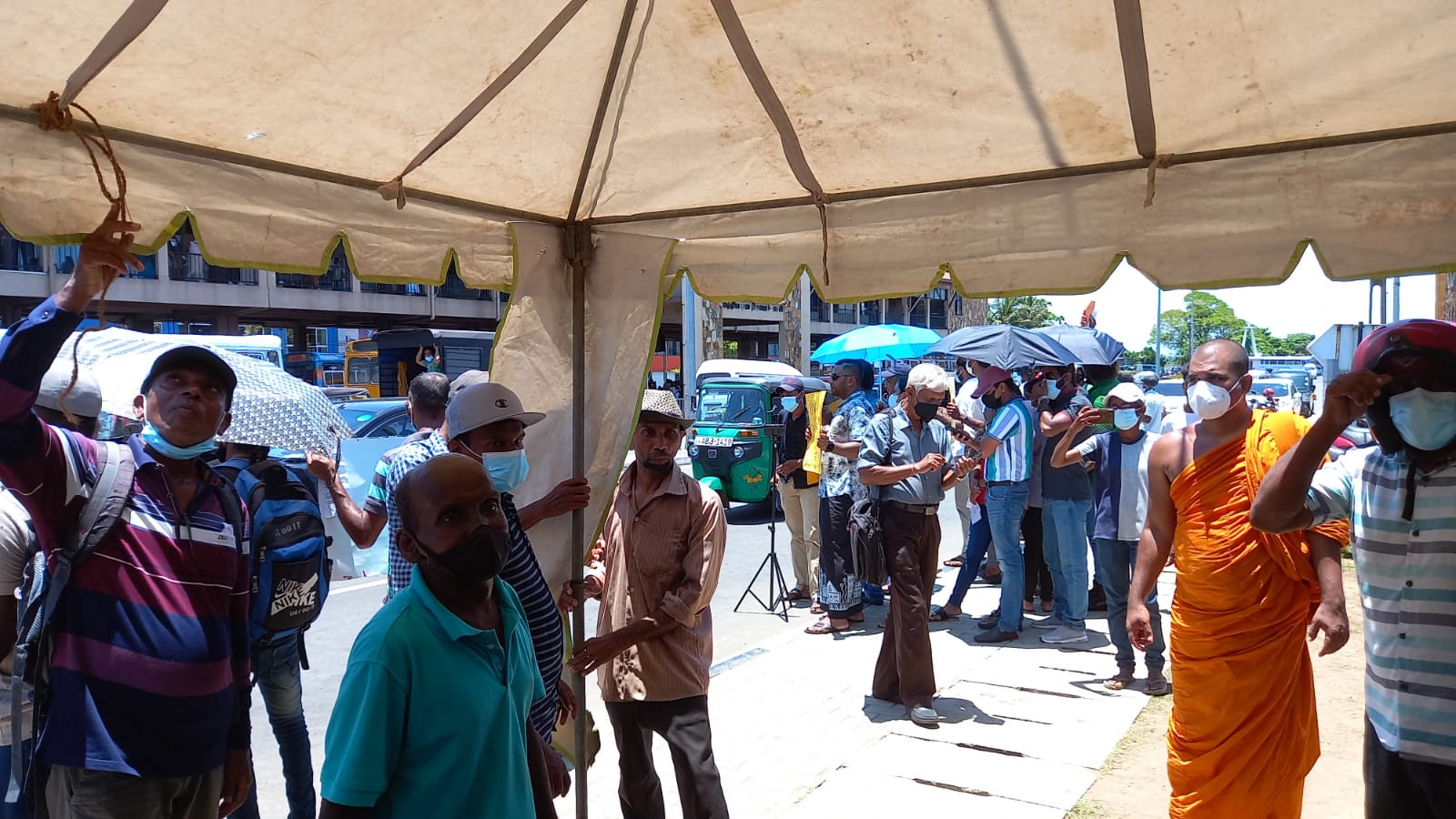
The tents which were enacted in Galle, dubbed the ‘GotaGoGama’ Galle branch, have been restored after legal intervention.

A tense situation arose on Sunday (17) morning when Police attempted to remove the temporary structure set up in the Galle Town in support of the Occupy Galle Face Protest in Colombo.

Food and water for protestors was accumulated at the tents which were removed by the Police.

Posted in Uncategorized

Occupy Galle Face protest on for 8th-day

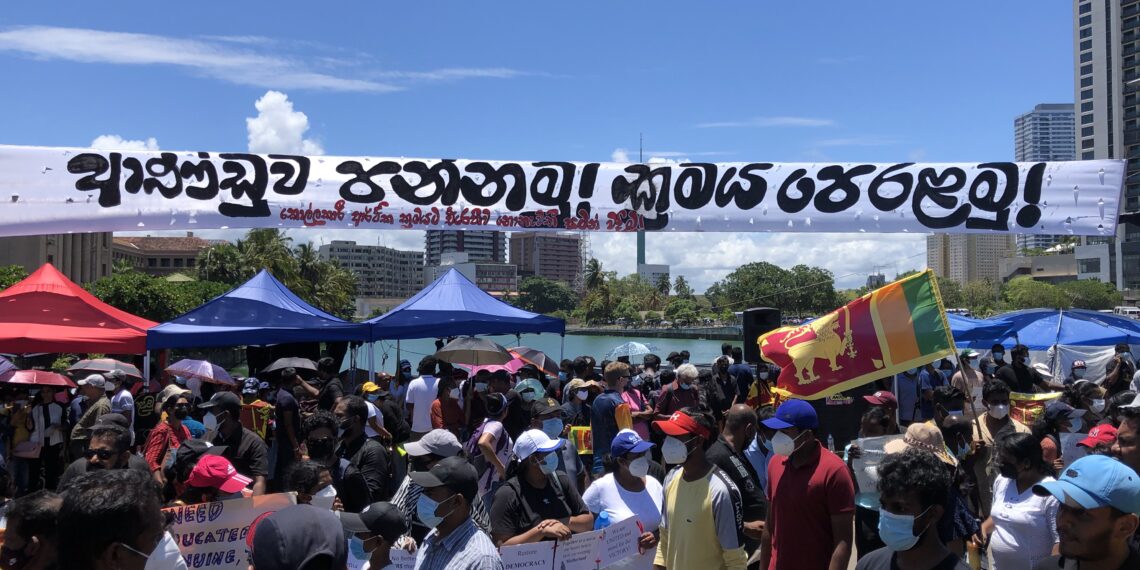
Sri Lankans continue to occupy the Galle Face stretch opposite the President’s Office demanding the immediate resignation of the President, Prime Minister, and the Government.

They have already rejected an offer by the Prime Minister for a sit down and discuss their issues.

A large number of people including artists and master blaster Sanath Jayasuriya joined the ongoing protest at Galle Face, the main beachfront in the capital Colombo, outside Sri Lankan President’s Office for the 8th day.

The Occupy Galle Face protest is continuing in the Galle Face Green area in the capital city of Colombo as the Island nation is facing its worst economic crisis since independence with food and fuel shortages, soaring prices, and power cuts.

Sri Lankans are protesting against the government’s handling of the economic situation, an the protesters have been accusing Rajapaksa’s government of corruption and misrule.

Posted in Uncategorized

GotaGoGama branch set-up in Galle

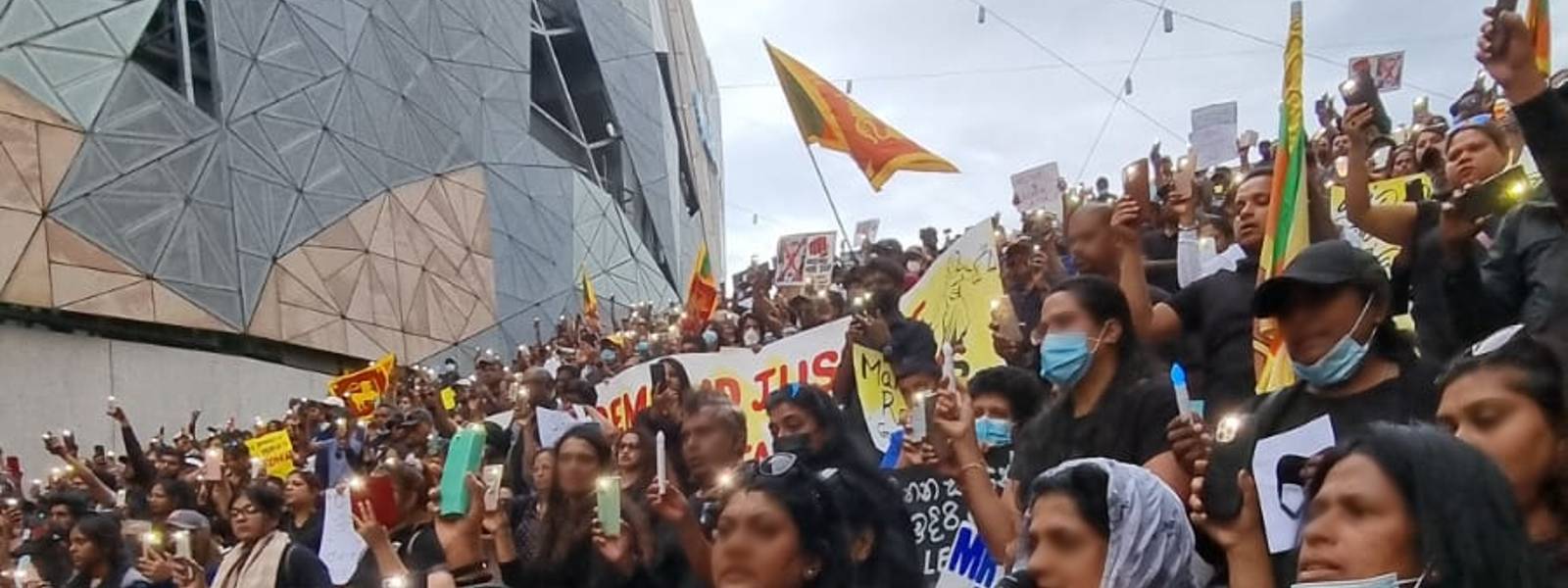
The Occupy Galle Face protest in Colombo is gaining more support from many other parts of Sri Lanka and as well as across the world.

Over in the southern coastal city of Galle, a branch of the GotaGoGama (Gota Go Village) was opened on Friday (15) evening in support of the Galle Face Protest.

The people in Galle told News 1st that since they are unable to travel to Colombo due to the fuel shortage, they decided to extend their support from their hometown.

Sri Lankans are protesting against the government’s handling of the economic situation, the protesters have been accusing Rajapaksa’s government of corruption and misrule.

President chairs meeting on current situation

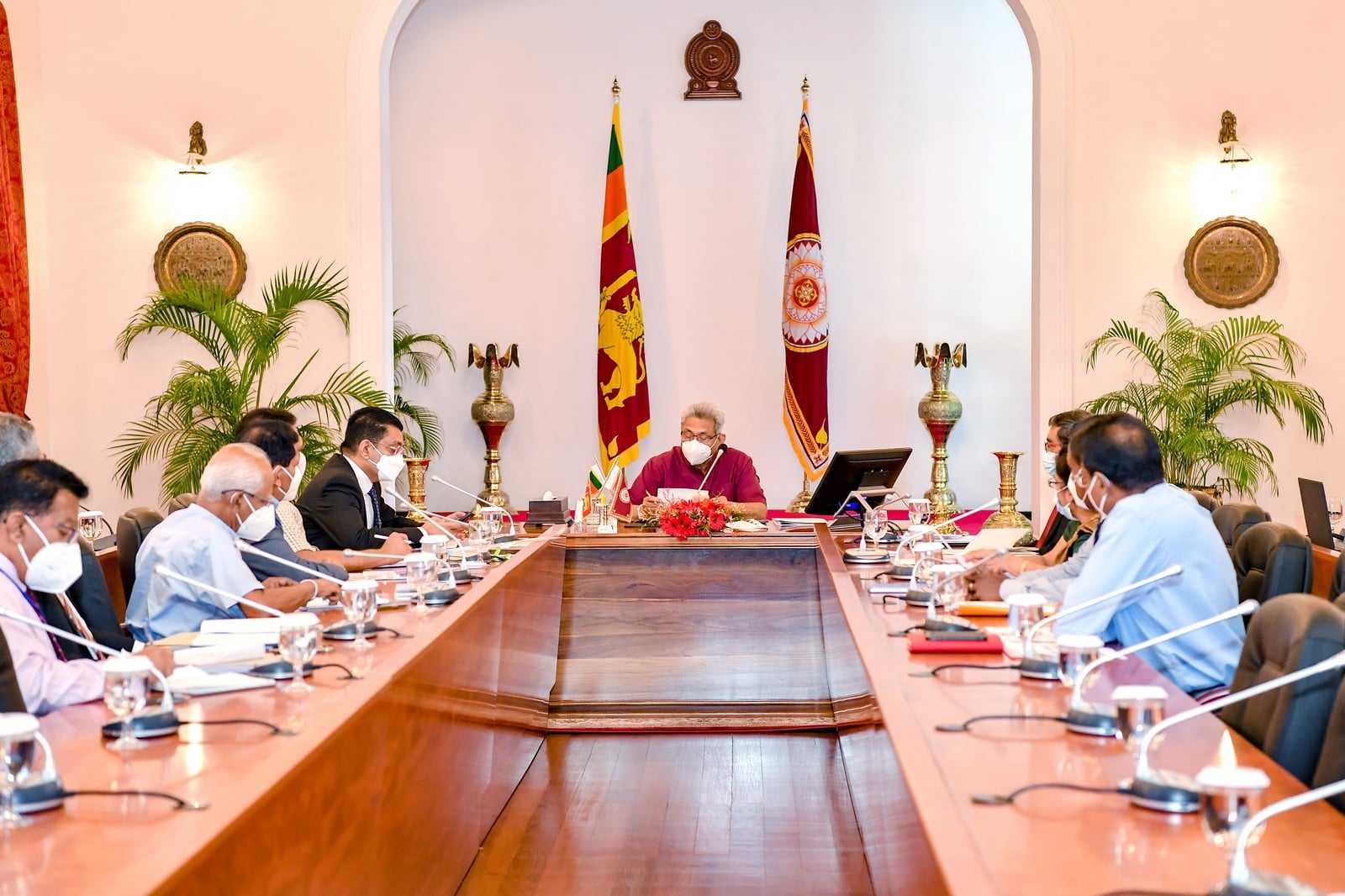
Several discussions were held on Saturday (16) under the auspices of President Gotabaya Rajapaksa regarding the current situation in the country.

The President’s Media Division (PMD) said the first discussion was between Finance Minister Ali Sabri, PC, Central Bank Governor Dr. Nandalal Weerasinghe, Secretary to the President Gamini Senerath, Presidential Advisor Lalith Weeratunga, and Secretary to the Ministry of Finance K.S. M. M. Siriwardena.

The President held another discussion with the participation of officials from the Ministries of Finance, Energy, and Health, said the PMD.

Posted in Uncategorized

Analysis: Sri Lanka bondholders brace for big losses in debt restructuring

(Reuters) – Sri Lanka’s creditors face losing a third to half of their investment in the country’s dollar bonds, after the government announced it would restructure $11 billion worth of debt, the first such financial shake-up in its modern history.

Formal debt talks haven’t started but analysts are already crunching the numbers to estimate what kind of haircuts could be inflicted on bondholders.

Mired in economic crisis, Sri Lanka has halted all external debt payments and is prioritising its remaining hard currency reserves to buy food and fuel..

The country of 22 million has been hit by nationwide street protests and shortages of everything from power to medicines, and its dollar bonds trade at deeply distressed levels of around 40 cents in the dollar.

With markets factoring in an International Monetary Fund (IMF) loan programme as part of the debt overhaul, a $1 billion bond maturing on July 25 LK080475284= is valued at around 45 cents in the dollar, Refinitiv data showed.

Citi projects that, across the bonds maturing between 2022 and 2030, Sri Lanka may seek a coupon haircut of around 50%, a reduction of at least 20% in face value and maturity extensions between 10-13 years.

“Assuming an 11% exit yield, we estimate that the recovery value on the dollar bonds in such a scenario could range in the low to mid 40s,” Citi strategist Donato Guarino said, referring to the interest rate at which the new securities will trade on the day of the debt exchange.

Step-up coupons – interest payments that increase over time – could also play a role “to give the government more time to recover” after the restructuring, Guarino added, noting these were used in Ecuadorean and Argentine debt restructurings.

Tellimer analysts assumed in their base case scenario a 30% haircut. They assign a recovery value near 60 cents on the dollar for the bonds, with a 8% exit yield.

They also flagged an alternative scenario with a 42-cent recovery value and a 16% exit yield.

UNWELCOME SURPRISES?

Tellimer senior economist Patrick Curran considers a 50% haircut a “worst case” scenario, with a recovery value as low as 30 cents for a 16% exit yield.

He highlighted the possibility that the debt overhaul might not be as swift as hoped.

“While bondholders will receive some downside protection if negotiations drag out if interest is capitalised, prolonged delays will also make for a more onerous starting point and political risk will raise exit yields, potentially eroding recovery values,” Curran added.

Ratings agency S&P Global has said debt talks could be complicated and take “many months” to complete.

On Wednesday, it lowered Sri Lanka’s foreign currency rating to “CC” from “CCC” – two notches above the level denoting default – while Fitch cut its rating to “C” from “CC”. .

JPMorgan analysts say the debt servicing moratorium is expected to pave the way for an IMF programme but warn a restructuring might be “more comprehensive” than what has been announced.

As of now, the debt service suspension only covers about 55% of public debt, Citi calculates, noting the latest IMF report hints at a “tough programme ahead”.

The fund recommends tax reforms, and possibly, curbs on public-sector wages and capital expenditure.

Asset managers BlackRock (BLK.N) and Ashmore (ASHM.L) are among the top holders of Sri Lanka’s international bonds. They are part of a fledgling creditor group, with White & Case acting as legal adviser.

Bondholders are in wait and see mode until the government picks a financial adviser, one creditor said, speaking on condition of anonymity.

“The group’s idea so far is to be reactive, not proactive,” the source said.