Visitors to one of the many homes of the embattled President of Sri Lanka, Gotabaya Rajapaksa — now facing a wave of street protests over a crippling economic meltdown — almost always stop to admire an unusual ‘aquarium’ in the living room.
Not only is it on the floor, covered with a sheet of glass, the fish in the water body isn’t your usual garden variety goldfish, but a school of man-eating piranhas!
The President’s choice of pet fish — straight from James Bond villain Blofeld’s playbook — epitomises not just his luxe lifestyle, but his ‘take no prisoners’ persona of conducting business, in keeping with the image he’s carefully cultivated as the ‘Terminator’. The annihilation of the separatist Liberation Tigers for Tamil Eelam (LTTE) in the long-running 30-year battle, powered him to the presidency in the 2019 polls, polling 6.9 million votes for himself, and a massive two-thirds majority for his Sri Lanka Podujana Perumana Party; the whispered silencing of nearly every one of his critics, the stuff of legend.
Mangala Samaraweera, who served as both finance and foreign minister in then-president Mahinda Rajapaksa’s cabinet, was only sacked from the job when he was suspected of tracking where the Rajapaksas parked their wealth. Others paid a much bigger price. The ‘white-van disappearances’ targeted close family friend and journalist Lasantha Wickrematunga, editor of the Sunday Leader, gunned down at a traffic light in the heart of the capital Colombo in 2009 as he drove to work.
Wickrematunga’s letter, revealed post-assassination, named Mahinda – Gotabaya’s elder brother, two-term president and head of the family — was a shocking indictment of the clan’s brute tactics in silencing critics.
Fewer dare to speak of Gota’s rumoured meltdown when he served in the army as a young soldier and reportedly sought an honourable discharge!
The difference between then and now, 13 years after he led the slaughter of the Tamil Tigers as Mahinda’s defence minister, is that Gotabaya has overnight turned into his country’s most reviled leader; as has the rest of the family, five of whom held top posts in the recently dissolved cabinet — including younger brother Basil Rajapaksa, who was finance minister until April 4.
The resignations, seen as a move to buy time, are unlikely to help shift the blame away from the first family for the economic mess the country finds itself in, or stop them from facing the music. Based on a complaint that he was “misusing public funds”, a Colombo magistrate has already ruled that the Governor of the Sri Lankan central bank, Ajith Nivard Cabraal, a key presidential aide, cannot leave the country.
The Rajapaksas are under public scrutiny, too.
The economic crisis, with foreign reserves down to an estimated $1.7 bn and gold reserves down to $29 mn, has been a long time coming. Indeed, on Tuesday, Sri Lanka defaulted on payments on $51 bn of external debt. Paikiasothy Saravanamuttu, Executive Director at Colombo’s Centre for Policy Alternatives, blames it on the “systemic failure of the government, its profligate spending to boost its own popularity rather than safeguard the economy.”
Former President Mahinda’s wooing of Chinese investment to build white elephants such as the international port facility in hometown Hambantota and capital Colombo are only two examples of many such projects that yield no revenue. The famed Lotus Tower convention centre, an international airport at Mattala, a cricket stadium named after the Rajapaksas, and a string of highways are other examples of wasteful expenditure. Raising public sector employment in government and the military in peace time, with the attendant costs of pensions eating up dwindling revenue, was in keeping with the Mahinda-Gotabaya ploy to use debt – the first International Sovereign Bonds were tapped as early as 2007 — to ensure their popularity among the gullible populace, just like Gotabaya’s tax cuts in 2019, which favoured a select few.
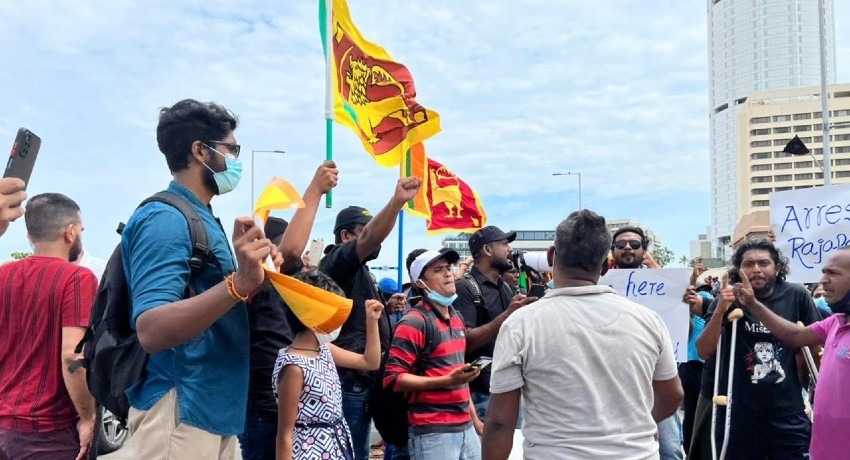
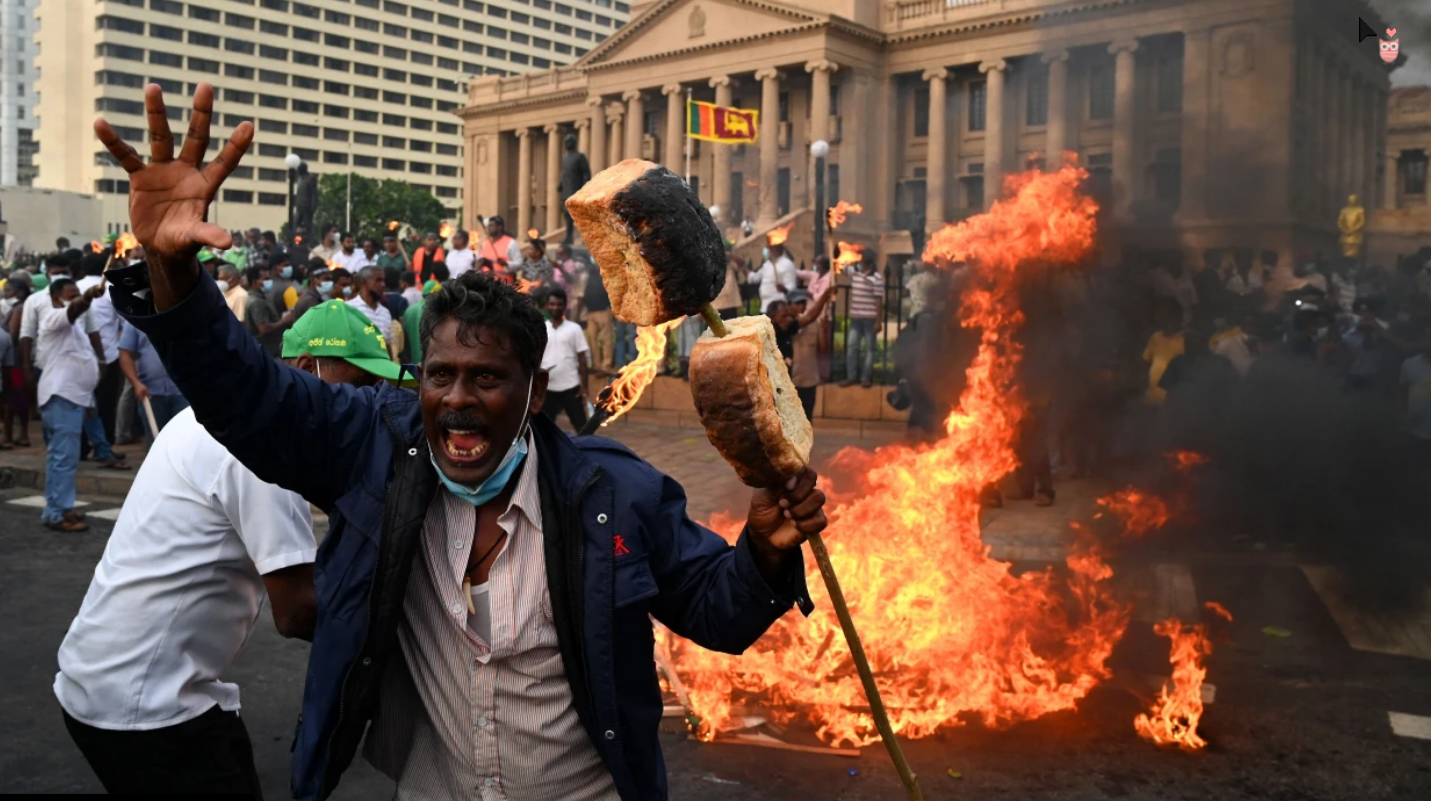
The blinkers are now off. The popular uprising that has exploded on the streets of Colombo, gathering pace across this once prosperous country, has angered the very same Sinhala majority that had catapulted the Rajapaksas to power.
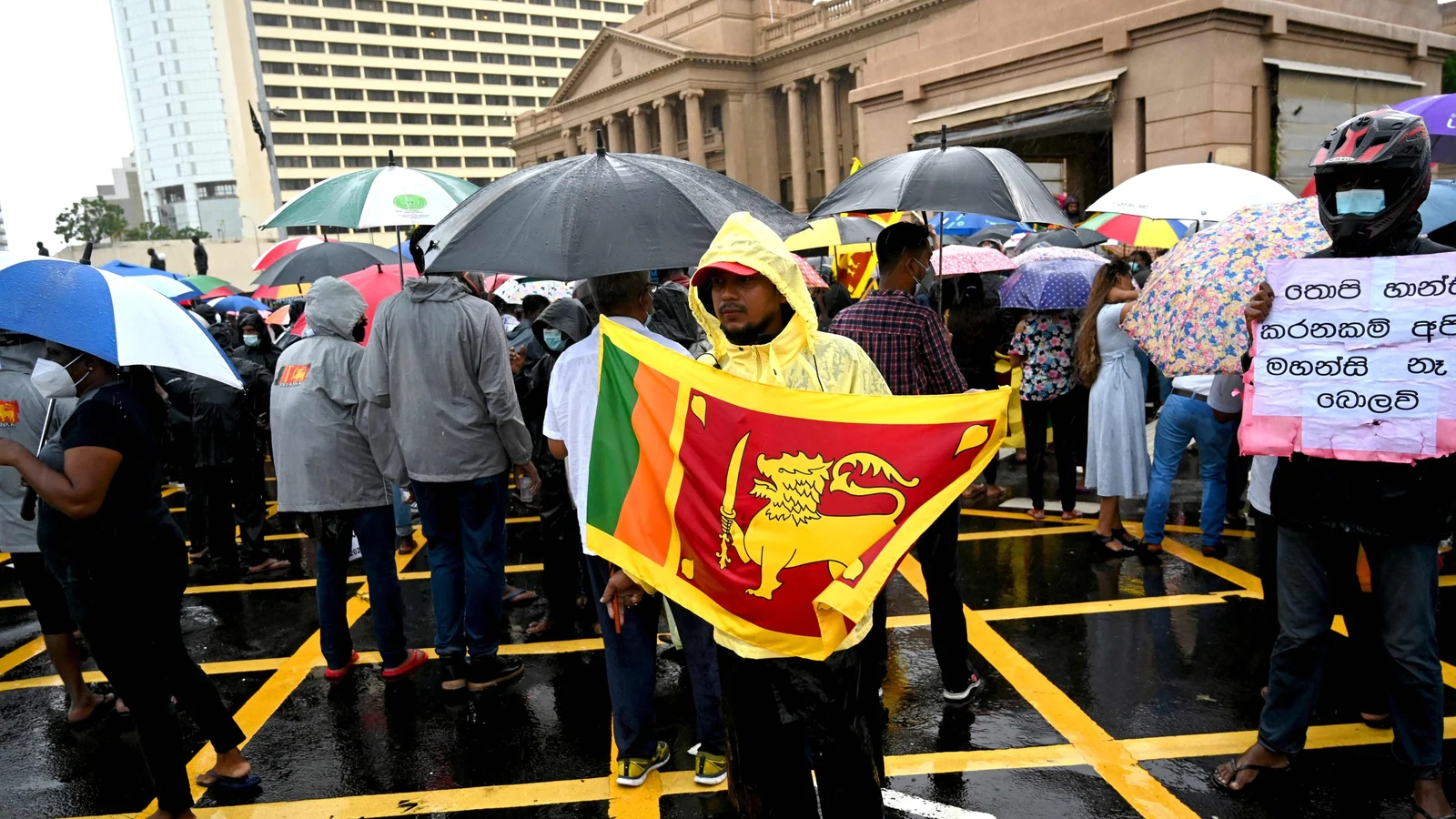
Dubbed Sri Lanka’s ‘Arab Spring’, the protesters do include members of the Tamil-speaking minority whose war-ravaged north continues to cry out for re-development, as much as justice for war crimes — the UNHRC is reportedly set to charge the President on this count. But the hundreds of thousands who are laying siege to the presidential secretariat on Colombo’s seafront have little or no political leanings. They are drawn not just from the Sinhala-speaking majority, but also Muslims, Catholics, and the clergy — both Buddhist and Christian — with nary a political leader in sight. A prominent Buddhist monk who had led poll rallies for the Rajapaksas was booed out of one such protest. Holding placards and shouting slogans are Sri Lanka’s educated and aware, young and old, doctors and factory workers, as well as fruit vendors and IT professionals, cutting across the ethnic and class divides.
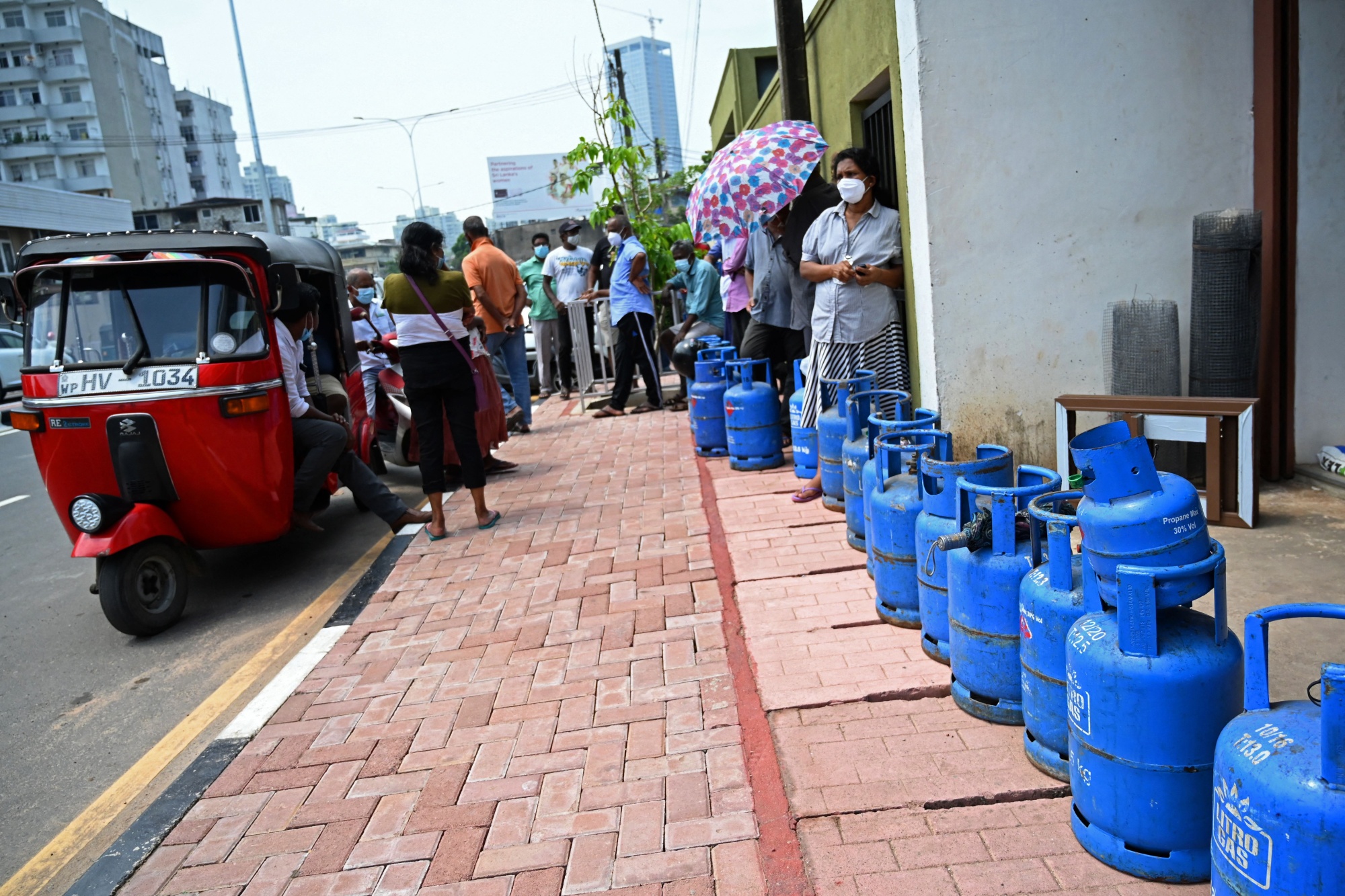
Unlike even a few months ago, the fury against the Rajapaksas is because their mishandling of the economy now impacts their daily lives. The depleted forex reserves have made it near impossible to import fuel and food, causing a widespread food shortage, and the misery made worse with crippling 13-hour power cuts that have brought hospitals and all vital services to a grinding halt.
The deeply unpopular – and ill-considered — move by Gota’s government to ban the use of chemical fertilisers in this agricultural hub, with the government only allowing the import of unaffordable organic fertiliser, was a death blow to the hugely lucrative tea industry, and cultivation of staples like paddy, vegetables and fruit, making it impossible for the common man to afford even the basic necessities.
“My fruit vendor asked me not to bargain as I usually do as he didn’t have enough money to even buy food for his children,” said a resident of Galle Face, who ended up buying the whole cart of fruits and giving the tearful orange seller a set of clothes for his family for the new year on April 13-14.
This is when protests are expected to turn violent, with sources close to the government leaking the minutes of a meeting on how pro-government rowdy elements would be introduced to create the circumstances that would bring in the army and the imposition of a possible Emergency.
The first big blow to the man on the street came with the huge drop in tourism earnings after the Easter bombings of 2019, followed by tourist numbers dipping alarmingly from an average of 2.52 mn visitors in the previous years to a mere 540,000 in 2020, with tourist sector earnings declining from $ 5 bn to $ 1 bn post-pandemic. With remittances from the Middle East shrinking as thousands lost their jobs, and inflation peaking at 18.7%, the island nation’s largely prosperous 22 million population is now increasingly stretched.
Stoking the people’s rage further are the persistent — if hitherto unproven — reports of the first family robbing the exchequer and looting the economy, amid growing calls for seizure of the Rajapaksas’ properties and assets abroad. The finger-pointing at Basil’s dual citizenship, alongside questions resurfacing on whether Gotabaya had, in fact, given up his US citizenship, a criterion to be eligible for the presidency, have now reached a crescendo, with the Opposition calling for the abolition of the Executive Presidency brought in through the 20th Amendment to the Constitution, which gave Gota sweeping powers.
Gota has set up a panel to address the economic distress, and has approached the IMF for talks to restructure outstanding international sovereign bonds that amount to $12.55 billion, and seek a moratorium on the $1 billion in payments due this July. But in a reflection of government ineptitude, within 24 hours of appointing Ali Sabry as the new Finance Minister, Sabry put in his papers, but with no one else willing to take his place, returned to his post!
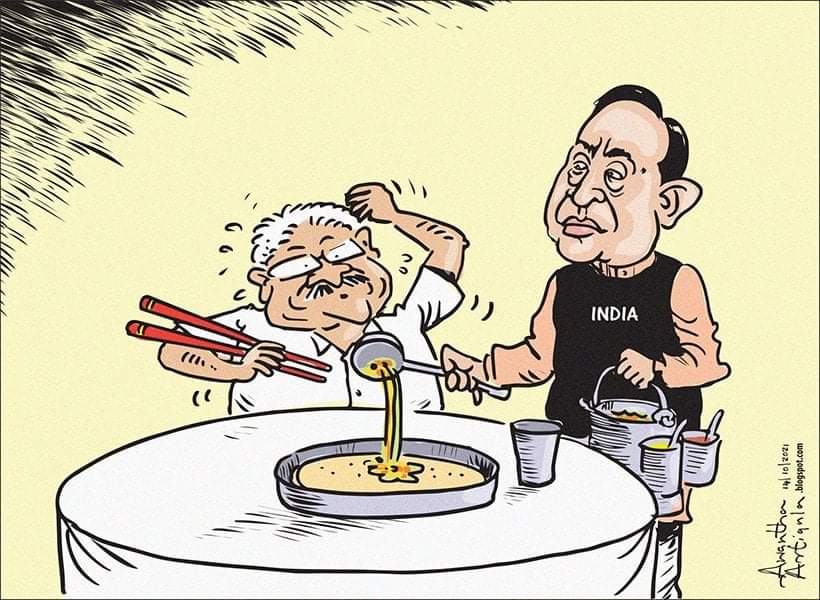
Gota had dispatched his brother and then Finance Minister Basil a number of times to India this past year, with the same motive, putting aside the past game of playing Delhi off against Beijing, a ploy that had infuriated the Narendra Modi government, particularly when he scrapped the Colombo Port Terminal project that had been promised to India, and handed it over to China. Adding to India’s ire, Gota handed over three islands in the north, barely 50 km from the Indian coastline to China. The Rajapaksas have since made amends by offering India an alternative to the Colombo port project and scrapping the development of the three islands with China and handing it over to India. In turn, Delhi has extended a $2.5 billion credit line and sent food and goods to its beleaguered neighbour and may well sign off on another $500 million credit line for fuel.
China’s cold shoulder is no mystery. “If China agreed to do this for Sri Lanka, it would set a very bad precedent for other countries in the China debt trap,” explains Sravannamuttu, who had urged the Rajapaksas to approach the IMF to restructure the debt, which the brothers had refused to do till this week. Too late. On Tuesday, Sri Lanka announced that it had defaulted on all its external debt.
Either way, in characteristic Gota fashion, as the social media erupted last Friday, and mobs converged on the offices and homes of lawmakers, including one of the President’s homes in Mirihana where luxury cars were parked in the driveway on March 31, he declared an Emergency and announced a ban on social media. When he called it off within 48 hours, under intense pressure from the diplomatic community, one of the most popular memes doing the rounds under the #GoGotaGo hashtag is a screengrab of Mahinda’s son Namal Rajapakse with his baby son sporting Gucci baby shoes!
Namal’s family has reportedly fled the country already, but he has stayed on. But rumours of a flight of capital, showing three Sri Lankan airline aircraft heading to Uganda in February 2021 refusing to divulge the contents of the ‘paper’ cargo, and the controversy over Mahinda’s trip to the Indian temple town of Tirupati on a chartered flight that flew from Uganda’s Entebbe airport via the tax haven of San Merino, were also doing the rounds. Also circulating were reports of the close relationship between the Rajapaksas and the Sri Lankan Ambassador to Uganda and Kenya, Velupillai Kananathan, who hosted Mahinda and his wife during a visit to Kampala.
Speaking on condition of anonymity, a prominent businessman in Kampala told this reporter that it was common knowledge that Kananathan, whom The Sunday Times of Sri Lanka called “a racketeer and profiteer”, was involved in gun-running for the LTTE before he befriended the Rajapaksas. The comment could not be independently confirmed.
Also doing the rounds was a list of 10 companies that the Rajapaksas have reportedly invested in – most of them in Kampala but one each in Dubai and Liechtenstein. The family is named on the board of the Kampala-based companies which are largely real estate firms, heavy engineering and concrete manufacturing units, while the Dubai facility is a company set up to import oil from Qatar to Sri Lanka.
The Opposition alliance, led by Sajith Premadasa of the Samagi Jana Balawegaya, and former PM Ranil Wickremesinghe, backed by the Tamil National Alliance, have belatedly got into the act, attempting to cobble together a two-thirds majority, with plans to begin a no-confidence motion, and impeachment proceedings against the President. They are pushing for Gota to resign immediately, the Rajapaksas are playing for time.
As the protesters converge on Independence Square in the heart of Colombo, steadily upping the ante, the big question is: Will the Rajapaksas stay on and fight, or scoot. Destination Uganda?