Sri Lanka bill yields marginally down, rupee bid at 295

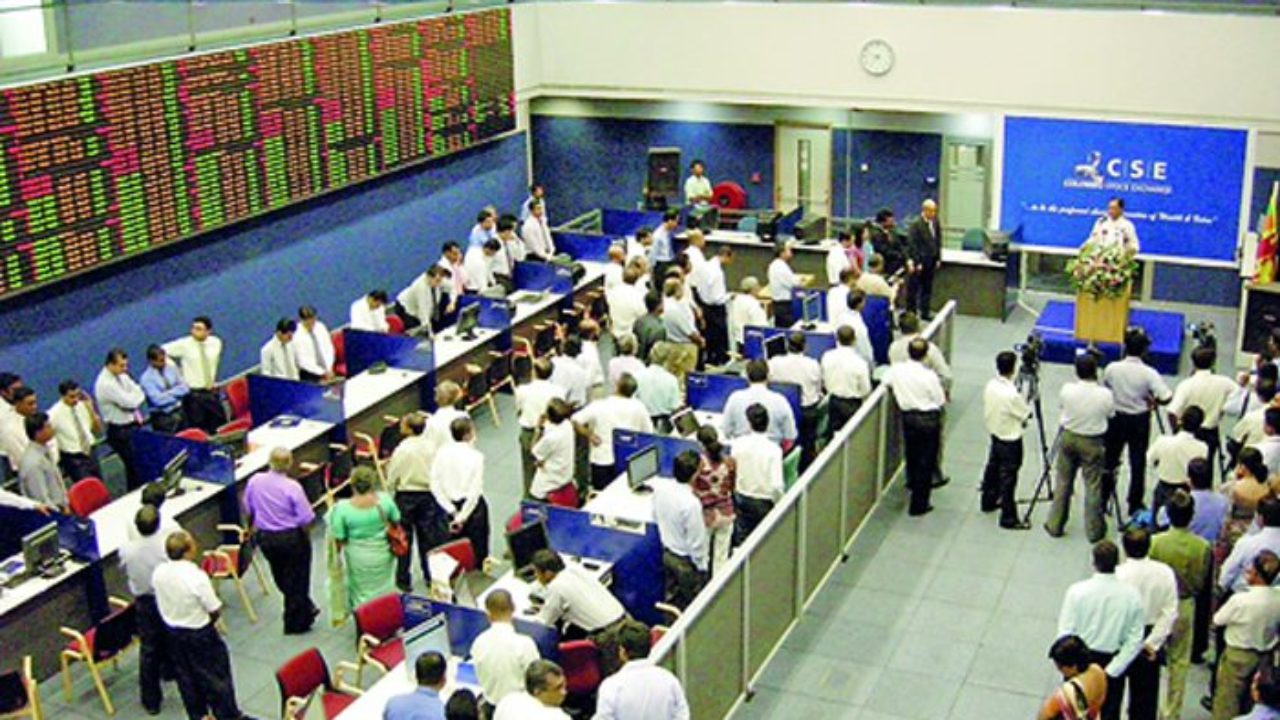
Sri Lanka’s bond market remains inactive on Wednesday (24) but bill yields have marginally eased in mid-morning trade dealers said, while the rupee was quoted around 295 with no firm offer.

The rupee was quoted as weak 295/325 to the US dollar at the previous day’s close.

Commercial Banks were offering to sell dollars for telegraphic transfers at 285 to 290 rupees and was buying at 275 rupees on Wednesday.

Analysts had warned that a surrender requirement imposed by the central bank goes against the rupee and is a stumbling block to the attempt at floating the rupee. However the surrender requirement was doubled on Wednesday.

In the money market, the central bank had not updated Thursday’s rates at the time of filing.

The central bank’s indicative spot rate was 280.42 dollars on Wednesday.

Market participants said the rupee is quoted around 295/325 against the dollar.

Commercial banks offered to sell dollars at 284.99 rupees for telegraphic transfer and buy at 274.99 rupees on Wednesday.

Bond markets were also inactive.

In the secondary market, the only liquid bond maturing on 01.08.2024 closed at 14.50/15.00 percent on Wednesday.

The 12-month bill was quoted 12.10/20 percent, from 10/30 percent on Wednesday.

At the weekly bills auction held on Wednesday, Sri Lanka’s debt office offered and sold 56.5 billion rupees.

The bills were split into 20 billion maturing in 3-months, 15 billion in 6-months and 21.5 billion in 1-year.

Three months bills moved up 75 basis points, 6-months moved up 93 basis points and 1-years up 85 basis points.

USD selling at nearly Rs. 300 at several commercial banks

The USD was selling at nearly Rs. 300 at several commercial banks today.

The Central Bank of Sri Lanka had recently decided to allow greater flexibility in the exchange rate.

The Central Bank had indicated that it will continue to closely monitor the emerging macroeconomic and financial market developments, both globally and domestically, and will stand ready to take further measures as appropriate, with the aim of achieving stability in the fronts of inflation, the external sector, the financial sector, and real economic activity.

In that context, the Central Bank had said that greater flexibility in the exchange rate will be allowed to the markets with immediate effect.

However, the Central Bank was of the view that forex transactions would take place at levels which are not more than Rs. 230 per US dollar.

Six Sri Lankans caught entering India illegally, trying to flee economic crisis

Six Sri Lankan nationals who allegedly tried to enter India illegally – they were stranded before being rescued by the Indian Coast Guard on Tuesday – are being interrogated, officials have told news agency PTI.

Three of the six are children, officials added.

The six Sri Lankan nationals including three children are all residents of Jaffna and Kokupadaiyan in the northern region. They were rescued from an island near Rameshwaram in Tamil Nadu.

The Sri Lankans attempted to land at Dhanushkodi in Tamil Nadu but the man who brought them here illegally forced them to disembark and left them stranded on a sand dune, officials said.

One of the Sri Lankans claimed they were trying to enter India because of the economic crisis in Sri Lanka.

Increasing prices of essential goods was making it difficult to manage the situation back home, PTI quoted her as saying.

Sri Lanka is battling a foreign exchange crisis that has forced a currency devaluation and hit payments for essential imports like food, medicine and fuel.

The country has turned to the International Monetary Fund (IMF) for help.

Posted in Uncategorized

Sri Lanka to hire global law firm to aid debt restructuring

Sri Lanka will hire a global law firm to provide technical assistance on debt restructuring ahead of talks with the International Monetary Fund (IMF) on the country’s economic crisis, a top official said on Tuesday.

The island’s currency reserves have slumped 70% in the last two years to $2.31 billion and it has to repay about $4 billion in debt in the remainder of this year.

The drain of its dollars has left Sri Lanka struggling to pay for critical imports, including food, fuel and medicine. The government ordered the military to post soldiers at hundreds of gas stations on Tuesday to help distribute fuel.

Sri Lanka’s cabinet made the decision to appoint a technical adviser on Monday, spokesman Ramesh Pathirana told reporters.

He said the central bank governor, foreign and justice ministers would oversee the selection process.

Sri Lanka’s finance minister is due to head to Washington next month for the IMF talks.

President apologizes to Ranil over Cabraal’s remarks

President Gotabaya Rajapaksa expressed his apology to former Prime Minister Ranil Wickremesinghe at the All Party Conference over the remarks made by Central Bank Governor Ajith Nivard Cabraal in which he accused the former government for the present crisis.

In his speech at the conference, Cabraal has briefed the Sri Lanka’s current economic situation and had palmed the blame on the former Government for the prevailing crisis.

Responding to the remarks, UNP Leader Wickremesinghe expressed his displeasure and slammed Cabraal for making such a statement.

“This conference was convened by you (President Gotabaya) at the request made by the SLFP. I made my appearance upon a request made by Minister Nimal Siripala de Silva who insisted me to attend the conference because of the old friendship,” he said.

“Accordingly, we are here to discuss the present crisis and propose solutions to overcome the challenges. However, this is not a time to play the blame game,” he added.

Former Prime Minister proceeded to say that he regretted to see that the Central Bank Governor had started his speech by saying that “the present crisis is due to the shortcomings of the former Government.”

“If we are to drag this issue, it will end in the era of King Vijaya,” Mr. Wickremesinghe added.

Subsequently, President Gotabaya apologized to Mr. Wickremesinghe saying that “my apology if you are hurt.”

Posted in Uncategorized

Ranil demands Finance Minister to table IMF report, slams Cabraal for playing ‘blame game’ at APC

Former Prime Minister Ranil Wickremesinghe, the Leader of the United National Party Ranil Wickremesinghe requested the Minister of Finance Basil Rajapaksa to present a copy of the report of the International Monetary Fund on the negotiations with Sri Lanka to the parliament.

A heated argument ensued between the former Premier and the Finance Minister when the latter responded that the report cannot be presented as they have only received a draft and not yet the final report in full.

Speaking at the All Party Conference convened by the President Gotabaya Rajapaksa Wednesday, Wickremesinghe further stated that a new budget should be presented identifying only the essential expenses.

Responding to this, Finance Minister Basil Rajapaksa said that a new budget with relief to the people would be presented before the Sinhala-Tamil New Year.

The Governor of the Central Bank Ajith Nivard Cabraal spoke on the economic situation of the country and laid the blame on the previous Yahapalana government for the country’s present economic woes.

Objecting to the comment, Wickremesinghe who was the prime minister of the previous government slammed Cabraal for talking politics at the All party Conference and said the APC was not a place to play the ‘blame game’.

UNP leader Ranil Wickremesinghe told the Governor of the Central Bank that he was not here for petty politics.

“This conference is being held at the request of the Sri Lanka Freedom Party … we thought this was important, so we came here. We are here because of this serious problem in the country. We are not here to return to party politics, not to say who is responsible, that narrow politics as the Governor of the Central Bank said. He started saying that this was a mistake of the previous government. What if I answer it? What then, and the next answer? It will end with King Vijaya saying that if he had not come to Ceylon there would not have been this problem. That’s what happens,” he said.

“So I’m only saying one thing. In those days, there was a different policy. In those days, people had food to eat, drink, had petrol. I’ll say no more.”

President Rajapaksa apologized to Wickremesinghe, if any of the statements by the Central Bank Governor had caused hurt to MP Wickremesinghe.
The following is the full text of the initial remarks delivered by former Prime Minister and United National Party (UNP) leader Ranil Wickremesinghe at the All-Party Conference held today as published in Newswire.

The Government’s economic policies during the last two (2) years have seen a reversal of the free-market economy which created a large middle class.

The distortions in the free-market economy resulted in the interruption of the production, distribution, and consumption of goods and services. Our agricultural production has dropped, which has had an impact on the processing industry. We are seeing nearly 25% of Small & Medium Enterprises shutting down due to these policies. The country is facing widespread unemployment and a rising cost of living which has seen increasing hunger and malnutrition. The country’s debt to GDP ratio has risen to 119%.

It will take at least 5 years for Sri Lanka to emerge from this crisis. The two issues we face are to stabilize the economy in the next 2 years and to consolidate economic recovery.

The reversal of economic policies has shaken the confidence among both foreign and local investors. This has resulted in many of our youth leaving the country. The only way to reverse the damage is if there is a consensus regarding the principles in relation to the country’s economic policy. Political parties must operate within this framework.

The Parties in Parliament must reach a national consensus on the short-term, medium-term, and long-term policies for the country. This must be an open dialogue, where the Government should take the lead while the Opposition must be ready to respond. To date, we have not seen any transparency or commitment from the Government. They have failed to provide us with the relevant data nor have they tabled the full IMF report in Parliament.

In the short-term we must work together to stabilize the economy, otherwise, the people will lose confidence in the country.

The country is faced with two immediate tasks: dealing with our foreign exchange deficit and rescheduling our foreign debts. This will be the first time that a government will have negotiated the scheduling of foreign debt. There are people in the Central Bank and the Ministry of Finance who can deal with the IMF in regards to the Extended Fund Facility. But there is no one who has experience in rescheduling debt. We must obtain two leading firms that can provide expertise in the financial and legal sphere. We also require the services of experts in financial analysis. These services must be obtained outside of Sri Lanka because we will require the best. The selection process of these firms must be done in a transparent manner, this must not be another questionable selection process. The Government must specify the selection criteria, and involve the political parties in Parliament. This cannot be left in the hands of an individual.

Section 5 of the Monetary Law states that the Central Bank has the responsibility of ensuring “Economic and Price stability” and a “Financial system of stability”. The Monetary Board of the Central Bank and the Ministry of Finance have failed in achieving these objectives. Monthly reports from the Ministry of Finance must be presented to Parliament. The new legislation will be required to enact a supervisory role to Parliament over the Central Bank to prevent the arbitrary deficit financing that is currently in place.

The Central Bank and the Ministry of Finance must adhere to a single strategy and speak publicly in one voice. Sri Lanka’s nominee on the Board of Governors of the IMF is the Minister of Finance. Therefore the Ministry of Finance must take the lead.

The new exchange rates have brought about pressure on the banks. Private banks are currently holding vast sums of dollar loans, while state banks are carrying a large foreign debt of several State-Owned Enterprises. There is a question over the balance sheets of the banks due to the conversion of dollar loans at the present exchange rate. The banking sector is on the verge of collapse, the Government must ensure that a safety net is enacted for the banks to prevent a collapse.

The price adjustments resulting from the Government’s economic policies have placed a huge burden on the people. Therefore, it is essential that relief is provided to the public. The IMF has also recommended, “a credible and coherent strategy to restore macroeconomic stability and debt sustainability, while protecting vulnerable groups and reducing poverty through strengthened, well-targeted social safety nets.”

The 2022 Budget is no longer relevant for the country. At this time of crisis, we must re-evaluate the non-essential expenditure and ensure that relief is provided to the public. 2022 will not be a year of development, but instead, this must be a year of relief.

Negotiations with the IMF will take a minimum of six (6) months, while the relief benefits from the Indian Credit Lines will not go beyond mid-May. The Government must find funding for the remaining four months until an agreement with the IMF and International Sovereign Bondholders is reached.

We have only one option, and that is to approach a few friendly nations that can form a consortium and request financial assistance and help implement a new economic plan. These countries must include India, Japan, China, and the European Union (EU) will work alongside the IMF. We had a similar consortium between 2002 and 2004 when the economy had collapsed and we were undergoing peace talks.

Our relationship with these countries is strained, and this is mainly self-inflicted. The Government decided to cancel several investment projects with India and Japan, these must be resolved. Similarly, this Government has brought about issues with China that must be addressed. Sri Lanka’s issue with the EU is related to the Human Rights Council in Geneva. Those concerns must be dealt with. Immediately measures must be taken to improve relations between Sri Lanka and these countries. If the Government can do so, then we will see increased confidence in the country that will encourage greater levels of foreign investment.

Article 148 of the Constitution has vested control of public finances in Parliament; however, the Parliament has so far been ignored. I call upon the Government to ensure that Parliament is informed of all developments, while all relevant reports are made available. The committees of public finance including COPE and COPA must be strengthened. Similarly, the Minister of Finance must take upon himself the responsibility of addressing Parliament monthly in regard to the present situation. If necessary, a Parliamentary Committee should be formed for consolidating this activity.

The President and his Government must take Parliament back into their confidence, otherwise, they will lose the confidence of Parliament.

The Government must initiate discussions with all Parties in Parliament, regardless of if they are present or not today. It is of utmost importance that we all reach an agreement so as a new program of recovery can be started. These actions must be taken, not for the future of us as Parliamentarians but for the future of the youth of the country.

Posted in Uncategorized

Truth-seeking mechanism coming for reconciliation

Foreign Affairs Minister Prof. G.L. Peiris said yesterday (23) that the Government of Sri Lanka (GoSL) hopes to develop a truth-seeking mechanism in Sri Lanka as part of its reconciliation process.

“The Nawaz Commission of Inquiry (CoI) report is very informative. One of its recommendations that we want to develop is the truth-seeking mechanism. Here, we do not wish to reinvent the wheel. There is no purpose in going back. No two situations are exactly alike, when we look at the experiences of other countries such as South Africa in particular. But we are always taking care to adopt the successful experiences of other countries to suit the circumstances in our country,” Prof. Peiris said.

The second interim report of the CoI, headed by Supreme Court Judge Justice A.H.M.D. Nawaz was handed over to President Gotabaya Rajapaksa last month.

Prof. Peiris was speaking at the media briefing held jointly with US State Department Under Secretary for Political Affairs Victoria Nuland at the Foreign Affairs Ministry yesterday, which was conducted following the fourth Sri Lanka-US Partnership Dialogue in Colombo. Prof. Peiris said that the ministry had briefed Nuland about the reconciliation process in the aftermath of the 30-year-long civil war.

He added that the assistance of the US is “most welcome” in this endeavour of a truth-seeking mechanism.

Nuland said that the notion of setting up a truth-seeking mechanism is a “very good step” and that the US looks forward to supporting Sri Lanka in that process.

“Setting up a truth-seeking mechanism, as other countries with difficult histories have done, particularly taking advantage of the South African experience, is a very good step,” she said.

According to Prof. Peiris, other points of discussion had been about the “initiative” by President Rajapaksa to have a meeting with the Tamil National Alliance (TNA) tomorrow (25), the constitutional reform process, the amendments to the Prevention of Terrorism (Temporary Provisions) Act, No. 48 of 1979 as amended (PTA), and the GoSL’s “purposeful work” with members of the civil society.

Commenting on the upcoming meeting between the President and the TNA, Nuland said that the US welcomes it, noting it to be a “very important step”.

She further encouraged the GoSL to hold the Provincial Councils (PCs) Elections and to broaden the democratic space in the country.

“We commend the first steps taken towards national healing, human rights, and justice, particularly with regard to the PTA and the release of certain prisoners. There is more to do. We commend the partnership of the Foreign Affairs Ministry and the Justice Ministry in moving forward on all these issues concerning national healing and justice. As you take those steps, it will open even more space for our partnership, particularly in the security arena,” she said.

Nuland visited Sri Lanka yesterday along with US State Department’s Bureau of South and Central Asian Affairs Assistant Secretary Donald Lu.

Posted in Uncategorized

US encouraging PC elections in Sri Lanka – US Under Secretary Nuland

It is a courageous step by the Sri Lankan Government to reach out to the International Monetary Fund for help now, said the United States Under Secretary of State for Political Affairs Victoria Nuland on Wednesday (23).

Speaking to reporters following a meeting with Minister of Foreign Affairs Professor G. L. Peiris in Colombo she said “We come at a particularly difficult and pivotal moment for Sri Lanka and you are a vital partner of the United States and at a key crossroads in the Indo-Pacific and we are eager to support you at this critical moment.”

“We are also encouraging provincial council elections and broadening of the democratic base,” said Nuland.

Watch the Full Press Conference Here:

Posted in Uncategorized

Sri Lanka softens ‘terror’ law after EU trade pressure

The Parliament of Sri Lanka has amended controversial “anti-terror” legislation after a European Union threat to withdraw lucrative trading status, but opposition lawmakers said the changes would not stop abuses under the law.

The EU last year warned that the island nation could again lose its generalised system of preferences (GSP Plus) designation – a favourable trade scheme to encourage developing nations to respect human rights – if Colombo did not improve its rights record.

Tuesday’s vote to tweak the Prevention of Terrorism Act (PTA) comes after President Gotabaya Rajapaksa told a delegation from Brussels in October that he had committed to urgent reforms of the law.

But Sri Lanka’s main opposition parties withheld support for the amendments, saying they did not go far enough in stopping the arbitrary arrest of dissidents.

“What is needed is a complete scrapping of the PTA and not cosmetic changes,” opposition legislator Anura Dissanayake told Parliament.

The changes reduce detention without trial limits from 18 to 12 months, but still allow confessions coerced from suspects to be used against them in criminal proceedings.

International rights organisations have accused Rajapaksa’s government of persecuting minorities and targeting rights activists.

Rajapaksa was the top defence official in 2009 under the presidency of his brother Mahinda, when the pair crushed the remnants of the Tamil Tigers separatist movement and ended a decades-long civil war that claimed more than 100,000 lives.

Government forces were accused of war crimes, including the killing of 40,000 Tamil civilians in the conflict’s final weeks.

Successive governments have denied the charges and refused to allow an international investigation.

As many as 78 Tamil prisoners are behind bars under the PTA without being formally charged, some of them for more than three decades.

The EU previously withdrew GSP Plus status for Sri Lanka after accusing Colombo of failing to respect human rights and ensure accountability for alleged war crimes.

The concessions were restored in 2017 after earlier reform promises by Sri Lankan authorities.

Sri Lanka parliament approves amendments to the draconian anti-terrorism law

Sri Lanka’s Parliament on Tuesday approved amendments to the draconian Prevention of Terrorism Act (PTA) after almost 43 years since it was enacted.

The Prevention of Terrorism (Temporary Provisions) (Amendment) Bill was passed by a majority vote in the Parliament today.

During the Second Reading of the Bill, Members of Parliament MA Sumanthiran and Anura Kumara Dissanayake called for a vote.

Accordingly, 86 votes were cast in favor of the motion and 35 votes were cast against it in the second reading and the second reading of the Bill was passed by a majority of 51 votes in the 225-member parliament.

The main Opposition Samagi Jana Balawegaya (SJB), the main Tamil party Tamil National Alliance and the Marxist party National people’s Power (NPP) voted against the amendments.

Thereafter at the Committee Stage the Bill was passed with several amendments and passed without a vote for the third reading.

The Cabinet granted approval on 24 January, 2022 to gazette the Prevention of Terrorism (Temporary Provisions) (Amendment) Bill containing the proposed amendments and thereafter to table the bill in Parliament for approval.

The Amendments include, reduction of the period of detention, Magistrate expressly empowered to visit places of detention of the suspects in the detention to address and eliminate allegations of torture, express recognition of Judicial review of acts under the PTA, Attorneys-at – Law to have access to a person in remand or in detention and right of the person so remanded or detained to communicate with his relatives, repeal of provisions regarding prohibition of publications, conduct of trials on a day to day basis for offences under the PTA, to ensure the expeditions disposal of cases and the introduction of a new Section 15B to make provision to grant bail to persons in remand or in detention under the PTA.

The Human Rights Commission of Sri Lanka (HRCSL) notwithstanding the amendments suggested by the government advocated the complete abolition of the draconian Prevention of Terrorism Act.