Domestic struggle for Easter justice to continue

Although the struggle for justice for the Easter Sunday terror attacks of 21 April, 2019 reached a certain climax with Colombo Archbishop His Eminence Malcolm Cardinal Ranjith meeting with the Catholic church’s Head, His Holiness Pope Francis and addressing the United Nations Human Rights Council (UNHRC), the struggle for the same would continue locally, said the local Catholic church.

Speaking to The Morning, Colombo Archdiocese Social Communications Director Rev. Jude Chrishantha Fernando said: “The Archbishop, who is currently on a visit to the Vatican, met with the Pope. He also addressed the UNHRC in Geneva, Switzerland. With these efforts, our struggle to demand justice for the Easter Sunday terror attacks reached a climax. However, the struggle that we launched locally would also continue.”

As another step towards that end, he said that the Catholic church has planned to hold a series of commemorations during this year’s Easter Sunday on 17 April and also on 21 April, the latter in line with the third anniversary of the said terror attacks. He noted that a number of special events have been planned, including special services on both 17 April and 21 April, adding it is hoped to finalise such when Archbishop Ranjith, who is currently in Rome, Italy, returns to Sri Lanka.

The Colombo Archbishop met with Pope Francis on 28 February at the Vatican, and the Easter Sunday terror attacks and the related investigations were discussed during the said meeting.

“The Archbishop is meeting the Pope after two years and he is especially focusing on informing him that we need help from the international community to seek justice for the victims of the Easter Sunday terror attacks,” National Catholic Social Communications Centre Director Rev. Cyril Gamini Fernando said at a press conference held on the same day.

Following the meeting with the Pope, Archbishop Ranjith met UN High Commissioner for Human Rights Michelle Bachelet and discussed about revealing the truth behind the Easter Sunday terror attacks and bringing justice to the victims, on 2 March, in an approximately 45-minute-long discussion.

Furthermore, claiming that there are attempts to harass and intimidate those who demand justice for the said terror attacks, the Colombo Archbishop on 7 March called upon the UNHRC and its Member States to devise a means to ensure that the truth behind the said terror attacks would be uncovered.

Making a statement at the 49th session of the UNHRC, the Archbishop said that the first impression of this massacre was that it was purely the work of a few Islamist extremists. However, he claimed that subsequent investigations have indicated that the said terror attacks were a part of a grand political plot.

“Despite our repeated requests and those of civil organisations pursuing the truth, the incumbent Government of Sri Lanka has failed to mete out justice to the victims. Instead of uncovering the truth behind the terror attacks and prosecuting those responsible, there are attempts to harass and intimidate those who clamour for justice. As a result, nearly three years after the horrendous crime, we are still in the dark as to what really happened on that Easter Sunday,” he said.

On 21 April 2019, Easter Sunday, three churches (St. Sebastian’s Church in Katuwapitiya, St. Anthony’s Church in Kochchikade, and Zion Church in Batticaloa) and three luxury hotels in Colombo (Cinnamon Grand Colombo, The Kingsbury Colombo, and Shangri-La Colombo) were targeted in a series of co-ordinated suicide bombings. Later that day, another two bomb explosions took place at a house in Dematagoda and the Tropical Inn Lodge in Dehiwala. A total of 269 people excluding the bombers were killed in the bombings, including about 45 foreign nationals, while at least 500 were injured.

Posted in Uncategorized

AKD claims all-party conference only to appease SLFP

The Janatha Vimukthi Peramuna (JVP) has alleged that the all-party conference to be held on 23 March has been convened to resolve the conflict between the Sri Lanka Podujana Peramuna (SLPP) and the Sri Lanka Freedom Party (SLFP), and not to discuss the current economic crisis in the country.

Speaking to the media, JVP Leader and National People’s Power (NPP) Parliamentarian Anura Kumara Dissanayake claimed that the said conference has been convened purely for political purposes.

“This is a conference convened solely for political reasons. There was a discussion between President Gotabaya Rajapaksa and the SLFP including with SLFP Chairman and incumbent SLPP Parliamentarian Maithripala Sirisena to resolve the crisis between the SLPP and the SLFP. This conference has been convened in response to a request made by Sirisena during that discussion,” he noted.

He stated that the Government has sent a letter to the JVP, inviting them to participate in the discussion. However, Dissanayake said that future developments with regard to the conference would determine whether they would participate or not.

He added: “The International Monetary Fund (IMF) has submitted a detailed report on the country’s economy. Therefore, present it to Parliament. Also, the Central Bank of Sri Lanka (CBSL) should provide us with details of the country’s foreign exchange reserves as well as the loans to be repaid. Without them, there would be no point in just chatting.”

President Rajapaksa had agreed to convene an all-party conference at the end of this month to discuss the current crisis in the country, following a request made by the main constituent party of the ruling SLPP-led government alliance, the SLFP.

SLFP General Secretary and Batik, Handloom, and Local Apparel Products State Minister Dayasiri Jayasekara said that the SLFP had made this request during the party’s meeting with the President on 8 March.

“As the President promised, all parties in the Parliament will be invited to the general assembly by the end of this month. This assembly will be convened to discuss and take immediate action to save the people from the country’s crises. Also, 15 proposals presented by the SLFP were approved at the meeting,” he noted.

Posted in Uncategorized

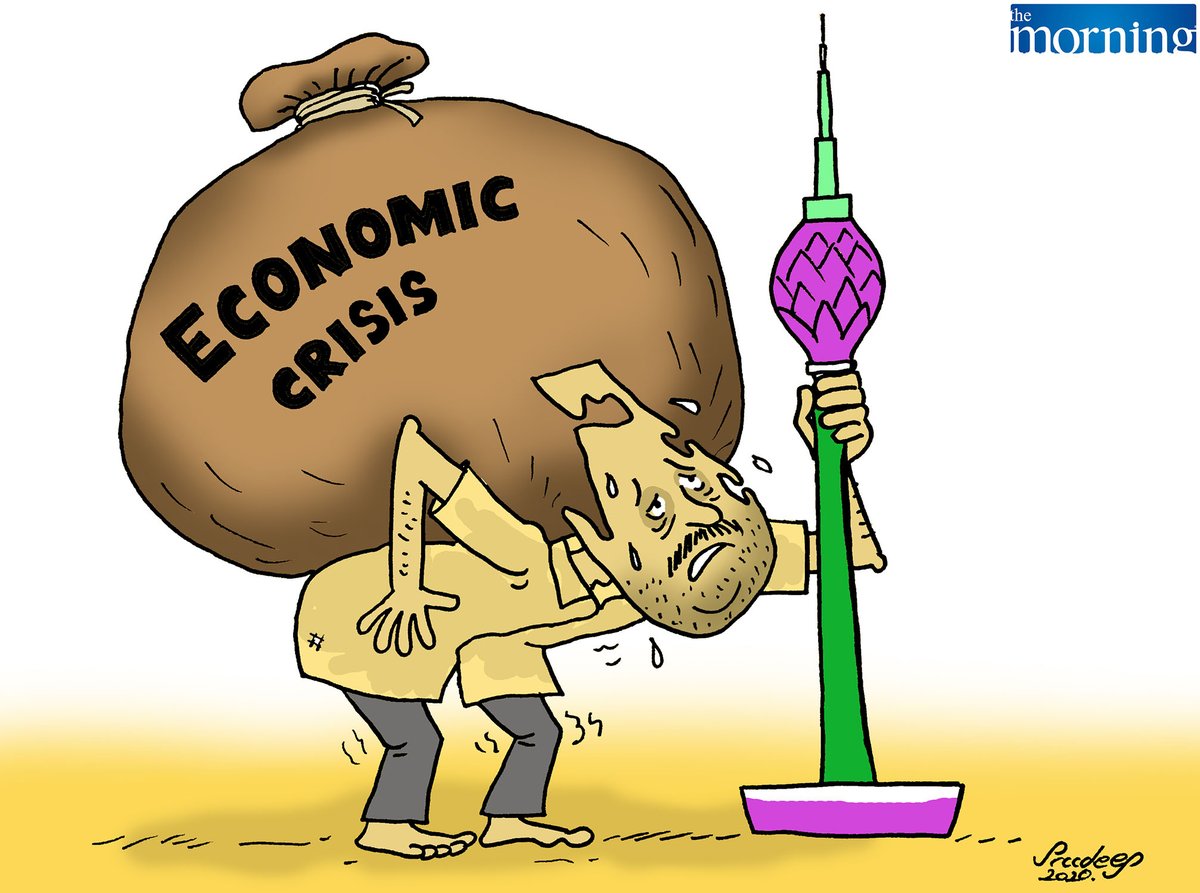
Sri Lanka’s economy is being crushed by war in Ukraine -TOI

Russia’s war in Ukraine, which has caused a humanitarian crisis and convulsed global financial markets, is now threatening to crush an $81 billion economy more than 4,000 miles away in the Indian Ocean.

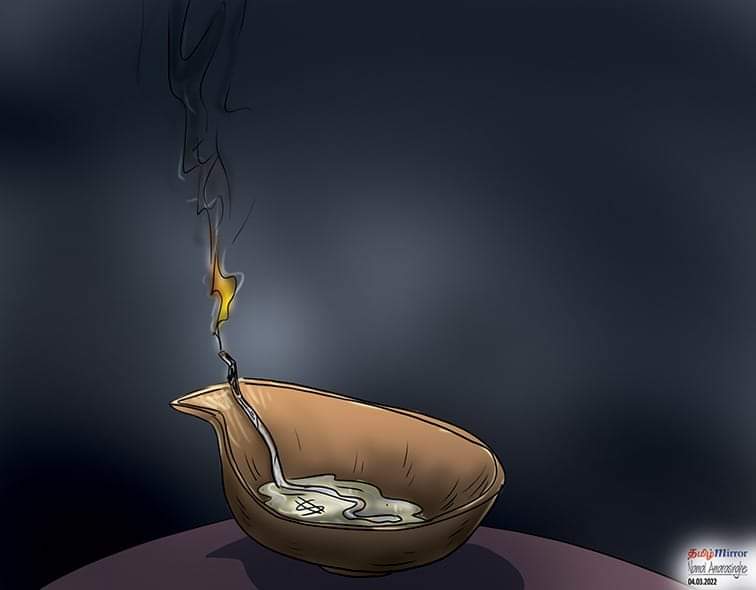
Hit by soaring oil import costs and a dip in tourism revenue, Sri Lanka is racing to avert a default amid dwindling foreign-exchange holdings. With inflation already at 15% — the worst in Asia — the conflict is only making it harder for the tropical island located off the southern tip of India. Fuel shortages and blackouts lasting as long as seven hours have become daily routine, while the wait gets longer at gas stations where prices surged almost 50% this month.

Authorities are struggling to contain the crisis. They’ve raised interest rates, devalued the local currency and placed curbs on non-essential imports. But with a meager $2 billion in forex reserves and $7 billion in debt payments due this year, the battle is turning uphill. The government this week finally abandoned its reluctance to seek help from the International Monetary Fund and President Gotabaya Rajapaksa pledged to fulfill Sri Lanka’s obligations.

“Seeking help from the IMF is the most feasible way to get out of the crisis,” said Ankur Shukla, a Mumbai-based economist with Bloomberg Economics. “The Russia-Ukraine war has worsened the already weak external balances situation, increasing the gap between external financial requirements and financing sources available.”

One of Europe’s worst conflicts since World War II couldn’t have come at a worse time for Sri Lanka, which is still recovering from a brutal 30-year ethnic strife that ended in 2009. The South Asian country has sought to revive growth since, spending millions on tourism infrastructure, until the pandemic dealt a blow to its plans. The crisis also shows how Russia’s war is putting some of the fragile developing economies at risk and imperiling decades of efforts to lift millions out of poverty.

In South Asia, other vulnerable countries include Bangladesh, Maldives, Nepal and Pakistan, Shukla said. Though direct trade and financial linkages with Russia and Ukraine are limited, the “price and supply shocks are powerful,” he wrote in a note on March 9.

With a population of about 22 million, Sri Lanka is a net importer of goods from medicines to fuel. In December, petroleum products accounted for about 20% of inbound shipments and the cost jumped 88% from a year earlier. The increase in oil prices this year is adding to the burden.
The country has also been paying off external debt it piled on to help rebuild an economy scarred by the bloody civil war between the majority Buddhist Sinhalese and a Tamil minority that’s predominantly Hindu. That has been draining its forex reserves.

Another pain point is tourism revenue. About 30% of visitors this year were from Russia, Ukraine, Poland and Belarus, and the war is threatening to turn off that tap. Sri Lanka earned $3.6 billion from tourism in 2019 before the pandemic slashed that to less than a fifth two years later, official data show.

The central government’s foreign-owned debt stood at $32 billion as of November. Optimism that the government will soon manage to reach a deal with the IMF has already spurred a rally in the country’s dollar bonds. An offshore bond due 2030 rallied to 49 cents to the dollar from a record low of 38.9 cents on March 9, while one-year default probability has dropped to 18.2% from as much as 31.3% in late December, according to data compiled by Bloomberg.

The nation’s international bonds need to be restructured by July as Sri Lanka doesn’t have the necessary resources to pay the $1 billion due that month, Citigroup Inc. said in a February note.
Besides raising borrowing costs and devaluing the rupee, Central Bank of Sri Lanka governor Ajith Nivard Cabraal also urged restrictions on non-essential imports of around 300 items from electronic appliances to apples and increases in fuel prices and power tariffs.

“The government seems to be reacting positively and that would help steer the economy to calmer waters in this time of unprecedented global challenges,” Cabraal said by phone last week.

Yet for ordinary Sri Lankans, the pain is real. Civic groups have held vigils highlighting rising costs, while the main opposition party organized a mass rally in the capital city of Colombo on March 15, demanding the resignation of President Rajapaksa. The protests pose no immediate threat to his government, which commands almost two-thirds majority in parliament.

Sugath Chaminda, 44, said he spent about 10 hours to refuel his auto rickshaw, after being turned away by numerous gas pumps that had run dry. He then spent more time hunting for a cylinder of cooking gas, which was also in short supply.

“I don’t know what the government is doing to have brought us to this situation,” he said in Colombo.

Some of the inflation surge is also self-inflicted. Last year, the government banned imports of chemical fertilizers in an ambitious plan to promote organic farming. That caused a shortage of nutrients, leading to crop failure and protests, prompting the government to reverse the decision in November.

Sri Lanka has also approached China and India for bilateral credit lines to avoid an IMF bailout, but negotiations have been complicated by the war in Ukraine. In the past, policymakers have generally considered some of the IMF’s conditions as burdensome, leading to reluctance to engage with the agency.

Rajapaksa said Wednesday his government has weighed the advantages and disadvantages of working with the IMF, which has urged a “credible and coherent strategy” to restore macroeconomic stability and debt sustainability.

A restructuring is necessary as the debt levels are too high, said Kenneth Akintewe, head of Asian sovereign debt at abrdn in Singapore.

“The country doesn’t have a history of defaults but that also means they don’t have experience with going through the restructuring process,” he said. “Added to that, the relationship with the IMF has been a fractured one. This leaves room for missteps along the way.”

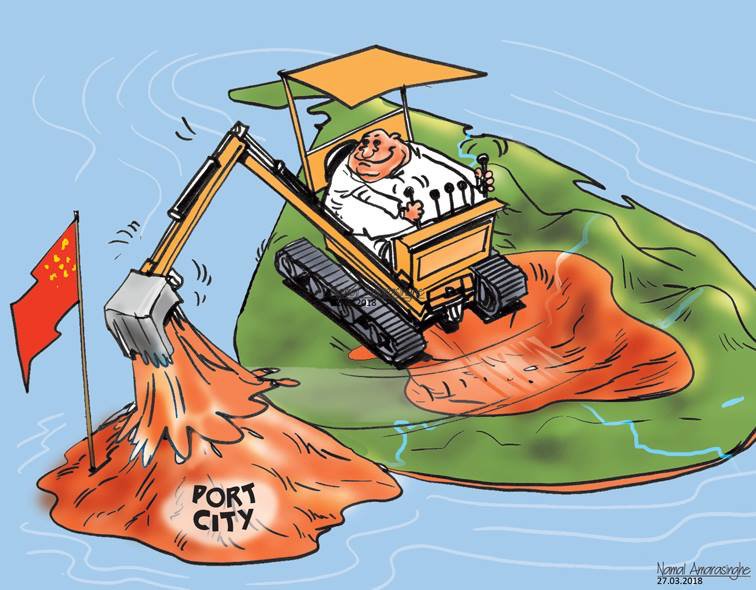
Does the China-SL FTA pose risks?

While signing loan agreements with India for the purchase of oil, food and medicine, China is also preparing to expedite a free trade agreement with Sri Lanka, which will seriously affect the country’s domestic industries.

A statement issued by the Sri Lankan Embassy in China yesterday (16) stated that the decision to expedite the agreement was taken at a meeting of the Ministerial Sub-Committee on International Trade.

The status of trade transactions between the two countries was also cited in the announcement, which mentioned that China sent $ 4700 million worth of goods to Sri Lanka last year, while Sri Lanka has sent $ 274 million worth of trade goods to China.

However, questions remain as to whether Sri Lanka, which already imports a large quantity of goods from China, compete with the Chinese market by entering into a free trade agreement, and what the fate of our country’s local industries be if these undrafted agreements are signed soon.

Posted in Uncategorized

State TV presenter sacked for being critical of Government

A state TV presenter has been sacked for being critical of the Government on social media.

Parami Ranasinghe said that she was removed by Rupavahini after publishing a post on Facebook, reflecting the views of the general public on the state of affairs in Sri Lanka.

Ranasinghe hosted a number of programs on Rupavahini, including Nuga Sevana and Hard Talk.

In a Facebook post, the TV presenter said that her freedom of speech had been violated.

She said that Rupavahini has banned her from entering the premises.

There was no immediate reaction from Rupavahini.

Posted in Uncategorized

Won’t remit Dollars to Sri Lanka: Expatriate organization

‘Sri Lankan Expatriates for Change’, an organization formed by the Sri Lankan expatriates based in Milan in Italy today said they have decided to refrain from remitting dollars to Sri Lanka as a protest against whom they call corrupt politicians who had ruled the nation in the past and now.

“It is common knowledge that the economic crisis in Sri Lanka was not caused by the fall of tourism industry or the decline that the Lankans abroad remit funds. It is the present rulers who had forced our relatives back home to suffer in long queues and to languish in darkness. It was the corrupt politicians who rule the nation now and those who ruled in the past who had wasted and robbed our blood and sweat.

Therefore, we the Lankan expatriates abroad have decided not to remit any dollars to Sri Lanka till a corrupt-free government is established,” Sri Lankan Expatriates for Change said in a statement.

“It is hilarious to note that they are saying their dwindling tourism dependency and expatriate remittances were the cause for the country’s present situation. It was their inability to take meaningful steps to resolve Sri Lanka’s economic crisis. It is the duty of the government to take meaningful and tangible measures to resolve the issue,” the statement added.

“Many countries have managed to stabilize their economies successfully after the pandemic and it is totally unacceptable blaming the pandemic and the Ukraine-Russia war for the current perilous economic crisis in Sri Lanka,” the statement asserted referring to President’s address to the nation on Wednesday.

Modi tells Lankan Finance Minister that India will stand with Sri Lanka

The Prime Minister of India Narendra Modi has stated that India would always stand with Sri Lanka, a close friendly neighbor, when the visiting Sri Lankan Finance Minister Basil Rajapaksa called on him on Wednesday in New Delhi.

Prime Minister Modi said in a tweet: “Had a good meeting with Sri Lanka’s Finance Minister @RealBRajapaksa.Glad to see our economic partnership strengthen and investments from India grow.”

The Prime Minister spoke about the central role that Sri Lanka occupies in India’s ‘Neighborhood First’ policy and its S.A.G.A.R (Security and Growth for all in the Region) doctrine. He reiterated that India would continue to stand with the friendly people of Sri Lanka.

Finance Minister Rajapaksa noted the deepening people-to-people relations between both countries, including in the cultural sphere. Prime Minister pointed to the potential for increasing tourist flows, including through joint promotion of Buddhist and Ramayan tourism circuits.

Finance Minister Basil Rajapaksa is on a two-day official visit to New Delhi to follow-up on the short and medium-term economic cooperation measures that were agreed upon during his visit to India in December last year. Rajapaksa briefed the Prime Minister on initiatives being taken by both countries to increase bilateral economic cooperation and conveyed his thanks for the support extended by India for the Sri Lankan economy.

The meeting between the Prime Minister of India and the Finance Minister of Sri Lanka was held at the former’s office in the Parliament House. The meeting was held in an extremely cordial manner.

At the outset, Finance Minister Rajapaksa thanked Prime Minister Modi for all the assistance that India has provided to Sri Lanka at this critical time. The indian Prime Minister assured the Lankan Minister that India would always stand with Sri Lanka, a close friend.

The two dignitaries discussed a wide range of issues pertaining to the bilateral relationship during the call. The areas included agriculture, renewable energy, digitalization, tourism and fisheries among others.

They Sri Lanka’s decision to move towards organic agriculture. Prime Minister Modi highlighted the advantages of natural farming and India’s experience in developing related techniques and products, including nano-fertilizers, which could be of relevance to Sri Lanka.

The two dignitaries also agreed that cooperation in the development of renewable energy in Sri Lanka is mutually beneficial and that it should be pursued with vigor.

Posted in Uncategorized

Why is Sri Lanka facing a gas shortage?

Liro Gas was unable to source the US $ 8 Million on Wednesday (16) to settle payment for a gas shipment that reached Sri Lanka.

According to Litro Gas, a shipment is valued at approximately US $ 3 Million, however, due to arrears and demurrages, the supplier is seeking the US $ 8 Million from Sri Lanka.

According to reports, the demurrages per day for this particular shipment is US $ 4,500/-, and Litro Gas revealed that it has payments to the tune of US $ 18 Million as demurrages to the supplier.

Where did it all go wrong?

If Litro Gas has opted for a long-term tender process, the payment for shipments could have been better managed.

Notably, the long-term tender of Litro Gas lapsed on the 28th of February 2022, and even at that time, Litro Gas has not taken any measures to finalize the renewal of the long-term tender.

Litro Gas has noted several reasons for the cause.

– The failed attempt to introduce a full functioning Siyolit (Pvt) Ltd, the special purpose vehicle (SPV) incorporated for Sri Lanka’s gas sector

– Crises that followed after reducing the weight of the domestic LP gas cylinders and distributing them to the local market

– Gas related accidents that were reported from across Sri Lanka

What is the situation at the moment?

Although the long-term tender awarded to a foreign supplier has expired, Litro Gas Lanka continues to purchase gas from the same company.

When a supply agreement is signed, the supplier usually agrees to supply at least 10 percent more or less of the total consignment.

Is gas being imported under this agreement?

Higher costs can’t be prevented when spot purchases are made for gas.

Last year, the chairman of Litro Gas criticized the supplier and blamed a mafia behind the transaction.

Is a mafia in operation at the moment, as mentioned by the Chairman of Litro?

Parliament to debate PTA Amendment Bill on March 22

The Second Reading Debate on the Prevention of Terrorism (Temporary Provisions) (Amendment) Bill will be held on the 22nd as decided at the Committee on Parliamentary Business, chaired by Mahinda Yapa Abeywardena today morning (16), Acting Secretary General Ms. Kushani Rohanadeera said.

Accordingly, the Bill is intended to be passed with the relevant amendments, the Acting Secretary General said.

Parliament will convene at 10.00 am on the said date and the Second Reading Debate on the Prevention of Terrorism (Temporary Provisions) (Amendment) Bill will be held from 11.00 am to 4.30 pm.

Regulations imposed under Gazette No. 2251/48, 2262/50 and 2266/5 published under the Land Development Ordinance will be taken up for debate on March 23rd from 11.00 am to 4.30 pm.

The Value Added Tax (Amendment) Bill will be taken up for debate on March 24th from 11.00 am to 4.30 pm.

Furthermore, the agreement reached between the Government of Sri Lanka and the Government of the Republic of Turkey on 28th January 2022 to prevent double taxation and tax evasion on income tax is scheduled to be ratified on the same day in accordance with the Inland Revenue Act.

Time has been allotted from 10.00 am to 11.00 am for Question for Oral Answers except for the 25th of March.

Furthermore, time has also been allotted for Questions at the Adjournment Time from 4.30 pm to 04.50 pm on each day starting from the 22nd except for the 25th and time has also been allotted from 04.50 pm to 5.30 pm for Motion at the Adjournment Time the same by the Opposition and the Government respectively.

From 10.00 am to 5.30 pm on March 25th, Vote of condolences will be moved on several late Members of Parliament.

Accordingly, time has been allotted for the vote of condolence for Batty Weerakoon, Thangeshwari Kathiraman, Jastin Galappatti and M. S. Selvasami on the said day.

Thus, time has not been allotted for Questions for Oral Answers, questions raised by party leaders under Standing Order 27 (2), Questions at the Adjournment Time and Motion at the Adjournment Time on the 25th of March.

Sri Lanka President requests people to have faith in his actions to resolve crises

Sri Lankan President addressing the nation Wednesday requested the people to have faith in his actions to find solutions to the inconveniences that the people are experiencing and alleviate many sufferings due to the shortages of essential items and increase in prices.

Speaking briefly a day after the opposition staged a massive protest in the capital Colombo against the government’s inability to provide relief to the people plunging the country into an economic abyss, the President said he is sensitive to the many sufferings the people have to experience over the past two months but the situation will continue for reasons beyond the government’s control.

“I am also very sensitive to the many sufferings the people have to experience over the past two months. I know that this situation will continue for reasons beyond our control though we make maximum possible efforts with regard to these situations,” he said.

The President said that he is determined to make tough decisions to find solutions to the inconveniences that the people are experiencing.

“Therefore, first of all I request you to have faith in the actions I will take on behalf of the people,” the President said.

He said the root cause of current issues is the foreign exchange crisis and the government must take action to fill the trade deficit and increase foreign exchange reserves. The President said the government has initiated discussions with international financial institutions as well as with friendly countries regarding repayment of the loan installments and following yesterday’s discussions with the International Monetary Fund (IMF), he has decided to work with them after examining the advantages and disadvantages. President Gotabaya Rajapaksa’s special address to the nation in full:

Most Venerable Maha Sangha, Priests of other Religions, Mothers, Fathers, Brothers and Sisters, Dear Children and Friends.

I address you today at a challenging time.

I am well aware of the shortages of essential items and increase in prices. I am also aware of issues such as gas shortage, fuel shortage and power cuts. I am also very sensitive to the many sufferings the people have to experience over the past two months. I know that this situation will continue for reasons beyond our control though we make maximum possible efforts with regard to these situations.

I accept responsibility for the actions I take. Today, I am determined to make tough decisions to find solutions to the inconveniences that the people are experiencing. I have appointed a National Economic Council and an Advisory Committee to assist it. I will constantly monitor whether the decisions I make through this are implemented. Therefore, first of all I request you to have faith in the actions I will take on behalf of the people.

I am well aware of the difficulties faced by the people. I was able to better understand and manage all the difficulties faced by the soldiers who were at the forefront of the war against the brutal terrorism and the innocent civilians who were affected by the war.

Our country is not the only country in the world affected by the prevailing crisis situation. The entire world is engulfed with various hardships. Increasing shipping costs, rising commodity prices and shortages of certain goods caused by the Covid-19 pandemic are all beyond our control. However, we have adopted concessionary initiatives for the benefit of the people.

This crisis was not created by me. When those who contributed to the creation of this crisis are criticizing the government in front of the people today, I am attempting to immediately resolve this crisis and provide relief to the people.

In a crisis situation like this, it is the responsibility of the politicians and intellectuals of a country to collectively find solutions to the issues.

The root cause of current issues is our foreign exchange crisis.

The projected export earnings for this year is USD 12 billion, before the rupee was floated. According to the data of the last two months, we have to bear USD 22 billion as the import cost this year. Accordingly, this will result in a trade deficit of USD 10 billion.

Based on recent data, this year we will receive about USD 3 billion from tourism, as well as export services such as information technology, and USD 2 billion from remittances from expatriate workers. Accordingly, the trade deficit will be USD 5 billion.

Meanwhile, USD 6.9 billion will have to be paid in loan installments and sovereign bonds this year. Then there will be a deficit of USD 11.9 billion.

We expect to generate USD 2.5 billion from other grants and investments. Accordingly, there is a total deficit of USD 9.4 billion in foreign exchange.

However, once the rupee is floated, export earnings are expected to reach USD 13 billion. This will also reduce the cost of imports from USD 22 billion to USD 20 billion. If that happens, the trade deficit could be reduced to USD 7 billion. We should aim for this target.

We can also expect USD 4 billion by providing export services and USD 5 billion in remittances from expatriate workers. Accordingly, our trade deficit will be USD 2.4 billion.

We must take action to fill this deficit and increase our foreign exchange reserves.

To this end, we have initiated discussions with international financial institutions as well as with our friendly countries regarding repayment of our loan installments. The government is in discussions with various parties to implement a new method regarding this which will be beneficial to our country. Yesterday’s discussion with the International Monetary Fund was also held for this purpose.

Through those discussions, we hope to find a way to pay off our annual loan installments, sovereign bonds, and so on. Subsequent to my discussions with the International Monetary Fund, I have decided to work with them after examining the advantages and disadvantages.

Due to some decisions I have taken in the recent past, we were able to control the import expenditure to a great extent. We suspended importing vehicles two years ago because we saw this issue in advance. In addition, we encouraged local industries. We also stopped the importation of many non-essential food items and took steps to cultivate those crops in our own country. Now we can witness the successful results of those initiatives.

The most serious issue we face in controlling the cost of imports is the rapidly rising fuel prices in the world market. Generally, more than 20 percent of our import expenditure is spent on purchasing fuel. In the last few months alone, fuel prices in the world market have more than doubled. This is the reason why the increase in fuel prices in our country was inevitable. Fuel is widely used in our country not only for vehicles but also to generate electricity.

This is why, I constantly took steps to discuss and encourage relevant agencies to use renewable energy sources as much as possible.

Therefore, by limiting the use of fuel and electricity as much as possible, the citizens too can extend their support to the country at this time. I hope that you will understand the responsibility lies with you at this challenging time.

The tourism industry, which was collapsed due to the COVID-19 pandemic, is revving. The last two months have seen a clear increase in tourist arrivals to Sri Lanka.

Also, due to the acceleration of the government’s provision of infrastructure facilities in the IT and telecommunications sectors, the revenue generated through these sectors is increasing.

We are a nation that has experienced many adversities and at the same time conquered those challenges throughout the history. We have faced foreign invasions, great famines, natural disasters and threats of terrorism. The way we dealt with the Covid-19 situation has been praised even by international organizations. However, we all need to understand that we have to face difficulties when implementing solutions for the issues for a certain period of time. Therefore, I urge all of you not to be discouraged but to unite as a nation to overcome this crisis.

You requested me to build a secure, disciplined, and a modern developed country, as well as a better education for your children. Almost two and a half years of my tenure were devoted to protect you and your child from the pandemic. I will dedicate remaining period of my tenure to accomplish those original goals.

I urge the Cabinet, the Parliament and public officials to work together as a team to achieve our desired goal of providing a better country for our children with a great commitment.

I entered into politics on your invitation. All of you have placed an utmost trust in me. I will never betray the trust you have placed in me and protect it with a great commitment.

May the Noble Triple Gem bless you all!