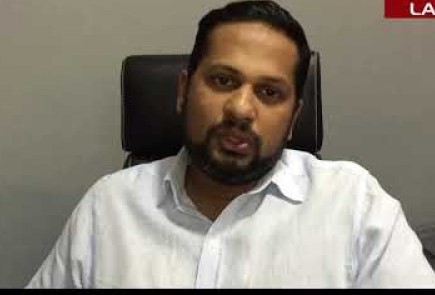
Chief Opposition Whip and former Minister Lakshman Kiriella is one of the most senior politicians in the House with a vast knowledge on Standing Orders and Parliamentary etiquette. He is an authority on Parliamentary law. Mr. Kiriella, a lawyer by profession, has been elected as an MP uninterrupted for 32 years since 1989 and was the Leader of the House under the Yahapalana government. The Daily Mirror sat with him to discuss the current political situation of the country and the future of the Samagi Jans Balawegaya (SJB).
EXCERPTS:
Q The public anger against the SLPP government and its hierarchy from all quarters of the country is mounting steadily by the day. What is the strategy of the Samagi Jana Balawegaya (SJB) as the next-in-line to power and the strongest political party in the opposition to save the nation from this predicament?
Well, we have given time to the SLPP government to fulfill their pledges given in two elections during the Presidential election in 2019 and Parliamentary election in 2020. But unfortunately, in the last two years since President Gotabaya Rajapaksa and the SLPP government were elected to power, they have failed miserably in all aspects, I mean in the economy, the rule of law, human rights and living standards of the people and general prosperity of the country in a dismal manner. They are failed in all aspects. They must look at their manifesto. If you look carefully at their manifesto, the so-called ‘Vistas of Prosperity and Splendour’, you can see that not a single promise given in two polls has been met and the country at the moment goes down a precipice of no return.
Q But you are still to come up with your game plan to grab power at the upcoming elections?
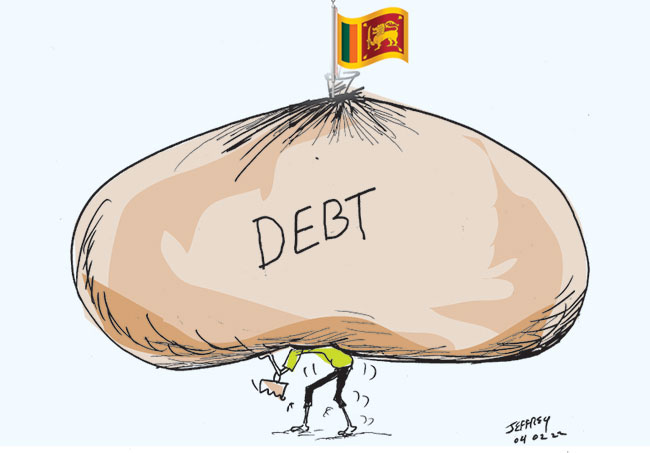
You must realise that any political party comes with its manifesto or the game plan in the election year. No party is expected to release its election strategy or the policies of their government once they are elected to power in mid term. No political party discloses its manifesto, three to four years before the election. If you take President Gotabaya Rajapaksa, he gave an interview after he was nominated as the candidate of the SLPP. He was asked ‘how he was going to settle the massive debt of the government. He could not answer. He paused for about a minute and looked at Mahinda Rajapaksa who was seated next to him. Gotabaya was one of the front runners to the Presidency but he did not know how to repay the government debts.
Obviously, the SJB will have a broad alliance to contest the forthcoming polls. Sajith Premadasa will be the leader of the alliance. We consult all constituent partners of the SJB on the policies, programmes and on decision making of the alliance and the style of the government to be formed. As I said earlier, no party publishes its manifesto years before the election.
Q You are one of the most senior and experienced politicians in the SJB. Do you think that the SJB is capable of convincing the electorate that an SJB led government is the best answer to the disaster the country has fallen into right now?
Yes, indeed. The UNP is not in existence now. We are the successors to the UNP. If you look at the period we ruled the country from 2015 to 2019, we controlled the food prices, we gave the biggest pay hike in history to public servants and pensioners, incurring Rs. 270 billion annually to the Treasury. We stabilised the food prices and brought the prices of gas and kerosene down. The people enjoyed a good standard of living under our government. You must realise that when we came to power in 2015, our annual income was Rs. 1000 billion. When we left in late 2019, it was Rs. 2000 billion and we had foreign reserves of US$ 8 billion. Today, government’s income is Rs. 1,300 billion and foreign reserves are about US$ 1 billion. We doubled the government’s income during our time. Not only that. We gave each and every demand made by the trade unions, be they public servants, pensioners or teachers. We can run the economy well under a presidency of Sajith Premadasa. You must not have any doubt about it because we can get the support of the international community. You may have seen diplomats, foreign leaders and delegates of many countries come to meet the Leader of the Opposition Sajith Premadasa regularly. We have a good rapport with them. The most crucial factor is that we have won the confidence of the international community and the global lending agencies. We will tax those who have money to increase the government revenue. When we came to power in 2015, the state revenue stood at Rs. 1000 billion. When we left in 2019, it was Rs. 2,000 billion. We doubled the government income by taxing big companies. What did Gotabaya Rajapaksa do? He cut tax in his first budget and lost 800 billion rupees of government revenue. That is what the global financial agencies want. This government does not increase the state revenue but loses it while giving huge tax relief to rich and powerful people and companies. Their recipe is to get loans as much as possible to fill the government coffers. Our strategy is to increase government revenue through taxing the corporate sector and those capable of paying. The government is under obligation to the companies as they sponsored Gota. Therefore, Gotabaya Rajapaksa is obliged to pay back these companies and people who funded his election campaign. At the very first cabinet meeting of the Gotabaya Rajapaksa regime held on November 27th of 2019, it was decided to remove PAYEE tax, Nation Building Tax, Capital Gains Tax imposed on CSE, Debt Services Tax, withholding tax, Debit Tax and VAT reduced, cutting state revenue by Rs. 800 billion annually.
Q Sri Lanka has become a geo-political playground for super powers like the US and China and the regional power India. It is no doubt that a future SJB government will have to handle this highly sensitive issue in an extremely careful and pragmatic manner not to offend any of them. How are you going to do this?
You must realise that once you give something, you can never take it back. In that case, this government is putting future governments in jeopardy. They don’t have any foreign reserves. When we handed over the government in 2019, we had US$ 8 billion in foreign reserves. Now, they have brought it down to a little over one billion. The Vistas of Prosperity and Splendour pledged not to hand over the assets of the country to foreigners. China has been given a part of the Port City, Yugadanavi power generation plant to the US, Trincomalee oil tank farm to India. Yes, as you said, Sri Lanka has become a playground to super powers as well as to the regional powers putting the country in danger.
Government must increase production to fatten foreign reserves and state revenue. The only answer for economic prosperity is to increase export revenue. There are no short cuts to economic development other than increasing production for the global market as well as for the domestic market. A future SJB government will lay full emphasis on exports. For example, last year there was a good rate for paddy. If the government gave the fertiliser subsidy to the entire agriculture sector, you would have increased the output by 30% because the weather was so good, it was raining round the year. What happened as a result was that the agricultural production came down by 30%.
We must have a special arrangement with India’s vast market. Don’t forget the fact that India being a huge market is next door to us. The Yahapalana government had plans to develop a major export processing zone at Hambantota with Hambantota International Port as the main export terminal with emphasis on Indian, Chinese and European markets.
Q How do you manage to entertain Foreign Direct Investment (FDI) from both power blocks by a future SJB administration?
I have been telling the government in the last two years that the main criteria to attract FDI is to maintain the rule of law, respect for democracy and human rights. Those are the cardinal principles for foreign investment. When we were there, we introduced the 19th Amendment to the Constitution. Under 19A, all the institutions in the country were free and free to take decisions. We gave the opportunity to the Supreme Court, the Public Service Commission and all independent commissions to work independently and take decisions free of political influence. The Executive President did not have power over the legislature or the independent commissions. Executive President had power only to nominate members to independent commissions and the Constitutional Council had the power to reject the President’s nomination. For an example, under 19A, if the President recommended a person to the Supreme Court, Army Commander or the IGP, the council could say ‘we don’t accept your nomination and send another name’. Today, under 20A, the President’s nominee has to be accepted with no holds barred. All the institutions are under the executive and therefore, the rule of law is under question. So, investors will not come. Then we have a UNHRC resolution against us on the dismal record. The European Parliament has passed a resolution to withdraw the GSP+ facility from Sri Lanka. I don’t know what will happen at the March sessions of the UNHRC. Definitely, they will penalise us. There will be a penalty on Sri Lanka. The EU or the UNHRC will not pass resolutions to please us.
We are confident that our policy though non-aligned would keep close and cordial relations with the West and East and North and South. We ensure the strict adherence to the rule of law, human rights, fundamental rights, labour rights and to protect all democratic establishments in the country. We also uphold all international covenants, conventions, protocol and guidelines while treating all citizens of Sri Lanka as equal. There will be no discriminations against any community or group.
We also have highly qualified professionals like Dr. Harsha De Silva, Eran Wickremeratne and Kabir Hashim to handle the economy and investments under an SJB administration.
Q You were one of the senior party stalwarts of the UNP before the formation of the SJB. I have no doubt that you all never expected the electoral setback and humiliation the grand old party was subjected to at the 2020 general election. What actually happened and who was responsible?
The main reason for the break up was the lack of internal democracy in the UNP. For a political party to go forward there must be internal democracy. Once when I went to India, I asked one of the senior politicians as to what had happened to the Congress Party – a super power of Indian politics.
He said there was no democracy in the Congress Party. All the political parties in India are massive and all the states are also very big. But for regional political parties there was no opportunity to produce national leaders. The Congress is dominated by Gandhis. All the regional leaders thought why they should back the Congress if they don’t have an opportunity to become national leaders. If and when there is internal democracy in a political party, then only regional leaders can become national leaders. All the regional parties in India have massive voter bases. They thought, if we don’t have a place in the Congress why should we support it to become the rulers of India and they backed away. That is what happened to the Congress party. The regional parties contested state elections under a different symbol and won without the help of the Congress and assembled to form alliances and grab power in the Central Government. That was how alliance politics started to dominate Indian politics. In the past, it was only the Indian Congress that ruled the roosts in Indian politics. Once, Deve Gowda of Janata Dal became the Prime Minister of India, but he lasted only ten months from June 1996 to April 1997. Now the status quo has been restored and BJP has become extremely powerful all over India.
The UNP must have internal democracy and no party can go forward without internal democracy. Those young leaders who aspire to become party leaders must be given the opportunity to meet their goals if the party is to survive. .
Q If a UNP-SJB amalgamation takes place as an alliance to confront the SLPP, what would be the position of the young and upcoming UNP leaders in the alliance who have the national leadership potentials, like Ruwan Wijewardene and Navin Dissanayaka?
The SJB is the most powerful political party in the opposition and a major political force right now across the country. So, we have the right to dominate domestic politics and we are capable of doing that. We are inviting all other political parties and politicians without naming them to join the SJB led by Sajith Premadasa. Under the SJB alliance, there are 11 political parties representing different ethnic groups and ideologies as constituent partners. There is not a single elected member of the UNP in Parliament.
During the uncertainty that dominated the UNP before the polls, I was also in a state of confusion. I summoned all the zonal leaders and candidates of the UNP in the Kandy District and consulted them as to what we should do. In one voice they asked us to go ahead with Sajith and ensure the victory of the SJB. You must understand that political alliances are formed within three or six months before an election. Even in 2015 this was what happened. At the same time, we must develop and strengthen our individual political parties throughout.
When we went to the electorate in 2020, the only manthra was Sajith and no one else. When we went to the villages, they asked ‘Sir, which side are you? We said “We are with Sajith’. Delighted, they voted for Sajith and the SJB, notwithstanding the fact that the President was from a different political alliance. In rural areas, ‘Sajith’ was the magic word in the 2020 general election campaign and you can see the massive popularity and respect he commands today not only in the periphery but in urban areas as well.
This must be because his late father, President Premadasa lived with the ordinary people during his entire political career. There was a conception among Sri Lankans that President Premadasa was the one and only President who had a soft spot always for the poorest of poor and the down trodden. He was the politician who did most for the poor in this country. His son cannot be an exception and Sajith has shown that he has the ability and concerns his father had, to serve the less privileged sections of the society. They have the confidence that Sajith would never let them down when he is given the opportunity.
The biggest advantage for Sajith is that he has the trust and the support of the International community. They treat him as the alternative leader of Sri Lanka. That is why the foreign diplomats and visiting leaders pay courtesy calls on him constantly. He also cuts a good figure in Parliament with his speeches and behaviour as an intelligent and respected political leader who upholds democratic, social and religious values and inter-communal harmony. He has the passion and the desire to work.
Ruwan, Navin and other young and upcoming leaders are welcome and accepted to the SJB with both hands if they are willing to do so.
I believe that Ruwan and Navin in particular have a place in national politics and serve the country blessed with the legacy of their ancestors.
Ruwan’s maternal and paternal grandfathers are national leaders. The late D.R.Wijewardene, the father of print media, and the father of the nation and first Prime Minister of independent Ceylon, D.S.Senanayake. Both fought for national independence and won.
Ruwan also comes from a family that continues to struggle vehemently to protect democracy and for the freedom of independent media for decades.
Imagine the fate of Sri Lanka if there was no accelerated Mahaweli Development Project, Navin’s father late Gamini Dissanayake gave to the nation as the Minister of Mahaweli Development under the J.R. Jayewardene regime that produces 40% of rice, many other commercial crops and 30% of hydro power of the national requirement today. It was he who pioneered to raise Sri Lanka’s cricket to the global level by taking the lead to obtain the membership of the International Cricket Council (ICC) and test status to Sri Lanka.
Therefore, these young leaders with unblemished track records in politics have a place in the SJB alliance if they wish so.
Q You have served as the Minister of Higher Education and Highways under the Yahapalana regime. Current Highways Minister Johnston Fernando alleges you at every opportunity saying that you misused funds allocated for road development and for the Central Express Way (CEW) in particular and failed to meet development targets. Your comments?
Those are political canards. The COPE went through my ministry’s work and they found nothing to that effect. Johnston makes these utterances in bad faith and to achieve credit he does not deserve.
When the infamous and unconstitutional overthrow of the Yahapalana government took place in October 2018, the construction of 37 kilometres of the 41 kilometres in the Meerigama-Kurunegala stretch had already been completed.
After I was appointed as the Minister of Higher Education and Highways in 2015, the blueprint of the CEW was still on the drawing table. It was I who started the survey of the stretch, took over 20,000 plots of land, paid compensation to land owners and commenced construction in October 2016. I did not obtain foreign loans and selected 16 local contractors for the job after calling open tenders. The project was funded by the Treasury.
By the time of the regime change in 2020, the SLPP government had only 4 kilometres to complete of the Meerigama -Kurunegala section of the CEW but they took more than two years to construct this short distance of road but did not have the decency to tell the truth to the country. The plagiarism they have shown on this matter displays their inferior behaviour and political bankruptcy. The SLPP government opened the Meerigama-Kurunegala stretch of the CEW with much publicity and pompous ceremony last month but people of this country should know who and where the credit must go for this development project.
Q Is Sajith the undisputed leader of the SJB and Presidential candidate in 2024?
Absolutely! He is the Presidential candidate of the SJB at the next Presidential election and all the constituent parties of the alliance led by the SJB will fully back him. As I told you earlier, ‘Sajith’ is the magic word in the rural areas in particular and that is why we demand an election for Pradeshiya Sabha, Provincial Councils or even a general election to test the water.
In a participatory democracy, it is a norm that an election is held once in two years that would reflect the public opinion. It will help the government to review its policies and take corrective measures and go for a policy change if and when the populace is unhappy on the performance of the government and the public opinion goes against it at the polls. In Sri Lanka, it is high time for the government to hold an election. I don’t think they will hold any election in the foreseeable future as the SLPP government and President Gotabaya Rajapaksa are extremely unpopular and detested by all.
Q But India urges the Sri Lanka government to hold PC polls as early as possible?
Don’t worry about that. Take my word. When India gets the Trincomalee oil tanks, they will conveniently give up the hegemony on Sri Lanka.
Q President Rajapaksa made an emotional appeal to the opposition for help to come out of the current apocalyptic scenario facing the country during the address to the nation he delivered at the opening of Parliament and on the Independence Day. Are you ready to extend a hand of friendship to the government?
Yes and no. The main opposition party, the SJB and opposition leader Sajith Premadasa is more than ready to assist the government in whatever way possible to help to liberate millions of our people from this sorry state of affairs. But the government must set the stage for us to do that because all the disasters are self-inflicted by the government except the COVID-19 pandemic. The huge tax cuts introduced to satisfy friends, ordering farmers to shift to organic fertiliser from chemical fertiliser overnight, food shortage, domestic gas cylinder explosions, skyrocketing food prices and scarcity of all the essential food commodities, sharp increase of cost of living and inflation, job losses, power outages, collapse of the rule of law and continuous violation of the fundamental rights and the weakening of democratic institutions and many other blunders and failures are a clear indication of Gotabaya Rajapaksa administration’s mismanagement, shortsightedness and inefficiency.
The opposition’s help must come as a team work. To do that the government must facilitate the process. When COVID-19 struck the nation in early 2020, we requested the government to pass the Disaster Management Bill and appoint the National Disaster Management Council headed by the President himself. If this highly influential national council was appointed, we could have addressed all the issues related to the pandemic successfully in a bipartisan approach. But the President is still to do that and appointed a task force led by Army commander. The pandemic continues devastating the country unchallenged, victimising thousands per day at the moment. Targeting opposition members with trumped up charges while discharging of government politicians and friends from all court cases, is a hindrance to offer any help to the government. Despite popular demand across the country for a presidential pardon, Ranjan Ramanayake is still in jail. He is not a criminal, thief, bribe taker, rapist or a murderer, but a representative of the common man. Under this extremely unhealthy and aggressive attitude, how can we extend the hand of friendship to this government?