Sri Lanka fails to sell 50-pct of bonds at final auction as rates rise

Sri Lanka failed to sell 50 percent of the volume of a 100 billion rupee bond auction, the final for 2021, data from the state debt office showed, as rates rose and the country faced severe foreign exchange shortages from mostly liquidity injected to sterilize interventions.

The office offered 50 billion rupees of 15.01.2033 bond and sold all at 12.06 percent.

On December 12, 15.03.2021 bonds were sold at 11.61 percent. The security was quoted around 11.85/12.05 percent before the auction.

The debt office rejected all bids for 15 billion rupees of 01.08.2025 bonds despite getting 36 billion rupees.

It also rejected all 38.3 billion rupees of bid for 25 billion rupees of 15 June 2027 bonds.

Sri Lanka is facing external default and rating of ‘CC’ after the central bank placed price controls on bonds and printed unprecedented volumes of money.

It then had to spend reserves to exchange the money for dollars as the newly printed money triggered a balance of payments deficit.

Some of the bonds that were repaid with printed money does not correspond to the current year deficit but to prior years.

On January 03, about 97.5 billion rupees of bonds and another estimated 50 billion rupee coupon is due.

When the holders of bond get the printed money, they will spend or save in banks, which in turn will give them out as credit, instead of raising new deposits, creating a forex shortage.

Remaining foreign reserves will be lost when the central bank gives convertibility to the new rupees.

A budget deficit will create inflation and balance of payments trouble only if the central bank prints money to accommodate it and keep rates down to boost credit artificially with ‘legally counterfeited’ fiat paper money.

“[We are making] it possible for the public to convert Government securities into money to expand the money supply.. . ,” Federal Reserve Governor Mariner Eccles said in 1951 as the agency was forced to buy World War I bonds to keep rates down.

“We are almost solely responsible for this inflation. …[T]he whole question of having rationing and price controls is due to the fact that we have this monetary inflation, and this committee is the only agency in existence that can curb and stop the growth of money.. . . ”

Sri Lanka has lifted most price controls on goods, but forex shortages are continuing.
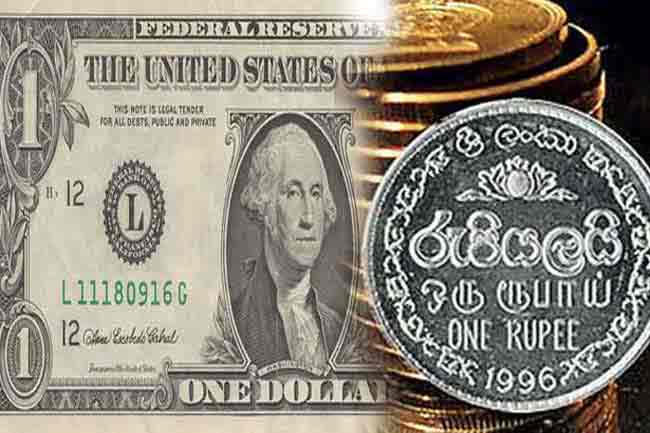
Dollar surrender rule can negatively impact the banks

The Central Bank recently instructed all licensed banks to sell 25% of the foreign exchange inflows they receive through workers’ remittances and exports proceed residuals to the Central Bank.

This directive came as a step of the Central Bank to consolidate its dollar reserves.

Deutsche Bank however says the toughened dollar surrender rule could aggravate forex crunch in the country.

In a letter directed to the Chief Executive Officers of all Licensed Banks, the CBSL said the 10 percent mandatory sale of foreign currencies to the Central Bank by licensed banks has been increased to 25 percent with effect from today.

The tighter dollar surrender rule, which came into effect from the start of this week, could have perverse outcomes as it could leave fewer dollars with the banking system for imports, potentially exacerbating the foreign currency troubles faced by importers and thereby worsening the shortages in some commodities.

According to a note sent out to its clients by Deutsche Bank, an exporter who sells US$ 100 to his commercial bank earlier resulted in the bank selling US$ 10 or 10 percent back to the Central Bank leaving US$ 90 with the commercial bank.

But from Monday onwards, the commercial bank is required to surrender US$ 25 or 25 percent from the US$ 100 that was sold by the exporter, leaving it with only US$ 75.

This, according to the Deutsche Bank will leave a fewer amount of dollars with the banking system available to be sold when an importer comes up with rupees for opening letters of credit (LCs).

As a result, the dollar shortage confronted by the importers even to this day from around July this year, could become more pronounced and thereby worsen the shortages of imported commodities in the local market.

Murtaza Jafferjee, the Chairman of Advocata Institute said that there will be a more acute shortage.

“I’m assuming the central bank is doing this because their reserves are depleting. And the reason for the depletion is mainly because they are continuing to permit the Government to service its foreign debt. It seems that they are prioritizing the needs of creditors over the needs of the citizens of the country. Due to the shortage of Dollars, the scarcity of goods and services in the market is going to increase. And probably the prices also,” he warned.

Sri Lanka minister wants IMF bailout, hints at letting national carrier go

Amid reports that cash-strapped Sri Lanka’s ruling coalition is split down the middle over an International Monetary Fund (IMF) bailout, another cabinet minister on Wednesday (29) spoke in favour of IMF assistance, even going as far as to hint at the sale of the country’s national carrier.

“We will have to go to the IMF. There is nothing wrong with that… since we have no other option,” Environment Minister Mahinda Amaraweera said speaking to reporters on Wednesday (29).

Amaraweera is a member of the Sri Lanka Freedom Party (SLFP), which is increasingly at odds with the ruling Sri Lanka Podujana Peramuna (SLPP). State Minister Dayasiri Jayasekara, the SLFP’s general secretary, had also recently advocated going to the IMF.

“Of course, we need to not accept every condition put forward by the IMF,” said Amaraweera.

“We have been informed that the central bank governor and the Treasury Secretary will be joining the cabinet meeting next Monday (03). I think we will be able to reach a final consensus then,” he added.

Co-cabinet spokesman and Media Minister Dullas Alahapperuma on December 21 told reporters that the cabinet had “exchanged views” on an IMF bailout for the second week in a row but no decision had been made.

Minister Amaraweera, meanwhile, also commented on SriLankan Airlines, the national carrier, and other under-performing state owned enterprises (SOEs).

“At this point, we may have to let go of certain institutes. For example, SriLankan suffers losses in the billions. These losses are borne by people who have never even touched [an aircraft],” he said.

A day before Sri Lanka raised fuel prices last week, Trade Minister Bandula Gunawardena told reporters that the IMF would ask to cut the bloated public sector, reduce the budget deficit, make state enterprises profitable, and raise fuel and electricity prices.

A few days earlier, State Minister Jayasekera said after last week’s cabinet meeting that the IMF imposes conditions such as making state enterprises profitable.

“It is a good thing to do that,” Jayasekera said.

Finance Minister Basil Rajapaksa had already said the state workers and state enterprises were a big burden on the economy.

Older IMF baiout programs typically involve cutting the deficit with tax hikes (revenue based), trimming expenses (spending based) expressed as a net domestic finance target, a foreign reserve target and a reserve money target.

However Sri Lanka’s last failed extended fund facility from IMF program where money was printed within the program to create forex shortages and worsen foreign debt, an inflation target was given and the budget target was defined as a primary deficit.

Instead of a measurable reserve money or ceiling on central bank credit an inflation target was given, allowing the trigger happy central bank to print money and trigger a currency crisis within the program.

Under revenue based fiscal consolidation, state spending soared and the currency collapsed from 151 to 183 under a so-called flexible exchange rate where the exchange flipped from pegged to floating rapidly and interventions were sterilized on top of it.

Posted in Uncategorized

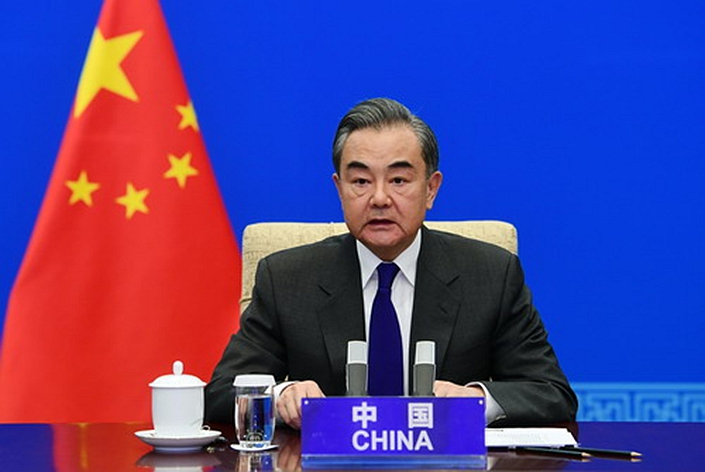
Chinese foreign minister to visit Sri Lanka in January

China’s Foreign Minister Wang Yi is scheduled to arrive on the island on January 08 for an official visit, a spokesperson of the Foreign Affairs Ministry of Sri Lanka confirmed to Ada Derana.

According to media reports, the Chinese minister is expected to present a number of investment proposals.

His two-day visit is taking place as Sri Lanka is preparing to finalize the long-delayed agreement with India on the joint development of the Trincomalee oil tank farm.

According to Ceylon Petroleum Corporation (CPC) chairman Sumith Abeysinghe, the agreement is slated to be signed with the relevant stakeholders within a month.

Thereby, the CPC plans to establish a new subsidiary company named ‘Trinco Petroleum Terminals Ltd’ for this purpose.

The oil storage complex, which is adjacent to the Trincomalee Port is nearly a century old and needs to be refurbished if they are to be used again.

Spread across Lower Tank farm and Upper Tank Farm, it consists of 99 storage tanks with a capacity of 12,000 kilolitres each.

Fourteen of these tanks are run by Lanka OIC. The new subsidiary firm is expected to develop the remaining 85 oil tanks.

SLMC mulls EP development with other parties

Sri Lanka Muslim Congress (SLMC) Deputy Leader and Ampara District MP, H. M. M. Harees said they were ready to collaborate with other political parties when it comes to the development of the Eastern Province.

Harees was addressing an event held at the Sainthamaruthu Divisional Secretariat under the patronage of Divisional Secretary M. M. Ashique.

“Our country is facing a foreign currency crisis right now. However, a large sum of money has been allocated in the Budget 2022 for rural development activities. Bangladesh is achieving its development goals as they focused on rural development. Therefore, it is the duty of responsible parties to implement rural development projects,” he said.

Speaking further, he said that the Government has allocated Rs 100 million for each MP and they must make use of this money to alleviate poverty in their electorates.

More than 40 percent of people in the Ampara District are engaged in Agriculture. They have many issues to be addressed and the fertiliser issue is one of them. The Government has taken all possible steps to address the issues of farmers and the public, Harees added.

Posted in Uncategorized

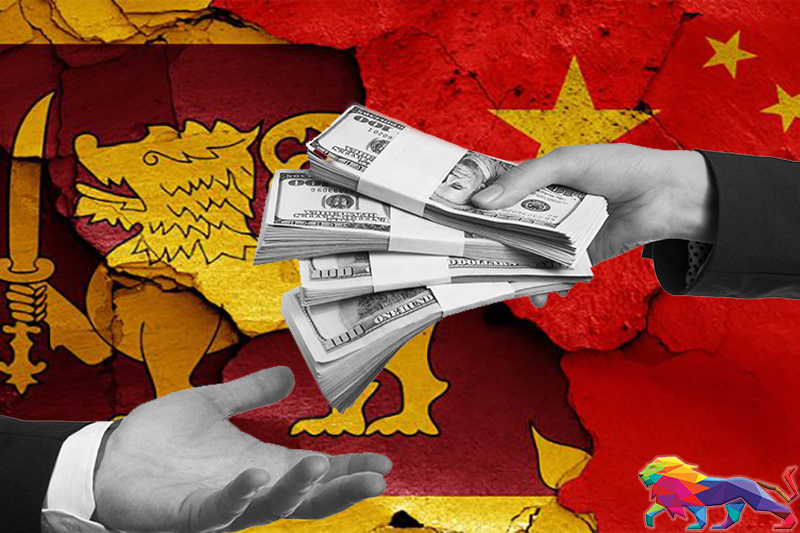
China lends another $1.5 Bn!

The $ 1.5 billion exchange deal to be taken from the Central Bank of China will take place this week, Treasury Secretary S.R. Attygalle said.

The exchange is aimed at boosting Sri Lanka’s foreign reserves.

The Central Bank of Sri Lanka has stated that Sri Lanka’s foreign exchange reserves will be around US $ 3 billion with this deal.

Sri Lanka’s foreign exchange reserves have fallen to US $ 1.5 billion, of which only US $ 1.1 billion is in exchange, according to Finance Ministry sources.

However, commenting on the foreign exchange problem, Central Bank Governor Ajith Nivard Cabraal recently said that Sri Lanka’s foreign exchange reserves would increase to US $ 3.5 billion by December 31 and that accordingly, the amount of foreign reserves should not be a problem.

Posted in Uncategorized

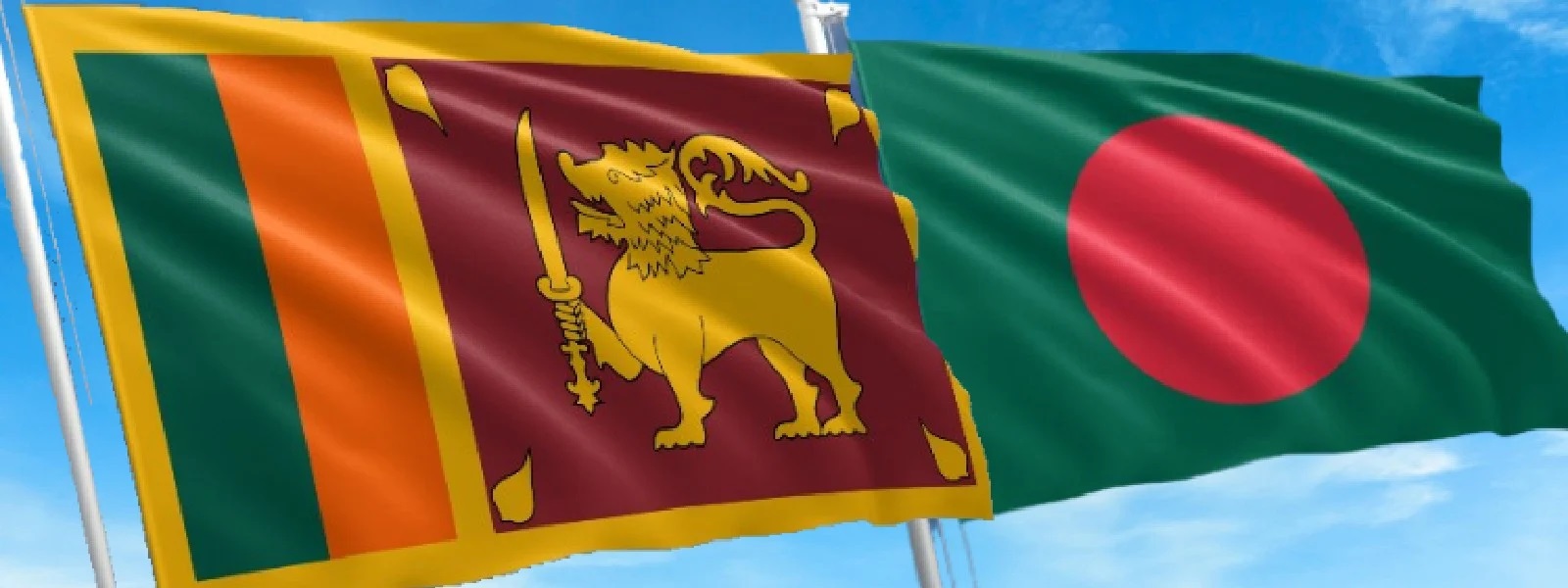
Bangladesh Bank renews Sri Lanka forex loan by three months

The Bangladesh Bank (BB) has extended validity of the 200 million US dollar credit facility it extended to Sri Lanka by three months after the expiry of its first three-month tenure, the Dhaka-based New Age reported.

The loan facility has been renewed following a request from the island nation, New Age quoted a senior BB official as saying on Sunday (26).

The forex-rich Bangladesh extended the credit facility amounting to $200 million under a currency swap deal with Sri Lanka, to be delivered in three tranches as follows: 50 million US dollars on August 19, 100 million dollars on August 30, and the final 50 million dollars on September 21.

As per the agreement, Bangladesh would receive 2 per cent plus LIBOR (London Inter-Bank Offered Rate) as interest on the credit amount. If the instalment principal remains unpaid even after six months, the applicable interest would be 2.5 per cent plus LIBOR, New Age reported.

“Our assessment is that the Sri Lanka would use the fund for at least nine months,” the publication quoted the BB official as saying.

The currency swap initiative was taken after Sri Lankan Prime Minister Mahinda Rajapaksa’s visit to Bangladesh to join the celebrations of the golden jubilee of Bangladesh’s independence and received the BB’s approval in May.

The island nation also received another 787 million US dollars from the International Monetary Fund’s special drawing rights (SDR) allocation to boost its reserves in September.

While Sri Lanka’s forex reserves plummeted, Bangladesh’s reserves stood at 46.3 billion US dollars after hitting a record high of 48 billion from around 33 billion one and a half year ago, according to New Age.

Posted in Uncategorized

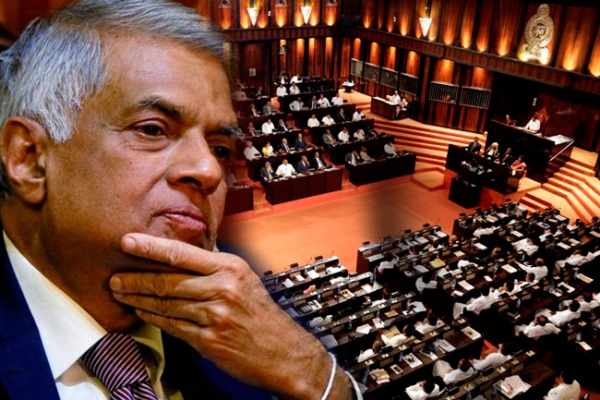
Ranil warns of an impending food shortage in Sri Lanka

Former Prime Minister Ranil Wickremesinghe says that the US dollar shortage has resulted in a serious situation in the country and that it has reached a point where the people are no longer able to bear this burden.

He stated that businesses are collapsing, people are losing jobs, the middle class is deteriorating and the farmers are left stranded. “Solutions are urgently required for these,” he said, issuing a statement to the media today (28).

The UNP leader said that despite the Covid-19 pandemic, many countries have shown economic progress in the year 2021 and that Sri Lanka too should resolve its issues.

“Therefore the government has a responsibility to immediately go to the International Monetary Fund (IMF) and obtain aid or else it should present an acceptable alternative,” he stressed, while adding that “both those things have not happened.”

Wickremesinghe said that today the people of the country are in anger.

The UNP parliamentarian added that in addition to this the country is now having to face another problem, which is the food shortage that is going to occur in Sri Lanka.

He said that based on the information they are receiving a food shortage is likely to occur in the country around the time of the Sinhala and Tamil New Year. He said that many regions are reporting that this year’s harvest will be only around 60% of the harvest from the previous time.

The former PM warned against angering the general public which could have drastic impacts on the government as well as the parliament and therefore called for the prevention of such a situation in order to develop the country.

He sternly urged the government to immediately conclude its discussions and agreements with India to obtain fuel and food on credit.

Wickremesinghe said that obtaining loans or obtaining goods on loan will not resolve the country’s foreign exchange crisis. However, he urged the government to implement the process to obtain fuel and food on credit in order to at least get a temporary reprieve.

Posted in Uncategorized

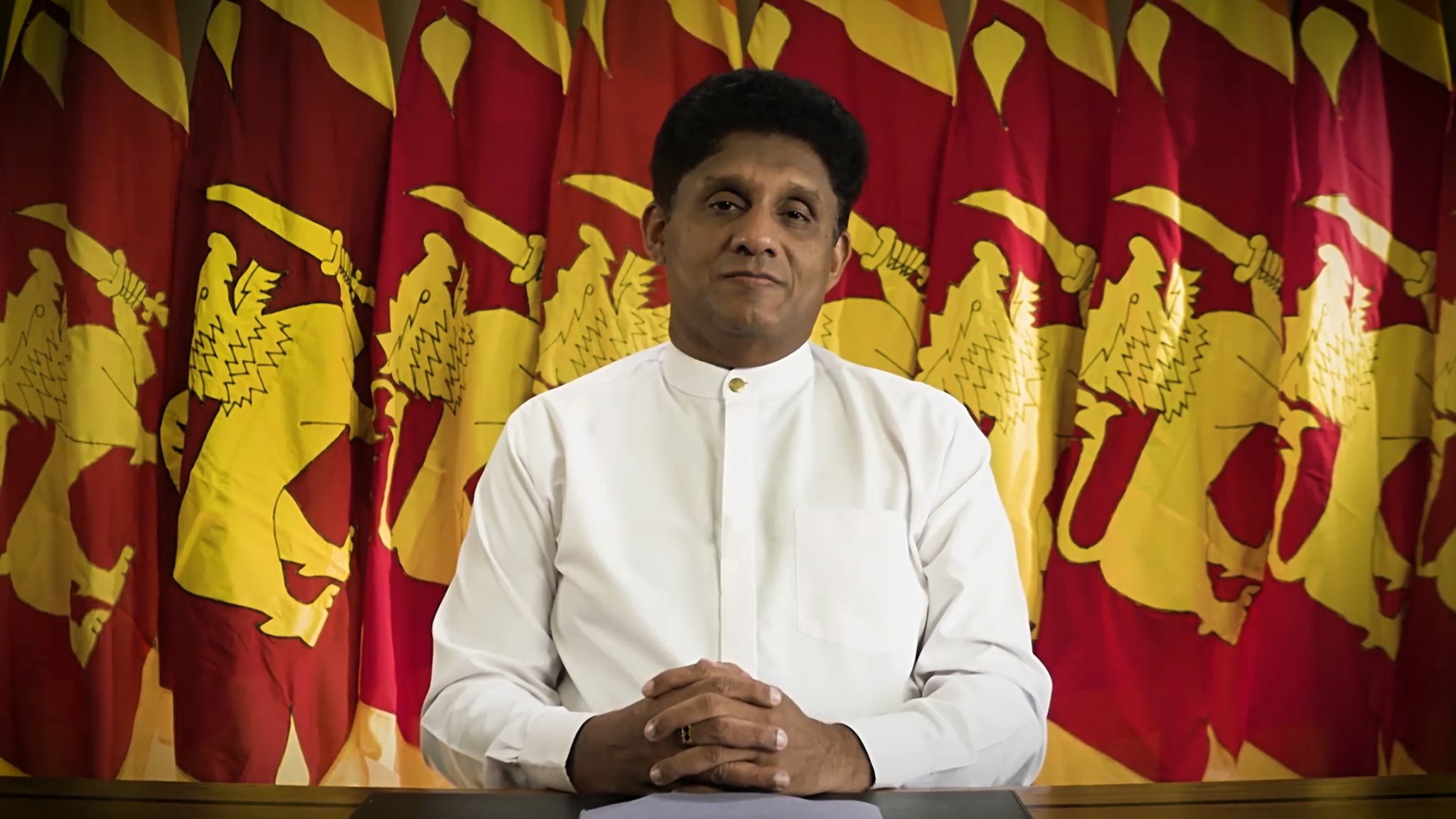
Sajith happy that his party won over China’s confidence

The Chinese government donated Rs.19.6 million to Samagi Jana Balawegaya’s (SJB) medical equipment donation programme ‘Husmak’ recently.

Opposition Leader Sajith Premadasa who accepted the donation from Chinese Ambassador Qi Zhenhong said these funds will be used to purchase dialysis machines for kidney patients.

“This is special, as it is the first time that a foreign mission has donated funds to an opposition party. This means that we have managed to win China’s confidence,” Mr. Premadasa said.

“We have donated medical equipment worth Rs. 101 million to 34 hospitals since the COVID19 pandemic hit the country,” he added.

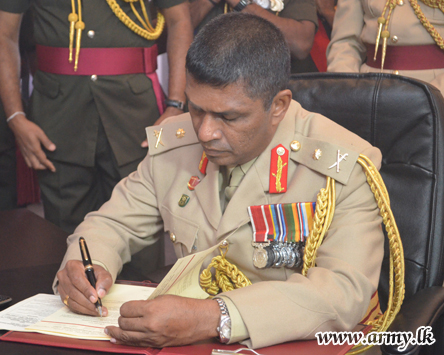
Now, another Maj. Gen. barred from entering US

The US has categorised another senior military official, Maj. Gen. Udaya Perera, who was Sri Lanka’s Deputy High Commissioner in Malaysia (2009-2011) as a war crimes suspect.

The wartime Director of Operations, Perera, has been denied entry to the US recently although he has a five-year multiple entry visa issued in August 2019.

Well informed sources told The Island Maj. Gen. Perera had been informed of the US decision after he, along with his wife and his teenage son, on the night of 05 Dec., proceeded to the immigration counter to board the Colombo-Singapore Singapore Airline flight.

Maj. Gen. Udaya Perera has successfully followed top military courses in NDU (National Defence University in 2004) and USAWC (United States Army War College in 2012) and is a frequent traveller.

Having cleared the Perera family, the Singaporean Airline staff at the Bandaranaike International Airport (BIA) told him that they had received an alert from US authorities.

From Singapore, they were to fly to Los Angeles. Sources said that Maj. Perera stayed back while his wife and son went ahead with the planned visit. The General and his wife were to see their first granddaughter born in California.

Sources questioned the rationale behind the US move as Maj. Gen Perera, having retired in 2017 had received a multiple entry visa two years later. The Maj. Gen. had attended his daughter’s wedding; she got married to a naturalized US national from Kerala in Sept. 2019. Sources said that it was not clear what prompted the US action three years after the issuance of multiple entry visa and 12 years after the successful conclusion of the war.

The US made its move several weeks after inducting former Army Commander General Mahesh Senanayake into the United States Army Command and General Staff College (CGSC) International Hall of Fame at Fort Leavenworth. An alumnus of CGSC, Senanayake, who contested the 2019 presidential election has been conferred this honour in recognition of his “outstanding military leadership for the nation and commitment to preserving global peace. “

Sources said that about a week after blocking Maj. Gen. Perera, the US included two Sri Lankan military personnel in a list of officials prohibited to enter the US under Section 7031(c) of the Department of State, Foreign Operations, and Related Programmes Appropriation Act, 2021. The following is the relevant section of the U embassy statement:

• Chandana Hettiarachchi, a Sri Lankan naval intelligence officer, for his involvement in gross violations of human rights, namely, the flagrant denial of the right to liberty of at least eight “Trincomalee 11″ victims, from 2008 to 2009. Sunil Ratnayake, a former Staff Sergeant in the Sri Lanka Army, for his involvement in gross violations of human rights, namely the extrajudicial killings of at least eight Tamil villagers in December 2000. The designation of these two Sri Lankan individuals is not the only action we are taking in support of accountability for gross violations of human rights in Sri Lanka.”

However, the US embassy statement that dealt with the inclusion of two personnel conveniently refrained from making any reference to Maj. Gen. Udaya Perera.

Sources said that it was not clear whether the US has dealt with Maj. General Udaya Perera US under Section 7031(c) of the Department of State, Foreign Operations, and Related Programmes Appropriation Act, 2021.

This controversial law provides that in cases where there is credible information that officials of foreign governments have been involved in a gross violation of human rights or significant corruption, those individuals and their immediate family members are to be designated publicly or privately and are ineligible for entry into the United States.

In Feb. 2020, the US prohibited Army Commander General Shavendra Silva, who is also the Chief of Defence Staff (CDS) and his family from entering the US. In addition to them, Australia declined to allow Defence Secretary General Kamal Gunaratne and Maj. General Chagie Gallage from entering Australia. The US denied visa to Field Marshal Sarath Fonseka more than once.

The Island learns that Maj. Gen. Udaya Perera has written to the US embassy in Colombo in this regard.