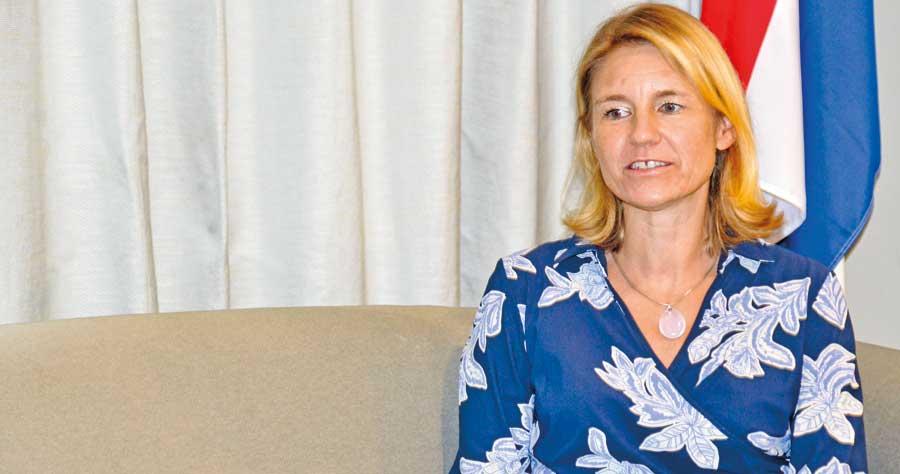
The Netherlands ready to support SL in implementing commitments to UNHRC – Ambassador of the Netherlands Tanja Gonggrijp

Ambassador of the Netherlands Tanja Gonggrijp, in an interview with Daily Mirror, speaks about bilateral relations between the two countries and rich Dutch heritage in Sri Lanka. She also responds to queries about Sri Lanka’s move for organic agriculture and the UNHRC process.

Excerpts;

Q Sri Lanka–the Netherlands bilateral relations are historical and multifaceted. It has influenced the legal system, architecture, cuisine, culture and lifestyle, as well as various facets of the socio-political system of Sri Lanka. In the event of the two countries celebrating the 70th anniversary of bilateral ties, how do you intend to elevate bilateral ties to the next level?

Indeed, Sri Lanka and the Netherlands celebrate our 70th anniversary of diplomatic relations this year. Two weeks ago, my counterpart in The Hague and I launched the celebrations and we foresee a series of events to mark this historic milestone in our relations. Our countries have known many historic milestones since the starting of trade between our countries around 1600. You mention the Dutch influence which has indeed contributed to the rich culture of Sri Lanka today. However, it is also important to recognise the dark side of the Dutch period in Sri Lanka; its colonial violence, slavery and monopolisation of trade. An important milestone was the ending of Dutch colonial rule in 1796. And another milestone was the start of official diplomatic relations between the two sovereign countries in 1951. Since then, our relationship has widened and deepened during countless forms of cooperation: for example to conserve our shared cultural heritage and to exchange know-how in the agriculture as well as infrastructure sectors and of course facilitating exchange for students and assistance for tourists.

We now focus to grow our relations in future-proof ways: both countries have committed to achieving the Sustainable Development Goals, so we share a vision to achieve them through our bilateral relations as well. We are facing big challenges, notably because of climate change. We view them as complex puzzles: puzzles that can only be solved together sustainably. So we are committed to business opportunities that support a shift to a circular and sustainable economy, climate resilient agriculture and supporting Sri Lanka to become the preferred sustainable choice in the region. Our infrastructure projects in Sri Lanka, the development of hospitals, bridges and water supply systems, also have a strong focus on sustainability, both with regard to the end use and the way the infrastructure is built. And we focus on deepening our cultural collaboration beyond maintaining our shared heritage: we support projects that look into the Dutch period in Sri Lanka critically and innovatively and we support the development of contemporary art in Sri Lanka. As we strongly believe, we should Leave No One Behind, we will continue to work with all sectors in society – government actors, civil society, knowledge institutes and businesses – to contribute to a thriving and inclusive society where human rights
are safeguarded.

Q You find a lot of Dutch history in Sri Lanka. What are the latest measures as far as conservation of places associated with the Dutch rule is concerned?

Sri Lanka is one of the focus countries for the Netherlands in terms of cultural cooperation. We have ongoing projects supporting heritage management and work with the museum sector and national archives to keep the Dutch heritage alive for the next generations. For example, we have recently started a project to produce digital mapping of Dutch fort cities in Sri Lanka. Local youth are involved and are made the future custodian of the shared heritage; they will tell stories about the forts and what they mean to them. We are also co-developing contemporary cultural expressions; for example, we have just started a dance project involving youth from all over Sri Lanka, going beyond boundaries of ethnicity, disability and genders.

Q How can the Netherlands cooperate with Sri Lanka in the development of tourism?

Two important elements that attract a lot of tourists to Sri Lanka are the island’s rich culture and the beautiful and diverse nature. I would like to explore how Sri Lanka could offer a more interactive and edutainment experience for visiting tourists with regard to for instance the Dutch period. This will make Sri Lanka an even more attractive destination for Dutch tourists. I know that the Department of National Museums is working on renovating the Dutch Period Museum in Colombo and we are glad to engage with the Department to contribute to the development of an audience oriented museum. I also see opportunities for more sustainable tourism. Making Sri Lanka a destination for eco-tourism will not only add to its attractiveness, but also contribute to the wellbeing of the Sri Lankan people and protection of the environment.

Q The Netherlands is the second highest export earner of agricultural products in the world despite being a geographically small country. How can Sri Lanka benefit from bilateral ties to develop its agriculture and livestock industries?

Indeed, the Netherlands is a big agricultural exporter: not only of agricultural products, but also of sustainable agricultural knowledge and technology. Since many years, Dutch technology and technical know-how has supported the Sri Lankan agricultural sector to better handle the challenges like the need for productivity, water use inefficiency and climate resiliency. The Embassy has been supporting different Sri Lankan agricultural sectors in these areas by organising missions, exposure tours, capacity building training and fellowships. Right now, we have ongoing projects to support the dairy, poultry and horticulture sectors in Sri Lanka. The focus is on supporting Sri Lanka to develop these sectors in a more future-proof, sustainable way. And I think that in the future, as the Netherlands plays a prominent role in the global agricultural supply chains, Sri Lanka can benefit from having more partnerships with
Dutch companies.

Q Sri Lanka has introduced organic farming in place of chemical farming. As a country advocating environment-friendly agriculture, how does your country observe this?

The Netherlands is not only the second largest exporter of agricultural goods in the world, we are also regarded as a leader in efficient and sustainable agriculture. Nearly 20 years ago, the Netherlands made a commitment to work towards sustainable agriculture by aiming to produce twice as much food using half of the resources. Research and innovation facilitated by partnerships between government, farmers, industry, civil society and knowledge institutions like the University of Wageningen, have brought Dutch agriculture a long way. This has led to a reduction of dependence on water by 90 percent and a considerable reduction of chemical pesticides and fertilisers, even almost eliminated in greenhouses. Today the Netherlands is aiming for circularity in agriculture, energy saving in the greenhouse sector and better animal welfare. I am convinced that sustainable and more organic farming is the only future-proof way of farming in the long run in any country; in the Netherlands, in Sri Lanka, anywhere. However, this transformation takes time and demands more research and innovation and long-term planning and investments. No country can do it alone as supply chains are global. So indeed we aim to continue to improve our policy and support other countries like Sri Lanka on this road too, and work together.

Q In what ways can the Netherlands help Sri Lanka implement organic agriculture?

Dutch experience, inputs and technology could support Sri Lanka with this. We have many private companies that produce inputs and machineries for organic cultivation. Moreover, the Netherlands is the home to many sustainability, fair trade and certification initiatives and organisations, like Solidaridad, Fair Trade and Rainforest Alliance. The expertise and experience of these organisations can also support Sri Lanka to work towards sustainable, organic production based on the latest insights in this area. The embassy is here to identify opportunities and connect the right partners in order to assist Sri Lanka becoming a sustainability frontrunner in the region.

Q What are the measures already taken in this regard?

Working towards more sustainable agricultural practices have been part and parcel of our agricultural collaboration with Sri Lanka for many years now. For example, we have trained around 250 trainers on Integrated Pest Management (IPM) in collaboration with the Department of Agriculture. And we are currently in the process of training another 100 trainers on protected agriculture, again in collaboration with the Department. And last year, we trained 125 dairy stakeholders on sustainable dairy feed and waste management in collaboration with the Sri Lanka Dairy Association. Further, we have organised many training and exposure missions to the Netherlands for the sustainable development of the dairy, horticulture and poultry sectors. Many fellowships have also been awarded for the same cause.

Q Recently, you undertook a visit to the eastern province along with your Norwegian colleague. What have you gathered from the visit for further cooperation?

Our visit to the East was as a part of our ongoing engagement with different stakeholders in Sri Lankan society. Together with my Norwegian colleague, I was able to get firsthand insight in the developments in the Eastern Province by visiting the Batticaloa and Trincomalee districts. We had a series of meetings with members of the government, opposition, civil society and the clergy in the province. We visited some of the projects supported by our respective embassies and – of course – Dutch heritage sites.
The visit was also an opportunity to see one of our infrastructure projects. To date, the Dutch company Janson Bridging has completed almost 700 bridges in Sri Lanka since commencing in 2015. These newly constructed bridges enable rural communities to have easier and quicker access to for instance markets, work, health services and education. The Netherlands Government will continue to support the rural bridges across Sri Lanka under the Development Related Infrastructure Investment Vehicle (DRIVE) programme, where 200 more bridges will be built through Dutch government support and partnership.

Q All the European countries decide as a bloc when it comes to Sri Lanka’s issue at the UNHRC. The Netherlands is collectively bound by this decision. However, as the ambassador, how do you assess Sri Lanka’s ground situation as far as the matters envisaged in the UNHRC resolution are concerned?

The Netherlands always aims to work to achieve the greater good for the global community and supports international efforts by the UN or other international mechanisms towards that goal. So yes, we would like to see a prosperous and stable Sri Lanka. As regularly underlined by the Netherlands, EU and the UN, this is possible only through genuinely addressing accountability issues and fostering true reconciliation. We appreciate progress made by Sri Lanka since the end of war and hope it will honour commitments it made before the international community in a timely manner. The Netherlands stands ready to support Sri Lanka in implementing its commitments to the UNHRC.

Q How does the Netherlands view Colombo Port City as a gateway to South Asia?

Colombo Port City has great potential due to its geographical location in the Indian Ocean. Sri Lanka is situated in one of the busiest sea trade routes on the globe. I can certainly understand Sri Lanka’s desire to develop its infrastructure to tap into those potentials and become a key hub for international maritime trade. Developing infrastructure is therefore important, as is attracting trading partners and investors. To do so, a transparent and predictable business environment is key. This will enhance investment confidence and attract diverse investors. Then I think there would be potential for Dutch companies too; they made Rotterdam harbour the gateway to Europe and could therefore contribute to Colombo’s Port
City ambitions!
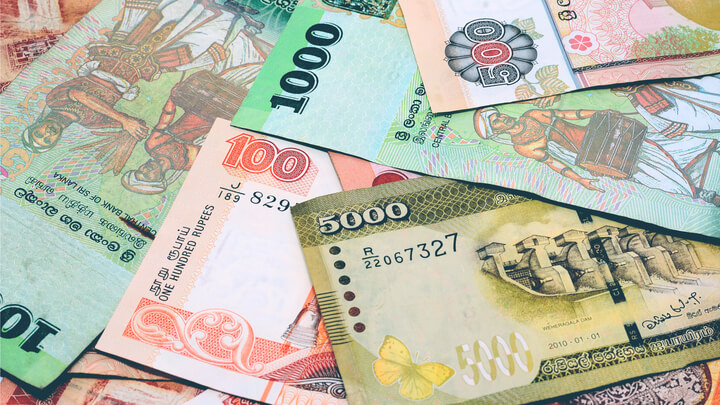
Money printing increases by Rs 16B

Government of Sri Lanka’s (GoSL’s) face value money printing (FVMP) debt established two records yesterday due to a sustained lack of revenue.

They were hitting the highest FVMP debt figure of Rs 1,841,772.24 million (Rs 1.8418 trillion) and such debt entering the one hundredth (100th) consecutive market day to yesterday. The previous highest FVMP debt figure was Rs 1.8356 trillion established two days ago on Monday.

Yesterday over the previous day Tuesday, GoSL’s FVMP debt increased by 0.86 per cent (Rs 15,769 million/Rs 15.77 billion) to a record Rs 1,841,772.24 million (Rs 1.8418 trillion). However, this increase was non-demand pull inflationary, as it was used to meet an external commitment such as for the import of “essential” items and repayment of GoSL’s foreign debt.

Since and including 20 July, GoSL’s FVMP debt has been over Rs one trillion, when on 20 July it increased by 4.42 per cent (Rs 42,689 million) to Rs 1,008,148.42 million (Rs 1.0081 trillion) and has been over Rs one trillion up to yesterday.

Meanwhile, GoSL’s FVMP debt first passed the Rs 1.5 trillion milestone on 2 September 2021, when its FVMP debt increased by 10.85 per cent (Rs 12,755 million) to Rs 1,511,834.44 million (Rs 1.5118 trillion) and has been staying that way since.

In related developments, GoSL’s highest to the seventy third highest FVMP debt has been registered in the 73 consecutive market days to yesterday, though not necessarily in a particular order.

GoSL’s FVMP debt is equivalent to the FV of Central Bank of Sri Lanka’s (CBSL’s) Treasury (T) Bill and T Bond holdings.

Posted in Uncategorized

“How far away is India from here”?, Chinese Ambassador at Point Pedro

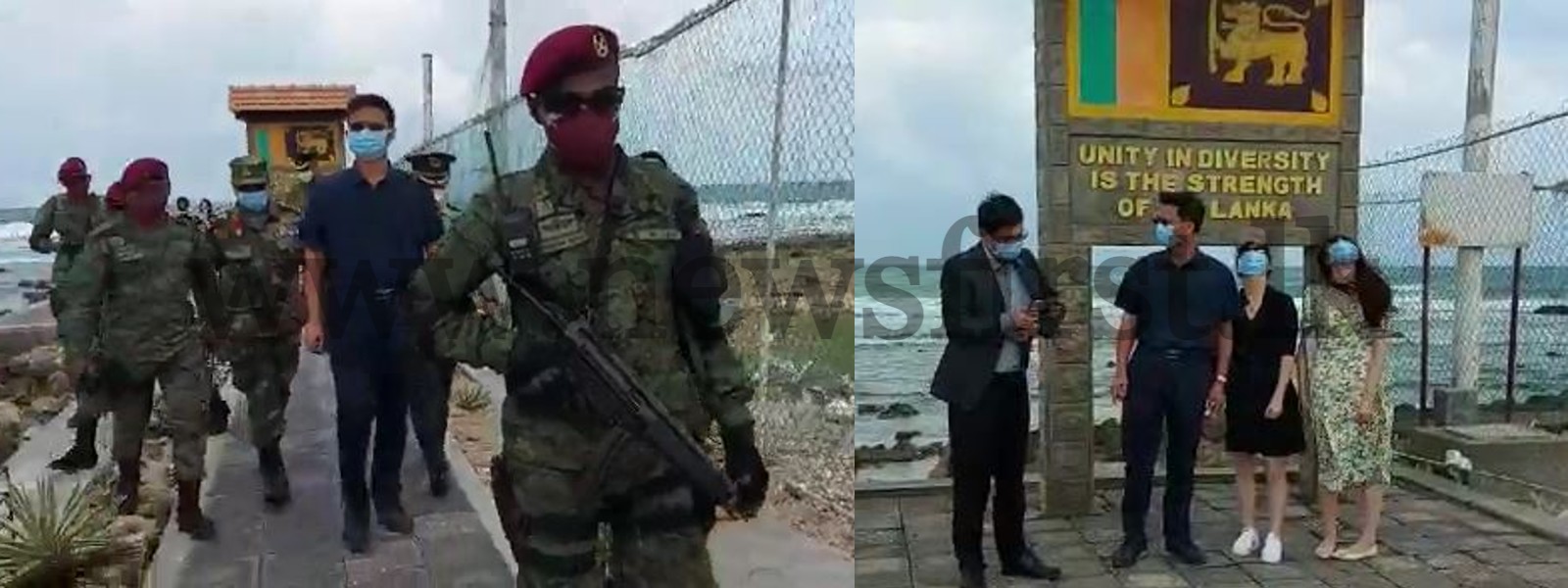
The Chinese Ambassador to Sri Lanka, Qi Zhenhong, began his visit to the islands Northern province on Wednesday (15) by visiting Point Pedro, the northern most point in the country.

He toured the area along with several Chinese officials and was accompanied by members of the Sri Lanka Army. The Media captured him asking local officials what the distance was from his location at Point Pedro to India, to which officials replied, telling him it was roughly 30 KM.

His visit to the North comes amidst a spate of frantic diplomatic activity in the politically sensitive region, especially in the backdrop of talks of a massive multi-million-dollar renewable energy project to be given to Indian conglomerate Adani.

The Adani investment comes in the wake of a recent visit by the Chairman of the company, Gautam Adani, to Sri Lanka which was followed by Sri Lankan Finance Minister Basil Rajapakse’s visit to India. That visit was focused on Sri Lanka’s major cash crunch, to which India has reacted favorably, but perhaps with strings attached.

Sri Lanka has been walking a geopolitical tightrope between India and Chine for a close upon a decade now. Although its close proximity to India, China was the first mover having secured the Colombo Port City and the Hambantota Port, two key strategic positions in the Sea of Sri Lanka.

Analysts believe that a relatively recent lop-sided relationship with China, unnecessarily offset the good relations that Sri Lanka enjoyed with the world’s first and second most populous nations, for many decades.

“Now dragging it back to some sort of equilibrium would mean difficult decisions and consequences”, noted a senior political analyst at a local university.

The Sea of Sri Lanka has become the world’s geopolitical pivot, with all key superpowers flexing their muscle and jockeying for positions for access to sea routes and resources.

The Chinese String of Pearls or Maritime Silk Road, and the recently created AUKUS- a trilateral security pact between Australia, the UK and the US have a very focused strategic interest in the Sea of Sri Lanka.

It is in this light that moves and initiatives taken by key foreign missions in Sri Lanka must be read. The Chinese Ambassador visiting the North can be framed as routine.

But reading between the lines and understanding the long-term implications of this tug-of-war Sri Lanka is now embroiled in, will be the key challenge. And all of this amidst one of the worst economic downturns the nation has faced in the recent past.

A firm hand at the wheel along with the deft touch of diplomacy seems to be the need of the hour.

Posted in Uncategorized

Sri Lanka President is not mastermind of Easter attack: Secretary

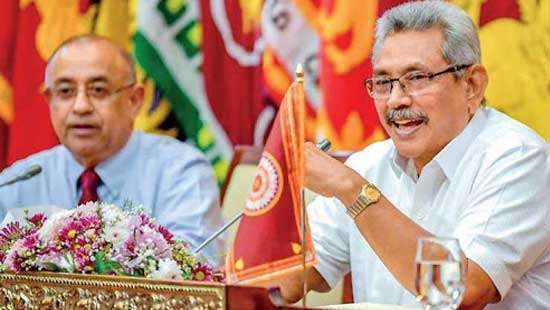
Sri Lanka’s top defence official Wednesday announced that President Gotabaya Rajapaksa was not the “mastermind” of the Easter Sunday carnage that many claim was the catalyst for his ascendency.

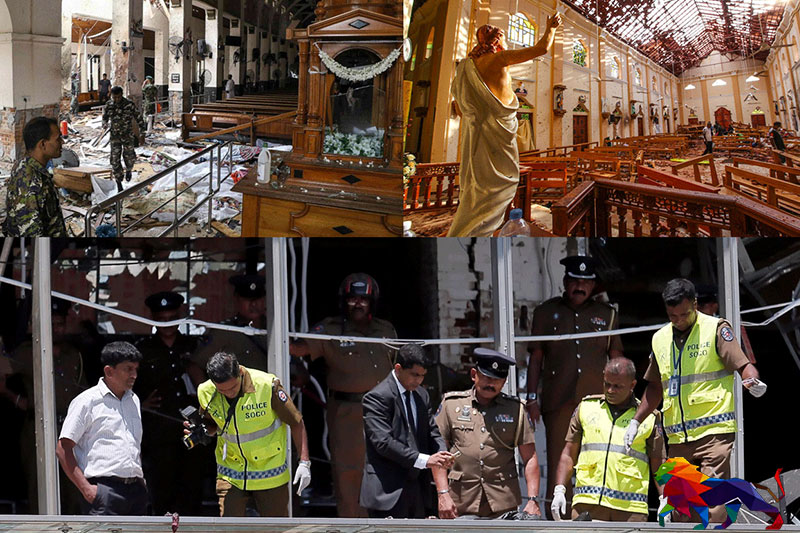
General Kamal Gunaratne told a press conference organised by the Presidential Media Division that there was no basis for the allegations against Rajapaksa, a political non-entity at the time, who announced his candidacy two days after the April 2019 suicide bombings that killed at least 279 people.

The attacks were blamed on a group of local jihadists although the bombings were belated claimed by the Islamic State group led at the time by the internationally-wanted Abu Bakr al-Baghdadi who was later killed in a US bombing in Syria six months later.

“There are lot of allegations on social media that President Gotabaya Rajapaksa was the main mastermind of the Easter attacks,” Gunaratne said. “There is no truth in those allegations. It is a despicable attempt at making political gains”

He also denied allegations that the country’s current head of intelligence, Major General Suresh Sallay, was also involved in instigating the National Thowheed Jamath leader Zahran Hashim to carry out the audacious bombings. Sallay was previous the head of the Directorate of Military Intelligence (DMI).

He said many linked Sally to the bombings because he was also a member of the minority Muslim community. Hundreds of Muslims were detained following the Easter Sunday attacks and some are still in detention without charges.

“It is unfair to make those allegations. As far as I know, Sally, a ‘golaya’ (student ) of mine from the time of being a cadet to major general. He can’t speak a word of Tamil or Arabic. He has not read the Koran, only the “Sally” part of his name is Muslim. He is not a radical.

“His two children have Sinhala names. He is married to a Sinhala-Buddhist lady,” Gunaratne said adding that Sallay who currently heads the State Intelligence Service, the country’s premier spy agency, was an asset to the country and the “jaaythiya” (race).

Sallay was performing a ”bodi pooja” at the “Uda maluwa” of Anuradhapura (Sri Maha Bodhi) when Gunaratne went there during the opening of the Sandahiru Seya temple recently, he said.

He also flatly denied that the suicide bomb leader was funded by the directorate of military intelligence (DMI) during a previous Rajapaksa administration when Sallay headed the DMI. Government minister had previously admitted that several Thowheed Jamath groups as well as the BBS, the Bodu Bala Sena group were supported by intelligence agencies. Zahran Hashim had broken away from one such Thowheed Jamath groups and formed his own.

In October, Sallay filed a complaint against Cardinal Malcolm Ranjith’s spokesman father Cyril Gamini Fernando over allegations that he (Sallay) played a key role in nurturing Zaharan Hashim.

Posted in Uncategorized

UN Assistant Secretary General Kanni Wignaraja calls on PM Mahinda Rajapaksa

UN Assistant Secretary General, United Nations Development Programme (UNDP) Assistant Administrator and Director of the UNDP Regional Bureau for Asia and the Pacific, Ms. Kanni Wignaraja called on Sri Lankan Prime Minister Mahinda Rajapakse today (15).

At the meeting, Ms. Wignaraja reinforced Sri Lanka’s longstanding partnership with UNDP while renewing the organization’s commitment and engagement towards building a digital driven, innovative, human centric, greener development pathway for Sri Lanka, a statement said.

She was accompanied by Resident Representative of UNDP in Sri Lanka, Mr. Robert Juhkam and Deputy Resident Representative of UNDP in Sri Lanka, Ms. Malin Herwig.

Also present at the meeting was Foreign Minister Prof. G.L. Peiris and Secretary to the Prime Minister Mr. Gamini Senarath.

The UN Assistant Secretary General had arrived in Sri Lanka on December 13 for a five-day official visit to the island.

She is visiting Sri Lanka with the aim of better understanding country priorities and exploring new avenues of support from UNDP to Sri Lanka—particularly focusing on follow up to the recently concluded UN Climate Change Conference COP26, post-COVID-19 socio-economic recovery in the region, and leveraging of more development financing to the country.

The official visit will focus on the human development agenda and the acceleration of the Sustainable Development Goals (SDGs) also given COVID-19 socio-economic impacts, while importantly celebrating the human development achievements of Sri Lanka.

During her visit, ASG Wignaraja is scheduled to meet with high-level government officials and other partners, and having a first-hand look at some of UNDP supported work on the ground.

She had also met with Sri Lanka’s Finance Minister Basil Rajapaksa on Monday.

Posted in Uncategorized

SL requests Pak to ensure timely receipt of promised financial benefits to Priyantha’s family

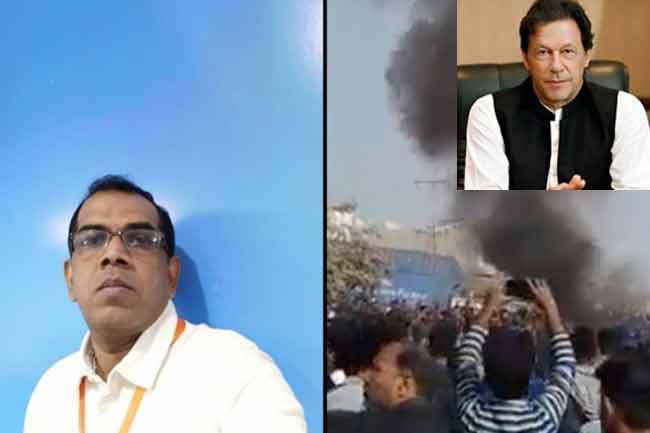
Sri Lanka has requested the Pakistan Government to ensure timely receipt of financial benefits from the employer and the Government of Pakistan to the family of the late Priyantha Kumara who was brutally killed by a mob in Sialkot, Pakistan recently, Foreign Minister Prof. G.L. Peiris said.

He revealed this at an event held at the Foreign Ministry today (15), where he handed over a financial grant to the family of late Priyantha Kumara. Minister Peiris, while expressing his deepest condolences to the family on the tragic death of Priyantha Kumara said that the prime concern at this moment is the future of the two children and the financial security of the family. In this regard, the Minister stated that he was in discussions with the Sri Lanka Insurance Corporation to obtain assistance for the family of the deceased.

Minister Peiris mentioned that the Acting High Commissioner of Pakistan in Colombo was informed that appropriate arrangements have been made in Pakistan to hear the case. The business community in Sialkot has agreed to provide US$ 100,000 to the family of Priyantha Kumara.

The Foreign Minister further said that Sri Lanka is closely monitoring the developments of the investigation and expecting those responsible for the gruesome murder would be speedily penalized by the law and justice will be served.

Posted in Uncategorized

Sri Lanka runs out of time in requesting IMF assistance

Time is running out for Sri Lanka to get assistance from the International Monetary Fund (IMF) as official discussions with government authorities and the IMF delegation now in the island are nearing completion, official sources said.

The government will have to make an official request for IMF financial assistance if there is a lack (or potential lack) of sufficient foreign currency financing available on affordable terms, to meet its net international payments.

“The IMF has not received a request for financial support from Sri Lanka recently, but the staff stands ready to discuss options if requested,” IMF’s Mission Chief for Sri Lanka Masahiro Nozaki said recently.

If Sri Lankan authorities fail to make a request with a brief proposal outlining economic situation and economic policy, the IMF staff team holds discussions with the government to assess the economic situation.

Typically, a country’s government and IMF staff must then agree on a programme of economic policies to be implemented in return for a loan.

It is now highly difficult to finalise this matter, but the government can ask for a short time period to enable them to make necessary requests and follow other procedures, informed sources said.

Once an understanding has been reached on the terms of the loans and the programme of economic policies, a recommendation is made to the IMF’s Executive Board to extend access to IMF resources.

These terms and commitments are restricting certain financial expenditure detrimental to the country although it is favourable for rulers and does not harm the public but it will close loop holes opened for financial misappropriations, a senior economist who has worked with the IMF revealed.

Depending on the type of funding arrangement, this could be in phased installments or as a single disbursement.

In similar circumstances, the IMF team reached a staff-level agreement with the authorities of Zambia on a three-year programme supported by an arrangement under the Extended Credit Facility (ECF) in the amount of about SDR 980 million or USD 1.4 billion.

The Zambian authorities who faced an economic situation similar to Sri Lanka have committed to an ambitious economic reform programme with the IMF to address the severe economic and social challenges facing the country.

These reforms seek to remedy past weaknesses in economic governance and public financial management that led to an unsustainable debt overhang.

Zambia’s external debt includes around USD 3 billion in outstanding Eurobonds and another USD 3 billion owed to China and Chinese entities. Tensions between those two groups of creditors have so far stymied restructuring efforts.

Posted in Uncategorized

Sri Lanka President returns from Singapore, Basil leaves for US

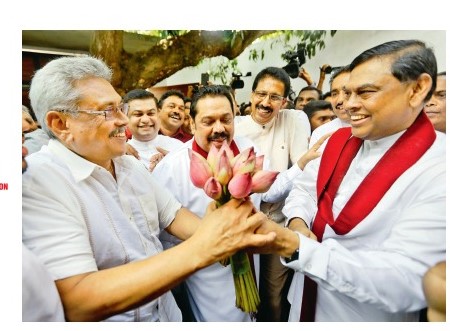
President Gotabaya Rajapaksa returned home from Singapore ahead of schedule while his younger brother, Finance minister Basil, left for the US on a previously unannounced visit, official sources said.

The president was earlier expected to spend about five days in Singapore undergoing medical checks at Mount Elizabeth hospital, but it was not immediately clear why he returned in just two days. Rajapaksa had undergone heart bypass surgery at Mount Elizabeth in May 2019.

His sudden return coincided with the departure of Basil in the middle of what of the most serious currency crises since the 1970s, when the country was under severe trade and exchange controls.

Forex shortages come from money injected by a soft-pegged central bank into the domestic banking system either to finance the budget at below market rates (monetization of debt) or to offset dollars sales (sterilized interventions) to maintain a fixed policy rate out of line with domestic credit.

Hours before travelling to Singapore on Monday, the president had prorogued parliament till January 18, a move that effectively dismissed parliamentary committees, including the Committee on Public Enterprises (COPE).

The president has also resisted pressure from within the cabinet and his parliamentary group to sack his top aide, Punchi Banda Jayasundara, who some insiders expect to stay in the job despite mounting pressure.

There have also been calls from some members of the ruling coalition to consider an IMF bailout.

Sri Lanka’s cabinet is divided on whether to seek an IMF bailout for the current balance of payments crisis.

Cabinet objections to Dr. P.B. Jayasundara

Severe objections against Dr. P.B. Jayasundara have been rising with almost all the minister’s calling for him to step down as the Secretary to President Gotabaya Rajapaksa over various concerns, the Daily Mirror learns.

At Monday’s cabinet meeting the matter had been raised by the ministers briefly and almost all the ministers present had raised concerns and were of the view that Dr. P.B. Jayasundara should resign from the post and a new face should be appointed.

A senior political source told Daily Mirror that one of the main allegations cited at the meeting was that he was unavailable to discuss matters of government whenever the ministers attempted to contact him and other issues which are yet to be revealed.

In fact, the pressure on Dr. Jayasundara has mounted so much that rumours are rife that he will hand over his resignation soon, but he has been told to stay back by Minister Basil Rajapaksa due to the President’s absence in the country.

Also, the new name proposed to take over Dr. P.B. Jayasundara’s position as Secretary to the President is that of Anura Dissanayake, Secretary to the Ministry of Irrigation and former secretary to the Education Ministry.

However, this is yet to be approved by the President.

President Rajapaksa is presently in Singapore on a private visit, which sources said was a medical check-up and is likely to return to the island today.

Sri Lanka To Impose More Import Restrictions Due To Shortage Of Dollars: Several Sectors To Be Given Priority

The Minister of Finance Basil Rajapaksa has stated at the Cabinet meeting held tonight (13) that imports will have to be further restricted due to the shortage of dollars in the country.

However, the Minister of Finance has stated that priority will be given to the importation of inputs for fuel, pharmaceuticals, essential food items and industries.

He said he was in talks with allies, including India, Japan, and China, to overcome the dollar deficit and hoped for a positive response from those countries.

He has also stated that his talks with the Indian government during his recent visit to India have been successful

Meanwhile, he said he was also in talks with the International Monetary Fund.

Posted in Uncategorized