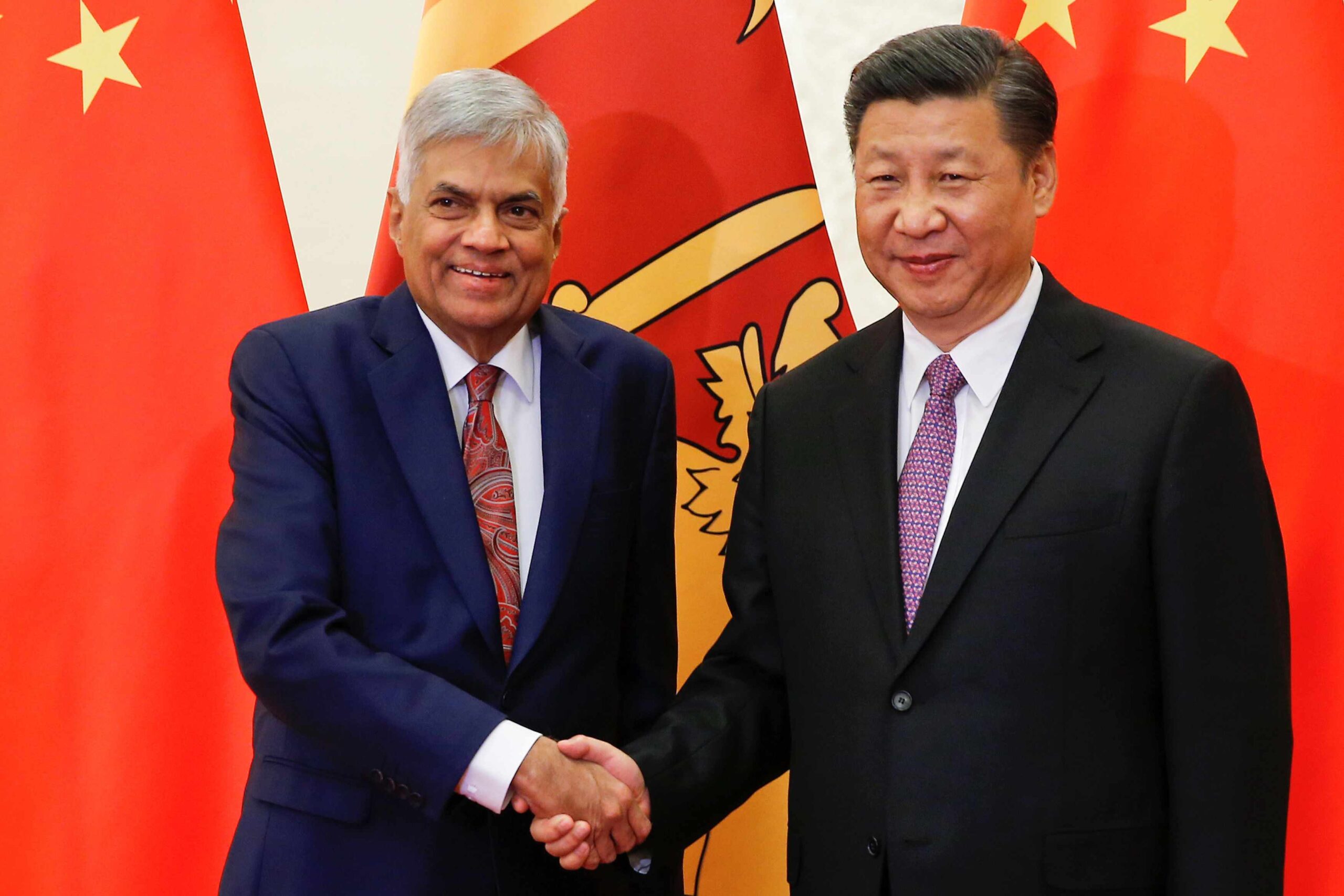
US-China power rivalries and Aukus alliance will bring regional instability in Indian Ocean: Ranil

Former Prime Minister Ranil Wickremesinghe says the devastation of Covid-19 on human health and well-being have been compounded by the adverse effects of climate change in the Indian Ocean region.

In fact, the erratic monsoons, increasing droughts, and reduction of fish stocks arising from the changes to ocean water is poised to bring about food scarcity in the coming year, he warned speaking during a special plenary at the 5th Indian Ocean Conference in Abu Dhabi today (05).

“And of course, the strain on Health Systems and Public Finances are and will be endless given the persistent mutation of the virus. The total global economic effects continue to mount,” he said.

“We are all aware of how the recurrent lockdowns have driven large numbers of people into poverty and many others who were on the threshold of middle class to subsistence levels.”

He said the overloaded Health systems are neglecting the treatment of other illnesses and diseases. Therefore, most countries are increasingly vulnerable to other epidemics, that easily become pandemics. The National Education systems are disrupted, he pointed out.

Furthermore, the resources for Education in some countries are being reduced to increase the allocations for health, he said, adding that it is also disrupting the social fabric of all countries including an increase in reports of addiction and domestic violence.

There will be an accrual of these, and further costs, given the culmination of the destructive impact of the pandemic in escalating social and political tension, Wickremesinghe cautioned.

He also said that the loss to Asia from climate change is 5 to 6 times greater than our western counterparts.

The ensuring human displacement, migration and construction of new human habitation caused by the ecological changes will be an intolerable burden on the affected countries in a region given their limited resources to combat climate change, the MP said.

“Depressing as it is, we need to understand that a further downturn of our economies will reduce the resources for development already being eaten up by the increasing ecological and pandemic costs in an intersecting, downward spiral.”

“Yet, we cannot discuss the IOR without accounting for another intersection – that of geopolitics – the simmering power rivalries between US and China in the IOR,” the former prime minister added.

He said this picture becomes even more complicated by the addition of the AUKUS military alliance which also covers the Indian Ocean. “These developments in an increasingly multipolar world order will bring about regional instability in the Indian Ocean.”

The entanglement of great power rivalry in the Indian Ocean risks removing the focus on the public health shortfalls, digital inequalities, education disparities, unemployment and social fragmentation in some of our countries. The end result will be a further de-stabilisation of the IOR, he warned.

He said the intersecting economic setbacks from Covid-19 and impediments from accelerated climate change as well as the US – China rivalry have a potential to become a critical drag on this region that could prevent its potential to be the next global economic growth pole.

In such a scenario, the growing presence of advanced economies of Europe as outside players in the region could result in a throwback to the 17th and 18th Century Indian Ocean scenario – with more powerful outside powers dominating the weakened Indian Ocean states, he said.

“This is a wake-up call for our region – for effective regional cooperation,” Wickremesinghe said.

Posted in Uncategorized

Extreme food prices slam inflation-ridden Turkey and Sri Lanka -NikkeiAsia

Months into the worst inflation in decades, a new round of food price hikes is ratcheting up pressure on governments around the world. Figures released Thursday by the United Nations’ Food and Agriculture Organization show a barometer of food commodity prices in November at its loftiest since June 2011 and 27.3% higher on the year.

Some of the starkest numbers out of Asia come from Turkey and Sri Lanka, where inflation is racing and governments are responding with dramatic measures that defy economic orthodoxy.

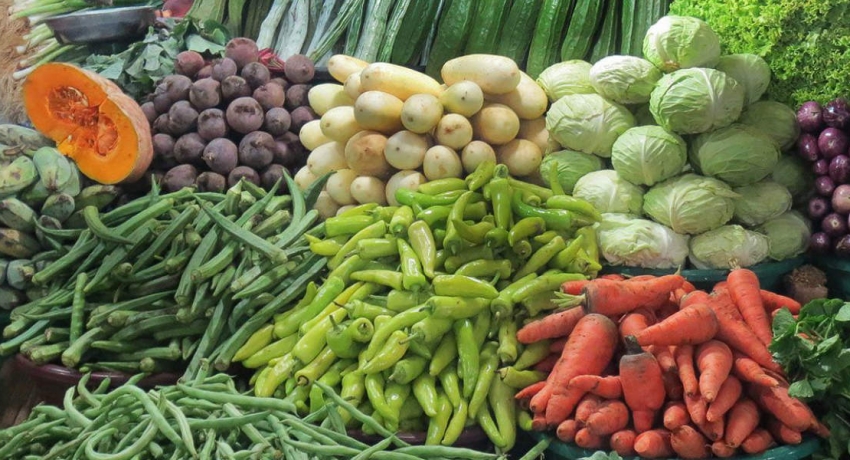
“The price of vegetables is exorbitant,” said Shamla Naleer, a resident of Matale in central Sri Lanka. Her family, though middle-class, is still struggling.

“It’s at the point where we question, ‘Do we need to eat a vegetable today?’” she said. Her father’s small grocery store used to be able to offer discounts for family and close friends. That is out of the question now.

“No one budgets for their price of food to double in a year,” said Aritha Wickramasinghe, who lives between the capital of Colombo and a small village in the south.

“We’re managing by eating differently,” he said. “Portions are different.”

The FAO’s monthly food price index measures the average increase in global prices across a basket of food commodities. The organization has issued a high-alert warning for Sri Lanka, where it says rice and wheat flour prices hit record highs in October. Annual inflation, measured by the central bank’s Colombo Consumer Price Index, came to 9.9% in November.

Sri Lankan President Gotabaya Rajapaksa has attempted to fight rising costs with controversial price control measures, most recently with a September cap covering such items as white rice and sugar. The move backfired: Many food retailers refused to sell at the lower prices, shortages ensued, and much selling migrated to the black market. Images went viral of Sri Lankans in long food lines.

Rajapaksa walked the measure back in October. Prices immediately shot up; rice increased almost 30% in Colombo from September to November, according to the FAO. Malathy Knight, a competition policy expert and research associate at Colombo’s Verite Research, called the flip-flopping “political theater.”

“A price control is a feel-good policy to seem that you’re doing something,” she said.

“It undermines the way markets have to work and has the opposite effect on consumers in the long term,” Knight said. “In the informal sector it’s really a token regulation. They don’t comply.”

READ: Sri Lanka gears up for double threat – Dengue and Omicron

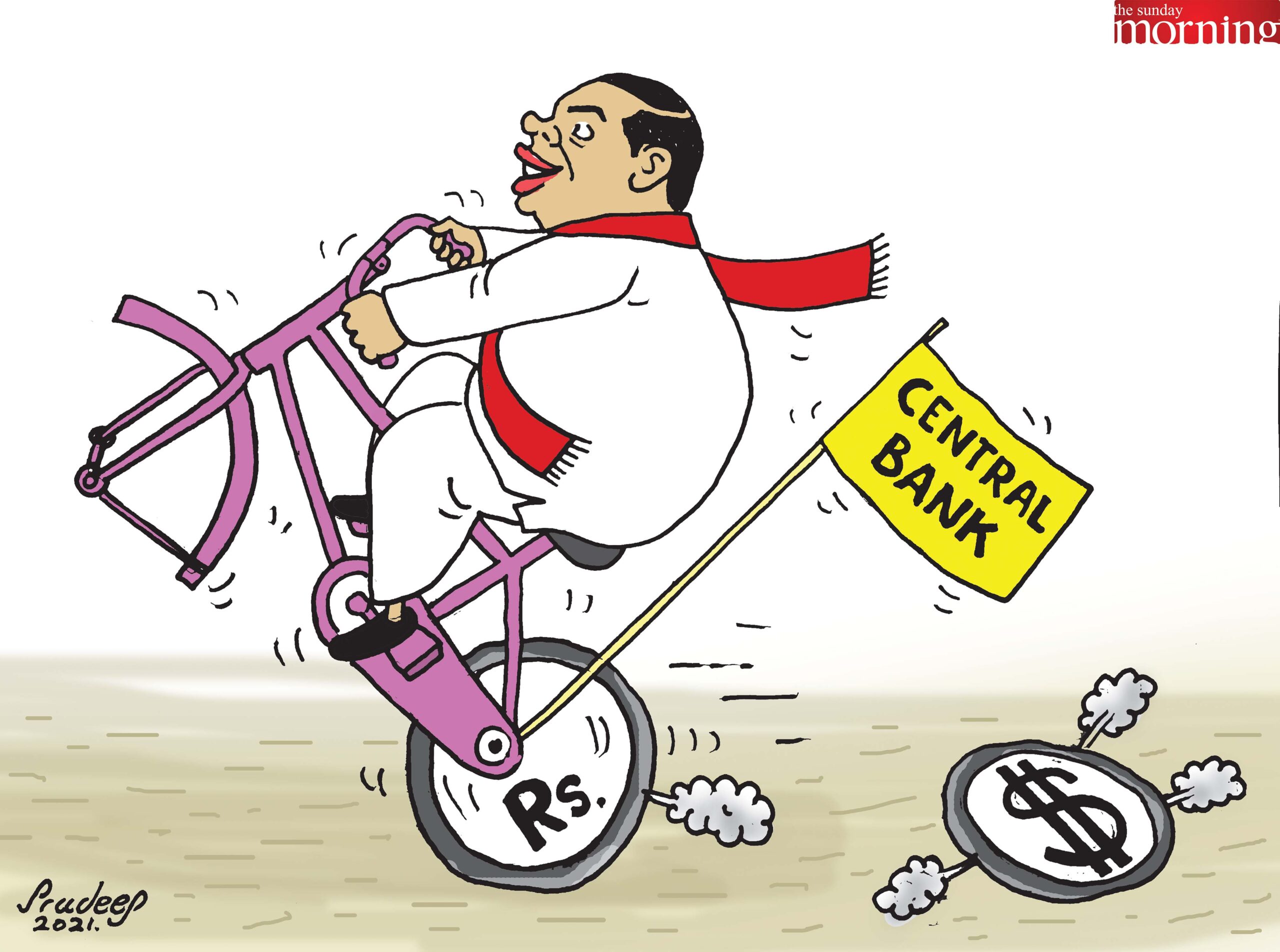
Sri Lanka’s fiscal problems include roughly $1.5 billion in debt owed by next July and diminishing international reserves — $2.27 billion as of October — that led the government to restrict imports. The central bank has been printing many billions of rupees, further increasing inflation.

Meanwhile, food supplies are shrinking. Sri Lanka’s main annual harvest will not reach the market until the spring. “They are currently in the tight period,” said Cristina Coslet, who monitors Asian countries’ food prices for the FAO.

“They will need to import … but also support the most vulnerable households with subsidized food,” she said. Sri Lanka is more closed off to imports now than at any point since the 1970s.

Inflation is also sky-high in Turkey, where the lira has been setting new record lows against the dollar for weeks — reaching nearly 14 to the dollar on Tuesday. A dollar bought about 7.8 lira last December and around 3.5 five years ago. Annual inflation in the “food and nonalcoholic beverages” category came to 27.4% for October, according to the Turkish Statistical Institute.

“Everything we need is very expensive and difficult to get,” said Guray Bilginoglu, a resident of Hatay in the southeastern part of the country.

“Lines for cheap bread have started to form,” he said. “We are trying to save on everything.”

In October, President Recep Tayyip Erdogan drew international attention for suddenly slapping heavy fines on top supermarket chains for alleged price fixing.

The supermarkets are contesting the claims. The leader of Turkey’s Food Retailers Association said they were being “scapegoated” for rising prices that actually stem from increasing production costs.

Erdogan has looked at supermarkets with suspicion for years, saying stores that hike prices commit “food terrorism.” He recently ordered the creation of 1,000 or so shops run by the national agricultural cooperative.

At the same time, his continued pressure on the central bank to lower interest rates — to stimulate growth, he says — is baffling mainstream economists.

“Turkey has a long history of high inflation rates,” FAO economist Monika Tothova said via email.

“In a standard macroeconomic situation, a central bank usually responds to increasing inflation by increasing interest rate, although the central bank in Turkey seems to be taking a different approach,” she wrote.

Turkey and Sri Lanka are far from alone; fast-paced inflation is hitting most of the world. In the U.S. — where the Labor Department reported 5.3% annual food inflation for October, the highest since January 2009 — the costs are assumed to be at least partially behind President Joe Biden’s sinking approval rating, which he is under pressure to improve before the 2022 midterm elections. In November, he took the dramatic step of asking the Federal Trade Commission to investigate whether oil and gas companies are illegally fixing prices.

The FAO has also issued a price warning for Pakistan, where wheat flour prices in most of its markets were at record or near-record levels in October, as well as for Peru, Argentina, Brazil, Zimbabwe, Ethiopia, Nigeria, Uganda, Sudan and South Sudan.

With presidential elections coming up in 2023 and 2024, Turks and Sri Lankans will be able to express their discontent at the ballot box before long.

Erdogan’s approval rating sank under 40% in Ankara-based MetroPoll’s latest survey from Nov. 25. In a poll from Sri Lanka’s Institute for Health Policy released last month, a third of respondents who said they voted for Rajapaksa in 2019 or his camp in 2020 said they would not do so today.

“Sri Lanka’s a society that’s used to price controls,” Wickramasinghe said. “There’s always been this sentiment that it’s part of the government’s job to regulate the price of essentials.” But in the last few months, he has felt public opinion start to shift.

“I think people saw that actually, these are useless,” Wickramasinghe said.

Basil returns to Sri Lanka empty handed; Indian relief package details in January

Indian Finance Minister Nirmala Seetharaman and External Affairs Minister S.K. Jayashankar had informed Finance Minister Basil Rajapaksa that India would officially announce the economic relief package given to Sri Lanka to overcome the country’s economic crisis, next January.

The Indian ministers added that the economic package would apply to the strengthening of foreign reserves, the supply of food and medicine, the promotion of the energy sector and investment.

The economic package for Sri Lanka, which has already been approved by the Indian Ministry of Finance, will be approved by the Indian Cabinet in January.

Finance Minister Basil Rajapaksaand Sri Lanka’s High Commissioner to India Milinda Moragoda had informed the Government of India of the relevant proposals.

Basil Rajapaksa and Secretary to the Ministry of Finance SR. Attygalle and High Commissioner Milinda Moragoda met the Indian Finance Minister and External Affairs Minister twice recently.

Meanwhile, ‘The Hindu’ reports that “President Gotabaya Rajapaksa’s request for a $1 billion swap, made directly to PM Modi during a telephone conversation in May 2020, has not yet materialised.”

“India has also delayed a decision on a request PM Mahinda made directly to PM Narendra Modi during a meeting in February 2020 for a debt moratorium waiver to help Sri Lanka tide over its economic problems that have been exacerbated by the pandemic,” it adds.

Hippo Spirit sailing to Singapore for Arbitration & Sampling

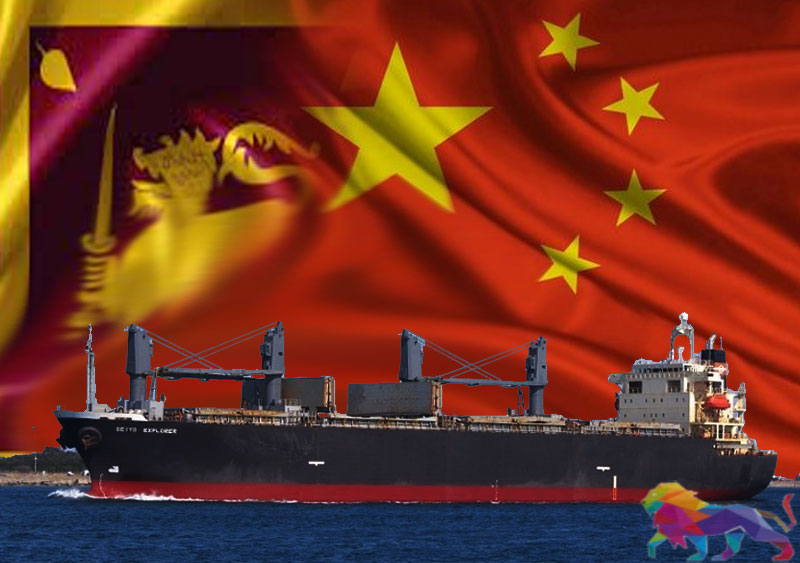
The Hippo Spirit vessel which is carrying tonnes of rejected Chinese Organic Fertilizer is sailing to Singapore.

Qingdao Seawin Biotech Group Co., Ltd, the supplier of fertilizer, EXCLUSIVELY told News 1st that the ship is sailing to Singapore for arbitration in Singapore.

In addition, the ship is sailing to Singapore for sampling and arbitration, said Qingdao Seawin Biotech Group Co., Ltd.

The Bulk Carrier – Hippo Spirit:

The Hippo Spirit is carrying tonnes of rejected Chinese Fertilizer from Qingdao Seawin Biotech Group Co., Ltd to Sri Lanka.

Earlier, it is reported that the Hippo Spirit, the ship carrying Chinese Organic Fertilizer, did not return to China after the first samples were rejected by Sri Lanka.

Instead, the Hippo Spirit had sailed to Singapore and altered its course back to Sri Lanka, without returning to China.

On the 22nd of September, the Hippo Spirit ship carrying 20,000 metric tonnes of organic fertilizer left for Colombo from China’s Qingdao Port.

But the ship was diverted to Singapore after harmful bacteria was detected in the samples of this fertilizer shipment.

The Hippo Spirit ship that didn’t return to China had left Singapore declaring it would be heading to the Colombo Port.

But on the 14th of October, the automatic identification system (AIS) used to track the ship had been deactivated at the Malakka Strait.

Vessel trackers showed the last position of the ship as the Malakka Strait before it went out of range.

Data available online showed the Hippo Spirit ship in Hambantota on the 24th of October 2021 under the name Seiyo Explorer.

The Hippo Spirit and the Seiyo Explorer both share the same IMO number, and therefore it can be confirmed the Hippo Spirit is the Seioy Explorer.

The IMO Ship Identification Number is a unique seven-digit number that remains unchanged through a vessel’s lifetime and is linked to its hull, regardless of any changes of names, flags, or owners.

Pathogen Detected:

On the 17th of September Sri Lanka’s Minister of Agriculture confirmed that a microorganism identified as ‘Erwinia’ was discovered in samples brought down ‘unofficially’ to Sri Lanka and tested.

The supplier was the same, Qingdao Seawin Biotech Group Co., Ltd.

On September 29th, Sri Lanka’s Agriculture Minister Mahindananda Aluthgamage announced the suspension of organic fertilizer imports from China.

This was after Director-General of Agriculture Dr. Ajantha De Silva on 28th September confirmed that Harmful Bacteria was detected in a fresh sample (2nd batch) of Chinese Organic Fertilizer.

The Ceylon Fertilizer Company Limited had got a court order to block payment to Qingdao Seawin Biotech over the shipment of organic fertilizer which was contaminated.

The Colombo Commerical High Court had issued the order on October 22nd, against the Qingdao Seawin Biotech, its local agent, and the People’s Bank.

Blacklisting People’s Bank :

The People’s Bank of Sri Lanka was then blacklisted by the Economic and Commercial Office of the Chinese Embassy in Sri Lanka for failing to make the payment according to the Letter of Credit and the contracts between the two parties.

However, People’s Bank said that is it bound by an enjoining order issued by the Commercial High Courts of Sri Lanka with regard to the trade transaction in question, which precludes the bank from processing the payment.

People’s Bank also said that the temporary delay in processing the said payment pertaining to the LC is solely due to the bank’s obligation to be bound by the legal directions of the country, as a responsible corporate citizen.

Letter of Demand:

On the 7th of November Qingdao Seawin Biotech Group Co., Ltd., the Chinese Organic Fertilizer Manufacturer sent a Letter of Demand to the National Plant Quarantine Service.

The Letter of Demand seen Exclusively by News 1st notes that Qingdao Seawin Biotech Group Co., Ltd., has suffered significant loss and damage in a sum of US$ 8 Million and continues to suffer further loss and damage due to loss of reputation and goodwill as well as existing and potential business, due to the negligent conduct of the National Plant Quarantine Service.

The LOD noted that the NPQS make a payment of US$ 8 Million within 3 days from the date hereof for the loss and damage caused to Qingdao Seawin Biotech Group Co., Ltd.

Lankan lynched in Pakistan: Pakistan urged to ensure safety of other Lankans

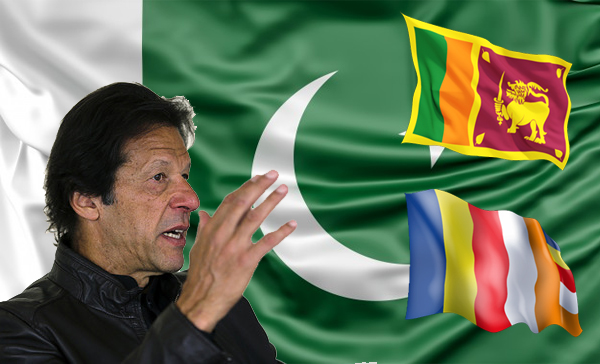
Pakistan Prime Minister Imran Khan yesterday (4) called President Gotabaya Rajapaksa in the UAE to speak about the lynching of a Sri Lankan national in Sialkot, Pakistan last week.

“Spoke to Sri Lankan President Gotabaya Rajapaksa today in the UAE to convey our nation’s anger and shame to people of Sri Lanka at the vigilante killing of Priyantha Diyawadana in Sialkot. I informed him 100-plus people arrested, and assured him they would be prosecuted with full severity of the law,” Khan tweeted.

The victim, Priyantha Diyawadana, a general manager at an industrial complex in Sialkot, was lynched by a mob of extremists last week.

The spouse of the victim speaking to broadcast media last afternoon appealed to President Rajapaksa and Prime Minister Khan to do justice by her husband and her children.

“My husband was a kind and innocent person. I saw his inhumane death on the news and saw the same being shared on the internet. I ask the Sri Lankan Government, President Rajapaksa, and the Prime Minister of Pakistan to conduct a fair investigation into his killing and appeal to them to deliver justice to my husband and our two children,” Nirishi Dasanayake told the media.

======

The Foreign Ministry is in the process of getting the final count of Sri Lankans currently residing in Pakistan, including migrant workers and students, while President Gotabaya Rajapaksa yesterday (4) appealed to Pakistani Prime Minister (PM) Imran Khan to ensure the safety of Sri Lankans residing in Pakistan, The Sunday Morning learnt.

There are almost 500 Sri Lankan migrant workers currently residing in Pakistan registered with the Sri Lankan Bureau of Foreign Employment (SLBFE), and the Pakistani Government has taken all necessary efforts to assure their safety, SLBFE Deputy General Manager Mangala Randeniya told The Sunday Morning.

However, Randeniya speculated that there could be more Sri Lankans in Pakistan, particularly students, and that the Foreign Ministry was working to corroborate the exact number.

Meanwhile, President Rajapaksa yesterday appealed to PM Khan to ensure the safety of other Sri Lankans currently residing in Pakistan, stating he was deeply saddened by the merciless lynching of the Sri Lankan professional. “As an ardent friend of Pakistan, Sri Lanka commends the actions taken by the Government of Pakistan led by Prime Minister Imran Khan to ensure justice, immediately after this brutal assassination,” the statement issued by the President’s Media Division noted.

Pakistani PM Khan, in a Twitter message, said he spoke to President Rajapaksa to convey his nation’s anger and shame over the killing of Priyantha Diyawadana to the people of Sri Lanka, and informed him that over 100 persons were arrested and would be severely prosecuted.

PM Khan had earlier stated that he was overseeing the investigations into the killing and that those responsible will be punished with full severity of the law.

Last Friday (3), a mob in Sialkot, Pakistan, brutally murdered Priyantha Diyawadana, a Sri Lankan who worked as an export manager of a private factory, and set his body on fire over blasphemy allegations.

According to SLBFE’s Randeniya, latest reports from Pakistan indicated that the Police had arrested a prime suspect and booked over 800 under the Pakistani Anti-Terrorism Act. The Police had stated that one Farhan Idrees, the key suspect, had been detained.

It had been reported that an initial report of the incident was submitted to PM Khan by the Punjab Police.

The initial investigation had noted that the Sri Lankan citizen was killed over allegations of blasphemy and that the matter was being probed from all angles.

The initial report submitted to Khan had further stated that at least 112 suspects, who were identified with the help of the factory managers, had been detained.

“The body of the deceased has been handed over to the Police after a postmortem for legal formalities, and the remains will be brought to Sri Lanka within the next two days,” Randeniya said.

Last evening, Sri Lanka’s High Commissioner in Pakistan Vice Admiral Mohan Wijewickrama had stated that arrangements are being made to send Priyantha Diyawadana’s remains to Sri Lanka tomorrow (6) from Lahore to Colombo in a special flight.

Meanwhile, government and Opposition parliamentarians yesterday condemned the killing of a Sri Lankan national by an extremist mob in Pakistan. Government parliamentarian Shantha Bandara drew attention to the murder and condemned the attack. Leader of the House Dinesh Gunawardena told the House that the Government expressed its condolences over the death. Minister Dr. Bandula Gunawardana called on Speaker Mahinda Yapa Abeywardena to intervene and bring the matter to the attention of the Pakistani Parliament through its Speaker to ensure that justice is meted out to the victim, and ensure the safety of other Sri Lankan workers in Pakistan. Samagi Jana Balawegaya (SJB) MP Ranjith Madduma Bandara said the Opposition also condemned the incident and requested the Government to intervene to ensure that justice was served.

Issuing a statement, the Muslim Civil Society Alliance (MCSA) expressed its outrage and condemnation at Kumara’s murder. They stated that it is a heinous and inhumane crime that should not be permitted, and that extrajudicial vigilantism cannot be tolerated at any cost, regardless of one’s religion, ethnicity, or nationality.

The MCSA commended PM Khan and his administration for taking immediate action in ordering the arrest of the offenders.

“We understand that over 75 (persons) have been arrested and an investigation report has been called for within 48 hours. We sincerely hope that Pakistan will set an example to the world that extremist vigilantes will face tough judicial action. We call upon Prime Minister Imran Khan to bring the perpetrators of this heinous crime to justice and to compensate the family adequately for their loss,” the MCSA statement added.

Posted in Uncategorized

Sri Lanka reports 21 Covid-19 deaths on Saturday, toll rises to 14,440

Sri Lanka Saturday reported 21 deaths due to COVID-19 after the figures were confirmed by the Director General of Health Services on Friday, December 03.

Among the deaths reported today, 17 are of males and 04 of females. The majority of deaths – 15 – are of elderly people in the 60 years and above age group.

According to the data reported by the Government Information Department, the total deaths due to Covid-19 since the pandemic began last year has now risen to 14,440.

Posted in Uncategorized

Easter Sunday blasts; an issue that the government wants to wish away

Like an angry storm cloud that refuses to go away, the government of President Gotabaya Rajapaksa appears incapable of escaping the anger, anguish and burning questions being raised by the Easter Sunday attacks and the lack of progress over the hunt for the principal conspirators.

The quest for answers runs parallel to protests over economic issues that have been the springing up across the country. They are exacerbated by the quiet but unrelenting pressure exerted by the Catholic Church and human rights activists over the attacks on their churches and the resulting deaths of hundreds of worshippers.

And as we witnessed recently, the mounting pressure seems to have irked President Gotabaya Rajapaksa.

Speaking at the opening of the New Kelani bridge, the Head of State revealed that he is troubled by the continuing questions being raised about the multiple issues the government is facing.

In the past weeks, protests have been intensified by farmers, workers, teachers, and lots of others who voted for this President. In his speech, the President criticized the main opposition Samagi Jana Balavegaya for bringing thousands of protestors to Colombo, saying they were not a “responsible opposition” for ignoring COVID related guidelines. There was no mention however, that police had been deployed at various points to prevent protestors from travelling to Colombo that day.

He also conveniently forgot that a huge crowd attended the unveiling of a gigantic stupa that commemorated the victory of the Armed Forces against the LTTE in Anuradhapura which he and other members of his government were attended. In fact, the unveiling of the Stupa, was criticized by a vocal minority of the Buddhist clergy who said it was un-Buddhistic to celebrate a victory in armed conflict without seeking reconciliation.

President Rajapaksa said that the Presidential Commission of Inquiry into the blasts had faulted the former President, Prime Minister and the Ministers for the Easter attacks. He said that he has handed over all the information to the police and the Attorney General and the “law will take its course. We have to trust them.”

In his speech he also issued a veiled threat to former President Maithripala Sirisena, former Prime Minister Ranil Wickremesinghe and the “entire Cabinet” of the former administration that he could use the two-third’s majority he commands in Parliament to deprive them of their civic rights over this issue.
That threat strains the fragile relations between the ruling Sri Lanka PodujanaPeramuna and its main ally, the Sri Lanka Freedom Party.

A day or two later, Sirisena, the Leader of the Sri Lanka Freedom Party, fired back in Parliament. Participating in the Budget debate when the topic of allocations for the Office of the President came up, Sirisena reserved his invective for the agriculture minister Mahindananda Aluthgamage, blaming him for the government’s unpopularity. “You made the farmers burn your own effigies,” he said.
In his speech Sirisena said that “if we are attacked, we know how to strike back. We may not know Boxing, but we know how to strike.” His was an oblique warning to the threats directed at him.

In a move reminiscent of the book and film on Chess, the Queen’s Gambit the SLFP leader reminded the ruling coalition it was his party’s 14 Members of Parliament that gives the government the majority that Rajapaksa threatens to use to change the constitution and if needed deprive anyone of their Civic Rights.

Sirisena told Parliament that infighting within coalition governments have repeatedly brought down administrations. He advised the government to look at the issue more critically and intelligently. “Since 1947, governments in this country were established with the support of other parties, and these alliances broke off along the way,” he warned. He said that political events in the past five to six decades has shown that governments have fallen due to coalition partners breaking off. “This government is also a coalition with 11 parties supporting it,” he reminded everyone.

Though President Rajapaksa says that “all” the information contained in the Inquiry report has been released, Opposition MPs however charge that only one of the 22 volumes of the report have been made public. The government has not explained why the bulk of the report and the recommendations have not been released.

Background

The Easter Sunday attacks was the worst act of terror that the island had faced since the end of the separatist war in 2009. It came from a Muslim extremist group against another minority, the Christians. The terrorists also attacked 3 five-star hotels, dealing a massive blow to the country’s biggest money-spinner, the tourism industry. Some 260 people were killed, many more maimed for life.

For a generation which had grown up during the war, it seemed the horrors of conflict had returned as pictures of the churches and hotels where the blasts took place, on the most joyous day of the Christian religious calendar, and blood splattered bodies flooded social media.

There were multiple effects of that tragedy. First, the anti-Muslim rhetoric fed by racist politicians and nationalists, prior to the attack simply reached a crescendo. The assiduous attacks by the state sponsored racists such as the BoduBalaSena were justified. Banners came up overnight at street corners and outside government building condemning the attacks and sympathising with Christians, a show of support never before seen even when the LTTE ploughed explosive laden vehicles into the Central Bank, for instance, killing nearly a hundred.

Was it all orchestrated?

Until the Easter Sunday attack, in Sri Lanka where tensions between religious groups are not uncommon, rarely, or never have there been issues between Muslims and Christians. Within days of the attack, Gotabaya Rajapaksa declared his candidacy for the Presidency. The campaign was launched with an emphasis that the Yahapalanaya government had neglected National Security and the Easter attacks were the result.

The strikes also served to split the Muslim and Christian votes. After the attacks Catholic voters in particular, till then mostly supporters of the United National Party, overwhelmingly turned to the SLPP. Many Muslims were simply fearful of voting. In the run-up to the election the SLPP candidate Rajapaksa pledged to “bring justice” to the victims of the attacks.

The preferred official line of the Rajapaksa administration about the Easter attacks is the most convenient. Wahhabis Zaharan Hashim was the leader and mastermind, he blew himself up, end of story. The frontline peddler of this theory is the new Director General of the Institute of Security Studies Dr Rohan Guneratne. “There is no conspiracy behind this,” he told interviewers at TV stations Adaderana and Swarnavahini.

But questions arise

What stirred the pot of those who believed otherwise was the statement made by the outgoing Attorney General Dappula de Livera in May this year. In an interview with NewsFirst he said, “there is a Grand Conspiracy with regard to the 2019 April Attacks.” He added that the information provided by “the State Intelligence Service with times, targets, places, method of attacks and other information is clear evidence there was a Grand Conspiracy in place.”

De Livera is among a few officials with access to all the documents, including the full report of the Presidential Commission that investigated the attacks, the Parliamentary select committee reports and the CID investigations. Why the police investigators into the blasts are yet to ask the former AG on what grounds he concluded there was a grand conspiracy, is a question that has gone unanswered.

In summation the questions being asked by those closely watching the issue and the government seems to be avoiding are:

– Why hasn’t the former Attorney General been asked to give a statement to the police about his public declaration that there was a “grand conspiracy” behind the Easter attacks?

– How come DIG Nilantha Jayawardana who was faulted by the Parliamentary Select Committee as well as the PCoI for dereliction of duty been made the state witness in the on-going case charging 25 people with the attacks? He was the first to receive information on the imminent attack, days before it took place and on Easter Sunday morning.

– Who was the State Intelligence Officer who met or contacted the bomber who did not carry out his attack and detonated himself at a guest house in Dehiwela?

– What were the alleged connections that the bombers had with Military Intelligence prior to the attack?

– Who was the intelligence officer said to be responsible for asking an intermediary to convince the Islamic State to claim responsibility for the attacks?

– Who is the officer with the call sign “sonic sonic?”

– Why was the person arrested by the CID, removed by the Military claiming it was “our project?’

– Why were those speaking on behalf of the victims, Fr. Cyril Gamini Fernanado, ShehanMalaka Gamage being before the CID, while others such as Dappula de Livera are left out?

For the Catholic Church, the promise of Justice for the victims is yet to be realised and anguish and consternation is now exploding in anger. Various lobby groups are agitating inside and outside the country for answers.

In a statement, the leading Prelate of Sri Lanka’s Catholics, Malcolm Cardinal Ranjith said the present government “took political advantage of the Easter Sunday attack and promised to reveal within a month those who carried out the attack”. He said, “It is clear from this procedure that after such a long time the government has no interest in finding out the truth about the attack and they are going to cover it up and wash their hands.” He said the country is still insecure and attacks like those of Easter Sunday could take place any time.

“The real killers must be identified, and the country must know the truth. Politicians do not want to end this culture of killing. Extremism is beneficial to them, and they continue their selfish journey through the tears of human suffering,” Cardinal Ranjith added.

His public statement followed a detailed letter the Church wrote to President Rajapaksa asking a number of questions, primarily why the government had not carried out the directives of the Presidential Committee of Inquiry. The Presidential Secretariat did respond through its Legal Officer but did not answer the primary question. Then, according to the Cardinal, in a telephone conversation the President had told him that if he carries out the directives, he would become unpopular.

Of late, Catholics, both lay and clergy have become more outspoken on the issue, questioning the lack of progress of the investigation and asking questions that are inconvenient for the government. The government’s response so far has been to haul these persons, particularly lay activist ShehanMalaka and Fr Cyril Gamini Fernando who has acted as a spokesman for the church on this matter, to the CID for questioning. Another, ChiranthaAmarasinghe who has been challenging the government for answers for several months too has faced harassment.

If the allegations are true that a “Deep State” orchestrated the Easter attacks with the dastardly aim of bringing to power the current President over a pile of bodies, it bodes ill. It is fundamental that that the government of President Rajapaksa, genuinely investigates the issue and reassure the nation, particularly those who lost children, friends and families that he and his government are above board.
If the President has evidence of Sirisena’s involvement in the Easter tragedy, then he must ensure the latter is brought to justice, instead of making oblique threats. The government must also explain why Nilantha Jayawardena, has been made a State witness, and why those who speak for the victims are being harassed.

As it stands, it seems like the government is not interested in bringing relief to the victims, giving credence to charges by critics of a cover up.


Posted in Uncategorized

India stressed its commitment to aspirations of Tamils in Sri Lanka at UNHRC: MEA informs Rajya Sabha

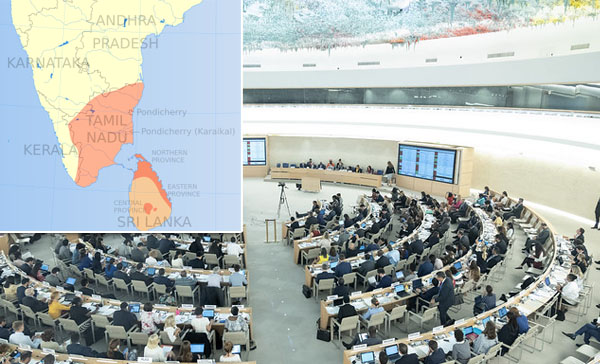
The Ministry of External Affairs in Rajya Sabha stated that India, at the 46th Session of UNHRC, stressed its abiding commitment to the aspirations of Tamils of Sri Lanka.

“India believes that delivering on the legitimate aspirations of the Tamil community is in the best interests of Sri Lanka,” the Ministry said.

In March, the UNHRC had adopted a resolution brought by Britain on behalf of a group of countries, boosting UN rights chief, Michelle Bachelet’s staff and powers, with a view to future prosecutions.

In the resolution, the Human Rights Council had expressed “deep concern” at the “deteriorating situation” in Sri Lanka, and criticised the erosion of judicial independence, marginalisation of minorities and impunity.

At the UNHRC session, Tichy-Fisslberger speaking on behalf of the European Union had highlighted the “accelerating militarisation” of civilian government functions, “the erosion of the independence of the judiciary”, and “increased marginalisation” of Tamil and Muslim minorities, which has been “exacerbated” by the island’s response to the COVID-19 pandemic, such as the reported prevention of Muslims, and members of other religions, from practising their own religious burial rites, according to UN News.

Source(ANI)

More Sri Lankans switch to Hawala as money printing drive parallel exchange rates

Sri Lankan migrant worker Sampath* is now determined to send his salary from Dubai to his family via hawala, a traditional net settlement system based that had facilitated trade for centuries.

“Last week I found out that my friends get 10 rupees extra for each dirham and I have been losing nearly 15,000 rupees monthly because I have been using the banks,” Sampath, who is now working at a restaurant near Emirates Tower in Dubai, told EconomyNext.

Sampath has been a migrant worker in the UAE since 2010 and he has always sent his salary through the banking system as he was concerned over the hawala intermediaries.

But early last month he found those intermediaries are Sri Lankans and many of his friends have been sending their foreign earnings through these intermediaries for years.

“I got 55 rupees for a dirham from my bank whereas my close friend got a rate of 65 rupees after sending through hawala,” the 38-year old migrant worker said while having his meal at a low cost Indian restaurant near the Emirates Tower metro station.

“I don’t understand this price difference, but I will also send my salary through hawala from next month onwards. I can compensate for the increased prices through the extra 15,000 I will get by sending through Hawala.”

Net Settlements

The higher parallel exchange rate emerged as the central bank limited convertibility to excess rupees printed to keep rates down and tightened exchange controls while trying to maintain a soft-pegged exchange rate of 200/203 to the US dollar.

The gap between official and parallel rates widened as banks rationed dollars to importers on top of exchange controls already in place amid a pick-up in private credit with printed money.

Hawala is a cross bordersettlement system said to have started around the 8th century where inflows and outflows are net-settled against the balance of a broker instead of settling every transaction separately as it is done in electronic real time gross-settlement systems.

People who earn foreign currency give the amount of money that should be sent to their family to a hawala broker instead of sending through a foreign bank.

The hawala broker in turn calls the Sri Lankan counterpart and asks to pay the cash money in rupeesequal to the foreign currency given by migrant workers.

Migrant workers’ families receive the money in cash in the local currency as quickly as in the formal banking channels.

The Sri Lankan hawala broker now has a ‘foreign reserve’ or a positive ‘net open position’ in his books placed with the Dubai broker, which can be used to import goods to the country, pay university fees, settle a foreign debt, or make any other payment, just as if dollars or dirham were exchanged at a commercial bank, and its treasury placed the funds short term in a Middle Eastern bank.

A person within Sri Lanka who cannot get enough dollars to remit out for imports or other purpose will go the Sri Lanka hawala broker and give him the premium to pay his foreign counterparty.

Hawala brokers do not create money and transactions are made in existing rupees in the reserve money already in the country and cannot put pressure on the exchange rate, analysts say.

Payments out through Hawala reduce the total dollar outflow demand on banks as just as the payments in reduced the inflows.

Premium Effect

As Hawala premiums went up and banks were barred from paying a higher rate to customers coming to cash dollar drafts, worker remittances through official channelsplunged.

In September 2021 official remittances fell by 50 percent to 353 million US dollars compared to the same month in 2020.

Many migrant workers in Dubai said the lower exchange rate given by Sri Lanka banks has forced them to switch to official channels

“I don’t mind losing 2-3 rupees by sending my salary in dirham to support the country,” an Abu Dhabi-based migrant worker told EconomyNext.

“But the gap is 10-11 rupees. If the local banks can give a realistic rate, I will consider sending money via banking channels.”

The central bank has said this week it will give 10 rupees more for dollars converted in December, in a new ‘official’ parallel exchange rate.

In the past, a 2-rupee incentive was given. However since banks only converted at 197.50 the incentive was not felt.

However, at 65 rupees a dirham a migrant’s family will get about 238 rupees for a US dollar via the Hawala system.

Sri Lanka’s central bank has allowed people to open up bank accounts in dollars in a move to encourage people to save in dollars so that they also can hedge against rupee depreciation (deposit dollarization).

However, the banks only return rupees to customers. And as money printing ratcheted up last year payments out were severely restricted and can only be paid to immediate family members of the account holders (such as children studying abroad) or if the holder travels abroad.

The Central Bank has already set up a new Foreign Remittance Facilitation Department.

Credibility of the peg

Exporters also do not want to convert dollars early expecting depreciation ahead.

The central bank has also tightened rules on exporters holding dollars, after printing money to keep rates down.

However the market is also adapting.

Ashan* is a small time exporter of food* products and he exports them to a Middle Eastern country where he visits frequently.

In October, he earned nearly 5,500 US dollars for his exports.

Instead of asking his buyer to remit the money to his Sri Lankan local account, he requested his foreign counterparty to keep the money with the buyer until he visits the foreign country.

“If I get the money to my bank account, I get a lesser amount. So when I go on foreign trip, I get the money in the foreign currency,” Ashan told EconomyNext.

“I am ready to use the formal banking channel if there is only a 2-3-rupee difference between the central bank rate and black market rate. But the difference is around 20 percent. Why should I lose the money?”

Ashan was unwilling to convert because he fears depreciation ahead, which is called a loss credibility of the peg.

With the money blocked in Dubai in a private foreign reserve, Ashan now has to use his savings or borrow from a local bank to buy goods for his next export shipment.

This should raise domestic interest rates, crowd out other private credit – perhaps to a house builder – and reduce imports.

However if money is printed to keep rates down, there will be no reduction in credit or imports to offset the money kept out of the country.

Exporters are incentivized to borrow domestically because rupee rates are low and the carrying cost of not converting is low.

Other are also coming up with innovations.

Another small importer said he is now unable to get any dollars because his local bank had told him they do not have enough to give.

“So I asked some of my friends in foreign countries to pay my import bill from outside the country and I pay in rupees to my friend’s family or whoever my friend asks to pay,” the importer told EconomyNext, asking not to be named fearing repercussions from the authorities.

“The rate is cheaper than the black market.

“I do this because there is no sizable quantity of dollars to buy legally. At the same time, I will have to close my business if I buy dollars from black market and use them for imports. The central bank’s dollar rate is 200 rupees. But a dollar is sold at around 240 rupees now in the unofficial market.”

Central Bank Governor NivardCabraal last week warned against Hawala and off market transactions.

“There are some clearing houses as well which indulge in this kind of clearing of foreign exchange receipts which occur in one part of the world and there is a mirror image of the transaction taking place here (Sri Lanka) as well,” he said on November 25.

“We are using laws as well as persuasive powers the central bank has with the banks to deal with that.”

This week in a twitter.com message this week he said bank accounts involved in settling unofficial remittances are being frozen.

Christmas Parallel

Also this week an official parallel exchange rate for expat workers was set up.

With foreign reserves depleting further, the central bank on Wednesday (01) decided to increase its incentive paid on inflow of each US dollar to 10 rupees from the existing 2.00 rupees in the month of December.

“The additional incentive provided by the CBSL (central bank of Sri Lanka) is expected to attract more workers’ remittances to the country through the formal banking channels, thereby improving the foreign currency liquidity in the domestic foreign exchange market,” the central bank said in a statement.

“At the same time, several measures are being taken by the CBSL and the law enforcement authorities to curtail informal fund transfer channels, which would, in turn, further encourage migrant workers to use formal channels to remit their hard-earned foreign exchange to the benefit of their dependents.”

The move will see migrant workers getting around 210 rupees compared to 240 rupees in the black market.

The latest incentive may also not be enough to convince those who receive around 240 rupees for dollars in the parallel market.

Analysts say the central bank will either have to raise rates, float the currency (fully deny convertibility) or do both to close the gap to re-start free conversion of exporter and remittances.

Posted in Uncategorized

Chinese embassy says no withdrawal from northern power projects

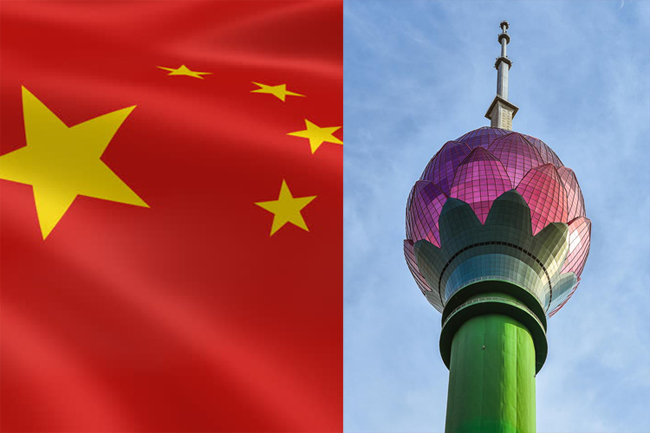
The Chinese embassy said , China’s Sino Soar Hybrid Technology Co., Ltd, had not withdrawn from the execution of northern power projects.

A spokesman for the embassy said the project had been suspended by Sri Lanka earlier this year , but it was still valid.

“The company will continue the contract after the cabinet approval . There is no withdrawal,” he said.

Earlier , the embassy tweeted , “Sino Soar Hybrid Technology, being suspended to build Hybrid Energy system in 3 northern islands due to ‘security concern’ from a third party, has inked a contract with Maldivian gov’t on 29 Nov to establish solar power plants at 12 islands in the Maldives.”