Sri Lanka inflation hits 12-year high in Nov 2021 amid money printing

Sri Lanka’s inflation accelerated to 9.9 percent in the 12-months to November from 7.6 percent in October, in the wake of record money printing for over two years, while policy in reserve currency central banks also deteriorated.

The Colombo Consumer Price Index jumped 2.6 percent in the 30-day of November. Food prices jumped 5.3 percent in the month, driven by rice and vegetables.

Vegetable prices rose to unusual levels in November amid rains. But non-foods jumped 1.2 percent after jumping 1.5 percent a month earlier.

The 12-month inflation is the highest recorded since January 2009 when the index showed a 10.4 percent after a base change.

Sri Lanka has recorded 9.8 percent inflation in January and February 2013 when the credit system was recovering from a 2011/12 currency crisis.

Food prices rose 17.5 percent during the past 12 months, partly driven by unusually high vegetables.

Rice prices are kept up with import controls after printing money.

Over two years food prices had risen 29.5 percent.

Since August 2019 when the central bank ended prudent policy and began the current bout of inflationary policy by purchasing bonds to inject money, food prices have risen 34 percent. Headline inflation, made up by adding more services and other items which grows more slowly is up 15.9 percent.

Sri Lanka’s central bank has promised to only create inflation of 4-6 percent a year. However since aggressive call money rate targeting with excess liquidity began Sri Lanka has been experiencing currency crises every 2 to 3 years.

Sri Lanka stocks hit a new record on Tuesday rising 2.13 percent.

From July 2019 to September 2021, the central bank has printed 1.48 trillion rupees. Foreign reserves have fallen from

Global monetary policy has also deteriorated coming from the US Fed and other reserve currencies. Post World War II money printing central banks have earlier blamed inflation on wage-spiral inflation, the oil shock and overheating.

The current excuse is supply chain bottlenecks.

Posted in Uncategorized

Podi Lassi’s mother appeals to UN about life threat

Following a series of custodial deaths this year, the mother of Janith Madushanka alias Podi Lassi, has written to United Nations (UN) Sri Lanka Resident Coordinator, Hanaa Singer-Hamdy, about alleged threats to the life of her son, who is currently in the custody of the Criminal Investigations Department (CID).

Madushanka’s mother has also handed over a letter detailing her concerns regarding the alleged threats to her son’s life to Singer-Hamdy along with the Committee for Protecting the Rights of Prisoners (CPRP).

“Madushanka has been detained for a lengthy period now, under detention orders. His mother has advised us that there is now a grave danger to his life. In the past, it was observed that several persons who had been named as underworld leaders by the government authorities, have been killed and murdered during the investigation stage,” the CPRP’s letter to Singer-Hamdy read.

In her letter to Singer-Hamdy, Madushanka’s mother also explained that Madushanka was arrested on 16 October 2020 by the CID, on a detention order. She said that she has received information that following the end of his detention order on 16 December 2021, he will be transferred to the Peliyagoda Criminal Department and that she is concerned about her son’s life following this planned transfer.

The CPRP has claimed that it is futile to inform the Human Rights Commission of Sri Lanka (HRCSL) and the Police Department about threats to lives of detainees, as was made clear in the case of Hewa Lunuwilage Lasantha, alias “Tinker Lasantha” who died in a shootout on 25 November which involved the Police, when he was taken to recover hidden weapons, according to the Police. This occurred following his arrest in Kalutara on the same day.

In a statement issued on 26 November, the Bar Association of Sri Lanka (BASL) said that Lasantha’s Attorney had informed the BASL about an alleged threat to Lasantha’s life on the evening of 25 November, after which the BASL had informed Inspector General of Police (IGP) Chandana D. Wickramaratne, the HRCSL, and the Consortium of Humanitarian Agencies (CHA).

“It is our belief that citizens cannot repose any faith in such institutions regarding any such threat to life. Hence, we request that you (a reference to the UN Resident Co-ordinator) intervene to take whatever measures you can with regard to the same,” said the CPRP.

“Madushanka’s detention order will end on 16 December 2021. His mother is concerned about his life as there are rumours that an incident similar to what happened to Tinker Lasantha will occur once his detention order ends,” CPRP Chairman Attorney-at-Law Senaka Perera told The Morning last week.

These developments come following several custodial deaths over the past two years. On 11 May 2021, underworld figure Mabulage Dineth Melan Mabula alias Urujuwa, died in a shootout whilst in police custody. Two days later, on 13 May 2021, Dharmakeerthi Tharaka Perera Wijesekera alias Kosgoda Tharaka, also died in a shootout whilst in police custody. On both these occasions, the Police Media Spokesman at the time, Senior Deputy Inspector General of Police (DIG) Ajith Rohana, told the media that incidents that had occurred while the suspects had been taken for special police operations had led to their deaths.

In a similar incident in October last year, underworld figure Samarasinghe Arachchige Madush Lakshitha alias Makandure Madush, was killed while in police custody. The Police at the time claimed that the victim was killed in the crossfire between the Police and suspected gang members, as the latter group had attempted to extricate him (Madush) from police custody.

Campaign finances to be regulated

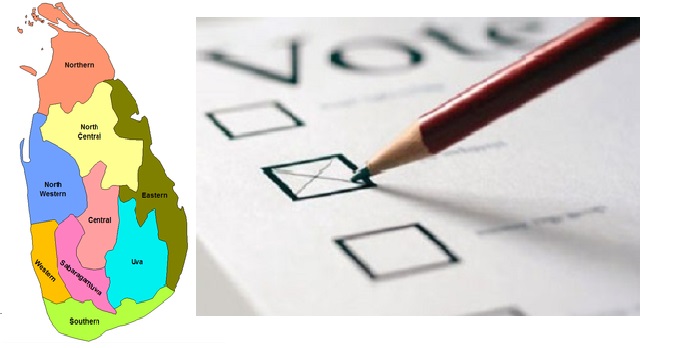
Provisions will be introduced to regulate and control election expenses, following the Cabinet’s approval being granted on Monday (29 November) for a proposal by President Gotabaya Rajapaksa to the effect, as part of efforts to create a more just playing field for the conduct of free and fair elections, the Government said yesterday (30 November).

“Prior to 1977, there were regulations about election-related spending. Unfortunately, however, with the introduction of the proportional representation electoral system, these regulations did not make their way to the new legislation. In 2017, the Cabinet gave approval to amend existing ordinances and as the final step, President Rajapaksa gave this cabinet paper this week. We hope that with these provisions, a background and a playing field to conduct freer and fairer elections will be created,” Cabinet Spokesman Dullas Alahapperuma said at the post-cabinet meeting press briefing held yesterday.

He raised concerns about the unlimited spending during election times, which he claimed, has become a practice.

“Regulating the spending capacity during elections is one big aspect of ensuring fair elections. We must also look for an election mechanism that represents the people better. However, we hope that regulating election expenses will create new hope for a country that is exhausted with the current election mechanisms and politicians. We hope that there will be bipartisan support in Parliament for this,” said Alahapperuma.

In September this year, Sri Lanka Podujana Peramuna (SLPP) Monaragala Pradeshiya Sabha Member Harshaka Priya Dissanayake, who was accused of bribing voters to garner votes, was disqualified in a landmark High Court judgement. The People’s Action for Free and Fair Elections (PAFFREL) and the Centre for Monitoring Election Violence (CMEV) initially filed the case against Dissanayake. Following the ruling, PAFFREL noted the necessity of laws to limit election expenses by candidates.

The Parliamentary Select Committee to Identify Appropriate Reforms of the Election Laws and the Electoral System and to Recommend Necessary Amendments has reached an agreement in consultation with the relevant parties to introduce these provisions.

The Morning’s attempts to contact Election Commission Information Officer M.K. Saman Sri Ratnayake for more information on the matter proved futile.

Posted in Uncategorized

Seven held for links with ISIS

The Colombo Terrorism Investigation Division (TID) yesterday informed Colombo Additional Magistrate Chandima Liyanage that seven suspects have been arrested and are being questioned on detention orders by the Colombo Terrorism Investigation Unit for allegedly spreading extremist ideologies through the internet and having direct links with ISIS terrorists.

The suspects were arrested in Polonnaruwa, Kattankudy and Wellampitiya areas and are being questioned under the Prevention of Terrorism Act.

Posted in Uncategorized

German Ambassador to visit Jaffna and Trincomalee

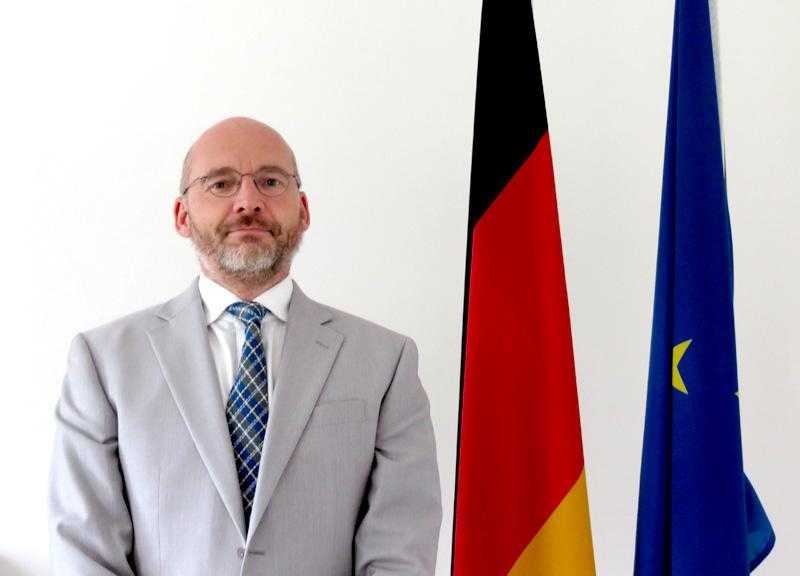
German Ambassador Holger Seubert is scheduled to pay an official visit to Jaffna and Trincomalee from 29th of November to 02nd of December 2021.

His visit strongly focuses on further strengthening economic ties between this region of Sri Lanka and Germany.

During his visit, Ambassador Seubert will launch the partnership between the German Asia Pacific Business Association (OAV) and the Yarlpanam Chamber of Commerce and Industry (YCCI) partnered by the German Chamber of Commerce (AHK Sri Lanka).

He is expected to hold discussions with several senior government officials including Governor of the Northern and Eastern Province, Jeevan Theagarajah, Governor of the Eastern Province Anuradha Yahampath and the Mayor of Jaffna, V. Manivannan.

Furthermore, he will meet with representatives and partners of German companies, the Goethe Institute and Deutsche Gesellschaft für Internationale Zusammenarbeit (GIZ) GmbH.

That will give him a broad overview of the existing cooperation regarding trade, industrial production, vocational training, culture and education in the Northern and Eastern part of the country, the German Embassy in Colombo said.

He will also have the opportunity to visit a demining site of the HALO Trust in Jaffna (co-financed by Germany) and discuss other relevant subjects with representatives from the region.

Sri Lanka kitchens blow up as gas crisis deepens

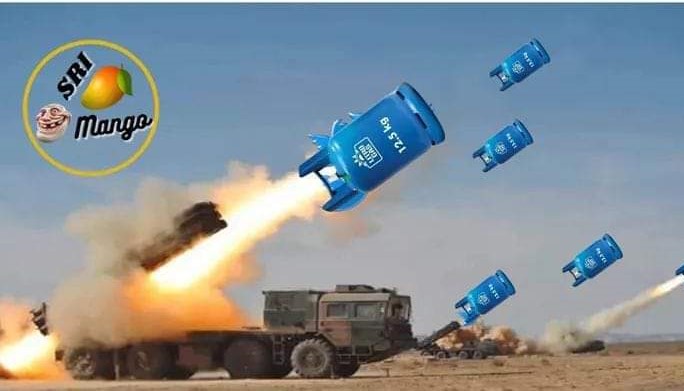
Sri Lanka is investigating a sharp rise in kitchen explosions caused by cooking gas that have reportedly killed at least one person and wounded dozens of others, parliament heard Monday (Nov 29).

The island is in the grip of an economic crisis with serious shortages of fossil fuels and other essential goods because of depleted foreign currency reserves.

Opposition lawmakers have blamed increased concentrations of propane in liquified petroleum gas (LPG) cylinders used for cooking, relative to the more expensive butane.

The government is now probing LPG supplies after a dozen blasts linked to kitchen stoves, consumer affairs minister Lasantha Alagiyawanna told parliament.

“During a short space of time there has been a very sharp increase in gas accidents,” he said.

“We don’t want to have 10 to 15 homes blowing up daily, so I have ordered an investigation.”

An official in Sri Lanka’s consumer affairs agency, who asked not to be named, told AFP that higher concentrations of propane were increasing pressure on LPG cylinders, causing leaks that led to explosive fires.

State-run gas agency Litro has denied changing the proportion of butane and propane in domestic gas cylinders, instead blaming poorly maintained stoves and faulty pipes.

Local media reports said a 19-year-old woman was killed after a gas cylinder leaked and exploded in Sri Lanka’s east last week.

Police have denied the death was due to a gas leak.

Consumers have faced serious LPG shortages in recent months with authorities struggling to find foreign exchange to finance gas and crude oil imports.

Sri Lanka’s only oil refinery shut for the first time in its 52-year history this month because it could not source dollars to import crude.

The island’s economy shrank last year as the pandemic took hold and tourism nosedived.

A resulting foreign exchange shortage prompted authorities to shore up Sri Lanka’s trade imbalance with a broad ban on imports, including some food and agricultural products.

That decision eventually sparked food shortages, with supermarkets rationing rice and the price of some staples doubling earlier this month.

Source: AFP

Posted in Uncategorized

HRCSL starts inquiry on assault in Mullaitivu

The Human Rights Commission of Sri Lanka (HRCSL) announced yesterday (29) that it has commenced a Suo Motu (of its own accord) inquiry concerning an assault on a journalist at Mullivaikal, Mullaitivu on 27 November 2021 by Army soldiers.

The HRCSL has called for reports from the General Officer of the Commanding 59 Division of Sri Lanka Army, Mullaitivu, and the Headquarters Inspector of the Mullaitivu Police Station with regard to the assault on or before 3 December 2021.

The Mullaitivu Press Club engaged in a wide range of protests on Sunday (28), condemning the assault of the individual by the name of V. Vishwachandran Mullaitivum last Saturday (27), a freelance independent journalist, who was assaulted by three officers attached to the 59 Brigade of the Sri Lanka Army.

Video footage showed Vishwachandran claiming that he was merely taking a photo of the “Mullivaikal” road sign when he was assaulted using “barbed wire”. Pictures of Vishwachandran’s hands show injuries, and he had later been admitted to hospital for treatment.

Three army officers attached to the 59 Brigade of the Sri Lanka Army, who were allegedly involved in the said assault, were reportedly arrested by the Police on Sunday (28) and later released on bail.

“He was beaten with palmyrah fronds wrapped with barbed wire. He suffered serious injuries and was admitted to the Mullaitivu District Hospital for treatment. Journalists in Sri Lanka, especially those in the war-affected North and East, are subjected to serious challenges amidst severe threats to their lives and profession. Despite 44 Tamil journalists being abducted or subjected to forced disappearances or killed, none of the perpetrators have been brought to justice,” the Mullaitivu Press Club said in a statement on Sunday.

The assault had occurred on the day of “Maaveerar Naal”, a commemorative day observed across the North and East as a mark of respect and remembrance of those who died during the civil war. Although reports show that several courts denied requests by the Sri Lanka Police to ban the planned commemorative events, many media outlets detailed the heavy military presence during the events last Saturday.

Govt. commences engagement with civil society on PTA reforms

The Ministerial Subcommittee on amending the Prevention of Terrorism Act (PTA) met with members of the Sri Lankan Collective for Consensus (SLCC) on to discuss the current state of their proposals.

SLCC consists of individuals drawn from civil society organisations that have reconciliation, human rights and peace building aims in their work.

Chairman of the Subcommittee, Foreign Minister Prof. G. L. Peiris said there was no draft legislation as yet to share but only a set of proposals which they wished to discuss with civil society and other groups. He stated that there would be no repeal of PTA as there is a continuing need for it due to security issues. He explained there was a need for balance between personal liberty and freedom and the need for national security.

The noteworthy amendments described in the verbal presentation made by Minister G.L. Peiris consisted of the following:

Detention orders: The period of validity of a detention order would be reduced from 18 months to 12 months.

Restricted use of PTA: The IGP has issued clear instructions to police officers not to have recourse to the PTA as a regular mode of arrest or as a short cut. The norm should be to investigate with the use of the normal law. They should only use PTA in exceptional circumstances when adequate evidence is found in investigation and if national security issues arise in the process of investigations.

Supervision by magistrates: It will be mandatory for magistrates to visit the place of detention and to personally ensure the welfare of detained persons. The Human Rights Commission should/ will be informed of such detention. Magistrates will be empowered to direct the IGP to investigate if any evidence of torture is found. In such a situation the Attorney General will institute criminal proceedings.

Judicial oversight: The person detained will have access to judicial appeal through Article 126 of the constitution (Fundamental Rights jurisdiction of Supreme Court) and Article 140 (Writ jurisdiction of Appeal Court). This will be spelled out in the law so that there is no ambiguity. This will be the first time in the four decade long history of PTA that detention orders can be legally challenged.
Access to lawyer: The person detained will have the right to access a lawyer and to visits by family members. This will be a statutory right so that there is no discretion in the matter.
Repeal of Section 14 of PTA: This prohibits publication of any statement made by the detainee or with regard to the investigation.

Speedy trial: Trials of PTA cases will take place on a daily basis until completed to avoid delays. The Chief Justice has already directed that PTA cases should be expedited.

Advisory Board: This has been set up under Section 13 of the PTA. Chaired by retired Chief Justice Asoka de Silva it has already recommended the release of 26, 8 and 6 prisoners on three occasions. The Advisory Board is expected to make recommendations and advise the President on the investigation, release, granting of bail and future action related to the persons imprisoned over terrorist activities and detained under detention orders.

Minister Peiris explained that the proposed changes to the PTA were a result of consensus between the Ministries of Foreign Affairs, Justice and Defence and the Attorney General’s Department, adding that these changes were not conceived as one-off ones, but as a part of a continuum, there being other changes contemplated that will be agreed on later. He also assured that changes in legislation will be rapid, and take place early next year.

Meanwhile, no written documents were provided to the SLCC either before or during the meeting. However, SLCC presented a position paper to the ministerial subcommittee which provides the principles underlying and restraining the PTA which we wish to have incorporated into the amended PTA.

Accordingly, the SLCC highlighted the following:

# Arbitrary arrests need to be ended. An example was given from Batticaloa where 10 civilians including a mother of two had been taken under PTA for commemoration of their dead relatives.

# The period prior to indictment should be considered under the normal law, and hence the judicial officers had power to bail out detainees, as decided in the Pathmanathan case by the Supreme Court and magistrates to be apprised accordingly.

# When detainees are sent to other districts on remand there is lack of communication and cross checking which can be rectified by video links for communication.

# All actions with regard to detention need to be judicial rather than executive or administrative.

SLCC also raised concerns regarding the conduct of security forces who had forcibly prevented family members and others from commemorating Martyrs Day of fallen LTTE cadres. They stressed the importance of national reconciliation taking place in a larger environment that is respectful of human rights.

Ven. Kalupahana Piyaratana, Rev. Asiri Perera (Retired President/ Bishop), Rev. Fr. C.G. Jeyakumar, Mr. Rohana Hettiarachchi, Dr. Joe William, DR. Dayani Panagoda, Dr. Jehan Perera, Prof. T. Jayasingham, Sarah Arumugam, Prof. Tudor Silva, Hilmy Ahamed, V. Kamaladhas, Sanjeewa Wimalagunarathna, Visaka Dharmadasa and David Yusuf represented the SLCC at the discussions.


Power Outage experienced across many areas

Power disruptions in several areas have been reported today due to the tripping off of two 220KV transmission cables from Kothmale to the Biyagama Grid Sub-Station, Power and Energy Development Director and Media Spokesperson Sulakshana Jayawardena said.

He told the Daily Mirror that due to tripping of the transmission lines, the Mahaweli hydro generation had stopped and the station experienced a frequency drop situation.

Therefore, certain sub-grid stations were unable to function and were automatically switched off.

“Several sub-grid stations (feeders) were programmed not to run at low frequency and those feeders were automatically switched off,” Jayawardane said.

Due to that, several areas experienced blackouts. The subgrid stations programmed to operate at a low frequency were not tripped off and continued with the power supply, he said.

He stated that the sudden power outage affected sub-grid stations in Biyagama, Kotugoda, Habarana, Galle, Matara, Pannipitiya, Rathmalana, Sri Jayawardhanapura, Kurunegala, Kiribathkumbura, Athurugiriya, Kosgama, and Sapugaskanda.

The whole country was not in darkness, but certain areas had the electricity supply, Jayawardane said.

However, the CEB maintenance services are already deployed to restore the power supply with the least possible delay, Jayawardena added.