Outrage over post given to controversial monk

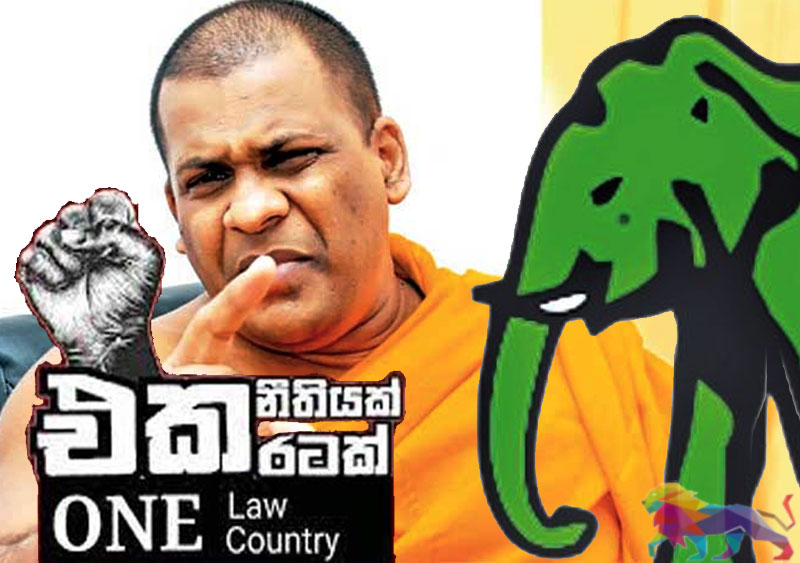
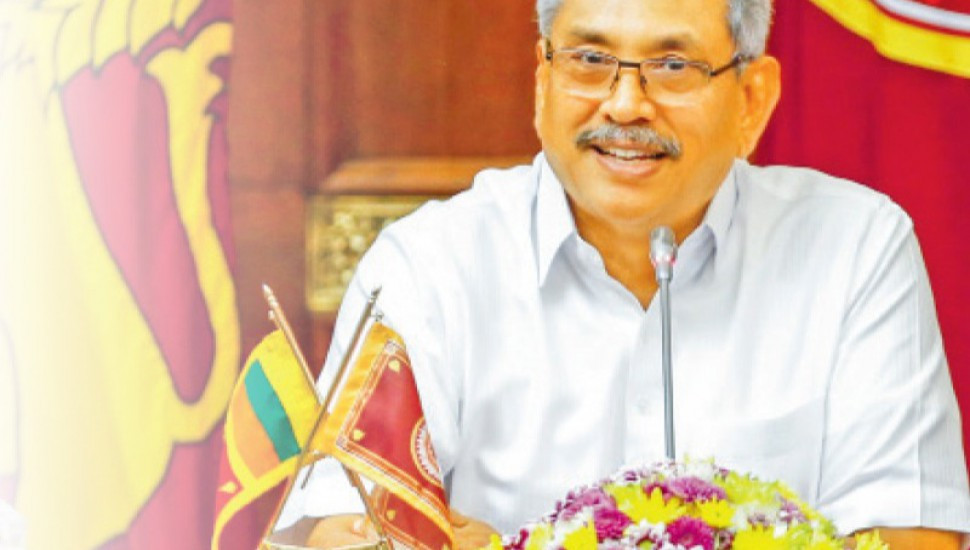
Politicians, civil society, activists, journalists and international organizations were among those who expressed outrage over the post given by President Gotabaya Rajapaksa to controversial monk, the Venerable Galagodaaththe Gnanasara Thero.

President Gotabaya Rajapaksa had appointed a Presidential Task Force led by the Venerable Galagodaaththe Gnanasara Thero to prepare a draft on ‘One Country, One Law’ and submit a final report by February next year.

The appointment drew strong reactions on social media as the Venerable Galagodaaththe Gnanasara Thero had been accused in the past of instigating attacks against Muslims.

The International Commission of Jurists (ICJ) said that it was concerned that the newly appointed Presidential Task Force to study the ‘One Country One Law’ concept may end up targeting minority communities in Sri Lanka.

ICJ said it was also concerned by the lack of representation from the Tamil community and the absence of female members in the Task Force considering the wide mandate provided to it.

The organization said that there was no need for a Task Force as the Justice Ministry is already engaged in the law reform process.

International Crisis Group Senior consultant Alan Keenan said that the appointment of the venerable Gnanasara Thero to head the Task Force is a “bracing dose of reality” to those who had hoped that the government’s recent international promises of accountability and inter-communal reconciliation offered chance of reform.

Tamil National Alliance (TNA) Parliamentarian Shanakiyan Rajaputhiran Rasamanickam said that the Venerable Galagodaaththe Gnanasara Thero has disrespected and violated the Sri Lankan Constitution repeatedly and so is not fit to lead the Task Force.

He said that it is worrying that public officials have been directed to provide information to the Task Force headed by the monk who is known to spread hatred and violence in Sri Lanka.

Samagi Jana Balawegaya (SJB) Parliamentarian Dr. Harsha de Silva tweeted saying that “One country one law” must be about uniting people and not dividing them further.

Moody’s further downgrades Sri Lanka to Caa2

Moody’s Investors Service has today downgraded the Government of Sri Lanka’s long-term foreign currency issuer and senior unsecured debt ratings to Caa2 from Caa1 under review for downgrade, concluding a review for downgrade initiated on July 19, 2021. The outlook is stable.

Following is tan edited version of the Moody’s statement.

The decision to downgrade the ratings is driven by Moody’s assessment that the absence of comprehensive financing to meet the government’s forthcoming significant maturities, in the context of very low foreign exchange reserves, raises default risks. In turn, this assessment reflects governance weaknesses in the ability of the country’s institutions to take measures that decisively mitigate significant and urgent risks to the balance of payments.

External liquidity risks remain heightened. A large financing envelope that Moody’s considers to be secure remains elusive and the sovereign continues to rely on piecemeal funding such as swap lines and bilateral loans, although prospects for non-debt generating inflows have improved somewhat since Moody’s placed Sri Lanka’s rating under review for downgrade. Persistently wide fiscal deficits due to the government’s very narrow revenue base compound this challenge by keeping gross borrowing needs high and removing fiscal flexibility.

The stable outlook reflects Moody’s view that the pressures that Sri Lanka’s government faces are consistent with a Caa2 rating level. Downside risks to foreign exchange reserves adequacy remain without comprehensive financing and narrow funding options. Should foreign exchange inflows disappoint, default risk would rise further. However, non-debt generating inflows particularly from tourism and foreign direct investment (FDI) may accelerate beyond Moody’s current expectations, which, coupled with the track record of the authorities to put together continued, albeit partial, financing, may support the government’s commitment and ability to repay its debt for some time.

Sri Lanka’s local and foreign currency country ceilings have been lowered to B2 and Caa2 from B1 and Caa1, respectively. The three-notch gap between the local currency ceiling and the sovereign rating balances relatively predictable institutions and government actions against the very low foreign exchange reserves adequacy that raises macroeconomic risks, as well as the challenging domestic political environment that weighs on policymaking. The three-notch gap between the foreign currency ceiling and local currency ceiling takes into consideration the high level of external indebtedness and the risk of transfer and convertibility restrictions being imposed given low foreign exchange reserves adequacy, with some capital flow management measures already imposed.

Moody’s initiated a review for downgrade on Sri Lanka’s ratings to assess the prospects for significant external financing to materially and durably lower the risk of default stemming from the country’s very low foreign exchange reserves adequacy. Although the potential for non-debt generating inflows has increased somewhat in recent months, the improvement in tourism and FDI prospects is highly tentative. At the same time, a large external financing envelope that Moody’s considers to be secure remains highly unlikely. In turn, external liquidity risks for Sri Lanka’s government will remain heightened over the coming years, raising the risk of default.

Sri Lanka’s foreign exchange reserves adequacy has fallen further since Moody’s initiated the review. Foreign exchange reserves (excluding gold and SDRs) amounted to $2 billion as of the end of September, compared to $3.6 billion as of the end of June and $5.2 billion at the beginning of the year. The reserves are sufficient to cover only around 1.3 months of imports and are significantly below the government’s external repayments of around $4-5 billion annually until at least 2025.

Moody’s baseline scenario continues to assume that the authorities will manage to obtain some foreign exchange resources and financing through a combination of project-related multilateral financing, official sector bilateral assistance including central bank swaps, commercial bank loans, the divestment of state-owned assets, and measures by the Central Bank of Sri Lanka (CBSL) to capture some export receipts and remittances. However, the amounts are generally modest, the arrangements piecemeal, and of relatively short maturity besides multilateral funding for project loans.

Meanwhile, ongoing efforts under the authorities’ six-month roadmap to promote macroeconomic and financial stability will likely boost FDI somewhat, and the reopening of international borders without quarantine requirements for fully vaccinated travellers will support the gradual recovery of tourism-related receipts. However, while Sri Lanka’s potential suggests that sizeable foreign exchange receipts could be generated, this potential has remained only partially realised for many years and realising it now is subject to the confidence and risk appetite of investors and travellers, both of which are highly uncertain.

Therefore, although reserves are likely to rise slightly over the next few months on the back of some of these inflows materialising, Moody’s expects them to remain insufficient to provide a buffer to meet the government’s external repayment needs.

Meanwhile, Moody’s assumes that Sri Lanka will not participate in a financing programme with the International Monetary Fund or other multilateral development partners for the foreseeable future, while international bond markets remain prohibitive as a source of external financing.

Heightened liquidity risks are compounded by Moody’s expectation that the government’s fiscal deficit will remain wide over the next few years, which will keep borrowing needs high and remove fiscal flexibility.

Although government revenue is likely to rebound alongside the economy — Moody’s projects real GDP will grow by an average of around 5% in 2022-23 — it will stay low in the absence of revenue reforms. Moody’s estimates that revenue will remain around 10% of GDP over the next few years. At the same time, interest payments will continue to absorb around 60-70% of revenue, leaving the government with politically challenging tradeoffs in rationalising across social spending and development expenditure. As such, Moody’s sees limited prospects for meaningful expenditure cuts, implying still wide fiscal deficits of 8.0-8.5% of GDP in 2022-23, compared to an average of 5.7% over 2016-19.

The wide deficits correspond to a gross borrowing requirement of around 25-27% of GDP per year over 2022- 23. While Moody’s assumes that the government can continue to access local currency financing given the size of the domestic savings pool and excess domestic liquidity in the banking system, this comes at a cost on the overall interest bill and does not address foreign-currency debt repayments.

Posted in Uncategorized

PM appreciates China’s continued support for Sri Lanka’s economic revival

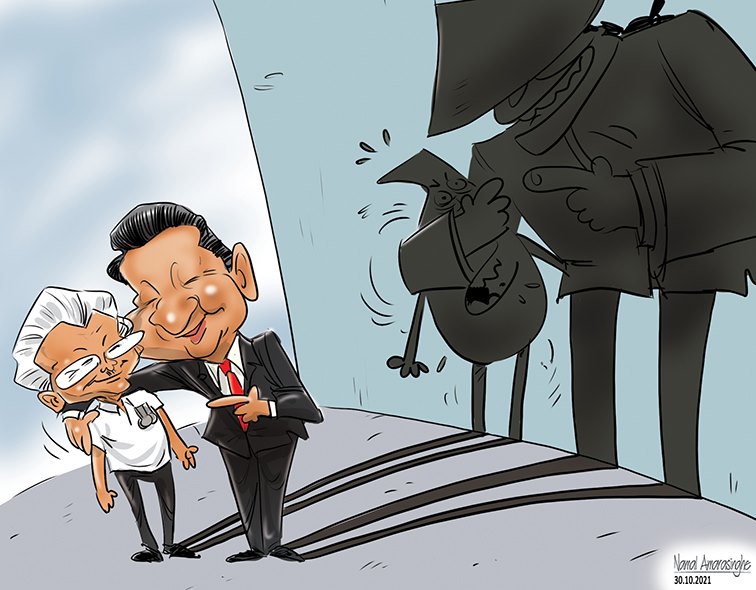
Prime Minister Mahinda Rajapaksa has expressed appreciation for China’s continued support when the Ambassador of China to Sri Lanka Qi Zhenhong called on the Prime Minister at Temple Trees on Wednesday (October 27).

He also thanked the Chinese Government for supporting Sri Lanka in the fight against the pandemic and the vaccine effort.

Meanwhile, Ambassador Zhenhong congratulated Sri Lanka on the success of the vaccine drive in the country and assured continued support. He also recalled the assistance provided by China in the way of medical supplies, vaccines and overall financial support from the beginning of the pandemic.

The Ambassador reiterated that the Bilateral Currency Swap Agreement between the Peoples Bank of China (PBOC) and the Central Bank of Sri Lanka (CBSL), amounting to CNY 10 billion would help reinforce global investor sentiment and enhance confidence in the Sri Lankan economy.

He noted that the year 2022 will be an important year in Sri Lanka—China bilateral relationship since it will mark the 65th anniversary of diplomatic relations between the two countries and the 70th anniversary of the signing of the Rubber-Rice Pact.

Further, Ambassador Zhenhong has conveyed early birthday greetings to Prime Minister Mahinda Rajapaksa from both the Chinese President and the Premier.

Posted in Uncategorized

Sri Lanka President calls coalition partner meet to head off storm over LNG deal

Sri Lanka President Gotabaya Rajapaksa has called a meeting of coalition partners on Thursday ahead of possible strikes over an unsolicited deal with a US-based firm that critics say will commit the country to buy billions of dollars of unwanted liquefied natural gas.

Ruling Sri Lanka Podujana Peramuna (SLPP) is facing an internal crisis as some coalition party members have said a preliminary agreement was inked with US-based New Fortress Energy by the Finance Ministry without their knowledge and being approved by the cabinet.

Trade unions and legislators including replaced power minister Dallas Alahapperuma has voiced concerns over the decision to sell an LNG plant to US firm New Fortress Energy, which critics say will commit state-run CEB to buy large volumes of LNG or pay compensation.

The nationalist SLPP party has maintained an anti-US stance before the election and promised the country not to sell any assets to foreigners.

The central bank on Tuesday said the first tranche of a $250 million US dollar deal is expected within the next two months.

The Presidential powwow comes as at least 11 coalition partners are due to meet on Friday to decide on a course of action which could involve strikes.

A Ceylon Electricity Board (CEB) trade union has issued an ultimatum to the government to abolish the New Fortress Energy before November 03 or face industrial action.

Convener of the CEB trade grouping Ranjan Jayalal told reporters that the trade union action will be similar to the 72-hour trade union action that was experienced in 1996 protesting the privatization of Lanka Electric Company, which led to blackouts.

It is not possible to cripple the power supply unless the powerful Ceylon Electricity Board Engineers Union joins the strike as engineers and power superintendents are capable of dealing with breakdowns on their own.

The CEBEU, which strikes rarely and is considered to be apolitical and last downed tools over two decades ago, has also voiced their opposition to the associated LNG take-or-pay deal – though not necessarily the sale of the stake in the power plant itself.

Amidst the LNG deal, a new engineers union was suddenly been formed this year with their retirement age being extended, which some observers say is a bid to reduce the clout of the engineers union.

Posted in Uncategorized

Thondaman points out lack of Tamil representation in One Country One Law Task Force

State Minister of Estate Housing and Community Infrastructure Jeevan Thondaman says he is disappointed with the One Country One Law Presidential Task Force as there is a lack of Tamil representation.

“Disappointed with the Presidential Task Force on ‘One country, One law’ concept as there is not one individual chosen for the Committee who would represent the interests of the vast Tamil population in Sri Lanka,” he expressed via a tweet.

The State Minister also said that the Sri Lanka Podujana Peramuna (SLPP) Party Vice President, along with the Prime Minister’s Coordinating Secretary have been requested to raise this concern at the Party Leaders meeting which is scheduled to take place this evening.

“I was invited to attend the Party Leaders’ meeting today, since I’m in Nuwara Eliya, I will not be able to attend. However I’ve asked our party Vice President and PM’s Coordinating sec to attend on my behalf and raise the aforementioned concern,” Thondaman further tweeted.

Posted in Uncategorized

Sri Lanka reports 22 Covid-19 deaths on Thursday, toll rises to 13,696

Sri Lanka Thursday reported 22 deaths due to COVID-19 after the figures were confirmed by the Director General of Health Services on Wednesday, October 27.

Among the deaths reported today, 09 are of males and 13 of females. The majority of deaths – 15 – are of elderly people in the 60 years and above age group. A female below 30 years of age also succumbed to the disease.

According to the data reported by the Government Information Department, the total deaths due to Covid-19 since the pandemic began last year has now risen to 13,696.

Posted in Uncategorized

Tamil MPs call for an end to ‘artificial alteration of Northern Province demography’

A collection of Tamil parliamentarians recently wrote a letter addressed to Chamal Rajapaksa, the Sri Lankan Internal Security Minister, asking him to put a stop to the “artificial alteration of the demographic pattern” of the Northern Province.

Referring to a putative attempt by the government to redraw the borders of the Vanni district, the letter stated,

“This attempt to change the provincial borders have ulterior motive(s) to alter the demographic pattern and systematically weaken Tamils political strength.”

The MPs also raised their disappointment that they were not consulted regarding the matter by the relevant officials. “Changing the provincial borders is a strategic decision of the country and must be consulted with relevant stakeholders including elected representatives. However it was not discussed at any point of time.”

The politicians who signed the letter include TELO Leader Selvam Adikalanathan,TNPF Leader Gajendrakumar Ponnambalam, TPA Leader Vikneswaran,PLOTE Leader Sitharthan and M.A. Sumanthiran, a senior leader of the Tamil National Alliance (TNA).

This development draws attention to the creeping state-sponsored colonisation of the Tamil homeland and the growth in Sinhalese settlements in the North-East.

Posted in Uncategorized

Submission filed with International Criminal Court to investigate Sri Lanka

A landmark legal submission has been filed with the International Criminal Court (ICC) calling on the Chief Prosecutor to “investigate and in due course arrest” several senior Sri Lankan officials for crimes against humanity.

The submission, filed by Global Rights Compliance LLP on behalf of 200 Tamil victims in the United Kingdom, is being made under Article 15 of the Rome Statute, which allows the prosecutor to initiate investigations “on the basis of information on crimes within the jurisdiction of the Court”.

It names several senior Sri Lankan officials, including current president Gotabaya Rajapaksa, defence secretary Kamal Gunaratne, former army commander Jagath Jayasuriya and others as individuals “responsible for crimes against humanity of deportation (through underlying acts of abductions, unlawful detention and torture), deprivation of right to return and persecution”.

“The severity of the persecution they have faced left the Victims with no option but to flee Sri Lanka and seek refuge in the UK,” it continues.

“Subsequently, the Victims were and continue to be deprived of their right to return to their homes as a result of the threats, torture and persecutory policies of the [Sri Lanka] security forces led by Gotabaya Rajapaksa and Kamal Gunaratne… The Victims continue to suffer from the harassment of and threats to their loved ones who remain in Sri Lanka, as well as the ongoing surveillance, harassment and persecution directed towards themselves in the UK.”

That these crimes have been partly committed within the territory of the UK, which is a party to the ICC, allows Court to exercise territorial jurisdiction, states the submission.

The move marks the first time that such a submission has been made to the ICC, with lawyers also filing a similar submission has been made to the British Metropolitan Police’s War Crimes Team.

The Myanmar option

A referral to the ICC has been a core demand of Tamil victim-survivors for years, after the failure of the Sri Lankan state and other international justice initiatives in holding perpetrators for mass atrocities to account. However, the ICC has only opened investigations into a handful of cases around the world and with Sri Lanka not a party to the Rome Statute, it seemed difficult to envisage a path to have the court investigate crimes that have taken place on the island.

But moves in recent years to open an investigation into Myanmar, which also has not signed up to the ICC, shed light on another potential avenue.

Former ICC Chief Prosecutor Fatou Bensouda said that since the end of 2017, her office had “received a number of communications and reports concerning crimes allegedly committed against the Rohingya population in Myanmar and their deportation to Bangladesh”.

“While Myanmar is not a State Party to the ICC, Bangladesh is,” said Bensouda. “The Court may therefore exercise jurisdiction over conduct to the extent it partly occurred on the territory of Bangladesh”. Following a request from the Prosecutor in July 2019, the ICC subsequently opened an “investigation into the situation in Bangladesh/Myanmar” later that year.

Lead submissions on behalf of the Rohingya Muslims in respect of the Bangladesh/ Myanmar case were done by Global Rights Compliance, and it is that same principle that the firm says applies to the case of Sri Lanka. They submit that the crimes of deportation, deprivation of the right to return and persecution have all partly taken place in the UK, “bringing it within the territorial jurisdiction of the Court”.

Their submission comes after a decision from a British tribunal earlier this year found that Tamils who engage in a range of political activities in the United Kingdom may continue to face “a real risk of ill-treatment or harm” if deported to Sri Lanka, in a significant ruling that clarified and expanded those who may face persecution on the island.

The submission states there are three crimes in particular that it wants the Court to consider – deportation (through underlying acts of abductions, unlawful detention and torture), deprivation of right to return and persecution.

“Due to the abduction, unlawful detention and torture they have been subjected to at the hands of the GoSL authorities and to avoid being arrested again and put through the same, if not worse, treatment, the Victims decided to flee Sri Lanka,” states the submission. “The Victims had no genuine choice but to leave Sri Lanka as a result of the conduct of the GoSL authorities and the coercive environment that such conduct brought about.”

“The mental harm they suffered due to their abduction and torture in Sri Lanka has been exacerbated by their inability to return to their homes, families and communities, as well as the continuing threats against their family members,” it continues.

“The persecution of the Victims by the Sri Lankan authorities was carried through acts that themselves constitute crimes against humanity under Article 7 of the Statute, including enforced disappearance (i.e. abduction), imprisonment, torture and deprivation of right of return.”

More than 12 years have passed since Rajapaksa’s tenure as defence secretary, and he now sits as Sri Lanka’s head of state. No one has been held accountable for the military offensive that he oversaw, which results in hospitals shelled, widespread sexual violence and tens of thousands of Tamil civilians dead or disappeared.

To this day, Tamils around the world, in London and in the Tamil homeland are searching for answers and for justice.

“Where are these babies [who] surrendered with their parents?” read a banner held by Tamil families last month, as they marked another year without their loved ones.

In the years since, several resolutions have been passed at the UN Human Rights Council, but none have led to any tangible outcomes.

“The criminal acts of the GoSL authorities have destroyed our lives,” said the victims in a joint statement.

“We all suffer from various mental illnesses (including post-traumatic stress disorder and depression) caused by our suffering at the hands of the GoSL authorities, the threats and harassment that our families are subjected to and being parted from our homelands and loved ones. The uncertainty that we had to go through during our respective asylum application processes in the United Kingdom, with the possibility of being handed over to our torturers in Sri Lanka, also took its toll on our mental health.”

“We live as shells of our former selves, unable to cope with the mental suffering that the GoSL has inflicted and continue to inflict on us every day.”

“This new initiative shows that there are some viable options to get international justice outside multilateral bodies such as UN Human Rights Council,” said one lawyer who worked closely on the submission. “Tamil victims around the world have been working for years towards justice and are determined that one day, it will be served.”

US Congress Human Rights Commission discusses Sri Lanka’s PTA

The US Congress Human Rights Commission discussed the Prevention of Terrorism Act (PTA) and its impact on human rights in Sri Lanka.

Former member of the Sri Lanka Human Rights Commission, Ambika Satkunanathan, was invited to brief the members on and participants on Sri Lanka.

The Tom Lantos Human Rights Commission had a hearing on counter-terrorism measures and their impact on human rights.

Speaking on Sri Lanka, Ambika Satkunanathan said that historically, the PTA has been disproportionately used against Tamils, and following the Easter terror attacks in April 2019, against Muslims as well.

She said the PTA allows for arbitrary arrest and detention for up to 18 months without being produced before a judge.

“I use the term ‘arbitrary’ because arrests are not based on evidence unearthed during an investigation or even reasonable suspicion. Persons who have come into contact with a person accused of an offence under the PTA, during the course of their employment, such as a person who processed the accused’s money transfer at a Western Union and a salesperson at a dealership who sold the accused a motorbike have been arrested under the law. Following the Easter terror attacks, persons who had books in Arabic, or Arabic songs praising Allah were arrested,” she said.

She also noted that due process is almost always violated during arrests under the PTA and that the PTA also allows the admission of a confession made to a Police officer above the rank of an Assistant Superintendent of Police as evidence during the trial.

“As a result, persons are tortured to obtain confessions. The burden of proving the confession was obtained under duress in upon the accused person,” she said.

Satkunanathan told the hearing that according to the Human Rights Commission’s study of prisons, in the study sample, 84% of men detained under the PTA stated they suffered torture following arrest, 90% of those who were subjected to torture said they were made to sign confessions after torture and 95% of male respondents stated that although the document which they were made to sign was written in Sinhala, a language they did not know, it was not explained to them.

The Commission noted a pattern of arrested persons being held at unauthorized places of detention and tortured, and being moved to authorized places of detention only after the confession was extracted. Hence, many indictments are based solely on such confessions with no other evidence presented.

She also noted that the PTA allows the Minister of Defence to issue Restriction Orders for up to 18 months. Restriction Orders can be used to prevent people from engaging in political activities, speaking at events, or advising an organisation. Such orders allow civic rights to be curtailed arbitrarily by the Minister with no due process, transparency or accountability.

The PTA also states that persons in judicial custody can be taken out of judicial custody by law enforcement officers to be interrogated at any other place. Further, it permits the Secretary to the Ministry of Defence to determine a person’s place of detention even after the person is sent to judicial custody. This removes a person from the protection of judicial custody and empowers the Secretary to override a judicial order. The Human Rights Commission has recorded testimonies of persons who were subjected to severe torture when removed from judicial custody for interrogation.

Satkunanathan said the PTA is also used as a weapon to intimidate, threaten and stifle dissent, media freedom and civil society activities, especially in the Tamil majority North as well as the East of the country, including in the guise of countering terrorism financing.

Full statement:

Tom Lantos Human Rights Commission Hearing

Counter-terrorism and Human Rights: Striking a Balance

Statement by Ambika Satkunanathan

Good morning, Co-Chair McGovern, Co-Chair Smith and Honourable members of the Commission. Thank you for inviting me to testify at this hearing. In my testimony I will illustrate the devastating impact the Prevention of Terrorism Act (PTA) has had on human rights in Sri Lanka.

Historically, the PTA has been disproportionately used against Tamils, and following the Easter terror attacks in April 2019, against Muslims as well. The PTA allows for arbitrary arrest and detention for up to 18 months without being produced before a judge. I use the term ‘arbitrary’ because arrests are not based on evidence unearthed during an investigation or even reasonable suspicion. Persons who have come into contact with a person accused of an offence under the PTA, during the course of their employment, such as a person who processed the accused’s money transfer at a Western Union and a salesperson at a dealership who sold the accused a motorbike have been arrested under the law. Following the Easter terror attacks, persons who had books in Arabic, or Arabic songs praising Allah were arrested.

Due process is almost always violated during arrests under the PTA. As recently as 28th September 2021 when a person was arrested in Trincomalee in the Eastern Province, officers didn’t identify themselves, did not inform him of the reason for the arrest, did not inform the family of the place of detention nor issue an arrest receipt as proof of arrest.

The PTA allows the admission of a confession made to a police officer above the rank of an Assistant Superintendent of Police as evidence during the trial. As a result, persons are tortured to obtain confessions. The burden of proving the confession was obtained under duress in upon the accused person. According to the Human Rights Commission’s study of prisons, in the study sample, 84% of men detained under the PTA stated they suffered torture following arrest. 90% of those who were subjected to torture said they were made to sign confessions after torture. 95% of male respondents stated that although the document which they were made to sign was written in Sinhala, a language they did not know, it was not explained to them. The Commission noted a pattern of arrested persons being held at unauthorized places of detention and tortured, and being moved to authorized places of detention only after the confession was extracted. Hence, many indictments are based solely on such confessions with no other evidence presented.

The PTA allows the Minister of Defence to issue Restriction Orders for up to 18 months. Restriction Orders can be used to prevent people from engaging in political activities, speaking at events, or advising an organisation. Such orders allow civic rights to be curtailed arbitrarily by the Minister with no due process, transparency or accountability.

The PTA also states that persons in judicial custody can be taken out of judicial custody by law enforcement officers to be interrogated at any other place. Further, it permits the Secretary to the Ministry of Defence to determine a person’s place of detention even after the person is sent to judicial custody. This removes a person from the protection of judicial custody and empowers the Secretary to override a judicial order. The Human Rights Commission has recorded testimonies of persons who were subjected to severe torture when removed from judicial custody for interrogation.

In March 2021, new Regulations titled “Deradicalisation from Holding Violent Extremist Religious Ideology’ were issued under the PTA. These regulations are similar to Regulations issued in 2011 that allowed for the rehabilitation of alleged former LTTE members, and resulted in gross human rights violations. In this instance they appear to target the Muslim community. The Regulations create a new predictive offence with a broad and vague definition that enables arrest and detention contrary to the procedure set out by law and permit investigations to commence after the arrest, which deprives a person of being informed of the reason for the arrest. They violate a person’s right to a fair trial because they deem a person guilty and require the person to be subject to rehabilitation for up to two years without a trial, solely on the basis of the recommendation of the Attorney-General. Moreover, the regulations can prevent a person from accessing legal representation, perpetuate ethno-religious stereotypes and encourage racial profiling.

The PTA is also used as a weapon to intimidate, threaten and stifle dissent, media freedom and civil society activities, especially in the Tamil majority North as well as the East of the country, including in the guise of countering terrorism financing. Victims, dissenters, human rights defenders, and particularly those who call for accountability or international intervention are labelled as traitors and terrorists. In February 2021 those protesting in Jaffna in the Northern Province demanding the release of persons detained under the PTA were threatened with arrest by intelligence officers, while an activist in the Eastern province received phone calls from security officials instructing him to cancel a similar campaign. Two Tamil journalists, one from the north and one from the east were instructed to appear at the Terrorism Investigation Department on 26th October and 8th November respectively for inquiries. Even families of the disappeared campaigning to find out the truth about their disappeared loved ones have been summoned for such inquiries.

There are two critical interventions that can be made. Firstly, we urge the international community and the United States to adopt a principled approach in their engagement with Sri Lanka based on the principle of “do no harm”. This would require, in particular, ensuring that their financial support, such as grants, do not enable the repressive policies of the government, even inadvertently. This applies to the United Nations, and to agencies such as UNODC in particular.

The second critical intervention is to support civil society and human rights defenders, with particular attention to those in the North and East, who are subject to surveillance, intimidation and threats. This would entail not only supporting their work through grant but also speaking out when they are being persecuted or action is being taken to undermine civic space, such as through repressive legislation. It is also important that donors and the United Nations, especially UNODC, listen not only to the government but also to civil society and human rights defenders when crafting programmes, such as on violent extremism, a nebulous concept that has no legal definition and is abused by govts, to ensure they do not undermine human rights or enable government targeting of minority communities. Thank you

Parliamentary Council approval to appoint former NP Governor to the Election Commission as a member

The Parliamentary Council has approved the appointments of Sundaram Arumainayagam as a member to the Public Service Commission and Mrs. P. S. M. Charles as a member to the Election Commission.

The Secretary General of Parliament Mr. Dhammika Dassanayake stated that the Parliamentary Council which met on the 25th under the chairmanship of Mahinda Yapa Abeywardena, Speaker of Parliament agreed the proposal made by President Gotabaya Rajapaksa to appoint Mr. Sundaram Arumainayagam as a member to the Public Service Commission given the demise of Mr. V. Sivagnanasothi.

He has previously served as the Secretary to the State Ministry of Foreign Employment Promotions & Market Diversification and the State Ministry of Investment Promotion.

The Parliamentary Council has also agreed to the proposal made by President Rajapaksa to appoint Mrs. P. S. M. Charles to fill the vacancy created given the resignation of Jeevan Thyagarajah from the Elections Commission.

She has previously served as the Governor of the Northern Province. She also previously served as the Secretary to the Ministry of Health and Indigenous Medicine and the Director General of Customs.

Prime Minister Mahinda Rajapaksa, Minister Douglas Devananda and Member of Parliament Kabir Hashim were also present at this meeting held online.

Posted in Uncategorized