India’s Adani Group signs BOT deal to develop WCT of Colombo Port

India’s Adani Group has signed a Build-Operate-Transfer (BOT) agreement with its local partner John Keells Holding s (JKH) and Sri Lanka Ports Authority (SLPA), to jointly develop the West Container Terminal (WCT) of the Colombo Port.

The agreement will be an investment exceeding USD 700 million.

In March, the WCT of the Colombo Port was approved to be developed as a Public-Private Limited Company in partnership with India’s Adani Ports and Special Economic Zone Limited (APSEZ Consortium) along with its local representative John Keells Holding PLC (APSEZ Consortium), and SLPA.

The terminal is to be developed on a 35-year Build, Operate, and Transfer (BOT) basis with the aforementioned stakeholders.

The port terminal will have a quay length of 1,400 meters and a depth of 20 meters, making it a prime trans-shipment cargo destination to handle ultra-large container carriers, according to the filing from Adani Ports.

It will be the first-ever Indian port operator in Sri Lanka and hold 51% in the joint venture.

Parliament to meet five days next week

Leaders of political parties representing Parliament has decided to hold sittings for five days next week, Chief Government Whip Johnston Fernando said today.

Parliament sessions will be held on October 4, 5, 6, 7 and 8 next week after the lockdown was lifted.

“Monday October 4 will be confined to oral questions raised by the MPs to be answered by the Ministers,” Minister Fernando said.

Meanwhile, Serjeant -at -Arms Narendra Fernandso told Daily Mirror that the House will take up some important legislations including the Petroleum Resources Amendment Bill, Registration of electors /amendment Bill , EPF Amendment Bill next week while a full day’s debate on Mid-year Fiscal Situation has also been lined up for the week.

Posted in Uncategorized

EPZ workers ask EU to ensure labour rights monitoring

The Stand Up Movement Lanka organisation yesterday (30 September) urged that a proper monitoring system be implemented in order to ensure the rights of labourers in Sri Lanka, if the European Union’s (EU) Generalised Scheme of Preferences Plus (GSP+) trade concessions are going to be granted to Sri Lanka next year.

“Governments have gained these concessions by hiding the labour and human rights violations that are taking place in the country. They have always painted the wrong picture, especially about the livelihoods and working conditions of the employees in the Export Processing Zones (EPZs). If the GSP+ concession is going to be given to Sri Lanka, then there must be a proper monitoring system and programme to ensure that labour rights are protected. If this is not done, this country is not suitable to receive GSP+,” said Movement’s Convenor Ashila Dandeniya at a press conference held yesterday.

She alleged that although the service of employees in the EPZs was deemed essential during the Covid-19 pandemic, the Labour Department was closed, which made it difficult for workers to access the necessary services pertaining to their labour rights.

“GSP+ is given after checking the progress of human and labour rights in the country. If the country does not protect the labour rights of the labourers who are working to supply the market that gives us GSP+, then, on behalf of whom are we asking for GSP+? If labour rights are not protected, then the GSP+ benefits are only going to one group of people amongst the higher economic classes,” noted Dandeniya.

The organisation has also written to the EU earlier this week in this regard. In its letter, the organisation noted that about 50,000 workers in the EPZs have, to date, contracted the coronavirus due to the failure of factory owners to take measures to prevent the spread of Covid-19 in the factories. It further claimed that factory owners are neglecting their responsibilities concerning isolating workers who test positive for the virus; instead opting to send them to their hostels or boarding rooms. Thus, adequate quarantine facilities are not being provided for them.

The GSP+ trade concessions Monitoring Mission arrived in Sri Lanka on 27 September and is due to remain in the country till 5 October.

Posted in Uncategorized

German Military Attachés on a working visit to Colombo

The two German military officers responsible for Sri Lanka, Capt Gerald Koch and LtCol Jan Cihar, will be in the country from October 3rd – 8th, 2021, a statement from the German embassy said.

After more than 18 months of pandemic-related travel restrictions, physical contact with the Ministry of Defense of Sri Lanka and other officials is finally being resumed.

One of the main purposes of this visit is to prepare the port visit of the German frigate BAYERN, planned from January 9th to 13th 2022. Underscoring the security policy component of the German policy guidelines, the German frigate BAYERN has started its half-year long journey to Asia. The frigate has left Germany in early August 2021 and will return at the end of February 2022.

In addition, it will serve as an opportunity to maintain and strengthen contacts with the Sri Lankan military in order to discuss priorities for cooperation. With the frigate BAYERN arriving in Colombo, it will be the first timely occasion to carry out joint exercises at sea with the Sri Lankan Navy at the beginning of January 2022, e.g. “Search and Rescue Operations” and many more.

To conclude, the visit follows the intention of completing Capt Koch’s official accreditation as Defence Attaché in Sri Lanka. The two countries, Germany and Sri Lanka, are thus highlighting the significance of further enhancing their long-term bilateral relations as well as fruitful cooperation in the military sector.

Posted in Uncategorized

Tamil PTA prisoners file FR against Ratwatte

A group of eight Tamil prisoners filed a fundamental rights (FR) petition at the Supreme Court (SC) yesterday (30 September), requesting for action to be taken against the alleged serious offences committed at the Prison Complex on 12 September by former Prison Management and Prisoners Rehabilitation State Minister Lohan Ratwatte.

The prisoners are detained at the Anuradhapura Prison Complex under the Prevention of Terrorism (Temporary Provisions) Act No. 48 of 1979 as amended (PTA).

“When I visited the 10 prisoners who faced this incident on 25 September, the requirement that action be taken against the incident was clear. A total of eight of the 10 prisoners have thus come forward to file a FR in the SC,” Tamil National Alliance (TNA) Parliamentarian President’s Counsel (PC) M.A. Sumanthiran told The Morning yesterday.

The petition is SC FR 297/2021. The petitioners are, namely, Poopalasingham Sooriyapalan, Mathiyarasan Sulakshan, Ganesan Tharshan, Kanthappu Kajenthiran, Rasathurai Thiruvarul, Ganesamurthi Sithurshan, Meiyamutthu Suthaharan, and T. Kantharuban. Sumanthiran PC and Attorney-At-Law Kesavan Sajanthan will appear on their behalf. The respondents are Ratwatte, Superintendent of the Anuradhapura Prison M.H.R. Ajith, Prisons Commissioner General (CG) H.M. Thushara N. Upuldeniya, Justice Minister M.U.M. Ali Sabry PC, and Attorney General (AG) Sanjay Rajaratnam PC.

They have further sought a declaration to be made that their FR, guaranteed under Articles 11 (freedom from torture, cruel, inhuman, degrading treatment, or punishment), 12(1) (right to equality and equal protection of the law), and 12(2) (freedom from discrimination and the right to non-discrimination) of the Constitution, have been infringed.
The petitioners have further prayed for interim orders for their transfer to prisons in the Northern Province, preferably the Jaffna Prison, and for them to be enlarged on bail.

On 12 September, an inebriated and pistol brandishing Ratwatte had flown in a helicopter to the Anuradhapura Prison where he had summoned a group of Tamil political prisoners detained under the PTA (reports state between eight to 16 such prisoners), and ordered them to kneel, and had proceeded to threaten two of them (Sulakshan – prisoner number 141 whose case is being heard at the Vavuniya High Court – and Tharshan), at point blank range, telling them to accept their offence/s and to submit to authority.

Prior to this incident, on 6 September, Ratwatte had, together with a group of friends, also under the influence of liquor, forcibly entered the Welikada Prison premises after 6 p.m. and proceeded to view the gallows. As per Section 39 of the Prisons Ordinance, a MP who wishes to pay a visit to a prison can only do so between the hours of 5.30 a.m. and 5.30 p.m.

The Prisons Department, the Human Rights Commission of Sri Lanka (HRCSL), and the Police Criminal Investigations Department (CID) have since commenced investigations into incidents, whilst Ali Sabry PC appointed High Court Judge (Retd.) Kusala Sarojani Weerawardena to independently inquire into the incident.

Ratwatte resigned from his post of State Minister of Prison Management and Prisoners’ Rehabilitation on 15 September and he claimed to have, as per a Tweet by the President’s Spokesman, accepted responsibility for the incidents at the Welikada and Anuradhapura Prisons. President Gotabaya Rajapaksa, the same Tweet mentioned, had accepted the said resignation. However, in subsequent statements made to the media, Ratwatte had denied all allegations against him.

Posted in Uncategorized

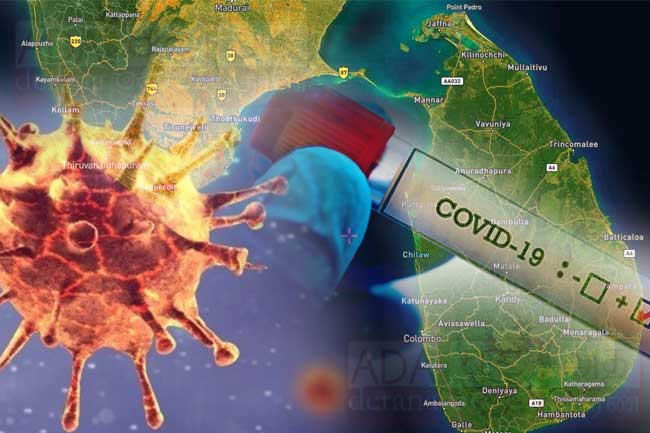
Sri Lanka reports 59 Covid-19 deaths on Thursday, toll rises to 12,906

Sri Lanka Thursday reported 59 deaths due to COVID-19 after the figures were confirmed by the Director General of Health Services on Wednesday, September 29.

Among the deaths reported today, 28 are of males and 31 of females. The majority of deaths – 47- are of elderly people in the 60 years and above age group. One female below the age of 30 also succumbed to the disease.

According to the data reported by the Government Information Department, the total deaths due to Covid-19 since the pandemic began last year has now risen to 12,906.

Posted in Uncategorized

Sri Lanka likely to lose GSP+ by April ’22 if govt doesn’t take drastic steps: TNA MP

Sri Lanka is at risk of losing access to a European trade concession worth over 500 million US dollars by April 2022 if the government does not take drastic measures to address human rights concerns, an opposition lawmaker said.

Tamil National Alliance (TNA) MP M A Sumanthiran told EconomyNext on Wednesday (29) that it is his belief that the European parliament has already decided to withdraw access to the Generalised Scheme of Preferences Plus (GSP+) concession as per a resolution passed in June this year.

“Unless the government makes some dramatic changes to address human rights issues, the country is likely to lose GSP+ in April next year,” he said.

The European parliament adopted a resolution on June 10 calling for the repeal of Sri Lanka’s Prevention of Terrorism Act (PTA) and inviting the European Union (EU) Commission to consider temporarily withdrawing access to GSP+.

Related: EU parliament adopts resolution on Sri Lanka; wants PTA repealed, GSP+ withdrawn

Meanwhile, a five-member European Union (EU) delegation arrived in Sri Lanka on Monday (27) to review the continuation of trade concession amid renewed concerns about the country’s human rights situation.

The EU is the second largest export destination for Sri Lankan products, and GSP+ has helped the country’s exporters to consolidate their position.

Related: EU to review Sri Lanka’s access to GSP+ trade concession amid rights abuse concerns

Sampathan met the EU delegation with TNA leader R Sampanthan on Tuesday. The MP told reporters that the discussion had focused on the PTA.

“We said [at the discussion] that this Act must be repealed, as it is very unjust. It is being used again, so it must be abolished. We also said people detained under the PTA, whether recently or long ago, must be released. We also talked about militarisation, and said that the situation in the country is not ideal for good governance,” he said.

“It is not correct to take a decision against us, but the government has been acting against the people. It is only with this kind of pressure that the government can change its ways and the people are allowed to live freely,” he added.

Posted in Uncategorized

Sri Lanka halts import of Chinese organic fertilizer found to contain harmful bacteria

Sri Lanka has halted the importation of a China-manufactured organic fertilizer after laboratory tests proved it contained harmful bacteria for a second time, an official said.

Ajantha De Silva, Director General of Agriculture at the Department of Agricutlure said in an with the privately owned NewsFirst network that the fertilizer samples collected last Friday (24) proved to have the harmful bacteria known as Erwinia.

On September 17, Minister of Agriculture Mahindananda Aluthgamage said the samples that were tested earlier were imported unofficially and therefore samples that only officially obtained samples will be tested for the second time.

“Earlier, nine samples were obtained unofficially and out of those, two samples were confirmed to have this Erwina bacteria in them”, Aluthgamage told reporters.

“Since it was obtained unofficially, our ministry had doubts about the results we got because if anyone wanted they could have injected the bacteria into those samples,” he said.

Farmers in Sri Lanka are banned from using chemical fertilizer and insecticides, amid import controls.

Since the release of the results, the agriculture ministry has suspended the 63 million US dollar tender that was awarded to Qingdao Seawin Biotech Group, a China based company to bring in organic fertilizer.

The opposition National People’s Power (NPP) raised concern over the matter in parliament on September 21.

NPP MP Vijitha Herath sought explanation from the government on what fertilizer was made of, warning that municipal waste fertilizer could contain harmful residue.

Herath said a sample was collected, supposedly tested and was found to contain Erwinia, though the government had said organic fertilizer was supposed to be sanitized or sterilized.

Some species of Erwinia are plant pathogens which destroy crops.

Media reports showed that with no fertilizers available to them, farmers are reluctant to start planting seeds for the upcoming ‘Maha’ season.

No further decisions have been announced so far by the ministry.

Critics of the fertilizer ban have said farming is supposed to be done under a globally accepted system which specifying safe levels of chemical residues which are updated from time to time and the sudden ban is creating an economic crisis.

Sri Lanka’s tea farmers are saying crops will fall sharply as time goes on due to the lack of specific chemical fertilizers, which are needed at specific times of the growth cycle and other sectors have also expressed similar fears.

Farmers have also periodically protested the lack of chemical fertilizer.

Rising rice rips Rajapaksa regime

The Rajapaksa Government has been forced to back out from imposing a Maximum Retail Price (MRP) on the country’s staple food, as large-scale rice mill owners jacked up prices by between 17% and 40%.

The Government yesterday blamed the rice mafia and traders for creating an artificial shortage leading to the abandoning of the MRP. It was only last week that the Parliament unanimously voted tougher legislation and higher fines to punish unscrupulous traders and protect consumer interest. Previously, the MRP set for a kilo of Kakulu was Rs. 95, Nadu at Rs. 98, Samba at Rs. 103, and Rs. 125.

Following the cancellation of the Gazette, large-scale rice millers yesterday announced the new retail price, which saw the price of Samba increasing by 36% or Rs. 37 per kilo to Rs. 140, and Keeri Samba by Rs. 40 or 32% to Rs. 165. The poor man’s Nadu will cost 17% or Rs. 17 more at Rs. 115 per kilo.

“These prices announced are for the highest quality of rice and there are products that are below these prices as well,” Araliya Group Chairman Dudley Sirisena said at a media conference yesterday. However, in the market, the prices of Samba are much higher.

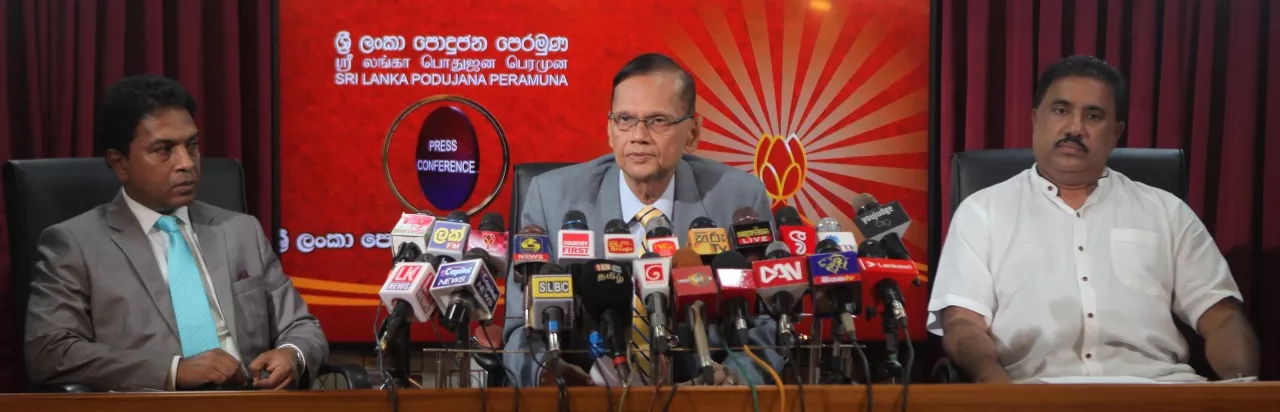
Cooperative Services, Marketing Development and Consumer Protection State Minister Lasantha Alagiyawanna said the Government rejects the prices announced by the Rice Mill Owners ‘Association as “not justifiable.”

Earlier in the day speaking at the weekly post-Cabinet meeting media briefing, Alagiyawanne refuted allegations that the vicious market conditions were created by the Government’s drastic measures – including MRP.

“Changes are bound to happen in an open economy, but these conditions were not created by the Government. Although 80-90% engage in fair trade, balance is involved in fraudulent trade. As a result, the Government has to intervene from time to time. The Gazette notifications are issued to protect the consumer, but it is difficult to maintain such controls for as long as a year or two in an open economy,” Alagiyawanna said in response to queries from journalists.

He also said if any party tries to increase prices unjustifiably, the Government with the Consumer Affairs Authority will intervene responsibly in the market to rectify the situation.

In a bid to counter possible shortages and maintain buffer stock, the Cabinet of Ministers at its meeting on Monday decided to import another 100,000 tons of rice from India and Thailand under a Government-to-Government (G2G) agreement as per a proposal by Trade Minister Bandula Gunawardena.

In August, the Government decided to import 6,000 tons of rice through the Sri Lanka-Pakistan Free Trade Agreement (FTA) as a short-term measure to address the shortage of rice in the market. Previously in June, the Cabinet decided to import 100,000 tons of Samba under the G2G deal.

State Minister Alagiyawanna assured that the importation of rice would not impact paddy prices in the upcoming Maha season and that the Government would intervene if needed.

“Paddy prices will not go down. If the paddy mill owners try to buy paddy at a lower price, then the Paddy Marketing Board will purchase stocks at the Government guaranteed price,” he said.

However, Sirisena at a separate media briefing, said that the large-scale mill owners were willing to purchase a kilo of Nadu at Rs. 62.50, Samba at Rs. 70 and Keeri Samba at Rs. 80.

The prices quoted by the private mill owners are much higher than the guaranteed price for paddy kilo, which is at Rs. 50 (Nadu), Rs.52 (Samba) and Rs. 55 (Keeri Samba). Previous guaranteed prices ranged between Rs. 30 and Rs. 32 per kilo.

The President’s Media Centre (PMC) in mid-September said that despite the guaranteed price for paddy, the market prices were much higher, with Nadu rice sold at Rs. 125 a kilo, Samba rice at Rs. 150 and Keeri Samba at Rs. 225, leaving consumers stranded. This prompted the Government under the Public Security Ordinance to impose an MRP, which however was abruptly abandoned yesterday.

Soon after the MRP was enforced, the PMC said large-scale rice mill owners reduced their daily rice production and distribution by more than 50%. During the raids carried out by the Commissioner-General of Essential Services on 8 September alone, 807,375 kilograms of rice were obtained from the rice warehouses owned by the large-scale mill owners at the Government controlled price and handed over to Sathosa.

The annual rice consumption requirement is around 2.4 million tons and the paddy harvest for the 2020/2021 Maha season and the 2021 Yala season is around 4.8 million. The collective production of rice is about 3.2 million tons.

“Despite the allegations made by various parties, as responsible businessmen, we will strengthen the Government to tackle the rice shortage in the country without further burdening the consumers or the farmers,” Sirisena said.

He said they will issue a sticker mentioning the prices and no one should pay more than the said amount.

“The farmers did not release the entire harvest to the market, we also received only a small quantity. Around 60-70% of the harvests are still with the farmers,” Sirisena said.

They hope that the farmers will gradually release the stockpiles as the mill owners have now set high rates to purchase paddy.

Sirisena also defended the Government decision to import 100,000 tons of rice, noting that it was the responsibility to maintain sufficient buffer stocks.

Lanka Rice Producers Association (LRPA) insisted the Government re-impose the MRP, warning that rice prices will skyrocket in the immediate future.

“Rice can be priced less than what is quoted by the large-scale mill owners,” LRPA President Suraj Jayawickrama said at a media briefing yesterday.

They proposed a MRP for a kilo of Kakulu at Rs. 105, Nadu at Rs. 110, Samba at Rs. 160 and Keeri Samba at Rs. 165.

LRPA claimed that the Government was responsible for the price crisis created for rice at present.

As per the association it costs around $ 40 million to import 100,000 tons of rice.

“Do not waste the balance foreign reserves to import rice which can be easily produced in the country,” they appealed to the Government.

They called on the Trade Minister to refer to the rice importers list of 2017, claiming that leading large-scale mill owners were also among them. “It is like handing over chickens to a fox,” LRPA quipped.

All Ceylon Farmers Federation National Organiser Namal Karunaratna claimed the Government decisions have further strengthened the paddy mill owners and traders, by lifting the MRP on rice.

He said the Government will not be able to stop prices of rice increases in the next few days, adding that a kilo of Nadu rice will be hiked to Rs.125-130.

“The mill owners are quite aware of the dire state the Government is in and now no one will be able to stop them from increasing the prices. The move of the Government has once again created another opportunity for them to burden the consumers and farmers,” Karunaratna charged.

UK raises concerns over certain high profile Sri Lankan cases

The concerns were raised during talks between Foreign Minister Prof. G.L. Peiris and the High Commissioner of the United Kingdom to Sri Lanka Sarah Hulton.

During the engagement, Minister Peiris and the UK Envoy discussed several key issues pertaining to the close bilateral relationship between the two countries.

The Sri Lankan Foreign Minister referred to the recent cordial engagement with British Minister of State for South Asia, United Nations and the Commonwealth Lord Tariq Ahmad on the side-lines of the 76th UN General Assembly in New York, following up on previous communication with the UK’s Minister of State.

This dialogue, the Minister stated, is important in the context of Lord Ahmad’s initiatives to engage the Sri Lankan diaspora in the UK and to generate a more realistic understanding of contemporary developments in Sri Lanka. This is expected to be further enhanced by a proposed visit by the UK State Minister later in 2021.

Several key areas impacting on future Sri Lanka – UK bilateral relations were discussed, including the recent initiatives to foster and develop domestic reconciliation measures taken by the Sri Lankan Government. These included the work of the institutions dealing with national unity and reconciliation, missing persons, accountability and reparations. High Commissioner Hulton also raised concerns relating to certain high profile Sri Lankan cases that are of current interest and focus. Some of these issues were adverted to in the context of Sri Lanka’s ongoing engagement with the UN Human Rights Council.

Minister Peiris and High Commissioner Hulton also discussed enhanced trade and investment opportunities for UK businesses in Sri Lanka – especially new opportunities in the Port City development. Widening intra-Commonwealth trade and economic cooperation and related issues were also referred to.

Going forward, Sri Lanka’s positive commitments in support of global environmental initiatives in the larger context of participation in the upcoming COP26 Summit in the UK and its ongoing efforts in this sphere were also discussed.

Minister Peiris expressed his appreciation of the close, long-standing, historically significant and enduring relationship between the two countries and said he expected the fruitful and productive partnership to continue.

Posted in Uncategorized