Banks increasing rates for overseas online payments ?

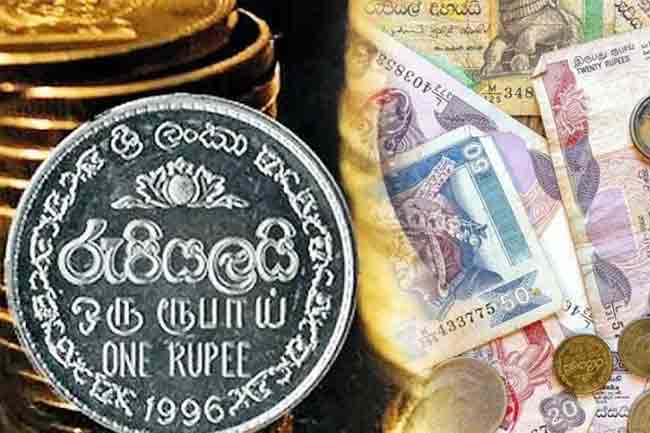
Several commercial banks in Sri Lanka have increased the RATE OF EXCHANGE applied at the time of purchase when carrying out international payments using debit or credit cards.

This move, as experts say, will have an impact on the e-commerce industry as well as the overall economy of the country.

The amount added to the rate of exchange at the time of billing stood at 2.5%.

According to information made available by several commercial banks operating in the country, this value has now been increased to 7% on overseas transactions.

However, the Central Bank of Sri Lanka says that they are only maintaining an 18% interest rate cap per annum and that this move by commercial banks is made individually by those respective banks.

T M J Y P Fernando, the Deputy Governor of the Central Bank said beyon the 18% interest cap on credit cards, there are no charges by the central bank or any limits.

“I think we need to look at this and we will have to kind of identified respective banks and see what this is,” he said.

HOW WILL THIS IMPACT THE E-COMMERCE INDUSTRY?

Sri Lanka Entrepreneur & Founder of ‘Kapruka’, Dulith Herath speaking to News 1st said this move will have a direct impact on those making direct purchases from platforms like Ali Express, E-Bay and Amazon.

Posted in Uncategorized

Joint Letter on Police Scotland Training for Sri Lankan Police -HRW

Dear Justice Secretary Brown,

We are writing on behalf of four human rights organisations for clarity about the current status of Police Scotland’s longstanding arrangement to train the Sri Lankan police.

The situation in Sri Lanka has deteriorated alarmingly since the election of President Gotabaya Rajapaksa in 2019. Abuses implicating the Sri Lankan police in past months include torture and other ill-treatment and extrajudicial killings. These incidents were described in a recent statement by Human Rights Watch, but are only the latest in a catalogue of abuses that have been documented for many years by our organizations and others, the media, and the United Nations.[1] In her report to the UN Human Rights Council in January, UN High Commissioner for Human Rights Michelle Bachelet described “the persistence of longstanding and endemic patterns of custodial deaths, use of torture and other ill-treatment, and extrajudicial killings by law enforcement officials with impunity.”[2]

A report in The Times on August 13, 2021, suggested that Police Scotland’s training programme has been “paused” since May “pending a review of its work it will carry out together with the Foreign Office.”[3] The Scottish government had previously only revealed that the programme was suspended due to Covid-19 travel restrictions, and a Police Scotland statement issued in July, marking a visit by First Minister Nicola Sturgeon to the Tulliallan police training centre, said that “in Sri Lanka, Police Scotland is half way through a three-year programme of work.”[4] In an August 6 letter responding to our request for a meeting with you, officials in your department defended the programme, made no mention of any “pause” or policy review, and said that implementation is a matter for Police Scotland.[5]

Police Scotland provided training to Sri Lankan police “on an almost continuous basis” from 2013 until the onset of the Covid-19 pandemic.[6] Police Scotland and your department contend that this programme is designed to enhance the Sri Lankan police’s respect for human rights, and that it particularly aims to reduce gender-based violence. The training also involves assistance in “community policing,” and in the past it has involved other components including crowd control.[7]

There is no evidence of any improvement in the human rights performance of the Sri Lankan police under the Gotabaya Rajapaksa administration. Our experience in Sri Lanka and elsewhere is that so long as there is no political will on the part of the government to end abusive police practices, no amount of “training” is going to bring significant improvements. Instead, continued training efforts merely appear to endorse the actions of an abusive police force.

On the training programme’s particular objective of helping to address gender-based violence, we note with dismay the recent comments by the Sri Lankan police spokesman, Senior Deputy Inspector General Ajith Rohana, who reportedly told a television talk show in August that the police would not pursue cases of threats or assault against a woman by her husband. “We do not proceed with these cases to court. We try to reconcile the matter. If we remand the person, the husband and wife will be separated, then what will happen to the children?” he was quoted as saying.[8]

It is our understanding that Scottish ministers have the power to intervene to prevent this training programme from continuing. Police Scotland is said to operate a “traffic light” system of red, amber, and green countries which receive training, with those on the red list requiring ministerial approval. We believe that Sri Lanka should be added to the red list. Material previously released under the Freedom of Information Act states that Scottish ministers must approve all overseas police training deployments, and that “ministerial approval is required under section 15 of the Police and Fire Reform (Scotland) Act 2012 (Temporary Service), where Police Scotland receives payment for the delivery of the training.”[9]

Police Scotland is paid by the UK Foreign Office to provide this training to Sri Lanka. In a parliamentary answer to a question lodged on February 2, your predecessor as justice secretary said, “Scottish Government ministers would also consider requests for further deployments of officers, taking into consideration a range of issues, including an examination of human rights implications.”[10]

We would greatly appreciate your providing details of the current “pause” and review of Police Scotland’s training of Sri Lankan police, including when the outcome of the review will be made public and the criteria by which the outcome will be determined. We urge you, as the minister responsible, to ensure that Police Scotland is not engaged in a relationship that is in conflict with your government’s values and stated commitment to upholding human rights. The current training programme should be halted until the Sri Lankan government and police demonstrate a genuine willingness to reform.

Sincerely,

Yasmine Ahmed, UK Director, Human Rights Watch
Melissa Dring, Campaign Director, Sri Lanka Campaign for Peace and Justice
Marian Pallister, Pax Christi Scotland
Steve Crawshaw, Director of Policy and Advocacy, Freedom from Torture

Cc:
Iain Livingstone, Chief Constable of Police Scotland
Martyn Evans, Chair of the Scottish Police Authority

[1] Human Rights Watch, “Sri Lanka: Police Abuses Surge Amid Covid-19 Pandemic,” August 6, 2021, https://www.hrw.org/news/2021/08/06/sri-lanka-police-abuses-surge-amid-covid-19-pandemic.

[2] “Promotion reconciliation, accountability and human rights in Sri Lanka, Report of the Office of the High Commissioner for Human Rights,” A/HRC/46/20, January 27, 2021, https://www.ohchr.org/EN/NewsEvents/Pages/DisplayNews.aspx?NewsID=26695&LangID=E.

[3] David Leask, “Police training in Sri Lanka halted over abuse fears,” The Times, August 13 2021, https://www.thetimes.co.uk/article/police-training-in-sri-lanka-halted-over-abuse-fears-3w87qk9rp.

[4] Question ref. S5W-34895, asked by Neil Findlay, February 2, 2021, https://www.parliament.scot/chamber-and-committees/written-questions-and-answers/question?ref=S5W-34895; “Police Scotland International Academy to support human rights across the world,” July 2021, https://www.scotland.police.uk/what-s-happening/news/2021/july/police-scotland-international-academy-to-support-human-rights-across-the-world/.

[5] Letter dated August 6, 2021, your reference: 202100227109.

[6] “FOI202000121879,” February 9, 2021, https://www.gov.scot/binaries/content/documents/govscot/publications/foi-eir-release/2021/02/foi-202000121879/documents/foi202000121879—information-released/foi202000121879—information-released/govscot%3Adocument/FOI202000121879%2B-%2BInformation%2Breleased.pdf.

[7] Lou Macnamara and Phil Miller, “Police Are Training Riot-Cops Linked to War Crimes in Sri Lanka,” Vice, July 7, 2017, https://www.vice.com/en/article/qv338m/undercover-footage-shows-british-police-are-training-riot-cops-linked-to-war-crimes-in-sri-lanka.

[8] Aazam Ameen, “Sri Lanka Police does not intend to take cases of intimate partner violence to court: SDIG Rohana,” The Morning, August 5, 2021, https://www.themorning.lk/sri-lanka-police-does-not-intend-to-take-cases-of-intimate-partner-violence-to-court-sdig-rohana.

[9] “FOI202000121879,” February 9, 2021.

[10] Question ref. S5W-34895, asked by Neil Findlay, February 2, 2021.

Your tax deductible gift can

Posted in Uncategorized

Chinese Sinopharm jabbed Sri Lankans face visa uncertainty

Sri Lankans vaccinated with China-made Sinopharm who have concerns about visa approvals from countries that have requested other vaccines for travelers, have no clear solution as yet, a minister said.

But authorities are offering a choice of vaccines for those students who are not yet vaccinated and those who have secured jobs abroad.

Already 9.48 million Sri Lankans have received Sinopharm as the first dose and over 4 million have received both doses.

“If they have got both Sinopharm vaccines, then there is no alternative,” Co-cabinet Spokesman Ramesh Pathirana told reporters Wednesday.

“The World Health Organization (WHO) has not given any recommendation in such cases.

“Only Covishield was given that kind of recommendation under mix and match. Apart from that unfortunately so far there is no recommendation from health sector.”

Shanghai Fosun, a China-based pharma company has already stuck a deal with Biontech to sell around 100 million Pfizer vaccines and also produce them (China’s approval of mRNA vaccine ‘in final stage’), with reports saying they intend to use it as a booster.

Western nations including most European countries have mandated foreign visitors to take other vaccines like AstraZeneca, Johnson and Johnson, Pfizer, and Moderna.

Out of 29 European Union nations, only eight countries have approved Sinopharm for domestic use.

Key EU nations like Germany, France, Netherland, Belgium, and Switzerland are yet to approve the Chinese vaccines.

The United States, Canada, Japan, India, Australia, The United Kingdom, and New Zealand are some of the countries which are yet to approve Sinopharm.

Several European countries however allow persons using World Health Organization approved vaccines including Sinopharm to travel, including Spain.

Sri Lankans vaccinated with Sinopharm who visited the US in recent weeks have reported no problems as long as they have a negative pre-departure PCR test.

But students and workers travelling to some countries want alternatives.

Easy availability of Sinopharm and delays in getting Western-made vaccines has made Sinopharm the most commonly used vaccine in Sri Lanka.

The government, however, now has announced they will administer Pfizer or AstraZeneca for those who are expected to leave Sri Lanka for foreign jobs and education.

“Already the expatriate workers are given the vaccine of their choice,” Pathirana said. “Through the Foreign Employment Bureau, around 8,000 people have already got vaccines of their choice

“At the initial stage we mostly had only Sinopharm. We could not think of anything because we had limited vaccines.

“But now all the vaccines are available in Sri Lanka. People can get vaccinated any (available) vaccines required to get the visa or requested by the country they are going.”

US dollars not available anywhere at Central Bank’s rates – Harsha

Parliamentarian Dr. Harsha de Silva says that Sri Lanka is today facing its worst economic crisis since independence and that there are no US dollars available anywhere at the rates specified by the central bank.

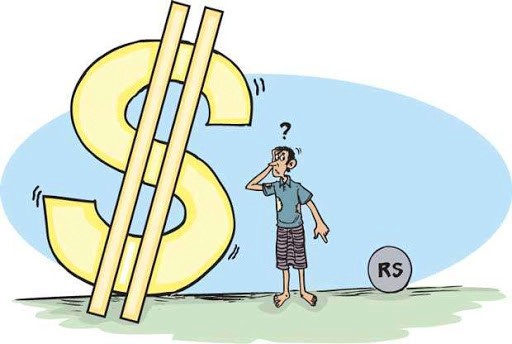
He stated that in the unofficial market the US dollar is being sold for around Rs. 235-240 and sometimes for even more, despite the exchange rates of the Central Bank of Sri Lanka stating that the buying price and selling price of the US dollar is Rs. 198 and Rs. 202.89 respectively.

“Dollars are not available at these rates anywhere,” he said, referring to the Central Bank’s exchange rates.

Dr. de Silva added that a Gazette notification has been issued stipulating a price of Rs. 98 per kilogram for rice, however rice cannot be purchased from anywhere at that price. He said the same can be said for the prices of salmon tins and gas cylinders as they cannot be purchased for the prices declared by the government.

The SJB MP stated that unfortunately for the first time the Central bank is saying that a US dollar is Rs. 202, however the general public is unable to buy US dollars at that rate from anywhere.

The former State Minister emphasized that what is happening is that Sri Lanka is today facing its worst economic crisis since independence and that the biggest challenge in the short term is the fact that within the next couple of months the country has to payback massive loans obtained is US dollars.

Posted in Uncategorized

Asgiriya-Malwatta chief prelates request President to shut down the country for a week to contain COVID-19

The Maha Nayaka Theras of the Asgiriya and Malwatta Chapters have sent a letter to the President requesting to close the country for at least a week to control the rapid spread of COVID-19 virus.

Maha Nayaka of the Asgiriya Chapter Most Ven. Warakagoda Sri Gnanaratana Thera and Maha Nayaka of the Malwathu Maha Vihara Most Ven. Thibbatuwawe Sri Sumangala Thera also commended the President and the Government for their successful vaccination program to protect the lives of the people.

However, the Maha Nayaka Theros pointed out that the entire country is facing a catastrophe due to the spread of the coronavirus.

They said that the World Health Organization has also warned of a major health crisis in Sri Lanka in the coming weeks due to the rapid spread of the virus.

Therefore, the Chief Prelates requested the President to close the country for at least a week under the instructions of health experts to control the spread of the disease by providing the necessary facilities to the people.

Posted in Uncategorized

Go for three-week lockdown; 10 political parties affiliated with Govt. urge Prez

The Leaders of ten political parties that are affiliated with the Government have appealed to the President in writing about the importance of imposing a three-week lockdown in order to prevent a major havoc in future in terms of COVID-19 spread.

The political parties opined that imposition of a three-week lockdown would decrease the number of COVID patients to a satisfactory level, which could be affordable to the hospital network.

They also underlined that the number of COVID fatalities could also be reduced with a lockdown for a period of at least three weeks.

The Leaders brought to the attention of President the fact that people are living in fear when the country remains open and they are hesitant to move with economic activities.

Thus, the leaders feel that once the spread is controlled with a lockdown, trust will be regained among the essential segments and would rejoin the country’s economic stream.

While saying that they do understand the economic status of the country, a three-week lockdown would be immensely helpful to bring the economic cycle back on track.

Besides, the leaders proposed the President to consider the present state as a national disaster, and therefore, call for the implementation of an all-party mechanism.

They also proposed to establish a committee comprising of health and economic experts to provide advice at the present situation.

The following leaders representing their respective parties signed the letter;

Ven. Athuraliya Rathana Thera – Ape Jana Bala Party

Minister Vasudeva Nanayakkara – Democratic Left Front

Prof. Tissa Vitharana – Lanka Sama Samaja Party

Minister Wimal Weerawansa – National Freedom Front

Minister Udaya Gammanpila – Pivithuru Hela Urumaya

A. L. M. Athaullah – National Congress

Tiran Alles – Mahajana Eksath Peramuna

Dr. G. Weerasinghe – Sri Lanka Communist Party

Asanka Nawaratne – Sri Lanka Mahajana Party

Gevindu Kumaratunga – Yuthukama National Organization (Sheain Fernandopulle)

EU gives SL a wake-up call on trade policy

Delivering a wake-up call to the Government, the European Union (EU) Mission in Sri Lanka last week stressed on the need to align trade policies before the situation worsens.

Although import restrictions imposed by the Government are understood in the context of the Balance of Payment (BOP) crisis, EU Ambassador Denis Chaibi said: “Conventions of the World Trade Organisation (WTO) should be respected.”

“Last year, EU exports to Sri Lanka were the lowest recorded in a decade,” he told a webinar titled ‘GSP+: Past, Present, Future’. It was jointly organised by the Federation of Chambers of Commerce and Industry of Sri Lanka (FCCISL) and the Colombo Chamber of Commerce.

Pointing out that the balance of trade with the EU had always been in favour of Sri Lanka, the Ambassador raised concerns on the serious imbalance exacerbated by import restrictions not formally notified to the WTO.

“We have no problem with the beneficiary balance for Sri Lanka, because the EU believes in free and fair trade. However, at some stage, there should be a reflection before this matter gets worse,” Chaibi stressed.

He explained that some considerations could be given if the restrictions were temporary and duly notified.

It was also revealed that a mission was scheduled in the coming months to assess the progress of Sri Lanka to retain the GSP+ concession.

Although it is yet to be decided whether the review will be held virtually or in person, Chaibi said the EU was keen to allow Sri Lanka to continue to reap the benefits of GSP+ for which it wanted to ensure the concerns raised on the human rights front were addressed.

“Commitment to international conventions, where social standards are respected make economies more competitive,” he said, adding that Sri Lanka was in a good position compared to other countries in the region.

The mission will conduct the first formal review of Sri Lanka’s compliance to the conventions laid out by the EU and progress in areas of concerns since a resolution was adopted by the European Parliament in June, urging the European Commission to temporarily withdraw Sri Lanka’s GSP+ status.

Underlining the benefits enjoyed by Sri Lanka through the preferential access to the largest and most competitive high-end EU market, Chaibi said: “It is not easy to replace a market.”

Last year Sri Lanka’s merchandise exports amounted to $ 10 billion, and the Government has set a target of $ 12 billion in 2021, of which $ 5.7 billion was achieved by June.

The EU remains Sri Lanka’s largest export market, accounting for 30% of the total. Nearly 60% of Sri Lankan exports benefit from some form of preferential access due to EU GSP+ and US GSP schemes.

The resolution on Sri Lanka was adopted noting the Government’s persistent failure to adopt and enact human rights reforms and repeal the draconian Prevention of Terrorism Act (PTA). Up to 628 votes were cast in favour of, 15 against, and there were 40 abstentions.

In January 2020, the EU delegation in Sri Lanka reassured that it would continue the GSP+ concessions to Sri Lanka till 2023 while noting that there would be ‘no changes’ in the rigorous monitoring of the country’s progress in implementing the conventions.

Sri Lanka regained the EU GSP+ privileges for Sri Lankan exports in May 2017. The trade preferences under GSP+ consist of the full removal of duties on 66% of tariff lines, covering a wide array of products, including textiles and fisheries.

The GSP+ scheme is conditional on Sri Lanka advancing human and labour rights and working towards sustainable development. Since the resumption of GSP+ concessions in 2017, Sri Lanka’s total exports to the EU has increased by 28%.

Posted in Uncategorized

Sri Lanka’s COVID-19 cases tally increases to 369,343

Another 1,232 COVID-19 cases have been detected today in the country, raising the number of confirmed infections to 369,343.

Accordingly, 3,660 coronavirus cases have been detected in Sri Lanka today.

The Epidemiology Unit of the Ministry of Health said 46,211 persons are currently receiving treatment for coronavirus at several facilities across the country.

Earlier today, 2,188 persons who recovered from COVID-19 were discharged from hospitals, raising the number of recoveries in the country to 316,528.

3,524 suspected COVID-19 cases are also under medical observation at present.

Sri Lanka’s coronavirus death toll is currently at 6,604.

Rights groups concerned over police abuses, urges Scotland to suspend training programmes

The Scottish government should provide details of a review of Police Scotland training for Sri Lankan police, Human Rights Watch, Freedom from Torture, the Sri Lanka Campaign for Peace and Justice, and Pax Christi Scotland said in a letter to the Scottish Justice Secretary Keith Brown.

Scottish ministers were further urged to exercise their authority to suspend the training program, which risks appearing to endorse the actions of Sri Lanka’s abusive police force.

Human Rights Watch notes that the Sri Lankan police in recent months have allegedly been responsible for torture and extrajudicial killings. They have been implicated in a pattern of such abuses over many years, despite receiving Police Scotland training “on an almost continuous basis” since 2013.

“Police Scotland should halt its Sri Lanka training program until the Sri Lankan government and police demonstrate a willingness to reform,” said Yasmine Ahmed, UK director at Human Rights Watch. “Scottish ministers have the authority to end this program, which does not live up to their government’s support for human rights.”

It was also mentioned that the Scottish government has announced that an important objective of the training program is to address gender-based violence. However, the Sri Lankan police spokesman recently said on a television talk show that it is not police policy to detain or prosecute men who are alleged to threaten or assault their wives. “We try to reconcile the matter,” he said. “If we remand the person, the husband and wife will be separated, then what will happen to the children?”

The human rights groups said that under the administration of President Gotabaya Rajapaksa, who took office in November 2019, the Sri Lankan police have also targeted ethnic and religious minorities for abuse, suppressed dissent, and narrowed the space for civil society organizations.

New COVID-19 guidelines: gyms, spas closed; public events banned

Sri Lanka has imposed new restrictions and guidelines as measures to prevent the spread of the COVID-19 virus within the country.

The measures include closing gyms, spas, children’s parks, swimming pools, and indoor sports halls with immediate effect.

In addition to this, musical events, beach parties, and carnivals have also been banned.

These new restrictions and guidelines will come into effect immediately and last until August 31.

According to the revised guidelines, the shopping malls will remain closed while only one person per household is permitted to go outside unless engaged in essential services.

The public transport is only allowed to transport seated passengers of the bus/train within the provincial limits.

Private sector offices can be operated with a minimum number of staff required while heads can summon employees outside the province.

Besides, the schools, preschools, universities, tuition classes will remain closed while weddings are also not allowed.

Spas are not permitted while children’s parks, carnivals, musical shows and beach parties are also not allowed under the revised guidelines.

However, restaurants can be operated with 50 percent of seating capacity while hotels, rest houses and guest houses are allowed to operate with 25 percent of capacity.