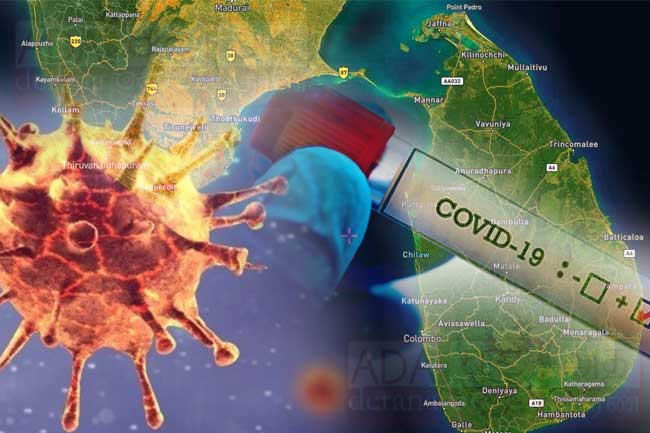
Record 124 deaths reported in a single day in Sri Lanka

A record 124 deaths have been reported in a single day in Sri Lanka, the Health Ministry said.

The 124 deaths had occurred yesterday (Tuesday) and were confirmed today as being linked to Covid.

The latest victims includes 95 people above the age of 60.

Cabinet Reshuffle – Key ministers to change including Health

A cabinet reshuffle is likely to take place next week with several key portfolios likely to change heads, the Daily Mirror learns.

One of the key changes will be that of Health, where Pavithra Wanniarachchi will be changed, amidst this worsening pandemic, sources said.

Dr. Ramesh Pathirana is likely to replace her as the new health minister. However this is yet to be finalized.

Other portfolios likely to change are education, power, media and foreign affairs.

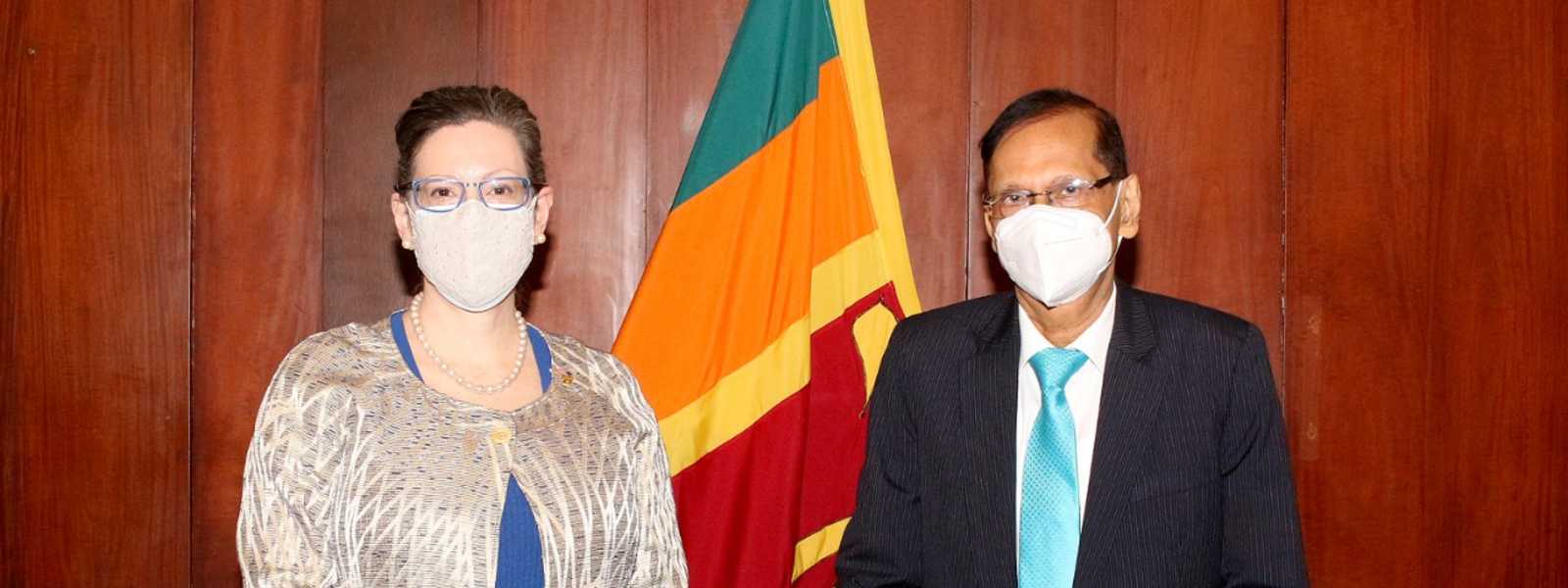
Prof GL Peiris who is presently the education minister is likely to be the new Foreign Affairs Minister.

The Rajapaksa triumvirate and the CCP backdoor in Sri Lanka

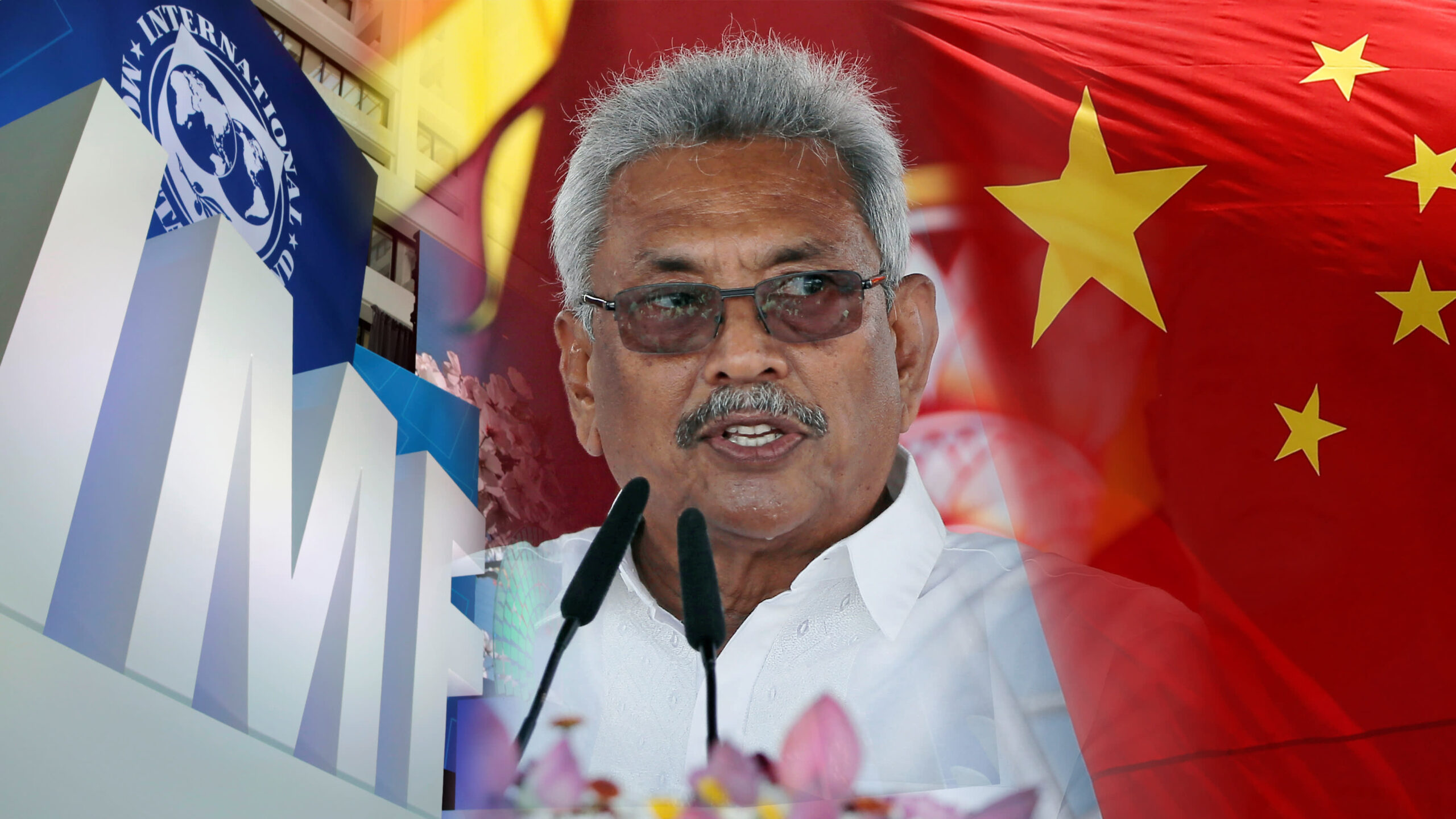
The current Sri Lankan regime has further moved away from democratic norms. There is a ‘triumvirate’ of power centres amongst the three Rajapaksa brothers— Basil, Gotabaya, and Mahinda Rajapaksa. For the first time in Sri Lankan history, the country’s finance, economic policies, and defence ministries are led by three brothers. The ruling family is further extended to include five other members; with a total of eight family members serving as ministers, it is the largest political ministerial dynasty in the world. Family politics in South Asia is not a new trait but never seen on this scale at any one given political moment. The new appointment of Basil Rajapaksa as the Finance Minister would further consolidate power amongst the Rajapaksa family members, further departing from the democratic norms and seeking alternative political models to justify their existence. Apart from the existing autocratic nature of the government, there is yet another danger. The government has opened a floodgate and has allowed autocratic quintessence to flow into its political system. Other autocratic nations, especially China, can use the fertile ground prepared by the Rajapaksa brothers to advance their agenda.

The new appointment of Basil Rajapaksa as the Finance Minister would further consolidate power amongst the Rajapaksa family members, further departing from the democratic norms and seeking alternative political models to justify their existence.

CCP centenary, the great firewall and its survival

Surrounded by a 70,000 member audience, President Xi sent a clear warning in his centenary speech in Beijing that “Chinese people would no longer allow any alien powers to bully and oppress and anyone who tried to do so would be badly battered by the Chinese nation’s perseverance…No one should underestimate the Chinese nation’s will and power to fight against foreign power”. China will fight in multiple geographies, including land, sea, cyber, and space. The warning comes when China is propelling its ambition to be a great power with its own characteristics. The new world order that China wishes to create has its own Chinese flavour backed by the Chinese Communist Party (CCP). The belligerence at the South China Sea, the human rights concerns in Hong Kong, Xinjiang, and the infrastructure loans in Sri Lanka to cyberspace and 5G technology are coated with these “Chinese characteristics”. The world order that China envisions is through the CCP political ideology. Its stance at the UN Human Rights Council makes it evident that China deems economic rights to be way more critical than individual civil liberty.

The new world order that China wishes to create has its own Chinese flavour backed by the Chinese Communist Party (CCP).

The CCP celebration is about the political values and its ideology, despite keeping the window open for reform. As Chinese reformist Deng Xiaoping said, “if you open the window for fresh air, you have to expect some flies and mosquitoes to blow in”. To keep such “flies” —the political dissent and liberal ideology—away, CCP has used multiple mechanisms. One such tactic was unleashed by the Ministry of Public Security that initiated the firewall Golden Shield Project in 2000. While the internet is a tool in China’s economic development, its existence also undermines political stability since the internet encourages diversity of ideas, propels information, and is a tool for democratising a society. The great firewall, thus, effectively carried out CCP’s efforts in suppressing liberal ideology.

With a quarter of the human population living in China, CCP—the second oldest one-party authoritarian rule—has managed to sustain the communist system for seven decades. According to Rana Mitter, there are two reasons why the Marxist Communist system have survived for so long in China. First, the CCP continues to be ruthless. The Leninist strand of absolute use of coercion continuess to be a necessary character to sustain the CCP model. Second, it practices flexibility—a trait uncharacteristic of authoritarian regimes. China’s willingness to change from the Soviet model during Mao’s time to open up economically during Deng’s time is evident. It is as if the Communist party has implemented a capitalist revolution to succeed with Chinese characteristics.

China’s willingness to change from the Soviet model during Mao’s time to open up economically during Deng’s time is evident.

Chinese backdoor in Sri Lanka

The CCP’s Leninist model will navigate easily in nations that have suppressed liberal democratic values. In this case, the external support will flow from China to sustain the autocratic government in Sri Lanka. The Rajapaksa triumvirate have already endorsed China and its CCP model of development. China would assist and use the Rajapaksa brothers to push the Chinese development and strategic agenda through its Belt and Road Initiative (BRI). However, the efforts will not be limited to BRI. The Rajapaksas’ power consolidation in Sri Lanka will have a long-term impact on the country’s democracy.

At first glance, the CCP political ideology with Leninist characteristics may not interest a democratic nation such as Sri Lanka and the promotion of the Chinese Communist model in nations along the BRI track will seem as an impossible task; however, that might not be the case in the long run. Currently, Sri Lanka might be predisposed towards a democratic model; however, it may change over time due to structural reforms to the nation’s foundational factors such as the Constitution and administrative policy preferences to import autocratic values and norms from the CCP model, justifying as an alternative to the existing one, claiming more efficiency for economic development. China will push the CCP agenda, camouflaging it with a promise of an economic miracle to many nations, including Sri Lanka.

China will push the CCP agenda, camouflaging it with a promise of an economic miracle to many nations, including Sri Lanka.

Prime Minister Mahinda Rajapaksa praised CCP’s role saying, “China has successfully eradicated poverty of 900 million people under its open economic policy… I am confident that China will bring back the economic strength that Asia had 500years ago through this Silk Road. China always believed that improving infrastructure will provide new ways and new strengths for the people. Therefore, we have constantly invited China to help develop the infrastructure of our country” said Rajapaksa on the 6th July CCP and World Political Future summit. Further, he expressed his gratitude to China for the development and generous donations of the Sinopharm vaccine, saying, “it is further admirable that China has approved for the production of the Sinopharm vaccine in countries like ours. During a global pandemic such as this, decisions initiated by the CCP will be respected as those taken for the benefit of humanity”.

The Prime Minister’s China praise shows clear signs of China dependency to ensure the regime’s survival. The regime’s decision to secure Port City Bill and large-scale Chinese infrastructure, even if it has negligible returns, is due to Prime Minister Rajapaksa’s informal relationship with China. According to Jonathan E. Hillman, who rightly observed in his book, “The Emperor’s new Road”, “If Chinese loans were cigarettes, Sri Lanka’s Hambanthota Port would be the cancerous lung on the warning label.” Sri Lankan leaders have raised the BRI spirits, ignoring economic returns, depending on the Chinese infrastructure development outcomes with high political expectation in order to sustain power. With economic woes and the rising cost of living, the public will have difficulty digesting the large-scale development projects with no returns as it requires a considerable time more than the regime’s timespan to generate profit and jobs such as the Colombo Port City.

Sri Lankan leaders have raised the BRI spirits, ignoring economic returns, depending on the Chinese infrastructure development outcomes with high political expectation in order to sustain power.

The Sri Lankan government completely ignored the strategic dimension of China. Like in Europe, where China has built a ‘Balkan Backdoor’ to enter the European Union through the Balkan states, China will enter South Asia from autocratic states such as Sri Lanka. The ‘Sri Lankan Backdoor’ that China has created for its strategic expanse is not visible to government policymakers who remain blind by the Chinese economic miracle and is accepted for their own political survival.

Symbolism and SLPP endorsement

CCP’s symbolic significance was amplified by the Sri Lankan government by issuing a special coin to commemorate the CCP centenary. The coins, which were perhaps minted in the Middle Kingdom and sent to Sri Lanka, was a clear sign of Rajapaksa regime’s China dependency. The public displeasure is evident on social media, critical of Sri Lanka’s heavy China dependency and its inability for debt repayment. One such post was from a local aviation engineer who posted, “It is not even to honour a foreign country but a dictatorial, single party that rules the country. Is this what is in store for Sri Lanka?”. While CCP pushes its model, the Sri Lankan public will reflect on the danger of losing its prized democratic values and view it as a threat to their civil liberties. For the first time, Sri Lanka’s usual practice of issuing commemorative coins to mark diplomatic relations milestones with foreign countries was deviated by extending to political parties. Another symbolic gesture was the illumination of the Chinese-built Lotus Tower in Colombo. This tallest tower in Sri Lanka was built by China, which was declared open during the last regime with no access to the public as of now.

Rajapaksa regime signed a joint statement initiated by China at UNHRC, raising concerns on the human rights situation in the UK.

The Rajapaksa regime’s political party, Sri Lanka Podujana Peramuna (SLPP) alliance include many leftist political parties. Further adding to the list of CCP endorsements, Sri Lanka’s leftist political parties and the ruling Rajapaksa SLPP conducted a joint conference online with China to support the CCP centenary from Colombo. The Sri Lankan Prime Minister Mahinda Rajapaksa attending the conference said, “The friend will always be there, both in sorrow and pleasure. Like the murals on a wall, they never look away… we appreciate the commitments made by the Chinese government for our independence during and after the war, forever”. At the conference, 11 political parties recognised the CCP as a steadfast champion for developing countries through the BRI, helping to improve infrastructure and production while respecting sovereignty. Further, the Rajapaksa regime signed a joint statement initiated by China at UNHRC, raising concerns on the human rights situation in the UK.

The Sri Lankan government went all out to promote the CCP centenary despite the pandemic environment where the public is struggling with the vaccine drive. However, CCP and Rajapaksa’s marketing campaign failed to catch public attention due to the country’s severe health and economic woes. The arrival of Basil Rajapaksa is viewed with hope by the government quarters in an attempt to kick start the economy. The triumvirate must, however, remain cautious in suppressing democracy by further expanding the CCP agenda in Sri Lanka.

The views expressed above belong to the author(s).

ORF research and analyses now available on Telegram! Click here to access our curated content — blogs, longforms and interviews.

Posted in Uncategorized

Oddamavadi burial site almost full

A land extent of five acres has been allocated at Irakkamam in the Ampara District for the burial of Covid-19 victims, as the current Oddamavadi burial site in the Batticaloa District is almost at full capacity, officials at the Koralaipattu West Divisional Secretariat in the Batticaloa District told The Morning yesterday (11).

A total of 1,507 burials have occurred as of 10 August at the Oddamavadi burial site and there is only room for approximately 300 more burials, The Morning learnt.

The number of daily burials has tripled during the past two weeks due to the increasing number of deaths that are occurring as a result of the virus. A total of 31 burials have been done on 10 August at the Oddamavadi burial site.

It was on 5 March that the Government commenced the burial of Covid-19 victims in the Soodupaththinachenai area in Oddamavadi, and in the Irakkamam area in the Ampara District.

In February, the Government reversed its controversial policy which mandated the cremation of the bodies of all those who fell victim to Covid-19. This was following concerns raised by many parties, including the Parliamentary Opposition, the civil society and the international community, against the forced cremation of Muslim Covid-19 victims in the country. The Muslim community had pointed out that cremation was against their religious beliefs and that more than 190 countries allow both cremation and burial as per the World Health Organisation’s guidelines.

The Extraordinary Gazette notification allowing the burial of Covid-19 victims was published on 25 February, amending the regulations made by the Health Minister under Sections 2 and 3 of the Quarantine and Prevention of Diseases Ordinance (Chapter 222).

The Government initially announced that the Health Ministry’s technical committee had approved the Iranaitivu Island in the Gulf of Mannar as a burial ground. Stating that it was decided to permit the burial of the remains of Covid-19 victims on the Iranaitivu Island, Cabinet Spokesman Keheliya Rambukwella said that the health authorities would announce the guidelines to be followed in this regard. However, due to protests by area residents, the island was not used as a burial ground.

On 5 March, the Government approved the burial of Covid-19 victims in the Soodupaththinachenai area in Oddamavadi, Batticaloa, and the Irakkamam area in the Ampara District. The guidelines for the burial of Covid-19 victims were subsequently issued by the Director General of Health Services (DGHS) on 3 March. The drafting of the guidelines was completed after the committee of experts appointed to examine methods for the disposal of Covid-19 victims met in February.

TISL calls for the appointment of an independent RTI Commission in September

The tenure of the Right to Information (RTI) Commission which is the central oversight and appellate body established under the Right to Information Act of Sri Lanka is set to expire in September this year.

Transparency International Sri Lanka (TISL) calls for the appointment of the new commissioners in line with the procedures set out in the Right to Information Act No 12 of 2016.

The RTI Commission is established under section 11 of the RTI Act which defines the constitution of the Commission, which consists of a chairperson and four members who serve a term of five years. Prior to the passing of the 20th amendment to the Constitution, the appointments were made by the President upon the recommendations provided by the Constitutional Council.

However, the 20th amendment changed the manner in which the RTI Commission is appointed. The Constitutional Council which is mentioned in the Act is no longer functional and has been replaced with the Parliamentary Council. Therefore, it is now up to the Parliamentary Council to obtain nominations from the Bar Association of Sri Lanka, organizations of publishers, editors and media persons and other civil society organizations to fill positions in the RTI Commission.

The Parliamentary Council is expected to make observations to the President on who should be appointed to the RTI Commission, while the President’s duty to seek such observations is mandatory.

TISL hopes that the President would take these observations into serious consideration when making appointments for the RTI Commission, in keeping with the democratic process stipulated in the RTI Act of Sri Lanka.

Commenting on this, TISL Executive Director Nadishani Perera stated that “Over the Past 5 years the RTI Commission of Sri Lanka was able to deliver commendable decisions that protected the people’s right to information. They were able to do this because the RTI Commission acted in its capacity as an independent body. TISL hopes that the President will make the new appointments to the Commission in line with the provisions of the RTI Act, ensuring the independent nature of the Commission,”

Earlier TISL took steps to invite Civil Society Organizations in the country to join hands in fulfilling their role laid out in the RTI Act. The nominations by a number of Civil Society organizations including TISL for a position in the RTI Commission were compiled and handed over to the Parliamentary Council yesterday.

The RTI Commission can be considered to be a bridge that connects the state with the general populace. During its tenure the current RTI Commission provided progressive rulings from matters ranging from simple RTI requests on local development activities to more controversial issues such as an order to release the asset declarations of the former Prime Minister. These rulings are a testament to the independence of the commission and further proof of why the proper procedure laid out in the RTI Act should be followed when making appointments to the Commission.

TISL Executive Director Nadishani Perera also noted that “the background of the RTI Commissioners and that role that they play have a direct impact on the general public. If the appointed Commissioners are impartial, with no direct ties to politics, they would be able to dole out impartial rulings on behalf of the people. Therefore, it is also the responsibility of the general public to pay close attention to the nature of individuals appointed to the RTI Commission.”

The following names were submitted to the Parliamentary Council by TISL and other civil society organisations for consideration when selecting candidates for the RTI Commission:

1) Dr. A.K.C.H. Priyangani Jayasundara
Nominated by : Safe Foundation

2) Mrs. J. H. Nilmini Sunethra Kumari
Nominated by : Child Vision Sri Lanka

3) Mr. P. Sai Balasubramaniam
Nominated by : Peoples’ Development Foundation

4) Rev. Dr. Noel Dias
Nominated by : Centre for Social Justice and Equity

5) Mr. D.M. Samantha Dassanayake
Nominated by : Centre for Human Rights and Community Development

6) Dr. Prathiba Mahanamahewa
Nominated by : Caritas SED

7) Mr. Sampath Pushpakumara
Nominated by : Families of the Disappeared

8) Mr. Nadarajah Sivaranjith
Nominated by : NGO Consortium, Ampara

9) Mr Aingkaran Kugathasan
Nominated by : Transparency International Sri Lanka

Posted in Uncategorized

It is Time for India to Invade the North-East of Sri Lanka.

NEW YORK, NEW YORK, UNITED STATES, August 10, 2021 /EINPresswire.com/ — It is Time for India to Invade the North-East of Sri Lanka.

The Chinese are now in the southern part of Sri Lanka and some Chinese are in the north and east. The Chinese seem to think that Sri Lanka is their own country.

There are 300,000 Chinese in Sri Lanka, 60,000 of whom are from Chinese military.

The Chinese have had a taste of successfully bribing some corrupt Tamils in political power. Now, along with Minister Douglas Thevanda, Tamil fishermen associations have agreed to the economic control the Chinese are seeking in the north-east.

Another development concerns US negotiations for the use of the Trincomalee area for crude oil refining and energy production.

When both of these dominant nations are so present in Sri Lanka, India has no real power. The Sinhalese engineered a smart move by removing Indian influence in Sri Lanka.

However, it is not too late for India to bring in its military to enforce a reasonable political solution in Sri Lanka as per the Indo-Lanka act. We think the wisest course of action for India and the best way to protect its own interests is to secure and defend the Tamil Homeland.

Indians should note that “Tamils in Sri Lanka say Mr. Sumanthiran has been working hard to get rid of the Indian role and influence in Sri Lanka.”

When a permanent solution for the Tamils is achieved, all the corrupt Tamils will disappear from their activities.

If India fails within a month to invade Sri Lanka, India will become weak and the Chinese will cause India’s federal structure to disintegrate.

Since the Sri Lankan Tamils is part of the brotherhood of Tamil Nadu, we as Tamils have faith that India will help us.

We the Tamils of Sri Lanka have written to our Tamil brothers in India with this urgent plea for assistance.
Editor
Tamil Diaspor News
+1 516-308-2645
email us here
Visit us on social media:
Facebook
Twitter

Posted in Uncategorized

Basil empowered to handle milk powder shortage

The Cabinet of Ministers has decided to empower Minister of Finance Basil Rajapaksa to take necessary measures to address the shortage of milk powder in the market.

The decision was reached at the Cabinet meeting held yesterday (09) when the issue of milk powder shortage in the country was brought to the notice of the Minister of Finance. Thereafter the Cabinet decided to hand over the relevant issue to the Minister of Finance Basil Rajapaksa.

Posted in Uncategorized

COVID-19 deaths surge in Sri Lanka with record 118 confirmed dead Tuesday; no lockdown

In yet another record daily death toll in Sri Lanka, the government information department confirmed 118 COVID-19 deaths Tuesday (10) evening, hours after a top minister said there will be no lockdown measures imposed.

Total COVID-19 deaths in the island now stand at 5,340.

At the time of writing, 1,992 people were confirmed to have been infected on Tuesday, bringing total cases in Sri Lanka to 326,308.

Update: 2,904 cases confirmed in total on Tuesday.

Despite the devastation, and repeated calls from the health sector to impose tighter restrictions, co-cabinet spokesman Minister Keheliya Rambukwella said Tuesday morning that the government has intention to impose a lockdown at the moment.

“There is no intention (for a shutdown). Curfew will be imposed only and only if it is extremely necessary,” Rambukwella told reporters at the weekly cabinet briefing.

“But we can’t it rule out given the world trend. It will be our last option,” he said.

Army commander and head of the national COVID-19 task force Gen Shavendra Silva said Tuesday afternoon that ongoing inter-provincial travel restrictions will be strictly monitored.

Weddings that were restricted to 150 guests, already seen as excessive by some experts, have been further restricted to 50 from midnight Tuesday irrespective of the venue’s seating capacity.

Only people who travel for work or essential services may travel between provinces.

Various health experts have called for a lockdown to contain the fast-spreading delta variant of SARS-CoV-2, the virus that causes COVID-19.

“The next two weeks has already been decided,” Public Health Inspectors (PHI) Union Chairman Upul Rohana said.

“Results of whatever decisions taken at this moment will be seen in another four weeks,” he said.

Government officials have said the lockdowns have hit economic activities and livelihood of hundreds of thousands of daily wage earners amid closure of many small-scale companies.

The government is compelled to strike a balance between controlling the pandemic through lockdown and allowing people to engage in their economic activities to meet the ends meet.

Images and videos circulating in social media showed hospital wards overflowing with patients, many of whom were see lining hospital corridors, half asleep on the floor. As of Tuesday, 5,340 people have died, a vast majority of whom perished in the third wave which officially began in mid-April, after the traditional Sinhala & Tami New Year holidays that saw much unrestricted travel around the country.

Posted in Uncategorized

Energy Minister denies submitting a cabinet paper to lease Trincomalee oil tanks to U.S.

Minister of Energy Udaya Gammanpila has stated that the allegation that a Cabinet paper was submitted to lease the Trincomalee Port, Oil Tank Complex and 33,000 acres surrounding it to the United States is completely untrue.

The Minister was commenting on a statement allegedly made by JVP Politburo member Wasantha Samarasinghe as the Convener of the Voice Against Corruption at a media briefing.

In a statement posted on his Facebook page, Minister Udaya Gammanpila said JVP Politburo member Wasantha Samarasinghe, posing as the convener of the Voice Against Corruption, has made a series of lies about him at a press conference on Sunday.

“He has stated that I have submitted a Cabinet paper to lease the Trincomalee Port, the oil tank complex and the 33,000 acres associated with it to the United States. His statement is a blatant lie. I did not submit such a cabinet paper. I challenge him to show me a copy of the cabinet paper,” the Minister said in a statement.

The Minister pointed out that since the JVP ally, United National Party (UNP) in 2003 leased the oil tank complex to India for 35 years and the fact that Mr. Wasantha Samarasinghe failed to understand that those oil tanks cannot be leased to another country until 2038 shows that he is unable to understand it is still 2021.

He further said it is ridiculous that a former Member of Parliament Wasantha Samarasinghe did not know that if the Trincomalee Port is to be leased to the United States, a Cabinet Memorandum should be submitted by the Minister of Ports and not the Minister of Energy.

“I would also like to inform Mr. Samarasinghe for his general knowledge that the Ministry of Energy does not have 33,000 acres in Trincomalee to lease to the United States, not even to be used for a domestic purpose and 33,000 acres is a vast tract of land spread over many villages.”

What Mr. Samarasinghe has actually done is to add three more lies to the JVP’s series of lies, Gammanpila said.

Ravaged by Delta outbreak, Southeast Asia shifts away from China’s vaccines

Southeast Asian countries that had widely rolled out Chinese-made coronavirus vaccines are turning away from the shots in favour of Western alternatives as they scramble to contain deadly outbreaks caused by the Delta variant.

The shift in a region where China vies with the US for influence underscores the limits of Beijing’s vaccine diplomacy. Countries such as Indonesia and Thailand once bet heavily on China’s Sinovac, despite warnings from medical experts, but their health systems have come under intense strain as the Delta variant tears through towns and cities. Indonesia has recorded more than 100,000 deaths overall.

“The current reality does present a stark contrast to the fanfare with which Beijing rolled out their vaccines and then insisted on their high efficacy, even when data was less available,” said Chong Ja Ian, an associate professor of political science at the National University of Singapore who studies US-China competition in Asia. The change, he added, shows “how risky it is to try to make the current pandemic, and the very real dangers to human life, into a sort of propaganda tool”.

Sinovac and Sinopharm were among the earliest to begin clinical trials, but they did not release full data. Millions of people have taken the shots, which governments rushed to procure amid supply constraints before the US pledged to share doses. With wealthier nations snapping up Pfizer and Moderna, some developing countries had little choice but to look to China.

Doubts over Sinovac’s efficacy grew in June, when fully vaccinated Indonesian doctors began dying of Covid-19. The Indonesian Medical Association has recorded at least 20 deaths of doctors who were doubly dosed with Sinovac. Earlier that month, the World Health Organisation approved the vaccine for emergency use.

Representatives for Sinovac and Sinopharm did not respond to requests for comment. Sinovac told China’s state-run Global Times newspaper in June that its vaccines cannot give 100% protection but can reduce severity and deaths. Sinovac CEO Yin Weidong, speaking last week at a forum hosted by China’s foreign minister, said the company will submit its clinical research and emergency use applications for the Delta variant to Chinese regulators in coming days, and said the company has “sufficient production capacity” to develop and produce the vaccine in response to the new strains.

Among the casualties in Indonesia was Novilia Sjafri Bachtiar, the lead scientist in the country’s Sinovac trials, according to local media. The nation of 270 million began administering the US-made Moderna vaccine in late July to healthcare workers, after Washington donated eight million doses.

Scenes of these donations – in boxes emblazoned with American flags – contrasted with those in January, when Indonesian President Joko Widodo received his Sinovac shot on live television. Health officials held up the vaccine box, adorned with Sinovac’s name, to boost trust in the doses. Chinese state media hailed Widodo’s move while touting the vaccine as “safe and effective”.

Thailand has also moved to mix shots, changing its policy in mid-July to immunising people with a first shot of Sinovac and a second shot of AstraZeneca. Healthcare workers who are already fully vaccinated with Sinovac will receive a third booster shot, either of AstraZeneca or an mRNA vaccine such as Pfizer or Moderna.

Before the policy change, Thai media reported the existence of a memo, supposedly leaked from an official meeting about vaccine use, that warned against giving a different booster shot to those already fully vaccinated with Sinovac because doing so would be an admission that the Chinese-made shot “can’t give protection”. The leak prompted an outcry, and the hashtag #GivePfizerToMedicalWorkers began trending on social media.

Even Beijing’s closest allies are making the switch. Cambodia said last week that it would start offering AstraZeneca booster shots to those who had received two doses of the Chinese-made vaccines, which have already been rolled out to about half of the population.

Responding to a question in May on whether Cambodia is too dependent on China, Prime Minister Hun Sen dismissed the suggestion as “unjust”.

“If I don’t rely on China, who will I rely on? If I don’t ask China, who am I to ask?” he said. “Without assistance from China, maybe we will not have vaccines for our people.”

China has held up its vaccine donations as a public good, especially for developing nations, while criticising vaccine nationalism. President Xi Jinping said last week that the country would provide two billion doses to the world this year.

Yet even before the Delta variant surge, people showed a preference for Western-made vaccines, particularly the mRNA shots developed by the US. A survey early this year in the Philippines showed more than 63% of adults preferred the US as a source of coronavirus vaccines. In May, residents flocked to the one site offering Pfizer doses, with lines forming from 2 a.m.

“We saw this huge divide even in the medical community among those willing and outright not willing to receive Sinovac,” said Vincen Gregory Yu, a physician and public health researcher. He said he encountered vaccine hesitancy among his peers and family, who signed up for Moderna through the private sector.

“In most cases, it’s not really, ‘We don’t want this vaccine because it’s not effective,’ ” he said. Instead, he said, it’s more that “‘we don’t want to accept this because something better will arrive’”.

Philippine President Rodrigo Duterte, who declared early in his term that he would say “goodbye” to Washington, a long-standing ally, maintains warm relations with China. He accepted another million doses of Sinovac days ago as his country endures a new lockdown amid a surge in infections.

But he admitted that his decision to preserve a defense pact between the US and the Philippines was influenced by a recent donation of Moderna vaccines from Washington.

“It’s give and take. Let’s thank them, and I gave them a concession,” Duterte said.

Chong said the vaccine experience has made some Southeast Asian countries realize “that reliance on the People’s Republic of China is not enough, whether on vaccines or other matters”.

(This appeared in The Washington Post on 10 August. Regine Cabato in Manila and Pei Lin Wu in Taipei contributed to this report)