Fears of “parliament cluster” emerge as three Sri Lanka MPs test positive for COVID-19

With three parliamentarians testing positive for COVID-19 on Friday (06), bringing total legislators infected in Sri Lanka to at least 18 to date, concerns have been raised over the possibility of a “parliament cluster”.

Ruling Sri Lanka Podujana Peramuna (SLPP) legislators Rohana Dissanayaka (Matale district) and Thisakutti Arachchi (Badulla district) along with main opposition Samagi Jana Balawegaya (SJB) MP Dilip Wedaarachchi tested positive for the virus on Friday, Serjeant-at- Arms Narendra Fernando said.

Two sources at the parliament told EconomyNext that concerns have been raised if the latest infections could result in a “parliament cluster”. The sources said all three MPs had been in the parliament during this week’s sessions with one legislator participating three full days.

“There was a general announcement in the parliament today asking MPs and other staff to take maximum precaution if they have had contacts with the three,” one source who did not wish to be named said.

“CCTV footage shows one MP move around in the parliament,” the source said.

Friday’s infections come three days after Agriculture Minister and Kandy district MP Mahindananda Aluthgamage, who had earlier vowed not to be vaccinated until vulnerable groups have been jabbed, tested positive for COVID-19 while being in self isolation.

Sri Lanka’s parliamentarians were asked to get vaccinated with AstraZeneca in mid-February at the Army hospital in Colombo though some legislators including opposition leader Sajith Premadasa, Minister Aluthgamage, and SJB MP Mujibur Rahuman vowed not to take the jab until vulnerable groups had first been vaccinated.

Both Premadasa and Rahuman tested positive in May. Premadasa on Tuesday (03) said “under the strict instructions of doctors who treated” him for COVID-19, he got the Pfizer-BioNTech jab. This was after doctors had warned him that failure to vaccinate may result in a fatal recurrence of COVID-19.

“Now we have become a country gradually succumbing to COVID-19,” Rahuman told parliament on Friday.

COVID infection among Sri Lankan legislators made international headlines when the island nation’s health minister Pavithra Wanniarachchi tested positive in January after promoting a local syrup manufactured by a shaman who claimed it was a life-long inoculation against the virus that would forgo the need for vaccination.

The health minister publicly consumed and endorsed the syrup while the shaman was allowed to enter the parliament premises and handover his syrup to the parliament speaker. The shaman had said the recipe for the syrup, which contained honey and nutmeg, was given to him in a visionary dream.

The health minister’s promotion, which was given huge publicity in the local media, led thousands of people queueing in front of the shaman’s house in the central Sri Lankan district of Kegalle.

“Some government ministers said we don’t need vaccines. But ultimately the government was forced to bring down vaccines because there was no alternative,” Rahuman told parliament on Friday.

Cabinet Minister Vasudeva Nanayakkara, State Ministers Dayasiri Jayasekara, Piyal Nishantha, and Arundika Fernando, ruling SLPP legislators Kader Masthan, Kapila Athukorala, M Rameshwaran, and Wasantha Yapa Bandara as well as opposition MPs Rauf Hakeem, Nalin Bandara, and Abdul Haleem were the other parliamentarians who have got infected by the virus.

All of them have recovered and are back in the parliament.

Meanwhile, Energy Minister Udaya Gammanpila and Industries Minister Wimal Weerawansa are in self quarantine after their close contacts recently tested positive for the virus.

SL’s police are increasingly abusing people under cover of pandemic measures, HRW alleges

Sri Lanka’s police are increasingly killing and abusing people under cover of the Covid-19 pandemic measures and an anti-drug campaign, Human Rights Watch (HRW) alleged today (06).

HRW notes that recent police abuses reported in the media include alleged extrajudicial killings, torture, and arbitrary detention. In this backdrop, it urges for the government to restore independent oversight of the police and meaningfully investigate and prosecute alleged police abuses.

Until there is progress on accountability and reform, the HRW has also stated that international partners, such as the United Nations Office on Drugs and Crime and the United Kingdom’s Police Scotland, should suspend assistance programs.

“Sri Lanka’s police seem intent on building on their past record of serious abuses, instead of cleaning up their act,” said Meenakshi Ganguly, South Asia director at Human Rights Watch. “The UN, UK, and others working with Sri Lankan law enforcement should recognize that without the political will to reform on Sri Lanka’s part, their engagement risks appearing to endorse abusive agencies.”

HRW highlighted that since May 2021, the police have been implicated in several unlawful deaths, including some linked to disproportionate and abusive enforcement of Covid-19 quarantines.

The UN high commissioner for human rights, Michelle Bachelet, in her report to the UN Human Rights Council in January, wrote that she was “concerned by a recent series of deaths in police custody and in the context of police encounters with alleged criminal gangs” amid a “militarized approach to law and order and drug control.” She highlighted five possible extrajudicial killings involving the Sri Lankan police between June and October 2020.

Further, it was expressed that the current police abuses come in a context of “shrinking civil and political space” under the Rajapaksa administration. The Bar Association of Sri Lanka has condemned the police’s use of the Covid-19 pandemic to curtail freedom of expression, including detaining peaceful protesters at a quarantine facility in July.

HRW has also urged for UN agencies to ensure that any engagement with Sri Lankan security forces complies with the “human rights due diligence policy on United Nations support to non-United Nations security forces” and the UN common position on drug policy.

“The Rajapaksa government needs to demonstrate that alleged police abuses will be properly investigated and prosecuted, and the law should promote accountability, not weaken it,” Ganguly said. “Until that happens, international partners should be under no illusions about human rights in Sri Lanka, and they should withhold assistance to abusive law enforcement agencies.

Coronavirus update: 2,794 new COVID-19 cases identified Friday, total rises to 324,223

According to Epidemiology Unit of the Health Ministry, 2,794 new COVID-19 cases were reported so far on Friday.

Among the cases confirmed today, 2,792 are from the New Year cluster and 02 are foreign arrivals currently in quarantine.

According to the Epidemiology Unit report at 11 pm Friday, a total of 324,223 COVID-19 cases have been reported and 31,095 infected patients are being treated at hospitals, while 288,307 patients have fully recovered and been discharged from hospitals.

Sri Lanka reported 98 deaths Friday raising the total to 4,919.

According to the Epidemiology Unit report, so far total of 10,777,259 people have received a first dose of COVID-19 vaccine and 2,679,076 have received the second dose.

Posted in Uncategorized

Islandwide lockdown will not be enforced

The Government has decided not to enforce an islandwide lockdown anytime soon.

A crucial meeting took place today (Friday) chaired by President Gotabaya Rajapaksa to discuss the current developments related to the coronavirus in the country.

The meeting took importance as the number of people infected by the coronavirus saw a rapid increase and daily deaths reached record levels.

There have been persistent calls for a nationwide lockdown to contain the rapid spread of the virus and the matter was noted at the meeting today.

However, at the meeting it was decided not to enforce a nationwide lockdown.

The government has so far been keen not to enforce a lockdown as that could have further impact on the economy.

Hospitals have been flooded with Covid patients, especially after travel restrictions enforced around the island were relaxed early last month.

Some hospitals how now declared an emergency situation as they run out of beds and oxygen.

India keen on investing in Sri Lanka’s renewable energy sector – HC Baglay

High Commissioner of India to Sri Lanka Gopal Baglay called on Foreign Minister Dinesh Gunawardena on Tuesday (August 03), says the Ministry of Foreign Affairs.

Minister Gunawardena has thanked the government and the people of India for extending assistance to Sri Lanka in combating the COVID-19 pandemic and appraised the opening of the country for economic activities.

The High Commissioner Baglay also appreciated Sri Lanka for lifting entry restrictions imposed on fully-vaccinated Indians as lifting of such restrictions would provide immense benefits for Sri Lanka’s tourism industry and the economy as a whole.

During the discussion, a joint commemoration of the 75th Anniversary of Independence of India and Sri Lanka was proposed in view of celebrating the centuries old cultural values shared between the two countries.

Commemorating this milestone which consists of cultural and religious events such as Buddhist pilgrims’ programmes and more importantly bringing down sacred Buddhist relics from India to Sri Lanka, would allow the bilateral relations to flourish further.

Minister Gunawardena has underscored the government’s priority in the field of renewable energy and he invited Indian private sector investments in the sustainable energy sector in Sri Lanka. Endorsing the government’s move, High Commissioner Baglay stated that Indian investors are keen to invest in the renewable energy sector, especially in solar energy.

A wide range of areas of mutual interest such as the joint commission on renewable energy, air connectivity, mutual trade and investment ventures, technical cooperation for digitalizing Sri Lankan movies and regional cooperation in the BIMSTEC were also discussed in length.

Posted in Uncategorized

Restrictions for Weddings, Funerals revised; State festivals postponed to 01st Sept

Sri Lanka has decided to revise certain restrictions due to the present COVID-19 situation in the country.

According to Army Commander General Shavendra Silva, if a Wedding Hall has a seating capacity of more than 500 seats, a maximum of 150 people are allowed to attend the wedding.

If Wedding Halls are with a seating capacity of less than 500, only a maximum of 100 people are allowed to attend the wedding, he said.

A maximum of 25 people are allowed to attend a funeral at a time, said the Army Commander.

Heads of State Institutions can decide on the number of people who are expected to report to work during this period, he added.

All state festivities are postponed until September 1st, the Army Commander went on to note.

Posted in Uncategorized

Bomb threat in leading 5 star hotels and several places in Colombo are false

Posts claiming that there is a bomb threat in two leading five-star hotels in Colombo and in places in Bambalapitiya, Wellawatta, Mirihana, Nugegoda, Mount Lavinia and Dehiwala are completely false and people have been urged not to panic, the Police told Daily Mirror a short while ago.

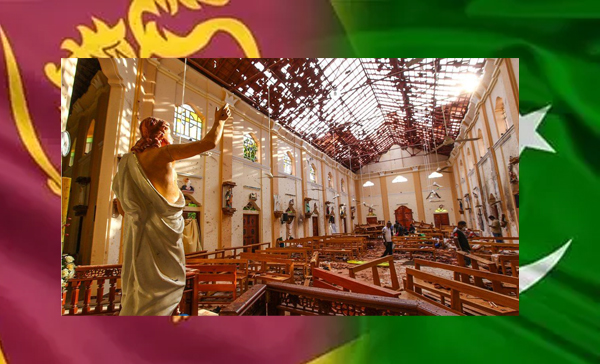
Army Commander General Shavendra Silva also confirmed that these reports were false and the panic had spread as a result of a post, which had circulated on social media, soon after the Easter attacks in 2019, being re-edited and circulated once again.

Police said an investigation had already been launched into the incident

Posted in Uncategorized

India pushes strategic interests in Indian Ocean island nations to counter China

Earlier this week, a Qatar-based media outlet published an article claiming India is building a 3km-long airstrip and two large jetties designed for military purposes at the Mauritian island of Agalega. South Block, which houses the ministry of defence in New Delhi, is silent on the issue. However, some officials are maintaining that the construction project is only for the benefit of the islanders and that it is for non-military purpose. Mauritius Prime Minister Pravind Jugnauth has also categorically denied that the construction is for military purposes.

In 2015, during Prime Minister Narendra Modi’s visit to Mauritius, India signed an agreement for setting up and upgradation of infrastructure in the Agalega archipelago. The plan was to create an airstrip for landing bigger aircraft like Boeing 737-900 and Airbus 320. Setting up of communication systems, closer to the existing jetty was to identify any ship as friend or foe, was also planned. Aggressive presence of China’s People’s Liberation Army Navy (PLAN) and other Chinese commercial vessels in the Indian Ocean Region (IOR)–considered the backyard of the Indian Navy–poses a challenge for India’s strategic interests. At a given time, PLAN has over a dozen of its warships in the IOR. And the Chinese research and fishing vessels are equally a threat to India’s maritime interest in the region.

So, to counter Chinese influence growing in the region with a military base in Djibouti, Indian strategists, too, have kept close watch on island nations like Mauritius, Maldives, Sri Lanka and Seychelles. And deep defence ties will anyway benefit India at the time of crisis, as it is in New Delhi’s strategic interests.

Mauritius is one of India’s key maritime neighbours in the Indian Ocean Region and occupies a special place in Modi’s vision of ‘SAGAR’ (Security and Growth for All in the Region). The island nation is also part of India’s security grid including Coastal Surveillance Radar (CSR) station of Indian Navy’s National Command Control Communication Intelligence network (NC3I Network). Information Management and Analysis Centre (IMAC), at Gurgaon is the nodal centre for NC3I Network, which was set up to provide coastal security and to avert tragic incidents like the 26/11 terror attack on Mumbai and to improve coastal surveillance. The NC3I network links 51 Naval and Coast Guard stations, located along the coast and on island territories. The network provides these stations coastal surveillance information obtained from various sensors such as the coastal radar chain of the Indian Coast Guard and automatic tracking systems as well as electro-optical cameras. The network rides on dedicated terrestrial data circuits, as well as, satellite communication, which help the stations in remote locations to be networked. “We do not want to be offensive but we must be strong enough to deter our enemies from casting an evil eye upon us”, former defence minister Manohar Parrikar had once said.

Early this year, India extended a $100-million Line of Credit to Mauritius to facilitate the procurement of Indian defence equipment. A defence official claimed that Agalega island is in close proximity with Seychelles and Maldives and the Diego Garcia military base of US to its east. An agreement to provide a HAL-manufactured Dornier aircraft and an Advanced Light Helicopter Dhruv on lease to Mauritius on gratis basis for two years will boost their capabilities to patrol and monitor the extensive maritime domain more effectively. Interestingly, the Head of Mauritius Navy and the Mauritian National Security Advisor are Indian officers.

Similar to Mauritius, India went ahead with a deal to develop Assumption Island in Seychelles for military use, as both nations share close defence ties. Seychelles is of strategic importance to India as it lies close to global lanes of shipping and commerce and is an important base in the fight against seaborne terrorism and piracy in the Indian Ocean Region. In June 1986, under Operation Flowers are Blooming, the Indian Navy deployed its INS Vindhyagiri at the Seychelles Port of Victoria to abort an attempted coup against President Rene by Defence Minister Berlouis.

Besides monetary support to Seychelles, India also provided Dornier 228s and Chetak helicopters for their defence needs. India also deployed its military officers in Seychelles to train their armed forces.

Maldives is also another island, in which India has very strong interest. New Delhi extended a $50-million line of credit to the Maldives for defence projects along with an agreement to develop and maintain a key naval facility for the armed forces of the Indian Ocean archipelago. India shares strong maritime cooperation with Maldives, and in the past, New Delhi has provided patrol vessels and maritime surveillance aircraft to bolster Maldives National Defence Force’s (MNDF) capabilities. India is also making efforts to elbow China’s growing presence in Maldives as erstwhile government of Abdullah Yameen had leased out an island to China.

India’s strategic ties with Sri Lanka is deep, and India’s role in the civil war in Sri Lanka proves it. And, China’s role in the development of the Hambantota port in Sri Lanka and now coming out with a port city in Colomobo, close to Indian waters have irked the New Delhi. Moreover, the growing transfer of arms and cooperation between Beijing and Colombo is a matter of concern for India, especially after Sri Lanka allowed two Chinese submarines and a warship to dock at its port in Colombo in 2014. Since, then India has been making efforts to enhance defence cooperation with the island nation. India and Sri Lanka have deep defence cooperation, as India has named Sri Lanka as “Priority One” partner in the defence sphere. India is active in a number of areas of development activities in Sri Lanka. About one-sixth of the total development credit granted by India is made available to Sri Lanka.

“Its high time to invest more in these tiny islands, as they are strategically important for India. Our presence in these island nations not only gives us long legs, but also a way to keep a close eye on movement of aggressive Chinese military in the IOR,” said a senior defence official.

Source:The week

Posted in Uncategorized

Women’s organizations submit proposals for electoral reforms

Five women’s organizations have submitted their proposals before the Parliamentary Select Committee to identify appropriate reforms of the election laws and the electoral system and to recommend necessary amendments.

The proposals were handed over at a meeting of the Parliamentary Select Committee chaired by Leader of the House Minister Dinesh Gunawardena, at the Parliament complex last afternoon.

The Women Parliamentarians Caucus, Women’s Political Academy, Will Club Women’s Organization, Yeheliya Foundation and Gangodawila United Social Service Women’s Association submitted their proposals before the Committee.

The Select Committee is scheduled to convene again on the 11th of August at the Parliament complex.

COVID-19 in Sri Lanka reaches tipping point as hospitals fill up and deaths surge

COVID-19 in Sri Lanka is taking a turn for the worse, with two hospitals declaring an internal emergency on Thursday (05) as wards overflowed with patients carrying the disease, amid rising daily deaths around the island.

Images circulating online of patients lining hospital corridors have raised alarm among the public and medical community alike, with some experts calling for renewed movement restrictions though the government has yet to officially respond to such requests, despite a death rate of three per hour according to one estimate.

“A COVID wave is unpredictable. But by following global health practices, we can prevent it,” Health Minister Pavithra Wanniarachchi told parliament on Thursday.

The Ratnapura hospital and the Karapitiya Teaching Hospital have both declared emergency situations in their premises due to a surge in COVID-19 admissions, Deputy Director of Health Services Dr Hemantha Herath told reporters Thursday morning.

Hospitals resort to emergency protocol when there is a sudden increase in admissions, Herath said.

“It can be COVID, it can be due to floods or food poisoning, whenever there is a spike in admissions, a hospital can declare emergency. Hospital staff is trained for such situations,” he said.

On July 20, the Sri Lanka Medical Association (SLMA) warned of a possible fourth wave of the epidemic triggered by the highly transmissible delta variant of SARS-CoV-2, the virus that causes COVID-19.

SLMA President Dr Padma Gunaratne told reporters that given the increasing number of patients in the national hospital and other COVID-19 treatment centres, Sri Lanka appears to be losing any gains made during a month-long lockdown in May-June.

Health Promotion Bureau (HPB) Director Dr Ranjith Bathuwanthuduwa said at the time that Sri Lanka was not looking at a new wave.

Related: Doctors and health officials disagree on imminent fourth wave of COVID-19 in Sri Lanka

Nearly two weeks later, hospitals are battling to treat the increasing number of patients, even as experts warn that the delta variant is fast becoming the dominant strain of the virus in Sri Lanka.

Deputy Director General of Medical Services Dr Lal Panapaitiya said hospitals do not have the capacity to withstand the surging caseload.

Panapitiya said nine regular wards at the Colombo National Hospital have been cleared to treat COVID-19 patients, while the Ragama Teaching Hospital has 13 of its wards dedicated for the deadly disease.

In an inspection tour at the Ragama hospital on Wednesday, Minister Wanniarachchi said more wards will be used to meet the growing requirements.

Out of a total 80,000 hospital beds in Sri Lanka, 30,000 are dedicated to COVID-19 treatment, according to health officials.

“If we take up more space for COVID treatment, we’ll have to take from the space allotted for other patients,” Dr Panapitiya said.

The Association of Medical Specialists on Tuesday (03) said there has been an exponential increase in the demand for oxygen.

Related: Revisit restrictions, Sri Lanka medical specialists urge govt as delta, oxygen demand surge

On Thursday, an official at the Jaffna Teaching Hospital told reporters that, due to a lack of oxygen, hospital workers are now making three trips a day to the Anuradhapura hospital to refill their supply for COVID-19 patients in Jaffna.

State Minister Prof Channa Jayasumana said Sri Lanka is using 100% of the oxygen produced in the country for COVID-19 treatment. Plans are under way to import more from India and Singapore in the next two weeks, he said.

Meanwhile, Sri Lanka’s opposition parties have accused the government of mishandling the crisis.

Opposition Leader Sajith Premadasa told parliament on Thursday claimed that the government was attempting to “suppress the truth” with regard to the pandemic situation.

United National Party (UNP) MP Ranil Wickremesinghe reiterated his oft-repeated call to for the cabinet of ministers to take charge of Sri Lanka’s COVID-19 response.

“We still don’t know about the spread of delta and we have failed to contain it. Until these task forces are there, we parliamentarians can only be observers. People are dying. I request you to appoint a cabinet committee and bring it to parliament. We can manage it,” he said.

Janatha Vimukthi Peramuna (JVP)-led National People’s Power (NPP) MP Vijitha Herath too blamed the ongoing spike in cases on the government’s failure to lockdown the country in April and on not purchasing vaccines on time.

Sri Lanka has made considerable progress on the vaccine front. According to official data, 86% of the country’s population over the age of 30 years has received at least one dose of a vaccine, while 18% are fully vaccinated. However, allegations remain that delays in vaccination led to thousands of deaths that would otherwise have been prevented.

SLMA Vice President Dr Manilka Sumanatilleke said though the vaccine rollout has been accelerated, the virus is ahead in terms of spread and is currently winning.

Meanwhile, calls for a lockdown persist.

For SLMA President Dr Gunaratne, it’s a “told-you-so” moment, though, no doubt one she does not relish.

“We said two weeks ago, that we’ll see an increase in cases. Now we say it will continue for the next two weeks. The delta variant is spreading rapidly in Colombo, Gampaha and Kalutara districts. We have to go for travel restrictions; otherwise we won’t be able to control it,” she said.

SLMA Vice President Dr Manilka Sumanatilleke said the number of patients in the community can be five to ten times higher than the daily identified patients.

“Earlier when we were doing 20,000 plus PCR tests a day, we identified around 2,000 cases. But now we are doing only about 10,000 tests daily and we still find 2,000 plus patients,” Sumanatilleke told reporters. Wednesday saw 2,561 people test positive for COVID-19, the sixth consecutive day for the daily count to surpass 2,000.

“This cannot be an accurate number, because the number of patients out there should be much higher,” he said.

Painting a grim picture, Sumanatilleke said some of the 600 COVID-19 patients being treated at the National Hospital in Colombo are “warded” in the hospital’s hallways.

Dr Herath said the government is periodically assessing the situation.

“If things go out of control, we will go for a lockdown,” he said.

COVID-19 deaths in Sri Lanka have also seen a surge. On Wednesday, 82 deaths were reported, the highest single-day death toll yet.

Dr Sumanatilleke said Sri Lanka now records three COVID-19 deaths per hour.

“The deaths per hour will increase in parallel to the increase in number of patients. That is why we need to decrease the number of patients,” Doctor Hemantha Herath told reporters.