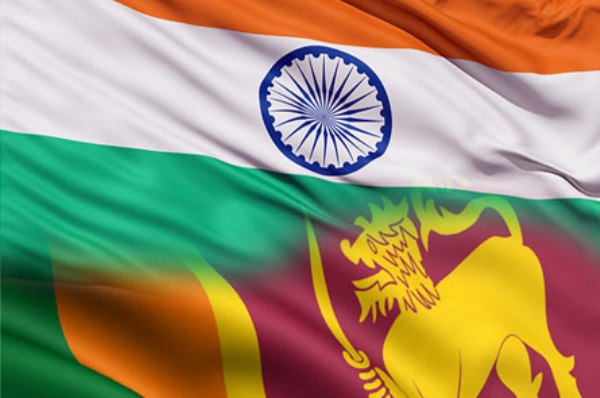
The Sri Lankan High Commissioner-designate to India, Milinda Moragoda, has submitted to President Gotabaya Rajapaksa, a detailed blueprint for making Sri Lanka-India relations a “special” one marked by “inter-dependence, mutual respect and affection.”
The document, entitled “Integrated Country Strategy for Sri Lanka Diplomatic Missions in India” covers the entire gamut of bilateral relations, and aims at addressing the “trust deficit” that has marked Sri Lanka-India relations. The idea is to transform the relationship from a narrow “transactional” one to one which will be broad-based and long lasting.
The document suggests adoption of multifarious bilateral interactions ranging from the top-most political level to the grass-roots people to-people level.
Worked out by a broad-based team led by Niluka Kadurugamuwa, the Deputy High Commissioner of India in New Delhi, under the guidance of High Commissioner-designate Milinda Moragoda, the proposals are founded on the belief that India-Lanka relations rest on a sound foundation based on Buddhism “India’s most precious gift to Sri Lanka.”
Buddhism was brought to Sri Lanka by the son and daughter of the Buddhist King Dharmashoka. “Against this backdrop, any setbacks to our relationship, however intractable they may appear to be at any given point of time, can only be temporary,” Moragoda says in his covering letter to the President.
The need for a fresh look at the relationship arose from the fact that despite the existence of a lot of good in it, it has increasingly become transactional “as a consequence of the changes in the geo-political equilibrium in the region, that has resulted in a growing trust deficit.”
However, the documents says that the transactional relationship “could be channeled towards building confidence and utilized to a means to bridge the trust deficit.”
The document stresses the importance of high level political visits –visits by the Head of State/Head of Government from either side, each year. There should be frequent visits by the Foreign Ministers. Line ministers should also make visits. These interactions could be virtual. There should be coordination with India in multilateral forums to strengthen bilateral ties. The India-Lanka Parliamentary Friendship Group should be re-activated with visits organized.
Sri Lanka should not only interact with the Central government in New Delhi but also with State governments some of which are particularly important for Sri Lanka, such as Tamil Nadu, Odisha, and West Bengal. The proposed opening of a Consul General’s office in Kolkata is welcomed. Sri Lankan Provincial Councils and local bodies members should be encouraged to interact with their equivalents in India under the relevant protocols. Chief Ministers of Indian States should be invited to visit Sri Lanka to promote economic and other ties. Sri Lanka could also explore appointing competent Honorary Consuls in key States for making local contacts.
For the implementation of policies and also for the generation of new ideas, the Indo-Sri Lanka Joint Commission and other Joint Committees should meet regularly. The Indo-Sri Lanka Foundation and the Kalinga Foundation could help generate new ideas.
Investments
To attract Indian investment to Sri Lanka, the High Commissioner designate has envisaged an Inter-Agency Committee on Trade, Investment and Tourism. Representatives of the Export Development Board, Board of Investment, Sri Lanka Tourism, Sri Lanka Tea Board and Sri Lanka Airlines will be participants in the committee. The BOI has set out targets for an Indian investment of US$ 300 million in 2021 and the Lankan Mission in India has set a goal of US$ 256 million. Indian investments could be in auto parts, electric and electronic goods, the hospitality industry, IT services, infrastructure, manufacturing, pharmaceutical, textiles and renewable energy. The documents has urged follow-up action in existing projects such as the West Container Terminal in Colombo Port, the Trincomalee Oil Tank Farm and projects in the power sector.
The Lankan missions in India should draw up a list of high net-worth investors, hold meetings with them and organize seminars and field trips to Sri Lanka. Sri Lanka’s access to Indian markets is hampered by protectionism and also challenging and changing regulatory mechanisms. And on its part Sri Lanka should improve its export basket whose content is now limited. However, the ED has set an export target of US$ 621.9 million for 2021 and the Lankan missions in India have proposed a figure of US$ 674.17 million for 2022.
The products Sri Lanka could sell in India are: pepper, cloves, cinnamon, nutmeg , vegan and vegetarian food, processed meat and fish, confectionary and beverages, paper desiccated coconut and related products, tiles and kitchenware, electrical conductors, switch boards and panels, various kinds of tea, men’s trousers, shirt and skirts.
Sri Lanka should take the initiative in getting help from India in the field of technology innovation, capacity building and product development to expand the export market. Indian technical help could be sought for the automation of the gem and jewelry industry, and the pharmaceutical industry.
Sri Lankan trade associations and trade associations should participate in trade fairs in India. The missions should help organize B to B meetings and seminars. Lankan missions should interact with Indian governments to secure easier access to Lankan products. Indian businessmen should be invited to visit Si Lanka to interact with their Lankan counterparts.
Tourism and Connectivity
There is immense potential in the Indian tourism sector. The Lankan Tourism Board has set a target of 63, 733 Indian arrivals in 2021 and 169, 955 in 2022. The areas which show potential for travel expansion are: MICE, weddings, film shooting, and the Ramayana Trail, Murugan and Siva Sakthi Trails. Sri Lanka needs to be present in tourism fairs in India. Fully vaccinated Indian tourists should be encouraged to visit Sri Lanka.
Since it is People-to-People contacts which will be the bedrock of a bilateral relationship, connectivity must be improved ,the document says, and suggests resumption or establishment of passenger ferry services beween Thalaimannar and Rameswaram, Colombo and Tuticorin, an Kankesanthurai and Karaikal. The document also propagates the facilitation of grid connectivity between the two countries for Sri Lanka to get power from India in times of drought and for Sri Lanka to sell power to India in case it has a surplus.
Defense Cooperation
In the field of defense cooperation, the document points out that Sri Lanka has not used the Indian Special Line of Credit of US$ 50 million for countering terrorism. Ways of using it should be explored, especially since more Lines of Credit in the defense sector are in the pipeline. The document points out the importance of having “political level strategic cooperation in the field of defense and security.” It can build on the model of the war-time Indo-Lankan Troika which was very useful.
Mechanisms for political level strategic cooperation existing in India and other countries should be studied. This would be apart from organizing regular high level visits of defense personnel and exchange of visits. There should be Sri Lankan high level defense personnel visits to India at least once a year. There should be India-Lanka and multilateral military exercises every year. There should be facilities in Sri Lanka for training Indian military personnel. There should be closer and regular interaction between the police forces of the two countries with places in Indian paramilitary and police institutions for Sri Lankan personnel. The office of the Defense Advisor in the Sri Lanka High Commission ought to be strengthened.
Fishing Issue
On the contentious issue of Indians fishing in the Palk Strait, the document says that the Sri Lankan missions in New Delhi and Chennai should interact with officials of the Central and State governments and also fishermen’s associations in Tamil Nadu to highlight the issue of IUU especially bottom trawling by Indian fishermen.
However, the document advocates a “humane approach” to the “genuine problems faced by fishermen on both sides of the maritime boundary.” The Sri Lankan government, it said, is working out a proposal on this issue.
Detailing the other areas of cooperation the document calls for joint research in fisheries and marine resources. It also talks of cooperation to set up a mechanism for disaster management
Lankan Refugees in India
The document makes suggestions for the resolution of the problem of Sri Lankan displaced persons in India. Its resolution will keep vested interests and fringe elements from exploiting the community’s plight for their narrow political ends. The Sri Lankan government should announce a comprehensive package which may include customs duty waivers, settling-in expenses, housing, and economic rehabilitation. The documents seeks the involvement of the UNHCR and also the political leadership of Tamil Nadu where the refugees live.
Culture and Education
India and Sri Lanka share a common cultural, linguistic, intellectual and religious legacy going back centuries into history. There has been a cultural cooperation agreement since 1977, but a lot more can be done. Sri Lanka should emulate the Indian Cultural Center in Colombo and spread Sri Lankan culture, dance, music and art in India by setting up a Sri Lankan Cultural Center and also participating in cultural events in India to showcase Lankan culture.
Buddhism has been a lynchpin of the age-old relations between Sri Lanka and India. While the mission in India is in touch with the Mahabodhi Society, it has to expand to other parts of India where there are Buddhist communities, the document said. Facilities should be provided for Indian scholars to study Buddhism in Sri Lanka and Sri Lankans should be able to study Pali and Buddhism in India. Sri Lanka should be able to provide Ordination for Indian Buddhist monks and allocate places for them in its Pirivenas. The government of India has already set apart US$ 15 million for the promotion of Buddhist links between India and Sri Lanka.
Religious Trails
With the help of Ambassador Dr.V.K.Valsan, the document has identified areas of cooperation in the field of Hinduism. The promotion of the Ramayana Trail, the Murugan Trail and the Siva Sakthi Trail will increase religious tourism between the Hindus of Sri Lanka and India. e The Hindu epic Ramayana intimately links the two countries. Cooperation between Sri Lanka and India in this area already exists as Sri Lanka has sent a sacred stone from the Sita temple here to the Ram Mandir in Ayodhya.
The document further urges the government to provide opportunities for Indian Hindu religious leaders and scholars to interact with their counterparts in Sri Lanka and to enable Sri Lankan diplomatic missions to actively participate in major Hindu religious ceremonies. The Lankan government should also facilitate Catholic devotees and scholars to visit the Velankanni church in Tamil Nadu which is very popular among both Tamil and Sinhalese Catholics.
Opinion Makers
The document urges the Lankan missions in India to be in touch with Indian journalists, foreign journalists based in India, intellectuals, opinion makers, film makers, archeologists, artistes, and think tanks to enhance Sri Lanka’s profile and also have positive stories presented in the Indian media. The South Asian University in New Delhi should be helped to become a center of excellence.
Tours of Sri Lanka should be organized for opinion makers to enable them to understand the realities in Sri Lanka and interact with their counterparts in the island. Heads of Lankan missions in India should give six interviews per year to the Indian print and electronic media and also be active on social media to clarify matters about Sri Lanka and promote the country.
The Lankan government and the missions in India should draw up plans to celebrate the centenary of Rabindranath Tagore’s visit to Sri Lanka in 2022 and the 75 th. Anniversary of the establishment of diplomatic relations between Sri Lanka and India in 2023.