Govt. must amend PTA and stop hunting social media bloggers

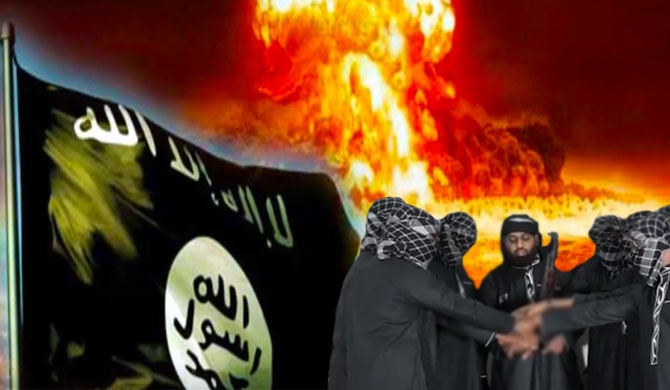
Government should introduce an amendment to the Prevention of Terrorism Act (PTA) to prevent arresting people for making posts in social media, Former Prime Minister Ranil Wickremesinghe proposed over the weekend.
This is one of the few proposals which Mr. Wickremesinghe came out with when he was asked questions on various issues faced by Sri Lanka during a webinar organized by a UNP-led youth group “Parapura” on Saturday.
“An amendment should be brought into PTA where a person could be arrested only if he/she is engaged in terrorist activities. Apprehending people for making a post in social media should be avoided. “Also, either Supreme Courts could propose amendments to PTA where Parliament could discuss and decide on necessary amendments to the legislation,” he said.
Coming up with another proposal, Mr. Wickremesinghe said Batticaloa Airport could be made use of to develop the domestic air travel industry if its runway is expanded, the former Prime Minister said over the weekend.
“Aviation industry had fallen because of the current pandemic situation. However Sri Lanka could benefit from the aviation industry if the government worked with India and even with the Maldives. We started negotiations with India during our regime. We discussed with India to develop Palali Airport. We also focused on introducing regional air traffic from India to Mattala. Our aim was to bring in Indian tourists to Kataragama temple. But these talks have stopped now. Also the Batticaloa Airport could be made use of, if the runway would be extended,” he said.

Posted in Uncategorized

Finance Min. denies reports on halting import of non-essential luxury goods

The Ministry of Finance says the government has not taken a decision to impose restrictions on the import of non-essential luxury goods.

Recent media reports claimed that the government is mulling the restrictions of electronic appliance including mobile phones, televisions and refrigerators as wells as perfumes, deodorants and other similar items.

It was further reported that steps would be taken to relax the import restrictions after foreign reserves in the country are strengthened.

However, a spokesperson of the finance ministry denied the media reports as ‘baseless.’

Meanwhile, a special press conference chaired by State Minister of Money & Capital Market and State Enterprise Reforms Ajith Nivard Cabraal is expected to take place tomorrow (July 05) to brief the public on the country’s current economic situation.

Abduction and assault of man in Norochcholai: Captain, three soldiers remanded

The Captain and three soldiers of the Army, who were arrested for abducting and assaulting an individual in Norochcholai, have been remanded till July 12 by the Puttalam Magistrate Court.

The suspects were arrested following a complaint made to the Norochcholai Police station that men dressed in uniforms similar to those of Army attire have abducted and beaten up a resident of Norochcholai and left him on the beach side on June 30.

Inter provincial travel restrictions till 19 July, no restrictions within provinces

Sri Lanka has extended COVID-19 travel restrictions between provinces for another 14 days until July 19, the national COVID-19 task force said Sunday (04).

Restrictions were to be fully lifted Monday (05) ending an unofficial curfew-style lockdown imposed since May 21 that was partially lifted June 21 with travel between provinces still prohibited.

After reviewing data, officials said, it was decided to continue the inter-province restrictions. Essential services such as health, police, military, power, petroleum, water supply, media and some private and government sector institutions will however be permitted to move.

No decision has been taken to fully lockdown the country, the task force said.

Emirates suspends carriage of SL passengers

Emirates airline will be suspending the carriage of passengers from Bangladesh, Pakistan and Sri Lanka to Dubai until July 15, 2021, the Dubai-based carrier said on its website.

The statement notes that passengers who have connected through Pakistan, Bangladesh or Sri Lanka in the last 14 days will not be accepted to travel from any other point to the UAE.

UAE Nationals, holders of UAE Golden Visas and members of diplomatic missions who comply with updated COVID 19 protocols are exempt and may be accepted for travel.

The latest announcement comes a day after Emirates said it would suspend all passenger flights from India until July 15.

Last week, Abu Dhabi-based carrier, Etihad, announced that it will not be permitted to carry passengers from Pakistan, Bangladesh, Sri Lanka or India until July 21.

Posted in Uncategorized

Dollar shortage in commercial banks spikes dollar prices in black market in Colombo

A U.S. dollar is now being traded between Rs 222/- and Rs 225/- in the black market, sources said, despite the dollar price having been fixed between Rs 199 and Rs 202 by the Central Bank.

It said the value of the dollar has increased in the black market _in the commercial streets in Colombo city _ due to the current shortage of dollars in the commercial banks.

On the other hand, due to the speculations that the rupee would be further depreciated against the dollar, the traders in the currency black market have spiked the dollar prices.

HOwever, increasing the dollar prices is an illegal act and it is learnt that the Central Bank had warned the traders not to do so because they run their business on a license obtained from the government.

Posted in Uncategorized

Government denies ‘excessive’ money printing

Denying claims made by various parties against the Government regarding excessive money printing, Money and Capital Market and State Enterprise Reforms State Minister Ajith Nivard Cabraal said the Government had printed money to settle the provisional advance taken by the annual budget.

At a media briefing held at the Government Information Department, he explained the money printing that took place on 28 June amounted to Rs. 200 billion.

He said: “Every central bank in the world gives a provisional advance. That is where about 10% of the money expected to be spent from the country’s budget is given as a temporary advance for the work of that government in the particular year. This amount needs to be settled within six months.”

Cabraal further explained that as the work progresses, the government may however face difficulties in settling the particular amount within six months and that therefore, each year, during a similar period, the government requests the Central Bank to issue one day’s security with the consent of the Auditor General to settle the provisional advance.

He added: “Accordingly, the provisional advance will be settled with that amount. Again, on the next day, we will be given the provisional advance due for this year.”

Meanwhile, speaking to The Sunday Morning, former Central Bank of Sri Lanka (CBSL) Deputy Governor Dr. W.A. Wijewardena said that over the past 17 months, the total money supply for goods and services in Sri Lanka has increased by Rs. 2,400 billion and noted that this is a critical issue.

He added: “During the last 17-month period, the Government had borrowed from the Central Bank as well as from commercial banks. Those borrowings amount to Rs. 2,600 million. Therefore, the money supply is increasing.”

Dr. Wijewardena also noted that during this period, the money supply had increased by 32%.

According to the latest report by Fitch Ratings, issued on Thursday (1), Sri Lanka’s largest banks are the most susceptible to heightened sovereign risk due to their higher exposure to foreign currency-denominated government securities, and in some cases, weaker capital positions.

Posted in Uncategorized

Another 34 COVID-related deaths confirmed in SL

34 persons have succumbed to the novel coronavirus during the past 24 hours.

The Department of Government Information said Sri Lanka’s COVID-19 related death toll has accordingly increased to 3,191.

21 males and 13 females were among the group that succumbed to the virus yesterday.

28 individuals among those who succumbed were identified as 60 years or above while six victims were between 30 and 59 years of age.

A plea for justice for Sri Lankan Tamil refugees By V Suryanarayan

The magnificent victory of the DMK and the assumption of office by MK Stalin as the Chief Minister marks a turning point in Tamil Nadu politics. The election campaign and assurances given in the manifesto have raised hopes of the people in the state for a clean, corruption-free and efficient government and establishment of an egalitarian social and economic order. The ambition of the father of our nation was to remove the tears from every eye. It may be beyond our reach, but as long as there are tears, our work would not be complete.

In particular, the government should pay attention to the tragic plight of the nearly 1,00,000 refugees, both living in camps and outside. They have been living between fear that they would have to go back to Sri Lanka with an uncertain future and the hope that they would be conferred Indian citizenship and given a chance to get assimilated with the local people.

The DMK manifesto has succinctly spelt out two interrelated issues of the refugee predicament. On the question of voluntary repatriation of refugees, the manifesto has pointed out that the Government of India “should make arrangements and extend all support to those who wish to return to Sri Lanka”. Voluntary repatriation could be sped up if shipping service is immediately resumed between Rameshwaram and Talaimannar. The refugees could be allowed to take back, without duty, all that they have acquired over the years, such as almirahs, gas stoves, bicycles, motorcycles and three wheelers. At present, repatriation takes place through air and naturally there is a limit to what the refugees could carry back to Sri Lanka.

Repatriation is taking place at a snail’s pace. According to UNHCR sources, between 2002 and 2020, 17,718 refugees have been repatriated. According to the Policy Note 2019-20, between 2014 and March 2019, only 4,017 refugees have gone back to Sri Lanka.

Secondly, the state and Central government should impress upon Sri Lanka to confer special privileges on repatriates. It may be recalled that New Delhi conferred on displaced persons from Pakistan, for a period of 50 years, free land for the construction of houses, government loans, free medical aid, scholarships for education and reservation in government jobs. Unfortunately there is no such demand in Sri Lanka. Even the Tamil National Alliance is silent on the issue.

On the second issue, the grant of Indian citizenship, the manifesto highlights the necessity to “grant citizenship to Sri Lankan Tamils, Indian-origin Tamils (hill country Tamils) and their descendants who are in India as refugees for more than 30 years”. For the first time, a distinction has been made between Sri Lankan Tamils and Indian-origin Tamils. All Sri Lankan Tamils are Sri Lankan citizens, and, if they want to acquire Indian citizenship, would have to renounce Sri Lankan citizenship. As far as Indian-origin Tamils are concerned, many of them are stateless. It may, however, be pointed out that the Sri Lankan government had enacted a legislation in 2003 by which all Indian Tamils—stateless as well as the residue of the Sirimavo-Shastri Pact—could acquire Sri Lankan citizenship. My interactions with the refugees, spread over many years, have made me realise that the overwhelming majority would like to acquire Indian citizenship. This is especially true of the younger generation who are born in India.

The question of grant of Indian citizenship has to be analysed in the backdrop of the welcome changes introduced by the Narendra Modi Government in refugee policy. India’s refugee policy, during the earlier period, was based on three premises that Jawaharlal Nehru spelt out in the Lok Sabha in 1959 with reference to Tibetan refugees: 1) India’s hope to maintain cordial relations with China; 2) protection of the territorial integrity and security of India and 3) India’s deep sympathy for the people of Tibet. The BJP had always been concerned about the plight of Hindus and Sikhs, who had been persecuted by the Islamic states of Pakistan, Afghanistan and Bangladesh and had sought asylum in India. The result is the Citizenship Amendment Act that was enacted in 2019.

There are two obstacles in the way of Sri Lankan refugees acquiring Indian citizenship. The first is a circular issued by the Government of India to the Government of Tamil Nadu in 1983 that Sri Lankan refugees are not entitled for Indian citizenship. We should immediately demand that this circular be withdrawn so that the refugees could apply for Indian citizenship by naturalisation. The second is on the legal status of the refugees. Answering a question in the Rajya Sabha a couple of years ago, the home ministry clarified that their status is that of illegal immigrants. And, according to Union Home Minister Amit Shah, “An illegal migrant is not eligible to acquire citizenship by registration or naturalization.” We should demand that Tamil refugees be treated on par with the refugees who have sought asylum in India from Pakistan, Afghanistan and Bangladesh.

Why is New Delhi discriminating against Tamil refugees? Home Minister Amit Shah declared that Pakistan, Afghanistan and Bangladesh are theocracies, whereas Sri Lanka is not one. Is systematic discrimination and ethnic violence in Sri Lanka different from that suffered by the Hindu and Sikh minorities in Pakistan, Afghanistan and Bangladesh? Though constitutionally, Sri Lanka is not a theocracy, the Constitution stipulates that it is the duty of the state to protect and foster Buddhist religion. According to Hindu organisations, nearly 200 Hindu temples have been desecrated by Buddhist goons since the dawn of independence. It was the burning alive of a Brahmin priest in Panadura, among other things, that made LTTE founder Prabhakaran take up arms against the government. Arson, murder, loot and rape, whether committed by a Muslim or a Buddhist, remain the same. A criminal does not become a saint if he is a Sinhala Buddhist.

In a landmark judgment delivered on 17 June 2019, Justice G R Swaminathan of the Madurai Division of the Madras High Court instructed the Indian government to consider the applications for citizenship submitted by Indian-origin Tamil refugees living in the Kottapattu camp. Two years have elapsed, but the Kumbakarnas in the home ministry have not woken up. This is an appropriate time for the TN government to appeal to the Supreme Court for the issue of a writ of Mandamus to compel the home ministry to implement the recommendations of Justice Swaminathan.

I had the good fortune to interact with the Malaiha Tamil refugees in the Kottapattu camp on several occasions. They live, as I stated earlier, between fear and hope. We in Tamil Nadu can understand their predicament only if we realise that we can all become refugees. As Benjamin Zephaniah, the refugee poet, has written: We can all be refugees, nobody is safe. / All it takes is a mad leader or no rain to / bring forth food. We can all be refugees. / We can all be told to go. We can be hated / by someone for being someone.

V Suryanarayan
Founding Director (Retd), Centre for South & Southeast Asian Studies, University of Madras
(suryageeth@gmail.com)

Posted in Uncategorized

Sri Lanka and Russia discuss ways to boost economic and technical cooperation

A meeting of the Co-Chairs of the Sri Lanka-Russia Intergovernmental Commission on Trade, Economic, Scientific and Technical Cooperation took place in a video conference format on 15 June.

The Co-Chairs discussed the development of existing and promising areas of cooperation in detail at the meeting.

The Russian side was headed by Federal Agency for Fishery Head Ilya Shestakov and represented by the officials from the Federal Agency for Fisheries, Ministry of Economic Development, Federal Customs Service, Ministry of Energy, Ministry of Industry and Trade, Rosinfokominvest JSC.

The Sri Lankan side was headed by Ministry of Trade Secretary Badrani Jayawardana and represented by officials from the Ministry of Trade, Foreign Ministry, Department of Commerce and Sri Lanka Embassy in Russia.

In his welcome speech, Co-Chair of the Russian side Ilya Shestakov emphasised that Sri Lanka was a longstanding and reliable partner of Russia in South Asia. He further stated that Russia was convinced that cooperation between the two countries had a significant potential for further development and it was prepared to work together with Sri Lanka for the successful implementation of the areas agreed by both parties.

In her opening remarks, Co-Chair of the Sri Lankan side Badrani Jayawardana mentioned that Russia being a longstanding trading partner with Sri Lanka, it was obvious that a number of untapped opportunities are available to expand bilateral trade. Further, both sides would be able to strengthen ties in other areas such as investment, tourism and science and technology through proceedings of the Intergovernmental Commission.

The Russian side agreed for further cooperation in the customs affaires and assistance for mutual trade. Cooperation in the fields of energy, chemical, pharmaceutical and agriculture were also discussed. The importance of organising the proposed working group on agriculture between the two countries and the Russian-Sri Lankan Fisheries Commission at the earliest, was highlighted. Cooperation in the IT sector was also in the agenda of the meeting.

The Sri Lankan side outlined in detail about ways and means of expanding market access in the gem and jewellery sector, Ceylon tea, and fisheries sector in the Russian market, and briefed on the issues that are faced by Sri Lankan partners. In the sphere of technical assistance, the Sri Lankan side requested R&D for improvement of the pharmaceutical sector, agro-based products, cooperation in the establishment of food safety management facility and improving of its standards.

The Russian side proposed, if the sanitary and epidemiological situation permits, to hold the third session of the Sri Lanka-Russia Intergovernmental Commission on Trade, Economic, Scientific and Technical Cooperation in offline format during autumn 2021 in Moscow. The Co-Chairs meeting was concluded with remarks that the forthcoming third session of the Sri Lanka-Russia Intergovernmental Commission would be the right platform to discuss, at length, the ways and means of enhancing the bilateral cooperation between the two countries.