Sri Lanka now lies in a depth of a deep abyss not so easy to recover from. The health crisis caused by COVID-19 pandemic is one of the major crises faced by Sri Lanka. The collapse of the socio-political system is another. The bankruptcy of the country caused by the inability to repay foreign loans is yet another crisis. All these crises are interconnected, and mutually affecting each other.
Under the circumstances Sri Lanka can be considered as a country that has failed completely. A country could reach such a situation only when there is a complete breakdown of the critical intellect of the society of the country. My observation in this regard can be confirmed in terms of the indicators used internationally, to measure the level of intelligence of a country.
However, discussing the international indicators would result in lengthening this article, and as such I will opt to talk about an important factor that has hugely contributed to the failure of Sri Lanka, which has not received the attention it deserves.
Transition to the modern age
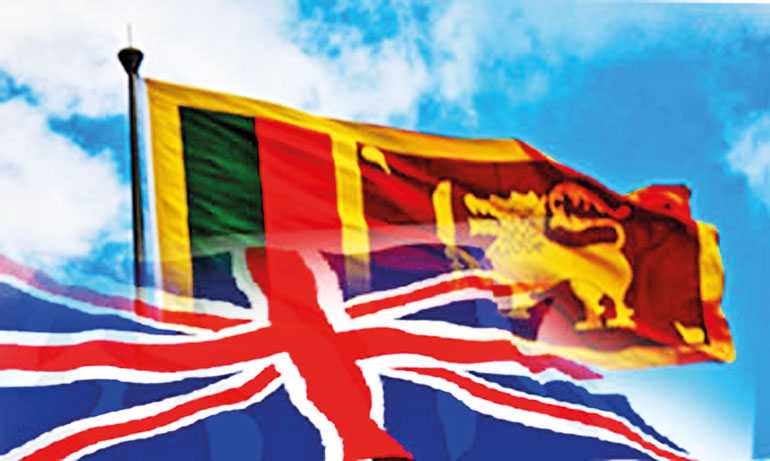
As an outcome of the Colebrooke reforms introduced during the British rule, Sri Lanka detached itself, to a greater extent, from the feudal system that prevailed during the pre-colonial times in the country. It marked the beginning of a process of modernisation.
This process of transformation is described as the advent of Sri Lanka into the modern age. The progress Sri Lanka has made despite all its limitations since then, and over a period of nearly 100 years up to independence, had been amazing, compared to other colonies ruled by the British.
In terms of education and health, Sri Lanka was ranked first or second among other Asian countries. It had achieved a significant improvement in infrastructure development also. It was endowed with a fully-fledged parliamentary system of governance. The civil service and judiciary had gained a prominent place. By 1950, Sri Lanka remained second only to Japan in terms of per capita income among Asian countries. The foreign exchange surplus available at the time of independence was equal to the outlay of one year’s import expenditure
Sri Lanka was able to achieve such remarkable progress during the British rule, mainly because the British rulers, who were at the helm of the emerging democratic system of governance, functioned on the basis of liberal principles. But after independence, the situation completely changed, rather reversed.
The indigenous leaders who came to power after that were not acquainted with liberal thinking. There were some with liberal thinking among the Burghers, who were derisively referred to as ‘Cockroach Lansi’ or ‘Thuppahi Lansi’, and most of them left Sri Lanka, en masse, realising that they had no future here after independence. By that, not only have we deprived ourselves of an important ethnic factor that could probably have been utilised to enhance the level of intelligence of Sri Lankan society, but also contributed to making Sri Lanka, from a political sense, a desert devoid of liberal-minded leaders .
Dharmapala and Marx
It was the Sinhala chauvinists inspired by the thinking of Anagarika Dharmapala and the internationalists inspired by Marxism, who had become the leading political scholars of this country, have turned Sri Lanka into an intellectual desert devoid of liberal-minded political leaders.
Dharmapala and Marx can be considered as the two prominent figures whose ideology, to a greater or lesser degree, had influenced the indigenous leaders who came to power after independence. Dharmapala influenced the psyche of the Sinhala leaders of the Ceylon National Congress. Marxism influenced the leaders of the leftist movement. Thus, the Sinhala leaders of the Ceylon National Congress can be considered as the followers of Dharmapala and those of the leftist parties as the adherents of Marxism.
Gunadasa Amarasekera attempted to create a hybrid national ideology for Sri Lanka combining the ideas of Dharmapala and Marxism. He even wrote a book titled ‘Is Dharmapala a Marxist?’ Later, he abandoned Marxism and became a theorist advocating Dharmapala’s Sinhala chauvinism.
However, Gunadasa Amarasekara did not combine the ideas of Marxism and Dharmapala, yet in the passage of time a popular ideology which constituted a combination of both emerged, influencing to a greater or lesser extent, the thinking of the rulers of Sri Lanka. This ideology has equally influenced the revolutionaries in Sinhala society. Both Wijeweera and Patali Champaka can be considered as a product of this ideology, of them the former had placed more weight on Marxism while the latter depended heavily on Dharmapala.
The democratic system of governance and the basic tenets of it can be considered as liberal creations. Those tenets were built based on the philosophical concepts of freedom, equality and the rule of law. After independence, the helm of the socio-political and economic system was handled by the adherents of Dharmapala or the Marxists who were not conversant with the liberal concepts on which the Constitution has been based. Their anti-liberal approach led to reversing the course of the country after independence, eventually resulting in Sri Lanka being plunged into a level of a completely failed state after 73 years.
The early signs of decline
Had our leaders possessed a liberal vision and discipline associated with it, Sri Lanka would not have fallen into such a pathetic state. The concept that defines sovereignty as a power possessed by the people, which constitute one of the most important cornerstones of democracy, is also a liberal creation. Therefore, State power per se is not an authority that can be used indiscriminately and arbitrarily. The rulers should govern in accordance with the treaty (the Constitution) they have entered into with the ruled.The constitution should not be violated. The State power is always subject to the will of the people.
The first Prime Minister of independent Sri Lanka violated the Soulbury Constitution even before the ink dried on it. The Indian plantation workers were deprived of citizenship rights in such a way that dispossessed even a section that was entitled to those rights. It was in violation of the Constitution that Bandaranaike enacted the Sinhala Only Act in 1956, depriving the Tamils of the right to work in the Tamil language.
It is evident that the rulers of Sri Lanka, from the very beginning did not have the necessary restraint to act in accordance with the Constitution. At the time of enactment of the two Acts mentioned above, the Judiciary had the ‘power of review’ vested in it by the Soulbury Constitution. Accordingly, the Judiciary had the authority to repeal the two Acts if they were not in conformity with the Constitution, but the Judiciary did not do it.
At the time of independence, a large number of higher positions of the Judiciary were held by the members of the Burgher community. Most of those who were appointed to fill the vacancies created when the Burghers left the country were not as competent and proficient as the burghers. This situation led to the weakening of the professional standards of the Judiciary.
Similarly, a large number of Tamil intellectuals left the country due to the Sinhala State Language Policy. These circumstances served as a significant factor leading to the deterioration of the intellectual milieu of the country.
In addition, the Sinhala Language Act put an end to the bilingual character of education, restricting it to a single language education. This situation greatly diminished the quality of education which eventually led to causing a major decline in critical thinking of the society.
Failure to establish a Covenant on Civil Liberties
The Liberals had recognised that the oppression based on majority rule would be possible even within a democratic system of governance. A government that represents the majority could impose its views forcibly on those who do not accept them. Such a situation can be prevented by including a covenant that guarantees civil liberties in addition to individual liberty, in the Constitution.
From the time of the Ceylon National Congress, there were differences which were not easy to be resolved, between the Sinhala and Tamil leaders on how the system of representation should be structured. There were fears about the domination by the majority Sinhala nation not only among the Tamil leaders, but also among the leaders of other minorities as well. Similarly, there was a fear among non-Sinhala Goyigama and non-Tamil Vellala people about the domination of the people of Goyigama and Vellala castes.
The best democratic measure to resolve such doubts would have been to incorporate a Covenant on Civil Liberties into the Constitution. But neither Sinhala nor Tamil leaders at the time were aware of this concept. Had there been leaders among them who had an understanding of liberalism, solving this issue would not have been difficult.
I remember having read about a remark made by K.M. de Silva, somewhere in his writings, that a Covenant on Civil Liberties was not included in the initial draft of the Constitution prepared by Ivory Jennings because D.S. Senanayake strongly opposed it. It is not clear why DS opposed such a move. I think it was due to lack of clear understanding of the concept itself. Had there been such a Covenant included in the Soulbury Constitution itself, it would have been difficult for DS to deprive the citizenship rights to those who were entitled to them. Even Bandaranaike would have found it difficult to deprive the Tamil people of their language rights.
Slaying the democratic system of governance
Under the guise of liberating the country from British domination, Colvin, with the Republican Constitution which he drafted in 1972, disrupted the democratic foundation of the Constitution. A fundamental principle of constitution making was violated by enacting the Republican Constitution solely on the basis of the two-thirds majority commanded by the government in Parliament regardless of the consensus of the Tamil people.
The same mistake was made by J.R. Jayewardene in 1978. Colvin deprived the Judiciary of the ‘power of review’ and civil servants of their independence .Furthermore, the secular nature of the Constitution was destroyed.
JR, while providing a solution to the language problem of the Tamil people killed the democratic essence of the Constitution, completely. In a democratic system of governance, there cannot be any authority above the law. He did not stop at placing the President above the rule of the law, and created a corrupt and unethical system in which he could appropriate public property which were placed under his temporary custody, on himself and also transfer them to his cronies.
He also launched a system that allowed the ruling party MPs to transact business with the Government, contrary to the law of the country, in order to keep them pleased. Eventually, this corrupt and unethical system became a practice sanctioned by all the political parties represented in Parliament, and continued to be pursued with their implicit consent. Now we have approached the hell at the far end of this corrupt and immoral path opened up by JR, and has been pursued by all the Presidents who have succeeded him irrespective of
party politics.
Will we be able to come out of the hell we are now trapped in? Are we destined to come out of it by ourselves and on our own effort? Or will a hero emerge and save us? Are there any leaders among the old lot who can safeguard their survival at least by admitting their mistakes? If so, who are they? If salvation lies completely at the hands of new leaders, have they already emerged, at least partially? Otherwise, when will they emerge? If they have already emerged, who are they?
The country has been destroyed by the chauvinistic or Marxist leaders and the leaders who belong to both ideologies at the same time. In this backdrop, it is only a liberal-minded decent leader with a far-reaching vision who could rescue Sri Lanka from the corrupt, uncivilised and immoral situation the country is facing. Do we in Sri Lanka have the capacity to produce such leaders?