Sri Lanka to borrow US$200m from ADB to upgrade rural roads

Sri Lanka’s cabinet of ministers has cleared a proposal to borrow 200 million US dollars from the Asian Development Bank as part of a project to upgrade rural roads in Eastern, Northern, Uva and Western provinces.

It is the tranche of a 900 million US dollar project to upgrade 3,400 kilometres of rural roads and 340 kilometres of national roads connected to economic centres in the provinces.

The 900 million US dollar ‘Second Integrated Road Investment Program’ is expected to be completed by March 31, 2027.

The cabinet approved a resolution by Prime Minister and Finance Minister Mahinda Rajapaksa to enter into a loan agreement with ADB.

Posted in Uncategorized

Sri Lanka Railways suspends interprovincial services

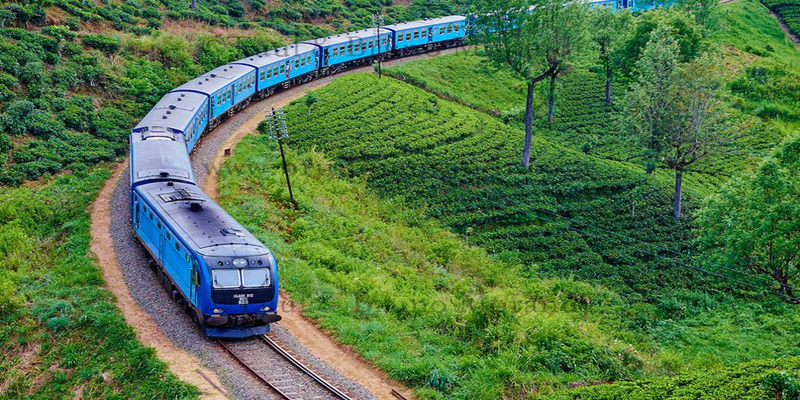
Sri Lanka Railways has decided to suspend interprovincial services effective from midnight today (May 11).

Accordingly, intra-provincial services will be provided for the commuters for time being, the railways department said further.

The decision came after the government announced that interprovincial travel restrictions would be imposed from tonight in a bid to control the spread of novel coronavirus.

In addition, interprovincial bus services provided by Sri Lanka Transport Board (SLTB) and private sector will also be suspended from tonight.

Minister of Transport Dilum Amunugama stated that an announcement regarding the use of buses for essential services will be made later.

Meanwhile, the Cabinet of Ministers has decided to continue the provision of concessions for interprovincial bus transportation during the COVID-19 pandemic.

Accordingly, the proposal submitted by Minister of Transport to levy only 50% of the annual tender deposits and only 50% of the expressway temporary permit charges from bus owners from April 01, 2021 to September 31, 2021 due to irregular operations following the outbreak of the pandemic.

WHO denies claims GR influenced decision on Sinopharm

The World Health Organisation (WHO) has denied claims that President Gotabaya Rajapaksa had influenced the decision by the global body to approve the emergency use of the Sinopharm vaccine.

In response to a question raised by Daily Mirror the WHO said that the Emergency Use Listing (EUL) of the WHO process usually takes two to three months to complete, depending on the quality and availability of the data submitted by the vaccine developers, among other factors and the prequalification process is more complex and thus takes longer.

Sri Lanka had taken the credit for the Chinese Sinopharm vaccine being approved by the WHO.

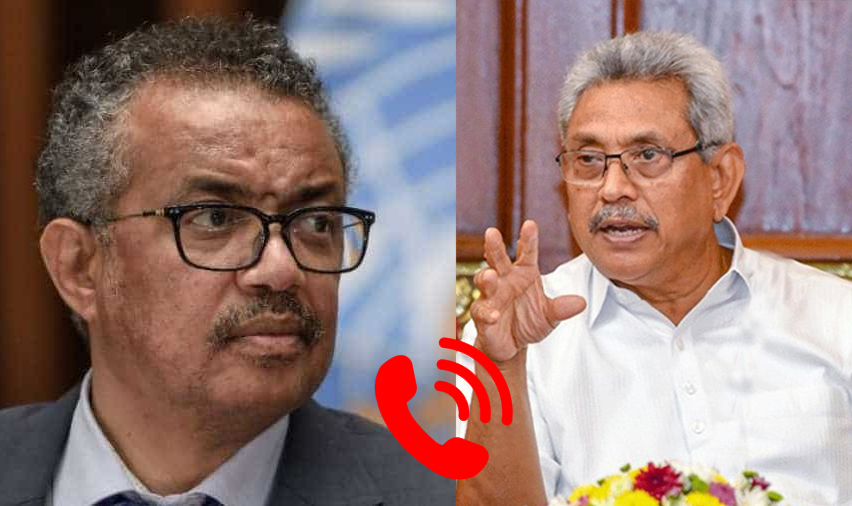
President’s Spokesman Kingsly Rathnayaka had said earlier that the WHO had approved the vaccine as a result of a discussion President Gotabaya Rajapaksa had with the Director-General of the World Health Organization (WHO) Dr Tedros Adhanom Ghebreyesus.

“….as a result of a discussion President Gotabaya Rajapaksa held with the Director-General of the World Health Organization (WHO) via ‘Zoom’ last Friday, the WHO on the same evening approved the emergency use of the “Sinopharm ” vaccine,” Rathnayaka had said in a statement.

WHO said that in line with their national regulations and legislation, countries have the autonomy to issue emergency use authorizations for any health product.

“Domestic emergency use authorizations are issued at the discretion of countries and not subject to WHO approval,” the WHO said in an emailed response to Daily Mirror.

The Who added that in emergency situations, such as the current COVID pandemic, and for countries whose regulatory authorities are under-resourced, WHO supports the regulatory process by running independent parallel reviews, usually involving independent experts and experts from regulatory authorities at global level.

Sri Lanka imposes inter-province travel restrictions

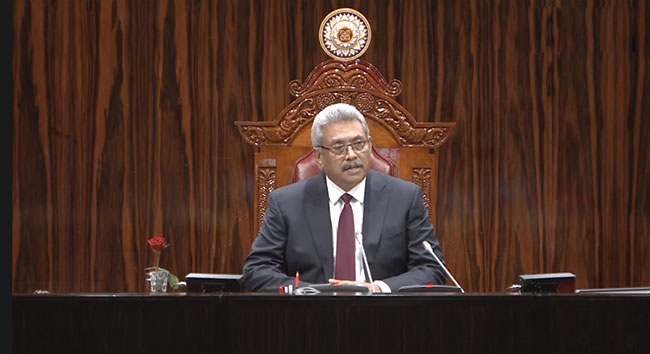
Sri Lanka’s President Gotabaya Rajapaksa has instructed authorities to impose Inter-Provincial Travel Restriction with immediate effect until the 30th of May in order to prevent the spread of COVID-19.

A statement from Kingsly Ratnayaka, the President’s Spokesperson noted that the President also instructed to cancel all gathering and events.

Further, the number of people entering any business establishment should be restricted and authorities are ordered to locate and isolate localities with rising numbers of COVID-19 infections.

However, the Inter-Provincial Travel Restrictions should not disturb the normal lives of the people and essential services must operate in a streamlined manner, the President ordered.

The statement made by the President’s Spokesman Kingsly Rathnayaka

(05-10-2021)

Excerpts.

“President Gotabaya Rajapaksa pays close and constant attention to the current situation in the country that has arisen due to the COVID-19 pandemic. I would like to present to you the outcome of his discussions with all relevant parties to protect the country and the people from this pandemic.

Sri Lanka received 500,000 doses of AstraZeneca vaccine free of charge and the government purchased another 500,000 vaccines. We received another consignment of 265,000 vaccine doses. Accordingly, Sri Lanka received a total of 1,265,000 doses of AstraZeneca vaccine.

Under the first phase of the COVID-19 vaccination drive, around 925,000 people were given the first jab of the vaccine. However, the recent developments in India obstructed in getting down vaccines required for the second dose.

The health authorities have pointed out that around 600,000 doses of AstraZeneca vaccine are required to complete the second dose of the vaccination. The government is currently in discussions with various parties to obtain the required AstraZeneca vaccine doses.

Meanwhile, Sri Lanka received a donation of 600,000 doses of Chinese Sinopharm vaccine, which was not earlier approved by the World Health Organization.

However, as a result of a discussion President Gotabaya Rajapaksa held with the Director-General of the World Health Organization (WHO) via ‘Zoom’ last Friday, the WHO on the same evening approved the emergency use of the “Sinopharm ” vaccine.

Accordingly, the “Sinopharm” vaccination programme was commenced from the very next day of receiving approval and the government is making arrangements to vaccinate 25,000 people per day in the Western Province under the first phase.

Negotiations held with the Chinese authorities to obtain three million doses of Sinopharm vaccine have been successful and the government has made plans to commence the vaccination programmes in other provinces too as soon as the vaccines are received.

The government has decided to use Russia’s Sputnik vaccine as well in the vaccination drive. Under the first phase of this, Sri Lanka received 15,000 doses of vaccines.

Since the vaccination method of Sputnik is slightly different from the methods used for other vaccines, our healthcare sector commenced the vaccination from the Gothatuwa area adopting the new methodology.

Under its second phase, 85,000 more Sputnik vaccines will be received soon.

The President is confident that Sri Lanka will be able to successfully manage the current situation through vaccination, similar to the successful results achieved in the United States, the United Kingdom and a number of European countries through vaccination. The President is also fully confident in Sri Lanka’s robust healthcare system and the entire staff members of the healthcare sector.

The World Health Organization (WHO) has specially appreciated Sri Lanka’s strong healthcare system in every discussion the President had with the WHO.

However, President Rajapaksa points out that even with all these measures, the commitment of the people to control the Covid-19 epidemic is vital.

The President is of the view that citizens focusing on social responsibilities and adhering to all safety measures and the advice given by the health sector to maintain social distancing and avoid unnecessary gatherings will lead to a healthier nation.

As a result of the discussions the President held with all stakeholders to put an end to the covid-19 epidemic, the President has instructed the relevant authorities to (until May 30);

-Impose travel restrictions between all provinces,
-Cancel all gatherings and functions,
-Limit the number of people who can enter and stay in commercial establishments, and
-Isolate the areas where infected people are found in higher numbers.

However, the President emphasised that proper procedures should be followed to ensure that the lives of the people are not disrupted and that the essential services of the country are maintained when imposing these restrictions.

President Gotabaya Rajapaksa is confident that the people of our country will act responsibly in line with the Government’s programme.

Thank you!”

(End of excerpt)

EP Governor imposes travel restrictions between districts in the Eastern Province

Governor of the Eastern Province Anuradha Yahampath with the aim to control the spread of Covid-19 disease has directed the security forces to take necessary measures to impose travel restrictions between districts in the Eastern Province.

In addition, the Governor has requested all shops in the cities of the Province to close their shops after 06.00 pm.

The Governor has also instructed the security forces to take necessary measures to prevent people from entering the cities after 6 pm except for an emergency.

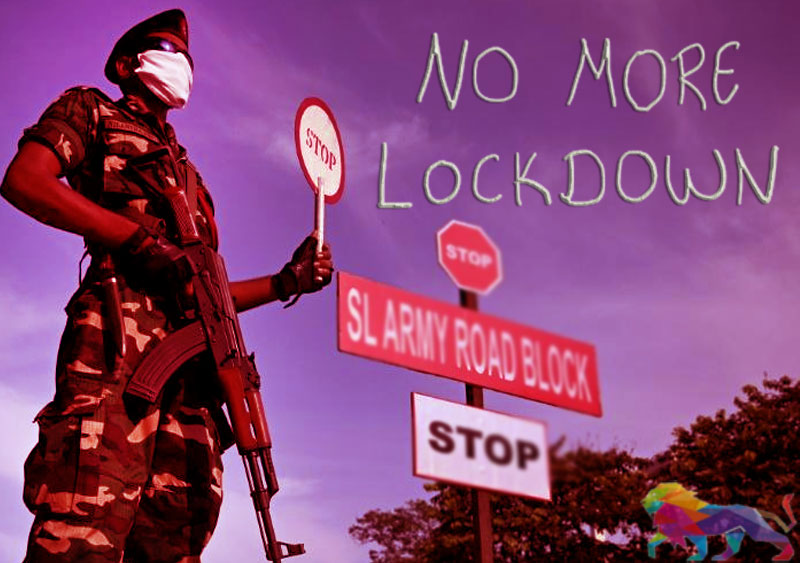
The Governor also directed the security forces to use roadblocks between the district boundaries to stop the unnecessary movement of people with immediate effect.

Posted in Uncategorized

No decision on islandwide lockdown, but provincial travel restrictions possible – Army Commander

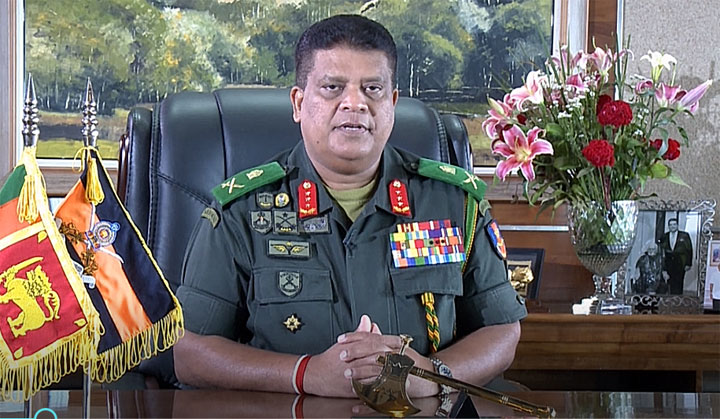
Head of the National Operation Centre for Prevention of COVID-19 Outbreak (NOCPCO), Army Commander General Shavendra Silva says that no decision has been taken regarding an islandwide lockdown.

He therefore requested the public not to panic or rush to shops, supermarkets etc. and to refrain from forming long queues to stock food or essential items.

However, the Army Commander stated that travel restrictions could be imposed within the next few days preventing travel between provinces.

Speaking to Ada Derana, he said that there is a possibility that provincial travel restrictions would be imposed considering the spike in Covid-19 infections and the manner in which people travel to various areas.

He stated that it is most likely that entering and exiting the Western Province would be prohibited except for essential services and essential workers, in the coming days.

In particular, a series of instructions is expected to be issued in the future to somewhat extend the time period where people can buy groceries and other goods and shops so that the people of the country can go at any time and get the groceries without congregating in a shop, he said.

The Army Commander especially requested the public to avoid traveling between districts for unnecessary reasons. As the coronavirus is rapidly spreading at this moment, steps are to be taken in the next few days to reduce the risk of it spreading from one province to another, he said.

Posted in Uncategorized

JVP predicts crash of economy imminent, due to mismanagement

The 2020 Central Bank annual report presented to Parliament last week is a testimony to the fact that the country’s economy is in dire straits, says the JVP.

Addressing the media at the party headquarters in Pelawatte yesterday, JVP Politburo member and former MP Sunil Handunnetti alleged that the government was using the funds meant for the development of the country for its projects to cling on to power. “The Central Bank report confirms many warnings we have been issuing in the recent past. The country’s economy is sliding into a recession and there would be a crash soon. The economy recorded a growth of -1.6% during the first quarter of 2020. That was before the onset of the pandemic. The situation worsened in the second quarter. The government is citing the pandemic as the reason for the sharp economic downturn.

“The impact of the pandemic on the economy is evident, but what we are experiencing is mainly due to the economic mismanagement. There are five main crises in our economy. The first is the loan crisis. The revenue received by the Treasury is not sufficient even to pay the installments of loans taken. To pay-back the due installments the country needs to borrow an additional 135 billion rupees. The total outstanding loans as at 2019 was Rs 14,115 billion. That increased to Rs 16,427 billion in 2020. The government has to pay 6.9 billion US dollars as loan repayments. The second is the import-export crisis.

“The government came into power promising to improve the production industry and bring down imports. We have sea areas, which eight times the country’s land masse, but we imported fish worth Rs 34,650 million in 2020. In 2010, we produced 27 percent of the onion requirement in this country; now it has dropped to eight per cent so that we have to import 92 per cent of the country’s onion requirement. We have imported Rs 27,610 million worth of salt, milk and milk products worth Rs 61,930 million. The third crisis is the weak government revenue. In 2016 the government income was around 23 per cent of the GDP. As at 2014 the figure dropped to 11.5 per cent. Now it’s at 9.1 percent.

“The fourth crisis is the collapse of the industrial sector due to the high cost of raw materials, failure to combine technological support with the industrial process and inability to create a proper market for industrial output. The fifth crisis is the inequitable distribution of national wealth.”

Of the total population, the top 10 percent of rich enjoy 38.4% of national income while 10 per cent at the bottom receive only 1.1 per cent of the national income. There is a huge tax burden on the people. This government promised to maintain 40 percent direct taxes and 60 percent indirect taxes. Yet now the indirect taxes are around 80 percent. Sri Lanka is the only country in the world with this much taxes on food consumed by the people. Even in India it’s 49 per cent, in Indonesia its 50 percent and in Thailand it is at 40 percent.”

JVP Central Committee Members Wasantha Samarasinghe and Nalin Hewage also addressed the press.

Posted in Uncategorized

Sri Lanka gets $500m South Korean loan after Chinese bailout

Sri Lanka said Monday it had secured a $500 million loan from South Korea, a month after a similar loan from China as the island faced a foreign exchange shortage amid a debt crisis.

The government said South Korea agreed to provide the loan at a concessional interest rate of 0.15 to 0.20 percent, repayable over 40 years with a 10-year grace period.

“The framework arrangement was signed today,” the finance ministry said in a statement.

Last month Colombo raised another $500 million loan from Beijing in a desperate bid to shore up its dwindling foreign reserves and ease pressure on the local currency.

The People’s Bank of China also granted a $1.5 billion currency swap to finance imports from China in February as the rupee hit a record low of 202.73 to the dollar.

At the end of April Sri Lanka said its economy shrank 3.6 percent last year due to the Covid-19 pandemic, making it the worst downturn since independence from Britain in 1948.

The unprecedented recession compared with 2.3 percent GDP growth in 2019, according to the Central Bank of Sri Lanka.

It said the government’s debt also rose to 101 percent of GDP last year, up from 86.8 percent the previous year, underscoring the debt crisis facing the island.

International rating agencies have expressed concern over Sri Lanka’s ability to service its huge foreign debt as the country’s foreign reserves fell sharply in the past year.

Sri Lanka has already borrowed heavily from China raising fears of a debt trap.

Chinese influence in Sri Lanka has been growing in recent years through loans and projects under its vast Belt and Road infrastructure initiative, raising concerns among regional powers and Western nations.

Between 2005 and 2015, Colombo borrowed billions from China, accumulating a mountain of debt for expensive infrastructure projects.

Sri Lanka was forced to hand over its strategic Hambantota port on a 99-year lease to a Chinese company in 2017 after it was unable to service the $1.4 billion debt from Beijing used to build it.
(AFP)

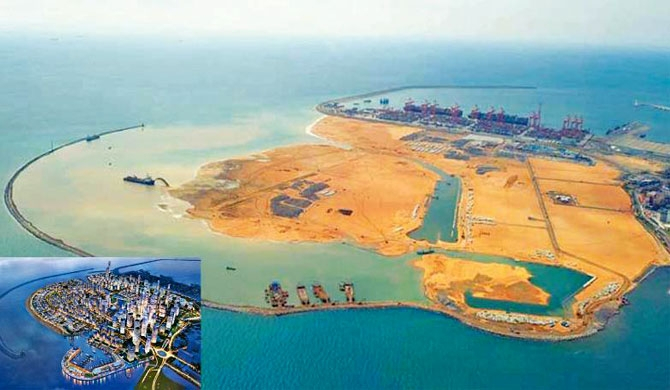
Ambitious Port City dragged into new controversies amid geopolitical cold war – FT.LK

The key Supreme Court decision to go ahead with the Port City Bill will be announced on 18 May, the day Sri Lanka will celebrate the 12th anniversary of the victory in a 26-year war. Once passed, possibly with a simple majority in the Parliament on the same day, many analysts expect the ruling party members to come up with slogans stating they ended another war on all opposition to the biggest foreign direct investment in the country that is expected to turnaround Sri Lanka’s economy.

The important decision is likely to be the Chinese-built Port City is going ahead with no major legal barriers. This is crucial because investors need confidence in the legal system governing their investments and Sri Lanka’s failure to look into the investor concerns on tough and delayed legal procedures in the past have driven away many potential investors. Obviously Port City cannot afford it, if the $ 1.4 billion project needs to create South Asia’s Dubai in Colombo.

The reality is that if Sri Lanka wants to attract long-term and serious investments as it had never before, then it has to do something it has never done in the past. This is what the optimists say about the proposed Port City Economic Commission Bill whose pros and cons have been already argued and counter argued in the Supreme Court. Opposition political parties, Bar Association of Sri Lanka, a civil society organisation, and some individuals sought Supreme Court ruling after filing fundamental rights cases against the proposed bill.

Port City is perceived as a game changer or turning point for sovereign-default facing Sri Lanka and the present Government expects it could help reduce the dependency on foreign debts. However, the proposed bill has become a rallying point for the opposition after ruling party legislator Wijeyadasa Rajapakshe criticised the bill with some concerns he had raised in the previous Government as well. The arguments put forward by the petitioners in the Supreme Court were based on inconsistency with the country’s constitution and the bill in infringing the island nation’s sovereignty as well as for lacking Parliament oversight.

The Port City Economic Commission Bill is not something that came overnight. It has been drafted since the last Government though Opposition politicians say it would have been different from what is presented now in the Parliament.

Though the original plan for such a reclaimed land and city was proposed by former prime minister Ranil Wickremesinghe in 2002, it was started under the presidency of current premier Mahinda Rajapaksa in 2014 with Chinese President Xi Jinping also arrived for the grand inaugural ceremony. What happened to the Port City under the previous Government led by Maithripala Sirisena including suspending the project for nearly two years is now history.

To understand the Port City and the reasons behind the agitations, one should see the big picture with the backdrop of how Sri Lanka is caught into geopolitics and a Cold War between China and allies of the United States including India, the South Asian regional power which has raised concerns over this reclaimed land and regional security from 2014. Two senior Government officials under Mahinda Rajapaksa’s 2010-2015 Government said the project was initially offered to India and then to China, after the Sri Lankan neighbour’s lethargic interest. An Indian diplomat, however, said India was never offered such a project.

Battle for strategic location

There have always been interests by international powers like the US, China, and India on Sri Lankan ports. Trincomalee, one of the best natural harbours in the world is dominated by India since 2003 and Hambantota port is now controlled and majority owned by a Chinese state firm since 2017. Colombo port has been attractive for many international powers with a Chinese firm already controlling a key terminal. All these interests and battles for Sri Lanka’s coast show the importance of the island nation’s strategic location in the world map, especially the global trade. All these interests would have been wonderful if successive Sri Lankan governments had converted them into investments to earn foreign exchange through win-win deals.

The broader picture based on global geopolitics, however, is completely different. The Port City with the proposed strong legislation is perceived to become a Chinese colony and is seen as a security threat to India and the Indian Ocean region. Top Government officials say both India and the US have raised concerns both directly and indirectly on this Chinese project.

Port City in the reclaimed land will be a strong contributor in China’s Belt and Road Initiative (BRI), a global infrastructure drive by the world’s second biggest economy that has made China’s rivals nervous. The previous Sirisena Government allowed to resume the project after suspending it. However, the Government was able to remove a clause in the original agreement that could have given some of the reclaimed lands on outright basis to the Chinese investor. Instead, the land was given on a 99-year lease basis. But that was done at the expense of cordial diplomatic relations with China. During the latter part of the previous Government, Maithripala Sirisena administration’s request for nearly $ 1 billion loan from a Chinese bank never materialised with some lame excuses being given.

The removal of the land ownership clause has hardly changed anything. A Chinese-controlled land in Sri Lanka is still a threat to Sri Lanka’s closest neighbour India for obvious security reasons. Government sources say India has never got settled since the arrival of two nuclear submarines in 2014 including one during Xi Xi Jinping’s official visit to Colombo. The arrival of the submarines to Colombo port later became one of the main reasons to oust then president Mahinda Rajapaksa in what is called by some most knowledgeable political analysts as an ‘internationally backed democratic coup’ through the presidential polls on 8 January 2015.

The last Government’s decision to give the East Container Terminal (ECT), which is close to the Port City and Chinese-built Colombo International Container Terminal (CICT), was to counterbalance those concerns, two top officials in the last Government say.

India along with Japan made its best bid to have control over ECT, the deepest terminal thus far in Colombo port. However, despite all the promises and commitment by the current Government leaders, Prime Minister Mahinda Rajapaksa went back on the promise, citing heavy pressure from the trade unions close to the ruling SLPP. However, two sources who are aware of the deal say Prime Minister Rajapaksa might revisit the decision if the state-owned Sri Lanka Ports Authority (SLPA) fails to start commercial activities at the ECT within six months from the decision.

Cold War

A perceived cold war between China and US-allies in Sri Lanka is not something new. Statements and counter statements by both the embassies of US and China in Colombo during the past year have proven this. The US, and its allies have raised security concerns as well as the genuineness of Chinese investments, while China has hit back against the US claims.

The perceived cold war comes at a time when China’s ambitious BRI infrastructure project is taking shape in the global trade and gradually impacting the West. China’s possible future plan to draw resources from Africa to Middle East via its BRI also is a concern for many countries who have been on the largest economies list in the past. The prediction of China becoming the largest economy in the world also is a concern for many developed nations as well. The bottom line is if China successfully establishes the BRI, then it’s going to be the busiest economy in the world, pulling the US down.

At this juncture, Sri Lanka’s strategic location is crucial for China’s BRI and for Sri Lanka, China is needed to borrow money as and when it wants amid piling foreign debts at higher cost. With the downgrading by all three global rating agencies, the island nation is unable to access the global capital market at a cheaper rate as in the past. This is why global financial analysts expect Sri Lanka to default sovereign loans in 2022.

For some Sri Lankan leaders, the close relation with China is a golden opportunity given that the $ 81 billion economy is unable to borrow money from the US, India, Japan, or countries from the European Union. These countries demand for transparency, better governance, more private sector participation, prudent financial procedures, and accountability for any money they give. Unfortunately, the Government is not in a position to wait for a long time to ensure all these criteria as it needs millions of dollars quickly.

China is different and it has now almost become Sri Lanka’s official credit card at any given time. A perfect match-making. However, as warned by many, Sri Lanka will soon find the threshold limit of its credit card when it will be forced give out lands and assets when it is unable to honour the loan repayments.

What Sri Lankan leaders have forgotten is the cost it paid for siding with one international power during a past Cold War. When then president J.R. Jayewardene’s administration got close to the US in late 1970s, India feared that J.R. could give Sri Lanka’s strategically located natural port in Trincomalee to be used as a naval base for the US military. This was the time when India and US were at the cold war because of US’ alliance with China and Pakistan.

Sri Lanka had earlier agreed to give the Trincomalee tank farm development project to India at that time because of India’s fear that the original bidders, a Singapore firm, had links to the United States. Jayewardene’s decision in 1981 to lift the nine-year-old ban on foreign warships in the Trincomalee harbour was seen as a major threat to India’s hegemony in the region, particularly because the United States was the first to send warships to the port for refuelling. India feared that the Trincomalee harbour would be covertly converted into a United States naval base if it did not put pressure on Sri Lanka to give up the Singapore firm’s offer.

This along with the J.R. administration’s response to the 1983 ethnic clashes with attacks over minority Tamils and South Indian Tamil Nadu’s agitation led Indira Gandhi’s administration to train Sri Lankan Tamil youths in South India. This is how the Liberation Tigers of Tamil Eelam (LTTE) received foreign training in India. The rest is history now.

Now the order has changed. India and US are allies, while Pakistan and China are in the rival group. But if Sri Lanka believes it could take advantage of this rivalry, as it did soon after the end of the war amid alleged war crimes, it would be a big mistake. The consequence would be unimaginable as was in Sri Lanka’s civil war.

Concerns from Sri Lanka’s partners

There is no question that the ambitious Port City project should go ahead and will help the Sri Lankan economy immensely both directly and indirectly. However, it is important to consider the concerns of Sri Lanka’s key trading partners, especially the United States and EU nations, which together account for more than half of our exports. Since these countries have pushed Sri Lanka to address the past human rights violations including alleged war crimes, the current administration’s diplomatic relations have not been up to the mark with them.

The warning came from Alaina Teplitz US Ambassador to Sri Lanka and Maldives. Last month she warned the island nation of unintended consequences of ‘nefarious actors’ who may try to misuse the China-backed Colombo Port City’s easy business rules as a permissive money laundering haven amid concerns of tax leaks.

“Any legislation relating to the Port City has to be considered very carefully for its economic impact,” Teplitz told reporters in Colombo in an online discussion. “And of course, among those unintended consequences could be creating a haven for money launderers and other sorts of nefarious actors to take advantage of what was perceived as a permissive business environment for activities that would actually be illegal.”

India’s concerns on possible threats to regional security has yet to addressed. According to a 1987 Indo-Sri Lanka accord, Sri Lanka has to work with India on any action that could have a threat to regional security with a mutual understanding. Though China has repeatedly said Sri Lankan lands will not be used for military purpose, Western diplomats say they could hardly trust it.

For a successful future, Port City investments engaging with Sri Lanka’s international partners, is vital before deciding the legislation. The Chinese investor for the project may not like this, but such discussion is important in the interest of Sri Lanka’s future unless China comes to rescue and buys all Sri Lankan exports.

Outdated legal system

Whether you like it or not, the foreign party has a greater say in the Port City at least as per the bill presented to the Parliament. It is remained to be seen if it is good. With the passage of the bill, the Chinese firm should be able to start commercial operations legally in the Port City.

Sources who are aware of the investment interest in the Port City say there had been interest from Europe and Middle East for projects in the reclaimed land. However, they have asked for clear and liberal laws on the investments.

“The main concern during the discussions was the delay in our legal system. Most investors during the discussion asked for a separate legal system that will cut down arbitration to one-week time. We also understand that it is a must as our outdated laws take years to resolve arbitrations,” a former minister in the last Government said asking not to be named.

“But what former prime minister Ranil Wickremesinghe proposed was to incorporate the separate legal and court systems into the constitution and also to have Parliament oversight. Those aspects are missing in the new bill.”

The new bill once passed will be used against the Government until people see economic benefits from the Port City. But that needs time.

The new Port City Economic Bill has also explained Sri Lanka’s existing legal system in doing business. It has acknowledged that the existing laws have made lives of entrepreneurs and investors miserable.

(The writer is former Reuters Economic Reporter for Sri Lanka and current Head of Training at Centre for Investigative Reporting Sri Lanka. He can be reached at shiharaneez@gmail.com.)


Posted in Uncategorized

Sri Lanka sets a new record of over 2,500 new COVID-19 cases in a single day

Sri Lanka Sunday set a new record with the number of daily Covid-19 infections exceeding 2,500 for the first time since the epidemic began.

According to Epidemiology Unit of the Health Ministry, 2,672 new COVID-19 cases were reported so far on Sunday.

According to the Epidemiology Unit report at 8:25 pm Saturday, a total of 125,906 COVID-19 cases have been reported and 20,657 infected patients are being treated at hospitals, while 104,463 patients have fully recovered and been discharged from hospitals..

According to the Epidemiology Unit report, so far total of 931,396 people have received a first dose of COVID-19 vaccine and out of them 197,340 have received the second dose.