SLPP Gen. Secretary Says Gammanpila Not Considered Party Leader In SLPP-led Alliance

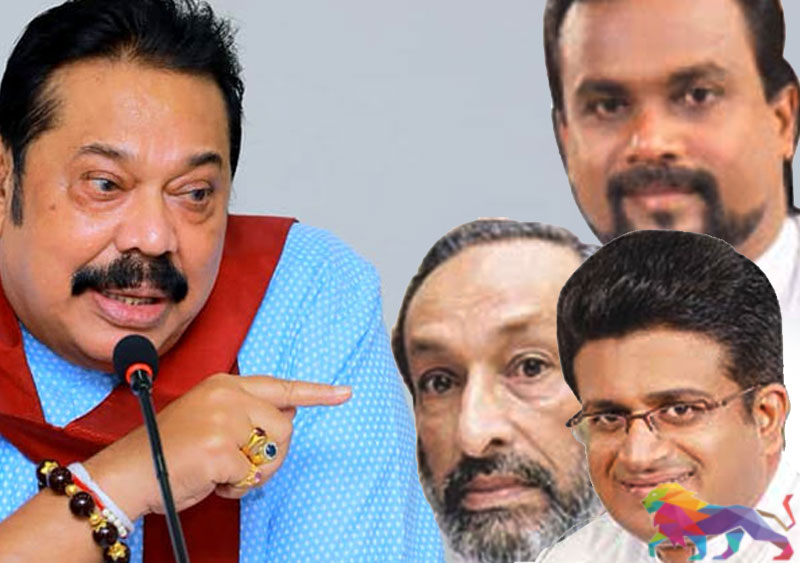
SLPP General Secretary Sagara Kariyawasam said Pivithuru Hela Urumaya leader Minister Udaya Gammanpila did not enjoy the ‘party leader status’ in the ruling SLPP-led alliance.

Kariyawasam made this remark to Asian Mirror when asked about several party leaders in the ruling alliance boycotting a meeting convened by the Prime Minister.

The General Secretary admitted that several party leaders including Wimal Weerawansa, Vasudewa Nanayakkara and prof. Tissa Vitarana did not attend the meeting.

“But Gammanpila is not considered a party leader. So, it is wrong to say that he boycotted the party leaders meeting,” the General Secretary added.

However, responding to the General Secretary’s statement, Minister Gammanpila said as far as he knew he was a party leader in the SLPP-led alliance.

“Who says I am not a party leader?” Gammanpila asked.

Sri Lanka marks two years since deadly Easter attacks

Sri Lanka is marking one of its darkest days in history today (April 21), with the second commemoration of the deadly Easter Sunday terror attacks which claimed the lives of more than 250 and injured at least 500 others.

The country was left devastated on the 21st of April 2019 after a group of suicide attackers of the now-outlawed local Islamic extremist organization National Thowheed Jamaat (NTJ) carried out a series of blasts at St. Anthony’s Church in Kochchikade, St. Sebastian’s Church in Katuwapitiya, Zion Church in Batticaloa, Cinnamon Grand, Kingsbury and Shangri-La hotels in Colombo and a guest house in Dehiwala.

Sri Lanka declared a state of emergency immediately after the bombings and the probes launched into the incident led to the arrest of many who have had links to the suicide bombers.

Archbishop of Colombo, His Eminence Malcolm Cardinal Ranjith has appealed to all Sri Lankans to observe a two-minute silence at 8.45 am in remembrance of the victims of the massacre.

Catholic churches in the island have been asked to ring bells at 8:45 a.m. and observe two minutes of silence before once again ringing the bells. Afterwards, candles or oil lamps will be lit, followed by various religious observances.

Two main memorial services will take place at the St Anthony’s Church in Colombo and the St. Sebastian’s Church in Negombo. The Archbishop will be presiding the memorial service at the St Anthony’s Church where the first bomb was detonated at 8.45 a.m. on April 21, 2019.

Meanwhile, Police Spokesperson DIG Ajith Rohana said special measures are in place to beef up security at all churches in the country.

The Police Headquarters has issued a special message to the officers-in-charge (OICs) of police stations and senior officers of territorial divisions including Senior DIGs, DIGs, SSPs and SPs to monitor the situation.

British parliamentarian calls for sanctions on Sri Lankan war criminals

Speaking in parliament yesterday(20-04-21), Elliot Colburn, MP for Carshalton and Wallington, and Chair of the All-Party Parliamentary Group for Tamils (APPGT) welcomed the work of the British Foreign Commonwealth and Development Office (FCDO) in bringing about the recent UN Human Rights Council resolution but questioned what further action was being taken.

He asked what steps the UK is taking “to implement the UN High Commissioner’s recommendations on applying sanctions, travel embargos, and filing cases against alleged war crimes under universal jurisdiction”.

Responding to the question, Wendy Morton, Parliamentary Under-Secretary of State for the FCDO, reemphasised the governments “serious concerns” for human rights in Sri Lanka and noted the UK-led resolution, “enhances the UN’s role in monitoring the situation and collecting evidence of human rights violations that can be used in future accountability processes”.

However, she further added that on sanctions, “it would not be appropriate to speculate on any further designation”.

Her statement comes as there are increasing calls to follow the US’s lead in placing sanctions on alleged Sri Lankan war criminals such as Shavendra Silva, who has been credibly accused of permitting mass atrocities such as the shelling of hospitals, summary executions, and widespread sexual violence. He is currently under a US travel ban due to these allegations.

Thus far the UK has yet to place a single sanction on any Sri Lankan military or government official implicated in human rights abuses.

Posted in Uncategorized

We oppose govt. decision to suspend May Day rallies: JVP

Politburo member of the Janatha Vimukthi Peramuna Sunil Handunnetti today (20) stated that the party opposes the government’s decision to suspend all May Day rallies and processions.

He stated that if the basis of the activities being suspended was due to the ongoing Covid-19 situation, there were several activities that should have been suspended.

“We cannot say this is a decision taken due to health reasons because the government had already made plans for the rally to commence. We were informed of this today even though we discussed the health regulations to which we should adhere to during the rally yesterday. If they are to stop these rallies, they should have also stopped Gama Samaga Pilisandara and all festivals held on Avurudu” he stated.

He said that he suspects the government is disallowing this because they are scared of the retribution the that rallies will have on the government itself.

“We are speaking on the injustice done to people and giving them their rights on May Day. The government knows that they have taken away some people’s rights. Therefore they do not want us talking about them,” Handunnetti said.

Sri Lanka cabinet nod for laws against “false propaganda” online

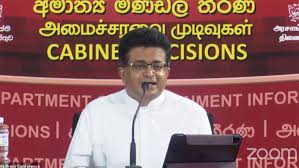
Sri Lanka’s cabinet of ministers has approved a proposal to draft legislation to combat false and misleading statements on the internet, the cabinet office said today, days after the country’s Justice Minister reiterated the government’s commitment to criminalising social media posts deemed fake.

The cabinet has approved a resolution tabled by Justice Minister Ali Sabry and Media Minister Keheliya Rambukwella to advise Sri Lanka’s Legal Draftsman to draft a bill to “protect society from the harm caused by false propaganda on the internet”, a statement from the cabinet office said.

The announcement follows a statement by the Justice Minister on Sunday (18) that the government will go ahead with a previously announced plan to introduce laws styled after Singapore’s Protection from Online Falsehoods and Manipulation Act (POFMA), a controversial piece of legislation that has drawn widespread criticism as a tool to control the media and free speech.

The minister told reporters that there are posts circulating online that paint the country in an unflattering light, constantly referring to Sri Lanka as an unlivable place.

“We won’t allow this to continue,” he said, arguing for the need to introduce a legal regime to contain it.

“The profiles of 15 to 17% of Sri Lanka’s social media activists are fake. It is impossible to take legal action against them no matter what falsehoods they might utter,” he said.

The cabinet announcement today said the spread of false information on the internet poses a serious threat and is seen as being used to divide society, to spread hatred and to weaken democratic institutions.

“Various countries have already taken steps to legislate in order to address this problem. Steps should be taken to provide access to accurate information to citizens and civil society by introducing a new law to protect society from the harm caused by false propaganda on the internet,” it said.

In November last year, Media Minister Keheliya Rambukwella told a Ministerial Consultative Committee on Mass Media that a regulatory framework for Sri Lankan websites was on the cards.

The committee had reportedly studied Singapore’s controversial Infocomm Media Development Authority Act (IMDA), in addition to POFMA, which critics said will be emulated by Sri Lanka’s proposed regulatory framework in its mandate to curb reporting and content that spread falsehoods and incite racism.

Singapore’s IMDA passed in 2016 is one of the applicable acts to the statutory body responsible for broadcasting and content regulation (irrespective of the transmission medium). It received criticism from various quarters including the International Press Institute over allegations of controlling the media.

Under POFMA, passed in 2018, the Singaporean government can issue a “correction notice” to an individual or organisation for online content about a public institution that the authorities deem false or misleading. The government can even amend such content in the name of public interest. According to various international media reports, the law has been accused of targeting civil society activists, NGOs and opposition lawmakers. Allegedly false statements published by media websites in Singapore can, under POFMA, carry hefty fines up to 1 million Singapore dollars (USD 731,000) and jail sentences of up to 10 years.

Posted in Uncategorized

3 Ministers who boycotted PM’s meeting held discussions with president

At least ten party leaders have boycotted the party leaders’ chairs chaired by Prime Minister Mahinda Rajapaksa yesterday.

Among those who boycotted the meeting were Ministers Wimal Weerawansa, Udaya Gammanpila and Vasudeva Nanayakkara.

However, prior to the meeting, these leaders have requested a separate date for them, saying their issues could not be discussed at the Monday’s meeting.

Accordingly, the PM has given them a separate date.As a result, leaders from Jathika Nidahas Peramuna, Pivithuru Hela Urumaya, Ape Janabala Pakshaya, Democratic Left Front, Sri Lanka Communist Party, Lanka Sama Samaja Party, Sri Lanka Mahajana Paksaya, Yuthukama National Movement and Jathika Janatha Peramuna did not show up at the Monday;s meeting.However, it is learnt that these leaders have boycotted the meeting because some of those invited to the meeting were not party leaders

.It surfaced that SLPP had invited 51 representatives to attend this meeting.Fourteen parties are coalition partners of the SLPP. Meanwhile, it is learnt that these three Ministers who boycotted the meeting with the Prime Minister had held a separate meeting with President Gotabaya Rajapaksa.

Posted in Uncategorized

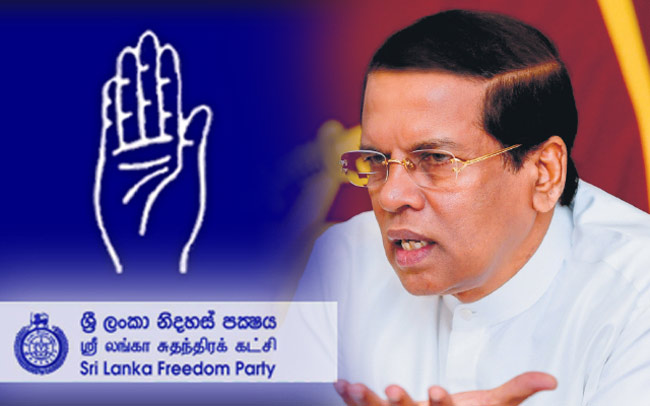
Sirisena’s SLFP Decides To Hold Separate May Day Rally In Colombo Amidst Heightening Political Tensions

The Sri Lanka Freedom Party decided to hold a separate May Day Rally in Colombo, announced SLFP Chairperson and Former President Maithripala Sirisena on Tuesday (20).

Speaking to reports, the Former President said the Central Committee of the Sri Lanka Freedom Party had decided for a separate May Day Rally.

On Monday (19), Sri Lanka Freedom Party General Secretary Dayasiri Jayasekera speaking to reporters said the SLFP will hold its own May Day Rally at the SLFP head office in Battaramulla.

“We will invite all parties in the alliance including the leaders of the SLPP,” he added.

The Sri Lanka Freedom Party will send a representative to the Sri Lanka Podujana Peramuna May Day Rally, he noted.

Posted in Uncategorized

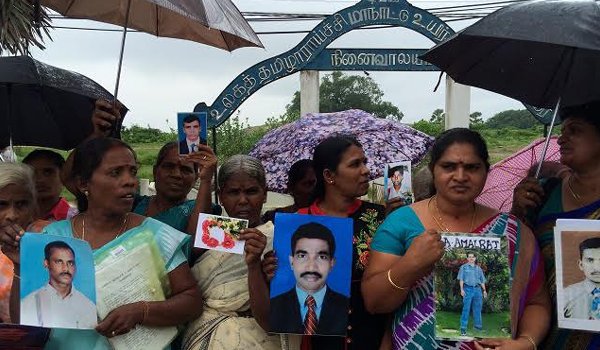
Continuing tragedy of war widows in Sri Lanka By V Suryanarayan

Thomas Hawkins, in his poem, The Tragedy of War, has written: “The tragedy of war, ends not with those who died, for the tragedy continues in fragile minds, who did survive”. The poem epitomises the sad plight of 70,000 war widows, mainly concentrated in the northern and eastern parts of Sri Lanka.

The Fourth Eelam War ended in 2009. But for the women left behind, the battle for survival continues. In the Tamil areas, the death squads of the government took away many young men, who “disappeared” leaving behind their wives and children as orphans. According to Thomson Reuters Foundation, Nathkulasimham Nesemalhar, 54, took a flight from Colombo to Muscat in March 2017.

She was happy she had a boarding pass as she hoped that by working as a housemaid, with a monthly salary of Rs 30,000, she would be able to repay debts and her three children could lead a normal life. But her hopes turned into a nightmare. When she arrived in Oman, she found she was enslaved with other women in a dimly lit room, with no ventilation. She was taken every day to different houses, to work from morning to night, and brought back and locked again. Nesemalhar said, “There were 15 of us. We never got paid”. Finally, they were brought back to Sri Lanka when the government intervened.

Nesemalhar’s case is not unique. The lack of opportunities for self-employment is making Tamil widows victims of human traffickers who sell them as slaves in West Asian countries. Reports of physical and mental abuse are common. Women are reluctant to speak about sexual abuse and rape, fearing shame and stigma. Since it is easy for Muslims to get jobs in West Asia, Hindu women marry Muslims, become the second or third wife of someone, get a passport and proceed to West Asian countries to lead a life of misery and toil.

It is not only the Tamil women who were rendered widows. Hundreds of Sinhalese soldiers died during the ethnic conflict and their wives became widows. They are eligible for pension benefits equivalent to their husband’s last salary. There is no equivalent treatment of Tamil widows.

According to UNDP estimates, Sri Lanka still ranks high in terms of human development index, better than other South Asian countries. Because of the war, the Northern Province remains one of the least developed parts. More than a fifth of the 2,50,000 households in the Northern Province are headed by widows, who have become breadwinners.

The maternal mortality rate is 30% against 22% for the whole country. M L A M Hizbullah, the then Deputy Minister for Women‘s Affairs and Child Development, admitted in September 2010 that the government had a list of 89,000 war widows—49,000 in the Eastern Province and 40,000 in the Northern Province. Among them were 12,000 below the age of 40 and 8,000 who had three children.

The government has done very little to improve the situation. Widows have to produce the death certificate of their husbands to receive Rs 50,000 as compensation. The widows, in most cases, cannot produce death certificates, especially those of the “disappeared”. The rest are given Rs 150 per month, not even sufficient to meet a day’s expenditure.

I was able to persuade Somi Hazari (who unfortunately died last month), a businessman involved in export-import trade with Sri Lanka, to chalk out a plan of action for starting poultry farms in the Eastern Province. The mother hens would be exported from India, assistance would be provided for starting the poultry farms, and eggs and chickens would be bought every day and sold throughout the country. If implemented it would have provided a decent income to many households.

The only hitch, according to Somi, is the government rule that mother hens cannot be imported from India. The Sri Lankan diplomats based in Chennai and New Delhi assured us that the ban would be lifted. The ban has not gone even today and Somi’s plan of action fizzled out.

Prabhakaran’s war strategy, in many ways, contributed to the present situation. During the fairly long spell of the ceasefire, 2002-06, he allowed the guerrillas to go home and get married. Once they started family life and had children, their revolutionary zeal began to wane. Milinda Moragoda, the astute Sinhalese politician who was involved in negotiations with Anton Balasingham during the ceasefire period, told me that a prolonged ceasefire would bring out into the open all the contradictions within the LTTE. The Eastern guerrillas raised the banner of revolt because they felt that the northern leaders were using them as cannon fodder.

Later they made common cause with the Sri Lankan government. Prabhakaran’s supply lines were destroyed, thanks to the inputs made by the Indian intelligence agencies. The crimes committed by the Tigers—the assassination of moderate Tamil leaders and using women and children as shields against army reprisals—disproved its claim that it was a national liberation organisation. The LTTE was forced to retreat from place to place and finally got decimated in May 2009.

The sad aspect of the present situation is the fact that India, especially Tamil Nadu, is not doing anything substantial to wipe the tears of the Tamil war widows. I have been pleading with the Tamil Nadu unit of the BJP that it should send a team to Lanka’s north and the east, study the problems in depth, and chalk out and implement self-employment measures for these unfortunate women.

Whenever I spoke to them, the leaders would nod their heads in approval, but no follow-up measures were taken. Like other Dravidian parties, they also make fiery speeches “full of sound and fury, signifying nothing”.
“What we call the beginning,”
T S Eliot wrote, “is always the end”. Let me, therefore, conclude from the poem that I quoted in the beginning. “So I say to leaders of this world, this nightmare should be gone, please realise once and for all, that a war is never won”.

V Suryanarayan

Senior Professor (Retd), Centre for South and Southeast Asian Studies, University of Madras

(The author was the Founding Director of the Centre in the University of Madras)
(suryageeth@gmail.com)


Posted in Uncategorized

Wimal, Gammanpila, Vasu, Tiran meet PM separately for talks

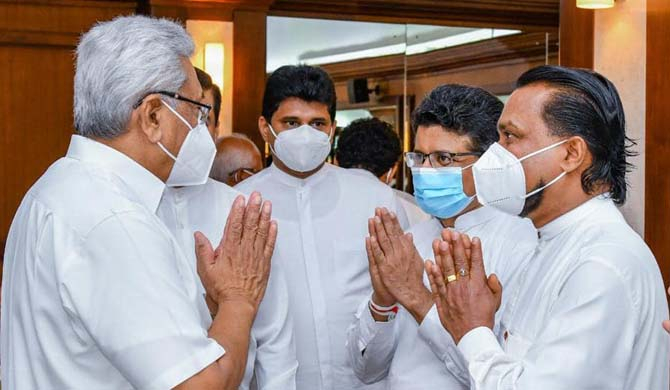
Ministers Wimal Weerawansa, Udaya Gammanpila, Vasudeva Nanayakkara and MP Tiran Alles who were alleged to have boycotted an all party leader’s meeting with Prime Minister Mahinda Rajapaksa yesterday had infact met the Prime Minister separately ahead of the meeting claiming they had certain political issues to discuss which could not be discussed in a larger crowd, the Daily Mirror learns.

Senior political sources said the four MPs had not boycotted the meeting as alleged by some, but the four of them had arrived at Temple Trees earlier yestetrday and met Rajapaksa separately to discuss several issues which were later also discussed in the All Party Leader’s meeting.

The excuse given was that the four MPs had asked for a smaller meeting with the Prime Minister but when they were notified that several other MPs would be present they had sought a seperate meeting with the Premier. The four had then left early before the larger meeting got underway.

The four had however attended a large dinner hosted for the ruling government MPs later in the evening at Temple Trees yesterday.

Indian Foreign Minister wants early elections to Sri Lanka’s Provincial councils

India supports the call of international community for the Sri Lankan government to fulfill its commitments on devolution of political authority including through early holding of elections to provincial councils, according to S. Jaishankar, External Affairs Minister.

This also covers the commitment of ensuring that all the provincial councils are able to operate effectively in accordance with the 13th Amendment to the Constitution of Sri Lanka, Dr. Jaishankar has stated in his letter sent recently to the AIADMK’s Member of Parliament (Rajya Sabha) M. Thambi Durai.

The Minister’s reply was in the context of the AIADMK leader raising the Sri Lankan Tamil issue in the Rajya Sabha last month in the context of a resolution adopted by the United Nations Human Rights Council.

Pointing out that the position of India was conveyed during the deliberations on the motion at the Council, Dr. Jaishankar said the country voted in abstention at the UNHRC but it made a “strong statement” as Explanation of Vote, stressing “our abiding commitment to aspirations of the Tamils of Sri Lanka for equality, justice, peace and dignity.” It had also urged the Sri Lankan government “to carry forward the process of reconciliation, address the aspirations of the Tamil community and continue to engage constructively with the international community.”

During the consideration of the resolution at the Council on reconciliation, accountability and human rights in Sri Lanka, he said India had remained “closely in touch” with all countries and made a statement at the interactive debate on February 25, outlining its position.

Assuring Mr. Thambi Durai that “all efforts are being made to ensure that the safety and interests of Tamils in Sri Lanka are fully safeguarded,” the Minister said the country “attaches high importance” to the matter.

Source:The Hindu