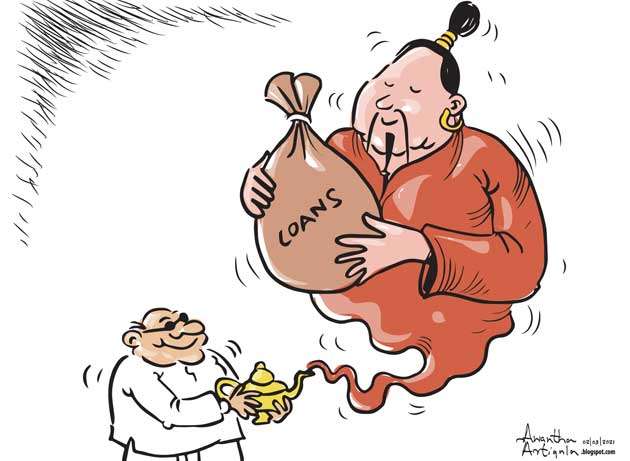
China’s way is exploiting other countries by persuading rulers and professionals through bribery and corruption: Nedalagamuwe Thero

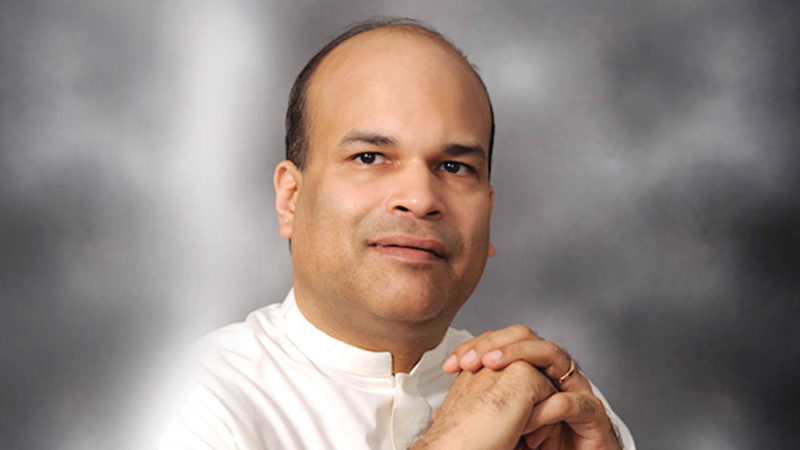
Exploiting other countries by persuading rulers and professionals through bribery and corruption is the way of China, Prof. Nedalagamuwe Dhammadinna Thero said speaking to a rally held in Rideegama two days (28) ago.

“It is the way of China that bosses are bought for money, while the minions automatically follow. That is the way. Now, if you are in desire of achieving something, the deal could have been done by any means necessary in order to achieve it. That is how the procedure goes,” the Thera said.

He added: “This would be a very immoral, irregular and illegal system. The United States Constitution states that state-owned enterprises do not return commissions at home or abroad. But in China, you will be given a whole commission of 15%, if you ask for a 15% commission. Imagine!”

“Now the best example in our country would be the coal power plant in Norochcholai,” the Thera went on. “That’s about 300 megawatts of electricity. But in fact, only 270 are generated in the turbines. 30 missing. Why ? If quality turbines are imported, commissions cannot be paid. So bring a lower level one to it. Our general public does not know anything about it. We believe what the politicians and the engineers say. When both of them are given commissions, this is what happens.”


Justice process for Easter Sunday attack victims should begin by April: Cardinal

The Archdiocese of Colombo yesterday faulted the Government for what it termed as repeated delays in bringing to justice those connected to the Easter Sunday attacks, and voiced concern on whether they were caused by “external interferences.”

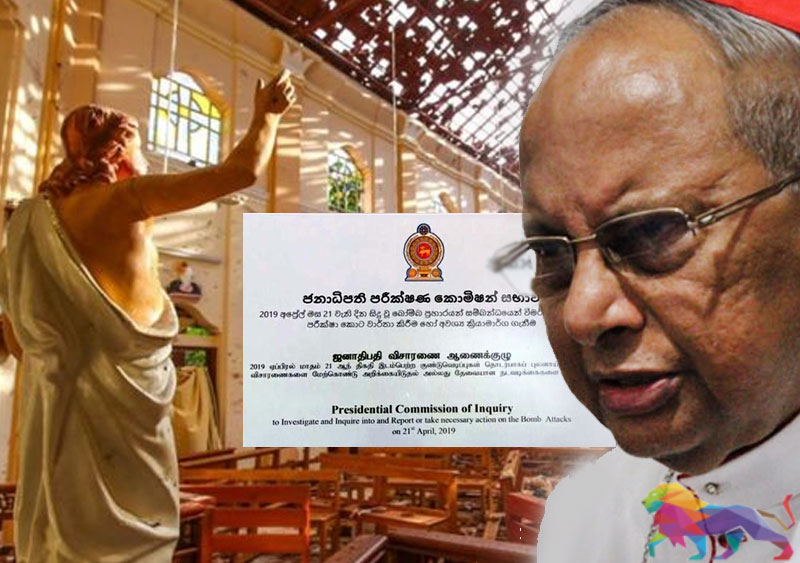
Archbishop of Colombo Malcolm Cardinal Ranjith, issuing a strongly worded statement, appealed for the process to begin at least by the second anniversary of the attacks that falls next month. The statement also pointed out that even though nearly two years had lapsed there was little tangible headway in investigations to bring justice to the hundreds of people affected.

“This makes us wonder whether there are any external interferences that hamper the efficiency of these institutions in finding out who the real culprits are, and in prosecuting those responsible for the attacks. If this does not happen, we are left with no other option but to intensify further our protest action and to extend it to the whole country,” the two page statement said.

It also went onto request the Government and other stakeholders to expedite further investigations on the matter and bring those responsible before the law without delay, while also speeding up action and the process of prosecution against those who have been arrested in connection with the bombings.

“We wish also to draw attention to the need to investigate thoroughly all those who, during the latter years of the North and East conflict, had contacts or dealings with Zaharan Hashim who is alleged to have been the leader of the suicide bombers.

“We also wish to categorically affirm that it is absolutely necessary to prosecute without hesitation and further delays all those political leaders and officials, irrespective of the position they held, who have been seconded for prosecution in the report of the Presidential Commission of Inquiry on the Easter Sunday attacks, and that for shirking their duty so callously and doing absolutely nothing to prevent the massacre having known sufficiently ahead of time through the report of intelligence that such an attack would really take place,” the statement added.

Malcolm Cardinal Ranjith noted in the statement that the Government should proscribe extremist Islamic groups that are a threat to national security with immediate effect, as well as their foreign sponsors and local agents, adding that those Islamic preachers who promote religious extremism through hate speech “should be banished from the island”.

“We wish to underscore that every effort should be made to implement or at least initiate the first steps in order to implement the foregoing demands before the 21 April 2021, which is the second anniversary of the attacks. When we look at the way the Criminal Investigations Department and all the other relevant State institutions handle intelligence and find out the culprits who commit other crimes in the country, taking action against them speedily, it baffles us as to why, after nearly two years they cannot do so in this case – getting at the culprits who murdered 269 innocent human beings and seriously injured over 300 others, some of whom remain maimed and made to go from hospital to hospital for the rest of their life.”

The statement also warned that the failure to complete the justice process for the Easter attacks could result the country being left vulnerable to future terror attacks, and called on the Opposition to support the Government towards this end.

“It is very clear that if the extremist terrorists organisations who are responsible for the attacks and those who finance them are allowed to possess weapons of different sports and operate freely, such a situation could lead in the future to similar or more violent attacks in any place or against any racial or religious group in the country. Therefore, it poses a serious threat to national peace and security. It is indeed the primary and principle duty of the State to stave off such threats to national security. It is also the responsibility of the Opposition to give their fullest cooperation in this regard without the petty interests of party politics.”

Posted in Uncategorized

No objections from India to Moragoda’s appointment

India has not objected to the appointment of former Minister Milinda Moragoda as Sri Lanka’s High Commissioner to India, the Government said today.

Cabinet co-spokesman Udaya Gammanpila said that the Cabinet has not been informed of any objections raised by New Delhi.

He told reporters at the post Cabinet press conference today that Moragoda is expected to assume duties in India soon.

The Parliament High Posts Committee had, last September, approved the appointment of eight new diplomats to represent Sri Lanka, including Milinda Moragoda.

Moragoda has been appointed as a Cabinet rank envoy who will directly respond to the President and Prime Minister.

Permanent Representative of Sri Lanka to the United Nations in New York Mohan Peiris, Ambassador to China Dr. Palitha Kohona, Permanent Representative of Sri Lanka to Geneva C.A. Chandraprema, Ambassador to Japan Sajiv Gunasekara and Sri Lanka’s new Ambassador to the United States Ravinatha Aryasinha were among those appointed at the time.

All the new envoys have since assumed duties in the respective countries but Moragoda is yet to leave for New Delhi.

Posted in Uncategorized

Civilians have right to self-defence: Sri Lanka police

Civilians have the right to self-defence in the event of an unprovoked attack from a police officer, police spokesman DIG Ajith Rohana said.

Speaking to the privately owned Swarnavahini this morning, Rohana said members of the public may resort to self-defence if their life is threatened by the actions of a uniformed police officer abusing his or her powers, as per sections 92 and 93 of the penal code.

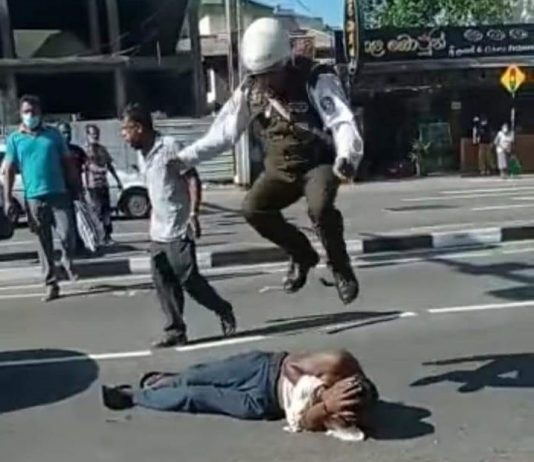
The police spokesman, who is also an attorney-at-law, was commenting on the brutal assault on a lorry driver by a traffic police officer in Pannipitiya yesterday (29). Footage of the incident went viral on social media yesterday afternoon and the constable, who is attached to the Maharagama police station, was promptly arrested later in the evening amid public outcry about police brutality.

Investigations have revealed that the lorry driver in question had accidentally knocked down the Traffic OIC (officer in charge) of the Maharagama police at the Pannipitiya junction on the High Level Road. Footage showed the enraged constable, who was on duty at the junction, shoving the driver to the ground and leaping onto him, not unlike a professional wrestler. (Incidentally, the constable is a former athlete, according to Rohana).

Asked if civilians who find themselves in such situations can retaliate in order to defend themselves, Rohana said a civilian who is unarmed and not showing resistance can use provisions in the penal code to defend themselves in such a situation.

“The law is the same for everyone. It’s fair. And the civilian has the right to self defence in that situation,” he said.

Section 92 of the penal code reads:

There is no right of private defence against an act which does not reasonably cause the apprehension of death or of grievous hurt, if done, or attempted to be done, by a public servant acting in good faith under color of his office, though that act may not be strictly justifiable by law.
There is no right of private defence against an act which does not reasonably cause the apprehension of death or of grievous hurt, if done, or attempted to be done, by the direction of a public servant acting in good faith under colour of his office, though that direction may not be strictly justifiable by law.
There is no right of private defence in cases in which there is time to have recourse to the protection of the public authorities. Extent to which the right may be exercised.
The right of private defence in no case extends to the inflicting of more harm than it is necessary to inflict for the purpose of defence.
Explanation 1

A person is not deprived of the right of private defence against an act done, or attempted to be done by a public servant, as such, unless he knows, or has reason to believe, that the person doing the act is such public servant.

Explanation 2

A person is not deprived of the right of private defence against an act done, or attempted to be done, by the direction of a public servant, unless he knows, or has reason to believe, that the person doing the act is acting by such direction ; or unless such person states the authority under which he acts, or. if he has authority in writing, unless he produces such authority, if demanded.

Section 93:

The right of private offence of the body extends, under the restrictions mentioned in the last preceding section, to the voluntary causing of death or of any other harm to the assailant, if the offence which occasions the exercise of the right be of any of the descriptions hereinafter enumerated, namely –

Firstly- Such an assault as may reasonably cause the apprehension that death will otherwise be the consequence of such assault;

Secondly- Such an assault as may reasonably cause the apprehension that grievous hurt will otherwise be the consequence of such assault;

Thirdly- An assault with the intention of committing rape;

Fourthly- An assault with the intention of gratifying unnatural lust;

Fifthly- An assault with the intention of kidnapping or abducting;

Sixthly- An assault with the intention of wrongfully confining a person, under circumstances which may reasonably cause him to apprehend that he will be unable to have recourse to the public authorities for his release.


Posted in Uncategorized

Pakistani intelligence on Sri Lankan linked to extremist terrorism ignored

Pakistan alerted Sri Lanka on August 10, 2018 about a Sri Lankan national involved in extremism and planning for development of explosive devises with the use of readily available chemical materials, but the authorities here had not paid attention on him, the Presidential Commission that probed the serial bombings on 2019 Easter Sunday observes.

The Pakistani authorities apprised the Sri Lankan High Commission in Islamabad in this regard. The Commission, in its report, recommends inquiry into dereliction of duty on the part of the Sri Lankan authorities in this regard.

The Pakistani authorities also had handed over information about the suspect along with his pictures. The dossier of information about the suspect contains a handbook on armed training, and details regarding improvised explosive devises, vehicle –borne improvised explosive devises.

However, the commission says there is no evidence to link this person directly to the April 21 attack targeting the places of Christian worships and three high-end hotels in Colombo.

Meanwhile, the Indian intelligence authorities conveyed sufficient and comprehensive details on April 4, 2019 regarding the impending terrorist strikes. However, the security authorities have not acted to prevent the attack despite the availability of such adequate information.

Source: Daily Mirror.LK

Posted in Uncategorized

Australian Prof. named in PCoI report on Easter carnage denies accusations, vows legal action

Australian Prof. Lukman Thalib, 58, mentioned in the Presidential Commission of Inquiry (PCoI) report that dealt with the 2019 Easter Sunday attacks, says that he will initiate legal proceedings against the Sri Lankan government over what he calls unsubstantiated allegations against him.

Thalib is believed to be in Turkey. His son, Ismail Thalib, 24, too, is mentioned in the PCoI report.

UK-based advocacy organization CAGE yesterday (29) in a statement sent to The Island quoted Prof. Thalib as having said: “Recent discussions on the Easter Sunday bombings in Sri Lanka which brought my name into public disrepute out of the blue, have shocked me and my family. I have had no contact from Sri Lankan authorities – they’ve not questioned me about any allegations. Instead I read about them in the press, which is a violation of my due process rights. It is absolutely reprehensible and disgusts me to my very core. I have spent all my life, as a Professor of Public Health and a scientific researcher, working for the protection and preservation of human life.

“I have instructed my lawyers to take legal action against the government of Sri Lanka for these defamatory allegations. It is unacceptable that my extended family faced harassment over the months preceding the release of the PCoI report. The government has shown that it lacks the credibility and impartiality for such a sensitive investigation, especially as it stands accused of war crimes by the United Nations.

“Not only have I been arbitrarily removed from my role as a senior Professor at Qatar University, but I have endured six months of torture, which has been widely publicized internationally. It’s becoming increasingly clear that the country where I was born has played a role in my suffering. They must be held accountable for this.”

Prof. Thalib alleged that they were tortured during the near six-month long detention in Qatar before being released. Qatar authorities took them into custody on July 27, 2020. Prof Thalib said that his relatives living in Sri Lanka, too, were questioned as regards their involvement.

Naila Ahmed, CAGE Casework Manager said: “Our client, Professor Lukman, has not been offered any opportunity to reject the allegations prior to them being unethically leaked to the press. This flies in the face of any semblance of due process and is a flagrant violation of the right to a fair hearing.”

According to international media, another son of Prof Thalib, identified as Ahmed Luqman Thalib, has been named by the US as an Al Quida operative allegedly involved in moving funds. The US named him several months after the arrest of his father and brother.

According to the Attorney General’s Department, AG Dappula de Livera, PC, on March 10 instructed IGP C.D. Wickremaratne to investigate several persons referred to in the PCoI report. Prof. Thalib and Katuwapitiya National Thowheed Jamaat bomber Hastun’s wife Sarah were among those named by the AG.

SLPP Chairman Prof. G.L. Peiris recently briefed the media regarding their alleged involvement in the Easter Sunday attacks. (SF)

Source:The Island

Posted in Uncategorized

Government factions undecided on PC elections

The key factions in the government are yet to reach an understanding over the Provincial Council Elections, especially about how the election will be held.

General Secretary of the Sri Lanka Freedom Party Dayasiri Jayasekera speaking to reporters said the SLFP wishes to contest the polls as per the Mixed-Member electoral system.

However, the SLPP says the method of holding the election will be decided by the Cabinet of Ministers.

Sri Lanka Podujana Peramuna General Secretary Attorney-at-Law Sagara Kariyawasam speaking to reporters said the cabinet would analyze the requests made on the method of holding the elections and then reach a decision.

However, many factions that assisted in bringing the incumbent government to power believe the Provincial Councils must be abolished.

In 2020, Venerable Medagoda Abhayatissa Thero said Provincial Councils pave the way for separatism in the country while it is also a waste of money.

Yet, Sri Lanka’s neighbor India, continues to call for the implementation of the 13th Amendment to the Constitution and to call for Provincial Council Elections.

At the recent UN Human Rights Council session, India supported the call by the international community for the Government of Sri Lanka to fulfill its commitments on the devolution of political authority, including through the early holding of elections for Provincial Councils and to ensure that all Provincial Councils are able to operate effectively, in accordance with the 13th Amendment to the Sri Lankan Constitution.

During the weekend, Sri Lankan President Gotabaya Rajapaksa said the recent UNHRC resolution against Sri Lanka was the doing of “local and foreign forces” which do not want the country to progress and vowed that his government would not succumb to such pressures.

In his first public comments since the UNHRC resolution, Rajapaksa said: “We will never succumb to (such) pressures (UNHRC resolution); we are a free nation. We will not be a victim of big power rivalry in the Indian Ocean.”

Posted in Uncategorized

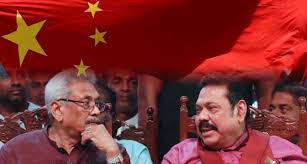
China calls on Sri Lanka to jointly advance Belt and Road cooperation

Chinese President Xi Jinping on Monday said China is willing to work with Sri Lanka to enhance Belt and Road cooperation and contribute to the economic revival of Sri Lanka in post-pandemic era.

Xi made the remarks during a phone call with Sri Lankan President Gotabaya Rajapaksa.

Xi said China will continue to provide necessary assistance to Sri Lanka, conduct cooperation in areas including aviation and education and explore other potential cooperation areas.

Xi said China will never forget Sri Lanka’s support for the restoration of China’s lawful seat in the UN, and is willing to continue working with Sri Lanka to support each other on issues of mutual concern, safeguard each other’s legitimate rights and promote global justice and fairness.

Rajapaksa congratulated China on the 100th founding anniversary of the Communist Party of China and spoke highly of China’s achievements in fighting the pandemic and its economic recovery.

Rajapaksa said Sri Lanka hopes to learn from China’s experience in poverty reduction and rural revitalization and is willing to expand cooperation in infrastructure construction, tourism and so on, so as to benefit Sri Lanka’s economic development and its people.(CGTN)

Will not allow other countries to push for ‘separatism in the guise of power devolution’, says Gotabaya Rajapaksa

The Sri Lankan President said ‘the government does not wish to be associated with the power struggles in the Indian Ocean region by the global giants’.

Sri Lanka will not allow other countries to achieve their geopolitical needs by introducing “separatism under the guise of power devolution” in the island nation, President Gotabaya Rajapaksa has said.

“The government does not wish to be associated with the power struggles in the Indian Ocean region by the global giants,” Mr. Rajapaksa said, adding that the sovereignty of Sri Lanka would not be betrayed, a front-page report in the state-run Daily News said on Monday.

Speaking at a ‘Discussion with the Village’ event in the southern Matara district on Saturday, he appeared to be responding to India’s intervention at the United Nations Human Rights Council last week. Although India abstained from voting, it supported the international community’s call in the resolution for devolving political authority, holding of elections to provincial councils and implementation of the 13th Amendment that guarantees a measure of power devolution to the provinces.

The Council adopted the resolution — with 22 countries backing it — that called for greater scrutiny of human rights in the country, including through an international evidence gathering mechanism, while flagging possible recurrence of human rights violations, citing recent policy decisions impacting Sri Lanka’s Tamil and Muslim minorities.

In addition to pegging the international call for devolution, to the geopolitical needs of “other countries”, Mr. Rajapaksa’s remarks also linked the demand for greater power devolution to separatism, although Sri Lanka’s Tamil political leadership has repeatedly underscored the need for enhanced powers for provinces within a “united, undivided and indivisible” Sri Lanka.

The President said: “We will face the Geneva challenge without fear. We will never succumb to pressures. We are a free nation. We will not be a victim of big power rivalry in the Indian Ocean,” a week after the U.N. Human Rights Council adopted a resolution.

The statement assumes significance in the wake of persisting calls from some within his government, including senior Ministers, for the abolition of the provincial council system and the 13th Amendment.

Provincial council elections

Less than a fornight before the vote on the Sri Lanka resolution in Geneva, amid Colombo’s hectic diplomatic outreach seeking support from members, Mr. Rajapaksa “instructed the relevant parties to take steps to expedite the provincial council elections by either withdrawing the Provincial Council Amendment bill or rectifying its anomalies,” a statement issued by the Presidential Media division said on March 13.

According to local media reports, the holding of provincial council elections is likely to be discussed in Monday’s [March 29] weekly Cabinet meeting.

After being elected President in November 2019, Mr. Rajapaksa stated that he would focus more on development rather than devolution. In an interview to The Hindu on November 30, 2019, during his first visit to New Delhi after assuming office, Mr. Rajapaksa said the previous push for “devolution, devolution, devolution” had not changed the situation in Sri Lanka.

Full devolution of powers as promised by the 13th Amendment to the Constitution in 1987 could not be implemented “against the wishes and feeling of the majority [Sinhala] community,” he noted, while the legislation envisages power devolution to all provinces in the country, including those with a Sinhala-majority.

Source: The Hindu

Sri Lanka’s COVID-19 death toll increases to 566

Five more COVID-19 fatalities have been recorded in Sri Lanka, raising the death toll to 566.

The Director General of Health Services in a statement said all five deaths were confirmed from the Western Province.

Accordingly, a 45-year-old male from Colombo 15, a 55-year-old male from Kalutara South, a 63-year-old male from Kandana, a 67-year-old male from Colombo 13 and a 70-year-old male from Ethul Kotte have passed away after contracting the novel coronavirus.

Posted in Uncategorized