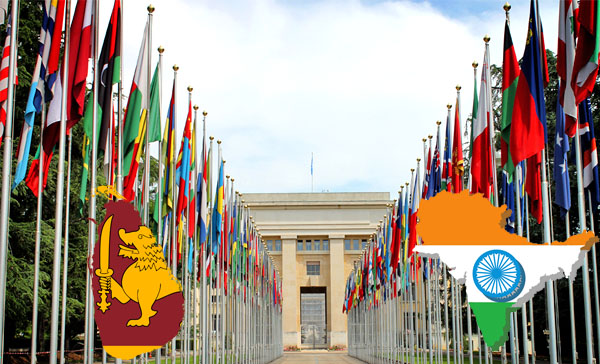
India abstains from UNHRC vote, calls for early PC polls in Sri Lanka

India has urged Sri Lanka for early holding of Provincial Council elections and to ensure that all Provincial Councils are able to operate effectively, in accordance with the 13th amendment to the Sri Lankan Constitution.

Delivering a pre-vote statement during the UNHRC session on draft resolution L1/Rev.1 titled “Promoting Reconciliation, Accountability and Human Rights in Sri Lanka,” Indian representative reiterated that his country supports the call by the international community for the Government of Sri Lanka to fulfill its commitments on the devolution of political authority.

Despite Sri Lanka’s calls for India’s support at the UNHRC sessions on its human rights and accountability record, the closest neighbor of the island nation decided to abstain from voting today. Foreign Secretary Admiral (Retired) Jayanath Colombage recently stated he is hopeful that India would stand by and vote in favor of Sri Lanka.

During the pre-vote statement, the Indian representative Mr. Pawankumar Tulshidas Badhe said, “India believes in the primary responsibility of the states for the promotion and protection of human rights and constructive international dialogue and cooperation guided by the principles and purposes of the UN Charter in support of such efforts.”

India says it has contributed to the relief, resettlement, rehabilitation and reconstruction process in Sri Lanka after 2009, as an immediate neighbor of the island nation.

“Our development assistance has focused on the restoration of livelihoods and economic revival, especially in Sri Lanka’s Northern and Eastern Provinces.”

India stressed that its approach to the question of human rights in Sri Lanka is guided by two fundamental considerations. First is their support to the Tamils of Sri Lanka for equality, justice, dignity and peace and the second is in ensuring the unity, stability and territorial integrity of Sri Lanka. “We have always believed that these two goals are mutually supportive and Sri Lanka’s progress is best assured by simultaneously addressing both objectives.”

Mr. Badhe went on to note: “India supports the call by the international community for the Government of Sri Lanka to fulfill its commitments on the devolution of political authority, including through the early holding of elections for Provincial Councils and to ensure that all Provincial Councils are able to operate effectively, in accordance with the 13th amendment to the Sri Lankan Constitution.”

India stresses that the work of OHCHR should be in conformity with mandate given by the relevant resolutions of the UN General Assembly.

India urged the Sri Lankan government to carry forward the process of reconciliation, address the aspirations of the Tamil community and continue to engage constructively with the international community to ensure that the fundamental freedoms and human rights of all its citizens are fully protected.

Japan, which was among the 14 countries that abstained from voting at the UNHRC session, meanwhile stated that in order to achieve national reconciliation and improvement of human rights situation, it is critical for Sri Lanka to implement its own initiatives.

“Japan hopes the international community will encourage and support Sri Lanka’s efforts.”

Japan recognizes the need for improvement regarding the human rights situation in Sri Lanka as well as the need for further effort for national reconciliation in the country, the representative said.

He stated that Japan takes note of the action taken by Sri Lanka such as the establishment of the commission of inquiry to investigate past cases of human rights violations and payment of reparations amounting to Rs. 142 million during 2020.
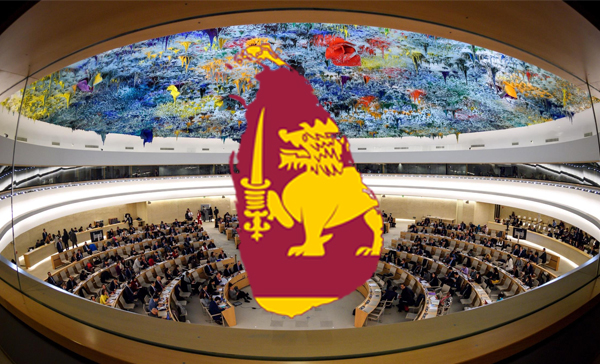
Sri Lanka loses vote at UN Human Rights Council

Sri Lanka lost a vote at the United Nations Human Rights Council today as the 47 members voted 22 to 11 to impose a resolution that will empower the UN to collect and store information that could lead to international criminal proceedings.

Fourteen members of the council, including India, Nepal and Japan abstained while China, Pakistan and Bangladesh supported Sri Lanka. The Resolution was introduced by the United Kingdom and among the proponents were Canada and the European Union states.

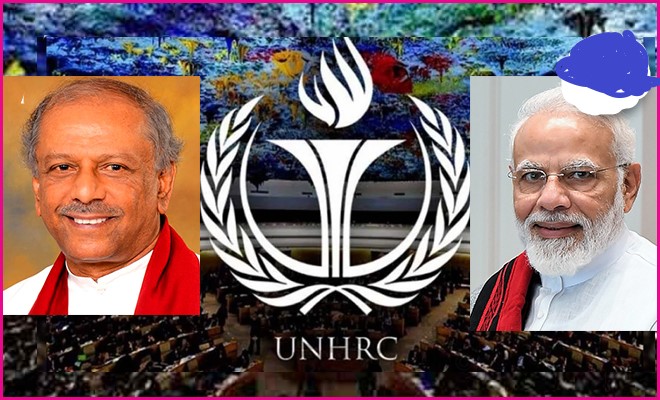
Foreign Minister Dinesh Gunawardena told reporters shortly after the vote that the session had been a “victory for Sri Lanka because 14 members had abstained so only 22 out of the 47 members supported the resolution.”

The resolution does not impose any sanctions on Sri Lanka as a country. The concrete result of the vote is that the UN will create an office with an annual budget of USD2.8 million to collect information about war crimes and crimes against humanity committed in the country.

The Executive Director of the Centre for Policy Alternatives Dr Paikiasothy Saravanamuttu told EconomyNext that the loss was a “foreign policy fiasco when you consider those who voted in support of Sri Lanka.”

In a statement made shortly before the vote was taken Sri Lanka’s Ambassador C A Chandraprema said that the scope of the resolution violates the United Nations Charter and accused the proponents of the resolution of politicizing the issues.

China which also supported Sri Lanka said that there was “interference in the internal affairs of Sri Lanka” in the Council proposing this resolution and urged members to oppose it.

The Philippines, which was roundly criticized by a number of Human Rights organisations for alleged extra-judicial killings, supported Sri Lanka calling for dialogue rather than a hostile resolution.

But the 22 yes votes was what most observers had predicted would happen on the eve of the vote. The supporters of the resolution had hoped for a few more yes votes so that there would have been a clear majority of yea votes.

The Sri Lankan government conducted a flurry of diplomatic moves over the past few weeks with Prime Minister Mahinda Rajapaksa visiting Bangladesh and President Gotabaya Rajapaksa making phone calls to the Secretary-General of the Organisation of Islamic Cooperation to get Muslim countries to support it.

Proposing the resolution to the Council the High Commissioner for Human Rights Michelle Bachelet pointed out that 12 years after the separatist war ended “domestic initiatives have repeatedly failed to ensure justice for victims and promote reconciliation. Despite commitments made in 2015, the current Government, like its predecessor, has failed to pursue genuine truth-seeking or accountability processes,” she said.

Earlier Bachelet had released a damning report on Sri Lanka accusing the armed forces and the LTTE of grave Human Rights violations.

She said the “impact on thousands of survivors, from all communities, is devastating. Moreover, the systems, structures, policies and personnel that gave rise to such grave violations in the past remain – and have recently been reinforced.”

In her report, the High Commissioner had noted that the space for civil society and independent media, which had grown significantly, is now rapidly shrinking in Sri Lanka.

“The independence of the judiciary, the Human Rights Commission of Sri Lanka, the National Police Commission and other key bodies has been deeply eroded by the recently adopted 20th Constitutional Amendment,” she said.

“The growing militarization of key civilian functions is encroaching on democratic governance. The continued failure to implement comprehensive reforms – or to vet personnel – leaves in place security and military officers who have been implicated in alleged grave crimes and violations,” she said.

The government had continued with its policy of forced cremations of the remains of all Covid 19 dead, despite serious objections raised by the Muslim and some Christian communities. It also disregarded recommendations by a panel of experts appointed by the Health Ministry that burial, which is the preferred method for these religious groups, could be allowed.

However, when seeking the votes of the Muslim countries in Geneva the government reversed the policy and the OIC allowed its members to vote for Sri Lanka.

Bachelet said successive Government commissions have failed to credibly establish the truth and ensure accountability. “Indeed, the Government has obstructed investigations and judicial proceedings into emblematic human rights cases,” she said.

“By repeatedly failing to advance accountability for past human rights violations committed, and by withdrawing its support for the Council’s resolution 30/1 and related measures, the Government has largely closed the door on the possibility of genuine progress to end impunity through a national process,” she added.

Posted in Uncategorized

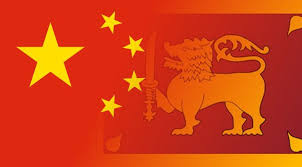
Sri Lanka and China ink 10bn yuan central bank swap for 3-years

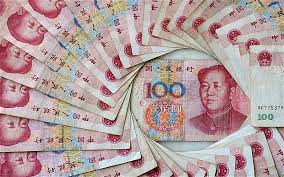
Sri Lanka has signed a 10 billion yuan (about 1.5 billion US dollars) swap deal with China for three years, the central bank said.

The swap would promote “bilateral trade and direct investment for economic development of the two countries, and to be used for other purposes agreed upon by both parties,” the central bank said in a statement.

The People’s Republic of China remains Sri Lanka’s largest source of imports. In 2020, imports from China amounted was 3.6 billion dollars of 22.3 percent of Sri Lanka’s imports.

The deal was signed by Central Bank Governor W D Lakshman and Yi Gang, Governor of the People’s Bank of China.

Sri Lanka’s Minister for Capital Markets and Money Nivard Cabraal said the swap would not be drawn down immediately since it has a cost and would be used as and when required.

The agreement was valid for three years.

Posted in Uncategorized

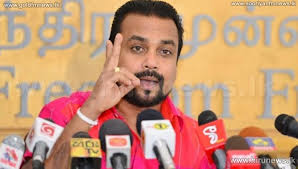
New Turn In Power Struggle Within Govt: Wimal’s Party Considers Contesting Provincial Council Election Separately

The National Freedom Front (NFF), led by Minister Wimal Weerawansa, has conducted an internal discussion to contest the upcoming Provincial Council election separately, informed political sources said.

The discussion comes against the backdrop of strained relations between the SLPP’s Basil Rajapaksa group and Minister Wimal Weerawansa’s faction in the ruling camp.

Commenting on the move, a senior NFF spokesman said a final decision would be made after carefully assessing the pros and cons of the move.

He said there was a deliberate attempt to defeat the candidates fielded by the National Freedom Front at the last Parliamentary election. Niroshan Premaratne and Padma Udaya Shantha Gunasekera, two candidates fielded by the NFF, could not secure their seats at the last Parliamentary election.

At present, the NFF has six MPs in Parliament and they are expected to lead the party’s campaign at the upcoming Provincial Council election.

Posted in Uncategorized

Tamil Nadu Political Parties Urge PM Modi to Take Stand Against Sri Lanka in UNHRC Session

India must take a stand against Sri Lanka in the United Nations Human Rights Council session vis-a-vis the accountability and reconciliation resolution, political parties in Tamil Nadu urged Prime Minister Narendra Modi on Sunday.

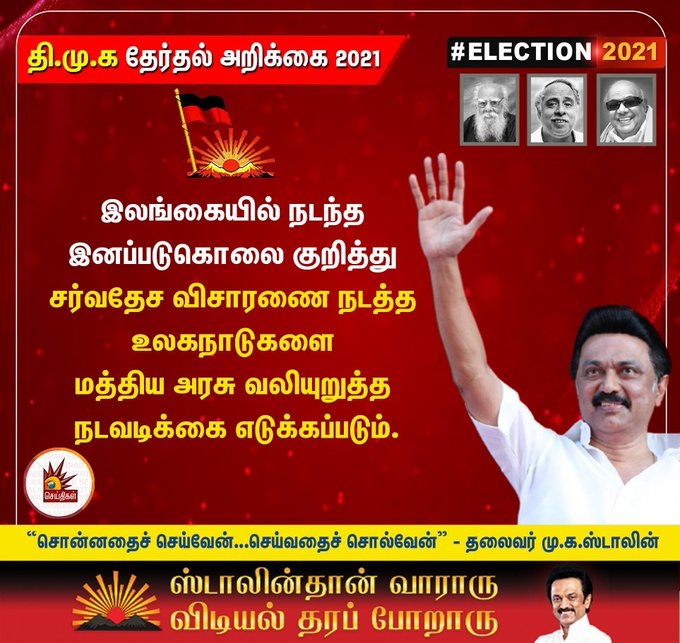
Pointing to news reports that Lanka was hopeful of India’s support at the UNHRC session on Monday in connection with the resolution, DMK president M.K. Stalin said Prime Minister Narendra Modi’s ‘silence’ over it has caused a big ‘shock’ among the Tamil diaspora and people in Tamil Nadu.

MDMK and PMK also sought India’s support to the resolution.

Recently, Sri Lanka expressed hope that India would stand by it when the UNHRC took up its latest accountability and reconciliation resolution.

This follows a UN report that called for drastic measures against those allegedly responsible for rights violations during last phase of the armed conflict with the LTTE (2009).

Stalin said India must not take a stand favouring Sri Lanka, which would be ‘an injustice’ to Lankan Tamils.

India should vote in favour of the accountability and reconciliation resolution against Sri Lanka, he said in a statement.

Also, Modi should take steps to see that support was canvassed in the UN body to bring amendments to that resolution to facilitate initiation of proceedings in the international criminal court against Lanka over war crimes, he said.

MDMK chief and Rajya Sabha MP Vaiko said India must support the resolution against Sri Lanka adding the BJP-led Centre should not ignore the sentiments of Tamil people.

PMK leader and former union minister Anbumani Ramadoss also appealed for India’s support to the UNHRC resolution, saying it should stand for human rights and peace in Sri Lanka.

Noting that justice continued to ‘elude’ Tamils killed in the Eelam war, he recalled Modi’s Feb 14 speech at a public meeting here where he promised that India was always committed to ensuring that the Tamils in the island nation lived with equity, equality, justice, peace and dignity.

The resolution accuses Lanka of war crimes with threats to take those responsible to the International Courts and impose targeted sanctions against officials allegedly responsible for human rights violations.

Source:The Wire

Posted in Uncategorized

Vote on resolution against Sri Lanka postponed to tomorrow

The vote on the resolution against Sri Lanka at the UN Human Rights Council (UNHRC) in Geneva has been postponed to tomorrow, reports said.

The vote was to be taken today but officials in Geneva said it has been postponed to tomorrow (Tuesday) owing to some scheduling issues.

“The vote on draft resolution A/HRC/46/L.1 will now take place on Tuesday 23 March 2021. As the first resolution to be reviewed the timing should normally be shortly after 09.00 (Geneva tine),” officials said.

The vote is expected to go against Sri Lanka as most countries have decided to support the resolution.

The resolution requests the Office of the High Commissioner for Human Rights to enhance its monitoring and reporting on the situation of human rights in Sri Lanka, including on progress in reconciliation and accountability, and to present an oral update to the Human Rights Council at its forty-eighth session, as well as a written update at its forty-ninth session, and a comprehensive report that includes further options for advancing accountability, at its fifty-first session, both to be discussed in the context of an interactive dialogue.

The resolution also encourages the Office of the High Commissioner and relevant special procedure mandate holders to provide, in consultation with and with the concurrence of the Government of Sri Lanka, advice and technical assistance on implementing the above-mentioned steps.

Posted in Uncategorized

Sri Lanka will NOT sign MCC; Attorney General tells Supreme Court

The Attorney General informed the Supreme Court on Monday (22), the Sri Lankan government had decided NOT to sign the Millennium Challenge Corporation agreement with the United State of America.

Additional Solicitor General Farzana Jameel appearing for the Attorney General told the court, the government is yet to decide on the Status of Forces Agreement (SOFA).

She further told the court, the Acquisition and Cross-Servicing Agreement will be carried forward as it was already signed by the government.

Additional Solicitor General Farzana Jameel made these announcements to court when a petition filed against the agreements was called up on Monday (22).

Fundamental Rights Applications were filed with the Supreme Court by Venerable Angunugalle Jinananda Thero, Attorney-at-Law Dharshana Weraduwage, and the Government Medical Officers Association against the said agreements, citing that signing the agreements would threaten the country’s sovereignty and national security.

The petitions were called up in the presence of Justices P. Padman Surasena, Gamini Amarasekera, and A. H. M. D. Nawaz.

The matter will be called up again on the 12th of July for the petitioners to announce their position to the court.

Posted in Uncategorized

Sri Lankan President and Prime Minister make phone calls to world Muslim leaders

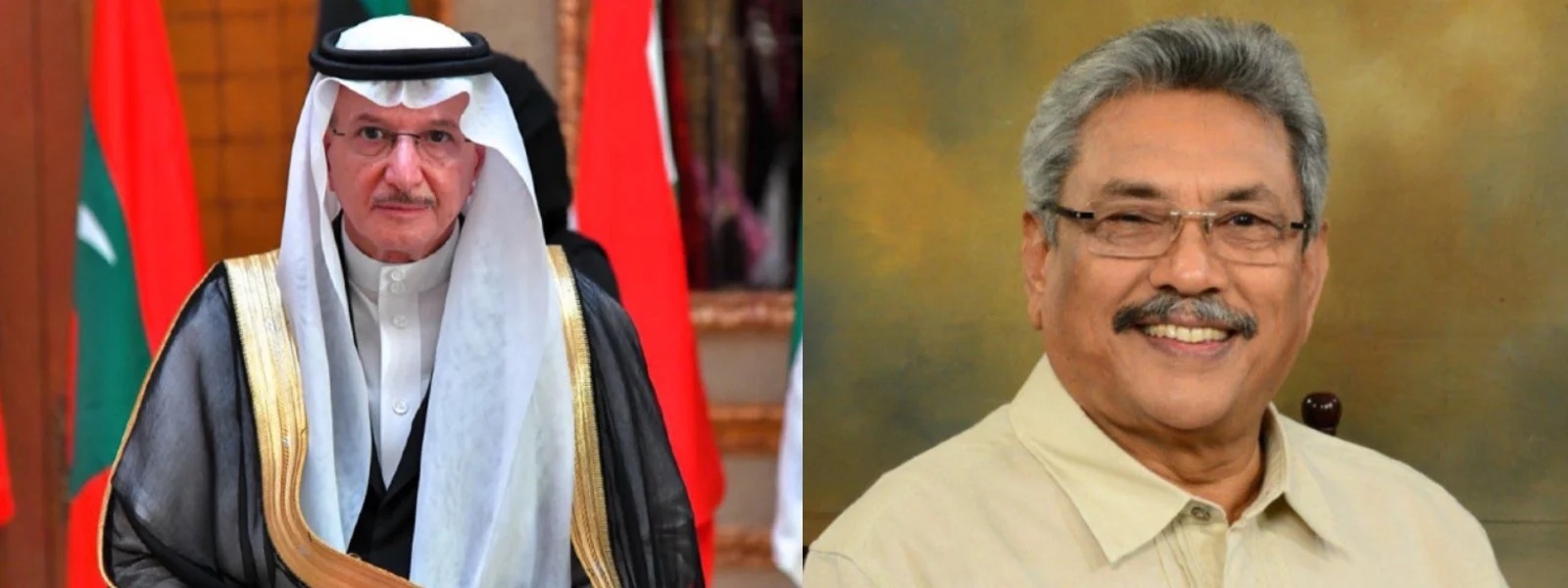
President Gotabaya Rajapaksa and Prime Minister Mahinda Rajapaksa have made phone calls to world Muslim leaders, a day before the UN Human Rights Council takes a vote on a resolution against Sri Lanka.

Secretary-general of the Organization of Islamic Cooperation (OIC), Dr. Yousef A. Al-othaimeen, had received a phone call yesterday (Sunday) from President Gotabaya Rajapaksa who discussed with him the existing relations between the OIC and Sri Lanka as well as the situation of the Muslim community in the country, the OIC said in a statement.

Al-Othaimeen praised the Sri Lankan President’s phone call and his willingness to open up and reach out to international organizations and welcomed the decision of the Government of Sri Lanka on the right of Muslims to bury their dead in accordance to Islamic rites.

The Secretary-general reaffirmed the OIC’S keenness to follow up the conditions of Muslim communities and defend their rights in non-oic member states, the OIC said.

Meanwhile, Prime Minister Mahinda Rajapaksa said he telephoned Deputy King Salman bin Hamad Al Khalifa of Bahrain yesterday.

Al-Othaimeen praised the Sri Lankan President’s phone call and his willingness to open up and reach out to international organizations and welcomed the decision of the Government of Sri Lanka on the right of Muslims to bury their dead in accordance to Islamic rites.

The Prime Minister tweeted saying they reviewed bilateral ties and other areas of cooperation that can be further solidified.

Rajapaksa said that the Deputy King had recalled and appreciated his efforts to sustain peace and stability in Sri Lanka from the time of his Presidency.

The OIC is the world’s largest Muslim body consisting of a number of Muslim countries which are part of the UN Human Rights Council.

Bahrain is also a member of the UN Human Rights Council.

DMK tells Modi to ensure India votes for resolution on Sri Lanka

India’s Dravida Munnetra Kazhagam (DMK) has called on the Indian Government to vote in support of a resolution on Sri Lanka at the United Nations Human Rights Council in Geneva.

DMK President M.K Stalin called on Indian Prime Minister Narendra Modi to intervene and ensure support for the resolution.

A vote on the resolution against Sri Lanka will be taken at the United Nations Human Rights Council tomorrow (Monday).

He also questioned the silence of Modi on the matter even after Foreign Secretary Jayanath Colombage had said that India has assured support to Sri Lanka in Geneva.
Stalin warned Modi that Tamils around the world will not forgive any attempt to betray the expectations of the Sri Lankan Tamils.

Just recently Modi spoke to President Gotabaya Rajapaksa and both agreed to maintain regular contact between relevant officials, including in the context of the continuing COVID-19 challenges.

The two leaders also reviewed topical developments and the ongoing cooperation between the two countries in bilateral and multilateral forums.

During the conversation Prime Minister Modi had reiterated the importance of Sri Lanka to India’s Neighbourhood First policy.

Chinese vaccine first given to Chinese nationals in Sri Lanka – Fernandopulle

Chinese nationals residing in Sri Lanka will be prioritized when vaccinating with the China-made COVID-19 vaccine ‘Sinopharm’, stated State Minister of Primary Health Care, Epidemics and COVID-19 Disease Control Dr. Sudarshini Fernandopulle.

She said that as per a request by the Embassy of China in Sri Lanka, the Sinopharm vaccine will first be administered to Chinese nationals in the island.

When inquired regarding the lack of WHO approval for the Sinopharm vaccine, the State Minister said, “A lot of vaccines have been given the WHO approval for emergency use. They are being checked now.

Even in our country, permission has been given only to accept the donation [of Sinopharm vaccine] as of yet. Since the Sinopharm vaccine is used in China, the Chinese people living here will be able to get the vaccine as well.”

Sri Lanka’s National Medicines Regulatory Authority (NMRA) on Saturday approved the China-produced Sinopharm COVID-19 vaccine for emergency use in the island country.

This is the third COVID-19 vaccine to be approved in the country after the AstraZeneca and Russia’s Sputnik V vaccines.

When inquired on the public enthusiasm for COVID-19 vaccination, State Minister Fernandopulle rejected the statement that there is a decrease in the number of people volunteering to obtain the vaccine.

She stated that both age groups – 30 to 60 years and 60 years and above – were given the vaccine at pre-selected vaccination centers [Grama Niladhari Divisions]. However, there had been complaints of persons of age group 60 years and above facing issues when receiving the vaccination at the same time other age groups, she added.

Subsequently, steps were taken to vaccinate only the age group of 60 years and above at those same centers, she said. However, since some under the age group were covered by the vaccination program earlier, there is a slight decrease in the numbers obtaining the vaccine now, Fernandopulle clarified.

She added that the public from the age group 60 years and above from other Grama Niladhari Divisions will also be vaccinated from tomorrow (March 22) onwards.

Posted in Uncategorized