Revised quarantine guidelines issued for arrivals from overseas

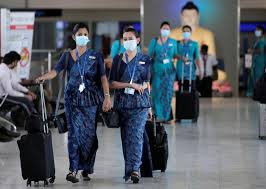
Director-General of Health Services has issued revised COVID-19 quarantine guidelines for all incoming passengers and tourists arriving in Sri Lanka from overseas.

The guidelines noted that they should receive the approval to enter the country from the Foreign Affairs Ministry and other relevant authorities or from Sri Lanka Tourism, respectively.

All travelers should submit the filled Health Declaration Form to the staff of Airport Health Office at Health Counters at the arriving airport, it read further.

Key points in the guidelines for Sri Lankan citizens/dual citizens and foreign nationals:

• For passengers who have received the recommended doses of COVID-19 vaccine:

– They should arrive in the country after two weeks of completion of COVID-19 vaccination.

– Upon arrival, they should produce the original copy of the vaccination certificate together with a certified copy of English language translation if the certificate is not in English language, to the Airport Health Officer.

– They will be referred to a PCR test within 24 hours upon arrival (Day One) from a private or state sector laboratory approved by the Health Ministry.

– Once the test report is available, they will be released from the quarantine hotel or centre by issuing a discharge document mentioning the date of PCR sample collection and PCR test result.

– They should undergo repeat PCR on Day Seven after arrival to Sri Lanka from a private or state sector laboratory approved by the Health Ministry.

• For passengers who have not received the COVID vaccine or not completed the recommended doses of vaccination and arrive in Sri Lanka within less than two weeks of vaccination:

– If they are undergoing hotel quarantine (single or shared by family members), they will be referred to PCR testing on Day One and Day Seven.

– However, if they are under quarantine at a centre, they will be subjected to PCR testing on Day One and Day Ten.

– If both tests are negative, they will be released from the quarantine procedure, following the second PCR test.

Upon being discharged, all arrivals are required to arrange their own transport method to go to their respective residences from the quarantine hotel or centre.

Immediately upon arriving home, they should inform the area Medical Officer of Health (MOH) by telephone or email and produce a discharge document issued by the designated authority at the quarantine hotel or centre.

After informing the area MOH, the travellers, who have received both vaccine doses and obtained a negative PCR report on Day One of arrival, are not required to quarantine further.

For those who have not received the recommended vaccine doses, a balance home-quarantine period (out of 14 days) under the supervision of area MOH, is mandatory.

All PCR test results must be informed to the MOH attached to their respective residential area. If one of the PCR test results is positive, they should inform the MOH, and follow the treatment protocol of Health Ministry.

If febrile or display respiratory symptoms of COVID- 19 during the quarantine period, they should inform the relevant MOH.

In the meantime, separate guidelines issued for tourists arriving in the country have also been revised by the Director-General of Health Services.
No more political parties based on racial & religious grounds: NEC

The National Election Commission (NEC) has drawn its attention to STOP the registration of political parties that are based on different racial and religious ideologies in the future, the Commission’s top official said.

The National Elections Commission (NEC) is currently holding discussions in this regard, Attorney-at-Law Nimal Punchihewa, the Chairman of the National Elections Commission told News 1st on Thursday (Mar. 18).

According to Punchihewa, the focus is also on changing the names of already registered political parties on the basis of race and religion.

Such political parties will be allocated a reasonable time period to change the existing party name nominated on the basis of various ethnicities and religions, the NEC Chairman pointed out.

The attention was drawn to this matter, taking into account the recommendations of several commission reports including the report of the Presidential Commission of Inquiry into the 2019 April 21 Attacks, pertaining to the registration of political parties on national and religious grounds, the Secretary of the National Elections Commission told News 1st.

Posted in Uncategorized

Key political parties contradict on PC election

The upcoming Provincial Council (PC) Election should be held according to the new draft bill tabled in parliament, the Sri Lanka Freedom Party (SLFP) said.

A special Central Working Committee meeting will be held on 30th March to hold further discussions regarding the matter, State Minister Dayasiri Jayasekara, the SLFP General Secretary told News 1st.

Meanwhile, the Sri Lanka Podujana Peramuna (SLPP) is of the view that the election should be held expeditiously, regardless of whether it is held according to the new or old system, in order to activate the operations of provincial councils, which are currently functioning without public representatives.

The party agrees with any decision taken by the Cabinet of Ministers with regard to the method of holding the Provincial Council Election, Sagara Kariyawasam, the General Secretary of the SLPP told News 1st.

Commenting on the same matter, the Samagi Jana Balagavega (SJB) said the majority opinion of the party is that the Provincial Council Election should be held according to the old system.

The party will hold further discussions in this regard, SJB National Organizer Tissa Attanayake told News 1st.

A discussion will be held on Friday (Mar. 19) between the Committee appointed to review the Local Government Election System and submit recommendations for a new election system, and the Chief Secretaries of all Provincial Councils and Local Government Commissioners.

The discussion will be held at the Ministry of Local Government and Provincial Councils.

The practical problems of the local government system will be inquired during the discussion, Chairman of the Committee – Secretary to the Ministry of Lands, R.A.A.K. Ranawaka said.

Posted in Uncategorized

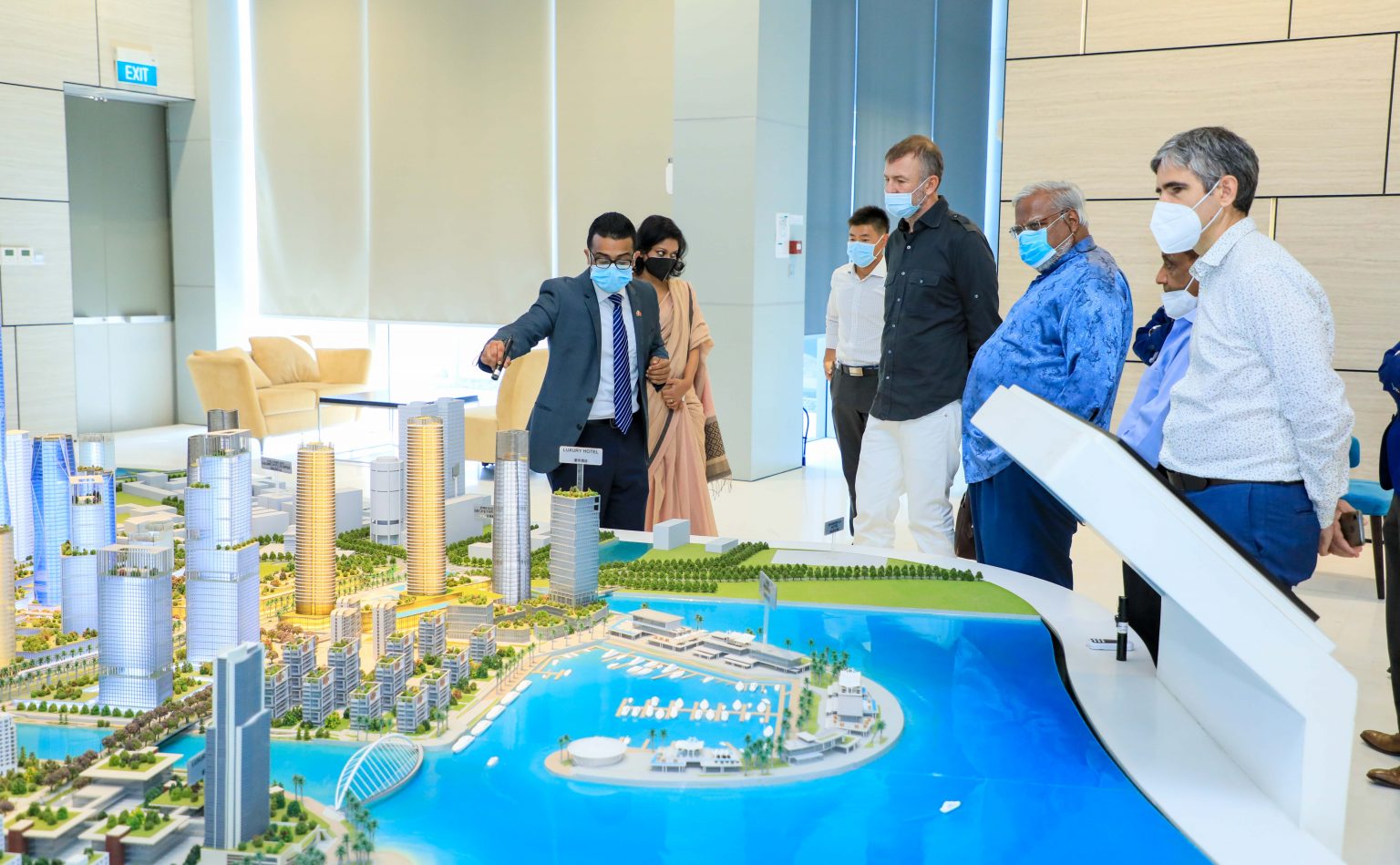
Top Russian billionaire visits Colombo Port City

Prominent Russian business tycoon Andrey Melnichenko visited the Port City in Colombo. He was accompanied by Sri Lankan-born British Politician and former EU Parliamentarian Niranjan Deva Aditya.

Melnichenko is a self-made billionaire with major investments in Switzerland based fertilizer giant EuroChem Group and Russia based coal energy company SUEK.

He was warmly welcomed by Port City Colombo Assistant Managing Directors Yue Yeqing and Thulci Aluwihare together with Director Sales and Marketing Yamuna Jayaratne.

The delegation was briefed on the Port City Colombo project, its construction progress and future developments by Radhika Ellepola, Country Manager Sales and Investor Relations.

Melnichenko expressed positive remarks about the project and he was impressed about the strategic planning of the new city in the making.

Board of Investment Chairman, Sanjaya Mohottala, Director General Pasan Wanigasekara and corporate sector veteran Rajan Brito were also present at the occasion.

From the beginning of this year, Port City Colombo continued to attract several world leading business personalities, keeping Sri Lanka back in the map as a potential hub for future investment.

Port City Colombo now awaits the introduction of the Special Economic Zone (SEZ) law by the Government which will further enhance FDIs to Sri Lanka.

Port City Colombo is a brand-new city development built as an extension of the existing Colombo CBD, with an initial investment of $ 1.4 billion and an expected $ 15 billion overall investment when completed.

Spanning 269 hectares, it is a sea reclamation project connected to the current central business district. Port City Colombo is made up of five precincts – a financial district, central park living, an international island, the marina and island living.

When completed, Port City Colombo is estimated to have 5.7 million square metres of built space, boasting some of the best in design in terms of grade-A offices, medical facilities, educational facilities, an integrated resort, a marina, retail destinations, hotels and other lifestyle developments.

Using the latest sustainable city design and smart city concepts, Port City Colombo will be the hub of South Asia.

Posted in Uncategorized

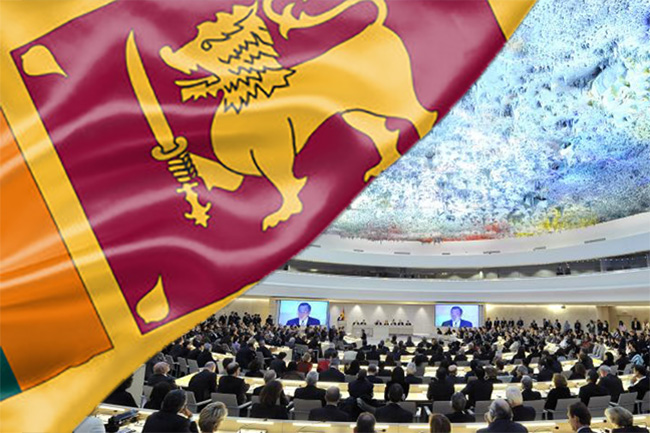
Resolution on SL to be taken up at UNHRC on March 22

The resolution on Sri Lanka will be taken up at the United Nations Human Rights Council next Monday with a vote expected the same day or the following day, Daily Mirror learns.

Tuesday was the deadline for the incorporation of any amendment to the resolution to be moved by the core group of countries led by the United Kingdom. The other countries in the core group are Canada, Germany, Malawi, Macedonia and Montenegro.

Besides, there are around 40 countries that have signed the resolution as co-sponsors or additional co-sponsors. Most of these countries are from the western world. Besides, the countries that have pledged support to Sri Lanka are from outside the west making Sri Lanka’s case looks like a division between the east and the west.

In South Asia, Pakistan has been the open supporter of the Sri Lankan government in countering this resolution. The resolution calls for the UN High Commissioner for Human Rights to report on Sri Lanka regarding the human rights situation.

Diplomatic sources said Sri Lanka is under pressure from the Australia-india-japan-united States alliance called ‘Quad’. It has been formed with the primary intention of containing China whose influence is growing in the world. A source said pressure is exerted on Sri Lanka through various tools to take a line in favour of the Free and Open Indo-pacific policy followed by Quad.

The leaders of the Australia-india-japan-united States Quad met on March 12 in a virtual summit

Posted in Uncategorized

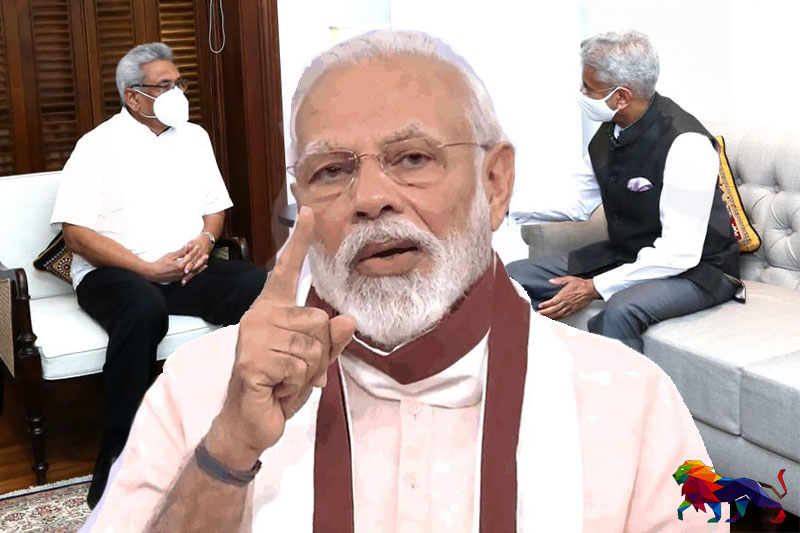
India consistently calling upon Sri Lanka to fulfil aspirations of Tamil people

India on Wednesday said it has consistently called upon Sri Lanka to fulfil its commitments to meet the expectations of the Tamil people for equality, justice and peace.

In response to a question in the Lok Sabha, Minister of State for External Affairs V Muraleedharan also said that External Affairs Minister S Jaishankar in meetings with his Sri Lankan counterpart has reiterated India’s support for the reconciliation process in the island nation.

“Government has consistently called upon Sri Lanka to fulfil its commitments relating to the Tamil community in Sri Lanka,” Muraleedharan said.

Jaishankar visited Sri Lanka in January and the Tamil issue figured in his meetings in Colombo.

“In his meetings with the Sri Lankan foreign minister, EAM reiterated India’s longstanding support for the reconciliation process in Sri Lanka and emphasised that it is in Sri Lanka’s own interest that the expectations of the Tamil people for equality, justice, peace and dignity within a united Sri Lanka are fulfilled,” said Muraleedharan.

“That applies equally to the commitments made by the Sri Lankan Government on meaningful devolution, including the 13th Amendment to the Constitution,” he said.

The 13th amendment provides for devolution of power to the Tamil community. India has been pressing Sri Lanka to implement the 13th amendment which was brought in after the Indo-Sri Lankan agreement of 1987.

Muraleedharan said Prime Minister Narendra Modi, in his meeting with Sri Lankan counterpart Mahinda Rajapaksa in February last and during a virtual summit in September, called upon the island nation to address aspirations of the Tamil people.

“The prime minister called upon the government of Sri Lanka to address the aspirations of the Tamil people for equality, justice, peace and dignity within a united Sri Lanka, including by carrying forward the process of reconciliation with the implementation of the 13th Amendment to the Constitution,” he said.

Posted in Uncategorized

Sri Lanka in ‘no rush’ to implement burqa ban Need Muslim countries Vote at the upcoming UNHRC meeting in Geneva- Arab News

Sri Lanka’s government is in “no rush” to implement a proposed ban on the wearing of burqas and the closure of over 1,000 Islamic schools, Cabinet Spokesman Keheliya Rambukwella said on Tuesday, adding that it was a serious decision that required “consensus and consultations.”

“It will be implemented with a consensus and consultations with Muslim organizations and leaders. We won’t rush through the proposal, since it is a serious issue,” Rambukwella said.

His remarks came a day after Pakistan’s envoy to Colombo Saad Khattak criticized the island nation’s move to ban the burqa — an outer garment worn by some Muslim women to cover the body and face — saying it was a “divisive” step impacting Muslims in Sri Lanka and across the globe.

Khattak tweeted on Monday that the ban would constitute an “injury to the feelings of ordinary Sri Lankan Muslims and Muslims across the globe,” adding that it would exacerbate economic difficulties and fuel concerns over the state of “fundamental human rights of minorities in the country.”

Khattak’s statement follows Sri Lanka’s Minister of Public Security Sarath Weerasekara signing a paper over the weekend seeking the Cabinet’s approval to ban the burqa, calling it “a sign of religious extremism” with a “direct impact on national security.”

“The burqa has a direct impact on national security. It is a sign of religious extremism … Such actions will help maintain security … We will definitely ban it,” Weerasekara said during a press conference on Saturday.

A temporary ban on the burqa was imposed three years ago after the Easter Sunday bomb attacks, which killed 269 people and injured more than 500 in separate locations of Sri Lanka on April 21, 2019.

The island nation also plans to ban more than 1,000 Islamic seminaries, or madrasas, out of the nearly 2,300 institutions across the island, with Weerasekara saying they were either “not registered with the authorities” or failed to follow the national education policy.

If implemented, the proposed ban could be the latest move impacting Sri Lanka’s minority Muslims, who make up nearly 10 percent of its total population of 22 million, where Buddhists account for 70 percent of the census.

Taking umbrage over the government’s proposed ban, Hilmy Ahamed, vice president of the Sri Lanka Muslim Council, said: “Muslim bashing by the government continues to hoodwink the economic burden cast on the 6.9 million who voted them to power.”

Ahamed also highlighted other issues faced by the Muslim community in recent months, among which was the forced cremation of Muslims who had died from the coronavirus disease (COVID-19).

“They forcibly cremated over 250 Muslims who had died from the virus against their religious belief, and now they want to ban madrasas and burqas,” he told Arab News.

“It is the right of women to choose what to wear, especially now during the pandemic when face masks are mandatory. Will the same scrutiny be given to Buddhist seminaries, which serve the same purpose as madrasas to educate theologians?” he added.

Shreen Saroor, cofounder of the Colombo-based Women’s Action Network, agreed, telling Arab News: “The ban violates Muslim women’s freedom of religion and expression.”

She questioned the government’s timing for the ban of the face and body veil “when everyone is wearing face masks to protect themselves from virus.”

“In the last few months, there has been an increase of Islamophobic rhetoric, and this ban is part of that. The Muslim community has been discussing various reforms, but getting rid of what has been practiced for such a long time overnight shows how this state regards its minorities and the pluralistic nature of our constitution,” Saroor said.

Ahamed agreed, adding that if the government were “genuinely concerned about national security, they would ban backpacks as well since suicide bombers often carry bombs in their backpacks.”

Lawmakers, for their part, believe that Sri Lanka’s delay in implementing the ban is part of its “vote-buying tactics.”

“Postponement of the implementation of the ban is to woo more votes from Muslim countries for Sri Lanka at the upcoming UN Human Rights Council meeting in Geneva on March 22,” Parliamentarian Mujibur Rahman told Arab News on Tuesday.

“The government is harassing Muslims. Such actions can have adverse repercussions on the Muslim community,” he added.

Others said the move could have a direct impact on tourism to the country.

M. Ameen, president of the Sri Lanka Muslim Council and editor of popular Islamic weekly, Nawamani, told Arab News: “The burqa ban will harm the island’s tourism industry because Arab women are more likely to reject Sri Lanka as a tourist destination.

“Arab tourists are heavy spenders, and they like the island very much. This move can divert them to neighboring countries,” he added.

In the years preceding the COVID-19 pandemic, 71,636 tourists from the Gulf and the Middle East — with 50 percent from Saudi Arabia — had visited the island nation, A. M. Jaufer, president of the Chamber of Tourism and Industry in Sri Lanka, told Arab News on Tuesday.

Posted in Uncategorized

Organization of Islamic Cooperation condemns move to ban burqa in SL

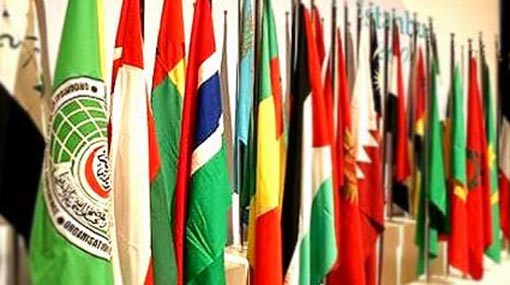
The Independent Permanent Human Rights Commission (IPHRC) of the Organization of Islamic Cooperation (OIC) has condemned Sri Lanka’s purported burqa ban stating it is a violation of human rights of minorities.

“The OIC-IPHRC condemns Sri Lankan Ministers’ statement to ban burqas and Madrassas in violation of the Article 18 and 27 of the International Covenant on Civil & Political Rights (ICCPR) Act, which guarantees minorities the right to freely profess, practice and manifest their religion,” the organisation said in a tweet.

Further, they requested the Sri Lankan Government to denounce the statement.

“The IPHRC urges the Sri Lankan Government to publicly denounce such discriminatory and Islamophobic statements and desist from any measures against law abiding Muslims which negate spirit of pluralism and contravene the International Human Rights Law,” they stated.

Party leaders to go for PC Polls – Minister

Leaders of the political parties aligned with the government have decided to prepare the necessary legal infrastructure to conduct the provincial council elections soon, a Minister said today.

Agriculture Minister Mahindananda Aluthgamage who attended the meeting chaired by President Gotabaya Rajapaksa and Prime Minister Mahinda Rajapaksa told the Daily Mirror that the necessary legal amendments would be done to call for elections as early as possible.

“We are ready for the elections,” he said.

The elections to some provincial councils have been held up since 2017 due to a legal snag created after the attempt by the previous government to change the present electoral system.

The previous government introduced it in the form an amendment to the PC Elections Act. It secured two-thirds for it at that time with the support of the Tamil National Alliance (TNA) and the Janatha Vimukthi Peramuna (JVP).

The resolution to be moved on Sri Lanka at the United Nations Human Rights Council (UNHRC) also calls for the conducting of elections to the provincial councils to strengthen the local governance. In the recent times, India has repeated its call for the implementation of the 13th Amendment which provides for the constitution of provincial councils.

However, the nationalist forces that back the government are opposed to the system. They have already urged the government to scrap the system.

China to play central role in supporting ‘CCC’ rated Sri Lanka, Maldives, Laos: Fitch

China is expected to play a major role in providing financial support for ‘CCC’ rated borrowers, Sri Lanka, Maldives and Laos, who owe large volumes of money to Chinese banks, Fitch Ratings said in a report.

India was also helping Maldives in a big way and had give a swap which had been settled pending a program with the International Monetary Fund.

“We expect bilateral credit to play a central role in providing financing support to Laos, the Maldives and Sri Lanka,” Fitch Ratings said in a report.

“This partly reflects the geopolitical strategic importance of these countries amid regional rivalry between India and China.

“China’s policies on extending debt relief or permitting debt rollovers may play a significant role in the debt sustainability dynamics of the three ‘CCC’ APAC sovereigns.

“In addition to China’s official support, Chinese state-owned banks are major commercial creditors in these markets.”

In Laos around half of external debt falling due was owed to China. The People’s Bank of China has already given Laos a swapline.

“The new government in Laos has indicated a desire to pursue equity, rather than debt financing, in the future, in which China is likely to play a crucial role,” the report said.

Analysts say Laos has monetary instability, while the Maldives has the best monetary authority among the lot.

All three CCC rated economies are expected to pick up in 2020.

“Economic recoveryis unlikely, on its own, to restore the creditworthiness of ‘CCC’ APAC sovereigns–Laos, the Maldives and Sri Lanka –to pre-pandemic levels,” Fitch said.
“The potential for heightened external liquidity strains leading to increased signs of default poses the most likely source of downward rating pressure for ‘CCC’ APAC sovereigns :

“External financing support from India may also be important,” the rating agency said. “The Indian government provided 250 million dollars of pandemic relief to the Maldives in September 2020, for example.”

In November the Reserve Bank of India gave Maldives 400 million dollar swap line. Maldives has an ongoing IMF program and has a received broad support from creditors including the Middle East.

Sri Lanka was also given a swap which was settled in February pending an IMF deal. Entry to the Debt Service Suspension Initiative of the G20 also required a IMF deal.

Sri Lanka did not qualify for DSSI. But there was also another program going beyond DSSI.

“Countries with IMF financing arrangements may benefit from a broader range of funding options, including access to funding from other multilaterals,” Fitch said

“Sovereigns would also need to enter an IMF programme to access the Common Framework for Debt Treatments Beyond the DSSI.”

Posted in Uncategorized