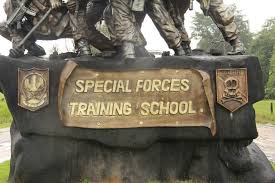
Lankan President says Special Forces camps will be reopened in Eastern Province

Sri Lankan President Gotabaya Rajapaksa has said that security will be beefed up in the Eastern Province to stem separatist terrorism and Islamic extremism.

Tamils and Muslims together outnumber the Sinhalese in the Eastern Province. The province had been the base of the Liberation Tigers of Tamil Eelam (LTTE) and also Jehadists who staged the April 21, 2019 suicide bombings in Colombo and other places.

Speaking at the 14 th. “Discussion with the Village” program in Galagoda East in Galle District on March 13, the President said: “ There were about 50 camps in the Eastern Province. They had been removed and only a handful of camps remain. I have advised that these camps be opened again, because separatist terrorism or Islamic extremism will not be allowed under our government.”

As per the full text issued by the President’s Media Division, the President said: “I’m well versed in national security and gravely concerned about it too. Under President Mahinda Rajapaksa I was entrusted with this responsibility as the Secretary of Defense. We worked as a team to end the 30-year war. I know how hard and how dedicated they were in executing it. So I will never allow this victory to be spoiled.”

He went on to say: “Those who neglected national security as a government are now trying to pin the Sunday Easter attacks on the former President alone. The Report of the Commission has clearly shown that the previous government did not give due importance to national security. All those who were part of the former government are responsible for this heinous attack.”

“His Eminence Malcolm Cardinal Ranjith has made a statement claiming that some politicians are involved in the attack and they were not mentioned in the report. We will investigate them as well. Those politicians are not with us. They did not help bring me or the government into power. They are with the opposition. We don’t want to protect anyone. We are not up for negotiation. We have 2/3rd majority (in parliament).”

“We came to power without any help from them. So we don’t need to protect them. If they have done anything wrong, they will be exposed.”

“After we came to power, in addition to those who were arrested by the CID, the police, the Terrorism Investigation Division, we have arrested others that had ties with foreign countries and several others who were engaged in them were also apprehended. Investigations are being carried out and they will continue until all the culprits are caught by the law.”

The President pointed out that the report of the Presidential Commission on Easter Sunday attack repeatedly stated that the previous government did not pay any attention to national security and it was the reason for this attack.

“True, we told the same thing back then. Not only did we win the war but we also placed required security measures to prevent a war from happening again, especially in the Northern and Eastern Provinces. However, during the previous government everything was neglected. Intelligence officers were imprisoned, and complaints were leveled against them. The security arrangements in those areas were completely dismantled. Even if a simple poster had been pasted, we would catch them. If you can remember, anyone who were even involved in minor incidents were apprehended. That is how we ensured national security. However, the Report clearly concludes that the previous government did not pay any attention to it and national security was ignored.”

On the steps his government has taken to ensure security, the President said: “ We have re-activated the program we carried out by deploying competent personnel to ensure national security. But when something like this collapses, it is difficult to rebuild. It will take some time. The existing intelligence services need to be re-launched. Officers need to be reinstated in those areas. The Special Forces, especially the police.”
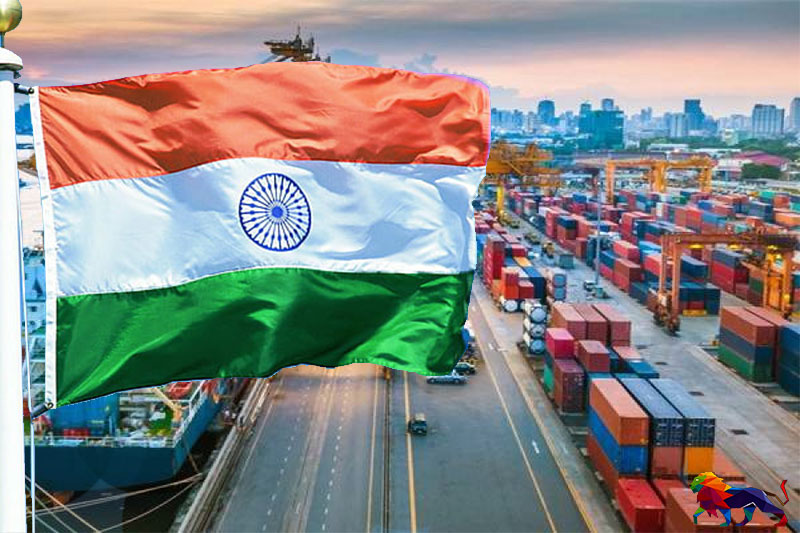
Indian company to get 51% in West Container Terminal deal

India’s Adani Ports is to get 51% in the West Container Terminal (WCT) deal of the Colombo Port, the company said today.

Adani Ports and Special Economic Zones Ltd. (APSEZ) India’s largest private ports and logistics company and a key subsidiary of the diversified Adani Group, said today it had received a Letter of Intent (LOI) from the Ministry of Ports and Shipping of Sri Lanka and the Sri Lanka Ports Authority, acting on behalf of the Government of Sri Lanka, pursuant to approval from the Sri Lankan Cabinet of Ministers for the development and operations of West Container Terminal (WCT) in Colombo, Sri Lanka.

APSEZ will partner with John Keells Holdings PLC, Sri Lanka’s largest diversified conglomerate, and with the Sri Lanka Ports Authority (SLPA) as a part of the consortium awarded this mandate.

The WCT will be developed on a Build, Operate and Transfer basis for a period of 35 years as a public-private partnership. WCT will have a quay length of 1400 meters and alongside depth of 20 meters, thereby making it a prime transhipment cargo destination to handle Ultra Large Container Carriers.

The project is expected to boost WCT’s container handling capacity and further consolidate Sri Lanka’s locational advantage as one of the world’s top strategic nodes along the busiest global transhipment route.

The Colombo Port is already the most preferred regional hub for transhipment of Indian containers and mainline ship operators with 45% of Colombo’s transhipment volumes either originating from or destined to an Adani port terminal in India.

APSEZ said the network impact of the partnership is significant and expected to be mutually benefitted from the string of 7 container terminals across its 12 ports that Adani operates along the Indian coastline handling an annual volume of over 6 million TEUs.

This partnership will multiply and accelerate the transhipment options that will become available to serve various shipping lines and other potential port customers across the South Asian waters, benefiting both, India and Sri Lanka in multiple ways.

Speaking on the occasion Karan Adani, CEO and Whole Time Director of APSEZ said, “Any port partnership is a validation of the mutual trust between two nations and in this context the WCT partnership is significant on several fronts. It is a continuation of the deep and mutually beneficial strategic relationship between two neighbouring nations whose history is deeply intertwined, and I am grateful to the Leaders of the Government of India, Leaders of the Government of Sri Lanka and our Sri Lankan partners for the deep trust they have endowed on us. The combination of the strategic location of the Port of Colombo as a launching point for transshipment across the entire subcontinent, the deep domestic strength of SLPA and John Keells Holdings PLC, and the Adani Group’s unmatched network of container terminals across the Indian coastline opens up several dimensions of growth possibilities for years to come, not just within our two countries but also to the east as well as the west of our two nations”.

Commenting on the occasion, Krishan Balendra, Chairman of JKH, said “We are excited about this opportunity to invest in the much-needed capacity expansion of the Colombo Port and to partner the Adani Group, the leading port operator in India.”

He went on to say that the Public Private Partnership development of the West Container Terminal would bring to bear the synergies, expertise and experience of the Adani Group, the John Keells Group and the Sri Lanka Ports Authority, which would ensure a world class deep-water offering in the Port of Colombo, catering to the largest container ships afloat.

Sri Lanka reports five COVID-19 deaths Monday, toll rises to 532

Sri Lanka confirmed five deaths on Monday due to COVID -19 raising the death toll from the viral disease to 532, according to health authorities.

The Director General of Health Services confirmed the following deaths caused by COVID -19 virus infection and accordingly the total number of deaths due to COVID -19 infection in Sri Lanka is 532 by now.

01. The deceased is an 86 year old female resident from Jaffna. She has died while undergoing treatments at Jaffna Teaching Hospital on March 13. The cause of death is mentioned as Covid pneumonia and blood poisoning.

02. The deceased is a 76 year old female resident from Gampaha. She was diagnosed as infected with Covid 19 virus while undergoing treatments at Gampaha District Hospital and transferred to the National Institute of Infectious Diseases where he died on March 13. The cause of death is mentioned as Covid pneumonia, multi-organ failure and acute diabetes.

03. The deceased is a 61 year old male resident from Kochchikade. He has died at Colombo North Teaching Hospital on March 08. The cause of death is mentioned as acute kidney damage and liver disease.

04. The deceased is a 78 year old male resident from Pamunugama. He has died at his residence on March 10. The cause of death is mentioned as Covid infection, high blood pressure and acute diabetes.

05. The deceased is a 94 year old female resident from Kalutara North. She was diagnosed as infected with Covid 19 virus while undergoing treatments at Moratuwa Base Hospital and transferred to the Homagama Base Hospital where he died on March 14. The cause of death is mentioned as Covid infection and acute diabetes.

Posted in Uncategorized

Pakistan envoy raises concern over ‘burqa ban’ in Sri Lanka

The Pakistani High Commissioner in Colombo has raised concern over Sri Lanka’s recent announcement on outlawing the burqa, noting that such a ban would “injure” the feelings of ordinary Muslims in Sri Lanka and elsewhere.

Sharing a news report on the development, head of the Pakistani mission Saad Khattak on Monday said in a Twitter thread: “The likely ban on Niqab #SriLanka will only serve as injury to the feelings of ordinary Sri Lankan Muslims and Muslims across the globe. At today’s economically difficult time due to Pandemic and other image related challenges faced by the country at international fora, such divisive steps in the name of Security, besides accentuating economic difficulties, will only serve as fillip to further strengthen wider apprehensions about fundamental human rights of minorities in the country.”

Rights issue

Coming two days after Sri Lanka’s Public Security Minister announced his government’s decision to prohibit the wearing of the burqa, the Pakistani High Commissioner’s remark is the first reaction to the move from the international community. Mr. Khattak’s reference to “other image related challenges faced by the country at international fora” assumes significance just a week ahead of the vote on Sri Lanka at the Human Rights Council, where Pakistan is currently a member.

The UN resolution on Sri Lanka’s rights record is expected to draw upon the January 2021 report of the Office of the High Commissioner for Human Rights, which observed that the country’s Tamil and Muslim minorities “are being increasingly marginalised and excluded from the national vision and Government policy, while divisive and discriminatory rhetoric from the highest State officials risks generating further polarization and violence”.

Sri Lanka has reached out to different members states, including India, seeking support at the Council. About a third of the 47-member Council’s current membership, including Pakistan, is part of the Organisation of Islamic Cooperation (OIC), which earlier criticised Colombo’s mandatory cremations policy for COVID-19 victims that affected the island’s Muslim minority.

Reversal on cremations

Following persistent calls from the island nation’s Muslim community, and from international bodies, including the OIC and the UN, Sri Lanka reversed the policy on February 26. Burials of victims of the virus would be permitted, the government said, days after Pakistan Prime Minister Imran Khan’s visit to Sri Lanka last month, when he reportedly raised the matter with the Sri Lankan leadership. High Commissioner Khattak had welcomed the move in a twitter message back then.

Lanka Defends North Korea At UN Human Rights Council; Reaches New Low In Multilateral Diplomacy

Sri Lanka marked another phenomenal low point in multilateral diplomacy by defending the appalling human rights record of one of the worst dictatorial regimes on the face of the earth.

Sri Lankan Ambassador to the UN in Geneva, C. A. Chandraprema made a statement at the human rights council defending North Korea, led by third generation dictator by Kim Jung-un. During an interactive dialogue after a Special Rapporteur presented a damning report on the appalling human rights situation in North Korea, Chandraprema who is himself an accused executioner allegedly involved in at least three assassinations of human rights lawyers, urged “All UN human rights mechanisms to engage in a genuine and constructive dialogue with the Democratic Peoples’ Republic of Korea based on mutual respect and cooperation.”

A 2014 UN Commission of Inquiry found that the government of North Korea committed gross, systematic and widespread rights abuses, including extermination, murder, enslavement, torture, imprisonment, rape, forced abortions, and other sexual violence. North Korea operates secretive prison camps where perceived opponents of the government are sent to face torture, starvation and forced labour.

The shocking statement by Chandraprema comes the same week Sri Lanka became the first and only country in the world to recognize the military Junta Myanmar which staged a coup d’etat to unseat the democratically elected administration on February 1.

Foreign Minister Dinesh Gunawardena formally invited the purported Foreign Minister of the military regime, U. Wunna Maung Lwin for a The Bay of Bengal Initiative for Multi-Sectoral Technical and Economic Cooperation (BIMSTEC) meeting to be chaired by Sri Lanka.

No other government in BIMSTEC which also includes India, Bangladesh and Thailand have recognized the military regime in Myanmar. The formal invitation by the Foreign Minister – Sri Lanka’s top diplomat has granted recognition to what the rest of the world considers an illegitimate regime.

Meanwhile in Geneva, President Nandasena Rajapaka’s handpicked Ambassador has been aligning Sri Lanka with some of the worst human rights violators in history. Last week Colombo Telegraph reported how Candauda Chandraprema similarly defended Eritrea, a country that had openly supported the LTTE even facilitating 10 aircraft to be smuggled to the terrorists’ organization. Foreign Ministry sources confirmed to Colombo Telegraph that Secretary to the Ministry, Admiral Professor Jayanath Colombage has approved Chandraprema to defend the human rights records of some of the worst violators in the world including North Korea, Syria, Eritrea, Belarus and Nicaragua.

These actions however will most likely backfire on Sri Lanka at the UN Human Rights Council. The resolutions on North Korea at the UN General Assembly in New York and the Human Rights Council in Geneva are championed by Japan and the Republic of Korea (South Korea). These countries also happen to be two of Sri Lanka’s largest bilateral donors. Both South Korea and Japan are current members of the HRC which is due to vote on a resolution concerning Sri Lanka next week. Bangladesh, which too is a member of the council, will be concerned by Sri Lanka’s recognition of the military junta in Myanmar which it accuses of gross violations which may even tantamount to genocide of the Rohingya community. Nearly a million Rohingya refugees who were chased out of Myanmar since 2017 are looked after by Bangladesh.

A very senior diplomat with previous experience in the Geneva processes commented to Colombo Telegraph that the ‘the inexperienced and cavalier Colombage-Chandraprema combo have managed to drag Sri Lanka to the nadir of multilateral diplomacy and made it impossible even for our friends in the international arena to vote in our favour at the upcoming resolution.’

A resolution on the human rights situation in Sri Lanka is due to be taken up for a vote on either 22nd or 23rd of March. See video of Ambassador Chandraprema’s intervention on behalf of DPRK (North Korea) here (time stamp 47.40-48.25). (By Chinthika De Silva)

Posted in Uncategorized

Incidents of police torture on the rise

The Sri Lankan Coalition Against Torture says in the first two months of this year alone, the organisation received thirteen complaints of police torture in several southern provinces.

It is unfortunate that the government has had to reaffirm its responsibility to create a country free of torture within a very short period of time since the beginning of the year while the Geneva HRC sessions are on going.

Although the recent police assault was that on law student Migara Gunaratne, the Sri Lankan Coalition Against Torture has reminded the government and its citizens that there have been similar assaults as well as even more violent deaths in the past due to torture by the Police.

The group alleges that the government is not sincere in its commitment to bring to justice the brutal attack on inmates at the Mahara Prison late last year and that justice has yet to be done for other prison incidents, including the Welikada prison massacre.

The Prisoners’ Rights Committee had earlier revealed that eyewitnesses to the Mahara shooting that killed 11 people were severely tortured by the STF.

The Sri Lankan Association Against Torture has expressed regret over the humiliation inflicted on Sri Lanka by police torture.

They emphasize to the Government that the right to be safe from torture is not only a fundamental right enshrined in the Constitution, but also that torture is an offense punishable under criminal law under Act No. 22 of 1994.

Incidents of torture have been reported from the Pitigala Police in Galle District, Hakmana Police in Matara District, Walasmulla and Tangalle Police in Hambantota District, Pothuhera and Wellawa Police in Kurunegala District, Aluthgama, Kosgoda and Payagala Police in Kalutara District and Aralaganwila Police Station in Polonnaruwa District.

Furthermore, three incidents of torture at the Gampaha Police have been reported to the Sri Lankan Coalition Against Torture, the organisation said.

Posted in Uncategorized

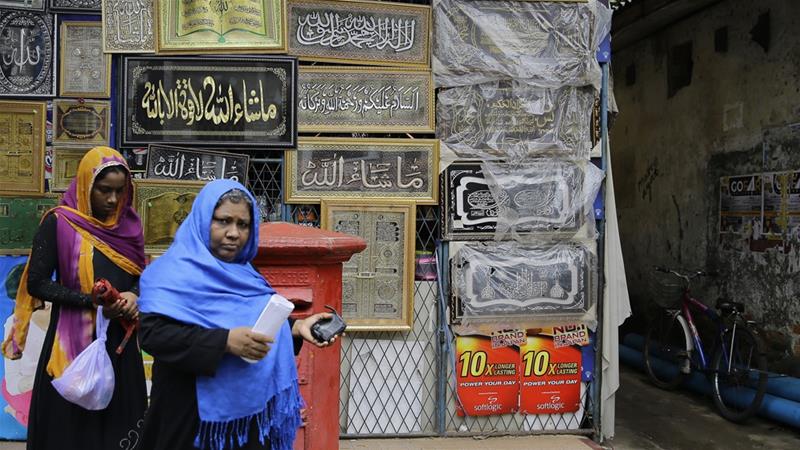
‘Racist agenda’: Fear, worries over Sri Lanka’s burqa ban

Sri Lanka’s move to ban the burqa on “national security” grounds while calling its use “religious extremism” has been termed a “racist agenda” used to cause divisions in the country.

A burqa is an outer garment worn to cover the entire body and the face and is used by some Muslim women.

On Saturday, Sri Lanka’s Minister for Public Security Sarath Weerasekera said he had signed a paper for cabinet approval to ban the burqa, adding that the government also plans to ban more than 1,000 Islamic schools that were defying national education policy.

Sri Lankans expressed disapproval of the proposal, with many viewing the act as an attempt to appease Sri Lanka’s Buddhist majority and cause divisions.

“This is a racist agenda,” Hilmy Ahamed, vice-president of the Muslim Council of Sri Lanka, told Al Jazeera. “They are trying to convince the Buddhists that they are going after Muslims.”

Sinhalese Buddhists account for about 75 percent of the country’s 22 million people with Muslims making up about nine percent. Ethnic minority Tamils, who are mainly Hindus, make up to about 15 percent.

The signed documents outlawing the burqa were submitted on Friday, according to Weerasekera. The proposal requires the approval of the Cabinet and Parliament, where the government has a two-thirds majority, before it becomes law.

“The burqa has a direct impact on national security,” Weerasekara told a ceremony at a Buddhist temple on Saturday. “It is a sign of religious extremism that came about recently. We will definitely ban it.”

Weerasekera’s announcement came a few weeks ahead of the second anniversary of the 2019 Easter attacks on three churches and three luxury hotels in the country that killed at least 269 people.

Two local Muslim groups that had pledged allegiance to the ISIL (ISIS) group were blamed for the attacks.

“It [wearing a burqa] should be considered a right of a women to choose,” added Ahamed.

“They forcibly cremated over 350 Muslims [COVID-19 deaths] against their religious belief and now they want to ban madrasas and burqa. Will the same scrutiny be there on Christian and Buddhist education which serves the same purpose as madarasas to educate theologians.”

In March last year, the government imposed regulations that said the bodies of COVID-19 victims could only be cremated. The rules banned burial, saying the virus could spread by contaminating groundwater.

This ban was lifted last month after criticism from international rights groups across the world and months of protests mainly by Muslim groups.

Vraie Cally Balthazaar, a gender activist based in the capital, Colombo, said the move will affect the lives of Muslims in the country after the government mandated the cremation of COVID-19 victims.

“I don’t think anyone making decisions on the burqa are doing it with the intention of national security or keeping the rights of women in mind. I think the burqa has become a symbol of a power struggle that the state wants to control,” Balthazaar told Al Jazeera.

“Having dealt with the cremation issue, we now have to face this. This is affecting the lives of Muslims, particularly women, in the country.”

‘Public awareness on what burqa is’
The burqa was temporarily banned after the 2019 bombings, drawing a mixed response with activists saying it “violated Muslim women’s right to practise their religion freely”.

Jamila Husain, a journalist based in Colombo, said there needs to be “public awareness on what the burqa really is”.

“Not many people, other than Muslims, know the difference between a burqa, hijab and niqab. Lack of proper awareness could lead to discrimination or targeting of Muslim women,” Husain told Al Jazeera.

“After the Easter Sunday attacks when the burqa was temporarily banned, Muslim women even covering their face or head with a shawl were abused or threatened because some non-Muslims assumed covering the head was banned. So there needs to be proper awareness before this is made law.”

Last month, Sri Lanka was called by the United Nations Human Rights Council to hold human rights abusers to account and to deliver justice to victims of its 26-year-old civil war, including over their treatment of Muslims.

SOURCE : AL JAZEERA

Posted in Uncategorized

Covid cluster at a garment factory in Vavuniya: 21 infected at present

Vavuniya Public Health Inspectors say that 21 employees of a leading garment factory in the Vavuniya District have been infected with the Covid -9 virus.

The Vavuniya Public Health Inspectors said PCR tests conducted following the confirmation that a group of employees were infected have confirmed that 21 more workers have been infected with the virus.

The garment factory employs nearly 700 people and the workers have been referred for PCR tests, Public Health Inspectors said.

However, people in the area told Neth New that they could see that the garment factory where the infections were reported was continuing to operate. As a result, there is a fear among them that there is a possibility of a serious health risk in the area.

Therefore, the residents of the area have reportedly requested the health authorities to temporarily close the garment factory where the infected persons were found and prevent the spread of the Covid in the area.

Posted in Uncategorized

Parliamentary approval needed to hold PC polls – Dinesh

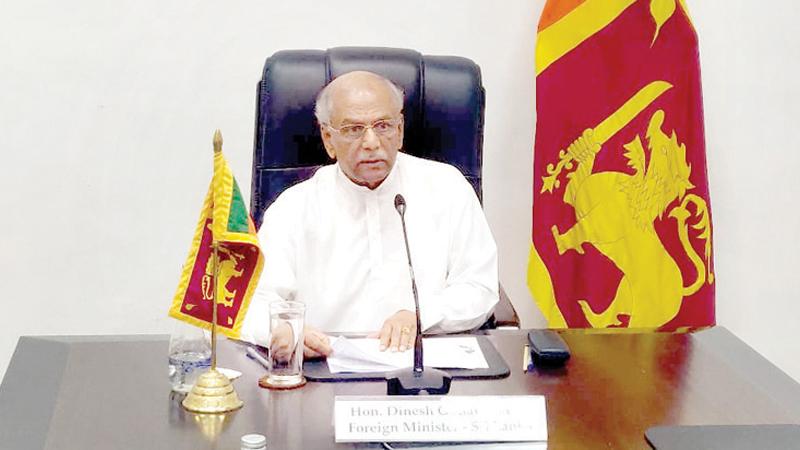
Parliamentary approval should be obtained before holding the Provincial Council elections, says Minister of External Affairs Dinesh Gunawardena.

Discussions are currently being held regarding the action to be taken in connection with the holding of the Provincial Council elections, the Minister added

Gunawardena mentioned this addressing the media following a ceremony held in Trincomalee.

“The previous government changed the law holding provincial council elections. However, the Supreme Court has ruled it illegal. Therefore, no one can hold an election without making a change in the law. The Supreme Court has asked the law to be fixed and passed.”

Revised Core Group draft resolution tabled: Calls for implementation of 13A

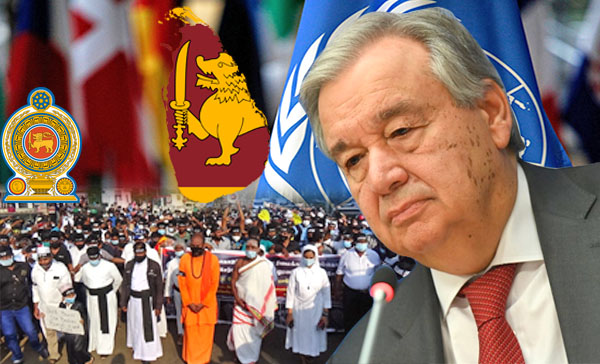
The draft of the revised Resolution by the United Nations (UN) Core Group of countries on Sri Lanka was tabled at the UN Human Rights Council (UNHRC) on Friday night (12) with more revisions, including a paragraph calling for the implementation of the 13th Amendment (13A) to the Constitution.
The Resolution, titled “Promoting reconciliation, accountability, and human rights in Sri Lanka”, was presented by the Core Group comprising Canada, Germany, Malawi, Montenegro, North Macedonia, and the UK.

The new paragraph on 13A also urged Sri Lanka to fulfil the commitment to devolve political power.

It said: “Calling upon the Government of Sri Lanka (GoSL) to fulfil its commitments on the devolution of political authority, which is integral to reconciliation, and the full enjoyment of human rights by all members of its population and encouraging the Government to respect local governance, including through the holding of elections for provincial councils (PCs), and to ensure that all PCs, including the Northern and Eastern PCs, are able to operate effectively, in accordance with the 13th Amendment to the Constitution.”

When the draft was revised for the first time, a new paragraph was inserted to highlight the joint statement issued on 26 May 2009 by then President Mahinda Rajapaksa and then UN Secretary General Ban Ki-moon to seek a political settlement and to bring about lasting peace and development in Sri Lanka. This paragraph remains unchanged.

It also said that states should comply with their relevant obligations under human rights law and international humanitarian law (IHL), including where applicable to prosecute those responsible for gross violations of human rights law or serious violations of IHL.

The Resolution has been revised to remove “positive” from the sentence which read “positive engagement between the GoSL and the Office of the UN High Commissioner for Human Rights (HCHR) between 2015 and 2019”. Now, it simply says “the engagement”, and the timeframe “between 2015 and 2019” has also been taken out.

The increased marginalisation of the Tamil and Muslim minorities, restrictions on media freedom, and restrictions on the public memorialisation of victims of war, including the destruction of a memorial, have been added in the new draft as areas of serious concern.

The paragraph on the mandatory cremation of Covid-19 victims has been amended to take off the sentence, “the decision made by the GoSL to mandate cremations for all those deceased from Covid-19”. The entire paragraph has not been taken out, however, as reportedly requested by the Government stating that the burial of victims has been allowed. The relevant paragraph now says: “…Expresses further concern that the response to the coronavirus (Covid-19) pandemic has had an impact on the freedom of religion or belief and exacerbated the prevailing marginalisation of and discrimination against the Muslim community, and that cremations for those deceased from Covid-19 have prevented Muslims and members of other religions from practicing their own burial-related religious rites, and has disproportionately affected religious minorities and exacerbated distress and tensions.”

The Resolution called on Sri Lanka to ensure the effective and independent functioning of the Human Rights Commission of Sri Lanka, Office on Missing Persons, and Office for Reparations to deliver their respective mandates.

It also called upon Sri Lanka to protect human rights defenders, to end surveillance, and to foster the freedom of religion or belief.

The final paragraph has been amended to include not only a written update but also an oral update from the Office of the UNHCHR at two separate UNHRC sessions instead of one.

Accordingly, the Resolution requested the UNHCHR to enhance monitoring and reporting on the situation of human rights in Sri Lanka, including on progress in reconciliation and accountability, and to present an oral update to the UNHRC at its 48th Session, as well as a written update at its 49th Session.

It said that a comprehensive report that includes further options for advancing accountability should be presented at the UNHRC’s 51st Session. Both reports are to be discussed in the context of an interactive dialogue.

Meanwhile, the UK Parliament, on 12 March, said that its parliamentarians would hold a general debate on a motion on the UK’s commitment to reconciliation, accountability, and human rights in Sri Lanka.

The House of Commons said that the general debate put forward by backbench MPs Siobhain McDonagh, Elliot Colburn, and Edward Davey will be held on 18 March.

However, Foreign Affairs Minister Dinesh Gunawardena said that Sri Lanka cannot in any way agree to the said Resolution, adding that the country’s response to the final draft and the final position on the matter would be declared next week at the UNHRC.

Gunawardena told The Sunday Morning earlier on Friday: “We cannot agree to the Resolution that they are bringing in. Many countries have already expressed their objection to the content during the meetings that have been held. We do have another round. We have not given a fixed date but we have the opportunity next week, after the Resolution is tabled. The Ambassador has the right to reply. We will make it next week.”

When queried about support at a vote on the Resolution, he said that Sri Lanka has no issue about the support of friendly countries.

“It is the western countries that run this. They do have a vote bloc. We are having fair support and it is growing. Only after the final draft is tabled will the reaction increase,” he added.