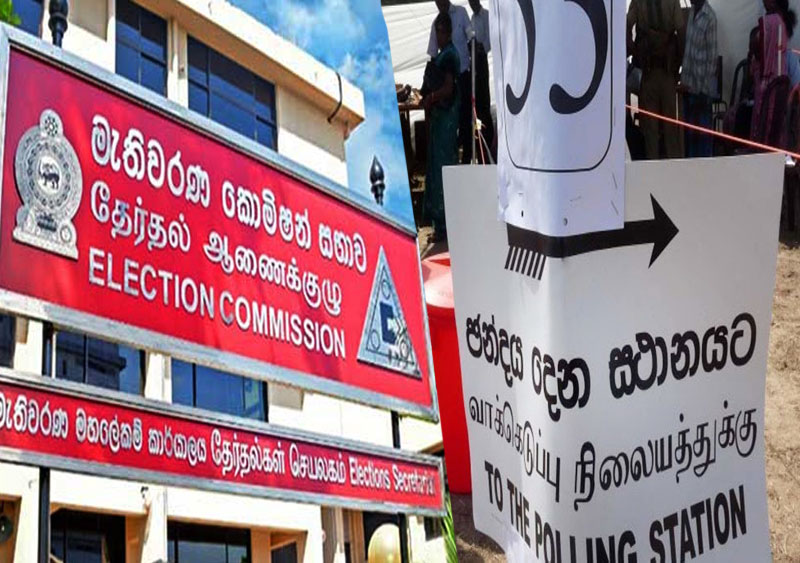
LG Elections: Ballot Paper Printing Nears Completion

Government Printer Pradeep Pushpakumara says that the printing of over one million ballot papers for 14 administrative districts has been completed.

Printing for the remaining 11 districts is ongoing and is expected to be completed by the 28th of April.

Meanwhile, Postmaster General P. Sathkumara said that approximately 50 percent of the ballot papers for postal voting are expected to be received by Department of Posts.

The postal ballots already received are currently being distributed.

He also noted that ballot papers for postal voting from local government institutions involved in ongoing court proceedings are anticipated to arrive soon.

The Court of Appeal yesterday lifted the interim injunction on 18 local government institutions, including the Colombo Municipal Council, allowing them to proceed with local government elections on May 6th as scheduled.

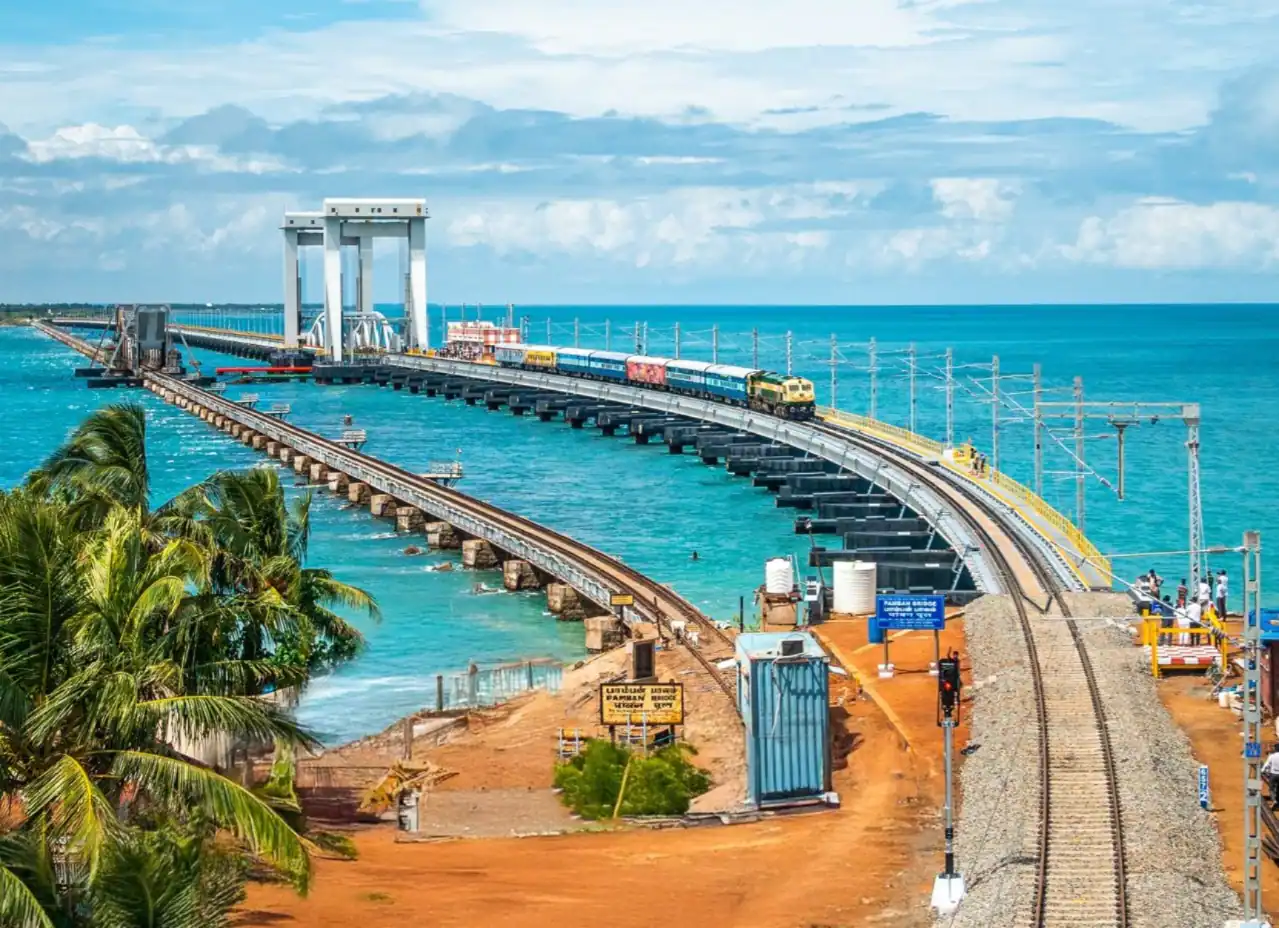
Chennai-Sri Lanka direct train: 60 years later, can Pamban Bridge bring a lost route back?

Decades ago, passengers could travel from Chennai (then Madras) to Colombo, Sri Lanka, by train and ferry. The journey began at Egmore station and continued along the eastern coast, crossing the iconic Pamban Bridge to reach Rameswaram. From there, trains ran to Dhanushkodi, the southernmost rail point in India. A short ferry ride across the Palk Strait took travellers to Talaimannar in Sri Lanka, where they could board a train to Colombo.

This seamless route was disrupted in 1964, when a powerful cyclone devastated coastal Tamil Nadu. The storm, with wind speeds over 150 kmph, damaged the Pamban Rail Bridge and wiped out the railway line between Rameswaram and Dhanushkodi. Since then, trains have terminated at Rameswaram, and the ferry link to Sri Lanka has not resumed, as per a report by India Today.

Sixty years on, a new bridge may breathe life into that lost connection. On 6 April 2025, Prime Minister Narendra Modi inaugurated a newly built Pamban Bridge, replacing the 110-year-old structure. The launch has revived hopes for a larger plan—a direct rail link between India and Sri Lanka.

The idea isn’t new. During British rule, a proposal was made to connect the two countries by rail, as part of a broader plan to move goods and people efficiently across the empire. In 1914, the South Indian Railway built the Pamban Bridge, enabling trains to reach Dhanushkodi. But the last segment—linking Dhanushkodi to Talaimannar—was never completed due to financial constraints and later global events like World War I.

Until the 1964 cyclone, a popular service called the Indo-Ceylon Boat Mail allowed passengers to travel from Chennai to Colombo through a combination of train and ferry. The cyclone not only halted this unique journey but also buried the vision of direct rail connectivity between the two nations.

In recent years, discussions around this long-standing idea have resurfaced. A road-and-rail bridge or undersea tunnel across the Palk Strait—from Dhanushkodi to Talaimannar, just 25 km apart—has been considered. Multiple feasibility studies have been conducted. The success of the new Pamban Bridge could serve as a stepping stone to extending the rail line further.

In 2002, Sri Lanka proposed a road-cum-rail bridge linking Rameswaram and Talaimannar, but the plan was shelved due to opposition from Tamil Nadu’s then-Chief Minister J. Jayalalithaa, who raised security concerns.

Though the political climate has shifted, questions of security and cost remain. In 2015, India’s Union Minister Nitin Gadkari pitched the project to the Asian Development Bank, which agreed to fund it. But Sri Lanka’s transport minister later dismissed the proposal.

Fresh interest in the idea emerged in 2024. Sri Lankan President Ranil Wickremesinghe stated that a feasibility study on the project was nearing completion. A Sri Lankan official also suggested that India might fund the entire $5 billion project, although this was later downplayed by another minister.

Meanwhile, India has deepened its role in upgrading Sri Lanka’s rail infrastructure. During PM Modi’s recent visit, he and Sri Lankan President Anura Kumara Dissanayake inaugurated two India-assisted railway projects. India has also built and upgraded several other rail lines in the island nation.

Sri Lanka is the only neighbouring country that India does not share a rail link with. Existing links connect India to Pakistan, Nepal, and Bangladesh, with plans for Bhutan in progress. Establishing a link with Sri Lanka could enhance trade, tourism, and cultural exchange, especially as both countries already share a Free Trade Agreement.

With growing focus on infrastructure, political realignment in Tamil Nadu, and renewed interest in regional connectivity, the dream of bridging the 25-kilometre gap between Dhanushkodi and Talaimannar might just move from paper to tracks.

Source: Times Now

Posted in Uncategorized

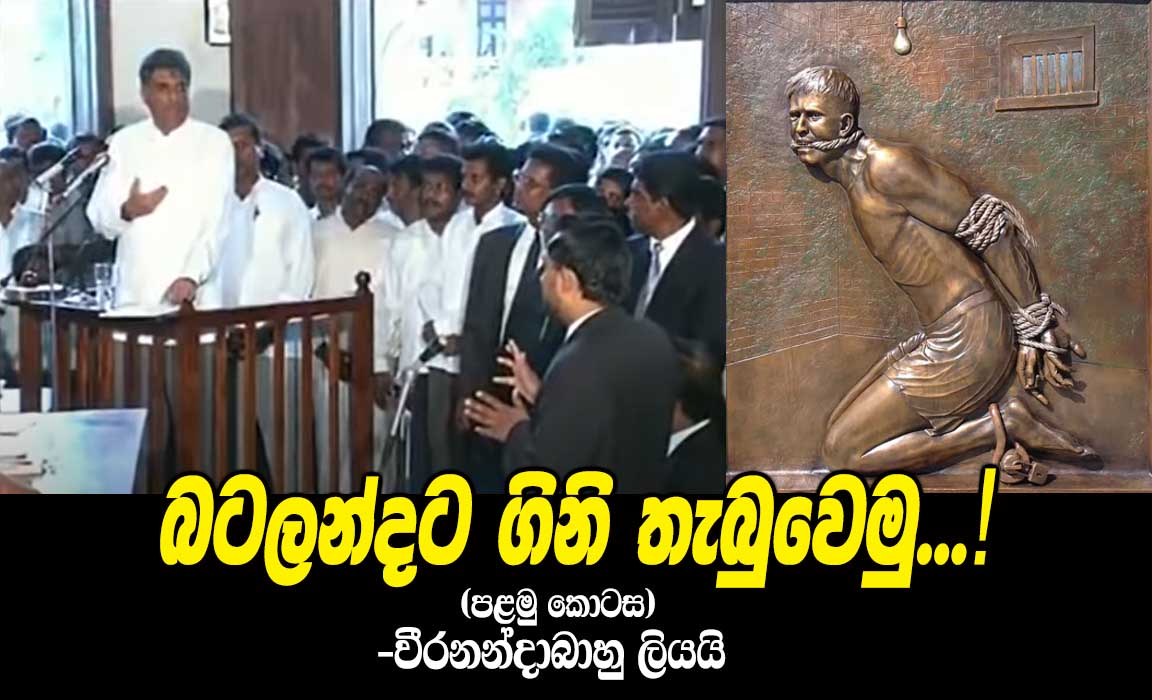
Bimal vows to punish Ranil, even taking foreign assistance if necessary

Minister Bimal Rathnayake says that steps will be taken—through legal means and, if necessary, with international assistance—against those found responsible for the Batalanda torture camps, including former President Ranil Wickremesinghe

“We will conduct all possible investigations within the law to hold Ranil Wickremesinghe accountable for his actions and ensure that these murderers are punished, even if it is at the latter part of their lives,” he said.

The Minister made this statement while participating in the first day of the parliamentary debate on the Batalanda Commission Report.

Posted in Uncategorized

IMF Staff Concludes Visit to Sri Lanka: Key Points

An International Monetary Fund (IMF) team led by Evan Papageorgiou visited Colombo from April 3 to 11, 2025.

In a statement, the IMF said that the staff team had very productive discussions with the Sri Lankan authorities on economic performance and policies underpinning the Fourth Review under the IMF Extended Fund Facility (EFF) arrangement.

Following are the key points from the statement:

1. IMF: Recent external shocks and evolving developments are creating uncertainty for Sri Lanka’s economy, still recovering from its own crisis.

2. IMF Mission Chief Evan Papageorgiou: More time needed to assess the impact of global shocks on Sri Lanka’s IMF-supported program.

3. Sri Lanka’s commitment to program objectives ensures policy continuity and strong implementation. Sustaining reform momentum is critical.

4. IMF: Sustained revenue mobilization and prudent budget execution are crucial to preserve limited fiscal space amid global uncertainty.

5. Boosting tax compliance and reinstating an efficient VAT refund mechanism will help revenue gains without new tax measures.

6. Avoiding new tax exemptions reduces fiscal revenue leakages and corruption risks, building needed fiscal buffers.

7. Restoring cost recovery in electricity pricing minimizes fiscal risks from state-owned enterprises.

8. IMF: Important to protect the poor and vulnerable with well-targeted, time-bound fiscal support.

9. Continued monitoring of inflation is necessary to ensure sustained price stability and macroeconomic stability.

10. IMF: Ongoing discussions with Sri Lankan authorities on economic performance and policies, underpinning the Fourth Review under the EFF arrangement.

Full Statement:

An International Monetary Fund (IMF) team led by Evan Papageorgiou visited Colombo from April 3 to 11, 2025. After constructive discussions in Colombo, Mr. Papageorgiou issued the following statement:

“Sri Lanka’s ambitious reform agenda supported by the IMF Extended Fund Facility (EFF) continues to deliver commendable outcomes. The post-crisis growth rebound of 5 percent in 2024 is impressive. Inflation declined considerably in recent quarters and has fallen to ‑2.6 percent at end-March 2025. Gross official reserves increased to US$6.5 billion at end-March 2025 with sizeable foreign exchange purchases by the central bank. Substantial fiscal reforms have strengthened public finances.

“The recent external shock and evolving developments are creating uncertainty for the Sri Lankan economy, which is still recovering from its own economic crisis. More time is needed to assess the impact of the global shock and how its implications for Sri Lanka can be addressed within the contours of its IMF-supported program.

“The government’s sustained commitment to program objectives is ensuring policy continuity and program implementation remains strong. Going forward, sustaining the reform momentum is critical to safeguard the hard-won gains of the program and put the economy on a path toward lasting macroeconomic stability and higher inclusive growth.

“Against increased global uncertainty, sustained revenue mobilization efforts and prudent budget execution in line with Budget 2025 are critical to preserve the limited fiscal space. Boosting tax compliance, including by reinstating an efficient and timely VAT refund mechanism, will help contribute to revenue gains without resorting to additional tax policy measures. Avoiding new tax exemptions will help reduce fiscal revenue leakages, corruption risks and build much needed fiscal buffers, including for social spending to support Sri Lanka’s most vulnerable. Restoring cost recovery in electricity pricing will help minimize fiscal risks arising from the electricity state-owned enterprise.

“The government has an important responsibility to protect the poor and vulnerable at this uncertain time. It is important to redouble efforts to improve targeting, adequacy, and coverage of social safety nets. Fiscal support needs to be well-targeted, time-bound, and within the existing budget envelope.

“While inflation remains low, continued monitoring is warranted to ensure sustained price stability and support macroeconomic stability. Against ongoing global uncertainty, it remains important to continue rebuilding external buffers through reserves accumulation.

“Discussions are ongoing, and the authorities are encouraged to continue to make progress on restoring cost-recovery electricity pricing, strengthening the tax exemptions framework, and other important structural reforms.

“The IMF team held meetings with His Excellency President and Finance Minister Anura Kumara Dissanayake, Honorable Prime Minister Dr. Harini Amarasuriya ; Honorable Labor Minister and Deputy Minister of Economic Development Prof. Anil Jayantha Fernando, Honorable Deputy Minister of Finance and Planning Dr. Harshana Suriyapperuma, Central Bank of Sri Lanka Governor Dr. P. Nandalal Weerasinghe, Secretary to the Treasury Mr. K M Mahinda Siriwardana, Senior Economic Advisor to the President Duminda Hulangamuwa, and other senior government and CBSL officials. The team also met with parliamentarians, representatives from the private sector, civil society organizations, and development partners.

“We would like to thank the authorities for the excellent collaboration during the mission. Discussions are continuing with the goal of reaching staff-level agreement in the near term to pave the way for the timely completion of the fourth review. We reaffirm our commitment to support Sri Lanka at this uncertain time.”

Posted in Uncategorized

And, Kachachatheevu Remains By N Sathiya Moorthy

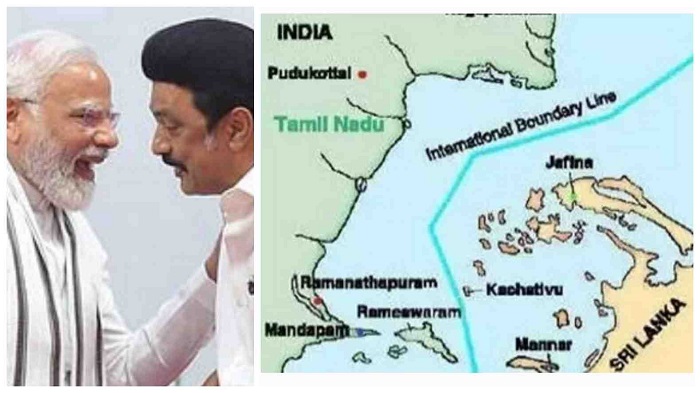
After less than a week of avoidable tensions, doubts and suspicions, Kachchatheevu remains – the tiny islet with Sri Lanka, and the controversy as a domestic issue in Indian politics. There is nothing on record to show that Indian Prime Minister Narendra Modi had mentioned it in his delegation-level discussions with the Sri Lankan team, headed by President Anura Kumara Dissanayake during his three-day visit to the island-nation. This was so despite their multi-sector talks touching upon the larger fishers’ dispute, where both sides seem to have reiterated only their known positions from the past.

Incidentally, Modi did not touch Kachchatheevu in his public rally on way back home in the southern temple town of Rameswaram, which is at the centre of the fishermen’s dispute between the two countries. Not that it was expected, given the complexities and legalities involved. It’s unlike the accompanying, larger fishermen dispute, which too has remained in the news in both nations, with the Sri Lanka Navy (SLN) continuing to arrest Indian fishers ‘illegally’ crossing the IMBL and ‘poaching’ in Sri Lankan territorial waters, closer to the northern Jaffna coastline.

Modi touched only upon the latter issue in his Rameswaram speech and recalled how his Government had obtained the release of over 3,000 Tamil Nadu fishers, arrested by the SLN, over the past ten years (of his rule, which began in 2014). Incidentally, the Sri Lankan Government had freed 11 Indian fishers as ‘goodwill gesture’ on the eve of Modi’s visit. In his interactions with the Sri Lankan leadership, the Prime Minister urged them to adopt a ‘humane’ approach in the matter.

‘Unanimous’ passage

The ‘Kachchatheevu issue’ became a political controversy in India for Sri Lanka and Sri Lankans to sit up and take notice after the State Assembly of the South Indian State of Tamil Nadu passed a ‘unanimous resolution’ calling for India’s federal government to take initiatives for the ‘retrieval’ of Kachchatheevu. The resolution itself was short, just two-paragraphs long. The second and concluding paragraph urged Modi to obtain freedom for Tamil Nadu fishers arrested by the Sri Lanka Navy (SLN) and also their high-cost bottom-trawlers that were being impounded – as a ‘goodwill gesture’. Nothing more, nothing less.

The resolution was moved by Chief Minister and ruling DMK head M K Stalin. It was in Tamil and there was no English translation either. By restricting it all to the present, the Chief Minister wanted to ensure a unanimous passage, including traditional rival, AIADMK – which obliged. Only the ruling BJP at the Centre, of Prime Minister Modi, opposed it, but even its members staged a walk-out, thus ensuring technical ‘unanimity’. They had the option of demanding a vote, but given the local mood, they chose not to.

This is not the first or the only resolution that the Tamil Nadu Assembly has passed on the subject. As Chief Minister Stalin said in a letter to the Prime Minister a day later, the State Assembly had passed similar resolutions at least four times in the past – in 1974, 1991, 2013 and 2014. Whenever the issue props up, there has been contestation between the DMK and its political rivals – namely, the AIADMK and the BJP – if Stalin’s late father M Karunanidhi endorsed the 1974 IMBL Agreement between New Delhi and Colombo.

Cede, Annex and what

By mentioning the 1974 resolution in his letter to the Prime Minister, Stalin was throwing up evidence that his late father and then DMK Chief Minister M Karunanidhi had indeed opposed the Agreement, which ‘placed’ Kachchatheevu on the Sri Lankan side of the International Maritime Boundary Line (IMBL). It was basically a ‘territorial issue’ if it was one, at the time, and there was no anticipation of a fishers’ dispute flowing out of it in such proportions as has been witnessed since.

The prevailing belief was that under the Indian Constitution, the federal government alone had the power to ‘cede’ or ‘annexe’ territories from other countries. The then federal government under Prime Minister Indira Gandhi concluded that it was for the first time that the two nations were marking the IMBL (under UNCLOS that was set to come into force) and hence there was no territory to be ‘ceded’ or ‘annexed’.

It meant there was no constitutional provision to deal with such a situation. The Indian federal government, in its wisdom, hence concluded that it was only an official acknowledgement of the Ocean territory that fell under the two nations. Accordingly, the letters exchanged by Indian Foreign Secretary Kewal Singh and his Sri Lankan counterpart W T Jayasinghe, were found to be sufficient. It was the case when the Agreement was modified in 1976.

Wadge Bank exchange

However, in the years that followed, Jayalalithaa Jayaram, the late AIADMK Chief Minister of Tamil Nadu, took a position, based on documents available in the Tamil Nadu Archives (then or earlier) that Kachchatheevu belonged to Tamil Nadu, and for the Centre to give it away to Sri Lanka, cannot be done through a mere exchange of letters. Instead, it could be done only through an official resolution passed in both Houses of Parliament, by a simple majority – or, so went the argument.

Suffice to point out that the Tamil Nadu Assembly resolutions of 1993, 2011 and 2014 on Kachchatheevu were piloted by the Jayalalithaa Government. The immediate purpose was to blame rival DMK and also the Congress ally-turned-opponent from 1991. Incidentally, in 1991, her first year as Chief Minister, Jayalalithaa broke tradition, when in her Independence Day speech at Chennai’s Fort St George, called upon New Delhi to ‘retrieve’ Kachchatheevu.

The immediate provocation for the Tamil Nadu Assembly passing the new resolution at present flows from State BJP leaders constantly accusing the DMK in particular, and also the latter’s Congress ally at present, of letting down local interests over the 1974 Agreement. The State BJP leaders, including party chief, K Annamalai, had taken their cue from Prime Minister Narendra Modi and External Affairs Minister (EAM) S Jaishankar, who had levelled similar charges during the Lok Sabha poll campaign last year.

Tamil Nadu had already voted in the multi-phase elections to Parliament’s Lower House when Modi levelled that accusations, hence it did not have any impact where it could have mattered. Even without it, successive election results in the Rameswaram area where the issue mattered, the local people seemed to be voting in terms of political loyalty rather than on either the Kachchatheevu issue or the larger fishermen’s dispute.

However, the issue died a momentary death for the n-th time after veteran diplomats familiar with the subject too joined the media discourse of the time. They too lent their support to the point that technically India did not ‘give away’ Kachchatheevu. They also recalled, joined the handful – or, less – of knowledgeable academics and observers that at best, it was a ‘territorial exchange’ of a kind.

In ‘return’ for Kachchatheevu, India got Wadge Bank, a ‘continental shelf’ south of the land’s end at Kanyakumari – again under the said Agreements. At the time, it was incidental that Wadge Bank is now believed to be mineral rich. Instead, in the aftermath of the victorious 1971 war with Pakistan, when their naval vessels could move closer to the peninsular shores and also wreak damage, India needed to secure its Ocean territory, where all it mattered the most.

In Sri Lanka, the issue did not flare up after then Foreign Minister Ali Sabry told newsmen that New Delhi had not informed the Government about any change in the approach of the former. He claimed that it was only an internal election-time affair in India. The same may apply to the situation even at present, what with the long run-up to the Tamil Nadu Assembly election being here, already.

Will not solve…

In their time, both Jayalalithaa and Karunanidhi filed separate petitions in the nation’s Supreme Court, and in their respective names, to declare the ‘transfer’ of Kachchatheevu to Sri Lanka, as unconstitutional. The two cases did not see much action until their death, respectively, in 2016 and 2018. Recently, DMK Treasurer and octogenarian-parliamentarian, T R Baalu, moved a petition in the Supreme Court to implead himself in the case, in the place of late Karunanidhi. The court is set to hear the petition later this year.

That having been said, there is realisation that the ‘retrieval’ of Kachchatheevu, even if it were to happen, would not solve the fishers’ dispute. Leave aside the monumental task of re-drawing the IMBL, which is just not going to happen, the very fact that even with Kachchatheevu on India’s side of the IMBL, the fishers’ dispute cannot end, is a reality. That is because there are too many trawlers operating from the Rameswaram region and they all would be fighting over too little a catch, which alone is available, in the Kachchatheevu waters.

Exclusive water body

Incidentally, the two IMBL Agreements do not mention Kachchatheevu by name. Instead, they refer only to latitudes and longitudes. India and Sri Lanka also promptly notified their IMBL Agreements under UNCLOS. This only strengthens any case against re-opening a settled maritime border dispute between two neighbours. The matter thus rests there – for now and for the future.

Then, there is a question about the IMBL in this sector being skewed and not following the median-line principle set out for the UNCLOS. When India began working on the ‘Sethusamudram Canal’ in these waters three decades back, the US, in particular, publicly claimed that if those waters were to be opened for transport, then, they too would have the right to the use of the same.

As is known, vessels transhipping from the eastern and western shores of India to the other now circumnavigate Sri Lanka. It’s because the Sethu waters are too shallow for ships of any kind. The Indian effort was to cut down on costs and time by creating a sea-canal in these parts, as visualised by a British engineer a century and more back.

However, the work on the canal project stalled after the Indian Supreme Court intervened on faith-based petitions, calling it the sacred ‘Ram Sethu’. As may be recalled, Prime Minister Modi, while flying from Anuradhapura in Sri Lanka to Rameswaram, over the weekend, mentioned how he could have ‘darshan’ of ‘Ram Sethu’ from his chopper.

Having said that, by taking a collective position in the matter when it mattered for the purpose of UNCLOS notification, India and Sri Lanka together ensured that the Palk Strait remained an ‘exclusive water body’ between the countries, with no room or space for any third nation to meddle with it, then, now or ever. Any reopening of the issue, now or ever, whatever the reason and methodology, could only open a Pandora’s Box, and both nations seem to be well aware of it!

(The writer is a Chennai-based Policy Analyst & Political Commentator. Email: sathiyam54@nsathiyamoorthy.com)


Posted in Uncategorized

Court lifts stay order issued on elections for several LG bodies including CMC

The Court of Appeal has ordered to lift the injunction order issued previously preventing the conduct of the Local Government Election for 18 local government bodies including the Colombo Municipal Council on 6 May.

The court further directed that the rejected nomination papers submitted for the aforementioned local government institutions be re-accepted.

This order was issued by a bench of Court of Appeal judges comprising Acting Chairman of the Appeals Division, Justice Mohammed Laffar Tahir, and Justice Priyantha Fernando, following the consideration of a motion submitted by the Attorney General.

Posted in Uncategorized

India proposes land connectivity again, but SL still non-committal

India has proposed a land connectivity project with Sri Lanka once again during the visit of Indian Prime Minister Narendra Modi, but the Sri Lankan government has not committed yet, the Daily Mirror learns.

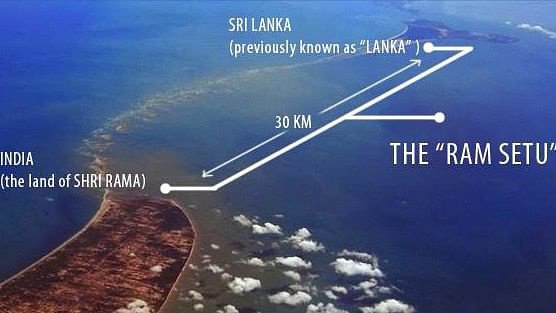
In 2002, the then Sri Lankan government proposed a land bridge between Rameswaram in Tamil Nadu, India, and Talaimannar in Sri Lanka. That was based on the ancient land link called Ram Setu or Adam’s Bridge.

According to the plan, road and rail bridge links were proposed to be developed.

Later, the two sides again started talks on the project, and it even crept into the joint statement issued during the time of the last government. It was not included in the joint statement issued after the visit of President Anura Kumara Dissanayake to New Delhi last year, though.

During the latest visit of Prime Minister Modi, the Indian side proposed it. The Sri Lankan government did not respond to it immediately, as reported.

Prime Minister Modi, on his way back from Sri Lanka, had a Darshan of Ram Setu, also known as Adam’s Bridge, a vast chain of natural limestone shoals that spans an impressive 30 miles (48 km) over the Indian Ocean. This ancient land bridge is celebrated for its geological, historical, and mythological significance. The ancient limestone bridge is believed to have been built by Lord Ram.

Meanwhile, India is ready to consider Sri Lanka’s request to increase the apparel export quota to 50 million units only in terms of the proposed Economic and Technology Cooperation Agreement (ETCA), the Daily Mirror learns.

In the wake of the United States slapping 44 percent tariffs on Sri Lankan exports, Sri Lanka is currently in the process of exploring fresh avenues to support businesses now grappling with U.S. tariffs.

Recently, Foreign Minister Vijitha Herath is reported to have said that Sri Lanka requested India to expand the quota to export under the Indo-Lanka Free Trade Agreement to 50 million units from the current 8 million.

However, Daily Mirror learns that this is a demand made by the Sri Lankan side during talks on ETCA.

India is ready to look at Sri Lanka’s request only when negotiations resume on ETCA.

Posted in Uncategorized

Court orders to re-accept 35 more rejected LG Polls nominations

The Court of Appeal has ordered the relevant Returning Officers to reaccept several rejected nomination papers due to issues arising from the certification of birth certificates by Justices of the Peace and the oath taken under the 7th Schedule to the Constitution.

Accordingly, the court has ordered nearly 35 rejected nomination papers to be reaccepted today (10).

This order was issued when several petitions filed by political parties and independent groups against the rejection of the relevant nomination papers were taken up before a bench of judges comprising Acting President of the Court of Appeal, Justice Mohamed Lafar Tahir and Priyantha Fernando this morning.

How Did a Government Housing Complex Become a Torture Chamber?

Former Inspector General of Police Ernest Perera made a startling revelation regarding the transformation of a government housing complex into a torture chamber. This revelation was recorded in the Batalanda Commission Report.

The Batalanda housing complex, originally under the purview of the Government Fertilizer Corporation, became a site of illegal detentions and torture.

During the Batalanda Presidential Commission, significant details emerged about the misuse of the housing complex.

At the time, Ranil Wickremesinghe was the Minister of Industries, and the complex was under the Ministry of Industries.

According to the commission’s findings, houses labeled A2/2, A2/1, A2/3, A1/7, B2, B1, and B7 were used by Wickremesinghe.

Additionally, houses in the complex were allocated to a police team led by Douglas Peiris, the then OIC of Peliyagoda Police.

Thirteen houses were designated for officers of the Kelaniya Anti-Riot Unit.

The report revealed that these allocations were made under Wickremesinghe’s instructions and orders.

However, some houses were occupied only nominally.

Former IGP Ernest Perera testified before the commission, expressing surprise that Nalin Delgoda, who had a private residence, was allocated a house in the complex but never resided there.

The commission uncovered that the allocation of houses to police officers was done improperly.

There was no official documentation from the police headquarters or Kelaniya division to support the lawful acquisition of these houses.

Former IGP Perera suggested that these allocations might have been based on private transactions.

The commission further questioned whether the improper allocation of houses facilitated the operation of illegal detention centers and torture chambers.

Perera acknowledged that the misuse of the housing complex for such purposes was indeed possible.

The pressing need now is to ensure justice is served.

Decision to privatise SriLankan Airlines scrapped

A decision taken by the previous administration to privatise SriLankan Airlines has been scrapped, the President’s Media Unit said.

A meeting between President Anura Kumara Dissanayake and senior officials of SriLankan Airlines was held at the Presidential Secretariat.

The discussions mainly focused on proposals to transform SriLankan Airlines into a more profitable state-owned enterprise.

Special attention was also given to possible short-term and long-term solutions for the airline’s debt management.

The talks further explored new investment opportunities for the airline. The President instructed the officials to take all necessary steps to transform SriLankan Airlines into a profit-making entity.

Although the airline has recorded operational profits, due to past mismanagement and poor decision-making, it remains one of the leading loss-making state enterprises.

The current government has decided to reverse the previous administration’s decision to privatize the airline. Instead, it plans to continue operating it as the national carrier while introducing a new management structure to ensure its profitability moving forward.

Minister of Labour and Deputy Minister of Economic Development Dr. Anil Jayantha Fernando, President’s Senior Advisor Duminda Hulangamuwa, Chairman of SriLankan Airlines Sarath Ganegoda along with several senior officials of SriLankan Airlines, were present at the meeting.

Posted in Uncategorized