Pakistan Prime Minister to visit Sri Lanka on February 22

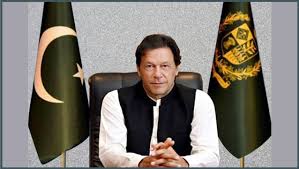
Pakistan Prime Minister Imran Khan is scheduled to visit Sri Lanka on February 22 on a two day official visit, according to Sri Lanka’s Foreign Ministry.

Pakistan PM will hold talks with President Gotabaya Rajapaksa, Prime Minister Mahinda Rajapaksa and Foreign Minister Dinesh Gunawardena during his stay in Colombo.

He will be the first head of state to visit the country after Covid 19 pandemic.

According to a Sunday Times report, Foreign Ministry sources have said Pakistan, which is currently a member of the UN Human Rights Council, is lobbying Muslim countries in the UNHRC to vote against a UN resolution that is due to come up on February 23 against Sri Lanka.

SLPP leadership should be given to the President – Wimal

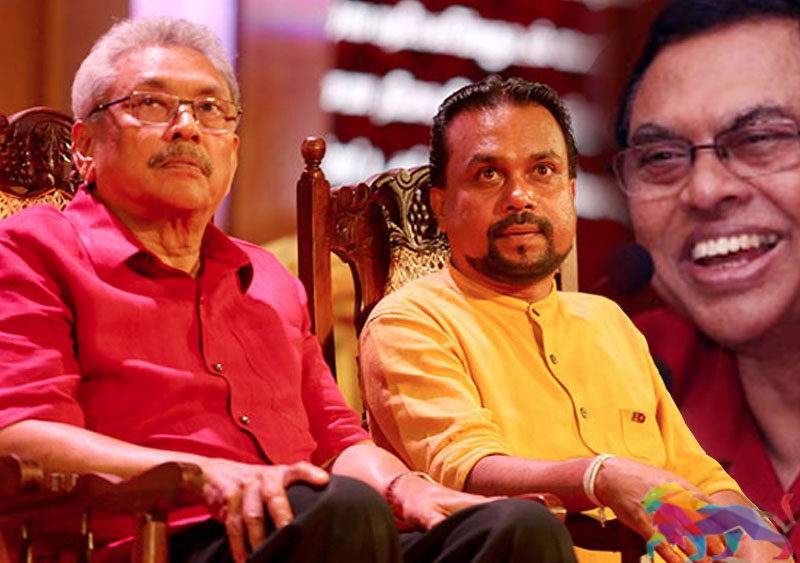
President Gotabaya Rajapaksa should have been appointed the leader of the Sri Lanka Podujana Peramuna (SLPP) after he was elected as the head of state since he was not an experienced campaigner in the political arena, Minister of Industries Wimal Weerawansa said.

Pointing out that it would be inappropriate to isolate him to the Presidential Secretariat as this would weaken the cordial link between the President and the Members of Parliament, he said that it would not be conducive to the social, economic and political well-being of the incumbent government as well as the country.

The Minister made these comments in an interview with the ‘Sunday Lankadeepa’.

Prime Minister Mahinda Rajapaksa is the leader of the SLPP while Basil Rajapaksa functions as the National Organiser.

“Confining Gotabaya Rajapaksa to a coterie of bureaucrats at the Presidential Secretariat is an impediment to the well-being of the country” – Industries Minister Wimal Weerawansa

While noting his concerns on certain people with vested interests who have been working vehemently to realise their own personal agendas, he said that he was deeply saddened by these efforts which would have devastating repercussions to the government.

The Minister also said that he was perplexed about the lack of effort to stop this harmful situation from developing further and questioned as to whose aspirations they were trying to realise.

Posted in Uncategorized

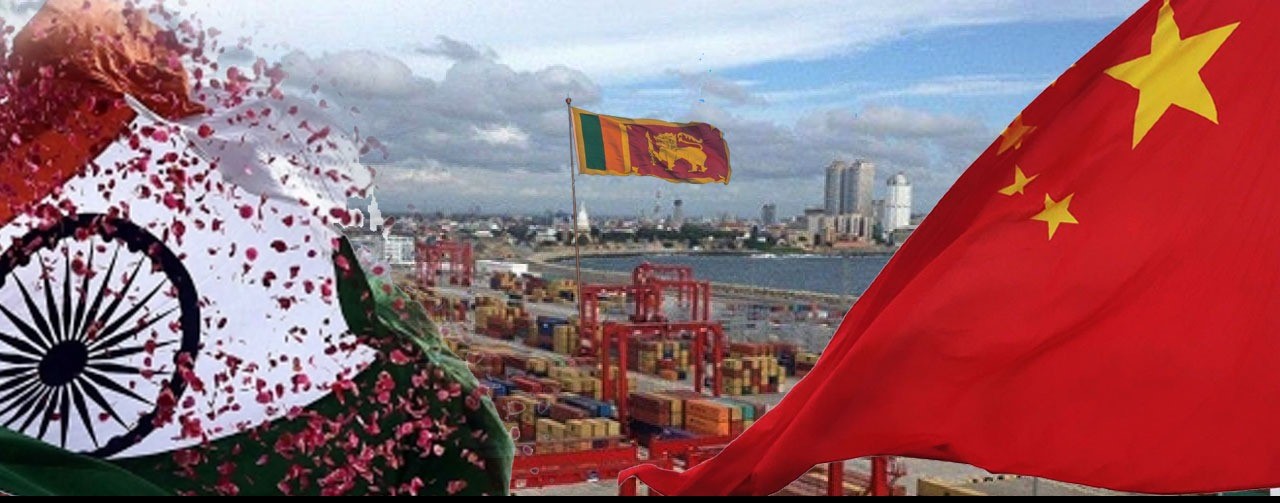
India fumes as China gets northern power projects

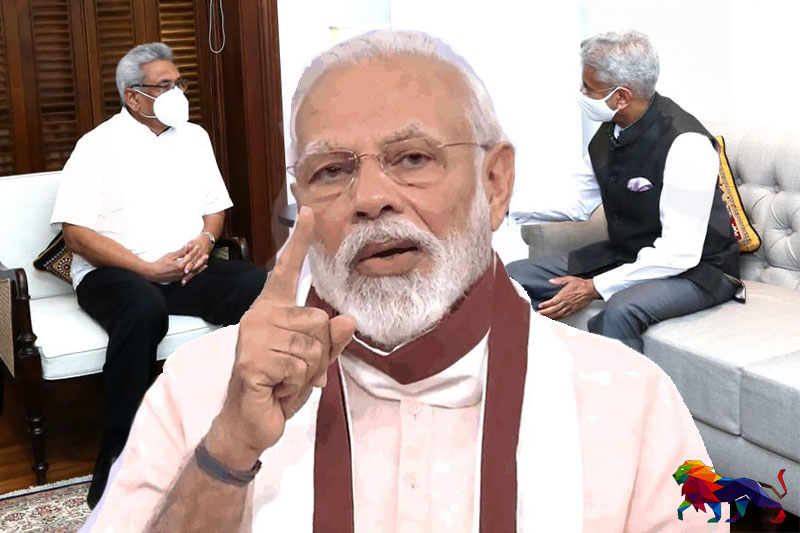
India has lodged a strong protest with Sri Lanka on the award of a tender to a Chinese company to set up three renewable energy projects in outlying islands off the Jaffna peninsula.

The protest, the Sunday Times learnt, came even before the Cabinet of Ministers decided not to give India and Japan the East Container Terminal in the Colombo Port. This also provoked a strong protest from India.

The protest was triggered by the Department of Information releasing the decisions of the Cabinet. The renewable energy project was approved by the Cabinet on January 18.

Diplomatic sources said India’s protest was on the grounds that such a move would raise security concerns for it. The islands concerned are the Delft Island, Analativu and Nainativu. The sources said the islands, separated by the Palk Strait from India, were in close proximity to India’s coast.

The Delft Island is only 48 kilometers away from the Indian coastal town of Rameshwaram.

The energy project’s local partner, the Ceylon Electricity Board, has finalised matters related to the project by identifying lands for the joint venture with Etechwin of China. The funds for the project are to come from the Asian Development Bank.

The US$ 12 million project has been awarded to MS/Sinosar-Etechwin Joint Venture in China.

The award to the Chinese company was recommended by the Cabinet-Appointed Standing Committee on Procurement.

Under the project, international competitive bids were called to instal hybrid renewable energy systems in the three islands utilising the accessible energy resources to improve the efficiency of the prevailing energy network.

Posted in Uncategorized

Biden administration throws its weight behind new Geneva resolution – The Island

Ahead of the 46th sessions of the Geneva-based United Nations Human Rights Council (UNHRC) scheduled to begin later this month, newly elected US President Joe Biden’s Democratic Party has raised Sri Lanka accountability issues in a recently submitted Resolution, with the focus on appointment of military officials, including that of Gen. Shavendra Silva as the Commander of the Army.

The UNHRC consists of 47 countries divided into five groups. The UK took over Sri Lanka matter in the wake of the US quitting the UNHRC in June 2018. It now heads the Sri Lanka’s Core Group.

Silva, the first General Officer Commanding (GoC) of the celebrated 58 Division was named the Commander of the Army by President Maithripala Sirisena.

Sirisena’s successor, Gotabaya Rajapaka, appointed Silva the Chief of Defence Staff (CDS) and subsequently promoted him to the rank of General.

Democratic Party Congressman Brad Sherman, a ‘very’ close associate of professional activists within the Global Tamil Diaspora has tabled a Resolution in the U.S. Congress charging President Gotabaya Rajapaksa administration of engaging in harassment and intimidation of human rights defenders and enforced disappearances, and protecting war criminals, Daya Gamage, former political specialist of the US State Department said.

Bradley James Sherman is the US Congressman representing California’s 30th congressional district since 2013.

The author of Tamil Tigers’ debt to America Gamage explained how the change in US administration had started to bring in ‘initial bearing’ on Sri Lanka with Congressman Sherman making a move. Gamage said that the US stand on the accountability issues should be examined against the backdrop of a statement attributed to Foreign Secretary Admiral Jayanath Colombage that the political change wouldn’t have any bearing on Sri Lanka.

Gamage said that in spite of the US not being a member of the UNHRC, it would throw its full weight behind the push for a new Resolution to be moved at the forthcoming sessions.

Here are four areas the Congressional Resolution on Sri Lanka has touched:

Whereas the Government of Sri Lanka has promoted high ranking military officials suspected of forcibly disappearing persons and bearing responsibility for war crimes, including Lieutenant General Shavendra Silva, and has failed to hold accountable other current military officials accused of war crimes.

Whereas, during the 26-year civil war ending in 2009 between government forces and the Liberation Tigers of Tamil Eelam, tens of thousands of Tamils were forcibly disappeared by the police, military, and paramilitary operatives

Whereas, according to a 2020 United Nations Special Rapporteur’s report, “no observable progress has been made on pending cases, including habeas corpus applications into the disappearance of Tamil Tigers and members of their families who surrendered during the final days of the war”.

Whereas lawyers, human rights defenders, and victims involved in cases of enforced disappearances face intimidation, harassment, and violence, particularly since Rajapaksa became President.

The Island learns that since the initial government reaction to the US slapping travel ban on Gen. Shavendra Silva and his immediate family members an year ago, the government hadn’t made representations to the US or UNHRC. The government ignored an opportunity to take up the Army Commander’s issue in the wake of the recent declaration made by the then US Secretary of State Mike Pompeo regarding the Army Commander’s matter. When the media raised the US travel ban on the Army Commander at a joint media conference given by Pompeo and Foreign Minister Dinesh Gunawardena, the one-time CIA Chief said “All right. Thank you. I think there were three questions there. The last one, look, it’s a legal process in the United States. We’ll always continue to review it. We want to make sure we get it technically, factually, and legally right. We’ll continue to do that.”

Well informed sources said that the UK spearheading the moves for a new Resolution at the UNHRC had told the Sri Lankan government in no uncertain terms that it was determined to go ahead with the project. Sources said that Secretary of State for Foreign, Commonwealth and Development Affairs and the Minister for South Asia Lord Ahmad of Wimbledon explained their stand to Minister Gunawardena and the Sri Lankan High Commission in London.

Tamil political sources said that they had the required support to secure a new Resolution at the forthcoming session. Sources said that a petition forwarded by three Tamil political parties represented in parliament to UNHRC members as well as the HR Commissioner received approval from those who mattered. Sources pointed out that the HR Commissioner’s latest report on Sri Lanka took the Tamil parties’ petition into consideration.

Posted in Uncategorized

Chinese hand seen behind blocking India’s bid to develop ECT at Colombo port – The Hindu

Beijing strikes back

China is said to have succeeded in blocking India’s efforts to gain a presence in Colombo port, a regional container transhipment hub, as the skirmishes along the border and the Centre’s pushback against Chinese goods and investments spills over into a strategic port project that India is keen to build, ironically, to check growing Chinese presence in the region.

Earlier this week, the Sri Lankan cabinet is understood to have scrapped a tripartite memorandum of cooperation (MoC) signed in May 2019 with Japan and India to develop the East Container Terminal (ECT) at Colombo Port in the wake of strong protests from port unions. Instead, Sri Lanka is believed to have offered the proposed West Container Terminal (WCT) project to India and Japan.

The first phase of the 2.5 million twenty-foot equivalent units (TEUs) capacity ECT terminal was completed in May 2015 involving a single berth of 440 metres, alongside water depth of 18 metres, but is yet to start operations.

Sources tracking the project in India believes that China put the “spanner” in the works.

Aside from its strategic interests, China has a commercial interest to stall India’s participation in a container loading facility in Colombo port. China’s state-run China Merchants Port Holdings Company Ltd holds an 85 per cent stake in the 3 million TEUs-capacity Colombo International Container Terminals Ltd (CICT), a joint venture terminal runs with Sri Lanka Ports Authority (SLPA).

SLP is the state-owned operator of commercial ports in Sri Lanka.

Unprecedented resistance

“The unprecedented resistance to India’s investment in Colombo raises concerns on whose behest all this is being triggered,” an Indian official overseeing the project said. “Such a fully orchestrated and coordinated campaign against Indian involvement in Colombo terminal has to be funded by somebody, it cannot be homegrown,” he stated.

General (Retd) R M Daya Ratnayake, Chairman, SLPA, was not available for comment.

Sri Lanka’s ‘take it or leave it’ offer to India and Japan for developing WCT has put the government in a quandry. A government-to-government MoC will help Sri Lanka bypass rules on public procurement which are done through open tenders only.

“If a MoC is not there, even the West Container Terminal cannot be offered to a pre-selected single party or group. It should then go under public tenders in line with our rules and procedures,” a Sri Lankan official briefed on the project said.

“So, an MoC is needed to offer the WCT without going through a public tender process to companies nominated by India and Japan,” he said.

The move to backtrack on developing ECT jointly with India and Japan “met the expectation of the general public that it should be run as a state-owned facility,” he said.

Sri Lanka also cited Japan’s insistence to extend a loan to the ECT project and not bring the money as an investment to justify calling off the MoC as the terms of the pact had changed.

As per the MoC signed by the previous Sri Lankan government, the Japanese government had to provide a loan to the project basis which the project was structured as a 51:49 joint venture.

However, the party running the government in Sri Lanka decided not to accept a loan from Japan to check the country’s rising debt profile and wanted the money as an investment in the project.

However, the Indian official countered this claim saying that “Japan has insisted on coming in as an equity investor in the project”.

Ball is now in India’s court

“The ball is now in India’s court; I think the WCT is a very good answer to India’s strategic and security needs in the region,” the Sri Lankan official stated.

Outlining the merits of WCT for India, the official said that both ECT and WCT were similar capacity terminals. The only difference is that the ECT is partly completed and can be put into operation quickly by erecting used cranes or in 18-20 months if new cranes are ordered now.

The WCT has to be built from scratch and could take at least three years to start operations.

With 85 per cent stake in WCT, the India-Japanese consortium will be able to run the terminal with full autonomy; unlike in ECT where SLPA will be a majority shareholder with 51 per cent stake.

“With 51 per cent majority stake held by SLPA, the ECT will be treated as a public company under Sri Lankan laws and come under the scrutiny of the government auditor and procurement would have to follow the public procurement guidelines. This will hamper the private firms from operating freely,” the official said.

Besides, the WCT has a 20-metre water depth, while all the existing three terminals at Colombo have a draft of 18 metres.

“Over the next few years, when the ship capacity requires depth beyond 18 metres, the WCT will be the only terminal which can take more than 18-metre draft ships,” the official added.
Posted in Uncategorized

Tamil’s Walk For Justice Attacked by Sinhalese Mob – No Arrests By Police – Police Impartiality Questioned

The third day of Tamil’s Walk For Justice march in Sri Lanka was attacked by Sinhalese mob, when the walk was leaving the Eastern city of Trincomalee.

The Police and Armed Special Task Force (STF) which was constantly intimidating, threatening and erecting road blocks to prevent the Tamil’s walk, did not make any arrests of the Sinhalese mob for attacking Tamil’s Walk For Justice participants . Raising fears that the Police and Special Task Force (STF) are openly siding with the majority Sinhalese community and allowing attacks on the Tamil minority.

Large crowds are joining this walk and the walk is attracting more people everyday, despite threats and intimidation by the Police.

This walk for justice was organized by North and East Civil Society Organizations to protest abuses against Tamils and to highlight Tamil’s joint appeal to UN High-Commissioner for Human Rights and to UN Human Rights Council member states. This appeal included a request to Refer Sri Lanka to the International Criminal Court (ICC) for War Crimes, Crimes Against Humanity and Genocide committed against the Tamil people by the Sri Lankan State.

Interestingly, Tamil Members of Parliament were sidelined in this Walk and was not allowed to play any role in this Walk.

In a dramatic turn of events Catholic Bishop of Trincomalee Bishop Christian Noel Emanuel was served with stay order by the police from participating in the Walk for Justice for Tamils.

This walk started on February 3rd from Pothuvil in the Eastern province and will end in Polihandy in the Northern province on February 7th.

Link to the Rally: https://youtu.be/CGYKkZxfqZ0

The Walk is to highlight the following issues:

1) Continuing land grab in Tamil areas and converting Tamil’s traditional and historical places into Sinhalese areas by establishing Buddhist temples after destroying Hindu temples. As of now around 200 Hindu temples were effected.

2) Muslims who died due to COVID are cremated against the wishes of the families and against Islamic teachings.

3) Tamils in the upcountry have been urging for pay raise of 1,000 rupees, but the Government is not responding to their demands.

4) Since the war ended ten years ago, militarization of Tamil areas is continuing and Tamils historical identity is destroyed with the aim to change demography in favor of Sinhalese, using different government departments, especially archeological department. Also, Government sponsored Sinhalese settlements are continuing.

5) Tamil cattle owners are facing numerous problems, where their gracing areas are being occupied by Sinhalese and their cows killed.

6) PTA has been used to imprison Tamil youths without charge or trial for over 40 years are now being used against Muslims.

7) Tamil political prisoners have been imprisoned for years without trial. The Government have pardoned Sinhalese on a regular basis, but none of the Tamil political prisoners were pardoned.

8) Families of the enforced disappeared have been protesting to find their loved ones, but the Government refuses to give them an answer.

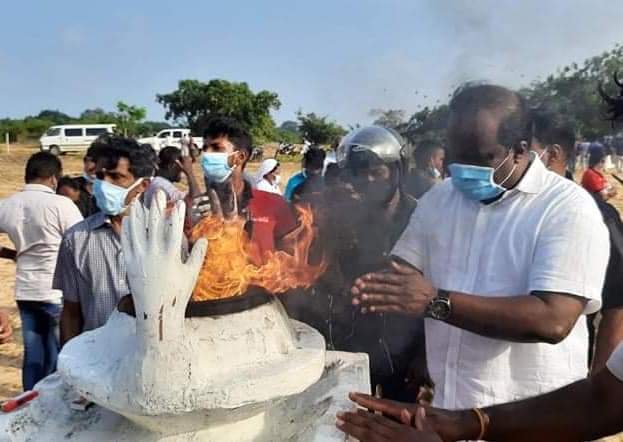
9) Tamils have been denied the Right to Remember their war dead, as demonstrated by denying remembrance events, destruction of cemeteries of the was dead and demolition of memorials.

10) Government is targeting Tamil journalists who cover these abuses and Tamil Civil Society activists who protest these abuses.

11) To Implement Tamil’s Joint Appeal to UN High Commissioner for Human Rights and to UN Human Rights Council Member States, which includes a request to Refer Sri Lanka to International Criminal Court (ICC) for War Crimes, Crimes Against Humanity and Genocide committed against the Tamil people by the Sri Lankan State.

For information contact:

1) : S. Sivayoganathan: + 94- 77-906-0474

2) Velan Suwamikal: +94-77-761-41 21

Email: civilsocietyfromnortheast@gmail.com
S. Sivayoganathan
Tamil Civil Society Forum
+94 77-906-0474
civilsocietyfromnortheast@gmail.com

Tamil’s Walk For Justice

Posted in Uncategorized

Govt.’s decision to reject UN report: OHCHR says it hopes SL will focus on the report’s substance

In response to the government’s decision to reject the UN Human Rights High Commissioner Michelle Bachelet’s report, a Spokesperson from her office told The Morning today that they hope Sri Lanka would focus on the substance of the report.

Liz Throssell, the Spokesperson for the UN High Commissioner for Human Rights, said, “The Office of the United Nations High Commissioner for Human Rights (OHCHR) hopes the Government will focus on the substance of the report and the very important recommendations that have been made by the High Commissioner for Human rights.”

The Sri Lankan Government announced this week that it has decided to reject the Human Rights High Commissioner’s report on the human rights situation in Sri Lanka based on two grounds.

The government said not only the allegations in the report were baseless but also that most of the content in it did not fall under the High Commissioner’s mandate.

Posted in Uncategorized

Several “.lk” domains Websites that came under cyber attack restored

Several “.lk” domains that came under a cyber attack early this morning (February 06) have been restored.

LK Domain Registry said: “An issue with the .LK Domain Registration System arose early in the morning of Saturday, 6th February, which affected a few domains registered in .LK. This issue was attended to expeditiously, and the matter was resolved by approx. 8.30 a.m.”

“The .LK DNS system is now functioning normally. However, some names may be cached in systems outside the registry, and may appear until the cache expires.”

“We are currently investigating the issue, and will report as soon as concrete information is available. If you need any further information or assistance, please contact us on our hotline +94 114 216061 or e-mail hostmaster@nic.lk.”

In a tweet, the Telecommunications Regulatory Commission of Sri Lanka (TRCSL) had said certain “.lk” domains were affected by a malicious redirection.

LK Domain Registry, TRCSL and Computer Emergency Readiness Team (CERT) had jointly worked on resolving the issue.

Registrar of LK Domain Registry Prof. Gihan Dias said measures were taken to restore the hacked websites, adding that necessary actions will be taken against those who are responsible for the attack.

Canada’s Leadership on Sri Lanka Urgently Needed Once Again at the UN

Six years ago Canada was among a group of countries that took the lead to adopt a crucial United Nations resolution to promote reconciliation and justice after decades of war and persecution in Sri Lanka.

The human rights situation on the island is again deteriorating, and it is crucial for Canada to step up to take diplomatic action once more. In a hard hitting new report, the UN high commissioner for human rights, Michelle Bachelet, says that “Sri Lanka remains in a state of denial about the past,” and the “current trajectory sets the scene for the recurrence of the policies and practices that gave rise to grave human rights violations.” She called for member states to take urgent action.

Tens of thousands of civilians were killed in the civil war between government forces and the separatist Liberation Tigers of Tamil Eelam (LTTE), which ended in 2009. Both sides committed numerous war crimes, particularly in the final months of the war. At that time Mahinda Rajapaksa was president, and his brother, Gotabaya Rajapaksa, was the defence secretary. They oversaw armed forces that repeatedly and indiscriminately shelled civilians and summarily executed captured LTTE fighters. Critics of the government and suspected LTTE supporters were murdered, tortured, and “disappeared” in white vans, abuses that continued even after the fighting ended. When the Rajapaksas finally lost power in the 2015 presidential election, there seemed to be an opening for change.

Canada is a member of a core group of countries at the UN Human Rights Council that supported a landmark resolution in 2015. The resolution offered victims of all communities in Sri Lanka the hope of truth, justice, and reconciliation, and upheld the principle of accountability for the most serious international crimes. Canada’s role was welcomed by victims’ groups, and there were significant improvements in human rights, particularly freedom of expression. The shadow of fear and repression was lifted.

Now fear has returned. In November 2019 Gotabaya Rajapaksa was elected president and he appointed his brother, Mahinda, prime minister. In a recent speech to celebrate his first year in office, President Rajapaksa made clear what his government is all about. He reassured his supporters that the “era of betraying war heroes… [has]now come to an end.”

The UN is warning of renewed violations. Police and intelligence officers have sought to instill fear in journalists and human rights defenders, as well as victims of past abuses and their families, as documented by the UN secretary-general in his annual report on reprisals.

Last February, soon after Rajapaksa took office, the government renounced its commitments under the 2015 Human Rights Council resolution. He has appointed numerous people who were implicated in war crimes, including his chief of defence staff, Gen. Shavendra Silva, who is banned from traveling to the United States for “his involvement, through command responsibility, in gross violations of human rights, namely extrajudicial killings.”

In March, Rajapaksa pardoned a former army sergeant, Sunil Ratnayake, who killed eight Tamil civilians including children, one of very few security forces members ever held accountable for violations. In September, Sri Lanka told the Human Rights Council that allegations against senior military officers are “unacceptable” and without “substantive evidence.”

In October, the government amended the Constitution to remove the remaining constraints on political interference in Sri Lanka’s courts. The few officials who have sought to pursue justice are now at risk.

The new administration in Sri Lanka has made clear it intends to block any efforts to help citizens come to terms with a bloodied past. Earlier this year the authorities even demolished a monument in Jaffna commemorating Tamil civilian victims of the conflict.

Instead of reconciliation and justice, the government is promoting extremist Sinhala Buddhist nationalism that discriminates against minority groups. Tamil communities in the north and east fear increasing instances of arbitrary and abusive behavior by security forces. Meanwhile, there has been an alarming rise in discrimination against Muslims, such as a ban on the burial of people who died with Covid-19, which denies the religious rights of Muslims and has no medical justification.

At its next session beginning later this month, the Human Rights Council will face a crucial decision: whether to allow the Sri Lankan government to continue down this path, or take action to protect vulnerable Sri Lankans and uphold international law. The UN high commissioner has laid out the stark facts in her report, and made clear recommendations of the measures that are now needed. She has asked the council to support a dedicated UN capacity to collect, preserve and analyze evidence of grave violations in Sri Lanka for use in future prosecutions. She also called upon member states to impose targeted sanctions on those allegedly responsible for the abuse.

Canada is well placed to lead these efforts. Steps to advance accountability for international crimes will reduce the growing risk of further horrors. The Canadian government should ensure that that the warning signs are headed, by taking action now.

India says further relief impossible without SL having an agreement with IMF

In response to internet media reports about India asking for the settlement of US $ 400 million currency swap as an act of retaliation for the cancellation of the port project, the Indian High Commission said a rollover facility for the settlement of had been granted for the Central Bank of Sri Lanka till February 1, and further extension was impossible without Sri Lanka having successfully negotiated staff level agreement for an IMF programme.

A spokesman of the Indian High Commission who commented on such media reports said, “We have seen speculative reports about the US$ 400 million settlement of currency swap facility by Central Bank of Sri Lanka (CBSL). In this respect, it is pointed out that Reserve Bank of India (RBI) and CBSL had concluded a US$ 400 million currency swap agreement on July 24, 2020 under the SAARC Currency Swap Framework. This swap facility was drawn by CBSL on July 31, 2020 for an initial period of three months,”

He said a three -month rollover was provided at CBSL’s request till February 1, 2021, and further extension would require Sri Lanka having a successfully negotiated staff level agreement for an IMF programme.

“Sri Lanka does not have at present. The Central Bank settled the swap facility with the Reserve Bank of India as scheduled and this was clarified by the Central Bank on February 5, 2021,” he said.

He also said India abides by all of its international and bilateral commitments in letter and spirit.

Bilateral relations with India hit a new low recently after the government reneged from a committee made in 2019 under the previous rule to develop the East Container Terminal of Colombo Port through an equity sharing arrangement . India conveyed its displeasure on this issue formally the Sri Lankan leaders last Tuesday.

Posted in Uncategorized